Summary
- Agencies need AI visibility platforms with multi-client management, white-label reporting, and flexible pricing -- not just monitoring dashboards
- Promptwatch leads the category by combining tracking with content gap analysis and AI-powered content generation to fix visibility issues
- Most competitors (Otterly.AI, Peec.ai, AthenaHQ) stop at monitoring and leave agencies stuck explaining problems without solutions
- White-label depth varies wildly: some tools only swap logos on PDFs, while others offer custom domains and complete brand removal
- Pricing models range from per-client seats to usage-based credits -- understanding the structure prevents surprise bills as you scale

What agencies actually need from AI visibility platforms
You're not buying these tools for yourself. You're buying them to deliver value to clients who want to know why ChatGPT recommends their competitors instead of them. That changes what matters.
Multi-client architecture. You need clean separation between client workspaces. User permissions that let clients view their own data without seeing other accounts. Bulk operations that don't force you to repeat the same setup 20 times. Most platforms claim to support agencies but their UI assumes you're managing one brand.
White-label reporting. Your clients should see your brand, not the tool vendor's. At minimum: custom logos and colors on reports. Better: custom domains and complete removal of the original platform's branding. Best: embeddable widgets you can drop into your own client portals.
AI search coverage that matters. ChatGPT, Perplexity, Google AI Overviews, and Claude are table stakes in 2026. Gemini, Grok, and DeepSeek matter for specific industries. Reddit and YouTube tracking separate leaders from followers -- these platforms directly influence AI recommendations.
Actionable data, not just dashboards. Visibility scores are interesting. Citation counts are useful. But what fixes the problem? Platforms that show you which content is missing, which prompts competitors own, and how to close the gap are worth 10x more than monitoring-only tools.
Pricing that scales with your business. Per-seat pricing works when you have a few large clients. Per-prompt or usage-based pricing makes sense when you're managing dozens of smaller accounts. Flat agency plans with unlimited clients sound great until you hit the hidden limits.
The action gap: why most tools leave agencies stuck
Here's the pattern we saw testing these platforms. You onboard a new client. Run the initial audit. Build a beautiful report showing they're invisible in AI search while competitors dominate. Client asks: "What do we do about it?"
Most tools have no answer. They show you the problem. They might even show you which competitors are winning. But they don't help you fix it. You're left manually researching content gaps, hiring writers, guessing at optimization strategies, and hoping something works.
Promptwatch breaks this pattern. It shows you the specific content your client's website is missing -- the topics, angles, and questions AI models want answers to but can't find. Then it generates articles, listicles, and comparisons grounded in real citation data from 880M+ analyzed citations. You're not guessing. You're creating content engineered to get cited.
This is the difference between a monitoring dashboard and an optimization platform. One tells you what's broken. The other helps you fix it.
12 AI visibility platforms compared for agency use
| Platform | White-label depth | Multi-client management | AI models tracked | Content optimization | Starting price |
|---|---|---|---|---|---|
| Promptwatch | Full (custom domain, embeds) | Unlimited clients on Business+ | 10+ (ChatGPT, Perplexity, Claude, Gemini, etc.) | Built-in AI writer + gap analysis | $249/mo |
| Profound | Agency mode with pitch environments | Yes, with brand configs | 9+ including Shopping | Agent creation, no content generation | Custom pricing |
| LLM Pulse | Full (custom domain, embed) | Multi-project support | ChatGPT, Perplexity, AI Mode, Gemini | No built-in content tools | €49/mo + white-label add-on |
| Otterly.AI | Logo swap on reports | Basic multi-brand | ChatGPT, Perplexity, AI Overviews | None | $99/mo |
| Peec.ai | Limited branding | Multi-brand tracking | ChatGPT, Claude, Perplexity | None | Custom pricing |
| AthenaHQ | Logo customization | Multi-client dashboards | ChatGPT, Perplexity, Claude, Gemini | None | Custom pricing |
| Search Party | Agency-oriented | Yes, consultancy focus | ChatGPT, Perplexity, others | Custom workflows, no content gen | Custom pricing |
| Scrunch AI | Basic white-label | Multi-site support | ChatGPT, Perplexity, Claude | None | Custom pricing |
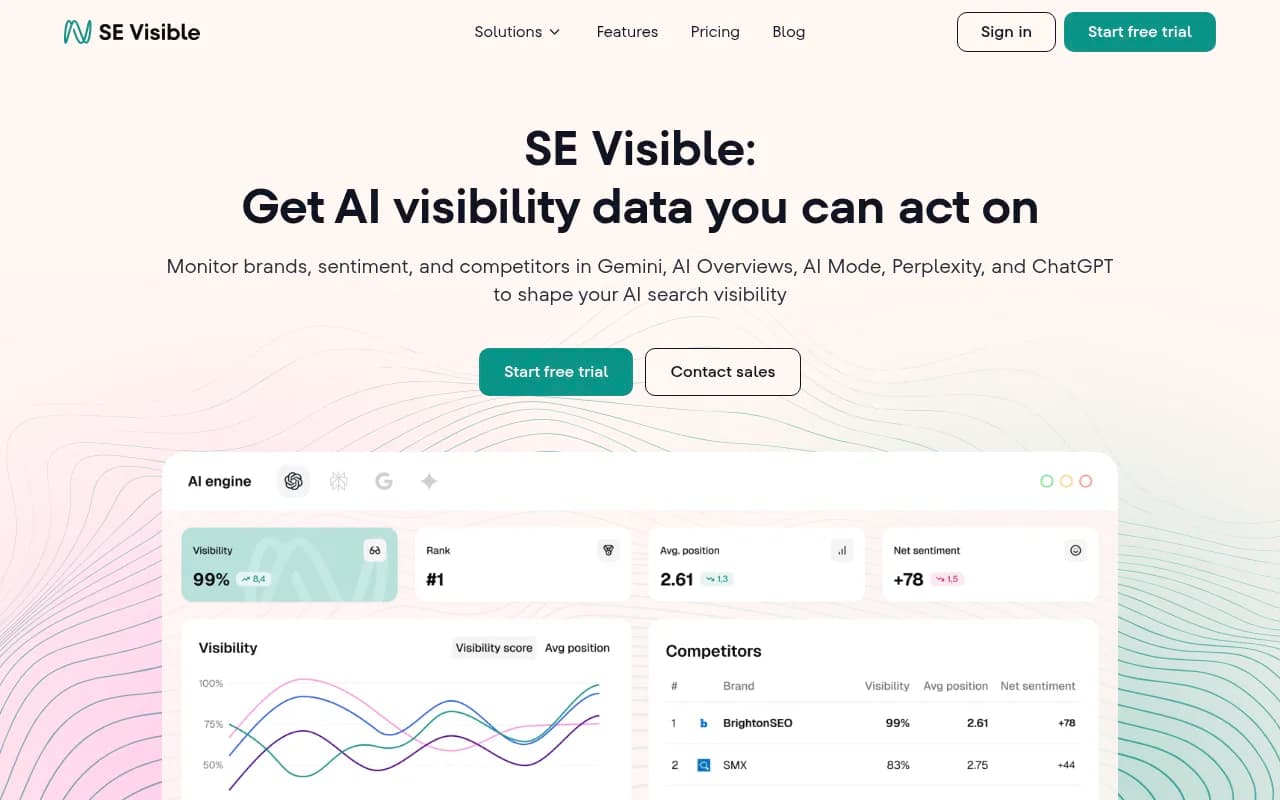
| SE Visible | Logo on reports | Multi-brand | ChatGPT, Perplexity, AI Overviews | None | Part of SE Ranking |
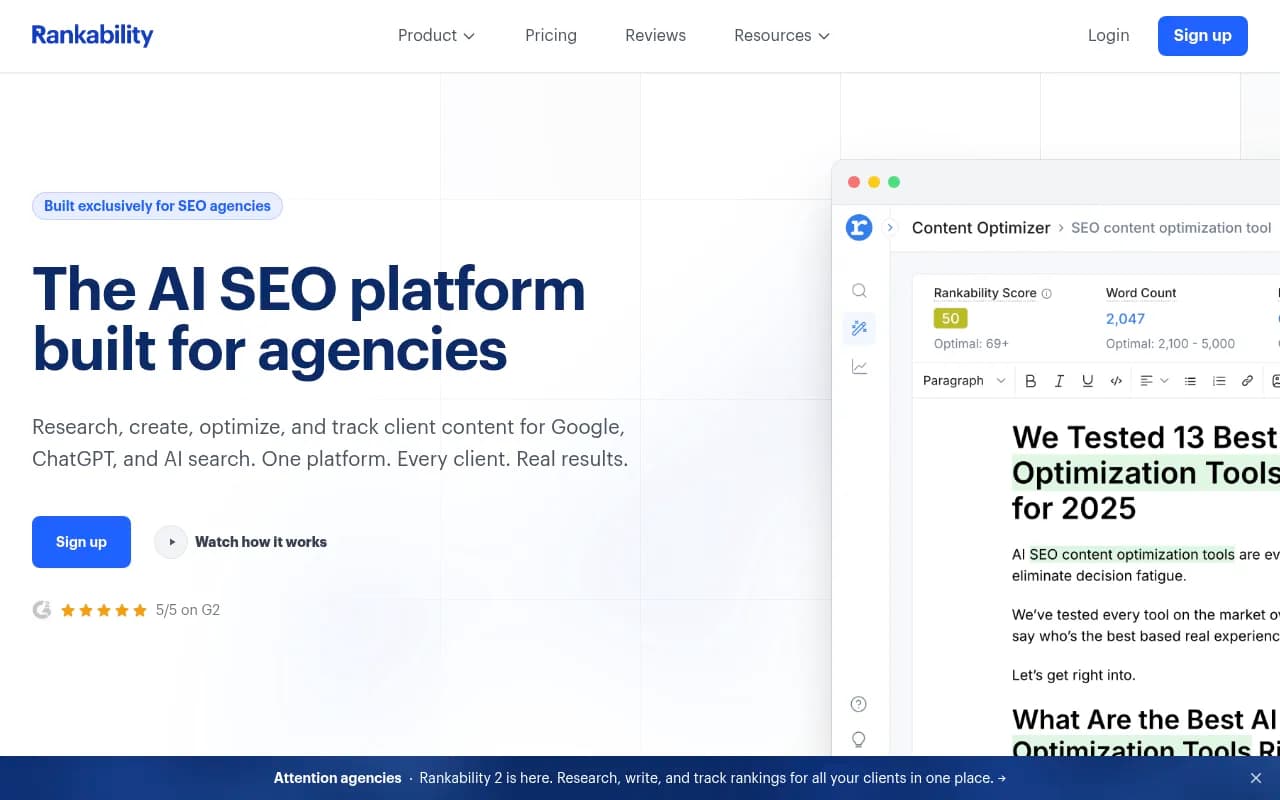
| Rankability | Agency-focused | Multi-client | Google + AI search | SEO + AI optimization | Custom pricing |
| Semrush | Limited AI branding | Multi-project | Fixed prompts, AI Overviews | Traditional SEO tools | $139.95/mo |
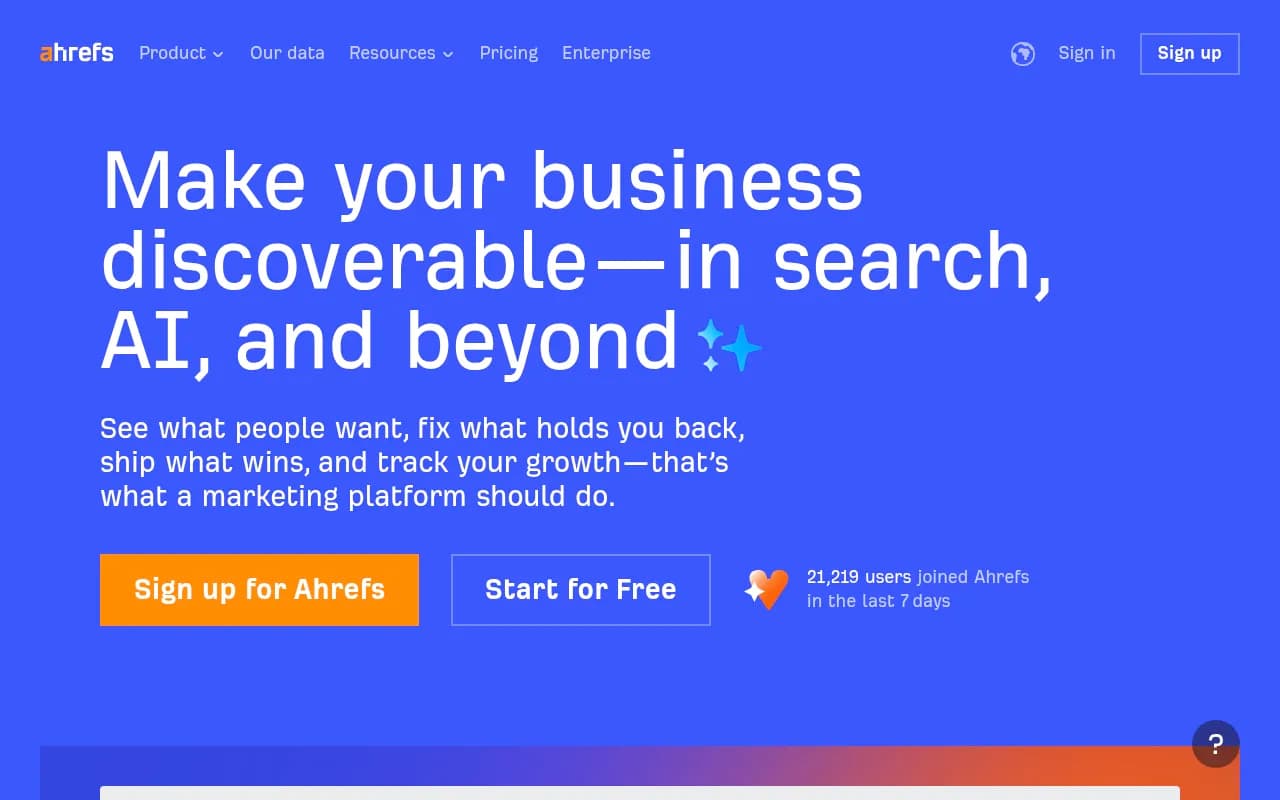
| Ahrefs Brand Radar | No white-label | Multi-brand | Fixed prompts | None | Part of Ahrefs |
Promptwatch: the only platform that closes the action loop
Most agencies hit the same wall. You show clients they're invisible in AI search. They ask what to do. You say "create better content" and hope they figure it out. Then nothing changes and they blame you.
Promptwatch solves this by connecting three steps most tools treat as separate problems:
1. Find the gaps. Answer Gap Analysis shows exactly which prompts competitors are visible for but your client isn't. You see the specific content their website is missing -- the topics, angles, and questions AI models want answers to but can't find on their site. This isn't vague "create more content" advice. It's a list of specific articles to write.
2. Create content that ranks in AI. The built-in AI writing agent generates articles, listicles, and comparisons grounded in real citation data from 880M+ citations analyzed. This isn't generic SEO filler. It's content engineered to get cited by ChatGPT, Claude, Perplexity, and other AI models. You're not guessing what works -- you're using data from what already works.
3. Track the results. See visibility scores improve as AI models start citing the new content. Page-level tracking shows exactly which pages are being cited, how often, and by which models. Close the loop with traffic attribution (code snippet, GSC integration, or server log analysis) to connect visibility to actual revenue.
This cycle -- find gaps, generate content, track results -- is what makes Promptwatch an optimization platform instead of another tracker. Most competitors stop at step one.
Additional capabilities that support agency workflows
AI Crawler Logs. Real-time logs of AI crawlers (ChatGPT, Claude, Perplexity, etc.) hitting your client's website. Which pages they read, errors they encounter, how often they return. Understand how AI engines discover content and fix indexing issues. Most competitors lack this entirely.
Prompt Intelligence. Volume estimates and difficulty scores for each prompt, plus query fan-outs that show how one prompt branches into sub-queries. Prioritize high-value, winnable prompts instead of guessing.
Citation & Source Analysis. See exactly which pages, Reddit threads, YouTube videos, and domains AI models cite in their responses. Know where to publish and what to optimize.
Reddit & YouTube Insights. Surface discussions that directly influence AI recommendations -- a channel most competitors ignore entirely.
ChatGPT Shopping Tracking. Monitor when your client's brand appears in ChatGPT's product recommendations and shopping carousels.
Competitor Heatmaps. Compare your client's AI visibility vs competitors across LLMs. See who's winning for each prompt and why.
Multi-language & Multi-region. Monitor AI responses in any language, from any country, with customizable personas that match how actual customers prompt.
Looker Studio Integration & API. Export data for custom reporting or build on the API for custom workflows.
Pricing: Essential $99/mo (1 site, 50 prompts, 5 articles), Professional $249/mo (2 sites, 150 prompts, 15 articles, crawler logs, state/city tracking), Business $579/mo (5 sites, 350 prompts, 30 articles). Agency/Enterprise custom pricing available.
Profound: agency mode with pitch environments
Profound positions itself specifically for agencies with an "Agency mode" that includes brand configurations and pitch environments. The pitch feature is clever: audit a prospect's AI visibility before sales calls without adding them as a paying client.
Coverage is strong: ChatGPT, Perplexity, Claude, Gemini, Grok, DeepSeek, and others. They track ChatGPT Shopping, which matters for e-commerce clients. Prompt volumes and difficulty scoring help prioritize what to optimize.
The platform lets you create AI agents, but there's no built-in content generation. You still need to figure out how to close visibility gaps yourself. For agencies that already have content production handled, this works. For agencies that want an end-to-end solution, it's incomplete.
Pricing is custom. Expect enterprise-level costs.
Profound

LLM Pulse: full white-label with custom domains
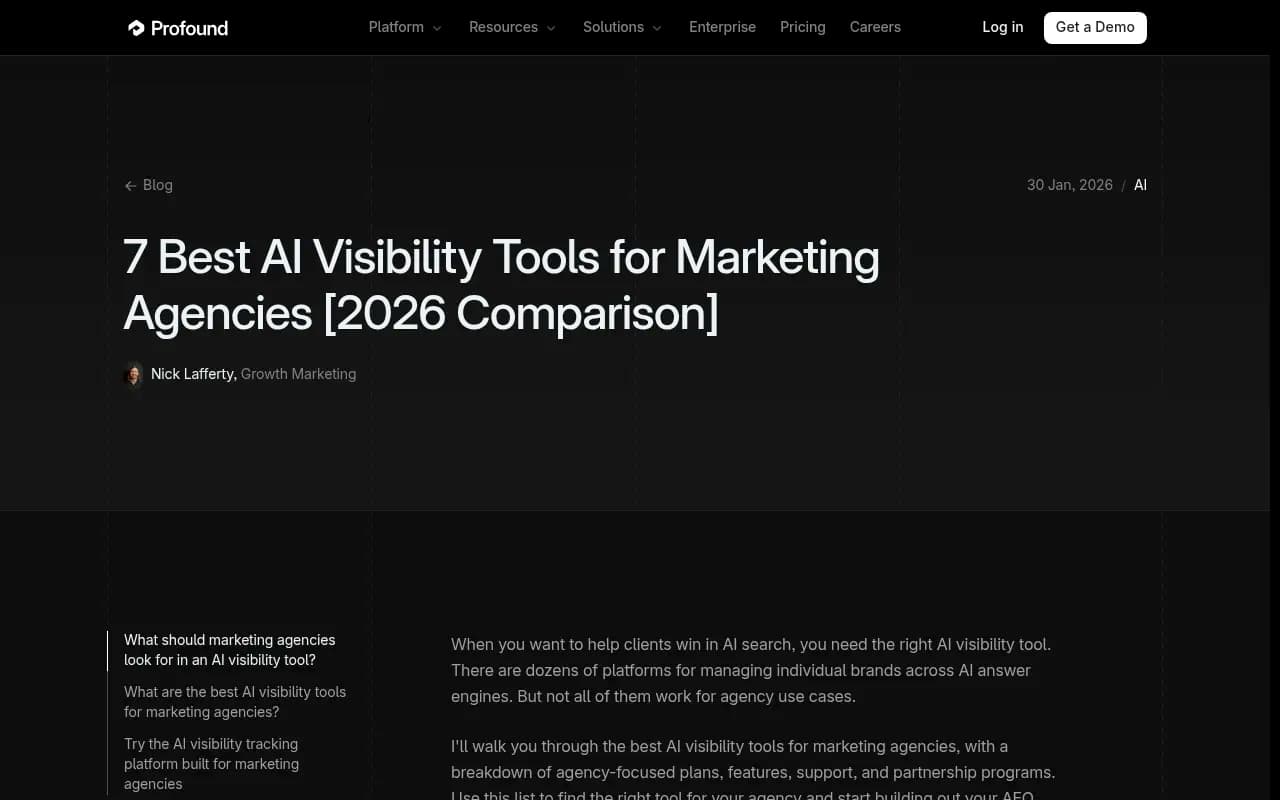
LLM Pulse offers the deepest white-label capabilities in this category. Custom domain, complete brand removal, and embeddable widgets you can drop into your own client portals. If client-facing branding matters more than anything else, this is the top choice.
AI search coverage includes ChatGPT, Perplexity, Google AI Mode, Gemini, and AI Overviews. Multi-project support handles multiple clients cleanly. The interface is straightforward.
The gap: no built-in content optimization or generation tools. You get visibility data. You don't get help fixing the problems. For agencies with existing content workflows, that's fine. For agencies that want one platform to handle everything, it's limiting.
Pricing starts at €49/mo plus a white-label add-on fee.
Otterly.AI: basic monitoring without optimization
Otterly.AI tracks ChatGPT, Perplexity, and Google AI Overviews. The interface is clean. Reports are easy to understand. Multi-brand tracking works for managing multiple clients.
White-label capabilities are limited to logo swaps on reports. No custom domains. No embeddable widgets. The branding is surface-level.
The bigger issue: this is monitoring-only. No crawler logs. No visitor analytics. No content generation. You see where your client is invisible. You don't get tools to fix it. For agencies that only need to report on AI visibility, it's adequate. For agencies that want to deliver results, it's incomplete.
Pricing starts at $99/mo.
Otterly.AI

Peec.ai: multi-brand tracking with limited agency features
Peec.ai covers ChatGPT, Claude, and Perplexity. Multi-brand tracking lets you manage multiple clients. The data is reliable.
White-label capabilities are limited. You can customize some branding but it's not a full rebrand. No custom domains. No embeddable widgets.
Like most competitors, Peec.ai stops at monitoring. No content gap analysis. No built-in optimization tools. No AI writer. You identify problems but you're on your own to solve them.
Pricing is custom.

AthenaHQ: multi-client dashboards without content tools
AthenaHQ tracks ChatGPT, Perplexity, Claude, and Gemini. Multi-client dashboards keep accounts separated. The interface is clean and the data is accurate.
White-label capabilities include logo customization but not full rebranding. No custom domains.
The platform is monitoring-focused. You see visibility scores and citation counts. You don't get tools to improve them. No content gap analysis. No AI writer. No crawler logs. For agencies that only need to track and report, it works. For agencies that want to optimize, it's not enough.
Pricing is custom.

Search Party: consultancy-oriented with custom workflows
Search Party positions itself as an "AI automation consultancy" that engineers custom workflows. If you need highly customized solutions and have the budget for it, they'll build what you need.
AI search coverage includes ChatGPT, Perplexity, and others. The focus is on custom implementations rather than out-of-the-box features.
This is not a self-service platform. You're working with their team to build custom solutions. That makes it expensive and slower to deploy. For large agencies with complex needs and enterprise budgets, it might make sense. For most agencies, it's overkill.
Pricing is custom and likely high.
Scrunch AI: basic multi-site support
Scrunch AI tracks ChatGPT, Perplexity, and Claude. Multi-site support handles multiple clients. The data is reliable.
White-label capabilities are basic. Some branding customization but not a full rebrand. No custom domains.
Like most tools in this category, it's monitoring-only. No content optimization. No AI writer. No crawler logs. You see the problems but you don't get tools to fix them.
Pricing is custom.
SE Visible: part of SE Ranking's ecosystem
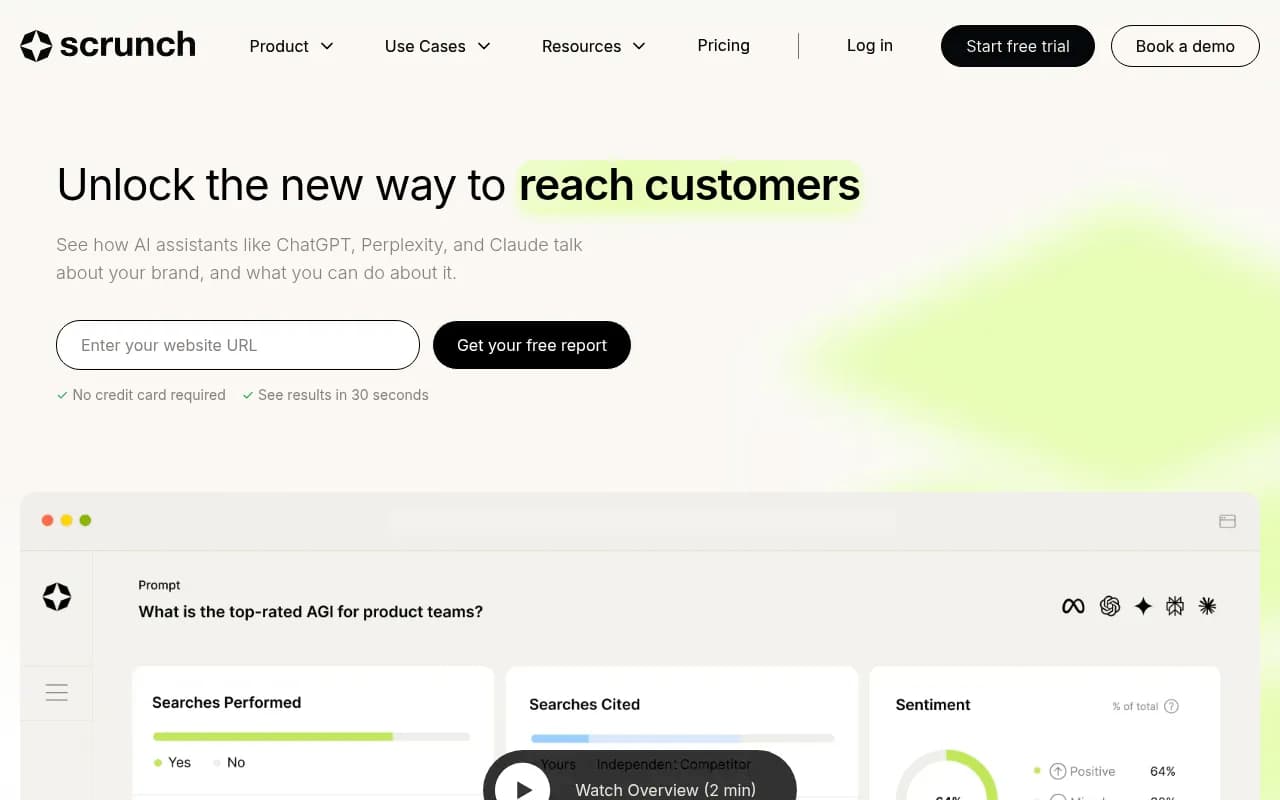
SE Visible is SE Ranking's AI visibility add-on. It tracks ChatGPT, Perplexity, and AI Overviews. Multi-brand support works for agencies already using SE Ranking.
White-label capabilities are limited to logo placement on reports. No custom domains. No embeddable widgets.
The platform shows you where you're visible and where you're not. It doesn't help you fix it. No content gap analysis. No AI writer. No crawler logs. If you're already paying for SE Ranking and want basic AI visibility tracking, it's a convenient add-on. If you want a dedicated AI visibility platform, it's not enough.
Pricing is part of SE Ranking's plans.
Rankability: agency-focused SEO + AI optimization
Rankability combines traditional SEO with AI search optimization. Multi-client management is built for agencies. Coverage includes Google search plus AI search engines.
The platform offers optimization tools, not just monitoring. This is better than most competitors. But the optimization is still manual -- you're using their tools to do the work yourself, not getting AI-generated content or automated fixes.
White-label capabilities are agency-focused but details are limited without contacting sales.
Pricing is custom.
Semrush: traditional SEO with limited AI features
Semrush is a traditional SEO platform that added AI Overviews tracking. Multi-project support handles multiple clients. The SEO tools are mature and reliable.
AI search capabilities are limited. Fixed prompts instead of custom tracking. No ChatGPT or Perplexity monitoring in the core product. AI Overviews tracking is an add-on.
White-label capabilities for AI features are minimal. The platform is built for direct use, not reselling.
If you're already using Semrush for traditional SEO and want basic AI Overviews data, it's convenient. If you need dedicated AI visibility tracking and optimization, it's not the right tool.
Pricing starts at $139.95/mo.
Ahrefs Brand Radar: fixed prompts, no white-label
Ahrefs Brand Radar tracks brand mentions in AI search. Multi-brand support works for managing multiple clients. The data is reliable.
The limitations: fixed prompts instead of custom tracking. No white-label capabilities. No content optimization tools. No AI writer. No crawler logs.
This is a basic monitoring add-on to Ahrefs' traditional SEO platform. If you're already paying for Ahrefs and want to see brand mentions in AI search, it's a convenient extra. If you need a dedicated AI visibility platform for agency work, it's not sufficient.
Pricing is part of Ahrefs subscriptions.
Pricing models decoded: how agencies actually get billed
Pricing structures vary wildly across these platforms. Understanding the model prevents surprise bills as you scale.
Per-client seats. You pay for each client account. Simple and predictable. Works well when you have a few large clients. Gets expensive fast when you're managing dozens of smaller accounts. Promptwatch, Profound, and most enterprise platforms use this model.
Usage-based credits. You pay for prompts tracked, reports generated, or API calls made. Scales naturally with usage. Can be unpredictable month-to-month. Watch for hidden costs like per-prompt fees that add up.
Flat agency plans. Unlimited clients for one price. Sounds great until you hit the hidden limits: maximum prompts per client, maximum reports per month, or throttled API access. Read the fine print.
White-label add-ons. Some platforms charge extra for white-label features. LLM Pulse's base price is low but the white-label add-on increases the real cost. Factor this in when comparing.
Custom enterprise pricing. "Contact sales" usually means $1,000+/mo minimum. Expect annual contracts. Negotiation is possible but time-consuming. Profound, Search Party, and most enterprise platforms use this model.
What to ask before you buy
Before you commit to a platform, ask these questions:
Can I embed this in my own client portal? If you're building a branded client experience, embeddable widgets matter more than standalone dashboards.
What happens when a client churns? Do you lose access to historical data? Can you export reports? Some platforms lock you in.
How much does white-labeling actually cost? Is it included or an add-on? Can you use your own domain or just customize colors?
What's included in content optimization? Monitoring-only tools are cheaper but leave you stuck. Platforms with built-in content generation cost more but deliver more value.
How many AI models do you actually need to track? ChatGPT and Perplexity are essential. Claude and Gemini matter for some industries. Grok and DeepSeek are nice-to-have. Don't pay for coverage you won't use.
Can you track Reddit and YouTube? These platforms directly influence AI recommendations. Most tools skip them. The ones that include them have a real advantage.
What's the real cost at scale? Calculate the price for 10 clients, 20 clients, 50 clients. Per-seat pricing that looks cheap for one client can get expensive fast.
The bottom line for agencies
If you only need to monitor AI visibility and report to clients, most tools in this category will work. Otterly.AI, Peec.ai, and SE Visible are adequate for basic tracking.
If you want to actually improve your clients' AI visibility -- not just report on it -- the field narrows fast. Promptwatch is the only platform that combines monitoring with content gap analysis and AI-powered content generation. You find the problems and fix them in one platform.
For agencies with enterprise budgets and complex custom needs, Profound or Search Party might make sense. For agencies that prioritize white-label branding above everything else, LLM Pulse offers the deepest customization.
For everyone else, Promptwatch delivers the best combination of features, pricing, and actual results. You're not just tracking AI visibility. You're improving it.