Key takeaways
- Nearly half of industrial buyers (48%, up from 25% in 2024) now use AI to research suppliers before contacting anyone, per RH Blake's 2026 manufacturing buying journey research, and 81% already have a shortlist before a vendor hears from them.
- AI engines cite mid-authority domains, not just giants. Promptwatch's August 2026 domain-rank data shows DR 46-75 sites earned nearly half of all ChatGPT citations, while DR 91-100 sites fell to roughly 3% — a manufacturer with a decent technical site can compete with McMaster-Carr or Grainger for specific queries.
- PDF spec sheets are close to invisible to AI crawlers. Structured HTML with schema markup is what gets cited; markdown mirrors of spec pages are a waste of effort since markdown accounts for just 0.05% of AI search citations.
- Third-party marketplaces, distributor pages, and review sites often out-cite manufacturer-owned domains, based on automotive-industry citation data from Promptwatch — don't neglect your presence on industry directories.
- No single tool does everything. Pick based on whether you need narrow ChatGPT tracking, the widest multi-engine coverage, or an execution layer that actually fixes the gaps it finds — Promptwatch is the strongest option if you want all three in one place.
Why industrial buyers are already asking AI before they ask you
A procurement engineer used to type "5-axis titanium CNC AS9100D supplier" into Google, click through ten blue links, and build a shortlist manually. Now a growing share of them just ask ChatGPT or Gemini the same question and get three names back, with no guarantee your name is one of them.
Forrester's 2026 Buyers' Journey Survey, covering nearly 18,000 global business buyers, found that 94% of B2B buyers used AI somewhere in their last purchase process. More specific to this industry, RH Blake's 2026 manufacturing buying journey research puts the number of industrial buyers using AI to research suppliers at 48% in the past 90 days, nearly double the 25% figure from 2024. Eighty-one percent already had a shortlist before contacting a single vendor.
Here's the part that should worry procurement marketers more than the adoption number: average AI trust scores among industrial buyers sit at just 4.9 out of 10. Buyers don't fully trust what the chatbot tells them, so 43% say they "often or always" seek independent, third-party verification. That means being cited isn't enough on its own — you also need to show up in the sources buyers use to double-check the AI's answer: review sites, distributor catalogs, trade publications, and comparison content that isn't yours.
The queries themselves look different from generic B2B search too. Industrial buyers ask capability- and certification-specific questions — "who does 5-axis titanium CNC with AS9100D?" or "ISO 13485 contract manufacturer with 4-week lead time?" — rather than broad category terms. That changes what you need to track and optimize for; a generic "best CNC machining companies" prompt tells you less than ten narrower capability queries would.
What makes manufacturing different from SaaS or ecommerce visibility
Most AI visibility tools were built with SaaS and consumer brands in mind. A few things about industrial content break those assumptions.
Spec sheets live in PDFs, and AI can't read them like a buyer does
AI crawlers convert pages to plain text before a model processes them. If your product attributes, tolerances, and material grades live inside a PDF datasheet rather than structured HTML, the crawler often just doesn't get that data. Industry commentary from Acro Commerce notes that spec sheets become "the most-cited content type per page" once manufacturers expose that data as structured HTML and schema markup instead of leaving it locked in a downloadable file. One Reddit test from r/TechSEO found that pages relying heavily on JavaScript rendering are effectively invisible to roughly half of AI crawlers — a direct risk for manufacturers with JS-heavy configurators or interactive spec tables.
You don't need DR 90 to get cited
Promptwatch's citation-share-by-domain-rank data for August 2026 found domains in the DR 46-60 and DR 61-75 buckets together captured roughly 46% of ChatGPT citations, while the very top tier, DR 91-100, dropped from about 7% in week one to roughly 3% by mid-month. For manufacturers whose domain rank will never touch what a Fortune 500 distributor has, this is good news: a focused, well-structured technical page with real specificity beats a generic page on a bigger domain.
Markdown doesn't help AI search visibility, whatever you've read
A few vendors push "AI-friendly" markdown versions of product pages as a visibility hack. Promptwatch's research on markdown in AI search found HTML accounts for 99.94% of AI search citations versus just 0.05% for markdown files, a roughly 2,000:1 ratio. Markdown matters for AI coding agents like Claude Code, not for AI search citations. Put the effort into clean HTML structure and semantic markup instead.
Third-party listings often beat your own site
There's no manufacturing-specific citation dataset yet, so the closest proxy is Promptwatch's automotive industry data for August 2026: marketplace and listing sites combined held 14.65% of all ChatGPT citations in that category, and review/research sites held 12.62%, while manufacturer-owned sites combined captured only 7.92%. Even a single dealership-level domain cracked the top 31. The lesson for industrial brands: your presence on industry marketplaces, distributor catalogs, and review platforms matters as much as your own spec pages, sometimes more.
How-tos and documentation are gaining ground fast
Promptwatch's citation-type tracking for August 2026 shows how-to content on ChatGPT more than doubled, from 4.3% in week one to 9.1% in the last nine days of the month, and documentation rose from 3.3% to 8.2%. Meanwhile social posts collapsed from 4.4% to under 1% after August 14, the same day Reddit's citation share in ChatGPT crashed from roughly 4% to 0.5%. For industrial content teams, that means application guides, installation documentation, and technical comparison pages are a better bet right now than forum engagement or social posting.
Comparison: AI visibility tools worth considering for industrial brands
| Tool | Engine coverage | Content/action layer | Entry pricing | Best for |
|---|---|---|---|---|
| Promptwatch | ChatGPT, Gemini, Claude, Perplexity, Grok, DeepSeek, Mistral, Copilot, AI Overviews, AI Mode, AI coding agents | Content Agents, Unified Actions, Agent Chat, CMS publishing | $95/mo | Manufacturers who want monitoring and automated remediation in one platform |
| Rankscale | 17+ engines including niche ones | Recommendations only, no content engine | ~€20/mo | Widest engine coverage on a budget |
| Gauge | 6 models on Growth, Claude/Grok on Enterprise | Built-in content engine and audits | $599/mo | Teams wanting conversational analysis tied to GA4/GSC data |
| Peec AI | 3 engines on Starter, more on Enterprise | Monitoring and analytics only | ~$100/mo | Smaller teams happy with monitoring alone |
| Profound | ChatGPT-only on Starter, multi-engine at $399+ | "Agents" remediation layer | $99/mo | Enterprise industrial brands with budget to match |
| Scrunch AI | 4 platforms on Core, more at Enterprise | Site audits, AI bot traffic tracking | $250/mo | Teams that also need persona/funnel modeling |
| Otterly AI | 4 platforms, 15 prompts on Lite | None | $29/mo | Smallest manufacturers just starting to monitor |
| Semrush AI Visibility Toolkit | Bundled into Semrush One | Keyword tracking crossover | $199/mo | Manufacturers already paying for Semrush |
Tool-by-tool notes for industrial teams
Promptwatch
Promptwatch is the one tool on this list built to do more than tell you a gap exists. It shows AI crawler logs for ChatGPTBot, ClaudeBot, PerplexityBot, and 400+ other bots hitting your site, which matters directly for manufacturers whose spec libraries and PDF datasheets may be getting crawled incorrectly or not at all. Pair that with citation analytics broken down by content type and domain authority, and you can see exactly which of your product pages, how-to guides, or documentation pages are actually earning citations, not just guess.
What separates it from most of the monitoring-only tools on this list is the action layer. Content Agents can plan, write, and publish GEO-optimized capability pages or application guides straight to Webflow, Framer, or WordPress on a schedule, with human review built in if you want it. Unified Actions turns the data into a prioritized to-do list instead of a dashboard you have to interpret yourself. For a manufacturer trying to close the gap between "we found 40 queries where we're invisible" and "we published content that fixed 15 of them," that matters more than another monitoring chart.

Promptwatch also tracks Reddit and YouTube citations specifically, which is useful given how fast forum citation share is dropping in ChatGPT. And because it's built on real UI monitoring across 4.5B+ citations analyzed rather than API sampling, the numbers reflect what buyers actually see.
Rankscale
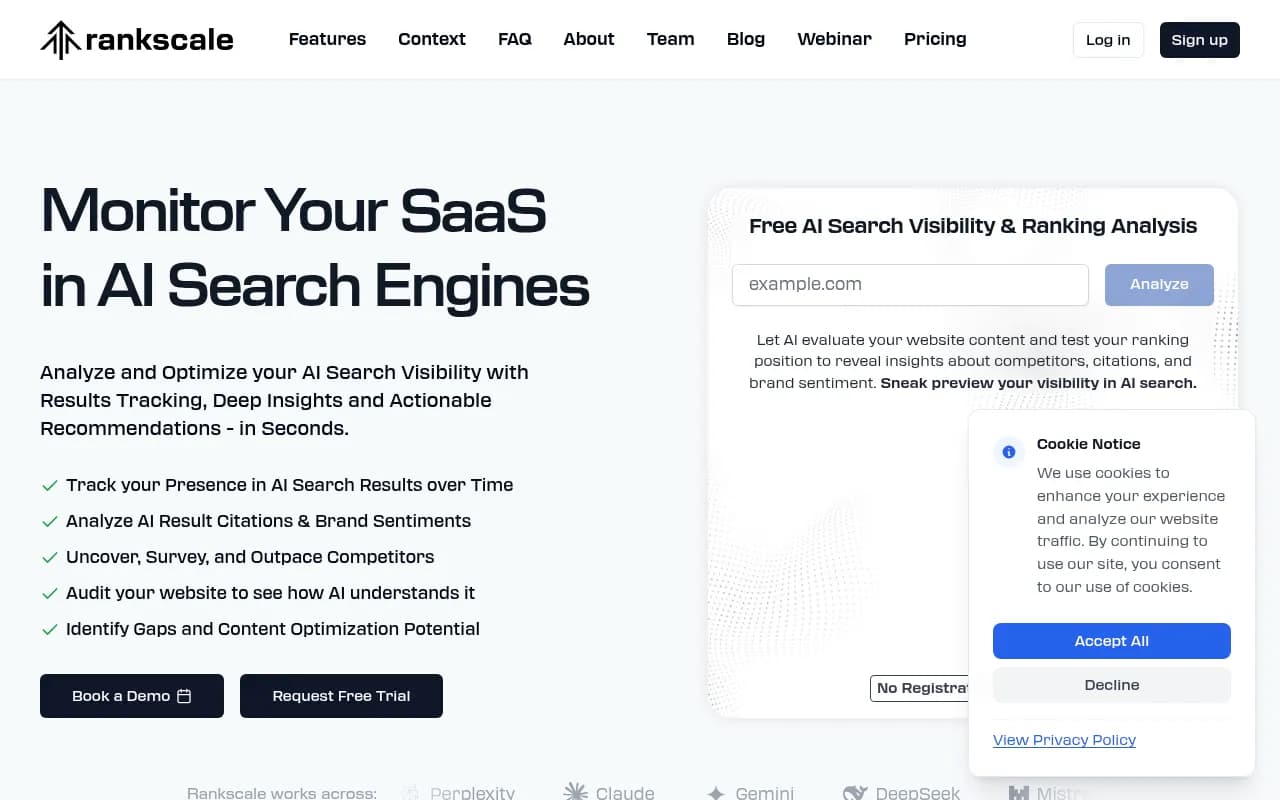
If budget is the constraint and breadth is the priority, Rankscale tracks 17+ engines including less common ones like DeepSeek and Mistral, plus 240+ countries. Page audits check crawlability, which is handy for a manufacturer with a large spec library to clean up. The catch is the credit-based pricing model, which is harder to budget against than flat prompt allowances, and there's no execution layer, just recommendations you then have to act on yourself.
Gauge
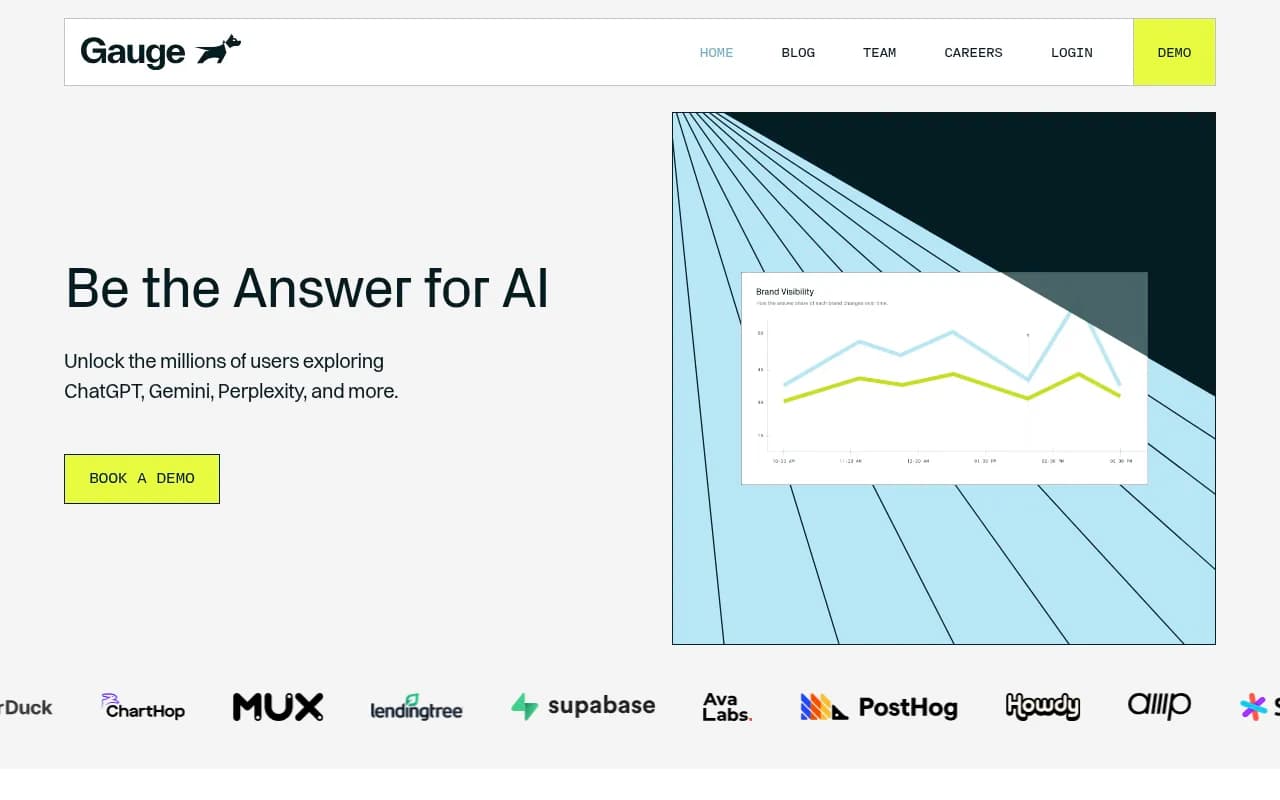
Gauge includes "Ask Gauge," a conversational agent that cross-references visibility data against GA4, GSC, and ad data, plus a built-in content engine and unlimited domain and competitor tracking on every plan. At $599/mo for the Growth tier it's not cheap, and Claude and Grok coverage require Enterprise, but the combination of analysis and execution is closer to what a mid-size manufacturer actually needs than a pure tracker.
Peec AI, Profound, Scrunch AI, Otterly AI
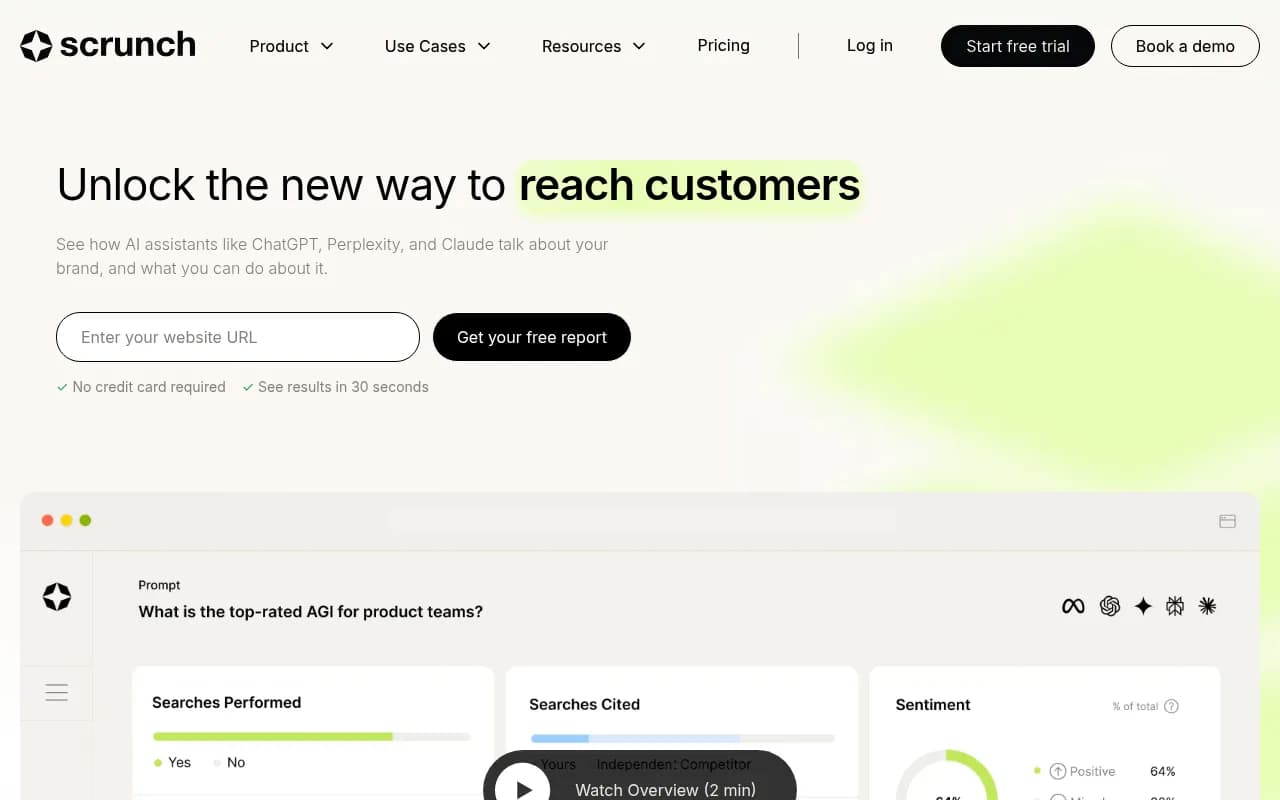
These four cover a spread of budgets and depth. Peec AI and Otterly AI are monitoring tools without a content or remediation layer, fine if your team already has a content engine elsewhere and just needs the data. Profound is built for enterprise scale with heavy funding behind it, and its "Agents" feature adds some remediation, but multi-engine tracking starts at $399/mo. Scrunch AI, now owned by Sitecore, adds persona and funnel modeling useful for longer industrial sales cycles, though Claude and Gemini coverage sit behind an Enterprise tier.

Profound

Otterly.AI

If you're already on Semrush or AthenaHQ
Manufacturers who run Semrush for traditional SEO can bolt on its AI Visibility Toolkit starting at $199/mo rather than adopting a separate platform. AthenaHQ is a smaller, less-funded option with an "Action Center" that gives it some remediation capability, priced lower than Profound or Scrunch, worth a look for budget-conscious teams that still want some action layer.

Fixing the spec-sheet problem before you track anything
Buying a tracking tool before fixing the underlying content problem is backwards. If your product attributes live in PDFs, no tool will show citations climbing because there's nothing for AI crawlers to cite correctly. Before or alongside rolling out visibility tracking:
- Convert core spec tables into structured HTML with schema markup for product attributes, certifications, and compliance terms, rather than leaving them embedded in PDFs.
- Audit robots.txt and CDN/WAF rules for all major AI crawlers, not just OpenAI's. Meta's crawler share of tracked AI requests jumped from about 2% to nearly 38% between mid-July and early August 2026, a sign crawler traffic is shifting fast and manufacturers who only whitelisted GPTBot may be blocking a growing share of AI discovery.
- Check whether product configurators or spec tables depend on client-side JavaScript rendering. If they do, assume a meaningful chunk of AI crawlers never see that content.
- Make sure your presence on distributor catalogs, industry marketplaces, and trade review sites is current — automotive-industry data suggests these third-party sources often out-cite manufacturer-owned pages.
One agency case study, cited by Radiant Elephant, describes a multi-vertical B2B manufacturer that went from Domain Rating 21 to 35 over seven months while competitors sat at DR 60-80 with far larger marketing budgets, and still reached the #1 position in Google AI Overview for its category, ahead of FDA.gov and Fortune 100 rivals. The tactics were entity-rich schema tied to certifications, a large volume of specialized technical content, and continuing GEO work through a full site redesign rather than pausing it. It's one case study, not a universal formula, but it matches the pattern in the data: structure and specificity beat raw domain authority.
Choosing based on where you are now
If you're a smaller manufacturer just starting to understand whether AI engines even mention you, a cheap monitoring tool like Otterly AI or Rankscale gets you visibility into the problem without a big commitment. If you already know you have gaps and your bottleneck is getting technical content published fast enough to fill them, that's where Promptwatch's combination of crawler logs, citation analytics, and Content Agents earns its higher price tag versus a pure tracker. If you're an enterprise industrial brand with a dedicated content team and budget to match, Profound or Scrunch AI's enterprise tiers may fit better given their scale and funding.
For teams that want to browse more options before deciding, the GEO software directory at bestgeosoftware.com lists additional platforms worth comparing side by side.
Whatever you pick, treat the tool as a way to find and prioritize gaps, not a substitute for fixing the structural issues, PDFs, JS rendering, missing schema, that keep AI crawlers from reading your content correctly in the first place. Tracking a problem you haven't fixed just produces a more detailed report of the same problem.