Key takeaways
- Cheap trackers like Otterly.AI ($29/mo as listed by Clarity) answer "was I mentioned?" and not much else. That is enough for some small businesses and not enough for others.
- A visibility score alone doesn't tell you what to do on Monday. Look for tools that show which sources AI trusts instead of you, and whether your changes moved anything.
- Several of the "best of" lists ranking these tools are written by vendors who rank themselves first. Treat those with suspicion, including mine where relevant.
- Social platforms matter differently per engine: YouTube for Google AI Overviews, Reddit and LinkedIn for Perplexity, and your own site for ChatGPT.
- Pick based on whether you need to watch, or to fix. Watching is cheap. Fixing costs more, but it is where results come from.
A note on "tried and tested"
I want to be upfront about this. The research behind this guide comes from reading vendor pricing pages, comparing independent roundups, and cross-checking claims. It is not a six-week hands-on bake-off of every product. Where I have solid numbers I give them, and where pricing wasn't verified (Peec AI, ZipTie, Rankscale, Scrunch, and current Promptwatch tiers beyond what's on its pricing page) I say so and point you to the vendor's page.
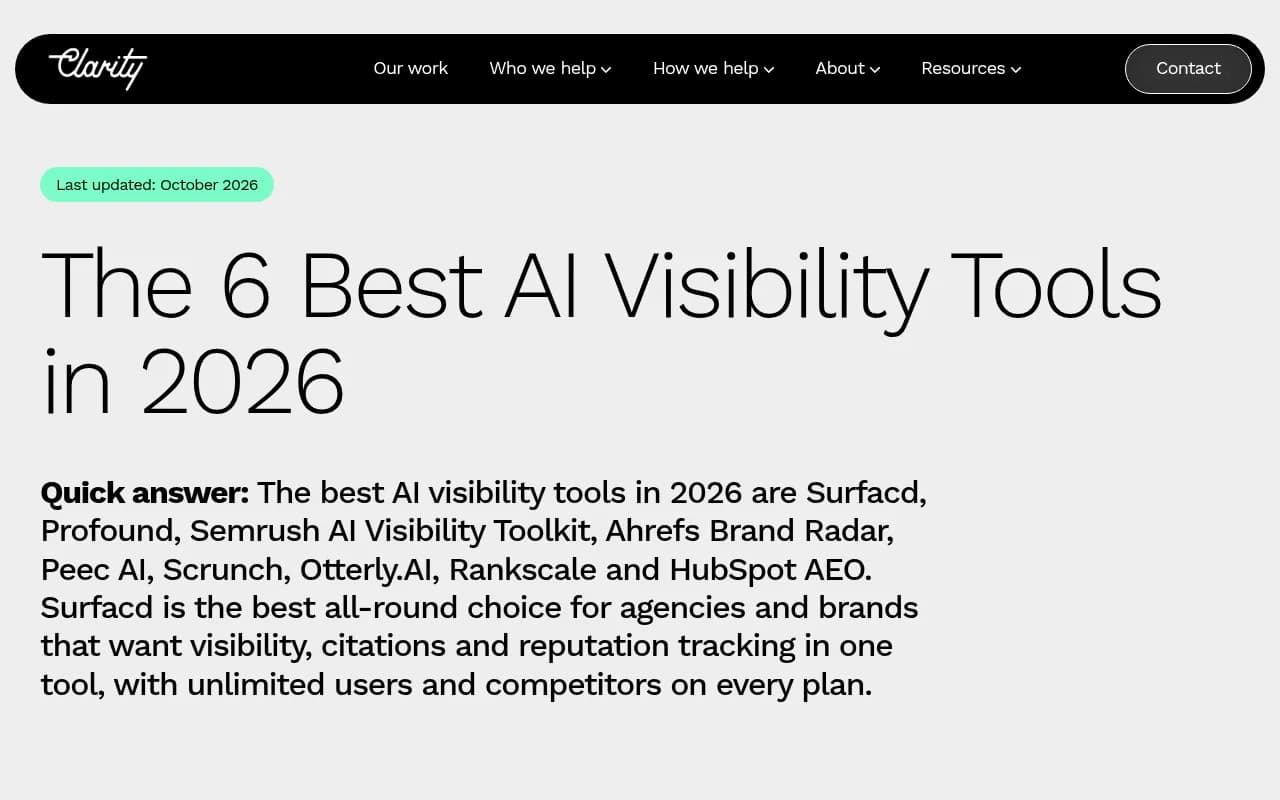
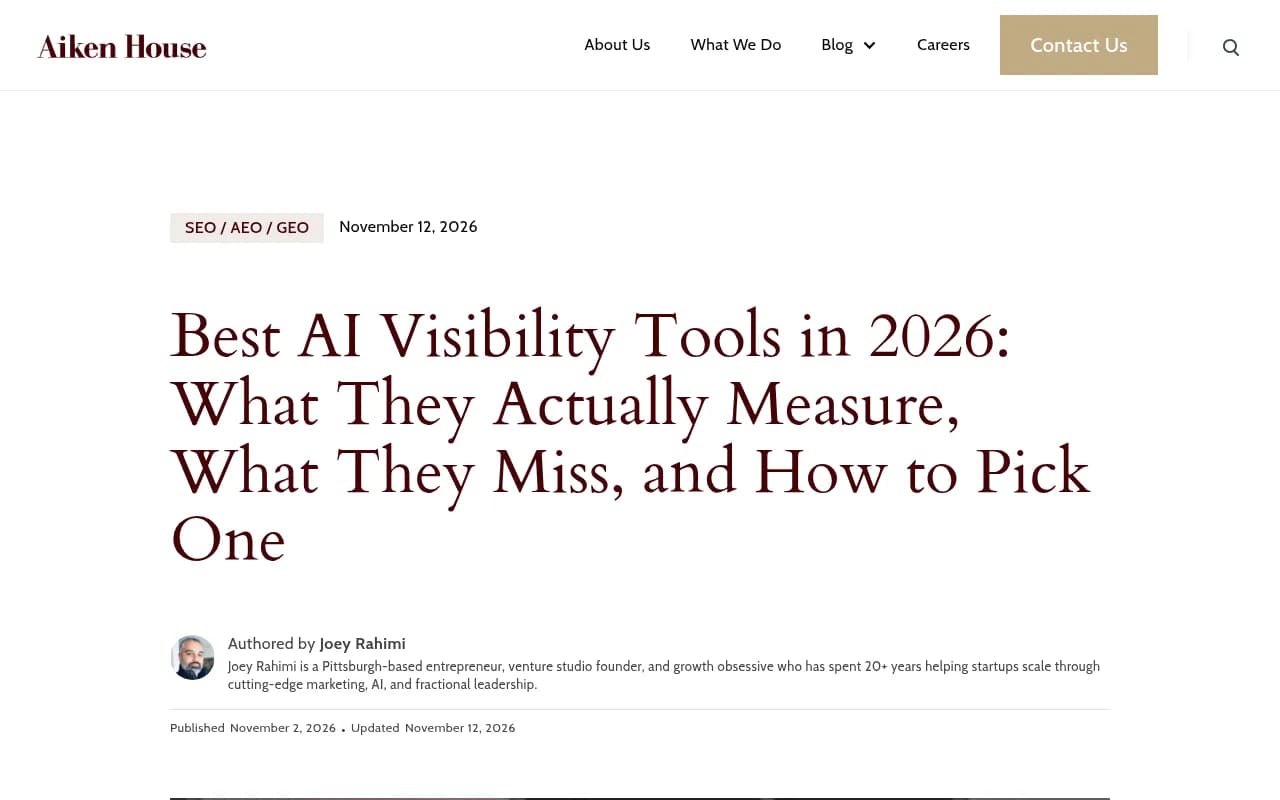
That honesty matters because the category is full of biased lists. Guzu ranks Guzu first. Ayzeo ranks Ayzeo first. Surfacd, through its Clarity-published roundup, ranks Surfacd first. That is not a crime, but it means you should read those rankings as marketing. Aiken House, which says it takes no affiliate fees and uses these tools for client work, is a more neutral voice, and Zapier discloses that it may earn commissions.
What AI visibility tools actually do
Almost every tool in this category works the same way. You give it a list of prompts, meaning the questions your customers ask AI engines. It runs them on a schedule across ChatGPT, Gemini, Perplexity, Copilot, Google AI Overviews and sometimes AI Mode, then records what comes back: whether you were mentioned, where, with what tone, and which sources were cited.
That is the commodity part. The differences show up in four places:
- Whether the data comes from the real consumer interfaces or from APIs. The two can produce different answers and different citations.
- Whether the tool explains why you're missing, not just that you are.
- Whether it helps you fix the gap, or leaves the work to you.
- Whether it ties any of this to actual traffic and customers.
For a small business, point four is the one people skip and later regret. A dashboard that says you're visible in 34% of answers is a vanity number unless you can connect it to leads.
What small businesses should care about
Enterprise buyers worry about SSO, audit logs and procurement. You probably don't. Your list is shorter:
- Price you can sustain. A tool you cancel after two months because it costs too much has taught you nothing.
- Prompt limits. 25 prompts covers a brand and a few competitors. It does not cover a service business operating in three cities.
- Local coverage. If you are a dentist, plumber or restaurant, "near me" prompts matter more than global brand queries.
- Actionable output. Nobody at a five-person company has time to interpret a heatmap.
- Seat limits. Some tools cap users, which is annoying when your freelancer needs access.
What the data says about where AI gets its answers
Before choosing a tool, it helps to know what you are trying to move. Promptwatch Data's social media citations report for October 11 to November 9, 2026 found that social platforms make up 13.16% of Google AI Overviews citations, 1.94% of Perplexity's and 0.64% of ChatGPT's. AI Overviews cites social media about 20 times as often as ChatGPT.
The engine-by-engine detail is useful for planning:
- In AI Overviews, YouTube rose from 4.28% in October to 6.71%, more than the other six platforms combined.
- In ChatGPT, Reddit is back on top but at just 0.40%, with LinkedIn at 0.20%.
- In Perplexity, Reddit sits at 0.82% and LinkedIn at 0.66%.
The report's own advice is to put YouTube first if your buyers search on Google, focus on Reddit and LinkedIn for Perplexity, and not rely on social posts to reach ChatGPT, where your own site and its listicles, guides and comparisons matter more. That last point is good news for small businesses: you control your own site.
One more data point on how ChatGPT searches. Promptwatch's ChatGPT query fanouts report shows average queries per response sliding from 2.15 in early December to about 1.84 by early March, with queries getting shorter. Its practical advice: write headings that read like search queries, put the entity and category first in titles, and build focused pages for sub-questions like pricing and comparisons.
The tools, compared
Prices below are entry prices as listed on the sources I reviewed. They change often, so confirm on each vendor's page.
| Tool | Entry price (as listed) | Free trial | Best for | Helps you fix gaps? |
|---|---|---|---|---|
| Otterly.AI | $29/mo | Yes | Tightest budgets, basic monitoring | Limited |
| HubSpot AEO | $50/mo | Free for 25 prompts | Existing HubSpot users | Limited |
| Surfacd | £59/mo | 7 days | Visibility plus reputation | Some |
| Semrush AI Visibility Toolkit | $99/mo | No (Semrush plans: 7 days) | Teams already on Semrush | Some |
| Ahrefs Brand Radar | $199/mo on top of an Ahrefs plan | No | Large-scale prompt research | Limited |
| Peec AI | Roughly 70 EUR/mo billed annually (per Ayzeo, unverified) | Check vendor | Clean multi-engine tracking | Limited |
| Promptwatch | Essential $95/mo | 7-day trial | Monitoring plus content and measurement | Yes |
| Profound | Custom | 7 days | Large enterprises | Some |
Otterly.AI
Otterly.AI is the name that comes up everywhere when the question is "cheapest serious option." Clarity lists it at $29/mo covering ChatGPT, AI Overviews, Perplexity and Copilot, and Zapier picks it for affordability. If you just want to know whether you show up and how that changes week to week, it does that.
Otterly.AI

What it won't do is tell you much about why, or help you fix anything. That's fine if you have an SEO person who will take the data and run with it. It is frustrating if you don't.
Peec AI
Peec AI gets recommended for clean multi-engine tracking and, per Zapier, smart suggestions. Ayzeo's roundup quotes unlimited seats from 70 EUR/month billed annually, but that comes from a competitor's list, so check the current price yourself.

HubSpot AEO
If your marketing already lives in HubSpot, the $50/mo entry price and free 25-prompt allowance make this a low-friction place to start. Coverage on the entry plan is ChatGPT, Gemini and Perplexity per Clarity. It is a reasonable first experiment, not a deep analysis tool.
Semrush and Ahrefs Brand Radar
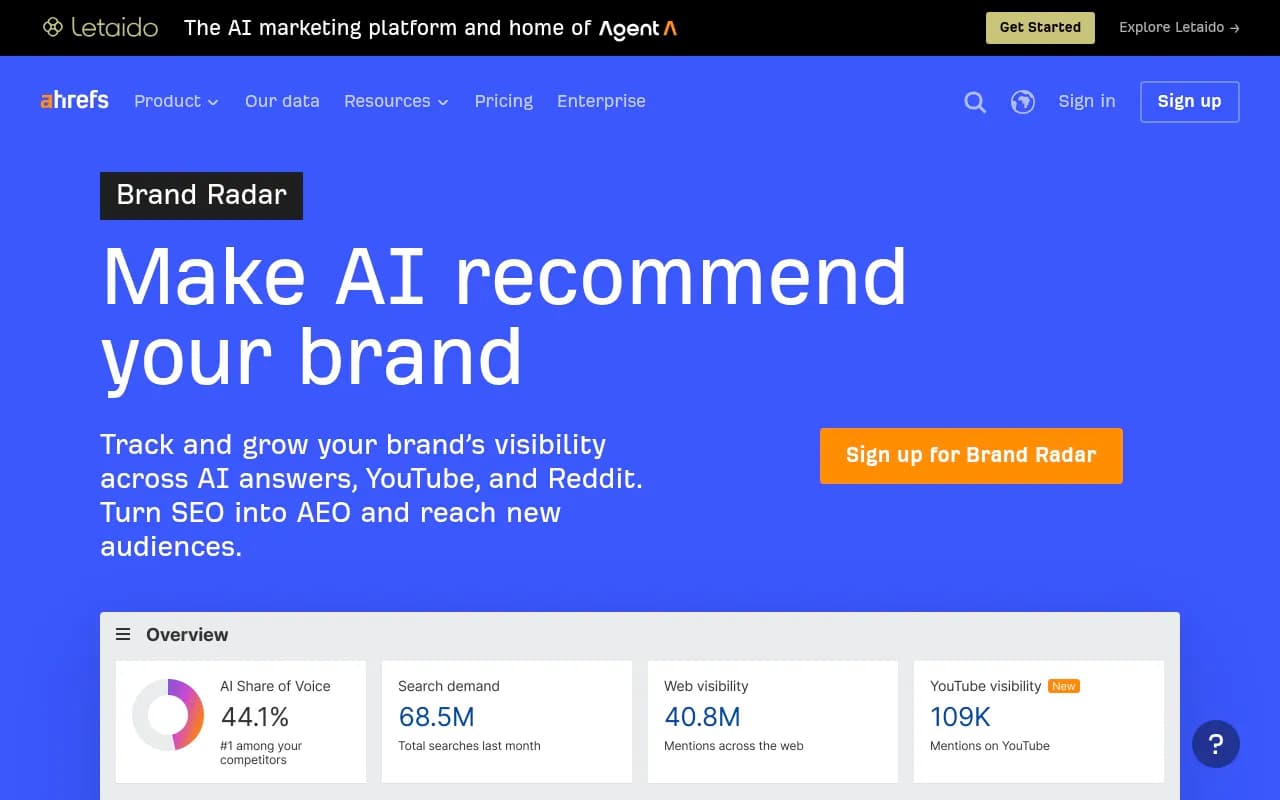
Both are SEO suites adding AI tracking. Semrush's toolkit starts at $99/mo, and Ahrefs Brand Radar is $199/mo on top of an Ahrefs plan, which makes it a poor fit for a small business that isn't already paying for Ahrefs.
If you already use one of these for classic SEO, adding the AI layer keeps everything in one login. If you don't, there are cheaper routes.
ZipTie
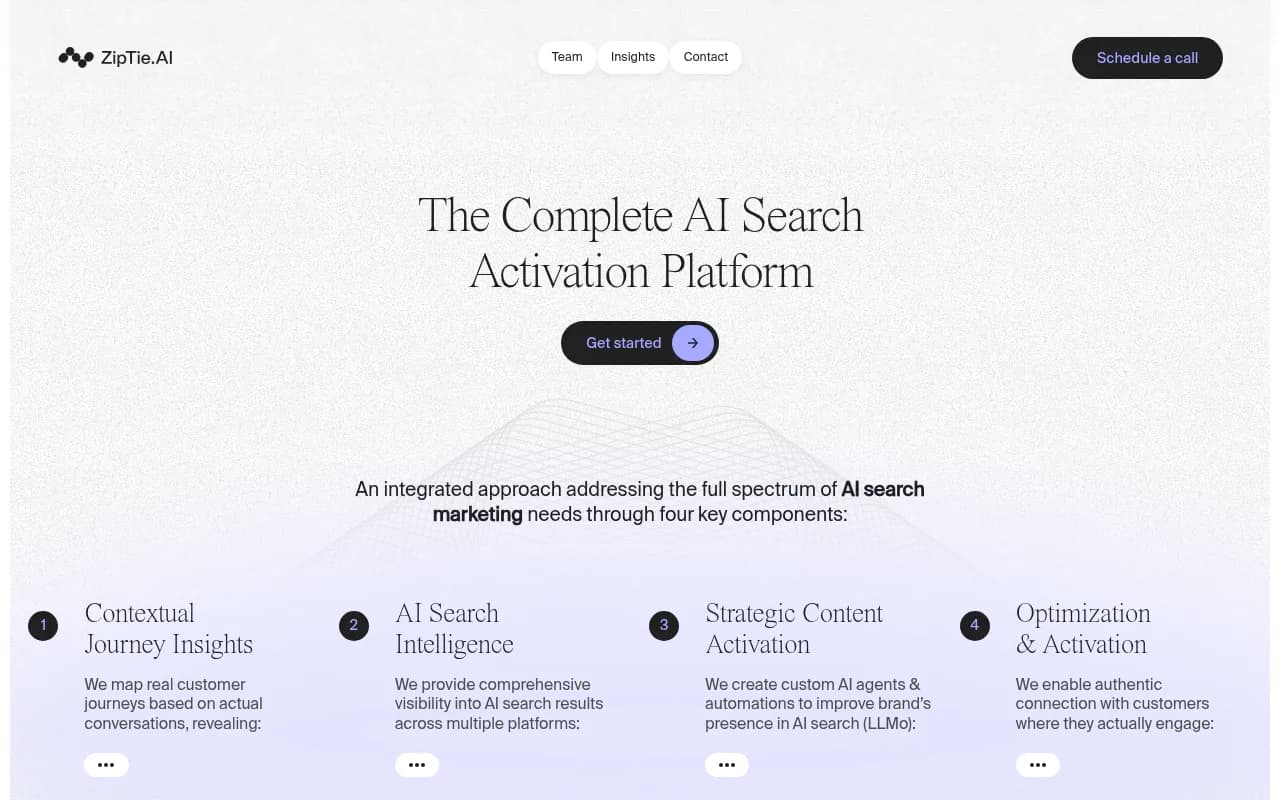
Zapier picks ZipTie for deep analysis and reporting. I haven't verified its current pricing, so check the site.
Promptwatch
Promptwatch sits at a different point in the market. Most tools in the table above stop at monitoring. Promptwatch tracks how ChatGPT, Gemini, Perplexity, Google AI Overviews, Claude and others mention and cite you, then shows where the citations come from through IP-verified AI crawler logs and content gap analysis. The Content Agent, available from the Business plan, writes and publishes the pages AI should be citing, and visitor analytics show whether any of it sends traffic.

The Essential plan is $95/mo (1 project, 50 prompts, daily tracking, country tracking, Agent Chat, Brand Narrative and visitor analytics). Professional is $245/mo and Business is $579/mo; confirm everything at promptwatch.com/pricing. There is a 7-day free trial on monthly billing, and a no-login free AI visibility report if you want a first look before paying anything.
Be realistic about fit. Essential is a monitoring-and-diagnosis plan: it doesn't include crawler logs or AEO articles, which start at Professional and up. If you only want a cheap pulse check, Otterly costs less. If you want to find the gap and then close it, Promptwatch is the one built for that loop. Local businesses should note that exact-coordinate local targeting is a Business-plan feature.
Profound
Profound is built for large enterprises with custom pricing. Aiken House also positions it for enterprise brands. A small business will probably find it more than it needs.
Profound

A decision framework
If your budget is under $50 a month
Start with Otterly.AI or HubSpot AEO (if you're in HubSpot). Use it to answer one question: does AI mention us at all for the 10 or 20 prompts our customers actually ask? Don't buy anything bigger until you know the answer.
If you can spend $100 to $250 a month
This is where the choice between watching and fixing matters. Peec AI, Semrush's toolkit, or Promptwatch's Essential and Professional tiers all live here. Pick the one whose output you will actually act on. If you have no SEO staff, favor the one that gives recommendations in plain language, not just charts.
If AI search is already driving leads
Then you need attribution. Look for crawler logs and AI-referred visitor analytics so you can see which pages get read, cited and clicked. Promptwatch covers this in-platform, and you can always lean on free options like Google Analytics for a rough picture.
Note that ChatGPT stopped sending a referrer on October 8, 2026, so tagging links with utm_source=chatgpt.com helps keep that traffic identifiable.
If you are a local business
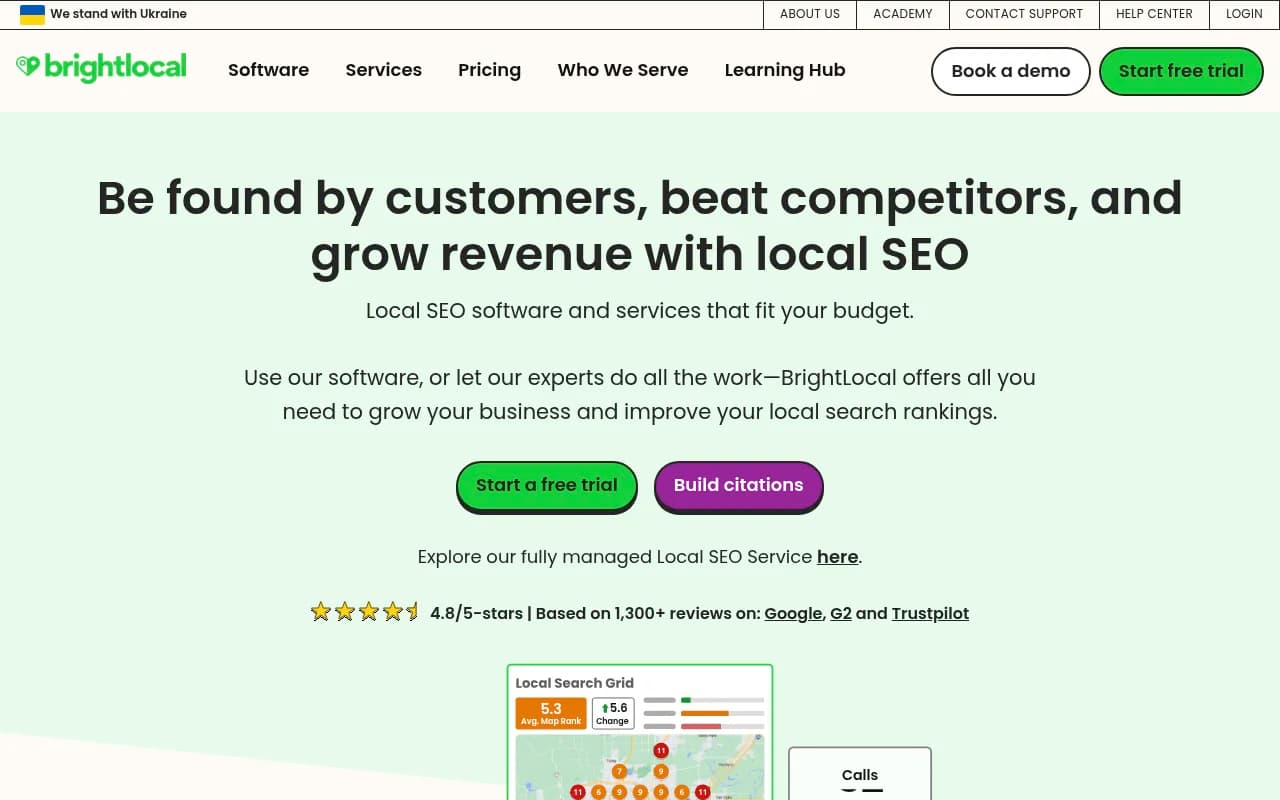
Check whether the tool can track location-specific prompts. Pair it with a local SEO tool such as BrightLocal so your listings are consistent, since AI engines often pull from the same directories and reviews.
Mistakes I see small businesses make
Buying coverage you don't need. Per-engine pricing and platform bundles can mean paying for engines your customers don't use. Check where your buyers actually ask questions.
Tracking brand queries only. Your name showing up for "[your brand] reviews" is nice. The money is in category prompts like "best accountant for freelancers in Leeds."
Treating the score as the goal. A visibility percentage is a symptom. Citations, sentiment and the pages behind them are the cause.
Ignoring their own site. Per Promptwatch Data, ChatGPT leans on websites, listicles, guides and comparisons far more than on social posts. A tracker can't fix thin pages. You have to write better ones.
Never reading the free stuff. Zapier and Aiken House both publish solid methodology notes, and Promptwatch's Academy explains metrics like Visibility Score and Share of Voice without requiring a purchase.
A sensible first 30 days
- Run a free visibility check, such as Promptwatch's free AI visibility report, to see a baseline.
- Write 15 to 25 prompts from real customer emails, call notes and reviews.
- Pick one tool from the table and start a trial, not an annual plan.
- Note which sources AI cites for your category. Those are the pages and sites you need to appear on.
- Fix one thing: a comparison page, a pricing page, a YouTube video if your buyers lean on Google.
- Re-check in two to four weeks. If nothing changed in the data, your tool or your tactic needs revisiting.
Where to look next
If this shortlist doesn't fit, the directories are bigger than any one article. The GEO software directory at bestgeosoftware.com lists dozens of options, and Promptwatch's compared platforms page lays out features side by side, bearing in mind it is written by a vendor.
Bottom line
If you want a cheap pulse check, Otterly.AI or HubSpot AEO will do. If you're already inside Semrush or Ahrefs, use their add-ons. If you need to find why AI isn't recommending you and fix it with content, then measure the result, Promptwatch is the one that closes that loop for a small team. Whatever you choose, start with a trial and a short prompt list, and judge the tool by whether it tells you what to do next.