Key takeaways
- I did not run a lab test of eight tools, and the research behind this guide doesn't include one. What follows is a comparison of eight tools worth evaluating, plus what published log studies say about ChatGPT and Claude bots.
- OpenAI and Anthropic each run three bot types: a training crawler, a search-index crawler, and a live user-triggered fetcher. Lumping them together hides what is going on.
- Different studies give wildly different bot shares because they use different methods. Vercel counted fetches, Profound measured share of traffic in an experiment, and Promptwatch uses IP-verified requests.
- Declared user agents can be spoofed. IP verification against each operator's published ranges is the fix.
- Your analytics tool can't see any of this, because bots don't run JavaScript. You need server, CDN, or edge logs.
A quick honesty note about the title
The title promises a test of eight tools. I want to be direct: the source material I had does not include a tool-by-tool test, pricing research, or hands-on trials of eight products. Inventing results would be worse than useless, because you'd make decisions on numbers that don't exist.
So this guide does two things. First, it lays out what real log studies found about ChatGPT and Claude bots, with the caveats attached. Second, it compares eight tools that are worth putting on a shortlist, based on what each one is positioned to do. Treat the comparison as a shortlist, then run your own trial against your own logs.
Why you can't see AI crawlers in your normal analytics
Google Analytics and similar tools rely on JavaScript running in a browser. AI crawlers mostly fetch raw HTML and never execute your tracking script. Rasmus from The Marketplace Guy made this point in his 7-day crawler log experiment: store owners had no idea bots were hitting their listings roughly every 17 minutes, around the clock.
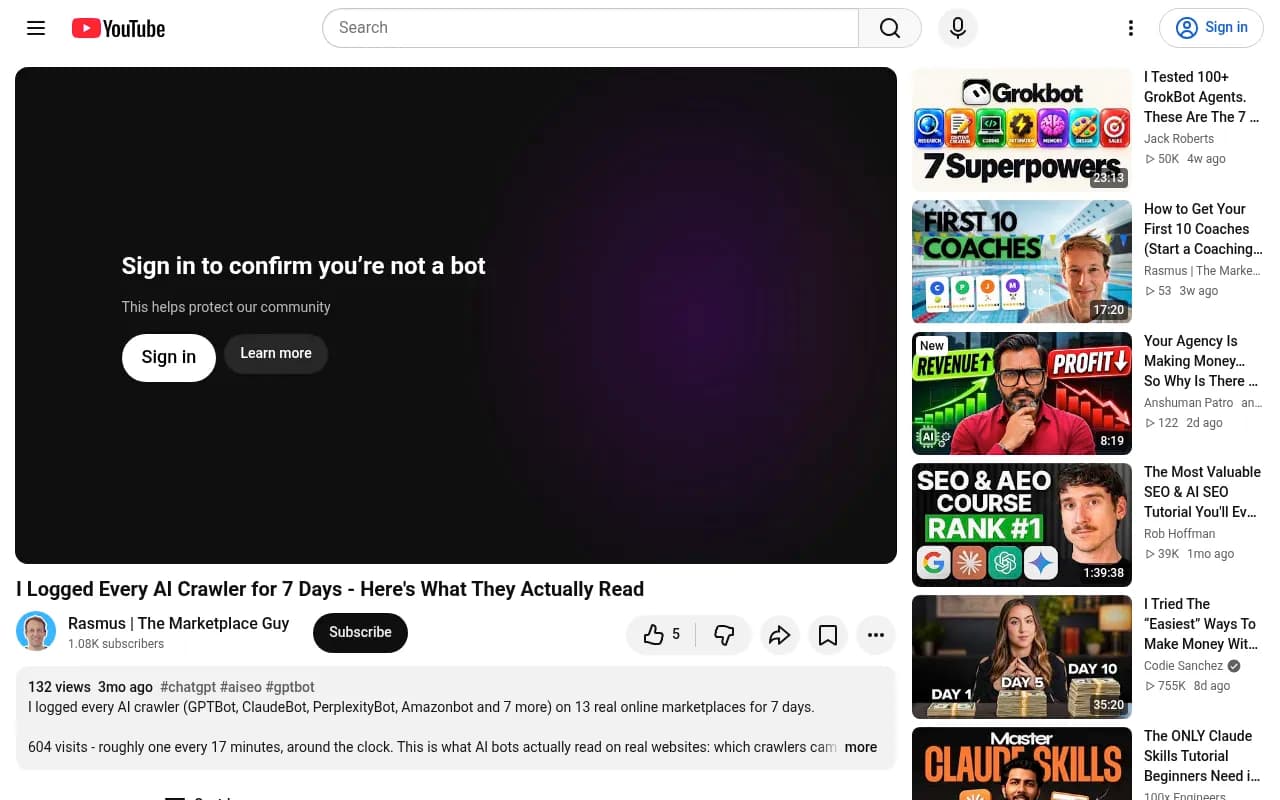
His setup: 13 marketplaces, 616 listings, logged July 22 to 28, 2026 at the server layer, with bots counted by declared user agent. That last detail matters and I'll come back to it.
The three bot types you need to separate
Advanced Web Ranking's breakdown of AI search crawlers gives the cleanest framing I've seen. Each vendor runs up to three different jobs:
| Vendor | Training crawler | Search-index crawler | Live user-triggered fetcher |
|---|---|---|---|
| Anthropic | ClaudeBot | Claude-SearchBot | Claude-User |
| OpenAI | GPTBot | OAI-SearchBot | ChatGPT-User |
| Perplexity | none | PerplexityBot | Perplexity-User |
Why this matters: blocking GPTBot in robots.txt stops training collection, but it doesn't remove you from ChatGPT search answers. If a log tool only shows you "OpenAI: 400 hits," you can't tell which of the three jobs those hits were doing. A useful tool breaks it out by bot name.
What the published logs say about ChatGPT and Claude bots
Here is the awkward part. Every study below is correct for its own sample, and they disagree. Don't average them.
| Source | Method | What it found |
|---|---|---|
| Vercel | Raw fetch counts across its network | GPTBot 569M fetches, Claude 370M, AppleBot 314M, PerplexityBot 24.4M |
| Profound | Share of traffic in a markdown vs HTML experiment, 381 pages, six sites | ChatGPT-User 73%, Meta/Facebook 20%, OAI-SearchBot 4%, ClaudeBot 2%, GPTBot 1% |
| Prometora sample | 13 marketplaces, 7 days, declared user agent | ClaudeBot 168 visits, almost 4x GPTBot; 8 bots on day one, 11 by end of week |
| Promptwatch Data | IP-verified requests, June 8 to Sept 6, 2026 | OpenAI 79.8% of verified requests in the final week, down from 94.8% in June |
Read those rows again. In Vercel's data, GPTBot leads Claude. In the marketplace sample, ClaudeBot beats GPTBot by roughly four to one. In Profound's experiment, GPTBot barely registers because user-triggered ChatGPT-User traffic dominated. Different sites, different content, different measurement. That is the whole lesson: your own logs are the only sample that matters for your own decisions.
What Claude's crawlers do
Vercel's data showed Claude spending 35.17% of its fetches on images and 23.84% on JavaScript files, even though it doesn't execute them. It also showed 34.16% of Claude's fetches landing on 404 pages. If you see lots of Claude errors in your logs, that is not unusual, but it is worth checking whether old URLs are being re-crawled.
Claude's citation-side traffic is small but growing fast. Promptwatch's Claude citation crawler data covers Dec 10, 2025 to Apr 18, 2026 and shows it growing from roughly 30 visits a day to several thousand, a 100x-plus jump, with a peak daily share of 1.73% of tracked citation crawler traffic. Over the whole 130 days the share was 0.45%. Small slice, steep curve. One naming wrinkle: the report text calls it Claude's citation crawler while the page description says Claude-User. Same thing, two labels, so check both when searching your logs.
What ChatGPT's bots do
The Profound experiment is the best argument for tracking user-triggered fetchers separately. ChatGPT-User accounted for 73% of tracked traffic. That is a person asking ChatGPT a question and the model fetching your page live. It is a much closer signal to "someone may see your content" than a training crawl is.
Profound's headline result on markdown is worth knowing too. They split 381 pages and served markdown to bots on 192 of them. Markdown pages got about one extra median bot visit over three weeks. Not nothing, but not a game changer. Promptwatch's markdown data points the same direction: markdown files are just 0.05% of AI search citations.
For the wider crawler picture, Promptwatch's AI crawler traffic report breaks verified requests down weekly by provider, and its Meta-WebIndexer report shows one bot going from about 2% to nearly 38% of tracked requests between mid-July and August 9, 2026. Bot mixes shift fast, so a baseline from last quarter is stale.
The spoofing problem most tutorials skip
The marketplace experiment counted bots by declared user agent. Anyone can send "GPTBot" in a header. Scrapers do. If your tool just matches strings, you may be counting impostors as ChatGPT.
The better method is verifying each request's source IP against the operator's published ranges. Promptwatch describes exactly this in its crawler data methodology: requests whose IP doesn't match are excluded. When you evaluate any tool below, ask one question: does it verify IPs or just read the user-agent string?
Eight tools worth shortlisting
I'm describing positioning here, not test results. Check each vendor's current pricing and feature list before buying.
| Tool | Crawler log focus | Good fit |
|---|---|---|
| Promptwatch | IP-verified AI crawler logs tied to citations and AI traffic | Teams that want logs, citations, and fixes in one place |
| Profound | Agent analytics inside an enterprise AI visibility suite | Large brands |
| Siteline AI | AI agent traffic analytics | Teams wanting a focused agent-traffic view |
| Scriptbee | AI crawler monitoring across unlimited domains | Multi-site owners |
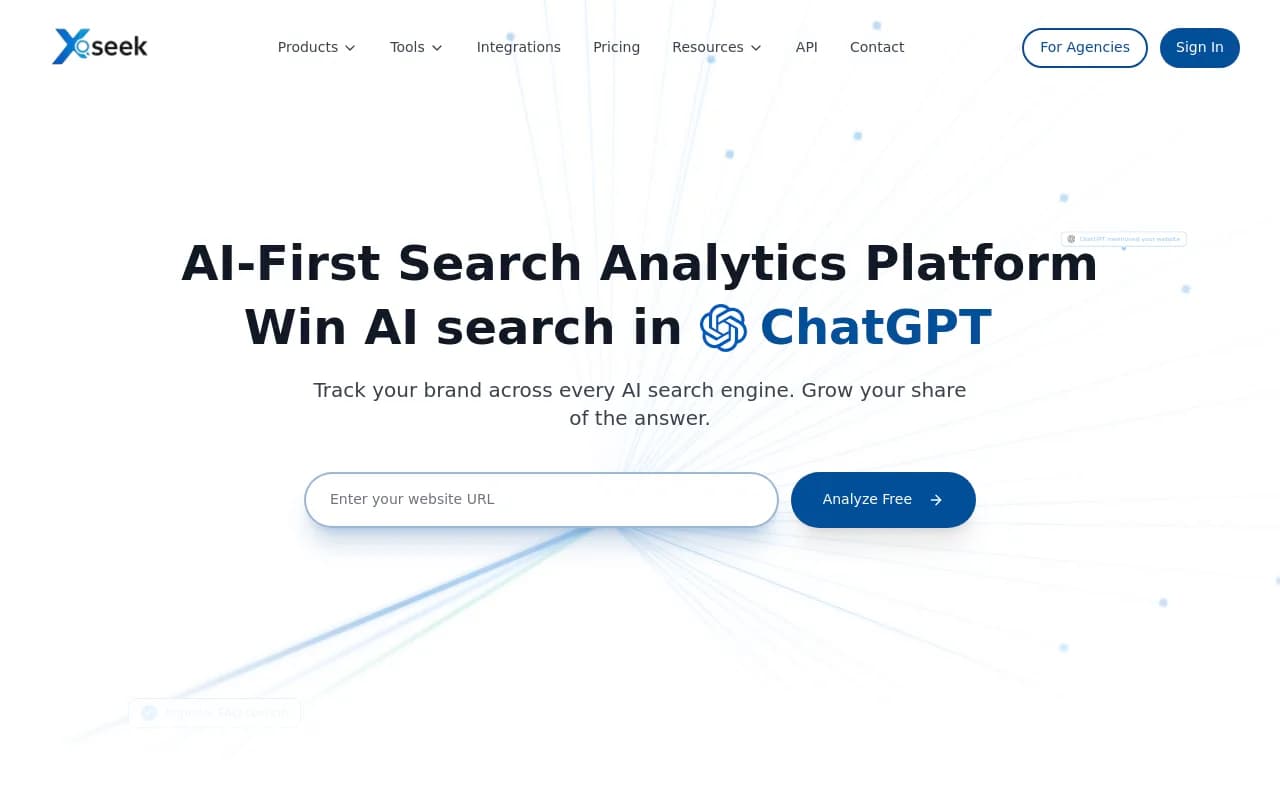
| xSeek | ChatGPT rank tracking with GPTBot crawler monitoring | ChatGPT-focused teams |
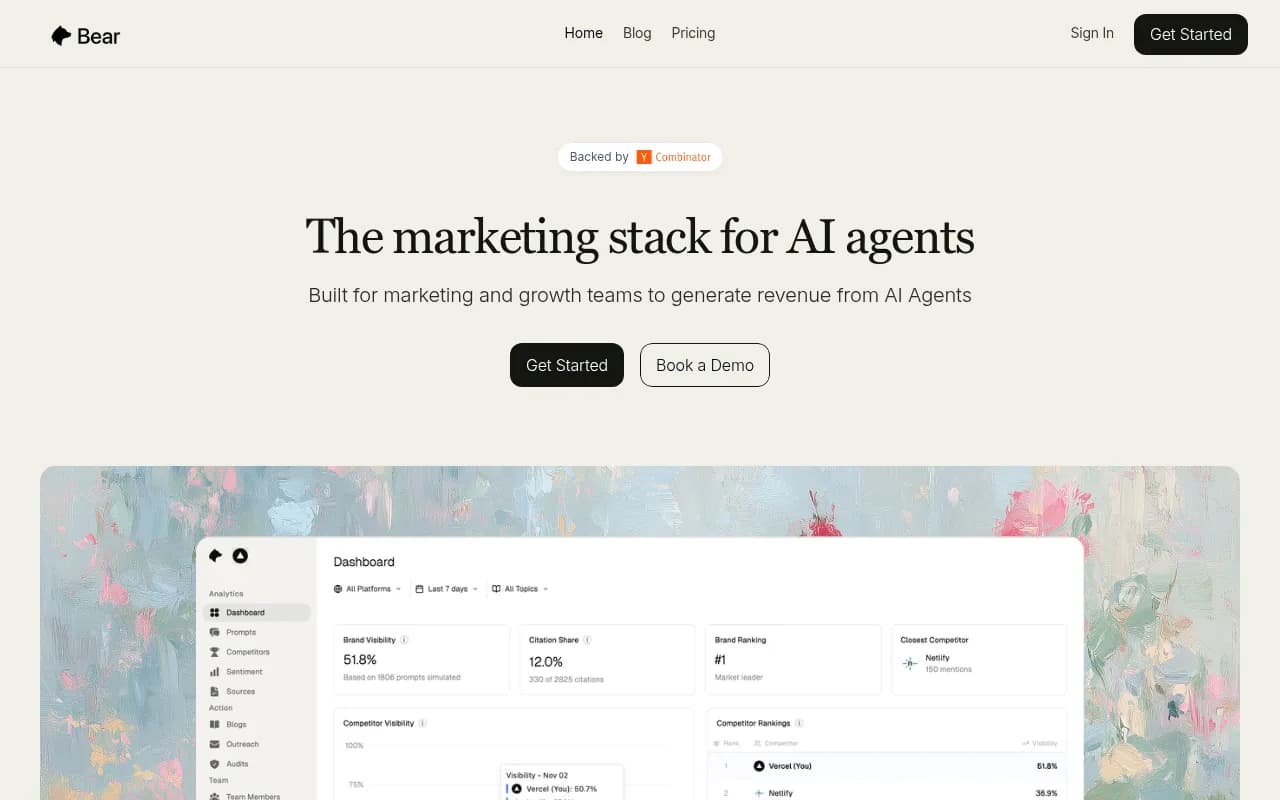
| Bear AI | Agent traffic plus conversion tracking | Ecommerce and revenue-minded teams |
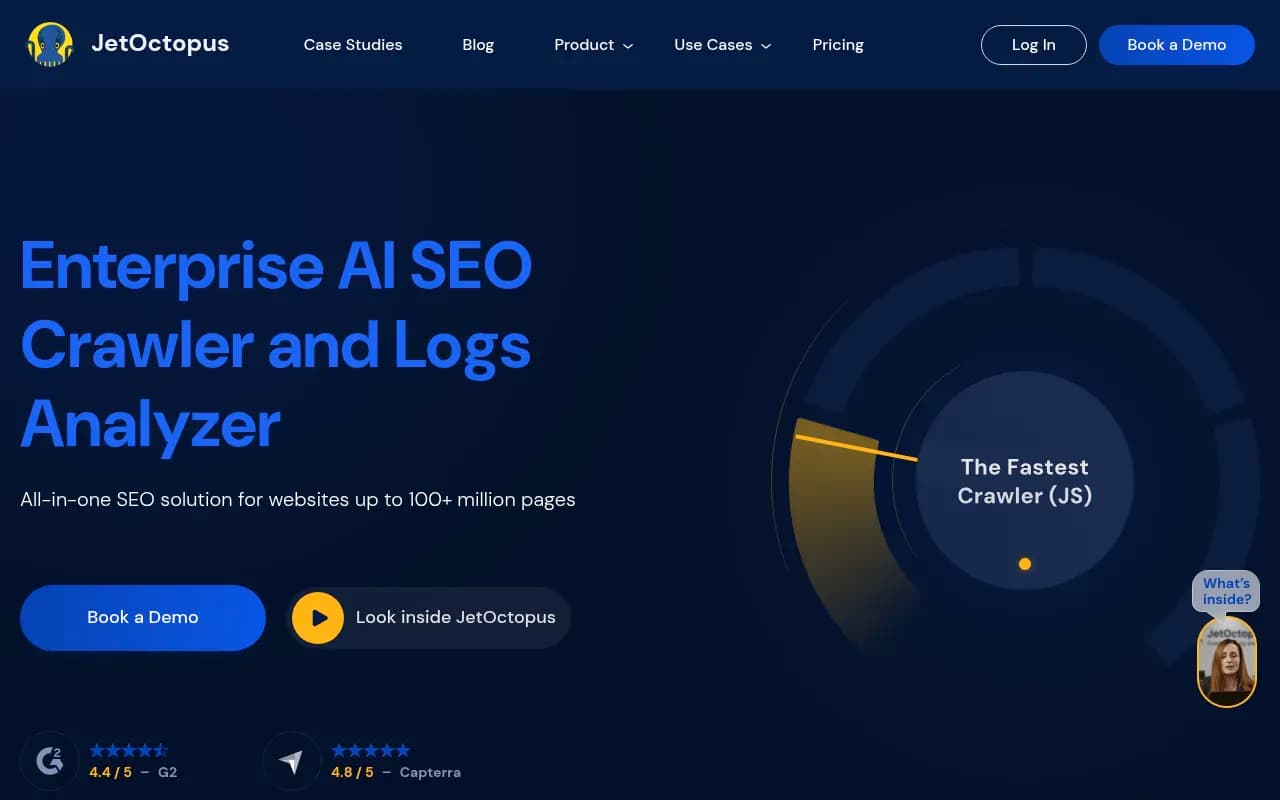
| JetOctopus | Classic server log analyzer for large sites | Technical SEOs with 10K+ page sites |
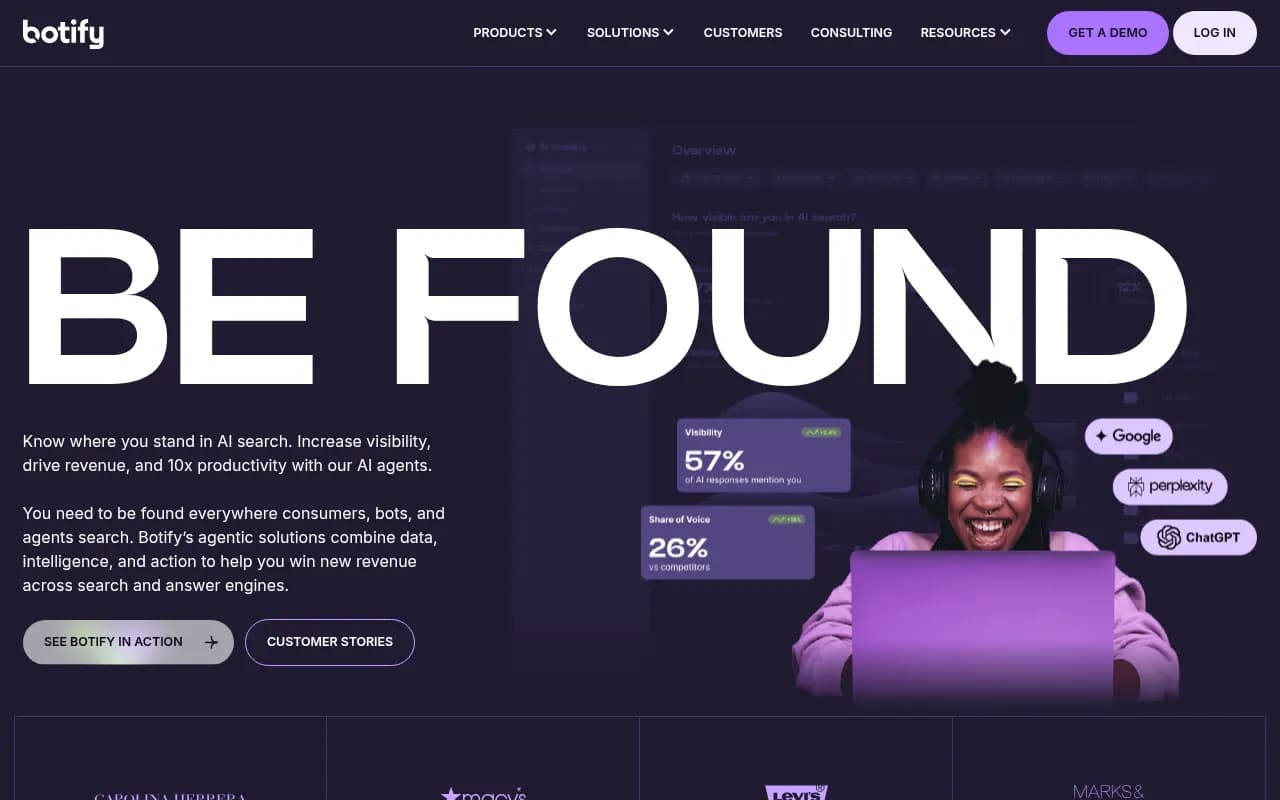
| Botify | Enterprise log analysis plus AI search optimization | Enterprise SEO teams |
Promptwatch
Promptwatch is an AI visibility platform, and its AI crawler logs cover GPTBot, OAI-SearchBot, ChatGPT-User, ClaudeBot, Claude-User, Claude-SearchBot, PerplexityBot and others, verified against operator IP ranges. The useful part is the crawl-to-citation path: it shows a citation rate per page, so you can tell whether a page is not being read (access problem) or read but never cited (content problem). Setup runs through Cloudflare, Vercel, Fastly, CloudFront, Netlify, Akamai, a custom endpoint, or a WordPress plugin. Crawler logs start on the Professional plan at $245/mo (25M logs); confirm current pricing at promptwatch.com/pricing.

Profound
Profound publishes some of the more careful bot research, including the markdown experiment above, and sells agent analytics as part of an enterprise AI visibility product. Expect a higher price point and a heavier sales process than the smaller tools.
Profound

Siteline AI
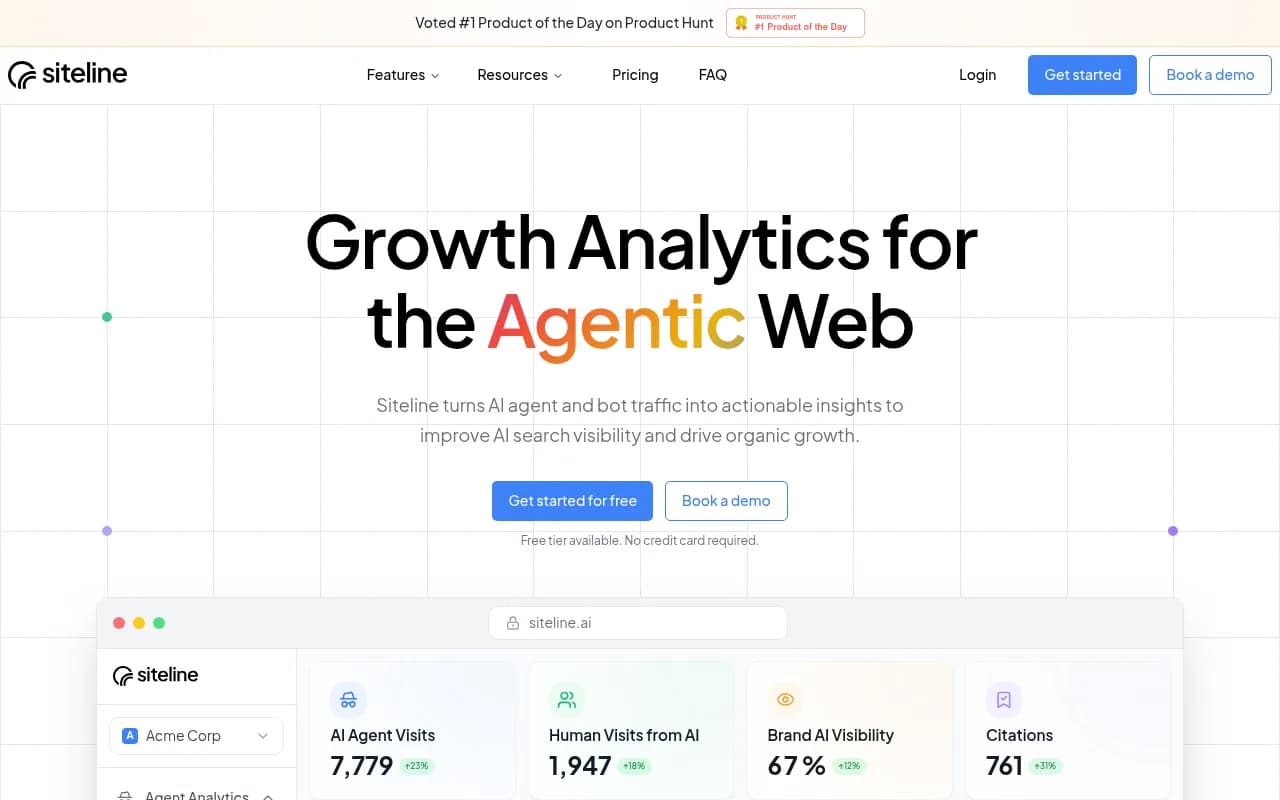
Positioned around AI agent traffic analytics. Worth a look if you want a narrower product than a full visibility suite.
Scriptbee
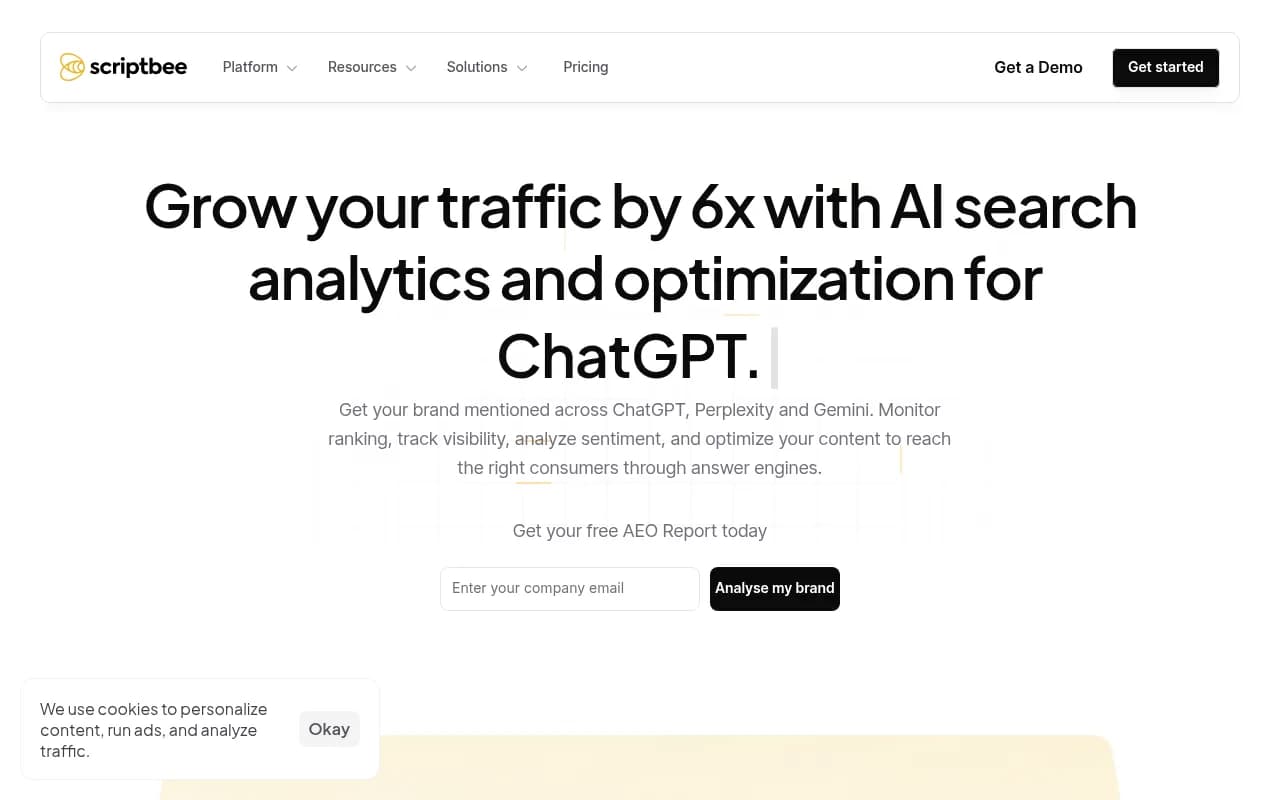
The pitch is AI crawler monitoring across unlimited domains, which suits agencies and publishers with many properties.
xSeek
Combines ChatGPT rank tracking with GPTBot monitoring. Check whether it breaks out ChatGPT-User and OAI-SearchBot, not just GPTBot.
Bear AI
Frames agent traffic as a revenue question, pairing visibility tracking with conversion tools.
JetOctopus
A general-purpose log analyzer, strong on large-site crawl analysis. AI bots show up as user agents, but you will do more of the interpretation yourself.
Botify
Enterprise platform that grew out of log analysis and now covers AI search. Overkill for small sites, sensible for big ones.
If you want to browse beyond this list, the GEO software directory and AI rank tool directory cover many more options.
How to evaluate a tool in one afternoon
Only three things separate a good crawler log tool from a bad one, plus a few nice-to-haves.
- Bot-level breakdown. It should split training, search-index, and user-triggered bots per vendor.
- IP verification. Ask directly. If the answer is "we match user agents," you will count spoofers.
- Page-level detail. You want which URLs were read and what errors they hit, not only totals.
Then add: setup time, log retention, and whether it connects crawling to citations or traffic.
A quick trial plan:
- Connect one site through your CDN or host.
- Let it collect for seven days.
- Check whether every bot you expect (GPTBot, ChatGPT-User, ClaudeBot, Claude-User) shows up.
- Open your robots.txt and CDN rules and confirm nothing is blocking what you want read.
- Compare against a benchmark such as Promptwatch's weekly AI crawler traffic report. If a provider is a large share there but near zero in your logs, you are probably blocked or unreachable for it.
The free Agentic Readiness Check and AI Crawler URL Inspector can help with the access side before you pay for anything.
What to do with the data
Logs tell you what machines read. They don't tell you what AI quotes, and the marketplace study was upfront about that: "I can see the machine reading, nobody can see it quoting." Two findings from that sample are still useful guidance:
- New listings were read within days, mostly within 24 hours, so fresh content doesn't wait in line.
- Listing age predicted being read better than description quality did. The author said he was wrong about that, which I appreciated.
So: fix access first (robots.txt, WAF, 404s), then look at whether read pages get cited, and only then rewrite content. Pages that get crawled but never cited are your content work. Pages never crawled are your technical work.
Bottom line
Pick a tool that verifies IPs and separates bot types, run it for a week against your own site, and trust that sample over any published benchmark, including the ones in this article. The studies disagree because the sites differ, and yours is just one more site.