Key takeaways
- Accuracy in citation tracking mostly comes down to one thing: does the tool collect from the real ChatGPT interface, or from an API that can return different sources?
- A single check is a sample, not a result. Promptwatch Data shows ChatGPT's fanout averages sat around 1.84 to 2.15 queries per response in the winter, so repeated sampling matters.
- Citation behavior changes overnight. ChatGPT's average sources per search response fell from about 6.4 to roughly 4.7-4.9 around the GPT-5.3 rollout on March 4, 2026.
- I could not find an independent accuracy benchmark, and most published rankings are written by the vendors themselves. The ranking below uses a stated method, and you should still verify it on your own prompts.
- Our top pick for accuracy plus follow-through is Promptwatch. Otterly.AI and Peec AI are the cheaper picks, and Profound is the enterprise pick.
How I defined accuracy (and what I could not verify)
Let me be upfront about something. Nobody has published a neutral, reproducible accuracy test for these tools. I looked. The "best tools" lists that dominate search results are mostly written by vendors: Searchable, TrueRanker, SE Ranking, Geoptie, Slate and RankMonster each rank themselves or their friends well. That doesn't make them wrong. It does make them self-interested.
So this ranking is built on criteria you can check yourself, not on a lab test I can't prove I ran. Where I cite pricing, it comes from the vendor listicles in the research, which I could not verify against each pricing page, so confirm before buying.
Here are the five things I weighted, in order:
- Data source. Real ChatGPT UI collection beats API calls. User-facing answers and citations can differ from API output.
- Sampling frequency. One response is one sample. Daily or faster beats weekly.
- Citation depth. URL-level data, in the order the engine listed sources, beats a bare mention count.
- Fan-out visibility. Seeing the sub-queries ChatGPT ran explains why a source was picked.
- Closing the loop. Can you tell whether a page was crawled, cited, and clicked?
The test you should run on any tool
Before paying for anything, do this. Pick 10 prompts that matter to your business. Run each one by hand in ChatGPT with search on, three times, and write down the cited domains. Then put the same prompts into the tool's trial. If the tool's citation list overlaps heavily with your manual runs, it is probably collecting from the real interface. If it shows a clean, stable list that never varies, be suspicious, because ChatGPT itself doesn't behave that way.
Why ChatGPT citation data is hard to get right
Two facts from first-party data explain most accuracy complaints.
First, the retrieval behind each answer is small and noisy. Promptwatch Data on ChatGPT query fanouts shows average fanout queries per response of 2.15 in early December and about 1.84 by early March, with average query length falling from about 117 characters to the high 80s. Searchable reports a similar 1.74 searches per response across 6.9 million responses, though that is a different dataset. Either way, what you see for a prompt is a sample of one or two sub-queries.
Second, the platform changes under you. In Promptwatch's report on the citation drop after GPT-5.3, average sources per search-enabled response fell from about 6.4 to about 4.7-4.9, roughly 27% fewer citation slots, within a day of the March 4, 2026 rollout. There was no recovery a month later. If your tracker only reported "citations went down," you'd assume you lost ground. You may have lost nothing.
The practical lesson: track citations per response, not just total citations, so you can tell "we lost visibility" from "ChatGPT cites fewer sources across the board."
The ranking at a glance
| Rank | Tool | Collection method | Citation depth | Starting price (per vendor listicles) | Best for |
|---|---|---|---|---|---|
| 1 | Promptwatch | Real UI of ChatGPT and other engines | URL-level, citation rank, crawler logs, traffic | $95/mo | Teams that want to fix gaps, not just see them |
| 2 | Profound | Multi-engine, URL-level | Source categories, watched pages | Custom | Enterprise brands |
| 3 | Ahrefs Brand Radar | Market-wide index | Citations across a whole market | $129/mo | SEO teams researching a category |
| 4 | Peec AI | Prompt runs per engine | Source data for PR planning | $95/mo | In-house PR and outreach |
| 5 | Otterly.AI | Prompt runs, URL-level reports | Link positions | $29/mo | Small teams on a budget |
| 6 | Scrunch | Prompt runs | Owned vs competitor vs third-party | $250/mo | Mid-market brand teams |
| 7 | Geoptie | Prompt runs | Cited URLs in cited order | $49/mo | Content teams |
| 8 | Cairrot | Prompt runs | Cited URLs by site type | Free one-off report | A quick first check |
| 9 | Semrush | Bundled AI toolkit | Domain-level | Bundled | Teams already in Semrush |
Rankings between 2 and 9 are judgment calls based on the criteria above and the vendor-published feature descriptions. Treat the order as a starting point.
1. Promptwatch
Promptwatch lands first because it is strongest on the criterion that matters most for accuracy: it monitors the actual interfaces of ChatGPT, Google AI Overviews, Google AI Mode, Gemini, Perplexity, Copilot and others, in each country and language you choose. API models like Claude, DeepSeek and Mistral are tracked alongside, so you can see what models believe from training data versus what live search returns.

Three things set it apart for citation work specifically:
- Citation rank, which shows where your domain lands in the source list. Closer to 1 means you are a primary source.
- Query fan-outs, so you can see the exact web searches ChatGPT ran for each response.
- IP-verified AI crawler logs, which separate an access problem (the bot never read the page) from a content problem (it read it and chose someone else). See the AI crawler logs feature.
The other half is what happens after you find a gap. The Action Board prioritizes fixes, the Content Agent writes and publishes pages, and Page Tracker plus visitor analytics tell you whether the page got cited and sent traffic. Most trackers stop at the dashboard.
Prompts run daily on every plan, and Business and Agency Scale can run every 12, 6 or 1 hours, which is the right answer to the single-sample problem. Pricing starts at $95/mo (Essential), $245/mo (Professional) and $579/mo (Business). Confirm at promptwatch.com/pricing. There is a 7-day free trial and a free AI visibility report if you want a quick look first. For a head-to-head view, see Promptwatch vs Profound.
Weak spot: Essential has no crawler logs and no AEO articles, so the full loop starts at Professional and Business.
2. Profound
Profound tracks citations at URL level across 10+ engines, including ChatGPT, Perplexity, Gemini, Copilot, Claude, Grok, DeepSeek, Meta AI and both Google AI surfaces. It adds source categories, Watched Pages and citation share, and its FactCheck feature scores what AI gets right and wrong about your brand.
Profound

Coverage is excellent. The tradeoffs are a custom contract (so no public price to check) and, per Promptwatch's own comparisons, no Reddit tracking or ChatGPT Shopping and less agentic execution. A reasonable choice for an enterprise with a dedicated AI search budget. See Promptwatch vs Profound if you are choosing between the two.
3. Ahrefs Brand Radar
Brand Radar is useful when your question is about a whole market, not just your tracked prompts. It covers Google AI Overviews, AI Mode, ChatGPT, Perplexity, Gemini, Copilot and Claude (the last via custom prompts), and starts around $129/mo on top of an Ahrefs plan with check packages.
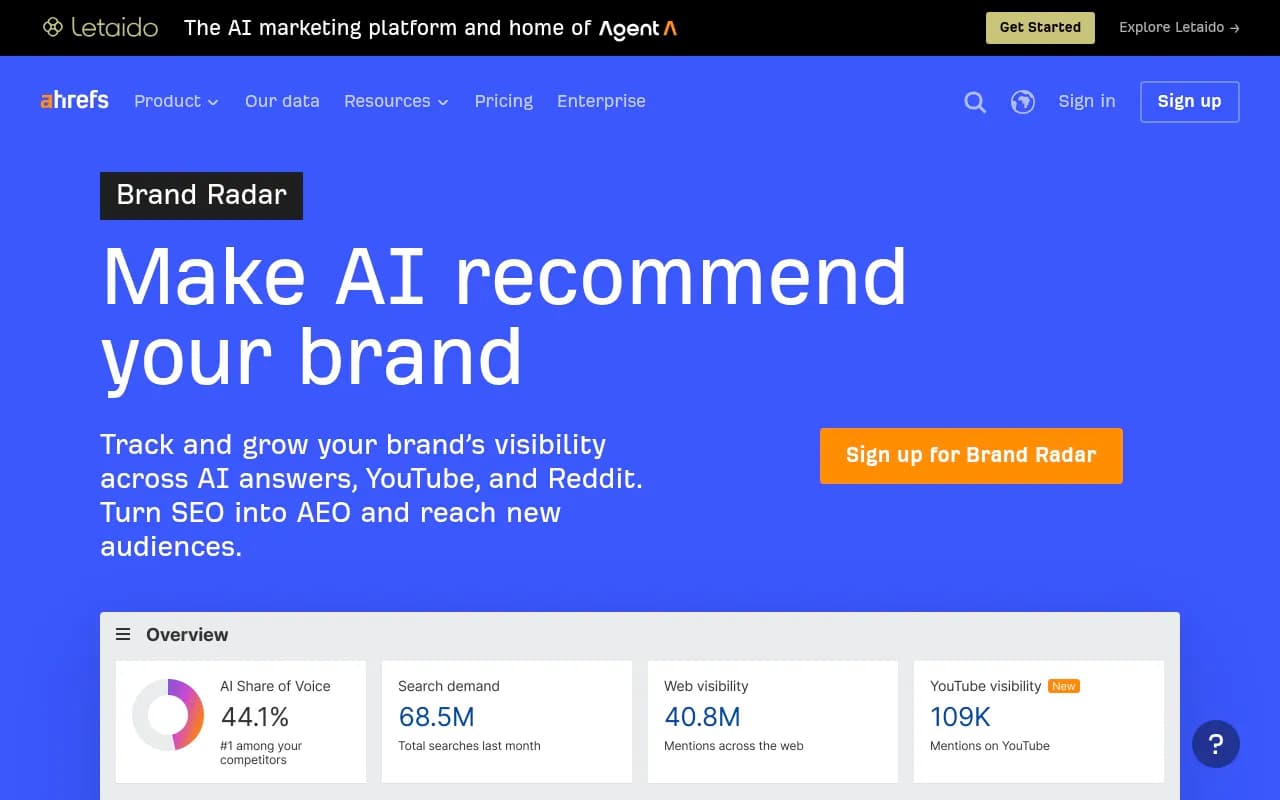
The catch is that it is built into an SEO suite. Prompt sets are less flexible, and there are no crawler logs or AI traffic attribution. Good for research, weaker as a day-to-day accuracy instrument.
4. Peec AI
Peec AI is the pick for in-house teams who plan PR and outreach from source data. You choose any three engines on the base plan, with model add-ons, from about $95/mo.

It is clean and honest about what it does. It does not have crawler logs, visitor analytics or content generation, so you learn who is cited and have to work out the rest yourself.
5. Otterly.AI
Otterly.AI is the budget option. Around $29/mo gets you URL-level citation reports and link positions across ChatGPT, AI Overviews, Perplexity and Copilot, with AI Mode, Gemini and Claude as add-ons.
Otterly.AI

For a solo marketer it is hard to beat on price. Expect prompt limits on lower tiers and a monitoring-only workflow.
6. Scrunch
Scrunch separates owned, competitor and third-party citations, which is handy when you want to know whether the sources shaping answers are yours or someone else's. It starts around $250/mo.
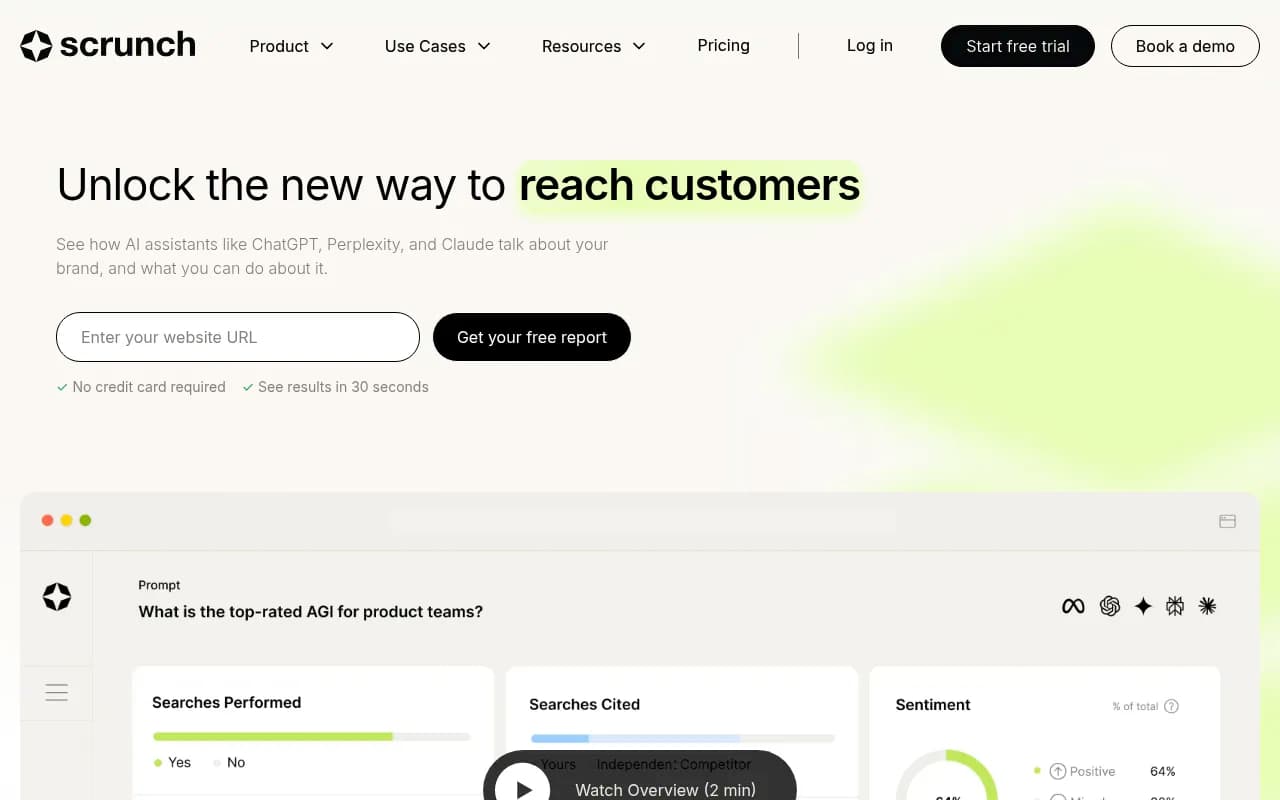
Strong monitoring, higher price, and no agentic execution.
7. Geoptie
Geoptie lists every cited URL in the order the engine cited it and bundles briefs and drafts to earn those citations, from about $49/mo.
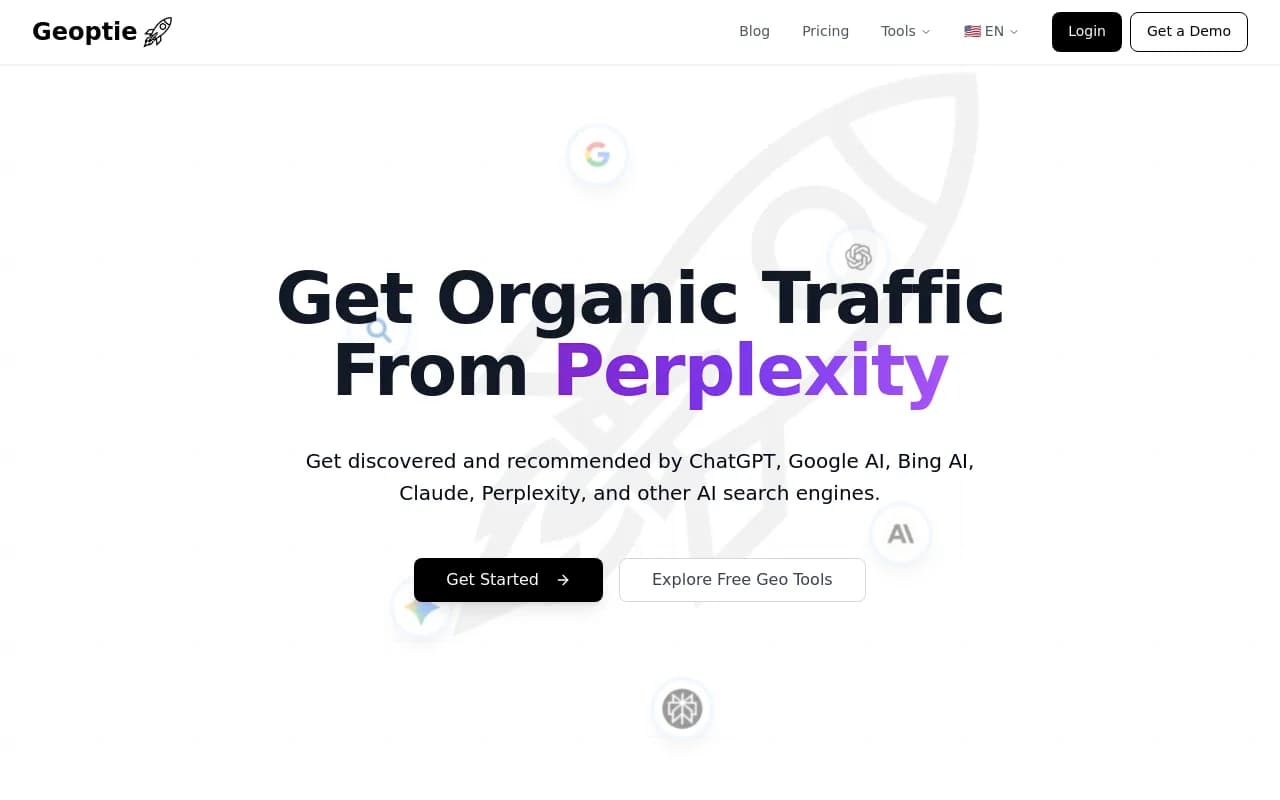
The order of citations is a genuinely useful detail. Note that this is a vendor-run comparison I'm drawing on, so check the claims against a trial.
8. Cairrot
Cairrot's "Cited URLs" report shows whether ChatGPT cited your brand, competitors or third-party sources, and categorizes citations by site type such as brand site, publisher and knowledge base. A free one-off report makes it a low-risk first check.
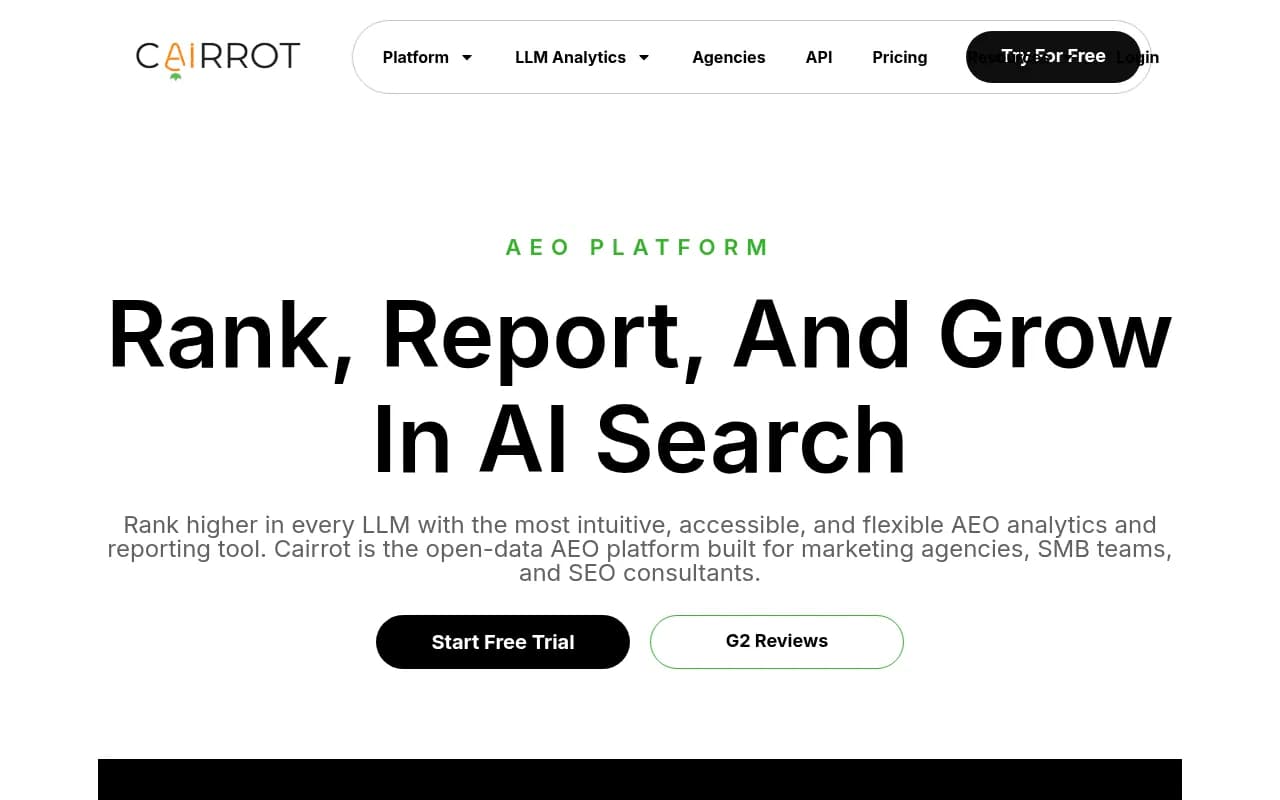
It is a good sanity test against your manual runs. It is not a continuous monitoring system on its own.
9. Semrush
If your team already lives in Semrush, the AI toolkit gives you ChatGPT, Gemini, Perplexity, SearchGPT and Google AI surfaces in familiar reports.
It ranks last here because traditional SEO suites bolt on AI tracking with fixed prompt sets and shallower AI-specific data, with no crawler logs. Convenient, not the most precise.
What the accuracy gap looks like in practice
Across these tools, the differences that actually move numbers are:
| Factor | Why it changes your results |
|---|---|
| Real UI vs API collection | Citations and shopping results can differ between the two |
| Sampling frequency | A weekly check can miss a same-day platform change |
| Country and language | A monitor in the wrong market shows the wrong sources |
| Prompt wording | Query fan-outs shift with phrasing, so small edits change sources |
| Mention counting rules | Brand names that are common words need analysis rules |
One more pattern from first-party data: almost half of ChatGPT responses cite 10 or more unique domains, per Promptwatch's unique domains report (Sep 28 to Oct 4, 2026). With that many sources per answer, a tool that only shows your top three citations is hiding most of the picture. And since Promptwatch's content half-life data shows news losing half its cited pages within 36 days while landing pages and docs last longest, a snapshot audit goes stale fast.
How to choose
- You want to find gaps and fix them in one place: Promptwatch.
- You have an enterprise budget and want maximum engine coverage: Profound.
- You are researching a whole category: Ahrefs Brand Radar.
- You want PR targets from source data: Peec AI.
- You are on $30 a month: Otterly.AI.
- You want a free sanity check first: Cairrot.
If you want to browse more options, the GEO software directory at bestgeosoftware.com lists many more trackers, and the research notes above are a reminder to weigh vendor-written rankings carefully.
A simple validation workflow
- Write 10 to 20 prompts that match real buyer questions.
- Run each one manually three times in the ChatGPT UI with search on. Log cited domains.
- Load the same prompts into two trials. Compare overlap with your manual log.
- Check that the tool shows citations per response, not only totals.
- Look for fan-out data so you can see why sources were chosen.
- Re-check after a week. Stable tools should show roughly consistent source families, not identical lists.
The tool whose data you can reconcile with what you see in the browser is the accurate one, whatever any ranking says, including this one.