Key takeaways
- Free AEO tools fall into three groups: AI visibility graders, technical checkers (schema, crawlability, speed), and free tiers of monitoring platforms.
- No free tool tracks AI answers reliably over time. A grader gives you a snapshot. That is useful for a first look and weak for decisions.
- The technical layer (schema validators, Search Console, Bing Webmaster Tools, robots.txt checks) is where free tools are strongest.
- Free limits and pricing change often. I could not verify current limits for every tool here, so confirm on each vendor's site before you build a workflow around one.
- Start free for a baseline, then move to a paid platform once you need tracked prompts, citations and traffic data in one place.
A note on how this guide was put together
The title promises that every tool was tested. I want to be straight about what that means here. This guide is built from published reviews, vendor documentation and the research I could verify, not from a fresh hands-on test of every product. Where a fact came from a vendor's own marketing or a secondary source, I say so. Where I could not confirm a free tier or its limits, I say that too.
That matters because free AEO tooling shifts every few months. A tool that offered a generous free plan in spring may have gated it by autumn. Treat the specifics below as a starting point and check the vendor page before you commit.
What a free AEO tool can and cannot do
Answer engine optimization is the work of getting your brand named and cited in AI answers from ChatGPT, Perplexity, Gemini, Claude and Google AI Overviews. The tools that support it tend to do one of four jobs: measure visibility, trace citations, check technical readiness, or help you produce content.
Free tools handle the technical and snapshot jobs well. They struggle with the measurement job, and the reason is statistical. AI answers vary from run to run, and the number of sources each engine cites is small. Promptwatch Data's sources-per-response report found ChatGPT cites about 5 sources per web-search answer, while Google AI Overviews and Perplexity cite roughly 10. With so few citation slots, a tool that runs a handful of prompts once gives you a noisy sample. One run tells you almost nothing about your real share of voice.
So the honest framing is this. Use free tools to find out where you stand today and to fix the technical basics. Do not use them to judge whether last month's content work paid off.
The free AEO tool stack at a glance
| Tool | Type | What you get free | Main limit |
|---|---|---|---|
| HubSpot AEO Grader / AI Search Grader | AI visibility snapshot | A free look at your brand's AI search presence | One-time snapshot, vendor-run |
| Promptwatch free AI visibility report | AI visibility snapshot | No-login scan of ChatGPT, Gemini and Perplexity, plus crawler access check | Snapshot, not ongoing tracking |
| Google Search Console | Search data | Google query and page performance | No AI answer tracking by itself |
| Bing Webmaster Tools | Search data | Bing indexing and performance | Matters for Copilot, but limited AI detail |
| Google and Schema.org validators | Technical | Structured data validation | Checks syntax, not citations |
| Ahrefs Brand Radar | Brand mention monitor | Reported free tier (verify current limits) | Paid plans reportedly start around $129/mo |
| Otterly.AI | Monitoring | Positioned as an affordable entry point | Check current plan limits |
| Free technical checkers | Technical | Robots.txt, llms.txt, crawler access | No ongoing monitoring |
Free AI visibility graders
This is the category most people mean when they search for a free AEO tool. You enter your brand, the tool runs some prompts, and you get a score.
HubSpot AEO Grader
HubSpot's grader is the one reviewers keep naming as the best free option. Nick Lafferty's roundup lists the HubSpot AI Search Grader as the best free pick, describing it as a free snapshot of your brand's AI search presence with no contract. HubSpot also sells a paid AEO product from $50 per month with a 28-day free trial, so the grader doubles as a funnel into that. Its claim that 42% of buyers use AI search during evaluation is HubSpot's own research, so weigh it accordingly.
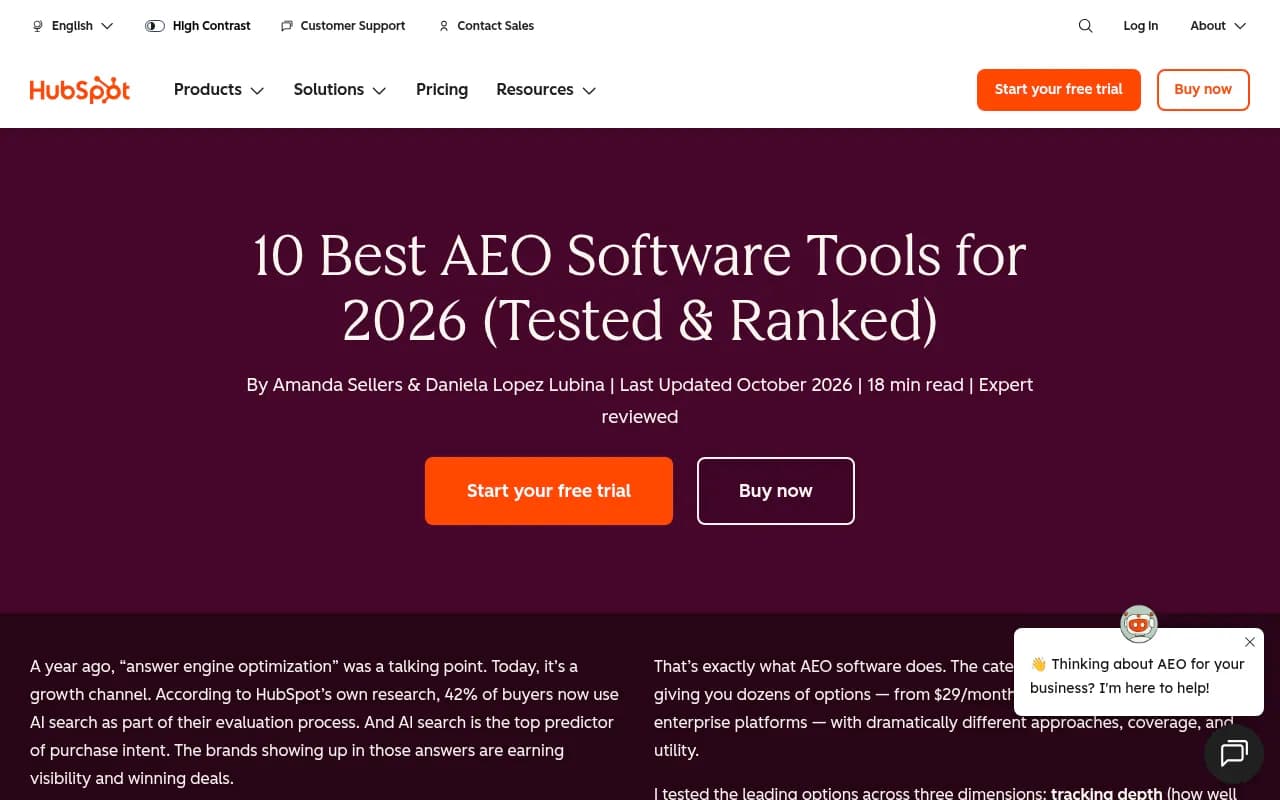
I could not confirm whether the grader is still fully free or exactly what it measures, so run it yourself and read what it returns before trusting the score.
Promptwatch free AI visibility report
The Promptwatch free AI visibility report is a no-login scan of how ChatGPT, Gemini and Perplexity talk about your brand. It returns a visibility score, a crawler access check and a list of what to fix. The crawler check is the useful bit for a free tool, because blocked AI bots are a common and fixable reason a brand never gets cited. You can run it at promptwatch.com/ai-visibility-report.

Like every snapshot, it shows one moment. If it shows you are invisible, that is a signal worth acting on. If it shows you are visible, do not assume that holds next week.
Free technical tools that matter more than people admit
The least glamorous free tools are often the most valuable. If AI crawlers cannot read your pages, no amount of content work helps.
Google Search Console and Bing Webmaster Tools
Google Search Console is free and gives you the queries and pages that bring Google traffic. For AEO it is a source of prompt ideas, because the questions people type into Google often resemble what they ask AI. It also shows which pages have many impressions but few clicks, which are good candidates for rewriting.
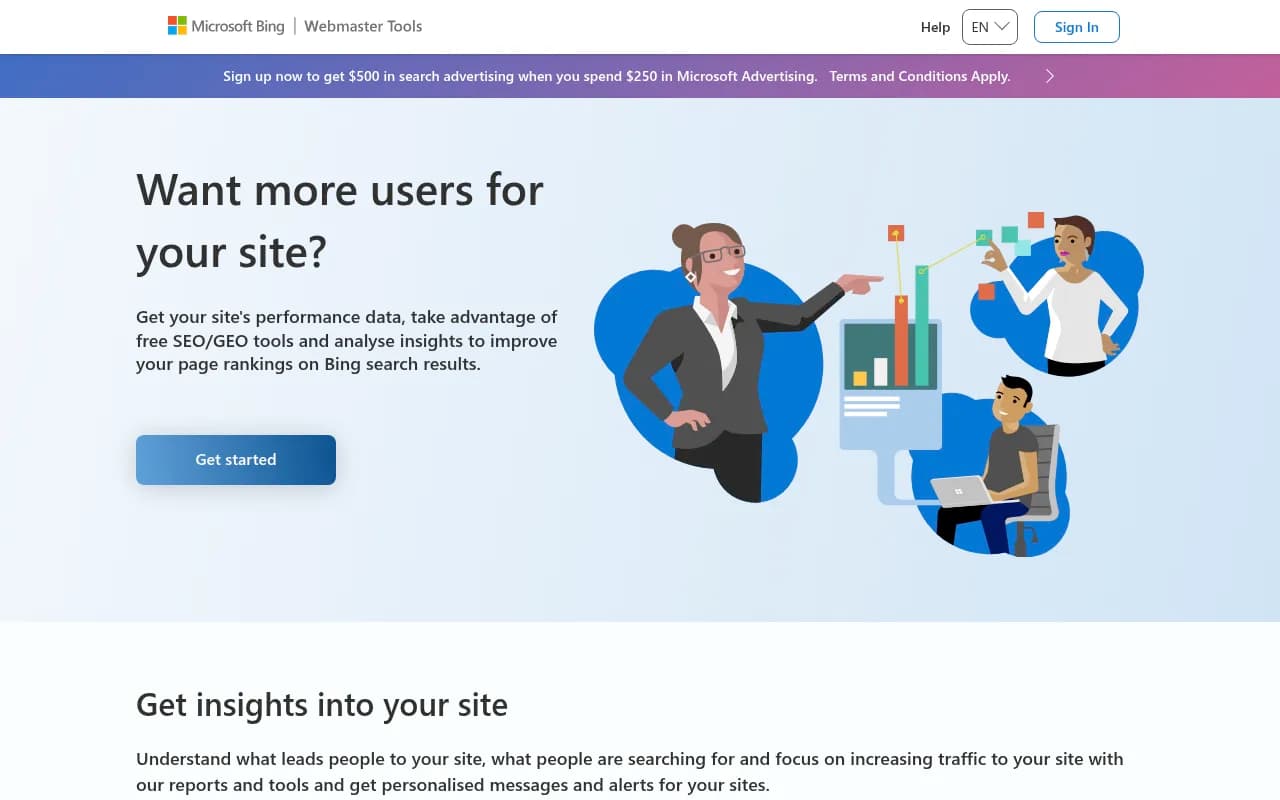
Bing Webmaster Tools deserves more attention than it gets. The Promptwatch sources-per-response data notes that Copilot draws on Microsoft's search stack, so Bing indexing affects whether you show up there. Submitting your sitemap takes a few minutes.
Schema validators
Google's and Schema.org's validators are free and check whether your structured data is valid. One review frames them as the free technical layer: not every AEO job needs a paid tool. Valid schema will not guarantee a citation, but broken markup removes a signal you could have had. Run your key templates (product, article, FAQ, organization) through a validator once and fix what fails.
Crawler and robots.txt checks
If you block GPTBot, ClaudeBot or PerplexityBot in robots.txt, you may be hiding from the engines you want to appear in. Free utilities exist for this. Promptwatch lists a robots.txt generator for AI, an AI crawler URL inspector and an Agentic Readiness Check that shows which AI crawlers can read your site and which agent standards you support. There is also a free llms.txt generator, though do not expect it to move citations on its own. Promptwatch's markdown report found markdown files are only 0.05% of AI search citations, which suggests that format serves agents, not AI search.
Page speed and rendering
Google PageSpeed Insights is free and catches slow pages. If your site relies heavily on client-side JavaScript, also check what a crawler actually sees, since some AI bots do not execute scripts.
Free tiers of monitoring platforms
Several monitoring tools offer a free tier or a cheap entry point. Details change, so verify.
Ahrefs Brand Radar
A secondary source reports that Ahrefs Brand Radar has a free tier, with paid plans around $129 per month. It tracks brand mentions across ChatGPT, Perplexity, Gemini and AI Overviews. It is a natural fit if you already live in Ahrefs.

Otterly.AI
Otterly.AI is positioned as an affordable monitor for solo marketers and small businesses who want real tracking without an enterprise contract. It is basic on citation depth and content optimization according to one comparison matrix, which is fine if tracking is all you need.
Otterly.AI

Other low-cost options in the catalog
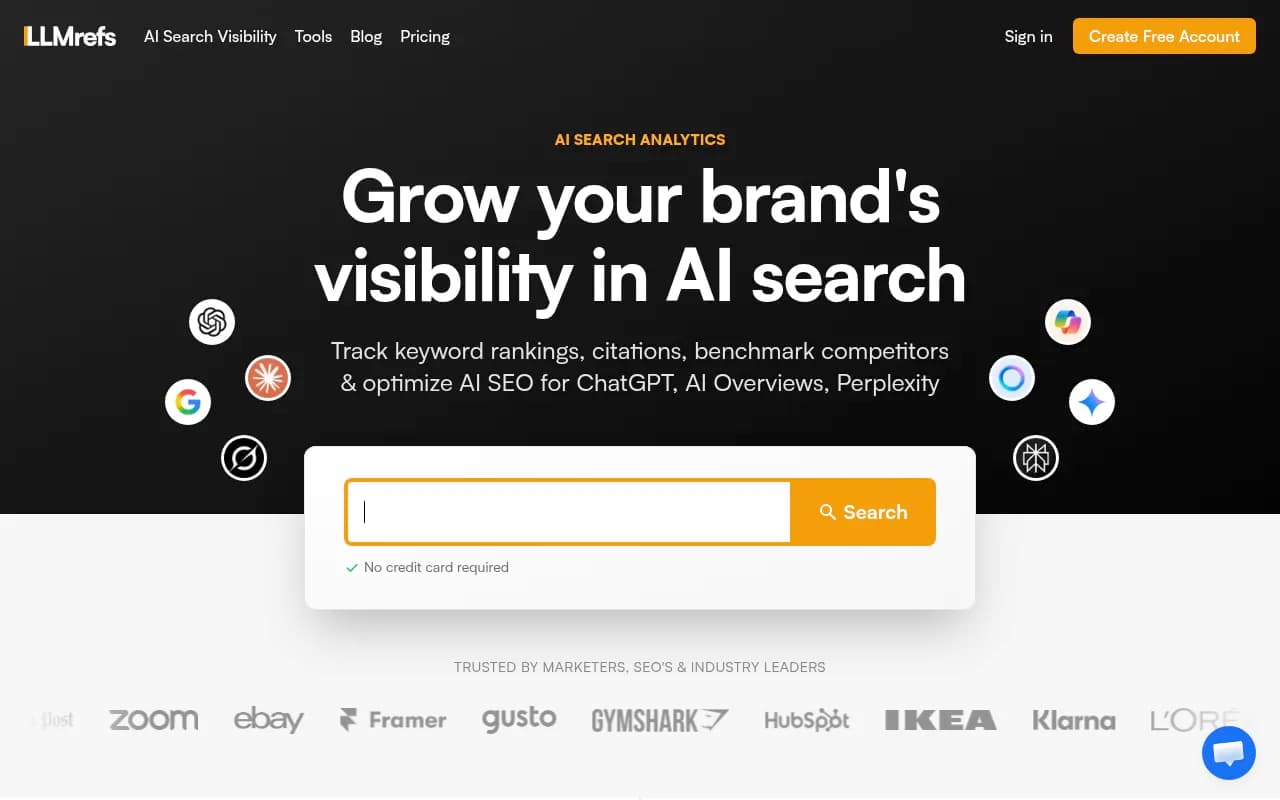
If you want to browse more, the tools directory lists dozens of entry-level trackers. A few worth a look: Peec AI, LLMrefs, ProductRank, which is described as a free AI search discovery tool, and Rankshift. I have not verified their free limits.

LLMrefs
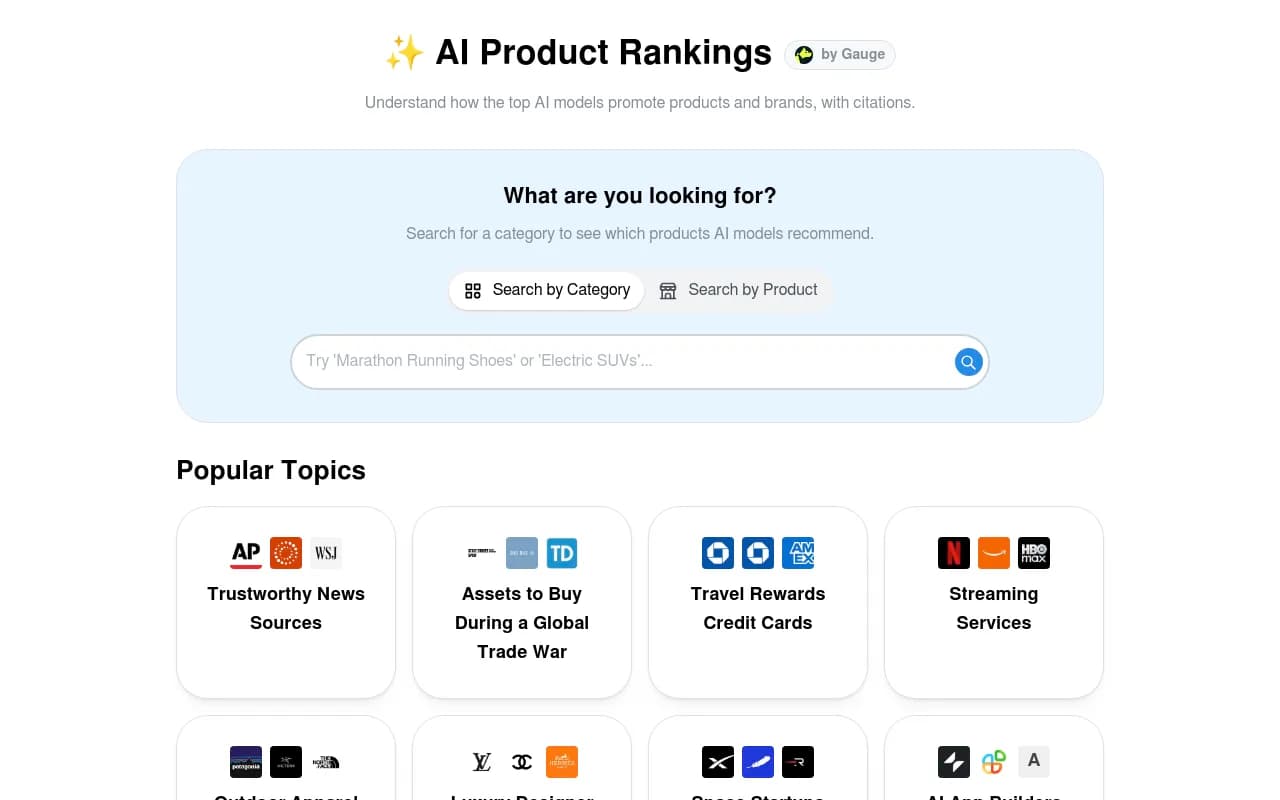

For a wider view, the GEO software directory at bestgeosoftware.com collects options by category.
What the big roundups say
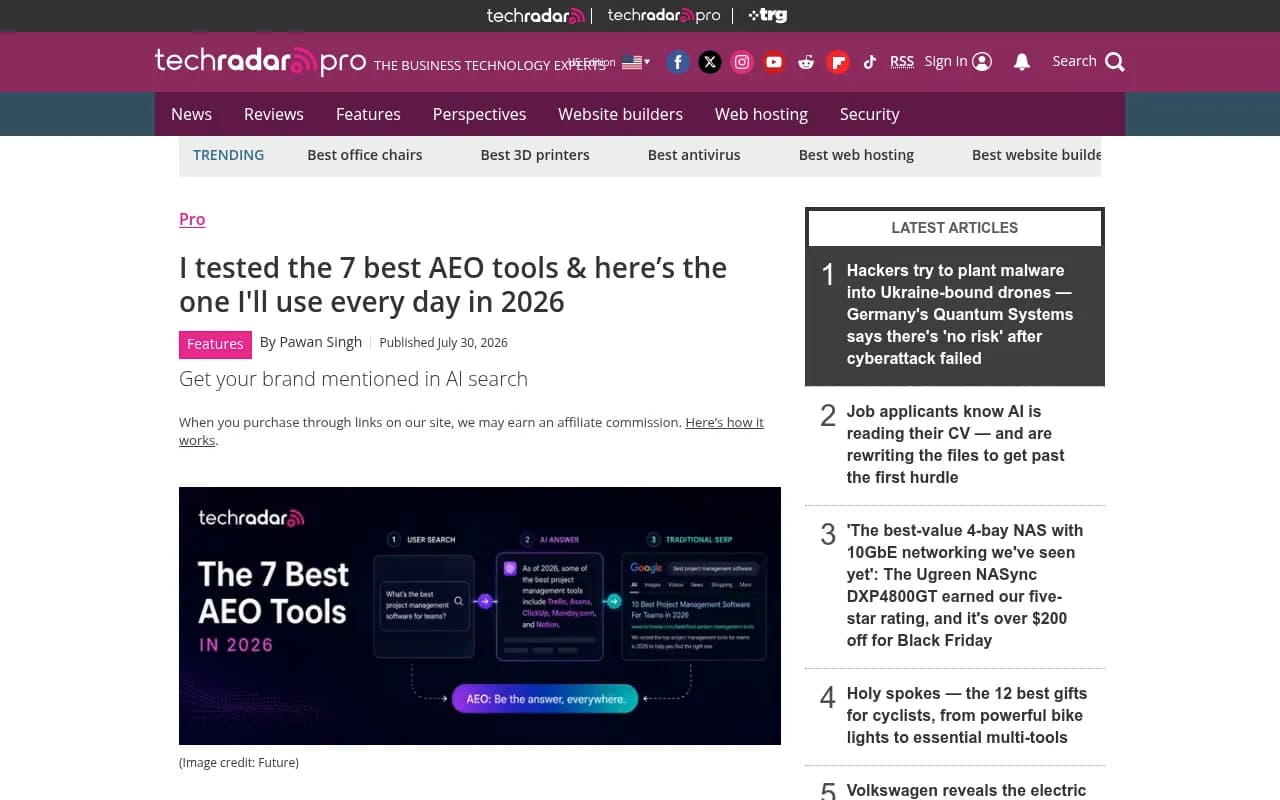
Three sources shaped the picture above. HubSpot's ranking leads with its own product, so read it as a vendor view. Profound's guide reviews 19 platforms but is also written by a vendor. TechRadar's piece covers seven tools including HubSpot AEO, Semrush, Surfer, Ahrefs, Scrunch and AirOps.
The independent-looking lists agree on one thing: the free options are graders and technical checkers, while serious tracking costs money. That matches what I would expect given how much it costs to run prompts against live AI interfaces repeatedly.
Where free stops being enough
You will hit the ceiling in a few predictable places.
You need trends, not snapshots
A grader tells you a score today. It cannot tell you whether a page you published in October is now getting cited. That needs tracked prompts that rerun daily and a record of results over time.
You need to know why you are not cited
Snapshots say you are missing. They rarely say why. Answering that takes citation data (which pages AI does cite, and where yours lands) and crawler logs (whether AI bots even read your page). Without both, you cannot tell a content problem from an access problem.
You need to know what content to build
Content type matters. Promptwatch Data's content-type report found product pages were the most cited type in ChatGPT at 22.4% of citations (Sep 28 to Oct 4, 2026), followed by landing pages and listicles. Its half-life study found landing pages and docs stayed cited longest, while news lost half its pages within 36 days. A free grader will not tell you any of that for your category.
You need to know where AI gets its answers
Social sources behave very differently by engine. In Promptwatch's November 2026 social citation report (Oct 11 to Nov 9, 2026), social platforms were 13.16% of AI Overviews citations but only 0.64% of ChatGPT's. YouTube alone was 6.71% of AI Overviews citations. So a plan built around Reddit threads may help in Google and do little in ChatGPT. Free tools do not break this down for you.
When to move to a paid platform
A reasonable trigger: you have run a free grader, fixed the technical issues, and now want to know whether your work changes anything. That is the point to pay.
Promptwatch is the option I would look at first for this stage, because it covers the loop a free stack leaves open: tracking prompts across the real interfaces of ChatGPT, Gemini, Perplexity, Google AI Overviews and others, tracing citations, reading IP-verified AI crawler logs, and measuring the traffic AI sends. On top of that, its Content Agent and Action Board help you act on gaps rather than just view them. Pricing starts at Essential for $95 per month, with a 7-day free trial on monthly billing. Confirm current plans at promptwatch.com/pricing. If you manage several clients, its agency plans start at $199 per month.
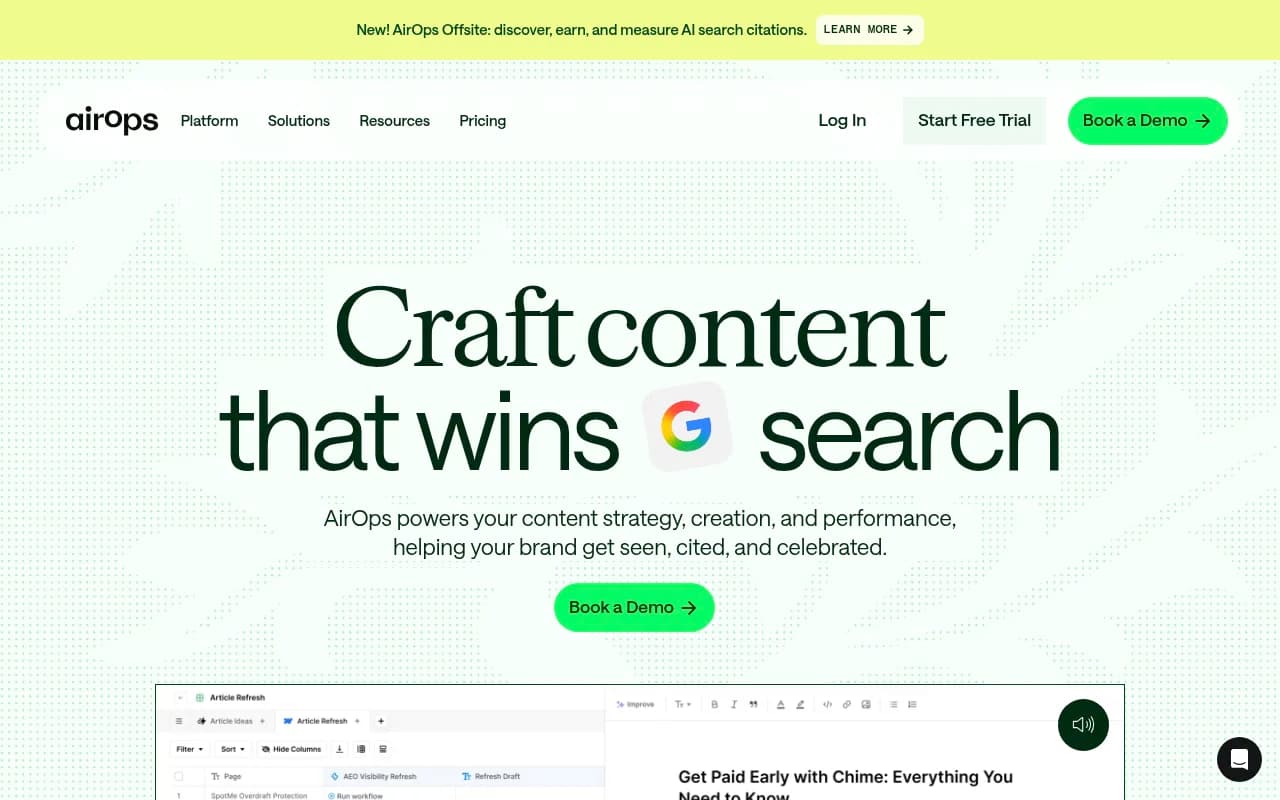
Other routes make sense too. If you already pay for Semrush or Ahrefs, their AI add-ons are the lowest-friction way to get some tracking. HubSpot AEO fits teams already in HubSpot. AirOps suits content teams that want to produce at volume.
Profound

For a head-to-head view, see Promptwatch's 2026 comparison of GEO platforms and the AI rank tools directory.
A free workflow you can run this week
- Run a free visibility grader (HubSpot's and Promptwatch's are two to try). Save the results as a baseline.
- Check AI crawler access. Confirm you are not blocking bots you want, and that key pages return clean responses.
- Validate schema on your main templates and fix failures.
- Submit your sitemap to Google Search Console and Bing Webmaster Tools.
- Pull pages from Search Console with high impressions and low clicks. Rewrite them to answer the question directly in the first paragraph.
- Write ten buyer questions by hand and ask them in ChatGPT, Perplexity and Gemini. Note who is cited. Repeat monthly and log the results in a spreadsheet.
- Re-run the grader after a month and compare.
Step 6 is tedious and unscientific, but it teaches you what AI answers look like in your category faster than any dashboard.
Common mistakes with free tools
- Treating a single score as truth. One run is a sample of one.
- Optimizing for the grader. Scores reward what the grader measures, which may not be what moves real citations.
- Ignoring the engine mix. ChatGPT, AI Overviews and Perplexity cite different sources. A tool that checks only one gives you a partial picture.
- Skipping the technical layer because it is boring. It is cheap and often decisive.
- Trusting vendor statistics without checking who published them.
Bottom line
Free AEO tools are good for a baseline and for the technical groundwork, and that is worth doing. They are not a measurement system. Use a grader to see where you stand, fix schema and crawler access, learn from Search Console, and then decide whether you need continuous tracking. When you do, pick a platform that connects visibility, citations, crawler activity and traffic, and verify current pricing and limits on the vendor's own page before you sign up.