Key Takeaways
- A ChatGPT rank tracker does not report a position in a list of links. It runs your prompts on a schedule and logs whether ChatGPT names, cites, and describes your brand.
- For B2B SaaS, track about a dozen high-value buyer prompts first. Do not import thousands of head terms.
- Tag prompts by intent (commercial, informational, branded), because each intent is won with different content. Promptwatch Data shows the cited content mix changes a lot between them.
- Pick a tool that shows which of your pages, docs, and G2 or Capterra profiles get cited, not just a yes/no mention.
- Most vendor listicles rank the vendor first. Treat them as biased, including this one's note on Promptwatch, which is the product of this network's publisher.
Why B2B SaaS buyers make ChatGPT tracking different
A B2B buyer researching software rarely types one query. They ask "best CRM for a 20-person sales team," then "HubSpot vs Pipedrive for startups," then "is Pipedrive good for outbound." ChatGPT answers each with a short list of vendors and a handful of sources. If you are not in that list, you were never considered.
Google rank doesn't predict this well. Leapd's guide claims only 12% of URLs cited by ChatGPT overlap with Google's top 10 for the same query. That's a vendor-published figure, so take it as directional, but it matches what most SEO teams see when they first run prompts: the winners are not who you expect.
So you need a different kind of tracker. This guide covers what to measure, which prompts to load, and how the main tools differ.
What a ChatGPT rank tracker measures
The category breaks into three modes, as Leapd describes it:
- One-shot visibility checkers that audit your current state, often free.
- Continuous monitoring with trend data, competitor share of voice, and prompt-level results.
- Platforms that also help you fix what the data shows.
For B2B SaaS you want at least the second, and ideally the third. The core metrics are mention frequency, citation rate, which URLs get cited, share of voice against named competitors, position within the answer, and sentiment. For definitions of these, the Promptwatch metrics overview is a useful reference, and the page on citations vs mentions explains why being named and being cited are separate problems.
Which buyer research prompts to track
One source in the research puts it bluntly: staff 12 money prompts, do not import 8,000 head terms. I agree with the spirit. A hundred well-chosen prompts beat ten thousand generic ones, because you will actually read the results.
Build the set around the buyer journey
A workable starting set for a B2B SaaS product:
- Category discovery: "best [category] software for [segment]"
- Use-case fit: "what tool should a [role] use to [job to be done]"
- Head-to-head: "[you] vs [competitor]" and "[competitor] alternatives"
- Branded checks: "is [you] good for [segment]", "[you] pricing"
- Integration and security: "does [you] integrate with Salesforce", "is [you] SOC 2 compliant"
Use long, natural prompts, not just head terms. One vendor RFP checklist in the research fails any tool that only supports head-term tracking, and I think that is fair.
Tag by intent, because content wins differently
Promptwatch Data's content type report (Sep 28 to Oct 4, 2026) breaks ChatGPT citations down by prompt intent, and the differences matter for tracker setup:
| Prompt intent | Top cited types | Notable detail |
|---|---|---|
| Commercial ("best CRM for small businesses") | Product pages 26.0%, landing pages 20.6%, listicles 15.0% | Comparisons hit 7.9% vs 5.9% overall; these four types are almost 70% of citations |
| Informational | Product pages 19.1%, landing pages 13.9%, listicles 13.6% | How-to guides 10.7%, docs 8.5% |
| Branded ("is HubSpot good for startups") | Product pages 23.3%, landing pages 22.8% | Reviews 5.6%, over three times their all-prompt share |
Across all prompts, product pages are 22.4% of citations and landing pages 16.8%. In plain terms, ChatGPT mostly cites pages that describe what a company sells. If your tracker shows you are mentioned but your own pages are never cited, that's a content gap on commercial pages, not a brand awareness problem.
Include short keyword-style variants
Promptwatch's ChatGPT query fanout data shows average query length falling from about 117 characters in December 2025 to about 53 in April 2026, and average searches per response sitting near 1.8 to 2.2 for most of that period. Fanout behavior also changed in August 2026, when ChatGPT began using the site: operator heavily (site: operator report). Your tracker's own prompt phrasing may differ from how ChatGPT actually searches, so mix in short variants alongside your long conversational ones. The query fan-outs guide explains how to read this.
What a B2B SaaS tracker must show
Beyond "was I mentioned," look for these:
- Citation-level data: which of your pages, docs, and third-party profiles get cited.
- Competitor share of voice on the same prompts.
- Persona or funnel-stage tagging, so you can compare how a CFO prompt differs from an engineer prompt.
- Real ChatGPT interface data rather than only API calls, since user-facing answers and citations can differ from API outputs.
- Some way to connect visibility to traffic, ideally AI crawler logs and visitor analytics.
The software citation data makes the citation point concrete. In Promptwatch's software prompts report (Sep 28 to Oct 4, 2026), GitHub (1.2%), learn.microsoft.com (0.98%), and G2 (0.73%) lead, followed by AWS docs, Google Cloud docs, Gartner, Capterra, Intercom, and Zapier. By source type, docs and help centers earn 2.64% and vendor sites 2.01%, while review sites and analysts earn 1.57%. Vendor pages plus docs together earn about three times what review sites do.
For a SaaS company, that means documentation is a citation asset, and your G2 and Capterra profiles matter too. A tracker that can't separate those source types hides the most actionable finding.
The best ChatGPT rank trackers for B2B SaaS
One disclosure first. This site is published by 1001 SEO Media, which uses Promptwatch for its own AI visibility work, so I include it below and say so plainly. None of the listicles in the research mention it, and several (KIME, Leapd) rank themselves first, so I have not copied their orderings.
Vendor prices below come from those listicles and I could not verify them, so confirm everything on each official pricing page.
| Tool | Strength for B2B SaaS | Listed starting price (unverified) | Fix-it features |
|---|---|---|---|
| Promptwatch | Prompt tracking plus crawler logs, citations, content creation | $95/mo (Essential) | Yes |
| Profound | Enterprise narrative control | $99/mo per listicle | Limited |
| Scrunch AI | Persona and funnel-stage segmentation | Not stated | Partial |
| Otterly.AI | Cheap cross-engine monitoring | $29/mo per listicle | No |
| ZipTie.dev | Clear optimization actions | $69/mo per listicle | Partial |
| Peec AI | Marketing-team monitoring | Check vendor | No |
| Semrush | Add-on if you already use it | Check vendor | Limited |
| Xofu | Bottom-of-funnel prompts | Free / $99/mo per listicle | Partial |
Promptwatch
Promptwatch tracks the real interfaces of ChatGPT, Google AI Overviews, Gemini, Perplexity, Copilot and others, then goes further than monitoring. Its prompt data includes volumes, difficulty, personas, and query fan-outs. IP-verified AI crawler logs show whether ChatGPT's bots can read your pages, and the Page Tracker shows which prompts cite a given URL, yours or a competitor's. For B2B SaaS, the Citation Trends classification (including a Directory source type that covers G2 and Capterra) maps directly onto the review-site question above.
On the fix side, a content gap analysis and Content Agent write and publish pages to WordPress, Webflow, or Framer, then check whether those pages get crawled and cited. Pricing is Essential at $95/mo, Professional at $245/mo, and Business at $579/mo. The Content Agent and faster-than-daily tracking start at Business. Confirm on the pricing page. There is a 7-day free trial on monthly billing, and a free AI visibility report if you want a look before committing.

For head-to-head details, see Promptwatch vs Profound and Promptwatch vs Peec.
Profound
Profound is the name that shows up most in B2B SaaS threads, including the Reddit r/ProductMarketing list that puts it first. It targets enterprise brands and narrative control. If you're a larger company that wants a polished monitoring layer, it's a serious option. Check whether the plan you want includes real execution, since monitoring is the stronger half.
Profound

Scrunch AI
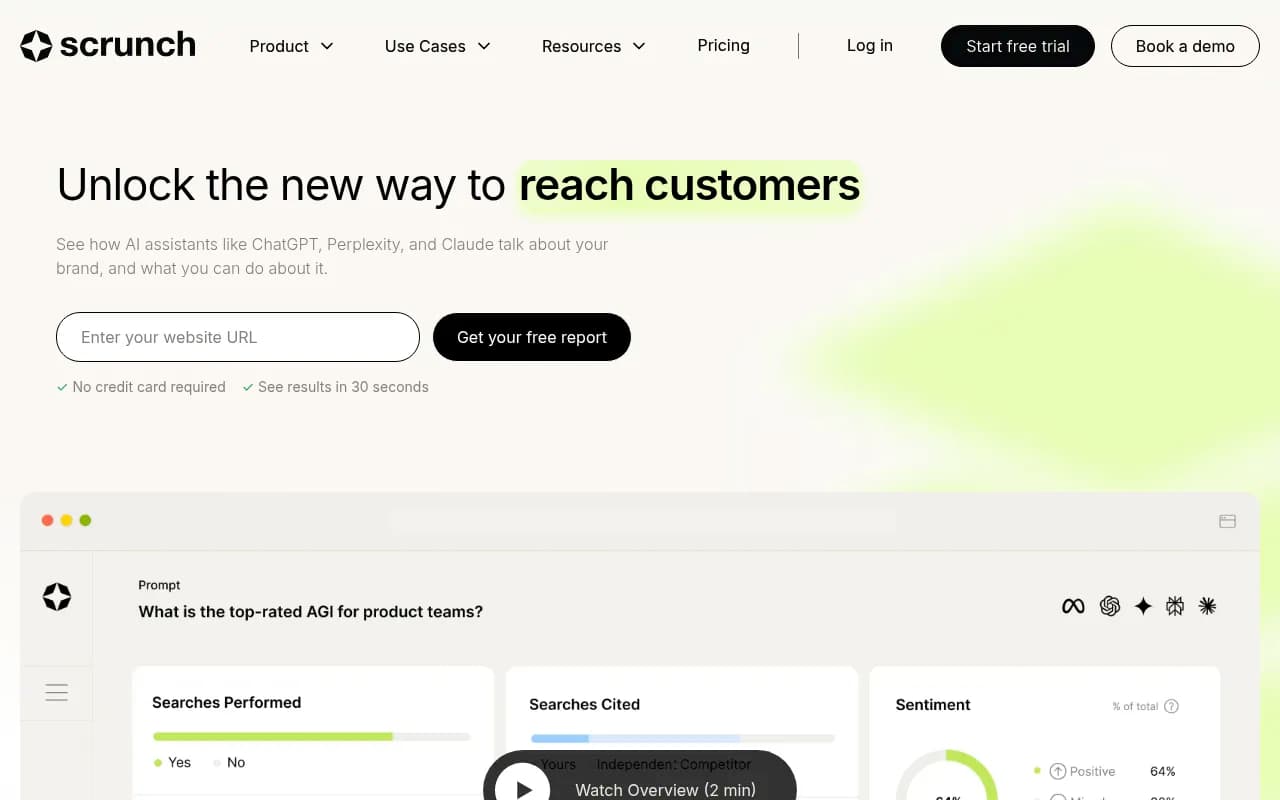
Scrunch lets you label prompts by buyer persona, funnel stage, topic, or location and compare sentiment and share of voice across engines. AIRIX recommends it for B2B SaaS teams segmenting prompts by persona, and that's the feature to evaluate if your sales motion has distinct buying committees.
Otterly.AI
Otterly is the budget entry point and popular with agencies running several brands. It is monitoring-focused. Good for a first pass, though you will outgrow it if you need crawler data or help writing content.
Otterly.AI

ZipTie.dev
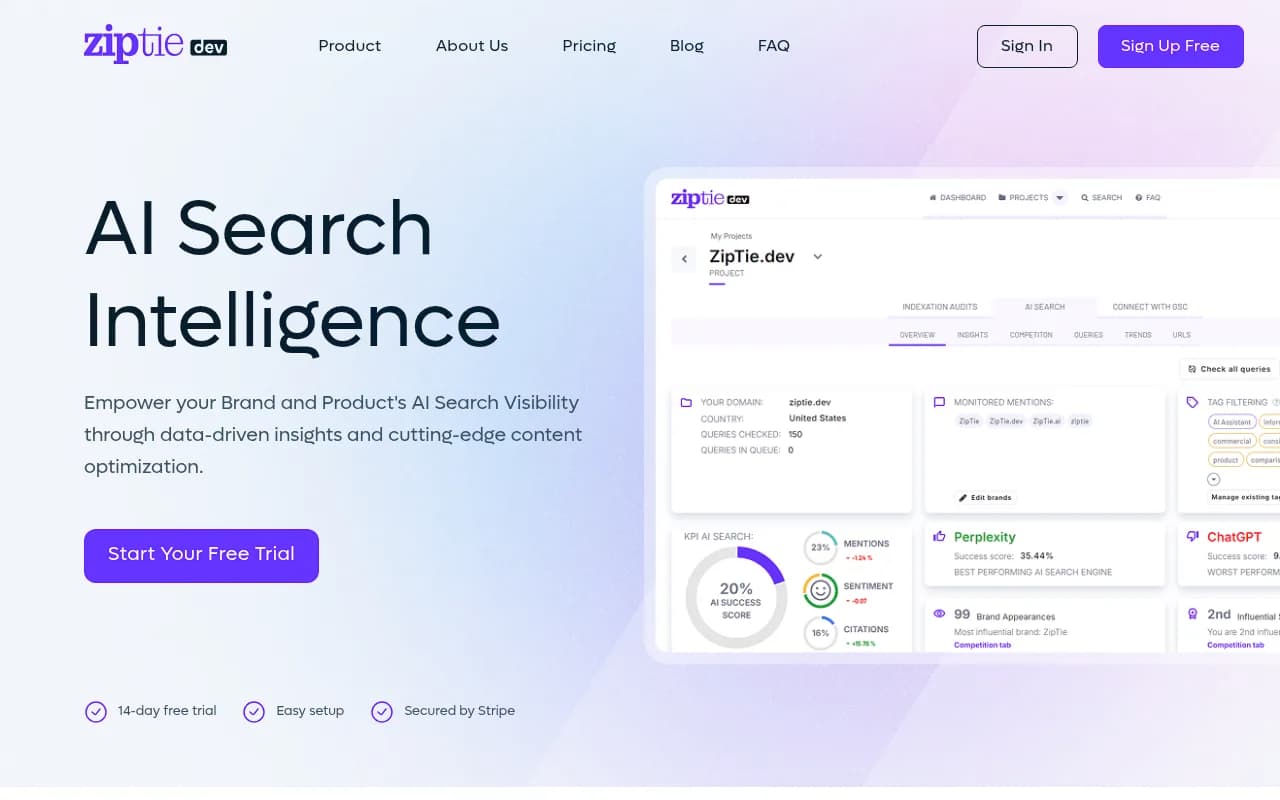
ZipTie positions itself around clear, actionable recommendations rather than raw dashboards, which suits a small marketing team without a dedicated analyst.
Peec AI
Peec AI is a monitoring tool aimed at marketing teams and appears in most B2B SaaS shortlists alongside Profound.

Semrush
If your team already lives in Semrush, its AI visibility add-on is the lowest-friction start. The tradeoff is depth. Suite add-ons tend to use fixed prompt sets and shallower AI-specific data.
Xofu and others worth a look
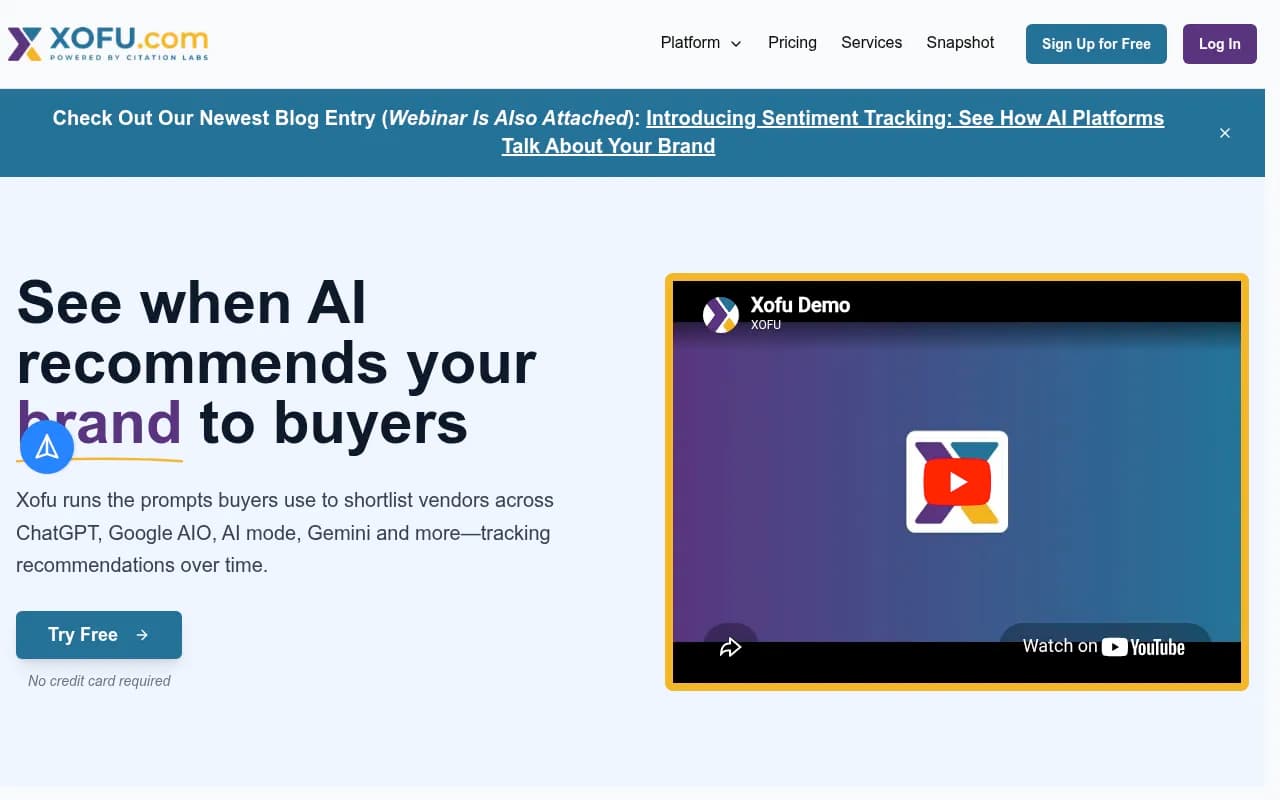
Xofu focuses on bottom-of-funnel prompts, which is exactly where SaaS pipeline comes from.
LLMClicks is described by AIRIX as specialized for B2B SaaS, though the same review notes the focus is narrower than platforms that cover many industries. For more options, browse the GEO software directory at bestgeosoftware.com or the rank tracker listings at ai-rank-tools.com.
How to choose: a simple scorecard
One research source suggests weighting a SaaS RFP. I'd adapt it like this:
| Criterion | Suggested weight | Fails if |
|---|---|---|
| B2B and long-prompt support | 20% | Head terms only |
| Citation-level source data | 20% | Mention yes/no only |
| Real interface data, not API-only | 15% | No answer on collection method |
| Competitor and persona segmentation | 15% | One flat list of prompts |
| Traffic or crawler data | 15% | No link to site outcomes |
| Fix-it workflow | 15% | Dashboard only |
Run a trial with your 12 money prompts on two or three tools. Compare results for the same prompts. If they disagree widely, that tells you something about collection methods.
Setting up your first 30 days
- Write 12 to 20 prompts across category, use case, comparison, and branded intent.
- Tag each by intent and, if you can, buyer persona.
- Add your three closest competitors and let the tool auto-discover others.
- Run for two weeks before drawing conclusions. ChatGPT answers vary run to run.
- Read the citations, not just mentions. Note which of your pages, docs, and review profiles appear.
- Check whether AI crawlers can actually reach your key pages. Promptwatch's free Agentic Readiness Check is a quick start.
- Fix the commercial pages first. They carry the highest citation share.
Content does age. Promptwatch's content half-life data found landing pages and docs stayed cited longest while news lost half its pages within 36 days, so refresh your evergreen commercial pages rather than chasing news.
Claims to treat with suspicion
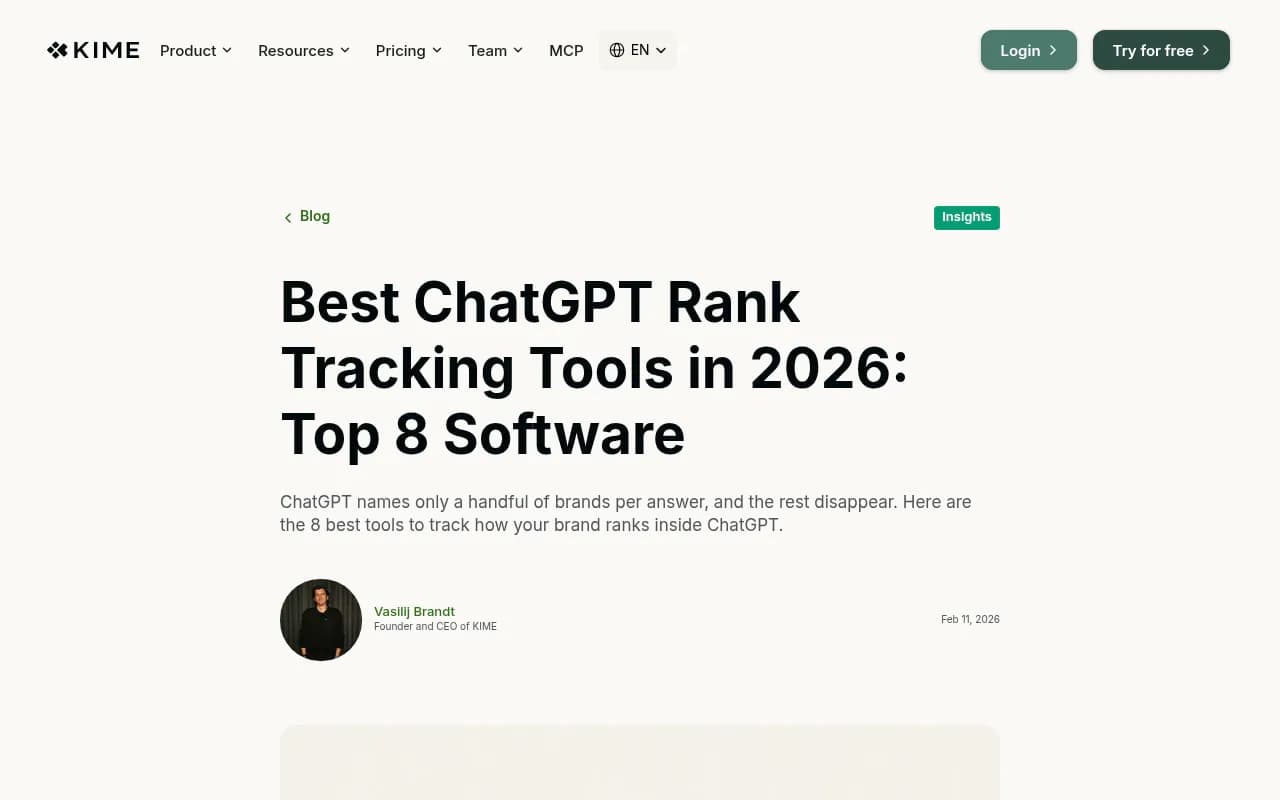
KIME's roundup says roughly 60% of organic traffic now originates from AI responses. It gives no source, so I wouldn't repeat it. Likewise, "top tool" rankings written by vendors reflect the vendor. Use them to discover options, then test.
Bottom line
For a B2B SaaS team, the best ChatGPT rank tracker is the one that shows you which pages get cited for your commercial and comparison prompts, and helps you change that. Monitoring-only tools like Otterly are fine for budget starts. Profound and Scrunch suit larger teams that want segmentation and enterprise reporting. Promptwatch fits teams that want tracking, crawler data, and content production in one place. Start with 12 prompts, tag them by intent, and judge the tools by what you can act on after two weeks.