Key takeaways
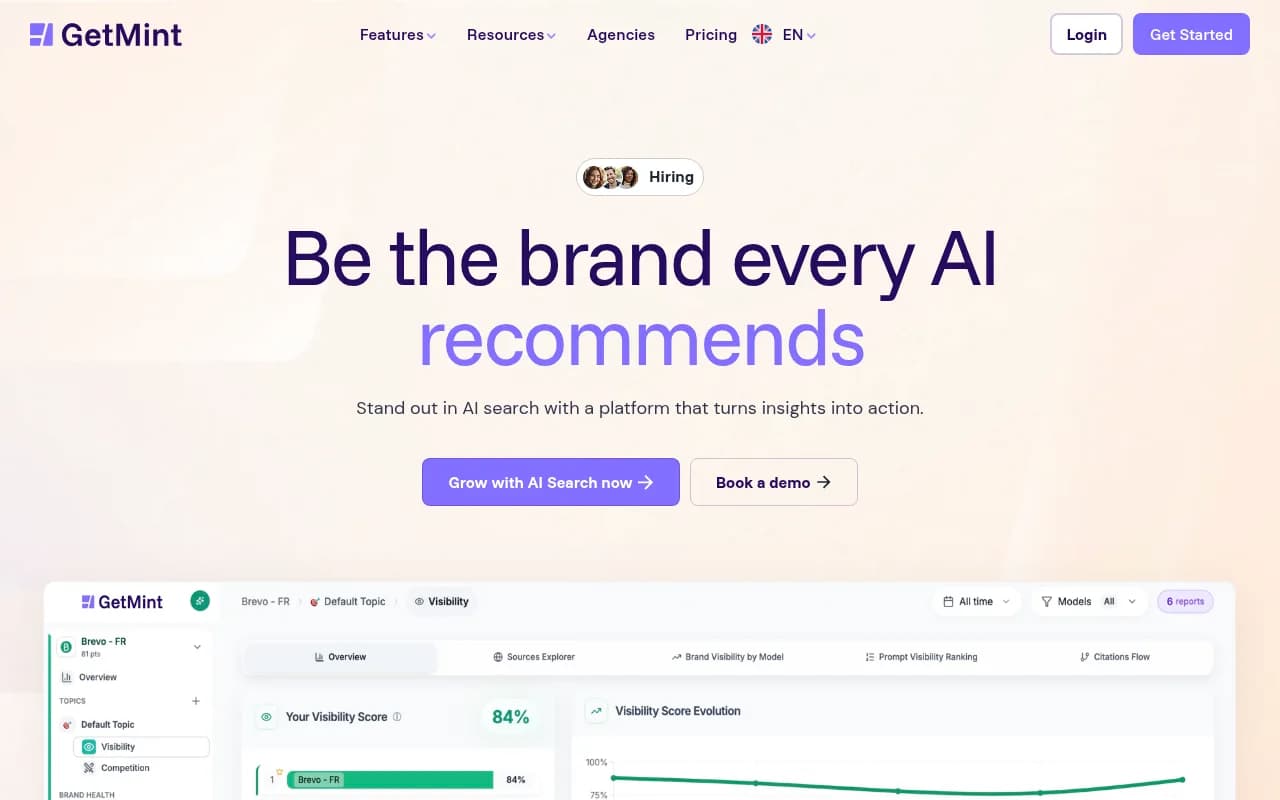
- GetMint is a Paris-based AI visibility platform (monitoring, a Content Studio, publisher distribution) with an entry plan around 99 euros a month. Its interface and support are in French.
- Most trackers under $250 a month measure only. They tell you whether you were mentioned, then leave the fixing to you.
- Cheap trackers start around $20 to $30 a month (Rankscale, Otterly), but engine coverage, prompt limits and refresh rates vary a lot.
- If you want monitoring, content and measurement in one place, Promptwatch's Essential ($95/mo) and Professional ($245/mo) plans both fit under the cap.
- Prices below come from spring 2026 vendor-written comparisons. Check each official pricing page before you buy.
Why people look for GetMint alternatives
GetMint is a French platform founded in 2025. It raised 4 million euros from Founders Future and Kima Ventures, says it has 200+ clients, and claims a network of 150,000+ partner publishers. It tracks ChatGPT, Claude, Gemini, Perplexity and AI Overviews with a Visibility Score, sentiment and competitor benchmarking.
That's a reasonable product. I'd still understand why a small team shops around:
- The interface and support are in French, which is a real friction point for English-only teams.
- Some of the finer analytics were announced for mid-2026, so check what is actually live today.
- The publisher-network approach is a distribution bet. Not everyone wants that bundled in.
- Reviewers like CheckThat.ai note it may fall short for enterprise needs (SOC 2 or ISO 27001, SSO) and for agencies managing 10+ clients. A startup rarely cares, but a growing agency will.
One caveat before we go further. Most GEO tools launched in 2024 and 2025, so independent reviews are thin across the whole category. Much of the pricing data online is written by vendors who compete with each other. Treat every number as a starting point and verify it.
What $250 a month actually buys you
The budget is tight but workable. Roughly speaking, you can get one of three things:
- A cheap tracker that runs a limited set of prompts on a few engines.
- A mid-priced tracker with daily refresh, more seats and reporting.
- A platform that adds content creation, crawler data or traffic attribution on top of tracking.
The deciding criterion is measurement reliability. A prompt tested once produces noise, because AI answers vary from run to run. So look at how often prompts re-run and how many you get, not just the headline price.
Engine behaviour matters too. According to Promptwatch Data's average sources per response report, ChatGPT cites about 5 sources per web-search answer, while Google AI Overviews cites about 10 and Perplexity almost exactly 10 every day. Microsoft Copilot swung from under 2 to nearly 17 sources within a few weeks. Fewer slots means tougher competition, so a tool that treats all engines as one number will mislead you. Track engines separately.
Comparison table: GetMint and its budget alternatives
Prices are spring 2026 figures from Cockpyt's comparison (itself a competitor, so vendor-written), plus Promptwatch's published pricing. Confirm everything on the official sites.
| Tool | Entry price | Refresh | Acts on the data? | Under $250? |
|---|---|---|---|---|
| GetMint | about 99 euros/mo | Weekly on Starter | Content Studio plus publisher network | Yes |
| Promptwatch | $95/mo (Essential), $245/mo (Professional) | Daily | Yes, with content gap analysis and Agent Chat; automated Content Agent from Business | Yes |
| Peec AI | about 89 euros/mo | Daily | No | Yes |
| Otterly | $29/mo (Lite) | Daily | GEO audit only | Yes |
| Rankscale | from 20 euros/mo | Per credits | No | Yes |
| Cockpyt AI | 29 euros/mo (annual) | Regular | No | Yes |
| AthenaHQ | $295/mo | Per credits | Attribution focus | No |
| Profound | $499/mo | Continuous | Enterprise | No |
AthenaHQ and Profound are listed so you know why they're missing from the rest of this guide. Both start above the budget.
The alternatives, one by one
Promptwatch: monitoring plus the fixing
Promptwatch is the one I'd look at first if you want more than a dashboard. It tracks ChatGPT, Gemini, Perplexity, Google AI Overviews, AI Mode, Copilot, Claude and others from the real user interfaces, then connects that to what to do about it: content gap analysis, an Action Board of prioritized tasks, and Agent Chat to dig through your data.

Here is how the tiers map to your budget:
- Essential at $95/mo: 1 project, 50 prompts, daily tracking, Agent Credits, Brand Narrative, visitor analytics and site audits. No crawler logs or AEO articles at this tier.
- Professional at $245/mo: 2 projects, 150 prompts, 5 AEO articles a month, 25M crawler logs, custom reports and Looker Studio. This is the plan that fits a startup that wants to publish content and see whether AI bots actually read it.
The automated Content Agent starts at Business ($579/mo), which is over your cap. That's worth knowing so you don't expect it at $245. Every plan includes unlimited seats and all supported AI models, and there is a 7-day free trial on monthly billing. Start with the free AI visibility report if you want a baseline before paying anything, and confirm prices at promptwatch.com/pricing.
If you are comparing it directly with a monitoring-only tool, see Promptwatch vs Peec and Promptwatch vs Otterly.
Peec AI: clean tracking, daily refresh
Peec AI sits around 89 euros a month, refreshes daily and includes unlimited seats and Looker Studio reporting. The catch is that each extra engine is a paid add-on, so the real cost climbs if you need broad coverage. It measures well and stops there.

Good for: marketing teams that already know what to fix and just need a reliable scoreboard.
Otterly: the cheapest credible entry
Otterly starts at $29/mo on the Lite plan, with daily refresh and a GEO audit that includes a SWOT-style summary. Pricing is per prompt, so a larger prompt set gets expensive quickly. Lite covers four engines, with Gemini and AI Mode optional.
Otterly.AI

Good for: solo founders who want a first look at AI visibility without committing real budget.
Rankscale: broadest engine coverage for the money
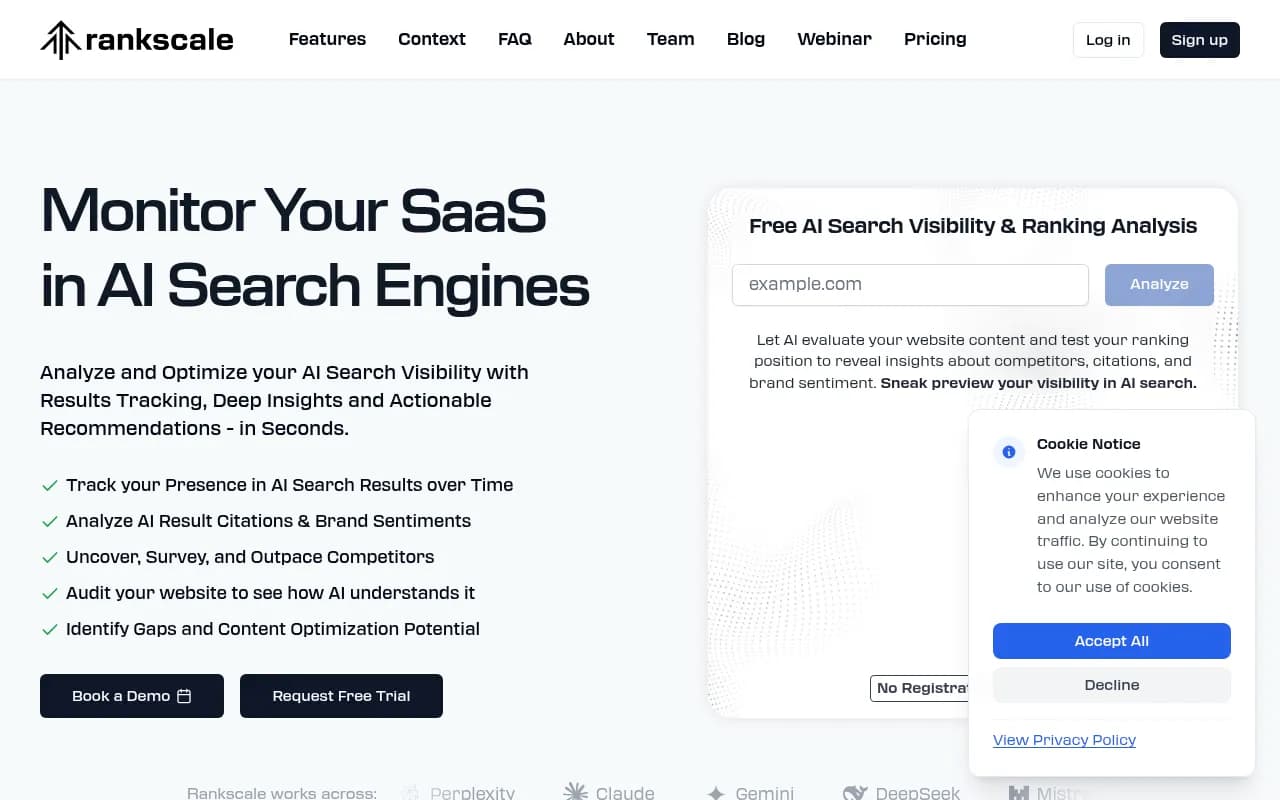
Rankscale starts from about 20 euros a month on a credit model with a 7-day trial and the widest engine coverage in this price range. Credit systems are flexible but make it hard to predict a bill. Run a trial and watch how fast credits drain.
Good for: tinkerers who want many engines and don't mind managing credits.
Semrush AI Toolkit: if you already live in Semrush
CheckThat.ai found Semrush appearing in 21% of "GetMint alternatives" answers, which tells you how often AI assistants point people to it. AI visibility is bundled into a broader SEO suite. That's handy if you already pay for Semrush, less so if you only want AI tracking. Verify the add-on pricing yourself, as I couldn't confirm it.
Writesonic: tracking with content creation
Writesonic pairs AI visibility tracking with content generation, which is the closest cousin to GetMint's monitor-plus-content idea. The writing side is stronger than the measurement side in my experience, so check the tracking depth before you commit.

Other options worth a look
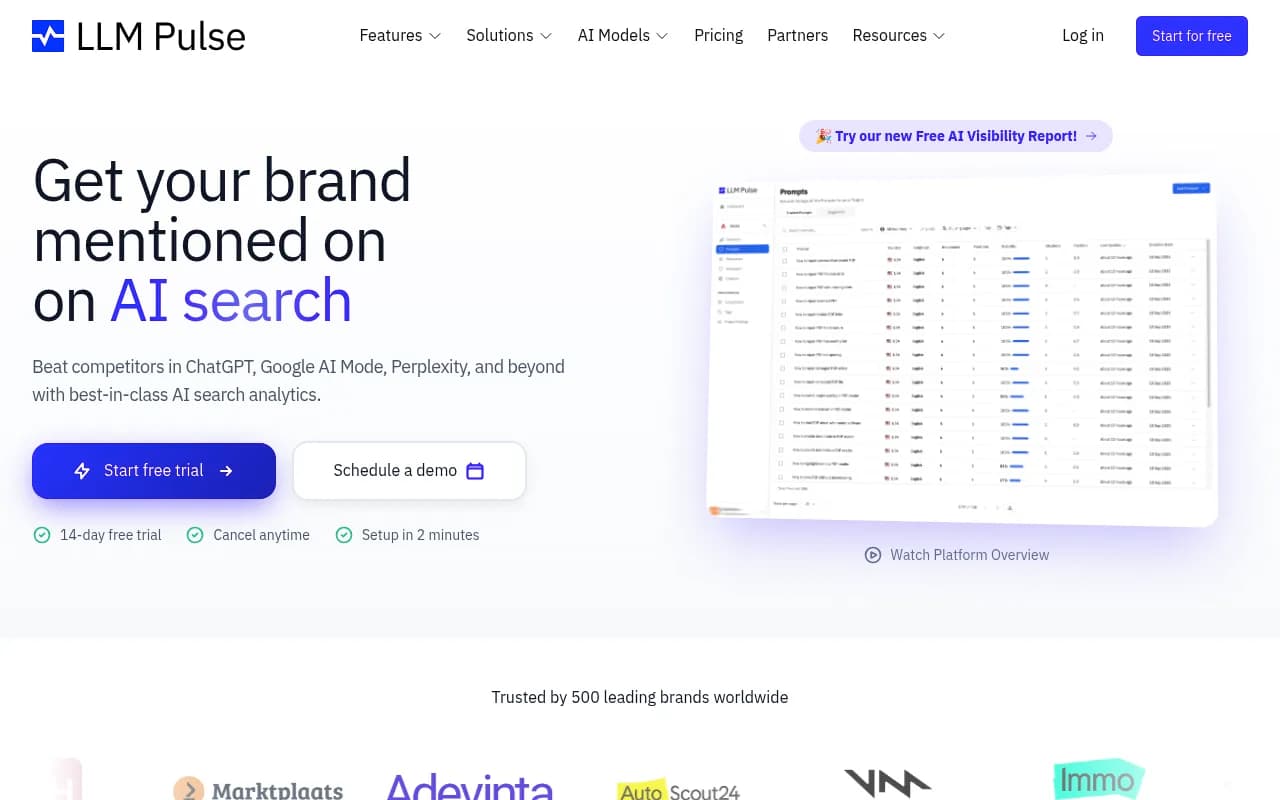
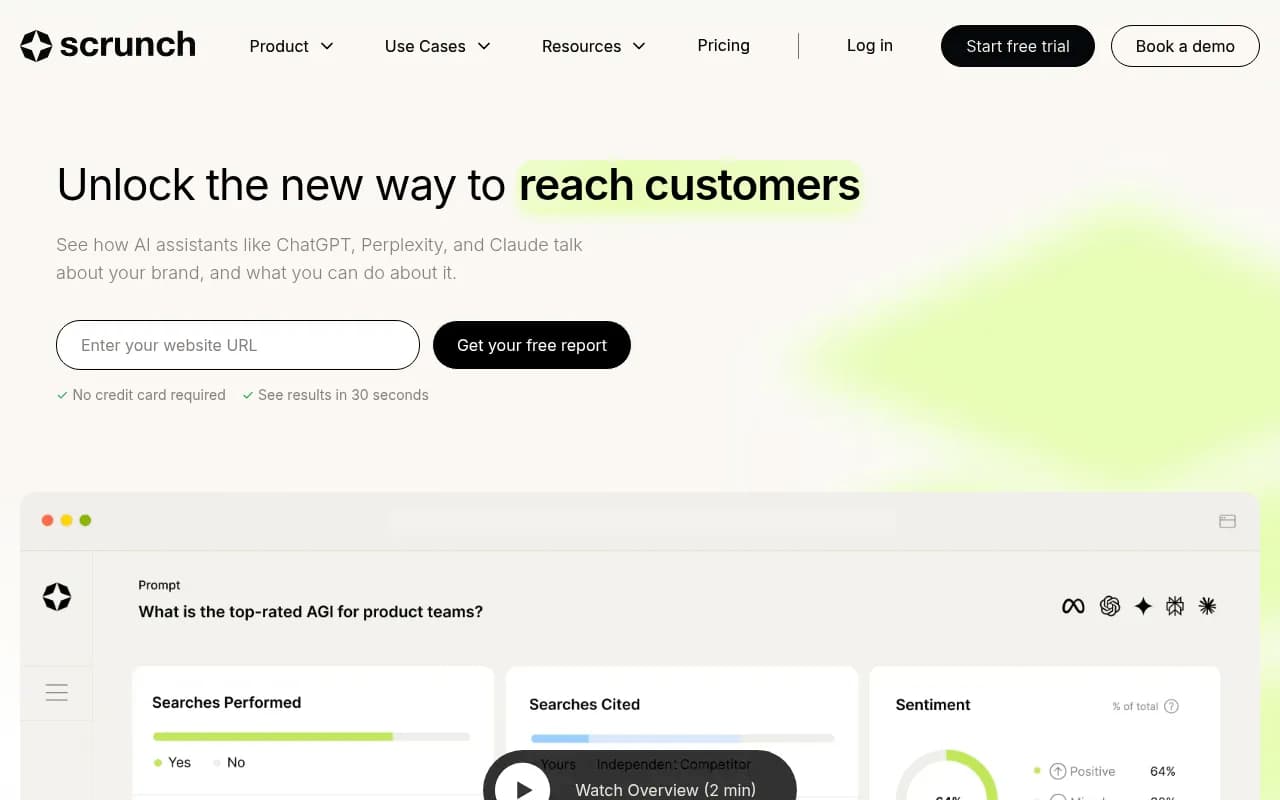
A few more names show up repeatedly in the category: Scrunch AI, LLM Pulse, Rankshift and Meteoria. For a content-first angle, MarketMuse and Jasper appeared in 16% and 17% of alternatives answers respectively, though neither is a pure visibility tracker.

Which one fits your situation?
| If you are... | Pick | Why |
|---|---|---|
| A solo founder testing the waters | Otterly Lite or Rankscale | Lowest entry price, trial available |
| A small team that wants to act on gaps | Promptwatch Essential or Professional | Content gap analysis, Action Board, crawler logs (Professional) |
| A marketing team that only needs a scoreboard | Peec AI | Daily refresh, unlimited seats, Looker Studio |
| Already paying for an SEO suite | Semrush AI Toolkit | One bill, one login |
| A French-speaking team | GetMint or Cockpyt | Native-language support |
| An agency with 10+ clients | Promptwatch agency plans (Kick-off $199/mo) | Unlimited projects and seats |
How to test a tool in a week
Don't trust a demo. Spend a week doing this:
- Write 20 prompts your real customers would type, mixing branded, comparison and long-tail questions.
- Run them in two tools at once and compare the answers each reports for the same prompt.
- Check whether the tool shows you the sources cited, not just a score.
- Look at how it handles Perplexity, which cites almost exactly 10 sources daily. Promptwatch's data suggests treating it as a test bench, because shifts in your citations there reflect your content changes rather than engine noise.
- Ask what the tool tells you to do next. If the answer is "nothing", you are paying for a scoreboard.
For tactics, Promptwatch Data recommends focused pages that each answer one question, targeting long-tail prompts, and measuring AI Overviews and ChatGPT citations separately. Its ChatGPT query fanouts report is useful for seeing how many web searches a single answer triggers, which tells you how many angles your page has to cover.
Mistakes that waste a small budget
- Buying for engine count instead of prompt volume and refresh rate.
- Ignoring add-on pricing. Per-engine and per-prompt pricing can double a bill.
- Tracking only brand-name prompts. Most buyers search by problem, not by your name.
- Skipping the crawler question. If AI bots can't read your site, no amount of content fixes visibility. The Agentic Readiness Check is a free way to test that.
If you want to browse more options, the directory at bestgeosoftware.com lists GEO tools by category.
Final take
GetMint is a decent choice if you read French and like the publisher-network model. For everyone else, pick based on whether you need a scoreboard or a way to improve the score. Otterly and Rankscale are the cheapest ways to start, Peec is the tidy tracker, and Promptwatch is the one that covers the work after the measurement within the $250 limit. Run a trial on two of them with the same 20 prompts and you will know within a week.