Key takeaways
- Sentiment in AI search is no longer a single positive or negative score. The useful version extracts the individual claims AI makes about you, groups them into themes, and ties each one to the pages responsible.
- Profound's revamped Sentiment product does this, with Content Priorities and agents for responding to negative reviews. If you want the same depth, look for claim-level analysis plus a path to fixing the source pages.
- Promptwatch is the closest match for narrative work: Brand Narrative is on every plan, with Fact Check, per-persona sentiment, and a content workflow that fixes the pages AI learns from.
- Most other alternatives (Otterly, Peec AI, Ahrefs Brand Radar, Semrush) report a sentiment score or label but leave the narrative analysis and the fixing to you.
- Whatever you pick, measure across many prompts. Brand-specific ChatGPT answers rest on a short list of sources, so a handful of review sites and forums can define how you are described.
What you are actually trying to track
Sentiment tracking used to mean counting positive and negative mentions. In AI answers that tells you very little. A model can mention your brand warmly and still say "its mobile app lacks features" or "expensive for small teams". Those two claims sink deals, and an average score hides both.
Profound made this point itself when it rebuilt its Sentiment product. Its own announcement says AI "doesn't just decide whether to mention you. It decides how": the tone, the framing, the verdicts. Its answer was to pull the specific claims being made about a brand, group them into semantic themes, and tie each theme to the citations responsible.
That gives us a useful checklist for comparing any alternative. Four questions:
- Does it show individual claims, or only a score?
- Does it group claims into themes you can compare against competitors?
- Does it trace each claim to the source page that taught the model?
- Does it help you change that source, or just report on it?
I think the fourth question is where most tools fall over. Plenty of dashboards can tell you sentiment dropped three points. Few help you work out which Trustpilot page or comparison article did it.
What Profound does now
Profound

Based on Profound's own description of the revamped product, it covers:
- Claim extraction grouped into semantic themes, each tied back to citations.
- Sentiment for your brand and competitors inside the same response, across a wider set of prompts than branded ones.
- Content Priorities, a list of owned and third-party pages contributing to negative sentiment. You update the ones you control and run outreach on the rest.
- Agents that, for example, draft a response when a negative review is driving citations.
It is a strong product, and it is aimed at enterprise budgets. If you are looking at alternatives, the reasons are usually price, a wish for more execution (writing and publishing the fix), or a need for data Profound does not emphasize, like AI crawler logs. Keep that in mind: you are not looking for something to replace a weak product, you are looking for a different shape of tool.
How the main alternatives compare on narrative and sentiment
| Tool | Sentiment depth | Claim-level narrative | Source tracing | Fixing the problem |
|---|---|---|---|---|
| Promptwatch | 0-100 score by prompt, topic, competitor; heatmaps | Yes, Brand Narrative on every plan, plus Fact Check | Citations, Reddit, YouTube, LinkedIn, offsite mentions | Action Board, Content Agent, CMS publishing |
| Profound | Brand and competitor sentiment in one response | Yes, themes tied to citations | Content Priorities | Agents |
| Ahrefs Brand Radar | Mentions and sentiment alongside SEO data | Limited | Offsite sources | Not built in |
| Peec AI | Per-prompt reporting | Limited | Citations | Not built in |
| Otterly.AI | Sentiment and answer-level insights | Limited | Citations | Not built in |
| Semrush AI toolkit | Inside the wider SEO suite | Limited | Limited | SEO suite tools |
| ZipTie | Visual, answer-level tracking | Limited | Answer-level | Not built in |
The ratings for tools other than Promptwatch and Profound come from how vendors describe themselves in roundups, so check each vendor's current product pages before you buy. The pattern is still clear: claim-level narrative is rare.
Promptwatch
Full disclosure: 1001 SEO Media publishes this site and uses Promptwatch as its own GEO platform. That said, the reason it leads this list is specific to the topic. It does claim-level narrative work and then goes on to fix what it finds.

Brand Narrative
Brand Narrative pulls the individual claims AI makes about you and your competitors out of every tracked response. Examples are "affordable for small teams" or "its mobile app lacks features". It groups repeated claims, shows how often and which models say each one, and files them under themes like Pricing, Features, Support, or Reputation. Each theme gets a 0-100 score you can compare against competitors. It is on every plan, including Essential at $95/mo.
Fact Check
This is the piece I find most useful for correcting a bad narrative. You mark a claim Accurate or Inaccurate, and Promptwatch reads the pages crawled from your site to find the ones that state it or its opposite, with quotes and a recommended next step. So when ChatGPT keeps saying you lack an integration you launched a year ago, you find out which of your own pages still says otherwise. Fact Check is on Business, Agency Scale, and Enterprise, and it uses Agent Credits.
Sentiment and personas
Sentiment is scored 0-100 (around 50 is neutral), independently of visibility, by prompt, topic, and competitor, with trends, a weekly AI summary, and competitor sentiment heatmaps. Custom personas let you prompt like your real buyers and see sentiment, position, and visibility per persona on a radar chart against the general audience. If a CFO persona gets a worse description of you than a developer persona, that shows up.
Closing the loop
This is the real separation from monitoring-only tools. Promptwatch traces where AI gets its answers (which pages are cited, which Reddit threads, YouTube videos, LinkedIn posts, and offsite pages name you), and then the Action Board, Content Refresh, and the Content Agent help change them. Pages come back through crawler logs, Page Tracker, and visitor analytics so you can see whether the fix got crawled, cited, and clicked. The Content Agent is on Business and Enterprise plans.
Promptwatch tracks the real interfaces of ChatGPT, Google AI Overviews, Google AI Mode, Gemini, Perplexity, Copilot, Meta AI, Alexa, and more, per country and language. Pricing runs from Essential at $95/mo to Business at $579/mo, with agency plans from $199/mo; confirm on promptwatch.com/pricing. There is a 7-day free trial on monthly billing, and a free AI visibility report if you just want a first look. A direct comparison is at Promptwatch vs Profound.
Ahrefs Brand Radar
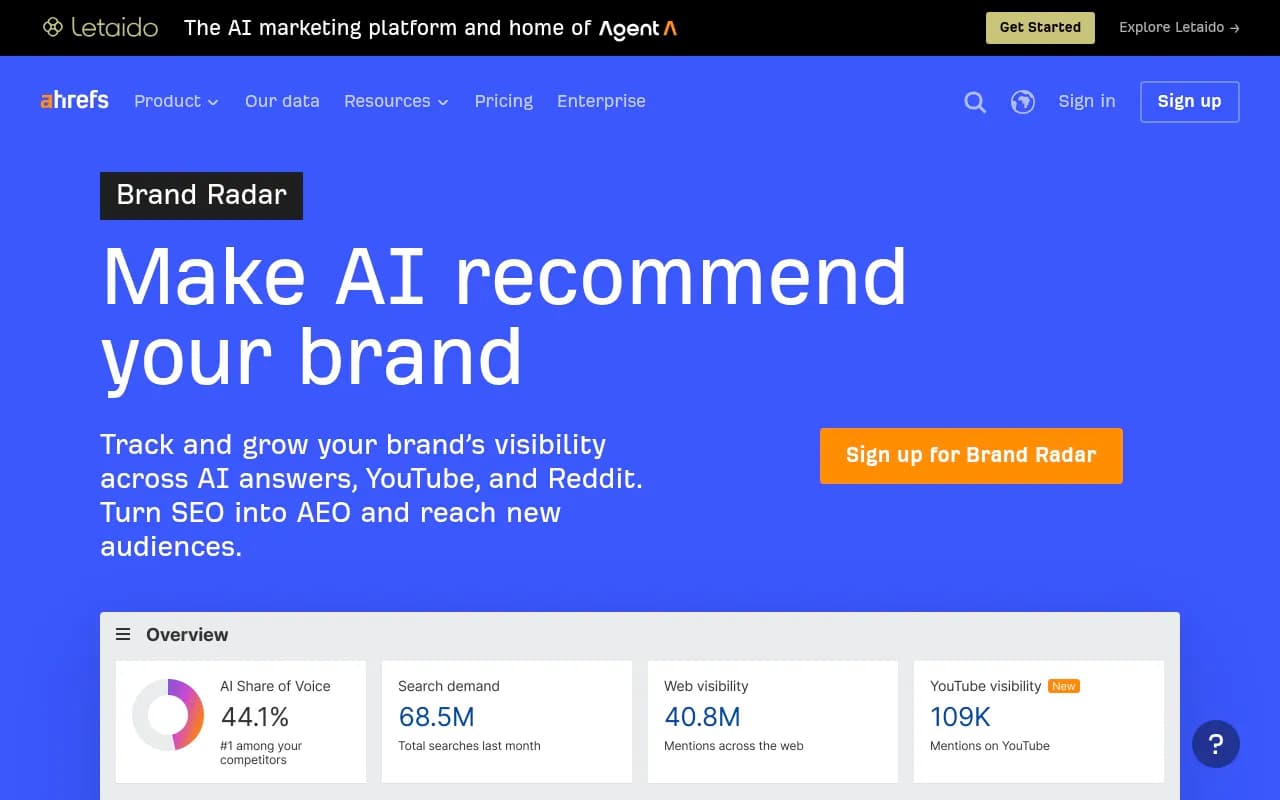
Brand Radar's draw is that it sits next to the keyword and backlink data you may already use. It counts AI mentions and the offsite sources behind them. That is genuinely useful context, and it is a good fit for SEO teams who want AI visibility in the same place as classic data. For narrative work, though, expect less depth: it tells you where you appear more than how you are characterized claim by claim. See Promptwatch vs Ahrefs for a closer look.
Otterly.AI and Peec AI
Otterly.AI


Both are lighter prompt-tracking tools with approachable pricing. Otterly is mentioned in roundups for brand sentiment and answer-level insights, and Peec reports each prompt individually with citation data. If your need is "tell me roughly how we are described and whether it is trending", they can be enough. If you need to know which specific claim is hurting you and which page caused it, you will hit the ceiling quickly. They also lack crawler logs and content generation.
ZipTie
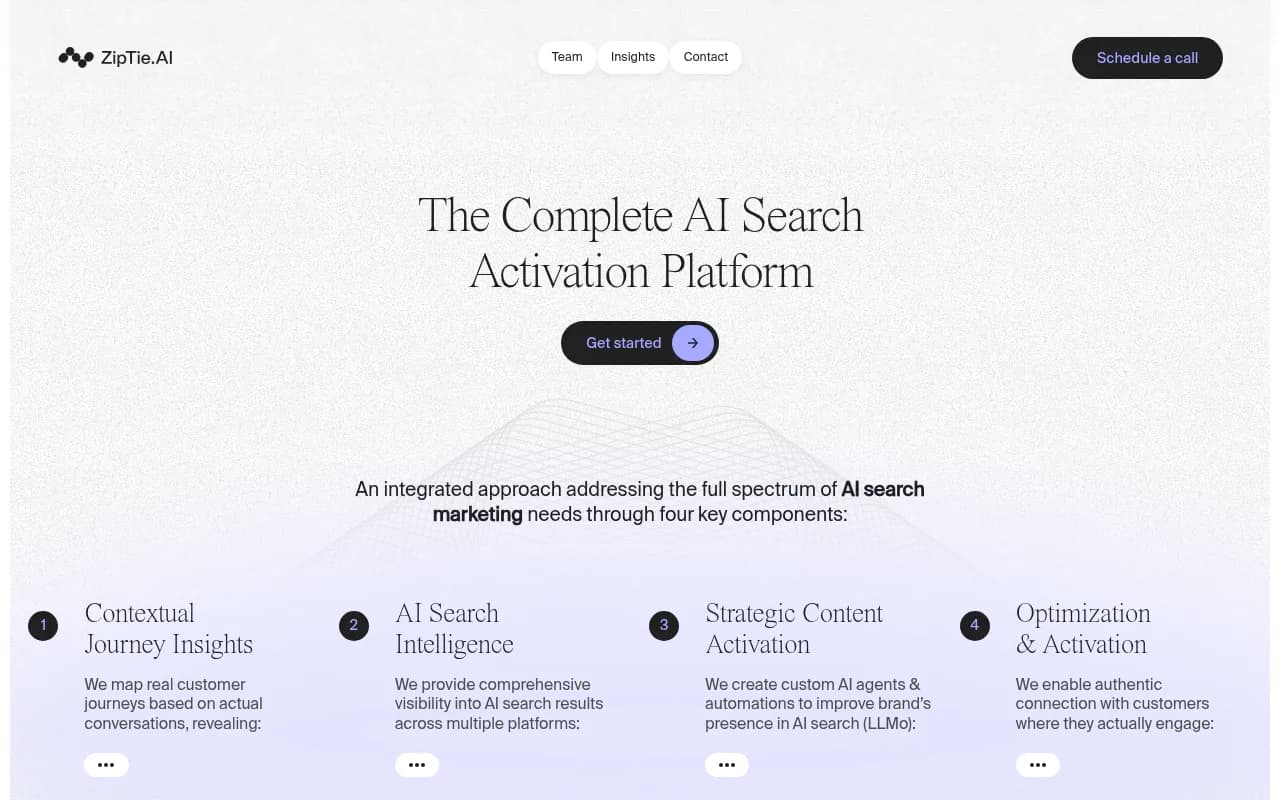
ZipTie is built around visual, answer-level tracking, so you see what the AI actually answered rather than only a metric. That is handy for PR and brand teams who want to read the real wording. It is a reviewing tool more than a fixing tool.
Semrush and the SEO suites
Semrush reports AI answer visibility inside the broader SEO suite. If you already pay for it, the incremental cost is low and the convenience is real. Prompt sets are more fixed and the AI-specific depth is shallower than in dedicated platforms. Good for a first view, less so for a narrative program. Seen as Promptwatch vs Semrush, the difference is mostly depth and what happens after the report.
Frase, Writesonic and AthenaHQ
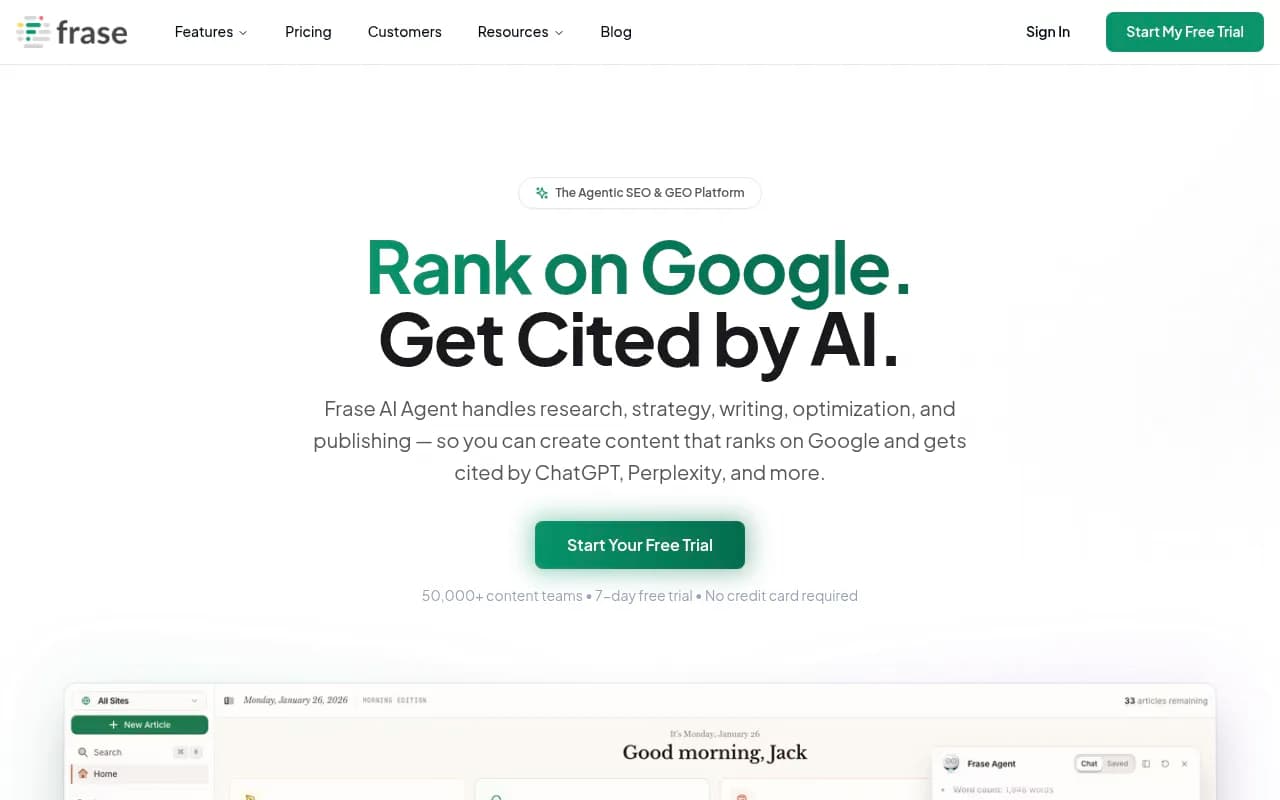


These come up in alternatives lists because they pair tracking with content work. Frase's own ranking puts itself first, which is worth discounting; its pitch is that alerts point at the slipped page and the product helps research and rewrite it. They are reasonable if your main goal is content production with some tracking attached. For sentiment specifically, none of the sources I reviewed showed claim-level narrative analysis comparable to Profound's or Promptwatch's.
For more options by category, the GEO software directory lists dozens of tools side by side.
Why narrative tracking needs many prompts and the right sources
Two findings from Promptwatch Data change how you should set this up.
First, brand-specific answers rest on a short source list. In Promptwatch's unique-domains report (Sep 28 to Oct 4, 2026), 47.6% of ChatGPT responses cited 10 or more domains overall, but for brand-specific prompts only 21.3% did. The most common count was 5 domains, and 40.7% cited 5 or fewer. In plain terms, when someone asks ChatGPT about you by name, a few review sites, comparison pages, and forums define the answer. Make sure they describe you accurately.
Second, where those sources live differs by engine. According to Promptwatch's social citations data for the same week, social platforms made up just 0.46% of ChatGPT's citations but 12.2% of Google AI Overviews', with YouTube at 4.28%, Facebook at 2.38%, and Reddit at 2.15%. Perplexity got 2.7%, with LinkedIn and Reddit tied at 0.86%. So a narrative problem born on Reddit may matter for AI Overviews and Perplexity, but is unlikely to drive ChatGPT. A tool that cannot split sentiment by model will mislead you here.
How to choose
- You need claim-level narrative plus fixes in one product: Promptwatch or Profound. Promptwatch is generally lower priced and adds crawler logs, visitor analytics, and Reddit, YouTube, and LinkedIn tracking.
- You are an SEO team that lives in Ahrefs or Semrush and want a quick read: use their built-in tools first, and add a dedicated platform when you need depth.
- You are a small team that wants a cheap trend line: Otterly or Peec.
- You are a PR or brand team that needs to read exact answers: ZipTie, or Promptwatch's response-level views.
- You manage clients: look at Promptwatch's agency plans (Kick-off $199/mo, Growth $399/mo, Scale $799/mo) or see the agency solutions page.
For rank trackers and AI monitoring tools more broadly, ai-rank-tools.com is a useful directory.
A simple narrative workflow that works with any tool
- Build a monitor of 30 to 50 prompts across branded, comparison, and category questions. Single prompts tell you very little.
- Pull out the repeated claims. Ignore one-offs.
- Mark each claim accurate or inaccurate. Be strict.
- For inaccurate claims, find the source: your own page, a review site, a comparison article, a forum thread.
- Fix owned pages first, then do outreach on third-party ones, and publish your own comparison pages so the accurate version exists.
- Re-measure after a few weeks, by model, and keep the claims that persisted.
If you have no budget at all, run the free AI visibility report and manually read answers for your top ten prompts. It is crude, but it will tell you whether you have a narrative problem worth paying to solve.
Bottom line
Profound set a high bar by tying claims to citations and sources. Among alternatives, Promptwatch is the one that matches it on narrative depth and adds the execution and measurement layers around it. The rest are fine for tracking a trend, and most will not tell you why the trend moved. Pick based on whether you need a report or a fix, and check current pricing and features on each vendor's site before committing.