Key takeaways
- Most AI visibility tools, including Profound, show you what AI models say about your brand but not how AI crawlers interact with your website. Crawler log monitoring is a separate, critical capability.
- Profound's pricing jumps sharply between tiers ($99 for ChatGPT-only, $399 for Growth), which pushes many teams toward alternatives.
- Only a handful of platforms in 2026 combine AI citation tracking with real crawler log analysis: Promptwatch, xSeek, Scriptbee, and JetOctopus are the main ones worth knowing.
- If you want to go beyond monitoring and actually fix visibility gaps with AI-generated content, Promptwatch is the only platform that closes the full loop from gap detection to content creation to citation tracking.
- For budget-conscious teams that just need basic brand mention tracking, Otterly.AI and Peec AI are cheaper entry points — but they won't show you crawler behavior at all.
Most teams shopping for a Profound alternative are asking the wrong question. They search for "which tool tracks more AI engines" or "which is cheaper" — and those are fair questions. But the more important question is: do you actually know what GPTBot, ClaudeBot, and PerplexityBot are doing when they crawl your site?
Profound tracks what AI models say about your brand. That's useful. But it doesn't tell you which pages AI crawlers are reading, which ones they're ignoring, which ones return errors, or how long it takes from crawl to citation. That gap is where a lot of AI visibility work gets stuck.
This guide covers the best Profound alternatives in 2026, with a specific focus on which ones include real crawler log monitoring — and which ones are just dashboards dressed up to look like they do more than they actually do.
Why teams leave Profound
Profound was one of the first serious enterprise platforms for AI visibility tracking. It covers ChatGPT, Perplexity, Google AI Overviews, and several other models, and its data quality is generally solid. So why are teams looking elsewhere?
A few recurring reasons:
- Price jumps are steep. The Starter plan at $99/month only covers ChatGPT. The Growth plan at $399/month unlocks broader coverage. For many teams, that's a significant jump for features they're not sure they'll use.
- It's monitoring-only. Profound shows you where you're visible and where you're not. It doesn't help you fix the gaps. There's no content generation, no brief creation, no optimization workflow built in.
- No crawler log analysis. Profound doesn't show you what AI bots are doing on your actual website. You can see citation outcomes but not the crawl behavior that leads to them.
- No Reddit or YouTube tracking. These are increasingly important signals for AI model training and citation behavior, and Profound doesn't surface them.
None of this makes Profound a bad tool. For enterprise teams that want clean, reliable monitoring data and have separate workflows for content and optimization, it works well. But for teams that want more action from their platform, the alternatives below are worth a close look.
What "crawler log monitoring" actually means
Before comparing tools, it's worth being precise about what this feature actually involves.
When AI companies like OpenAI, Anthropic, and Perplexity build their models and knowledge bases, they send crawlers to websites. GPTBot (OpenAI), ClaudeBot (Anthropic), PerplexityBot, and Google's various crawlers all visit pages, read content, and use what they find to inform AI responses and citations.
Crawler log monitoring means capturing those visits in real time and surfacing useful data: which pages each bot visited, how often, what HTTP status codes they received, whether they encountered JavaScript rendering issues, and how quickly a crawled page moves to being cited. Without this data, you're essentially optimizing blind — you can see citation outcomes but not the technical reasons behind them.
Most AI visibility platforms don't have this. They track prompts and responses through APIs or browser automation, which tells you what AI models say but nothing about how they're crawling your site. A handful of platforms have started building crawler log capabilities, and those are the ones worth paying attention to if this matters to your workflow.
The tools worth considering
Promptwatch
Promptwatch is the most complete platform in this space for teams that want both monitoring and action. The crawler log feature — called AI Crawler Logs or Agent Analytics — gives you real-time logs of GPTBot, ClaudeBot, PerplexityBot, and other AI crawlers hitting your site. You can see which pages they read, what errors they encounter, how often they return, and crucially, the timeline from first crawl to first citation.

That last part is what most tools miss. Knowing that ClaudeBot visited a page three weeks ago is interesting. Knowing that the page was crawled but never cited, and seeing that it returned a 200 status with thin content, gives you something to actually fix.
Beyond crawler logs, Promptwatch tracks 10 AI models (ChatGPT, Perplexity, Claude, Gemini, Google AI Overviews, Google AI Mode, Grok, DeepSeek, Copilot, Mistral), runs Answer Gap Analysis to show you which prompts competitors rank for that you don't, and includes Content Agents that generate articles and briefs grounded in real prompt and citation data. The integration options (Cloudflare, Fastly, Vercel, server logs, Google Search Console, or a tracking snippet) give you flexibility in how you capture crawler data.
Pricing: $99/mo (Essential), $249/mo (Professional, includes crawler logs), $579/mo (Business). Free trial available.
xSeek
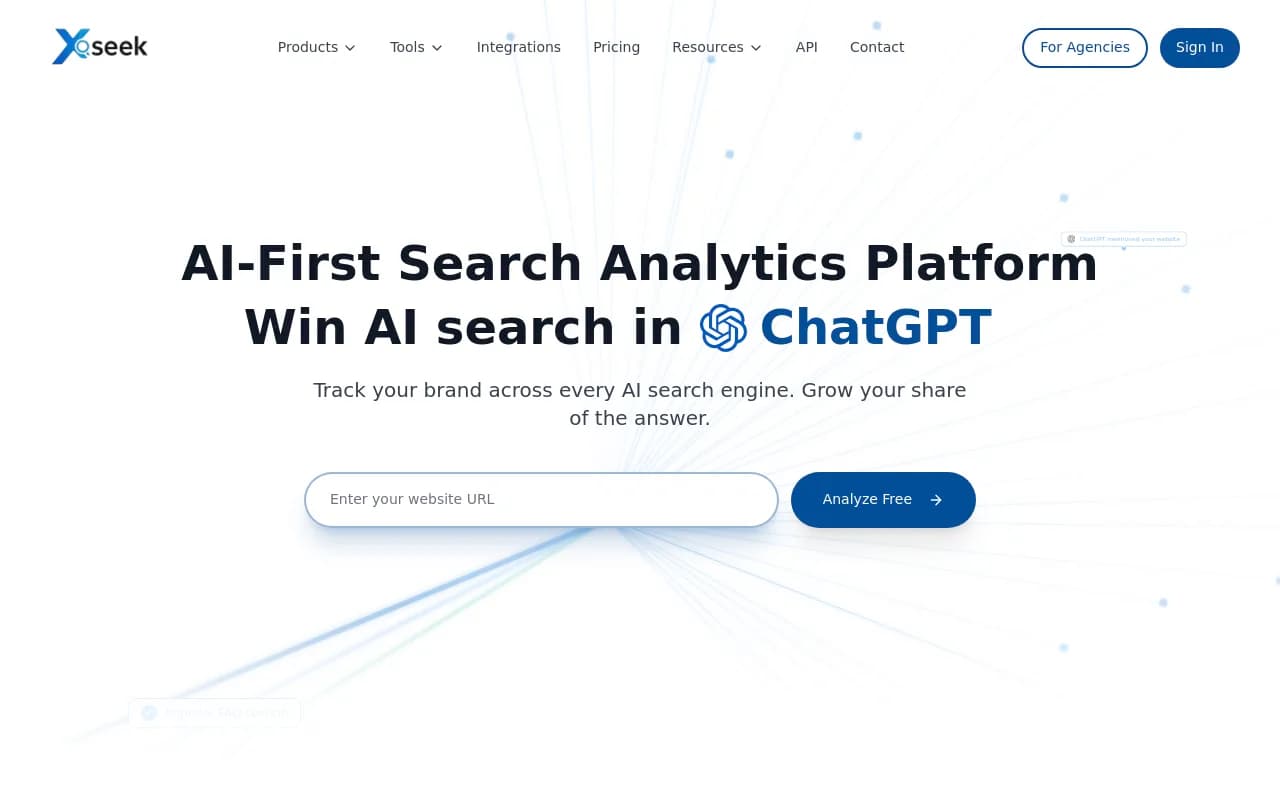
xSeek focuses specifically on ChatGPT rank tracking with GPTBot crawler monitoring. It's more narrowly scoped than Promptwatch — primarily ChatGPT-focused — but if your main concern is understanding how OpenAI's crawler interacts with your site, it's worth evaluating. The crawler monitoring component is real, not just a marketing claim.
Scriptbee
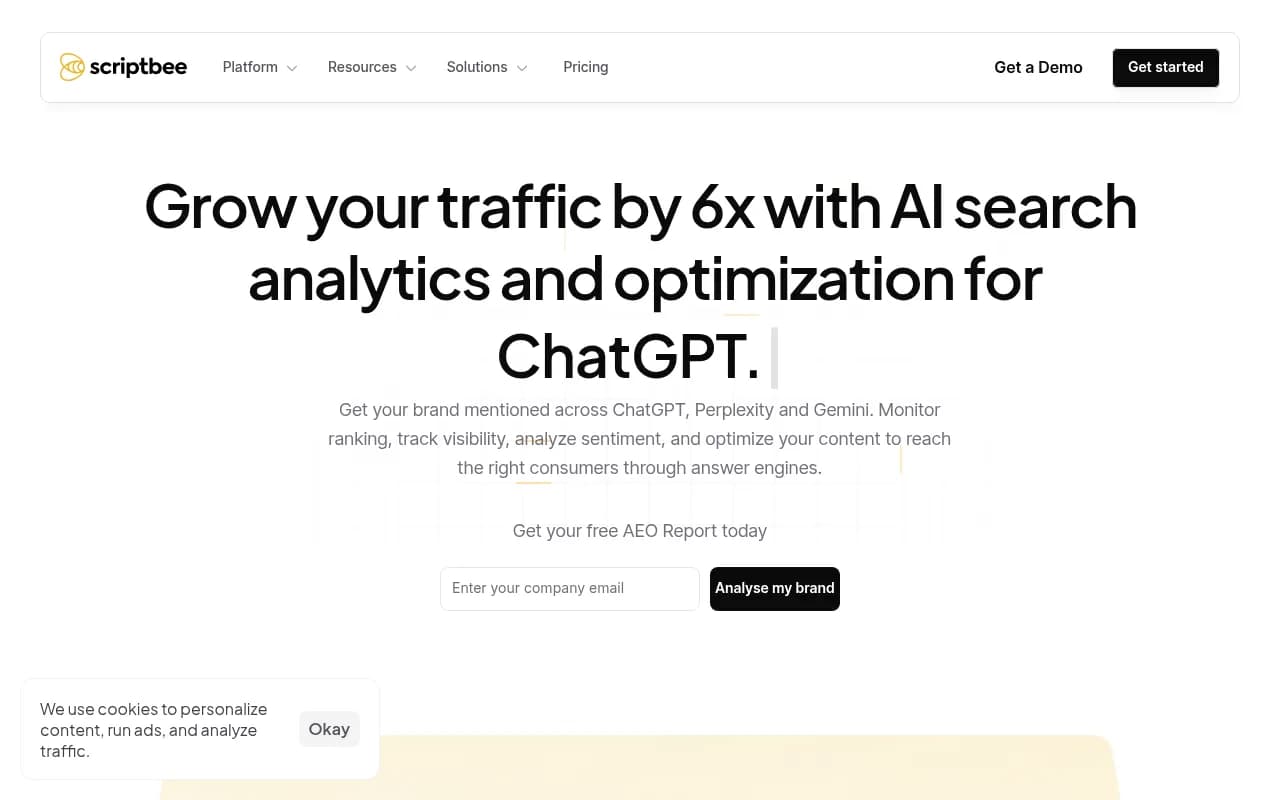
Scriptbee supports unlimited domains and includes AI crawler monitoring as part of its offering. It's positioned toward agencies managing multiple client sites, where the unlimited domain model makes more economic sense than per-site pricing. The crawler monitoring covers the major AI bots, though the depth of analysis is less granular than Promptwatch's Agent Analytics.
JetOctopus
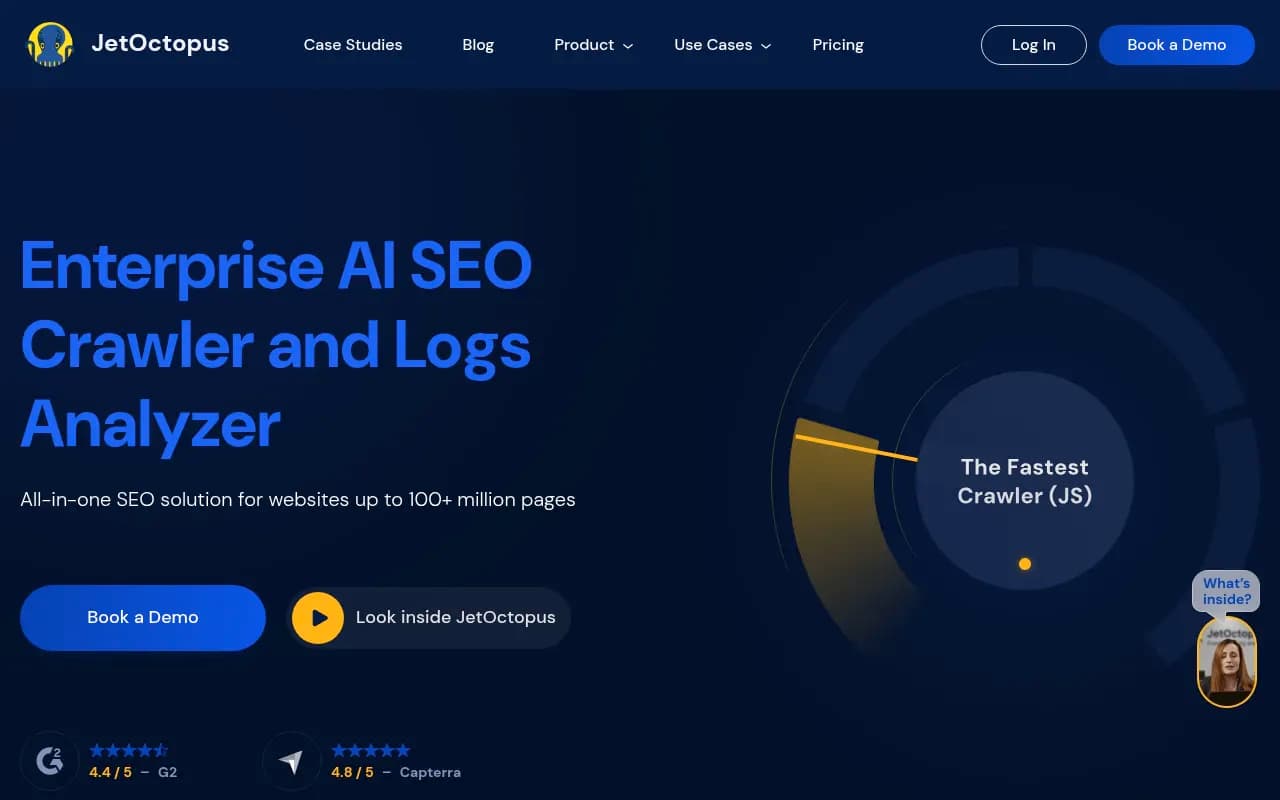
JetOctopus is primarily a technical SEO crawler and log analyzer built for large sites (10K+ pages). It's not an AI visibility platform in the traditional sense, but it does parse server logs and can identify AI bot crawl patterns. If you're already using JetOctopus for technical SEO and want to layer in AI crawler analysis without switching platforms, it's a reasonable option. Just know that it won't give you prompt tracking, citation monitoring, or content generation.
Otterly.AI
Otterly.AI

Otterly.AI is one of the more popular budget-friendly options for teams coming off Profound's price tag. It covers ChatGPT, Perplexity, and Google AI Overviews, and the interface is clean and easy to use. The honest caveat: there's no crawler log monitoring here. Otterly.AI is a monitoring tool, and a good one for what it does, but it won't show you what AI bots are doing on your site.
Peec AI

Similar story to Otterly.AI. Peec AI tracks brand mentions across AI engines at a lower price point than Profound, and it's a reasonable choice for teams that need basic visibility data without the enterprise price tag. No crawler log capability.
Scrunch AI
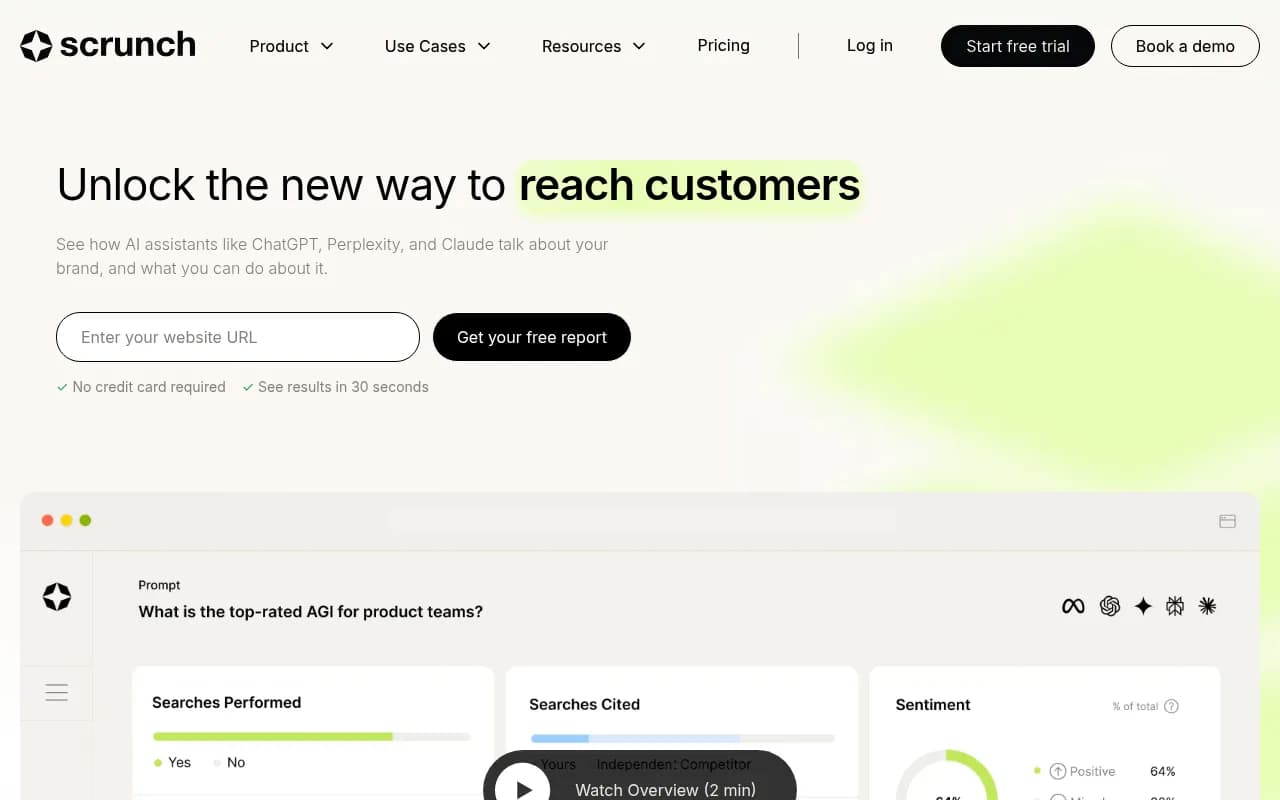
Scrunch AI has a stronger feature set than the basic monitoring tools and includes some content optimization capabilities. It tracks brand mentions, analyzes citation sources, and helps identify content gaps. No dedicated crawler log monitoring, but it goes further than pure tracking tools in terms of actionability.
AthenaHQ

AthenaHQ is monitoring-focused with solid data quality across multiple AI engines. It's often mentioned alongside Profound as an enterprise-grade option. The platform doesn't include crawler logs or content generation, which puts it in the same "monitoring-only" category as Profound itself.
ZipTie
ZipTie offers deep analysis for AI visibility tracking and covers ChatGPT and Perplexity with reasonable data depth. It's positioned as an analytical tool rather than an action platform. No crawler log monitoring.
Semrush
Semrush has added AI visibility features to its existing SEO platform, which makes it attractive for teams already paying for Semrush. The AI tracking uses fixed prompts rather than dynamic prompt intelligence, and there's no AI traffic attribution or crawler log analysis. It's a reasonable add-on if you're already a Semrush customer, but not a reason to switch from a dedicated AI visibility platform.
Ahrefs
Ahrefs Brand Radar covers AI search visibility as part of the broader Ahrefs suite. Like Semrush, it uses fixed prompts and lacks AI traffic attribution and crawler log monitoring. Good for teams already in the Ahrefs ecosystem.
Feature comparison
| Tool | Crawler log monitoring | AI engines tracked | Content generation | Prompt intelligence | Price (starting) |
|---|---|---|---|---|---|
| Promptwatch | Yes (real-time, multi-bot) | 10 | Yes (Content Agents) | Yes (volume + difficulty) | $99/mo |
| xSeek | Yes (GPTBot focused) | ChatGPT primarily | No | No | Varies |
| Scriptbee | Yes (multi-bot) | Multiple | No | No | Varies |
| JetOctopus | Yes (log analysis) | N/A (technical SEO) | No | No | Custom |
| Profound | No | 9+ | No | Limited | $99/mo (ChatGPT only) |
| AthenaHQ | No | Multiple | No | No | Custom |
| Otterly.AI | No | 3 | No | No | ~$49/mo |
| Peec AI | No | Multiple | No | No | ~$49/mo |
| Scrunch AI | No | Multiple | Partial | No | Custom |
| Semrush | No | Limited | No | No | $139/mo+ |
| Ahrefs | No | Limited | No | No | $129/mo+ |
How to choose based on what you actually need
The right tool depends on what's blocking you right now.
If you need to understand why AI models aren't citing your pages: Crawler log monitoring is the starting point. You need to know whether AI bots are visiting your pages at all, what they're finding when they do, and whether technical issues (JavaScript rendering, slow responses, thin content) are preventing citation. Promptwatch's Agent Analytics is the most complete version of this. xSeek is a reasonable option if you're primarily focused on ChatGPT.
If you need to find content gaps and fix them: Answer Gap Analysis plus content generation is the workflow you want. Promptwatch is the only platform that does both end-to-end. You can see which prompts competitors rank for, generate content targeting those gaps, and then track whether the new content gets crawled and cited.
If you need broad AI engine coverage on a budget: Otterly.AI or Peec AI give you basic monitoring across multiple engines at lower price points. You won't get crawler logs or content tools, but if you just need to know where your brand appears in AI responses, these work.
If you're an agency managing multiple client sites: Scriptbee's unlimited domain model is worth looking at. Promptwatch also has agency and enterprise pricing with custom configurations.
If you're already paying for Semrush or Ahrefs: The built-in AI tracking features are worth using as a baseline, but treat them as supplementary data rather than a complete AI visibility strategy. The fixed prompt approach and lack of crawler analysis leave meaningful gaps.
The crawler log gap most teams don't notice until it's too late
Here's something that doesn't get talked about enough: you can have great content, solid citations in some AI models, and still be invisible in others — and the reason is often technical, not content-related.
AI crawlers behave differently from Googlebot. Some struggle with JavaScript-heavy pages. Some have different crawl budgets. Some return to pages more frequently than others. If ClaudeBot is hitting your site and consistently encountering server errors on your most important pages, you'll never appear in Claude's responses for those topics — no matter how good your content is.
Without crawler log data, you'd never know this was happening. You'd just see low visibility scores and assume your content isn't good enough.
This is why crawler log monitoring is worth treating as a first-class feature rather than a nice-to-have. It's the diagnostic layer that makes everything else in your AI visibility strategy make sense.
Tools like Promptwatch connect this diagnostic layer directly to the optimization workflow — you see the crawl issue, you understand which pages are affected, and you have the tools to fix the content or technical problem and track the improvement.
A note on Profound's actual strengths
It's worth being honest: Profound is a well-built platform with strong data quality, particularly for enterprise teams. If your primary need is reliable, clean monitoring data across major AI engines and you have separate teams handling content and optimization, Profound does that job well. The enterprise pricing is high, but enterprise tools often are.
The case for alternatives is strongest when you want more from a single platform: crawler visibility, content generation, prompt intelligence, Reddit and YouTube tracking, or traffic attribution. Profound doesn't offer those, and for teams that need them, paying for Profound plus separate tools to fill the gaps often ends up costing more than a platform that includes them.
Bottom line
Most Profound alternatives in 2026 are still monitoring-only tools. They show you where your brand appears in AI responses, which is useful, but they don't show you what's happening at the crawl level or help you fix what's broken.
If crawler log monitoring is a priority, the shortlist is short: Promptwatch for the most complete solution, xSeek if you're focused on ChatGPT specifically, and Scriptbee for agencies with many domains. JetOctopus is worth knowing about if you're already doing deep technical SEO work and want to layer in AI bot analysis.
For teams that want to go further than monitoring and actually improve their AI visibility over time, the action loop matters: find gaps, create content that addresses them, track whether AI models start citing it. That's a harder problem than building a dashboard, and in 2026, very few platforms have solved it end-to-end.