Key takeaways
- Peak citation rate is the highest share of tracked AI responses that cite your brand or page, measured over a fixed prompt set. It only means something if you track it on a schedule.
- Citations decay by content type. Promptwatch Data shows landing pages and docs stay cited far longer than news, so your peak and your decay curve depend on what you publish.
- Platform changes can swing citation share overnight, so daily tracking with alerts beats weekly spot checks.
- Pick a tool by cadence, engine coverage, page-level history, and whether it connects citations to traffic. Cheap monitors cover the first two. Fewer cover the last two.
- Our pick for teams that want to act on the data is Promptwatch. Otterly.AI, Peec AI, LLMrefs, and Semrush are solid alternatives at different budgets.
What peak citation rate means
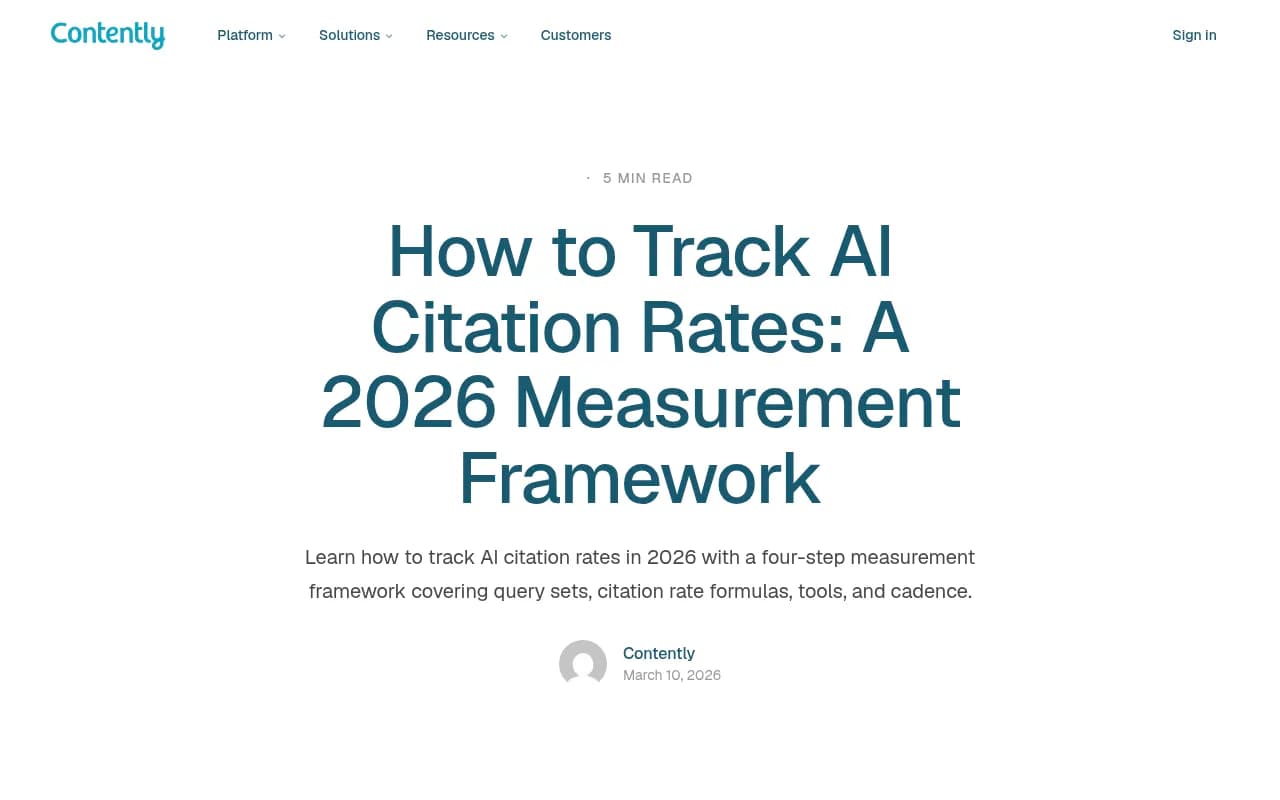
Citation rate is simple arithmetic: responses that cite you divided by total responses you tested. Contently's measurement framework frames it the same way: define a query set, run it across engines, log every mention, and divide.
Peak citation rate is the high point of that line. It answers questions a single snapshot cannot. When did a new page hit its best performance? How long did it hold? Did a model update knock it down, or did the content simply age?
I'd argue the peak matters less than the shape around it. A page that peaks at 40% and falls to 5% in three weeks is a different asset from one that peaks at 25% and stays there. You only see that with history.
Count three kinds of citation
A linked source, a named mention with no link, and a paraphrase of your content are different signals. A linked source can send clicks. A named mention builds awareness. A paraphrase suggests the model trusts your information. A good tool separates them rather than blending them into one score.
Why peaks are short and decay varies
Promptwatch Data tracked every page ChatGPT cited on July 6, 2026 for 90 days, through October 4, and split the results by content type (content half-life report). The numbers explain why your peak is not permanent:
- After 30 days, ChatGPT still cited 78% of landing pages and 76% of docs. After 60 days it still cited 69% and 67%.
- Comparison pages held 72% at 30 days and 63% at 60 days.
- Product pages, reviews, and how-tos sat around 55% at 60 days, with half-lives of 74 to 77 days.
- Listicles held 60% at 60 days.
- News decays fastest. Half of cited news pages were gone after 36 days, and almost a quarter were never cited again.
So if you publish news and press, expect a short burst. If you want a durable citation rate, invest in landing pages, docs, and comparisons, then re-check them on a schedule.
Platform changes move the whole line
Content age is not the only thing that moves your rate. Promptwatch's data on the ChatGPT citation drop after GPT-5.3 shows average citations per response fell across several models around the March 4, 2026 rollout. The Reddit citation collapse is sharper: reddit.com's share of ChatGPT citations fell from roughly 4% to 0.5% on August 14, 2026. And ChatGPT began using the site: operator at scale on August 8, jumping from about 0.4% to about 17% of fanout queries (report).
None of those are your fault, and none show up if you check monthly. That is the case for daily cadence and drop alerts.
Why a single prompt tells you little
Almost half of ChatGPT responses cite 10 or more unique domains (47.6% for Sep 28 to Oct 4, 2026, per Promptwatch Data). For organic prompts with no brand named, that rises to 52.5%. With that many sources per answer, your presence can flip on or off between runs without anything changing on your site.
The report's own advice is worth following: measure across many prompts, track your position and how you are described rather than only whether you are cited, and look at which competitors appear alongside you. Contently suggests 30 to 100 prompts per query set, which is a reasonable floor.
What to look for in a tracking tool
- Cadence. Daily at minimum. Hourly helps around launches. Weekly runs will miss the peak.
- Real interface data. User-facing answers and citations can differ from API outputs. Check how the tool collects.
- Page-level history. Peak and decay are per-URL concepts. Domain-level scores hide them.
- Citation type detail. Linked URLs versus unlinked mentions.
- Competitor context. Your rate means little without the rate of the brands cited next to you.
- Traffic and crawler data. Did AI bots even read the page? Did the citation send visits?
- Alerts. A drop you hear about in a monthly report is a drop you could not fix.
Comparison of the main options
Prices below come from third-party roundups dated August 2026 and may have changed. Confirm on each vendor's pricing page. Promptwatch prices are from promptwatch.com/pricing.
| Tool | Starting price | Cadence | Page-level citation history | Best for |
|---|---|---|---|---|
| Promptwatch | $95/mo (Essential) | Daily on every plan; 12, 6, or 1 hours on Business | Yes, Page Tracker and Citation Trends | Teams that want to track and fix |
| Otterly.AI | From $29/mo | Scheduled daily or weekly | Link citation analysis | Small teams starting out |
| Peec AI | About $89 to 95/mo | Daily | Source-level reporting | Marketing teams wanting clean dashboards |
| LLMrefs | $79/mo | Scheduled daily or weekly | Multi-platform citation data | Broad engine coverage |
| AIclicks | $59/mo | Scheduled | Pairs citations with conversions | Revenue attribution on a budget |
| Semrush | $99/mo | Varies by plan | Visibility score vs named competitors | Existing Semrush users |
| Ahrefs Brand Radar | Add-on pricing | Varies | Mentions, citations, impressions | Teams already in Ahrefs |
Tool by tool
Promptwatch
Promptwatch is the one I would start with if the goal is to understand why a peak happened and what to do about the fall. It collects from the real interfaces of ChatGPT, Google AI Overviews, AI Mode, Gemini, Perplexity, Copilot and others, rather than relying on API output.

For peak tracking specifically, three things matter. Page Tracker style monitoring lets you watch any URL and see the prompts and responses that cite it. Citation Trends classifies every citation by content type and shows first cited date, ramp-up, peak, and decay half-life per cited page, which is the exact curve this guide is about. And IP-verified AI crawler logs tell you whether a drop is an access problem or a content problem.
Then it closes the loop. Content Refresh gives git-diff-style updates for pages that are decaying, the Action Board prioritizes what to fix, and the Content Agent can publish new pages to WordPress, Webflow, or Framer. Visitor analytics show whether the citation produced traffic. Prompts run daily on every plan, and Business moves to every 12, 6, or 1 hours, which is what you want around a launch.
Pricing: Essential $95/mo, Professional $245/mo, Business $579/mo, with a 7-day free trial on monthly billing. Crawler logs start at Professional, and the Content Agent and faster-than-daily tracking start at Business. There is also a free AI visibility report if you want a baseline first. Compare it against rivals on the 2026 platform comparison or head to head, for example Promptwatch vs Otterly.
Otterly.AI
Otterly.AI is the low-cost entry point. It supports scheduled runs with drop alerts and shows the exact URLs cited, which covers the basics of peak and decline. You will not get crawler logs or content generation, so you see the line move but do the diagnosis yourself.
Otterly.AI

Peec AI
Peec AI is a tidy tracker aimed at marketing teams, with core coverage of ChatGPT, Perplexity, and AI Overviews and optional engines on top. Good dashboards, narrower scope.

LLMrefs
LLMrefs tracks across ChatGPT, Perplexity, and several other engines on a schedule with alerts. A fair choice if breadth of engines matters more than what happens after you spot a drop.
LLMrefs
AIclicks
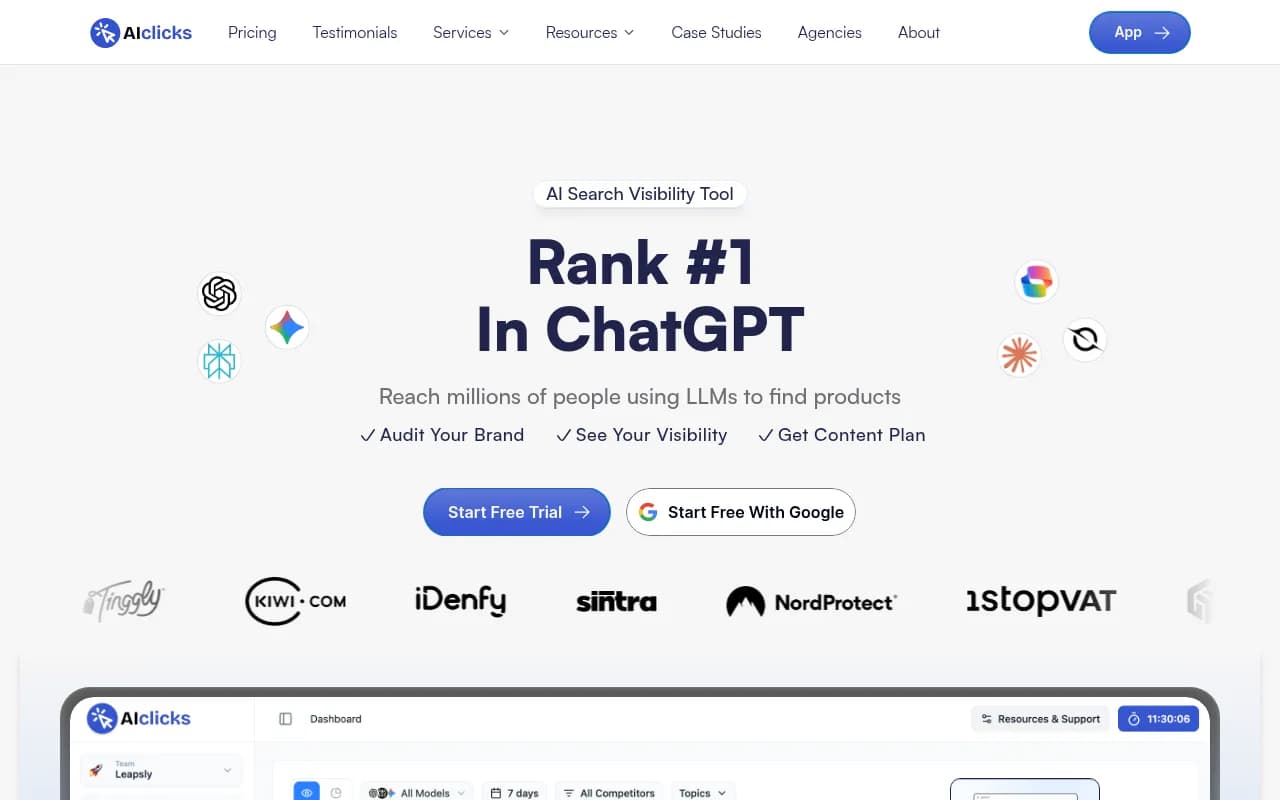
AIclicks adds conversion tracking to scheduled monitoring, so a citation drop shows next to its revenue impact. That is a useful angle if your boss asks about money rather than rates.
Semrush and Ahrefs Brand Radar
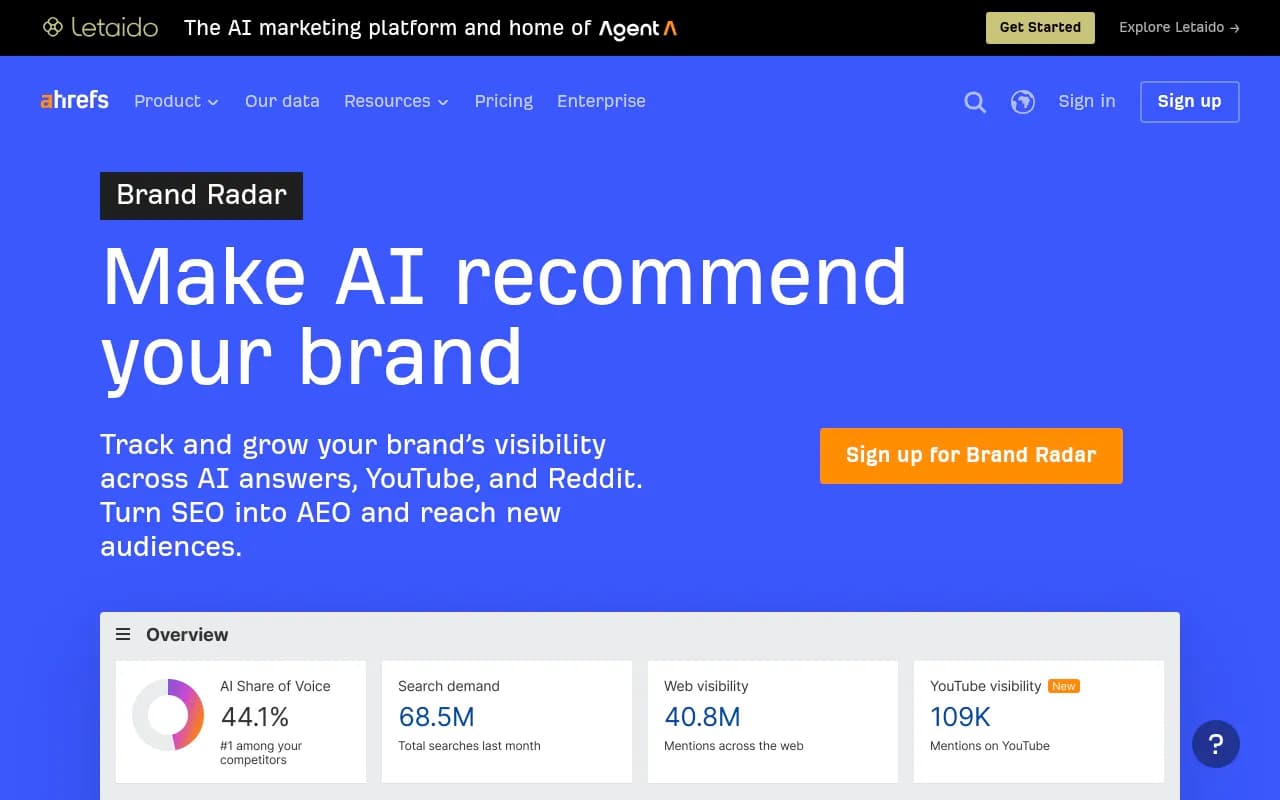
Both are SEO suites that added AI tracking. Semrush benchmarks an AI visibility score against named competitors. Ahrefs Brand Radar has a deep dataset for mentions, citations, impressions, and share of voice. They suit teams already living in those products, though prompt sets tend to be more fixed and there are no AI crawler logs.
Other trackers worth a look
Profound and Scrunch are strong on monitoring at higher price points. Rankshift, LLM Pulse, and AthenaHQ are monitoring-focused. If you want to compare more, the GEO software directory at bestgeosoftware.com and the rank tracker list at ai-rank-tools.com cover a wider field.
Profound


A simple workflow for tracking peaks
Step 1: Build a stable prompt set
Pull 30 to 100 prompts from real buyer questions. Split them into organic, brand-specific, and competitor comparison types, because citation counts differ by type. Do not edit the set mid-test or your trend line breaks.
Step 2: Tag by content type
Label each tracked page as landing page, doc, comparison, listicle, news, and so on. Given the half-life data above, this is what lets you predict decay rather than merely observe it.
Step 3: Set cadence and alerts
Daily runs. Alert on a drop beyond a threshold you pick, say a third of your trailing average. Move to hourly only around launches.
Step 4: Record the peak and the decay
For each page, note the date first cited, the highest citation rate, the date it hit it, and how many days until it fell to half. Tools with built-in half-life views save a spreadsheet.
Step 5: Refresh before the fall
When a page is about 30 days past its peak, refresh it. Landing pages and docs can go longer. News pages cannot, so treat them as bursts.
Step 6: Tie it to traffic
A high citation rate that sends nobody is a vanity number. Check AI-referred visits and conversions. Note that ChatGPT stopped sending a referrer on October 8, 2026, so tagging links with utm_source=chatgpt.com is worth doing.
Which tool should you pick?
- You want to see the number and little else: Otterly.AI or LLMrefs.
- You already pay for Semrush or Ahrefs: start with their AI add-ons, but expect shallower data.
- You care about revenue per citation on a budget: AIclicks.
- You want peak, decay, crawler access, refresh suggestions, and publishing in one place: Promptwatch.
One caveat. Every tool here samples. Run enough prompts and compare trends rather than single days, or you will chase noise.
If you would rather hand this to specialists, 1001 SEO Media runs GEO programs for brands using Promptwatch for measurement.
Final word
Peak citation rate is a useful number only if you keep the history behind it. Start with a fixed prompt set, track daily, tag pages by content type, and refresh on the decay schedule the data supports. For wider coverage of the category, see the Promptwatch Data hub and the AI search tool directory at surferstack.com.