Key takeaways
- Bluefish is a sales-led platform built for Fortune 500 marketing orgs, with reported annual contracts in the $150K-$500K+ range, no published pricing, and a five-module structure (Monitoring, GEO Optimization, Measurement, Commerce, Accuracy) that assumes separate brand, content, PR, and product-marketing teams
- If you're a five-person SEO team, an agency, or a mid-market brand, that structure works against you, not for you
- Self-serve platforms like Promptwatch, AthenaHQ, and Otterly.AI now cover the same monitoring core (citations, sentiment, competitor tracking) at $29-$579/month with published pricing and no sales calls
- Scrunch AI was acquired by Sitecore in June 2026 and folded into an enterprise DXP, so it's arguably moving in Bluefish's direction rather than away from it, worth noting if you were counting on it as the lightweight option
- The real differentiator isn't who tracks the most engines, it's who turns tracking into content and fixes, without requiring you to hire the org chart Bluefish was designed around
Why teams go looking for a Bluefish alternative in the first place
Bluefish markets itself, in its own words, as the AI marketing platform built for the Fortune 500. That's not a knock, it's just an accurate description of who they're selling to. The company raised a $43M Series B in April 2026 (on top of a $20M Series A), bringing total funding to $68M, and it's used by roughly 10% of the Fortune 500 across verticals like pharma, luxury, and financial services.
The problem shows up the moment you're not that buyer. There's no pricing page. No self-serve signup. No free trial. You book a demo, go through a sales cycle, and if you make it through, you're looking at reported annual contracts anywhere from $150K to $500K+, plus $15K-$100K in implementation fees, and 4-6 weeks of onboarding before you see real output. I've seen reviewers describe the platform as assuming a marketing org with separate search, content, brand, and PR functions, each expected to run their own prompt groups, Brand Vault entries, and Collections campaigns. If you're an agency running AI search work for ten clients, or a four-person in-house team, that structure isn't a feature. It's friction.
So the question worth asking isn't "what's the best Bluefish competitor" in some abstract sense. It's narrower: which tools give you real AI visibility monitoring, and ideally a path to fixing what you find, without asking you to justify a five- or six-figure line item to finance first.
What actually matters if you're skipping the full suite
Before getting into specific tools, it helps to know what you're actually trying to replace. Bluefish's pitch rests on five things: monitoring how AI engines describe you, optimizing content for those engines (GEO), measuring the impact, tracking commerce/shopping mentions, and auditing for factual accuracy (hallucination detection). Most lean teams don't need all five running simultaneously. What you usually need is:
- Reliable citation tracking across the engines your buyers actually use
- Enough prompt volume to see patterns, not just anecdotes
- Some way to turn a visibility gap into a piece of content, rather than just a red dashboard cell
- Pricing you can put on a credit card, not a procurement form
Worth grounding this in real numbers rather than vibes. Promptwatch's own research shows ChatGPT typically cites around 5 sources per web-search answer, while Google AI Overviews cites roughly 10 and Perplexity is remarkably consistent at almost exactly 10 (https://promptwatch.com/data/average-sources-per-response). With only five citation slots on ChatGPT, every one of those slots is genuinely contested, which is part of why monitoring without action is a weak strategy regardless of budget. Also worth knowing: mid-authority domains, not the DR 90+ giants, earned almost half of all ChatGPT Search citations in August 2026, while DR 91-100 sites fell to around 3% of citations by month's end (https://promptwatch.com/data/chatgpt-citation-share-by-domain-rank-august-2026). That's good news for smaller brands. You don't need enterprise-tier domain authority to show up, which undercuts a chunk of the "you need enterprise tooling too" argument.
The alternatives, compared
| Tool | Entry price | Engines tracked | Content/action layer | Best fit |
|---|---|---|---|---|
| Promptwatch | $95/mo (Essential) | ChatGPT, Gemini, Claude, Perplexity, Grok, Copilot, AI Overviews, AI Mode, and more | Content Agents with CMS publishing, Unified Actions, crawler logs | Teams that want monitoring and fixes in one platform |
| Profound | Custom (self-serve tiers removed Sept 2026) | Up to 9 engines on Enterprise | Agent Analytics ties crawler activity to referral traffic | Enterprise-adjacent teams who outgrew self-serve |
| AthenaHQ | $295/mo (Starter) | 9 engines incl. ChatGPT, Perplexity, AI Overviews, Gemini, Claude, Copilot, Grok | Content Optimization Agent, Citation Engine (ACE) | E-commerce brands needing Shopify-style workflows |
| Otterly.AI | $29/mo (Lite) | 4 free engines, Claude/Gemini/AI Mode as add-ons | GEO Audits, Agent Analytics on higher tiers | Budget-conscious teams wanting to start cheap |
| Peec AI | ~€70/mo (Starter, EUR pricing since Aug 2026) | Choose 3-6 models | Monitoring only, no content generation by design | Teams that specifically don't want a content layer |
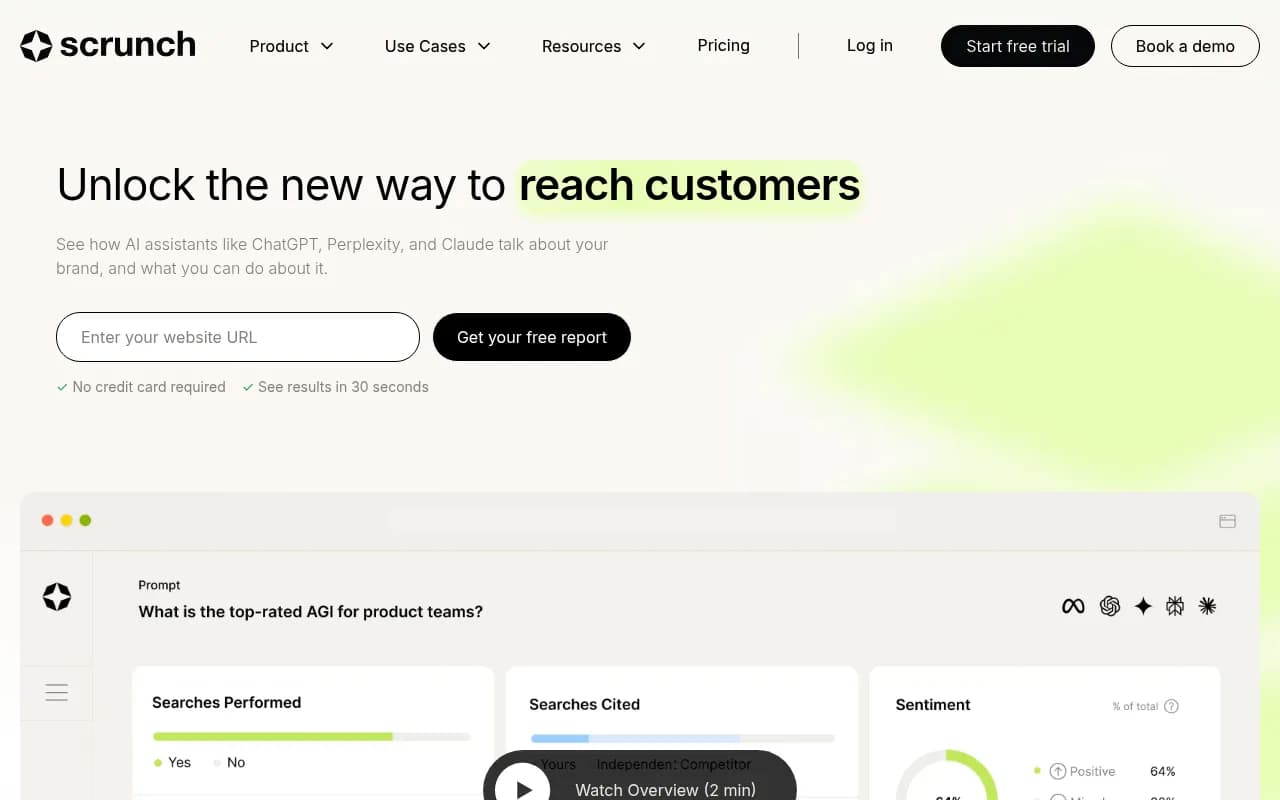
| Scrunch AI | Not published (post-Sitecore) | Up to 9 engines on Enterprise | Agentic web optimization, now part of Sitecore DXP | Brands already invested in Sitecore's ecosystem |
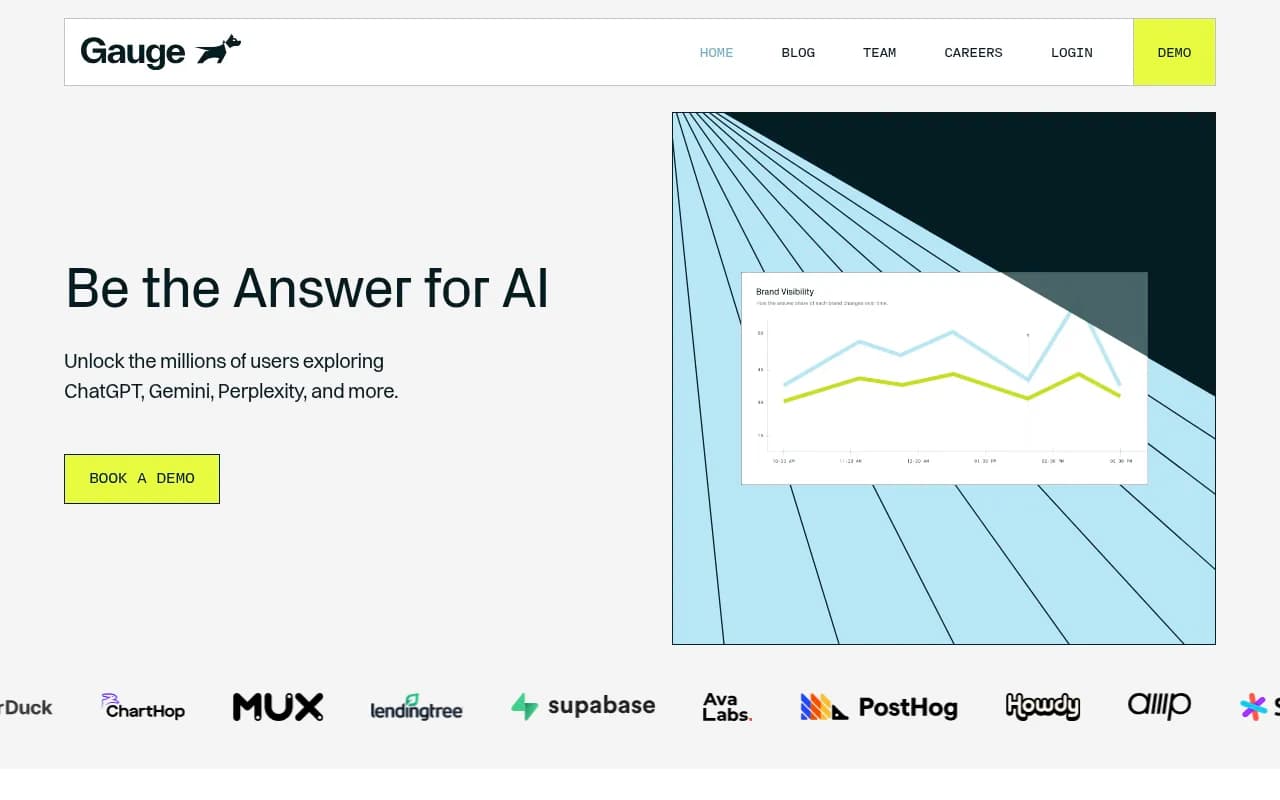
| Gauge | $599/mo (Growth) | 6 platforms, Claude/Grok via your own API key | 18 publish-ready articles/mo, "Ask Gauge" agent | Teams wanting competitive-strategy framing over raw tracking |
Promptwatch
Promptwatch is the one I'd point most lean teams toward first, mainly because it doesn't stop at telling you where you're invisible. Its Content Agents plan, write, and publish GEO-optimized articles directly to Webflow, Framer, or WordPress on a schedule, and Unified Actions turns your citation and crawler data into a prioritized to-do list instead of a wall of charts you have to interpret yourself. It's used by 1,840+ brands and agencies, rated 4.7/5 on G2, and tracks the actual UI of ChatGPT, Gemini, Claude, Perplexity, Grok, and Google's AI surfaces rather than relying solely on API outputs, which matters because what a user sees in the ChatGPT app can differ from what the API returns.

Pricing starts at $95/month for Essential (1 site, 50 prompts, 6,000 responses, 5 AEO articles) and scales to $245/month for Professional, which adds shopping insights, automated content generation, and state/city-level tracking. Compared to Bluefish's five- or six-figure contracts, this is a rounding error, and you get crawler log visibility (which engine bots are actually reading your pages) that Bluefish's own reporting doesn't include.
Profound
Profound is the enterprise benchmark most alternative guides put at the top of the list, largely because of its research output (the "Parrot Problem" 50K-prompt study, multi-million-prompt citation analyses). The catch, as of September 2026, is that Profound removed its self-serve Starter ($99/mo) and Growth ($399/mo) brand plans. Brands now get a one-time free trial (10 prompts, ChatGPT only) or go straight to custom Enterprise. That's a meaningful shift away from the "accessible alternative" positioning it used to have. If you were hoping to use Profound as the lighter-weight option, that door mostly closed this year, unless you're buying through an agency seat.
Profound

AthenaHQ
AthenaHQ's Starter tier runs $295/month for 3,600 credits and covers nine engines, which is broad for the price. Its Shopify integration and Advanced Content Optimization Agent make it a natural fit for e-commerce teams specifically, less so for B2B or services brands who don't need product-catalog-level tracking.

Otterly.AI
At $29/month for the Lite tier, Otterly is the cheapest credible entry point on this list. You get 15 tracked prompts and daily tracking across four free engines (ChatGPT, AI Overviews, Perplexity, Copilot), with Claude, Gemini, and AI Mode available as paid add-ons. It's not going to replace a content strategy, but as a first monitoring layer for a team with essentially no budget, it does the job.
Otterly.AI

Peec AI
Peec repriced in August 2026, moving to EUR-denominated plans (Starter €70/month, Pro €180/month, Advanced €360/month) and pulling back its published free-trial terms. It's deliberately monitoring-only, no content generation, which some teams will actually prefer if they have their own writers and just want clean visibility data plus a crawlability checker covering 40+ AI bots.

Scrunch AI
Here's the twist worth flagging clearly: Scrunch was acquired by Sitecore in June 2026 and is now part of Sitecore's enterprise digital experience platform. If you were eyeing Scrunch as the lightweight, standalone option, that positioning has changed. It's arguably moving in the same direction as Bluefish, toward an enterprise suite, rather than away from it. Worth checking current pricing directly before assuming it still fits a lean-team budget.
Gauge
Gauge frames itself around competitive strategy rather than raw monitoring, with 600 prompts tracked daily across six platforms at $599/month and 18 content-engine articles included. It's pricier than the others here, but the pitch is closer to what Bluefish promises (turning visibility into a roadmap) without the enterprise contract. Customers cited include PostHog, Supabase, and Sourcegraph.
What the data says about where the effort should go
One thing that's easy to miss when comparing tools on features alone: the content types AI engines actually cite are shifting fast, and that shift should shape what you build regardless of which tracker you pick. In August 2026, ChatGPT's citation mix was dominated by product pages (28.7%), with how-to content more than doubling its share intra-month (4.3% to 9.1%), while social posts collapsed from 4.4% to under 1% after August 14, the same day Reddit's ChatGPT citation share also cratered (https://promptwatch.com/data/chatgpt-citation-types-over-time-august-2026, https://promptwatch.com/data/reddit-citations-are-dropping-in-chatgpt). If your alternative-to-Bluefish strategy leans heavily on Reddit presence or social content to win citations, that bet has gotten weaker this year, not stronger.
It's also worth watching AI crawler behavior directly. OpenAI's share of verified AI crawler requests fell from 94.8% in early June 2026 to 79.8% by early September, as Anthropic, Google, Perplexity, and Mistral picked up share (https://promptwatch.com/data/ai-crawler-traffic). Any tool that claims "crawler visibility" as a feature should be tracking that shift, not just ChatGPTBot.
Making the call
If you're deciding purely on price and breadth, Otterly.AI or Peec AI get you monitoring for under $200/month. If you want the monitoring plus an actual mechanism to close the gaps it finds, without paying enterprise rates, Promptwatch and AthenaHQ are the two that actually publish an execution layer alongside the tracking. Gauge sits in between on price but leans hardest into the "strategy roadmap" framing Bluefish uses, just at self-serve prices.
What none of these require is a four-to-six-week onboarding, a custom SLA, or a demo call just to see a price. That, more than any single feature, is the real reason teams go looking for a Bluefish alternative in the first place. For a broader look at GEO platforms across every budget tier, the directory at bestgeosoftware.com is worth browsing before you commit to one.