Key Takeaways
- AI search is reshaping discovery: 48% of consumers now use AI assistants like ChatGPT, Claude, and Perplexity to guide purchasing decisions, making AI visibility as critical as traditional SEO
- LLM monitoring tools track brand mentions: These platforms show when, how, and in what context AI models reference your brand -- and when they recommend competitors instead
- Visibility varies dramatically by model: Research analyzing 4,500+ LLM responses reveals that brand perception and citation frequency differ significantly across ChatGPT, Claude, Gemini, and Perplexity
- Monitoring alone isn't enough: The most effective platforms combine tracking with content gap analysis, optimization recommendations, and AI-powered content generation to actually improve your visibility
- Pricing ranges from free to enterprise: Basic monitoring starts at $0-99/month, while comprehensive platforms with optimization features run $249-579/month for professional use
What Is Brand Tracking in Large Language Models?
Brand tracking in large language models (LLMs) means monitoring how AI search engines like ChatGPT, Claude, Perplexity, Gemini, and Google AI Overviews mention, recommend, and describe your brand when users ask questions.
Unlike traditional SEO where you track keyword rankings on Google, LLM brand tracking focuses on:
- Citation frequency: How often AI models reference your brand in responses
- Position and context: Where your brand appears (first mention, buried in a list, or absent entirely) and how it's described
- Competitor comparison: Which competitors get mentioned instead of you, and why
- Sentiment analysis: Whether AI models describe your brand positively, neutrally, or negatively
- Prompt coverage: Which user questions trigger mentions of your brand vs competitors
When someone asks ChatGPT "What are the best project management tools?" or Perplexity "Which CRM should I use for a small business?", you need to know if your brand appears in the answer. If it doesn't, you're losing qualified traffic and sales to competitors who do.
Why AI Visibility Matters More Than Ever
The search landscape has fundamentally shifted. ChatGPT reached 400 million weekly active users by February 2025, according to Reuters. Google's AI Overviews now appear in nearly half of all monthly searches, per research from Botify and DemandSphere.
Consumers increasingly skip traditional search results entirely. They ask AI assistants for recommendations, comparisons, and buying advice -- then act on those responses without clicking through to websites. If your brand isn't visible in these AI-generated answers, you're invisible to a massive and growing segment of your target audience.
Research published in Les Echos analyzed 4,500 LLM responses and found that visibility varies dramatically between brands and industries. B2C brands tend to appear more frequently than B2B companies, but B2B brands that do get cited often receive more positive sentiment. The study also revealed that no single brand dominates across all AI models -- what works for ChatGPT doesn't necessarily work for Claude or Perplexity.
The Two Types of LLM Monitoring Tools
LLM monitoring tools fall into two distinct categories, each serving different needs:
1. AI Brand Monitoring Tools (Marketing Focus)
These platforms track how your brand appears in AI-generated responses from a marketing and visibility perspective. They answer questions like:
- Does ChatGPT recommend my product when users ask for alternatives?
- How does my brand's visibility compare to competitors across different AI models?
- What sentiment do AI engines associate with my brand?
- Which prompts trigger mentions of competitors but not my brand?
Examples include Promptwatch, Semrush Enterprise AIO, Profound, and Otterly.AI. These tools are built for marketing teams, SEO professionals, and agencies focused on improving brand visibility in AI search.

2. Technical LLM Observability Tools (Performance Focus)
These platforms monitor the technical performance of LLM applications you've built or deployed. They track:
- API latency and response times
- Token usage and costs
- Error rates and debugging logs
- Model performance metrics
Examples include LangSmith, Langfuse, and Helicone. These tools are designed for developers and engineering teams building AI-powered products, not for tracking brand visibility.
This guide focuses exclusively on the first category -- AI brand monitoring tools that help you understand and improve your visibility across ChatGPT, Claude, Perplexity, and other consumer-facing AI search engines.
How LLM Brand Tracking Tools Work
AI brand monitoring platforms operate by systematically querying multiple LLM APIs with relevant prompts, then analyzing the responses for brand mentions, sentiment, and competitive positioning.
Here's the typical workflow:
1. Prompt Library Setup
You define a set of prompts (questions or queries) relevant to your industry, products, or services. For example:
- "What are the best email marketing platforms for small businesses?"
- "Compare Mailchimp alternatives"
- "Which CRM should I use for real estate?"
Most platforms offer pre-built prompt templates, competitor analysis to discover what queries trigger their mentions, and prompt suggestion engines based on search volume and relevance.
2. Multi-Model Querying
The platform sends your prompts to multiple AI models:
- OpenAI (ChatGPT)
- Anthropic (Claude)
- Google (Gemini, AI Overviews)
- Perplexity
- Meta (Llama)
- Microsoft (Copilot)
- Others like DeepSeek, Grok, Mistral
This happens automatically on a schedule (daily, weekly, or custom intervals) so you can track changes over time.
3. Response Analysis
The tool parses each AI response to identify:
- Brand mentions: Whether your brand appears and where (first, middle, end of response)
- Competitor mentions: Which competitors get cited and how often
- Citations and sources: Which websites, articles, or Reddit threads the AI model referenced
- Sentiment: Positive, neutral, or negative framing
- Context: How your brand is described and positioned
4. Reporting and Insights
Results are aggregated into dashboards showing:
- Visibility scores (percentage of prompts where you're mentioned)
- Position tracking (average placement in responses)
- Competitor heatmaps (who's winning for each prompt)
- Trend analysis (how visibility changes over time)
- Content gap identification (prompts where competitors appear but you don't)
5. Optimization Recommendations
Advanced platforms go beyond monitoring to suggest actions:
- Which content topics you're missing
- What angles or questions your website doesn't answer
- Where to publish (your site, Reddit, YouTube, industry publications)
- How to structure content for better AI citation
Key Features to Look for in LLM Tracking Tools
Not all AI brand monitoring platforms are created equal. Here are the essential capabilities to evaluate:
Multi-Model Coverage
The best tools track 8-12+ AI models, not just ChatGPT. Consumer behavior varies -- some users prefer Claude for research, others use Perplexity for news, and Google AI Overviews dominate mobile search. You need visibility across all of them.
Look for platforms that monitor:
- ChatGPT (OpenAI)
- Claude (Anthropic)
- Gemini (Google)
- Perplexity
- Google AI Overviews
- Copilot (Microsoft)
- Meta AI (Llama)
- DeepSeek, Grok, Mistral
Prompt Intelligence
Basic tools let you manually enter prompts. Advanced platforms provide:
- Volume estimates: How many people are asking each question
- Difficulty scores: How competitive each prompt is
- Query fan-outs: How one prompt branches into related sub-queries
- Competitor discovery: Which prompts trigger competitor mentions
This helps you prioritize high-value, winnable prompts instead of guessing.
Citation and Source Analysis
Understanding why AI models cite certain brands is critical. The best tools show:
- Which specific pages AI models reference (your site, competitor sites, Reddit threads, YouTube videos)
- What content types get cited most (listicles, comparisons, how-to guides)
- Where you should publish to maximize citation probability
Content Gap Analysis
Monitoring alone doesn't improve visibility. Look for platforms that identify:
- Prompts where competitors are visible but you're not
- Missing content topics on your website
- Questions your site doesn't answer
- Angles or perspectives AI models want but can't find
AI Crawler Logs
Some platforms (like Promptwatch) provide real-time logs showing when AI crawlers (ChatGPT, Claude, Perplexity bots) visit your website:
- Which pages they read
- How often they return
- Errors they encounter
- Indexing issues to fix
This helps you understand how AI engines discover and process your content -- similar to Google Search Console but for AI models.
Multi-Language and Multi-Region Support
AI responses vary by language and location. If you operate globally, choose a platform that tracks:
- Multiple languages (not just English)
- Different regions (US, UK, EU, APAC)
- Customizable personas (B2B buyer, consumer, technical user)
Traffic Attribution
The ultimate question: does AI visibility drive actual traffic and revenue? Advanced platforms connect visibility to business outcomes through:
- JavaScript tracking snippets
- Google Search Console integration
- Server log analysis
- Referrer detection
This closes the loop between AI citations and real conversions.
Top LLM Brand Tracking Platforms in 2026
Here's a comparison of leading AI visibility monitoring tools, organized by capability and use case:
Comprehensive Platforms with Optimization Features
These tools combine monitoring with content gap analysis, optimization recommendations, and AI-powered content generation:
Promptwatch -- The only platform rated as a "Leader" across all categories in a 2026 comparison of 12 GEO tools. Monitors 10 AI models, provides AI crawler logs, citation analysis, Reddit/YouTube insights, ChatGPT Shopping tracking, and includes a built-in AI writing agent that generates content grounded in 880M+ citations. The core difference: most competitors only show you data, Promptwatch helps you fix gaps with Answer Gap Analysis and automated content creation. Pricing: Essential $99/mo, Professional $249/mo, Business $579/mo.
Semrush Enterprise AIO -- Extends Semrush's traditional SEO platform with AI visibility tracking. Monitors ChatGPT, Perplexity, and Google AI Overviews. Includes competitor benchmarking and sentiment analysis. Best for teams already using Semrush who want to add AI monitoring without switching platforms. Uses fixed prompts, which limits customization. Pricing: Enterprise only (custom).
Profound

Profound -- Tracks 9+ AI engines with strong feature depth. Includes prompt volume estimates, competitor heatmaps, and citation analysis. Higher price point than Promptwatch but lacks Reddit tracking and ChatGPT Shopping monitoring. Good for enterprise teams with larger budgets. Pricing: Custom (typically $500+/mo).
Monitoring-Only Platforms
These tools focus on tracking and reporting but don't provide content optimization or generation capabilities:
Otterly.AI

Otterly.AI -- Clean interface, tracks ChatGPT, Perplexity, and Google AI Overviews. Provides basic visibility scores and competitor comparison. No crawler logs, no visitor analytics, no content gap analysis. Good for teams that just want monitoring dashboards. Pricing: Starts at $99/mo.
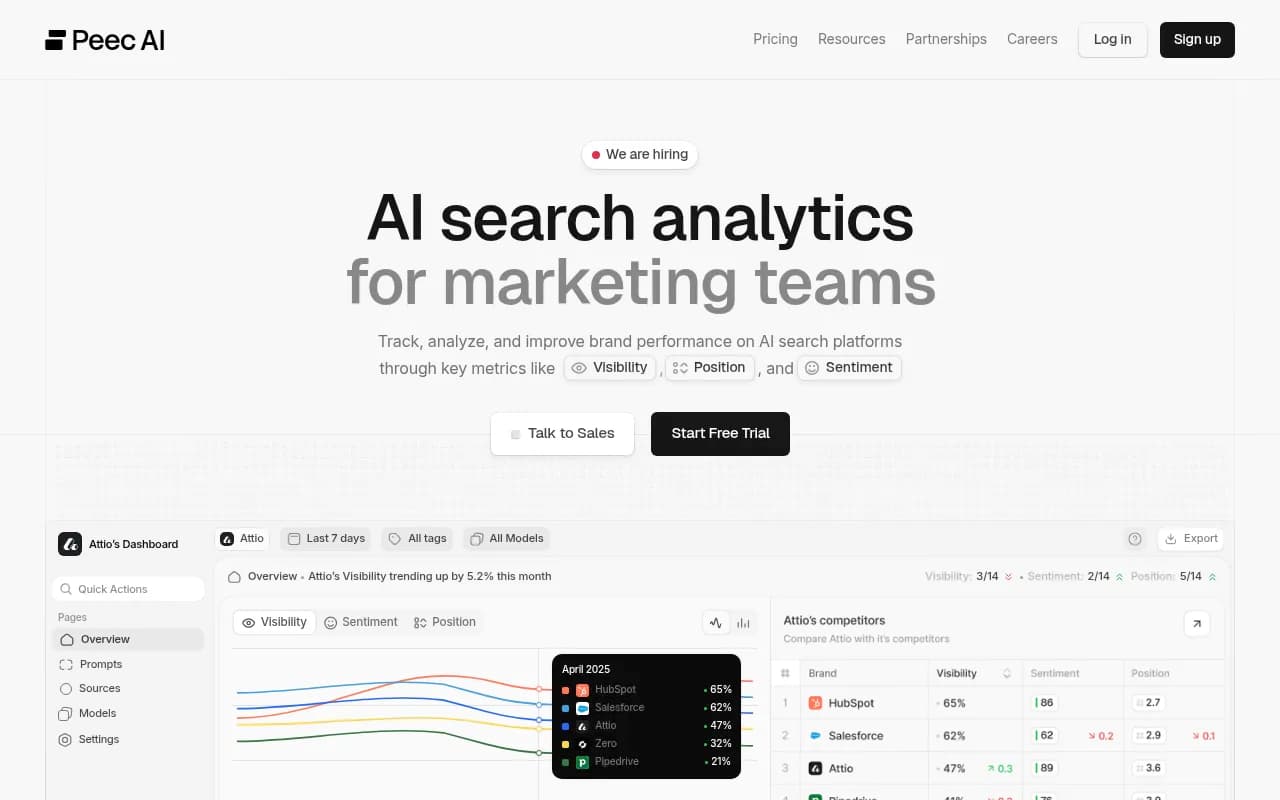
Peec AI -- Dedicated LLM visibility platform with straightforward tracking across major models. Lacks advanced features like prompt intelligence, content generation, or optimization recommendations. Suitable for small teams with basic monitoring needs. Pricing: Starts at $79/mo.

AthenaHQ -- Monitoring-focused platform with multi-model coverage. Provides visibility scores and trend tracking but limited actionable insights. Missing content optimization and generation capabilities. Pricing: Custom.
Agency-Oriented Platforms
Search Party
Search Party -- AI automation consultancy that engineers custom workflows for agencies. More of a service than a self-serve platform. Limited prompt metrics and no built-in content gap analysis. Best for agencies wanting white-label solutions. Pricing: Custom.
Traditional SEO Tools Adding AI Features
Ahrefs Brand Radar -- Ahrefs' entry into AI monitoring. Tracks brand mentions across AI engines but uses fixed prompts and lacks AI traffic attribution. Best for teams already using Ahrefs who want basic AI visibility without switching tools. Pricing: Included with Ahrefs subscription ($129+/mo).
Moz -- Traditional SEO platform with limited AI monitoring capabilities. Focuses primarily on Google rankings with basic AI Overviews tracking. Not a dedicated LLM monitoring solution. Pricing: Starts at $99/mo.
Niche and Limited-Feature Players
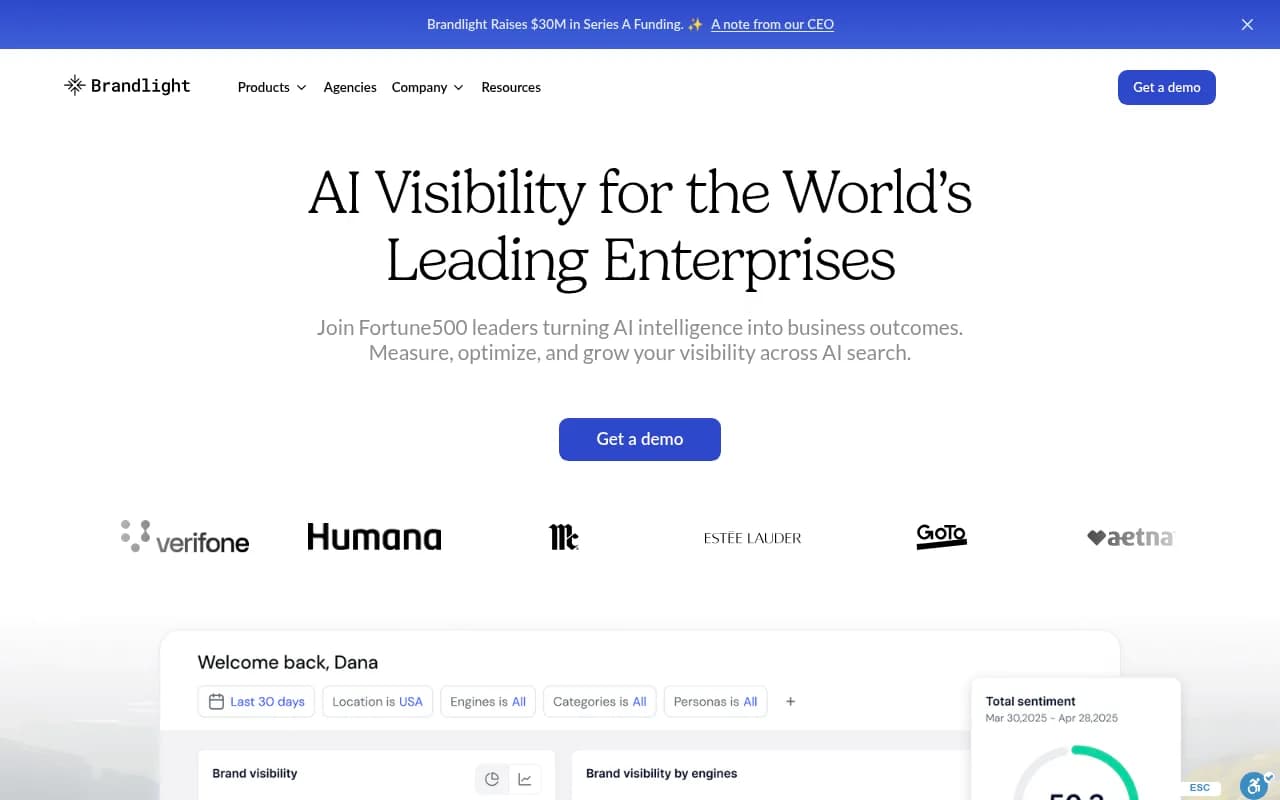
Brandlight.ai -- Tracks brand mentions across AI engines but missing multiple core capabilities like crawler logs, Reddit tracking, and content generation. Limited feature set compared to comprehensive platforms. Pricing: Custom.
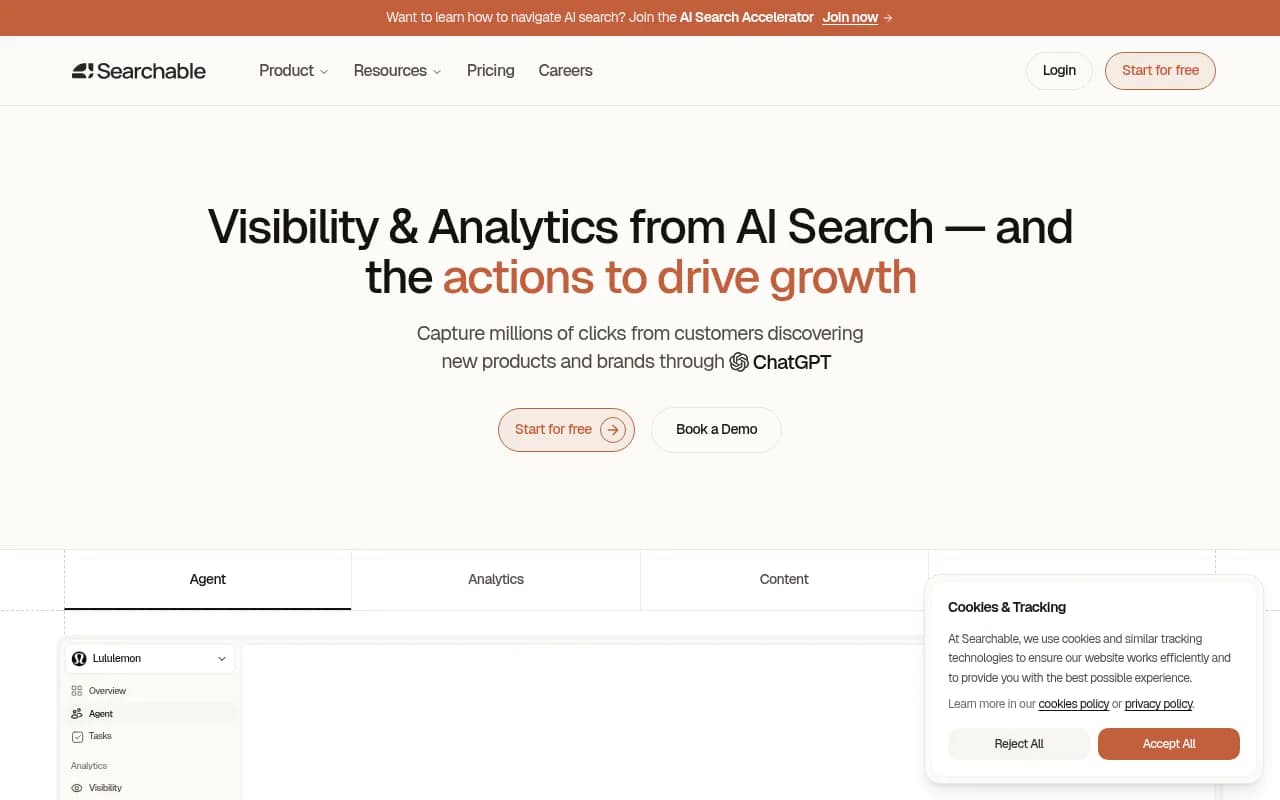
Searchable -- Basic AI visibility tracking with limited model coverage. Lacks advanced features like prompt intelligence, content gap analysis, and optimization tools. Pricing: Custom.
How to Choose the Right LLM Tracking Tool
Selecting the best platform depends on your goals, budget, and team capabilities:
If You Want to Actually Improve Visibility (Not Just Monitor)
Choose a platform with content gap analysis and optimization features. Monitoring alone tells you what's wrong but doesn't help you fix it. Look for tools that:
- Identify missing content on your website
- Show which prompts competitors win but you don't
- Provide AI-powered content generation grounded in citation data
- Track results after you publish new content
Promptwatch is the only platform that combines all of these in one workflow: find gaps → generate content → track results.
If You're Already Using Traditional SEO Tools
Consider whether your existing platform offers AI monitoring as an add-on:
- Semrush users: Enterprise AIO adds AI visibility tracking
- Ahrefs users: Brand Radar provides basic AI monitoring
- Moz users: Limited AI Overviews tracking available
These integrations work if you only need basic monitoring and don't require advanced features like crawler logs or content generation.
If You're on a Tight Budget
Several platforms offer affordable entry points:
- Promptwatch Essential: $99/mo (1 site, 50 prompts, 5 AI-generated articles)
- Peec AI: $79/mo (basic monitoring)
- Otterly.AI: $99/mo (monitoring-only)
Free tools like ProductRank and PromptReach exist but lack depth and reliability for serious brand tracking.
If You're an Agency Managing Multiple Clients
Look for platforms with:
- Multi-site support
- White-label reporting
- API access for custom integrations
- Bulk prompt management
Promptwatch Business ($579/mo) supports 5 sites with 350 prompts and 30 AI-generated articles per month. Agency/Enterprise plans offer custom pricing for larger portfolios.
If You Operate Globally
Ensure the platform supports:
- Multiple languages (not just English)
- Region-specific tracking (US, UK, EU, APAC)
- Customizable personas (B2B, consumer, technical)
Most monitoring-only tools lack multi-language support. Comprehensive platforms like Promptwatch and Profound offer global coverage.
Strategies to Improve Your LLM Visibility
Tracking is the first step. Here's how to actually improve your brand's presence in AI-generated responses:
1. Identify and Fill Content Gaps
Use your monitoring tool's content gap analysis to find prompts where competitors appear but you don't. These represent missing content on your website -- topics, angles, or questions AI models want answers to but can't find on your site.
For each gap:
- Determine what content type AI models prefer (listicle, comparison, how-to guide)
- Analyze which sources competitors cite (their site, Reddit, YouTube)
- Create comprehensive content that directly answers the prompt
- Publish on your website and optimize for AI crawlers
2. Optimize Existing Content for AI Citation
AI models favor content that is:
- Structured clearly: Use headings, bullet points, and concise paragraphs
- Factually accurate: Cite sources and provide specific data
- Comprehensive: Answer the question fully without fluff
- Authoritative: Demonstrate expertise and credibility
Review pages that already get some AI citations and enhance them with:
- More specific examples and use cases
- Comparison tables and feature breakdowns
- Expert quotes and case studies
- Updated statistics and current-year references
3. Publish Where AI Models Look
AI engines don't just crawl your website. They also reference:
- Reddit discussions: Highly influential for product recommendations
- YouTube videos: Cited for tutorials and reviews
- Industry publications: Authoritative sources for news and analysis
- Review sites: Trustpilot, G2, Capterra for social proof
Diversify your content distribution strategy. Answer questions on Reddit, create YouTube tutorials, contribute guest posts to industry blogs, and actively manage your review profiles.
4. Monitor AI Crawler Activity
If your platform provides crawler logs (like Promptwatch does), use them to:
- See which pages AI bots visit most frequently
- Identify crawl errors or blocked pages
- Understand how often AI models refresh their knowledge of your site
- Prioritize updates to high-traffic pages
Fix technical issues that prevent AI crawlers from accessing your content: broken links, slow load times, robots.txt blocks, or server errors.
5. Track Competitor Strategies
Analyze what's working for competitors:
- Which content types get them cited (listicles, comparisons, guides)
- Where they publish (their blog, Reddit, YouTube, guest posts)
- How they structure their content (headings, lists, tables)
- What angles or perspectives they emphasize
Don't copy -- learn from their approach and create better, more comprehensive content that AI models will prefer.
6. Test and Iterate
AI visibility optimization is an ongoing process:
- Publish new content targeting high-value prompts
- Monitor visibility changes over 2-4 weeks
- Analyze which content types and topics drive the biggest improvements
- Double down on what works
- Refine or remove content that doesn't get cited
Platforms with built-in content generation (like Promptwatch's AI writing agent) accelerate this cycle by helping you create optimized content faster.
Common Mistakes to Avoid
Here are pitfalls that prevent brands from improving their AI visibility:
Monitoring Without Action
The biggest mistake: paying for a monitoring tool, seeing that you're invisible, then doing nothing about it. Dashboards don't improve visibility -- content does. Choose a platform that helps you identify gaps and provides tools to fix them.
Focusing Only on ChatGPT
Consumer behavior varies. Some users prefer Claude for research, others use Perplexity for news, and Google AI Overviews dominate mobile search. Track all major models or you'll miss where your audience actually searches.
Ignoring Reddit and YouTube
AI models heavily cite Reddit discussions and YouTube videos, especially for product recommendations and tutorials. If you're not active on these platforms, you're missing a major citation source.
Using Generic SEO Content
Traditional SEO content optimized for keywords often doesn't work for AI citation. AI models prefer:
- Direct answers to specific questions
- Factual, well-structured information
- Comprehensive coverage without fluff
- Authoritative sources and citations
Generic blog posts stuffed with keywords won't get cited. Create content that genuinely answers user questions.
Not Tracking Traffic Attribution
Visibility is meaningless if it doesn't drive traffic and conversions. Use platforms that connect AI citations to actual website visits and revenue. This proves ROI and helps you prioritize high-value prompts.
The Future of LLM Brand Tracking
AI search is evolving rapidly. Here's what to expect in the coming years:
More AI Models to Track
New LLMs launch constantly: DeepSeek, Grok, Mistral, and others. The number of AI engines consumers use will continue to grow, making multi-model tracking even more critical.
AI Shopping and Product Recommendations
ChatGPT Shopping and similar features are expanding. AI models will increasingly recommend specific products and brands, not just provide information. Monitoring tools will need to track product placements, shopping carousels, and affiliate links.
Real-Time Optimization
Future platforms will move beyond monthly reports to real-time alerts and automated optimization. Imagine: your tool detects a competitor gaining visibility for a key prompt, automatically generates optimized content, and publishes it to your CMS -- all without manual intervention.
Integration with Traditional SEO
AI visibility and traditional SEO will converge. Platforms will unify tracking for Google rankings, AI Overviews, ChatGPT citations, and Perplexity recommendations in a single dashboard. Teams won't manage AI search separately -- it'll be part of standard SEO workflows.
Deeper Attribution and ROI Measurement
As AI search matures, attribution will improve. Platforms will connect AI citations to specific revenue outcomes, showing exactly which prompts drive the most valuable traffic and conversions.
Getting Started with LLM Brand Tracking
Ready to monitor and improve your AI visibility? Here's a step-by-step approach:
Step 1: Audit Your Current Visibility
Start with a free trial or basic plan from a monitoring platform. Run an initial audit:
- Which prompts mention your brand vs competitors?
- How often do you appear in AI responses?
- What sentiment do AI models associate with your brand?
- Where are the biggest gaps?
This baseline shows where you stand and identifies quick wins.
Step 2: Prioritize High-Value Prompts
Not all prompts are equally valuable. Focus on:
- High-volume questions (many people ask them)
- High-intent queries (users ready to buy or evaluate)
- Prompts where competitors dominate but you're absent
Use prompt intelligence features (volume estimates, difficulty scores) to prioritize.
Step 3: Create or Optimize Content
For each priority prompt:
- Determine what content type AI models prefer
- Create comprehensive, well-structured content that directly answers the question
- Publish on your website and optimize for AI crawlers
- Consider cross-posting to Reddit, YouTube, or industry publications
If your platform includes AI content generation (like Promptwatch's writing agent), use it to accelerate this process.
Step 4: Monitor Results
Track visibility changes over 2-4 weeks:
- Are you appearing more frequently?
- Has your position improved (first mention vs buried in a list)?
- Are AI models citing your new content?
- Is traffic increasing?
Iterate based on what works.
Step 5: Scale What Works
Once you identify successful content types and topics:
- Create more content in that format
- Target related prompts and questions
- Expand to additional AI models or regions
- Automate content generation where possible
AI visibility optimization is a continuous cycle: monitor → identify gaps → create content → track results → repeat.
Conclusion
Brand tracking in large language models is no longer optional. With 48% of consumers using AI to guide buying decisions and ChatGPT reaching 400 million weekly users, your visibility in AI-generated responses directly impacts traffic, leads, and revenue.
The best LLM monitoring tools don't just show you data -- they help you take action. Look for platforms that combine multi-model tracking with content gap analysis, optimization recommendations, and AI-powered content generation. Promptwatch leads the market by offering the only end-to-end solution: find gaps, generate content, track results.
Start with a free trial, audit your current visibility, and prioritize high-value prompts where competitors dominate. Create comprehensive content that directly answers user questions, publish strategically across your website and platforms like Reddit and YouTube, then monitor results and iterate.
AI search is reshaping how consumers discover brands. The question isn't whether to track your LLM visibility -- it's whether you'll act on what you learn before competitors do.