Key takeaways
- ChatGPT answers "does X have feature Y?" from two places: what the model absorbed in training, and the pages it retrieves when it searches the web. A wrong answer usually means one or both sources are stale.
- Product pages, landing pages, listicles and reviews are what ChatGPT cites most, so an outdated pricing page or a third-party roundup that predates your launch can keep feeding the wrong claim.
- Pages cited months ago keep getting cited. Fixing the problem means updating the long-lived pages first, not only publishing a new announcement.
- Diagnose before you fix. Run the question in several phrasings, note which sources get cited, then correct those sources.
- Expect a lag. Retrieval changes can show up in days, but training-based answers only change when the model changes.
The scenario nobody warns you about
A prospect asks ChatGPT, "Does [your product] support SSO?" or "Does [your product] have a native Salesforce integration?" You shipped it last spring. There was a launch post, a changelog entry, a webinar. ChatGPT says no, or says it is "not clear," and suggests a competitor instead.
This is maddening for a specific reason: nothing you control looks wrong. Your site is right. Your sales team knows the answer. But the buyer who asked a chatbot before ever visiting your site walked away with a false impression, and you will never see that conversation.
I want to be upfront about what is and isn't known here. OpenAI does not publish a simple rulebook for when ChatGPT trusts its memory versus a web search, and I could not find official documentation spelling it out. What follows combines how these systems visibly behave, Promptwatch's citation data, and practical testing you can do yourself. Where something is inference rather than fact, I say so.
Why ChatGPT gets your features wrong
There are really five causes, and they stack. Most brands with this problem have at least two.
1. The model remembers an older version of you
A language model learns from text collected up to some cutoff date. If your product was missing a feature when that text was gathered, the model may "know" you without it. Features launched after the cutoff are invisible unless ChatGPT goes looking on the web.
A feature launched "last year" can easily fall on the wrong side of that line, depending on which model version answers. And the model answering your prospect may not be the one you tested on. Different plans, different models, and different rollouts mean different answers. OpenAI's own release notes show how uneven this is: features arrive gradually, limited by plan, region, or user age.
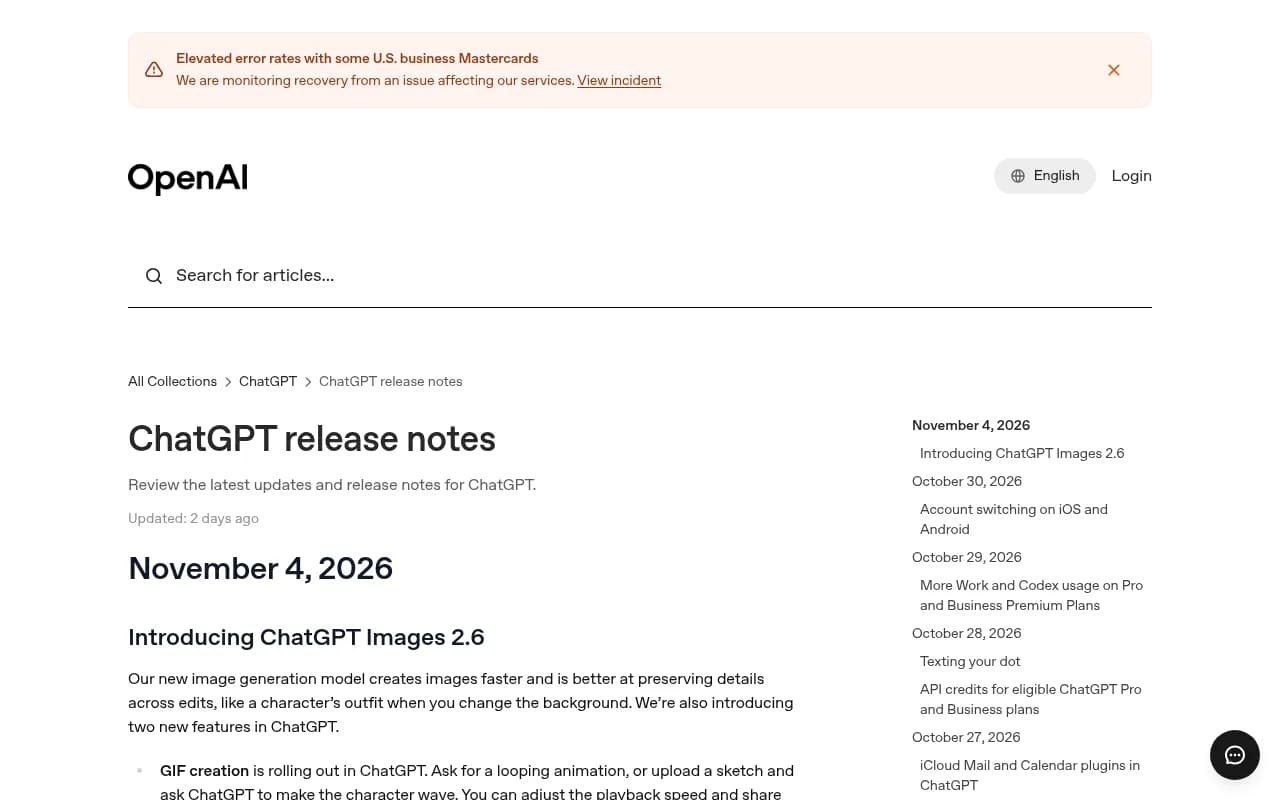
That unevenness matters for you in a practical way. When you test the question yourself, you are sampling one model on one plan in one country. Your prospect may get a different answer.
2. ChatGPT searched, but found stale pages
When ChatGPT does search, it leans heavily on a small set of page types. Promptwatch Data for Sep 28 to Oct 4, 2026 shows what those are:
| Content type | Share of ChatGPT citations |
|---|---|
| Product pages | 22.4% |
| Landing pages | 16.8% |
| Listicles | 13.6% |
| How-tos | 8.7% |
| Documentation | 7.5% |
| General articles | 6.1% |
| Comparisons | 5.9% |
| News | 5.7% |
| FAQ pages | 3.3% |
| Reviews | 1.7% |
Product and landing pages together are 39% of citations. Editorial formats together are 43%. So when someone asks whether you have a feature, the answer is built mostly from your own product pages and from third-party listicles, comparisons and reviews.
That is both the bad news and the opportunity. If your main product page still describes the old feature set, ChatGPT is quoting you accurately, and the answer is still wrong. If a "best tools for X" listicle published two years ago says you lack the feature, ChatGPT may repeat it.
For branded prompts, meaning questions that name your company, the same report finds product pages at 23.3% and landing pages at 22.8%, while reviews jump to 5.6%, more than three times their overall share. Reviews on trusted sites matter more than usual when someone is asking about you specifically.
3. Old pages keep getting cited for a long time
This is the part that surprised me. You might assume a stale page fades out of citations quickly. It doesn't.
Promptwatch's content half-life report tracked every page ChatGPT cited on July 6, 2026 through Oct 4, 2026. After 30 days, ChatGPT still cited 78% of landing pages and 76% of docs. After 60 days, 69% and 67%. Comparison pages held at 72% after 30 days and 63% after 60. Listicles were at 60% after 60 days.
Landing pages, docs, comparisons and listicles only crossed the 50% line in the final week of the window, and that is partly because the window ended. Their real half-life is probably close to or beyond 90 days. Pricing pages are classified as landing or product pages, so they fall into the same long-lived group.
Translate that to your problem: a page that says you lack a feature can stay in rotation for months. An outdated page isn't a dormant risk. It is actively being used.
The other side of that finding is less comfortable. News is the fastest-decaying type: almost a quarter of news pages are never cited again after day 0, and half are gone after 36 days. If your only record of the new feature is a press release or launch announcement, it has a short shelf life as a citation source. The permanent record has to live on pages that last.
4. Third-party sources contradict you
ChatGPT does not only read your site. It reads review sites, comparison articles, forum threads and listicles. If those say "no native integration," you are fighting several sources, not one.
One caution on social sources. Promptwatch's data shows ChatGPT drew only 0.46% of its citations from social platforms from Sep 28 to Oct 4, 2026, and reddit.com's share of ChatGPT citations fell from about 4% to 0.5% on August 14, 2026. So a wrong claim in an old Reddit thread is less likely to drive a ChatGPT answer than it was a year ago. Google AI Overviews behaves differently: it drew 12.2% of its citations from social platforms in that same week, per the social citations report. Check each engine separately.
5. The search ChatGPT runs doesn't find your page
When ChatGPT searches, it fires off queries to retrieve pages. Promptwatch's query fanout data shows these are short and keyword-like, around 53 characters on average from April 2026, with about one search per response. The report's own caveat is that the dating is slightly muddled, so treat the exact counts as approximate.
The implication is still sound. With fewer searches per answer, each retrieved page carries more weight. If your feature page is titled "Our latest updates" instead of something like "Salesforce integration for [Product]", a keyword-style query may never surface it. A separate, clearly named page for each notable feature gives the retriever something to match.
Diagnose the problem before you change anything
Fixing the wrong thing wastes weeks. Spend an hour on diagnosis first.
Run the question several ways
Ask ChatGPT the same thing in different shapes:
- "Does [Brand] have [feature]?"
- "[Brand] vs [Competitor] for [use case]"
- "Best [category] tools with [feature]"
- "What does [Brand] cost and what's included?"
The first tests the branded path. The second and third test whether you appear at all in comparison answers. The fourth tests whether your pricing page is the source.
Check whether it searched or answered from memory
If the response shows sources, it searched, and you can read exactly which pages it used. If it shows none, you are likely looking at a memory-based answer, which you can't fix directly. (This is an inference from how the interface behaves, not something OpenAI documents in detail.)
Read the cited pages, with fresh eyes
Open every source. Look for:
- Your own pages that omit the feature or describe it as "coming soon"
- Third-party roundups with a feature table that says "No" next to your name
- Review pages quoting an old version
- Documentation that predates the launch
Keep a simple log: prompt, model, date, cited URLs, what was wrong. You will need it to prove the fix worked.
Sort the cause
| What you see | Likely cause | Where to fix |
|---|---|---|
| Answer cites your own old page | Stale first-party content | Product, landing, pricing, docs pages |
| Answer cites a third-party list that says "no" | Outdated external source | Outreach, corrections, newer coverage |
| No sources shown, wrong answer | Training-based memory | Long-term: consistent public signals |
| Sources shown, but none are about the feature | No page matches the query | Create a dedicated feature page |
| Correct sources cited, still wrong answer | Conflicting signals across sources | Align every page that mentions it |
How to fix it
Update the long-lived pages first
Start with the homepage, product pages, pricing, docs and any FAQ. The half-life data says these pages stay cited for a long time, so they are where a correction pays off most. Promptwatch's report recommends treating landing, docs and pricing pages as long-term citation assets, and keeping prices, features and positioning accurate on them. It also notes that product pages don't stay cited on their own: 55% are still cited after 60 days, and they reach their half-life after roughly 74 to 77 days. So keep specs, availability and prices current.
Write the feature plainly. "Yes, [Product] integrates natively with Salesforce" in a heading or first sentence beats a paragraph of marketing language, because a retriever and a summarizer both favor direct statements.
Give the feature its own page
Given short, keyword-like queries, a dedicated page named after the feature is easier to retrieve than a bullet inside a big page. Front-load the product and the category in the title and H2s. Build separate pages for the sub-questions people actually ask: pricing, alternatives, X vs Y, how-tos.
Add an FAQ and a comparison page
FAQ pages are 3.3% of citations overall and 4.8% for branded prompts. A short FAQ with "Does [Product] support X?" answered in one line is cheap to build. Comparison pages hold up well too, with 72% still cited after 30 days. If competitors' pages claim you lack the feature, your own honest comparison gives ChatGPT a counter-source.
Chase the third-party sources
This is the slow, unglamorous part. For each outdated roundup that ranks for your category:
- Email the author with the launch date, a link to the feature page, and a screenshot.
- Update your profile on review and directory sites such as G2 and Capterra.
- Ask recent customers who use the feature to mention it in reviews.
Reviews matter more for branded prompts, as noted above, so this has direct payoff.
Don't rely on an announcement alone
A launch post is news-type content, and news decays fastest. Keep the announcement, but make sure the permanent record exists in docs, product pages and the FAQ.
Be patient with training-based answers
If the wrong answer comes from memory, no page edit will change it overnight. The model changes when it is retrained or replaced. What you can do is make sure the web is consistent, so the next model and any search-backed answer see the same story everywhere.
Monitoring so this doesn't happen again
Checking by hand works for one feature. It doesn't work across ten features, four engines and several countries. A few tool categories help:
- AI visibility platforms that run your prompts on a schedule and show the claims AI makes about you
- Crawler analytics that show whether AI bots can read the page you just updated
- Page change monitors that alert you when third-party pages change
Promptwatch is the option I would look at first for this problem, because it connects the pieces: Brand Narrative pulls out the individual claims AI makes about you (such as "lacks a mobile app"), and Fact Check lets you mark a claim inaccurate and then finds the pages on your site that state it or its opposite. That is the closest thing I know of to a direct tool for "ChatGPT says we don't have X, which page taught it that?" Fact Check is on its Business plan and above, while Brand Narrative is on every plan. Its AI crawler logs also show whether bots have actually fetched your updated page.

Other trackers cover parts of the job. Profound and Otterly.AI focus on monitoring brand mentions and answers; they tell you what is being said but leave the fixing to you.
Profound

Otterly.AI

For the third-party side, a change detector tells you when a competitor's comparison page or a roundup you care about gets edited.
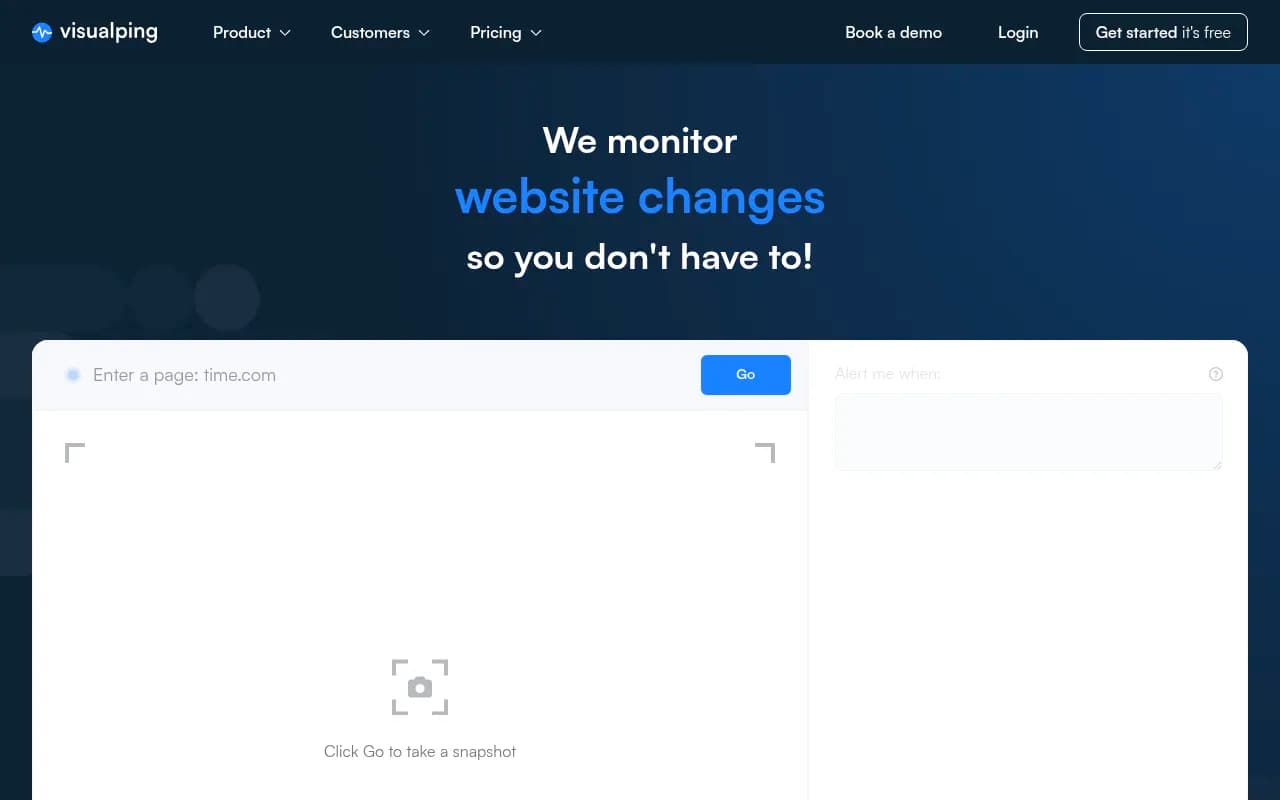
If you want a wider view of the category, the GEO software directory at bestgeosoftware.com lists the options.
A realistic timeline
People ask how fast this works. I don't have a measured number for "time to correct a feature claim," and I would distrust anyone who gives one. What the data supports is the shape of it:
| Timeframe | What to expect |
|---|---|
| Days 1 to 7 | Your pages are updated; crawlers may re-fetch them |
| Weeks 2 to 6 | Search-backed answers start citing the corrected pages |
| Months 2 to 3 | Old third-party sources begin to age out or get corrected |
| Next model release | Training-based answers can change, no guarantee |
Re-run your logged prompts every week or two. If the same wrong source keeps getting cited, it is still winning, and you have more outreach to do.
A short checklist
- Test the question in at least four phrasings, on more than one model if you can
- Record every cited URL
- Update product, landing, pricing and docs pages first
- Create one dedicated page per important feature
- Add a plain-language FAQ
- Fix or replace third-party sources that contradict you
- Collect fresh reviews on trusted sites
- Re-test on a schedule and keep the log
When to call in help
If this problem spans dozens of features, several markets and a pile of third-party pages, it turns into an ongoing program rather than a one-off fix. Agencies that do technical SEO and generative engine optimization handle exactly this kind of work; 1001 SEO Media, which publishes this site, is one example. For an in-house team, the plan above is enough to start with.
The bottom line
ChatGPT isn't ignoring your launch out of spite. It is working from a mix of an old memory and whatever pages it retrieves, and the pages it prefers (product pages, landing pages, listicles, reviews) tend to be the ones that go stale quietly. Because those pages stay cited for months, a wrong claim doesn't fade by itself. Update the durable pages, give each feature its own findable page, correct the outside sources, and measure again in two weeks.