Key takeaways
- No scheduling tool, on its own, changes whether ChatGPT or Google AI Overviews cite your brand. The tool is a distribution mechanism, not a ranking signal.
- Social platforms matter a lot as citation sources, just unevenly. Reddit's share of ChatGPT citations collapsed from roughly 4% to 0.5% in mid-August 2026, while LinkedIn and YouTube content keeps showing up in AI answers.
- What actually drives AI visibility is consistent publishing, cross-platform repurposing, and content that gets picked up and discussed elsewhere, things a scheduler can support but not create on its own.
- Engagement metrics (likes, shares) do not reliably predict AI citation. A post can get thousands of likes and never surface in an AI answer, and a quiet post can get cited if it answers a specific question clearly.
- If you're using a scheduler to pump out social content, pair it with an AI visibility tracker like Promptwatch so you can see whether any of that distribution is actually translating into citations and traffic from AI platforms.
The question people are actually asking
I hear a version of this question a lot from marketing teams: "We just signed up for Buffer / Hootsuite / Sprout, will that help us show up in ChatGPT?" The honest answer is no, not directly, and anyone who tells you otherwise is selling something. But the longer answer is more interesting, because social media activity clearly does influence AI visibility in a roundabout way, and understanding the mechanism matters more than picking the right scheduling app.
Let's separate the two things that keep getting conflated: the software you use to schedule and publish posts, and the content and distribution strategy that software supports. The tool itself has zero bearing on how an LLM evaluates your brand. What matters is what you publish, where it ends up, and whether other sources pick it up and reference it.
What the citation data says about social platforms
Promptwatch's research on social media citations by AI model tracks how often ChatGPT, Perplexity, AI Overviews, and Grok cite platforms like Reddit, X, YouTube, Instagram, Facebook, LinkedIn, and TikTok. The picture isn't uniform. Some platforms are genuinely useful as citation sources. Others are mostly irrelevant to how AI assistants answer questions, no matter how active your posting schedule is.
The biggest shift of the year happened on Reddit. According to Promptwatch's data on Reddit citations dropping in ChatGPT, reddit.com's share of ChatGPT Search citations fell from around 4% to roughly 0.5% on a single day, August 14, 2026. Google AI Overviews and AI Mode saw a similar decline, just more gradual. If your content strategy depended on Reddit threads surfacing in AI answers, that strategy got a lot weaker almost overnight, and no scheduling tool would have told you that was coming.
LinkedIn tells a different story. Promptwatch's LinkedIn citation page types report for August 2026 breaks down which kinds of LinkedIn pages get cited by ChatGPT, AI Mode, AI Overviews, and Perplexity. Semrush's own study of 89,000 LinkedIn URLs cited in AI search backs this up: LinkedIn content, particularly Pulse articles and company pages, shows up consistently in AI answers about companies, products, and professional topics. That's relevant if you're scheduling LinkedIn posts through a tool like Hootsuite or Buffer, because it means the platform itself is worth the effort, separate from whatever your posting cadence is.
YouTube sits somewhere in between. Promptwatch's YouTube citation data from February 2026 shows meaningful citation share across ChatGPT, Perplexity, and AI Overviews, with specific channels and video ages correlating with how often content gets referenced. If part of your social calendar includes video, that's not wasted effort from an AI visibility standpoint.
Engagement doesn't equal citation
Here's the part that surprises a lot of social teams. Emplifi's Q&A on optimizing social media for AI search visibility makes a point worth repeating: more interactions on a post does not mean AI models are more likely to cite you. I've seen brands assume that if a post goes viral, it somehow feeds a signal into ChatGPT's training or retrieval process. It doesn't work that way. AI search engines are mostly pulling from indexed web content at query time, not from engagement metrics on a platform's internal graph.
What actually matters is whether the content itself answers a specific question clearly, whether it's accessible to crawlers, and whether other sites reference or quote it. A LinkedIn post with 12 likes that gets quoted in a trade publication is more useful for AI visibility than a post with 10,000 likes that stays contained within the platform.
So what is the real mechanism?
A LinkedIn pulse article by an industry writer on this exact topic puts it well: social media appears to influence AI visibility mainly through amplification rather than direct citation. A social post sparks a conversation, that conversation gets picked up by a journalist or blogger, that article gets cited by ChatGPT or AI Overviews. The social post itself is rarely the final citation. It's the spark.
This changes how I'd think about the role of a scheduling tool. It's not there to generate citations directly. It's there to keep the spark lit consistently, across enough platforms, so that something eventually catches. Posting once and hoping doesn't work. Posting every week across LinkedIn, X, and YouTube, with enough volume and consistency that your ideas have a chance to get picked up elsewhere, is a different game.
Comparing scheduling tools on what actually matters for AI visibility
Since the tool itself won't move your citation numbers, the relevant comparison is which tools make it easiest to execute the strategy that does matter: consistent cross-platform publishing, content repurposing, and enough analytics to tell you what's resonating.
| Tool | Platforms covered | AI-relevant strength | Best for |
|---|---|---|---|
| Buffer | X, LinkedIn, Instagram, Facebook, Pinterest, Mastodon | Simple, affordable, easy to keep a consistent cadence | Small teams wanting reliability over features |
| Hootsuite | All major networks plus TikTok | AI-enhanced scheduling and broad analytics for spotting what gets traction | Teams needing one dashboard across many channels |
| Sprout Social | All major networks | Deep analytics tying engagement to content themes | Mid-size and enterprise teams |
| Metricool | All major networks plus web analytics | Combines social scheduling with site analytics in one view | Teams who want social and web data together |
| Publer | All major networks | Budget-friendly multi-platform scheduling with recycling | Agencies managing many client accounts |
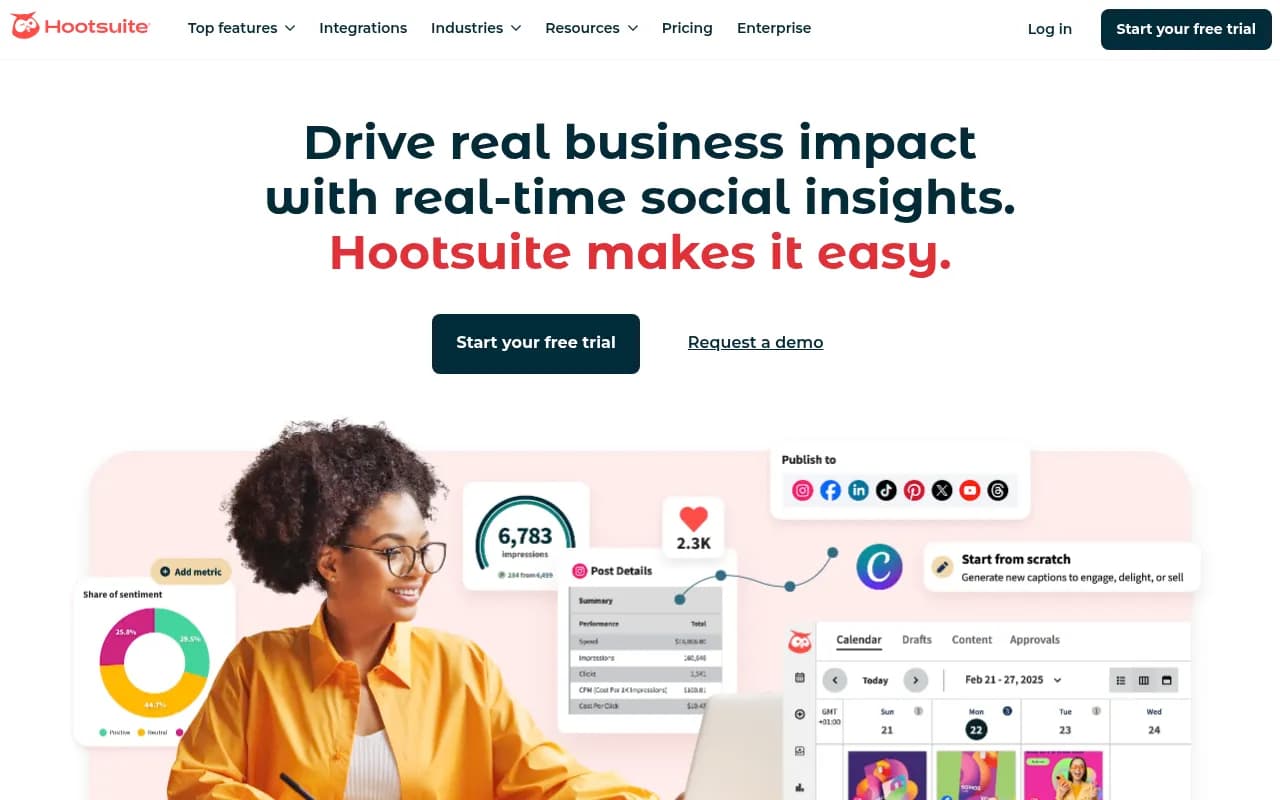
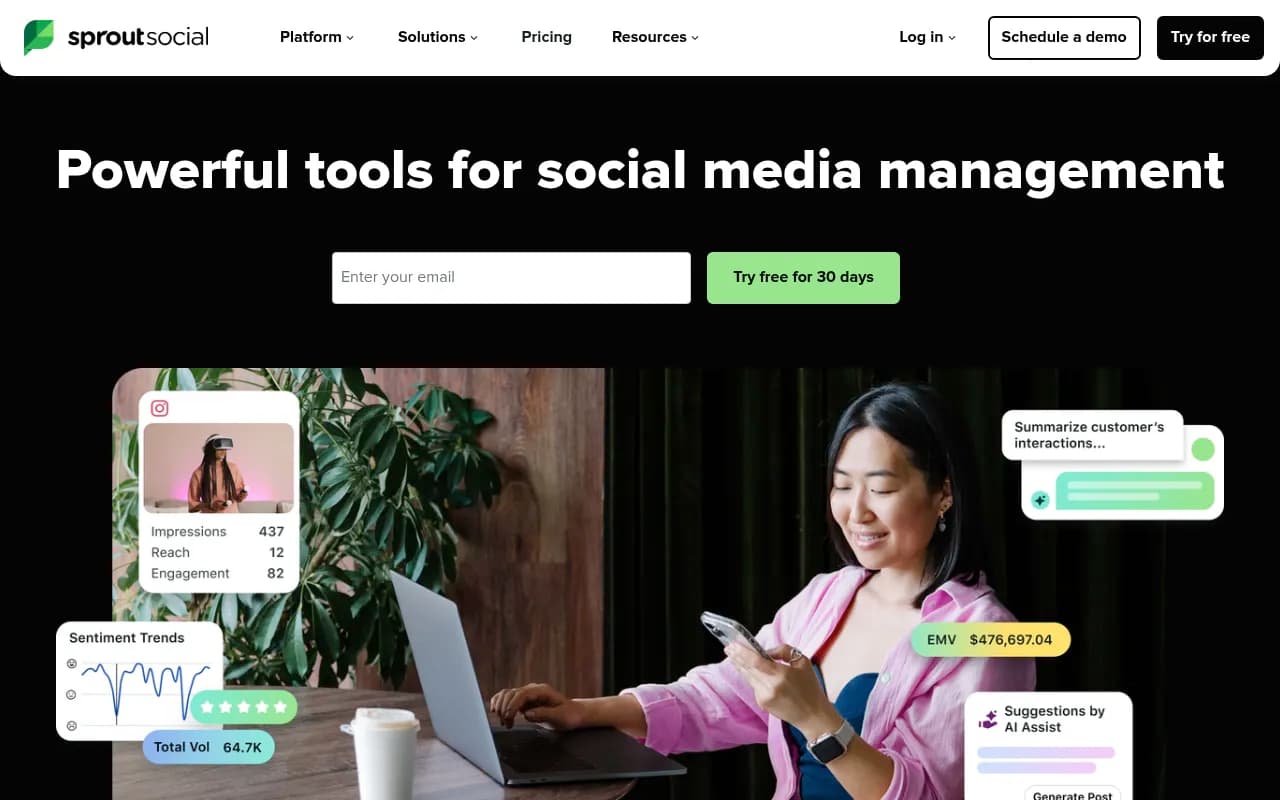
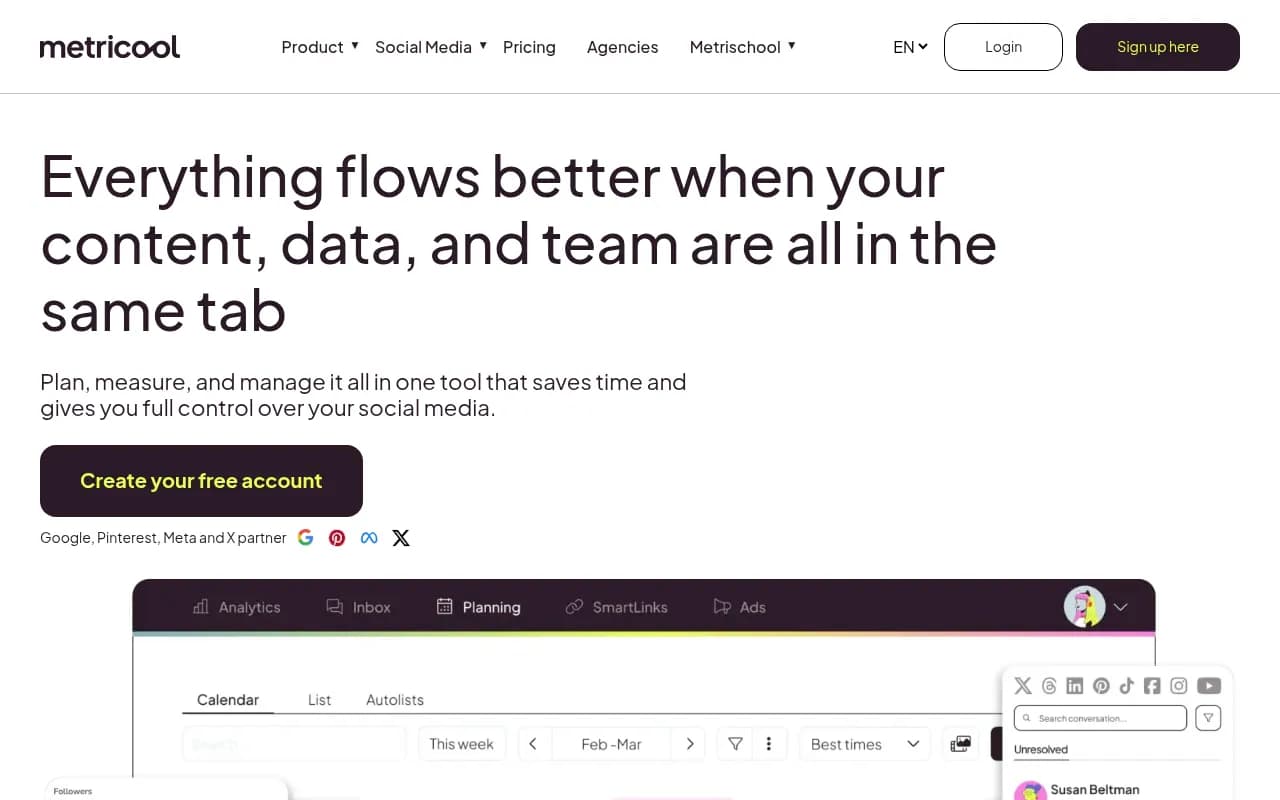
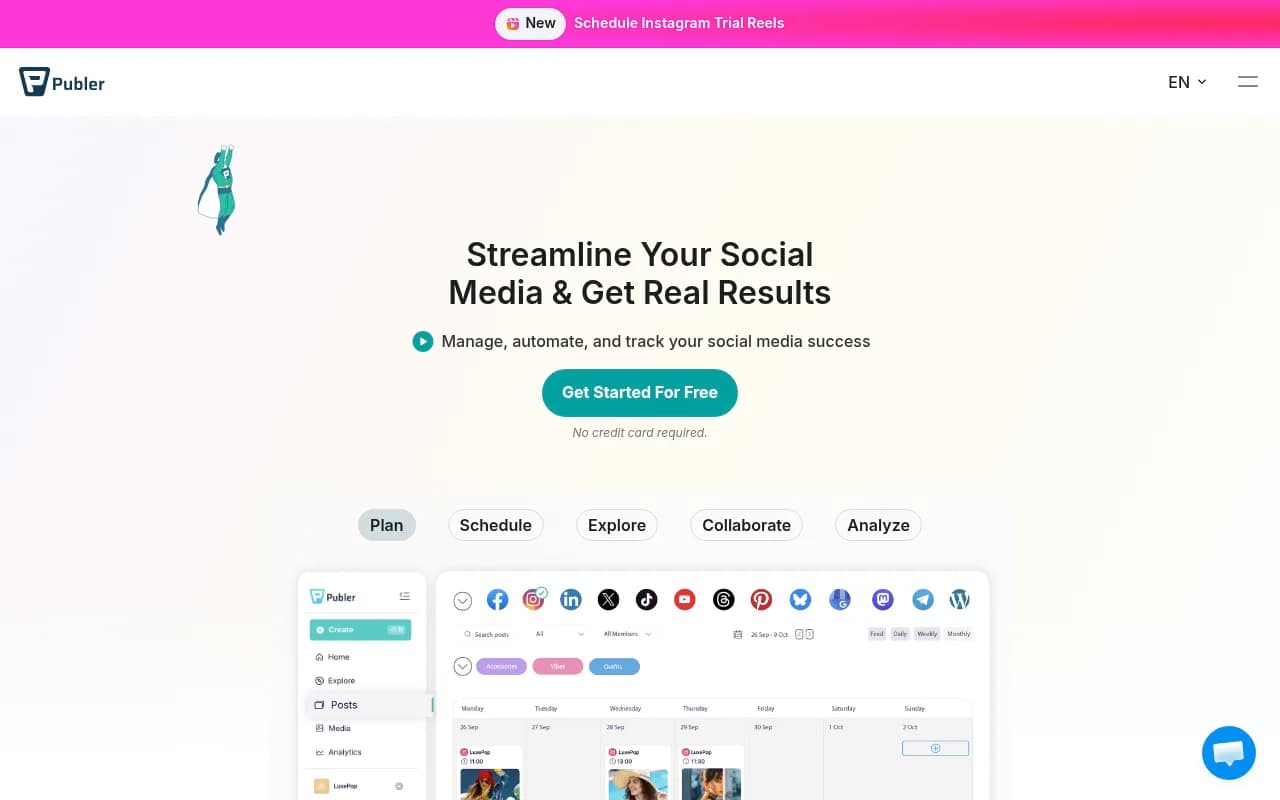
None of these will push your brand into more ChatGPT answers by themselves. What they can do is make it operationally easy to publish LinkedIn articles, repurpose YouTube transcripts into posts, and keep a steady drumbeat on the platforms that do show up in citation data. If you're choosing between them, pick based on which platforms you actually need covered and how your team collaborates, not on any claimed AI SEO feature, because that feature doesn't exist in a meaningful way yet in this category.
Where this connects to actual GEO work
The real work of improving AI visibility happens somewhere else entirely: on your owned content (blog posts, product pages, documentation), through digital PR that gets you mentioned on sites AI models already trust, and through technical work that makes your pages easy for AI crawlers to read. Social scheduling supports that work by distributing it, but it's not a substitute for it.
This is where 1001 SEO Media draws a clear line for clients: social distribution is one input into a bigger GEO and content strategy, not the strategy itself. Teams that treat their social calendar as the whole AI visibility plan tend to plateau, because they're optimizing for engagement metrics that don't correlate with citation.
If you want to know whether your social push is actually translating into AI visibility, you need something that tracks citations directly rather than guessing from likes and shares. That's the gap tools like Promptwatch fill, by monitoring how often your brand and content actually get cited across ChatGPT, Perplexity, Gemini, Claude, Google AI Overviews, and AI Mode, and by showing which of your pages (and which third-party mentions, including Reddit posts and YouTube videos) are driving that visibility.

Promptwatch's crawler logs also show you something a scheduling dashboard never will: whether AI bots like ChatGPTBot, ClaudeBot, or PerplexityBot are actually visiting the pages you've been promoting on social, and whether those visits turn into citations. That closes the loop between "we posted about this" and "did it actually help."
A practical framework for 2026
If you're trying to decide how much weight to put on social scheduling as part of an AI visibility strategy, here's roughly how I'd prioritize it:
- Get the underlying content right first. A page that clearly answers a specific question, with structured, extractable information, is the thing that eventually gets cited.
- Use your scheduler to distribute that content across LinkedIn and YouTube specifically, given what the citation data shows about those two platforms right now.
- Don't lean on Reddit as a citation strategy. The data shows its share of AI citations cratered in August 2026, and chasing engagement there for AI visibility reasons is now a weaker bet than it was six months ago.
- Track citations and crawler activity separately from social engagement metrics. They're measuring different things, and conflating them is how teams waste a quarter optimizing for the wrong number.
- Repeat content across formats. A blog post that becomes a LinkedIn article, a short video, and a thread has three separate chances to get picked up and quoted somewhere AI models trust.
If you're evaluating AI visibility platforms more broadly, the GEO software directory at bestgeosoftware.com is a reasonable place to compare options side by side before committing to one.
The short version: scheduling tools are plumbing, not strategy. They make it easier to be consistent, and consistency matters because AI visibility is a slow accumulation of citations across many sources, not a single viral moment. Pick a scheduler that fits how your team works, put your real effort into content that answers specific questions well, and measure the result with a tool built to track AI citations rather than social engagement.