Key takeaways
- SEO rank trackers (AccuRanker, SE Ranking, Semrush) and GEO/AI visibility platforms (Profound, Peec AI, Promptwatch) measure different things and mostly can't be merged into one tool yet
- Classic SEO rank tracking observes a fixed, ordered SERP; AI visibility tracking samples variable, unordered answers that can change source makeup by 75-80% between identical runs
- Domain authority barely predicts AI citation share: DR 46-75 sites earned almost half of ChatGPT's citations in August 2026, while DR 91-100 giants fell from ~7% to ~3% share in two weeks
- Citation behavior is platform-controlled and can shift overnight, so "set it and forget it" audits don't work for GEO the way they sometimes do for SEO
- Budget for two measurement layers in 2026: a traditional rank tracker for positions, backlinks, and crawling, plus an AI visibility platform that also helps you fix what it finds
Why this question keeps coming up
Every few months someone on LinkedIn declares that SEO is dead and GEO ate it. Then someone else posts a chart showing organic traffic still dwarfs AI referral traffic, and the pendulum swings back. Both camps are missing the actual question marketers need answered this year, which isn't "which discipline wins" but "do I need two different pieces of software to measure them, or can one tool do it all?"
I've spent time with both types of platforms this year, and the honest answer is: you still need two stacks, at least for now. Not because vendors want to sell you two subscriptions, but because the two things you're tracking behave according to completely different rules.
What a rank tracker is actually measuring
A classic SEO rank tracker like AccuRanker, SE Ranking, or Semrush is built around a stable, falsifiable fact: for a given keyword, on a given day, in a given location, Google returns an ordered list of ten (or so) results. Position 3 is position 3. You can screenshot it, log it, and chart it over months. The SERP is noisy at the margins (personalization, local packs, sometimes-you-sometimes-not featured snippets) but fundamentally it's a fixed, orderable thing.
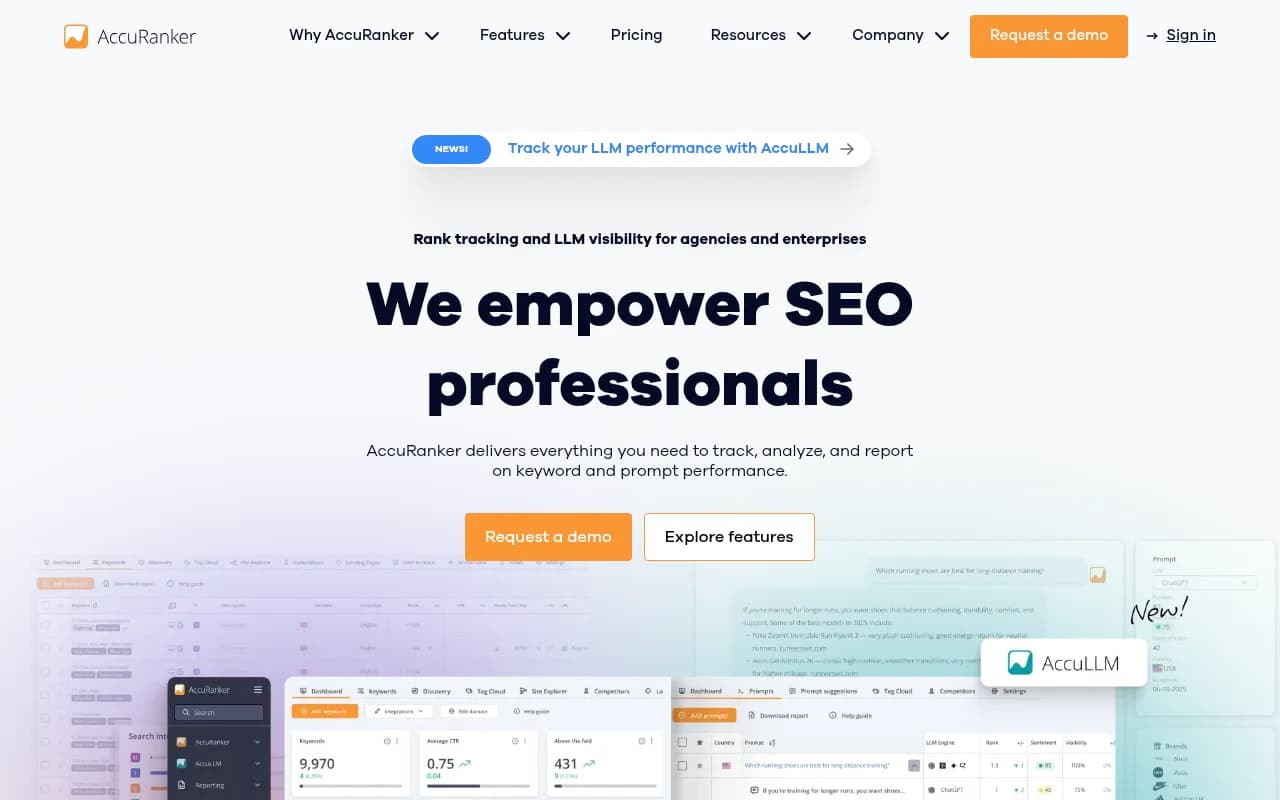
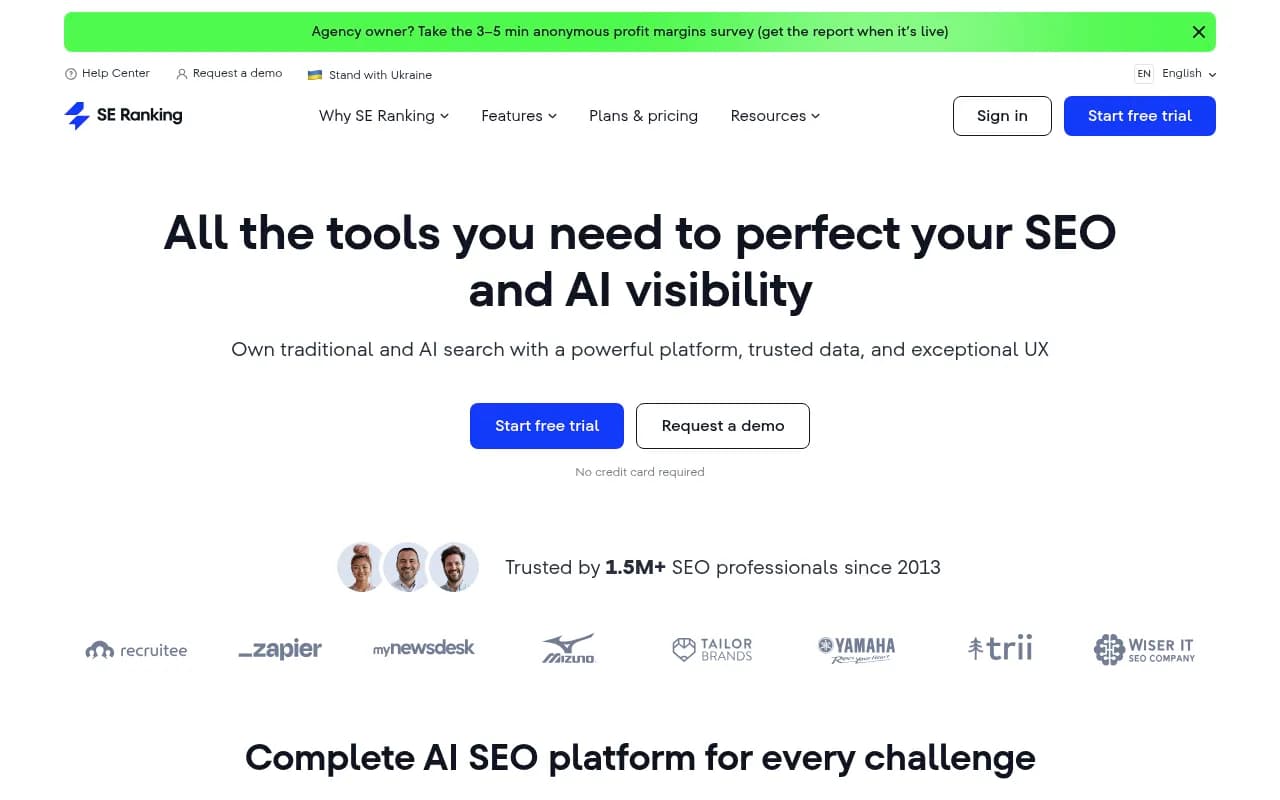
AccuRanker retired its old entry tier this year; current plans run from Professional at $224-249/mo for 2,000-5,000 keywords up to Enterprise with BigQuery exports and unlimited write API access. SE Ranking is the budget alternative, starting around $52-65/mo for the base SEO suite, with AI Overview tracking bundled into mid tiers as an add-on rather than a separate product.
That's the whole point of a rank tracker: it assumes there's a rank to track. For the first two decades of SEO, that assumption held.
What an AI visibility platform is actually measuring
AI visibility platforms (also called GEO tools, AEO tools, or AI search trackers depending on who's selling them) are measuring something structurally different: whether and how often your brand gets mentioned or cited inside a generated answer that has no fixed slot count, no fixed order, and no guarantee of reproducing the same result twice.
This isn't a minor technicality. A SparkToro and Gumshoe.ai study that ran 12 brand-recommendation prompts through ChatGPT, Claude, and Google AI Overview/AI Mode a combined 2,961 times found less than a 1-in-100 chance that the same prompt returns the same list of brands twice. Same-order repeats were closer to 1 in 1,000. And when Parse analyzed 693,509 answers across 16,143 ChatGPT prompts and 15,805 AI Overview prompts between late March and late April 2026, two repeat ChatGPT answers to the identical prompt shared only 21.2% of cited domains. Nearly four out of five sources churned between runs.
In other words, asking "what's my rank in ChatGPT" is a bit like asking what the weather is at an exact point in time during a storm. There's no stable number to find, because the system wasn't built to produce one.
Where it gets weirder: authority doesn't transfer
If you assumed a high-DR site would simply dominate AI citations the way it dominates Google rankings, August 2026 data says otherwise. Promptwatch's citation-share-by-domain-rank data shows DR 46-60 sites captured 22.6% of ChatGPT Search citations and DR 61-75 sites captured 23.4%, together nearly half the pie. Meanwhile DR 91-100 domains, the biggest sites on the internet, dropped from roughly 7% of citations in week one of the month to about 3% by August 14, and stayed there.
That's not a slow decline you'd expect from an algorithm update. That's a structural signal that AI citation models weigh something other than pure domain authority, probably freshness, specificity, and answer-shaped formatting over raw backlink profile.
And citation volume itself is a moving target
After the GPT-5.3 rollout on March 4, 2026, average citations per ChatGPT response dropped about 27%, from roughly 6.4 sources per response the week before to 4.7-4.9 by late March, with no recovery a month later, per Promptwatch's citation drop data. The drop hit GPT-5.3, GPT-5.4, and GPT-5-Mini simultaneously. One model update, and the entire inventory of "slots" available to be cited shrank by more than a quarter, overnight, for everyone.
Compare that to how many sources different engines cite on an average web-search response, which is its own source of confusion if you're used to thinking in terms of "the top 10":
| Engine | Avg. sources per response | Stability |
|---|---|---|
| ChatGPT | ~5 | Volatile, dropped ~27% after GPT-5.3 |
| Google AI Overviews | ~10 | Steady |
| Perplexity | ~10 | Extremely stable |
| Microsoft Copilot | 2 to 17 | Wildly inconsistent |
Source: Promptwatch's average sources per response data. If you're tracking "position" in Copilot right now, you're tracking noise, not signal, because Microsoft is visibly still rebuilding its retrieval system.
There's also the Reddit wrinkle. Reddit held a steady ~3.8% share of ChatGPT Search citations from mid-July through early August 2026, then collapsed to under 1% on August 14, an 86% relative drop that has held since, according to Promptwatch's data on Reddit citations dropping in ChatGPT. Google AI Overviews' Reddit share declined much more gently over the same window, about 11% relative, and AI Mode fell around 30%. Same source, three engines, three completely different trajectories, on the same day. A rank tracker has never had to model anything like that.
So, can one platform do both jobs?
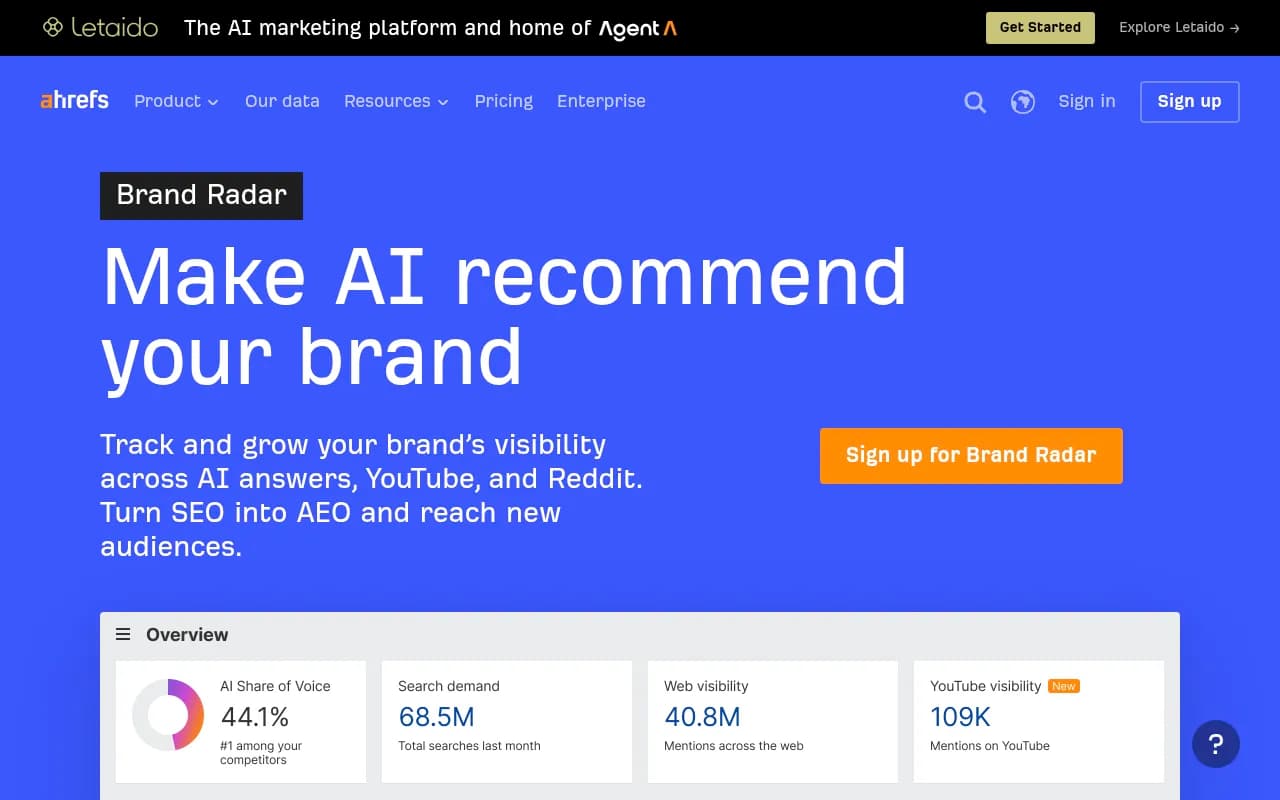
A few vendors are trying to blur the line. Morningscore and SE Ranking now bundle AI visibility features into their core SEO suites, and Ahrefs added Brand Radar to track AI share of voice alongside its traditional web index data. These bundled approaches are convenient if your needs are light, but they tend to be shallow on the AI side: smaller prompt sets, slower refresh cycles, and far less depth on crawler logs or citation-type breakdowns than dedicated GEO platforms.
Dedicated AI visibility platforms vary a lot in depth too. Here's roughly how the category breaks down in 2026:
| Platform type | Examples | What it measures | What it's missing |
|---|---|---|---|
| Classic SEO rank tracker | AccuRanker, SE Ranking | Ordered SERP position, backlinks, crawl health | No AI answer citation data |
| Bolt-on AI add-ons | Semrush AI Toolkit, Ahrefs Brand Radar | Basic AI share-of-voice layered on SEO suite | Shallow prompt sets, no crawler logs |
| Monitoring-only GEO tools | Otterly.AI, Peec AI, Profound | Prompt tracking, citation mentions across engines | Little to no content fix-it workflow |
| End-to-end GEO/AI visibility | Promptwatch | Prompt volumes, citation trends, crawler logs, visitor analytics, content generation, Reddit/YouTube tracking, Shopping and Ads Radar | N/A, built to close the loop |

The distinction between "monitoring-only" and "end-to-end" matters more than most buyers realize going in. A tool like Otterly.AI or Peec AI will tell you that your brand showed up in 34% of relevant prompts this month. That's useful, but it leaves you staring at a number with no clear next action. Promptwatch's approach is different: it also shows AI crawler logs (which pages ChatGPTBot, ClaudeBot, and PerplexityBot actually visited, and whether they hit errors), classifies every citation by content type and source, tracks real visitor traffic from AI platforms to your site, and then generates a prioritized action list and can draft and publish the content needed to close gaps directly to Webflow, Framer, or WordPress. Crisp, one of its customers, used this to scale from a handful of articles a month to 5-10 per day and saw 2x higher conversion rates from AI traffic versus traditional channels.
Otterly.AI


Profound

Why running both stacks still makes sense
The industry's own vendors agree on this, which is unusual. LLM Pulse's own FAQ states it plainly: "You need at least two stacks: a classic SEO platform for rankings, backlinks, and crawling, and an AI visibility platform for AEO and GEO monitoring." Dageno frames it similarly, arguing that "a complete measurement stack keeps both layers separate, then connects them through shared topics, landing pages, markets, and business outcomes."
That connecting piece, shared topics and landing pages, is where the real synergy lives. Your SEO rank tracker tells you a page ranks #4 for a commercial keyword. Your GEO platform tells you the same page gets cited in 60% of ChatGPT answers about that topic but almost never in Perplexity. Neither tool alone gives you the full picture; together they tell you exactly where to invest editing time.
A practical budget framework
For a mid-size marketing team, a realistic 2026 setup looks something like:
- SEO rank tracking: $50-250/mo depending on keyword volume (SE Ranking on the low end, AccuRanker if you need daily updates at scale)
- AI visibility platform: $95-579/mo depending on prompt volume and whether you need content generation included (Promptwatch's Essential tier starts at $95/mo with 50 prompts and all major LLM tracking; Professional at $245/mo adds automated content generation and shopping insights)
Rankability's research across 30+ AI visibility tools puts the category average around $337/mo, with small businesses typically landing in the $79-149/mo range if they skip the content-generation tiers. Compare that to AccuRanker's Expert tier at $764-849/mo for 10,000-25,000 keywords with AI-related SEO metrics, and you can see the two budgets rarely overlap in a way that lets one tool replace the other.
A note on measurement honesty
One thing worth flagging before you buy anything: ask any AI visibility vendor how their prompt universe is built. Somantra's analysis of 2.4 million citation records found that 57.2% of websites cited by ChatGPT or Google appear in exactly one month of results and are never surfaced again, which tells you how noisy single-snapshot audits are. Most vendors build prompt sets from Google Search Console data, keyword research, or AI-generated brainstorming, because no AI platform exposes a real query stream the way GSC does for classic search. Aleyda Solis's guidance from mid-2026 is blunt: assuming a tool's default prompt set is representative of your actual audience is the single biggest mistake teams make, and prompt libraries need validating against real language from site search, reviews, and support tickets rather than being averaged into one generic score.
If you're evaluating vendors, ask for the prompt set, the run count, the date range, and a confidence grade before you trust any single "visibility score" headline number.
Where to go from here
If you're a marketing lead deciding where to put next quarter's tooling budget, don't frame it as SEO versus GEO. Frame it as two measurement layers that need to talk to each other. Keep your rank tracker for what it's good at, stable keyword positions, backlink audits, technical crawl health, and add an AI visibility platform that goes past monitoring into fixing what it finds. For teams exploring the wider GEO software market, the directory at bestgeosoftware.com is a reasonable place to compare more options side by side, and agenticseotools.com is worth a look if you specifically want tools that execute fixes rather than just report problems.
The companies that treat GEO as a replacement for SEO are going to be surprised when Google still sends them the majority of their traffic in 2026. The companies that ignore GEO entirely are going to be surprised when they check their AI crawler logs and realize ChatGPTBot has been visiting their site for months while their content never once got cited. Run both stacks. They're measuring different things for a reason.