Key takeaways
- Hall AI is a solid entry-level tool, but many teams quickly outgrow it when they need deeper data, content optimization, or enterprise-grade accuracy
- The biggest accuracy divide in 2026 is between tools that simulate real user interfaces vs. those that only query APIs — the results can differ significantly
- Most Hall AI alternatives stop at monitoring; only a handful help you actually fix your visibility gaps
- Promptwatch is the only platform rated "Leader" across all evaluation categories in 2026, combining tracking, content gap analysis, and AI content generation in one loop
- For most teams, the right choice depends on whether you need monitoring only, content optimization, or both
Your competitors are showing up in ChatGPT responses. Perplexity is recommending them. Google AI Overviews are citing their blog posts. And you're not sure whether any of that is happening for your brand, or why.
Hall AI was one of the earlier tools to address this problem, and for basic AI presence monitoring it does the job. But "basic" is the operative word. As AI search has matured in 2026, the gap between entry-level trackers and serious platforms has grown considerably. Teams that need accurate data, competitive context, and a path to actually improving their visibility are looking elsewhere.
This guide ranks the best Hall AI alternatives based on one specific dimension that matters more than any feature list: data accuracy. Specifically, whether the tool captures what real users actually see in AI interfaces, or whether it's just querying APIs and hoping the results match.
Why data accuracy is the real differentiator in 2026
Here's the problem most people don't talk about: AI search engines behave differently depending on how you access them. When a tool queries the ChatGPT API to check whether your brand is mentioned, it often gets a different answer than what a real user sees in the ChatGPT interface.
Independent testing cited by ZipTie.dev found that API-based tracking matched manually verified UI data only about 60% of the time for some platforms. That means four out of ten data points could be wrong. If you're making content decisions based on that data, you're optimizing for a version of AI search that doesn't exist.
The tools that get this right simulate actual user interfaces, capture screenshots of real responses, and track what's happening in the wild, not just what the API returns. That distinction separates the serious platforms from the dashboards.
The accuracy spectrum: how these tools actually collect data
Before ranking specific tools, it helps to understand the three data collection approaches in use today:
UI simulation means the tool actually opens a browser, types the prompt as a user would, and captures the full response including citations, formatting, and shopping recommendations. This is the most accurate method but also the most resource-intensive.
API-based tracking queries the model's API directly. Faster and cheaper, but the responses often differ from what users see. API outputs don't include the same citation formatting, shopping carousels, or UI-specific features.
Hybrid approaches combine API queries with periodic UI validation. Better than pure API, but the validation frequency matters a lot.
Most tools in this space don't disclose which method they use. That alone should make you skeptical of any platform that doesn't explain its data collection methodology.
Hall AI alternatives ranked by data accuracy
Promptwatch
Promptwatch tracks how AI search engines behave in real user interfaces, not just through APIs. This matters because user-facing answers, citations, and shopping recommendations can differ from API outputs. It covers 10 AI models including ChatGPT, Perplexity, Google AI Overviews, Claude, Gemini, Grok, DeepSeek, Meta AI, Copilot, and Mistral.
What separates Promptwatch from most alternatives is that it doesn't stop at tracking. Its Answer Gap Analysis shows exactly which prompts competitors are visible for but you're not, and its Content Agents generate articles and briefs grounded in real prompt data to close those gaps. The AI Crawler Logs feature shows real-time logs of AI crawlers hitting your site, which pages they read, errors they encounter, and when pages move from crawl to citation.
It's used by 1,480+ brands and agencies including Booking.com and Center Parcs, and has processed more than 4.5 billion citations, clicks, and prompts. In a 2026 comparison of 12 GEO platforms, it was the only tool rated "Leader" across all evaluation categories.
Pricing starts at $99/month for the Essential plan (1 site, 50 prompts, 5 articles), $249/month for Professional (2 sites, 150 prompts, crawler logs), and $579/month for Business (5 sites, 350 prompts).

Profound
Profound is the strongest enterprise-grade option in this comparison. It covers 10+ AI engines, processes 100M+ queries per month, and supports 18 countries and 6 languages. Its Conversation Explorer feature lets you dig into how AI models construct their responses, which is genuinely useful for understanding why you're being cited or not.
The accuracy caveat: independent testing found that Profound's API-based tracking matched manually verified UI data about 60% of the time. That's not a dealbreaker for enterprise teams that care more about trend data at scale than individual response accuracy, but it's worth knowing.
SOC 2 compliance makes it the right choice for regulated industries. Pricing is on the higher end and requires a sales conversation.
Profound

Peec AI
Peec AI is the most interesting option for European teams. It uses browser-level rendering rather than raw API calls, which puts it closer to UI simulation than most mid-market tools. It's also the only purpose-built GDPR-native AI tracking tool in this comparison, which matters if you're operating under EU data regulations.
The main limitation is scale: the base tier limits you to 25 prompts and 2-3 platforms. For teams with a focused prompt set and a compliance requirement, it's a strong fit. For broader monitoring, you'll hit the ceiling quickly.

Otterly.AI
Otterly.AI covers 6 AI engines and integrates with SEMrush, which makes it convenient for teams already in that ecosystem. It monitors across 12 countries and has one of the broader platform coverage sets among non-enterprise tools.
The honest assessment: it's a monitoring tool. There's no optimization guidance, no content generation, and no crawler logs. The per-prompt cost is also steep relative to what you get. If you need a dashboard to show stakeholders that you're tracking AI visibility, Otterly works. If you need to do something about what you find, you'll need another tool alongside it.
Otterly.AI

SE Ranking
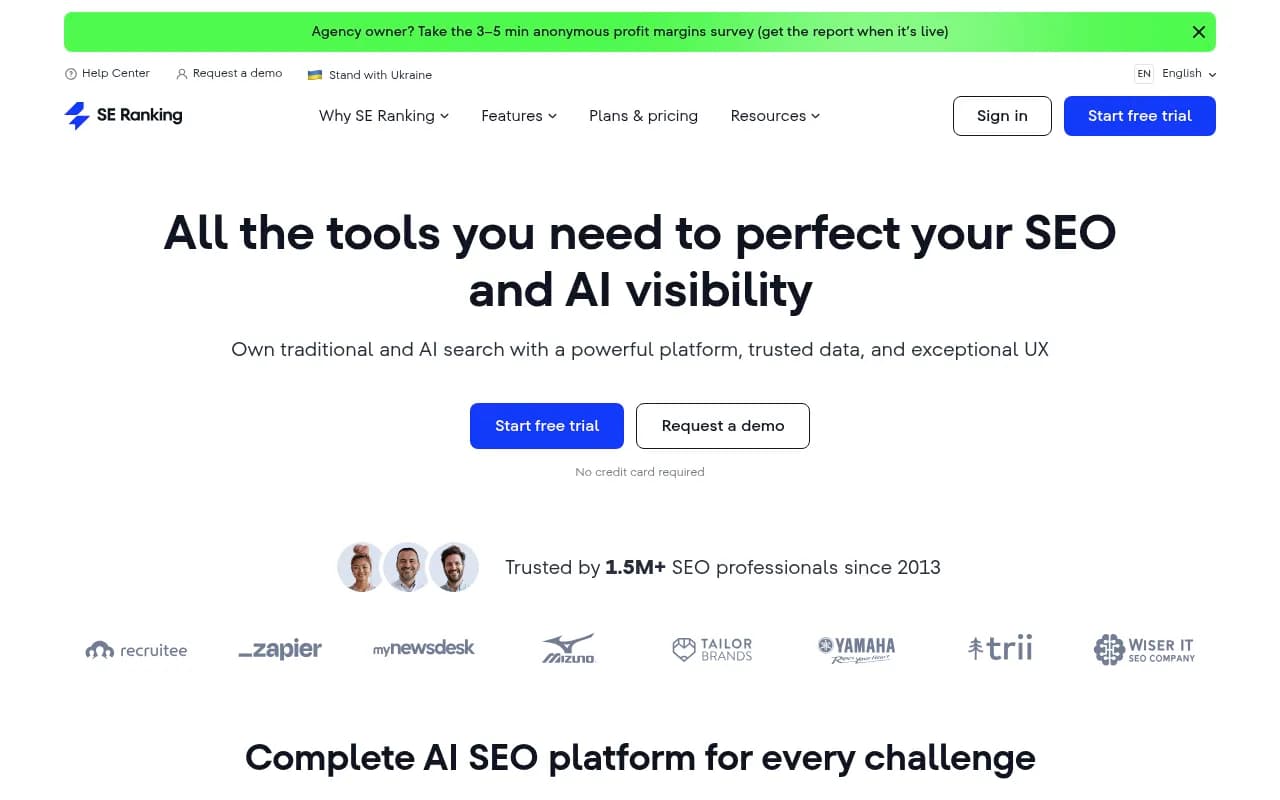
SE Ranking's AI Visibility Tracker is the most sensible option for teams already using SE Ranking for traditional SEO. It adds AI monitoring without requiring a separate platform, which reduces tool sprawl. The coverage isn't as deep as dedicated GEO platforms, but for teams that want a single tool for both traditional and AI search, it's a reasonable compromise.
Scrunch AI
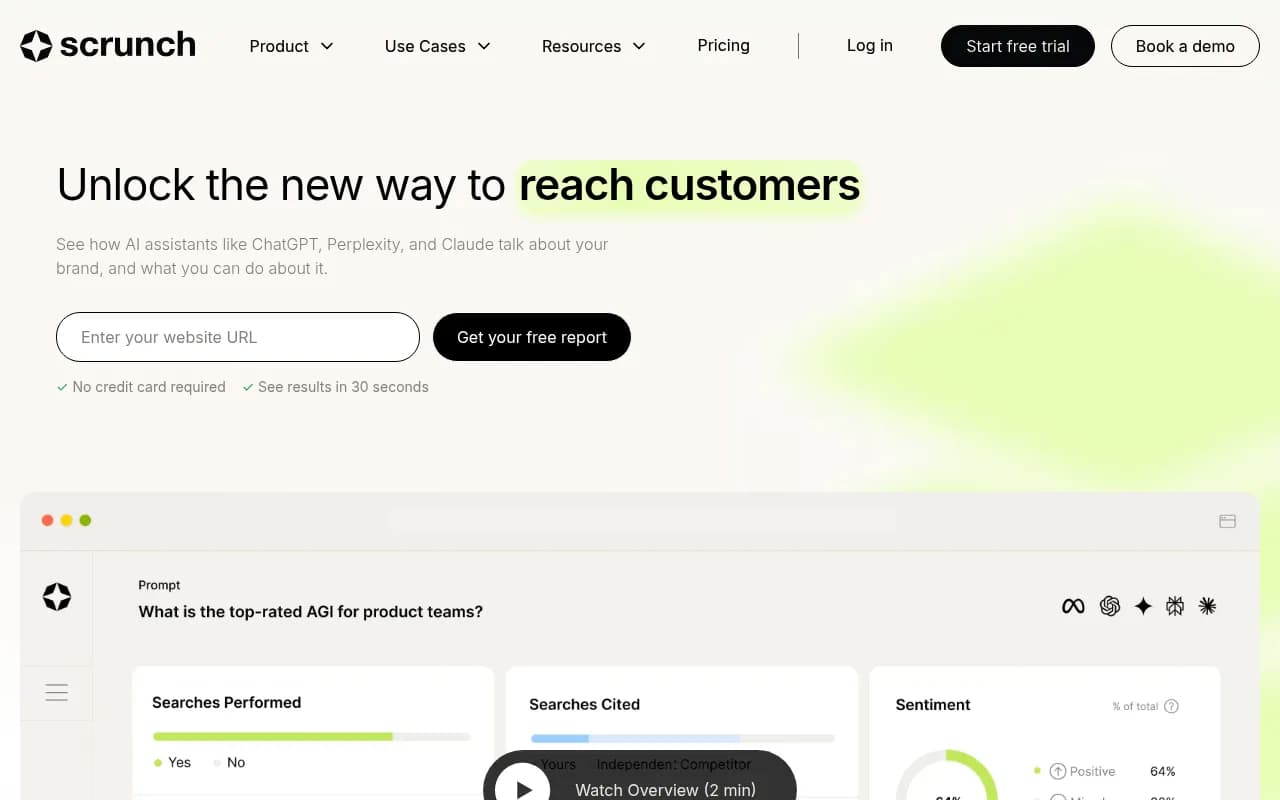
Scrunch AI focuses on brand and narrative monitoring in AI responses. It's particularly good at tracking how AI models describe your brand, not just whether they mention you. That distinction matters for brand teams managing perception, not just marketers chasing citation counts.
AthenaHQ
AthenaHQ positions itself as a GEO strategy platform. It has solid monitoring capabilities and some optimization features, but it's primarily tracking-focused. Teams looking for a structured framework for GEO strategy will find it useful; teams that need content generation will need to supplement it.

LLMrefs
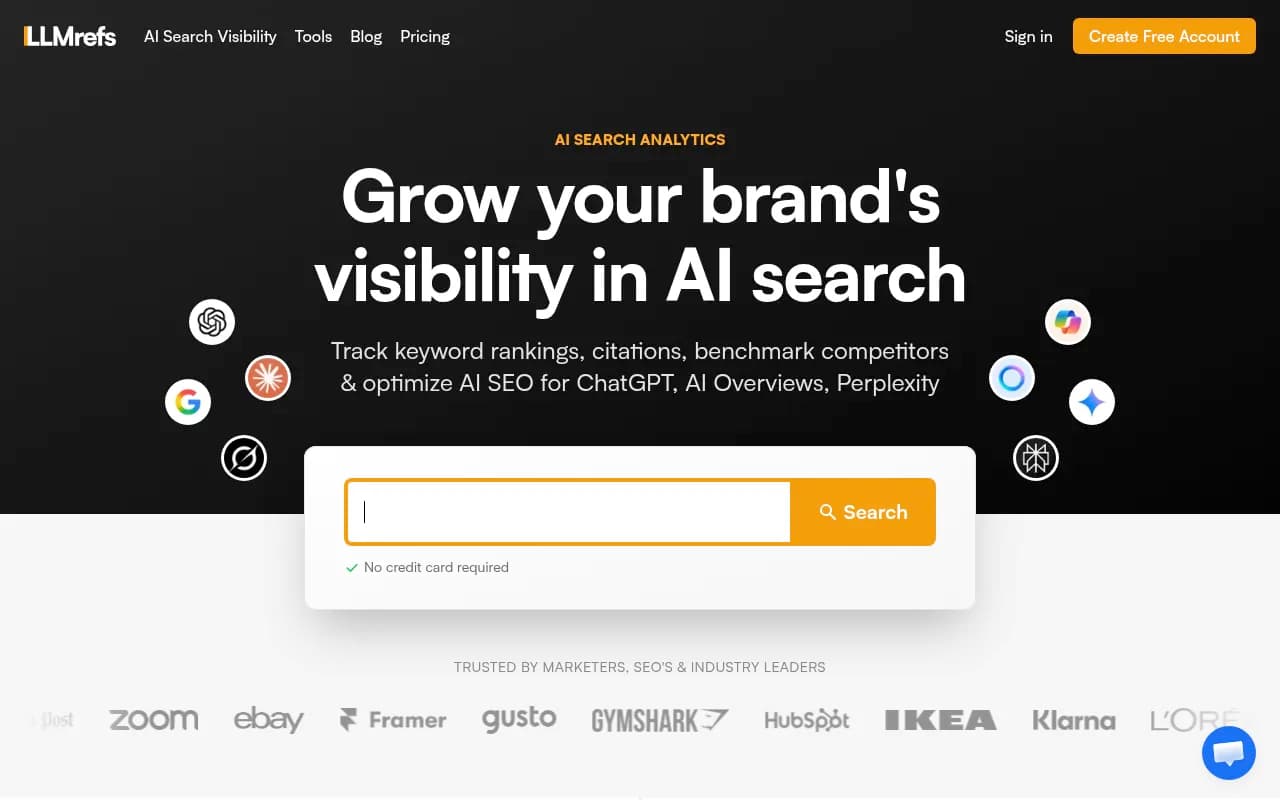
LLMrefs takes an SEO-style approach to AI visibility, organizing tracking around keywords and prompts in a way that feels familiar to SEO teams. It covers 9+ AI search engines and is a good fit for teams that want to apply existing SEO workflows to AI search without a steep learning curve.
LLMrefs
ZipTie
ZipTie uses UI simulation tracking and captures screenshots of actual AI responses, which puts its accuracy above most API-only tools. It covers 3 engines (fewer than most alternatives) and 6 monitoring regions, so it's best suited for teams with a focused geographic scope. Its AI Success Score gives a single metric for tracking progress over time.
Comparison table
| Tool | Data collection method | AI engines covered | Content optimization | Best for | Starting price |
|---|---|---|---|---|---|
| Promptwatch | UI simulation | 10 | Yes (full content generation) | Teams that want to track and fix visibility | $99/mo |
| Profound | API (with some UI validation) | 10+ | Limited | Enterprise scale, compliance | Custom |
| Peec AI | Browser-level rendering | 2-3 (base) | Actions feature | GDPR-regulated EU teams | Custom |
| Otterly.AI | API | 6 | No | Monitoring-only, SEMrush users | Mid-market |
| SE Ranking | API | Limited | No | Teams already on SE Ranking | Bundled |
| Scrunch AI | API + narrative analysis | Multiple | No | Brand perception monitoring | Custom |
| AthenaHQ | API | Multiple | Partial | GEO strategy planning | Custom |
| LLMrefs | API | 9+ | No | SEO-style GEO workflows | Varies |
| ZipTie | UI simulation | 3 | Guidance only | Focused tracking with accuracy | Per-check |
What most tools get wrong about "real" AI search data
There's a pattern worth naming. Most tools in this space were built quickly in 2024-2025 to capitalize on the AI search monitoring trend. They query APIs, wrap the results in a dashboard, and call it "AI visibility tracking." The problem is that API responses are not what your customers see.
When someone asks ChatGPT "what's the best project management tool for remote teams," the response they get in the ChatGPT interface includes specific formatting, source citations, follow-up suggestions, and sometimes shopping recommendations. The API response to the same prompt is often shorter, differently structured, and cites different sources.
If your tracking tool is querying the API and reporting that you're not being cited, it might be wrong. If it's reporting that you are being cited, it might also be wrong. The only way to know what's actually happening is to simulate what a real user does.
This is why the data collection methodology question matters more than the feature list. Before committing to any platform, ask specifically: "Do you simulate real user interfaces, or do you query the API?" If the answer is vague, treat the data accordingly.

Beyond monitoring: the tools that help you fix the problem
Knowing you're not being cited in AI search is useful. Knowing why, and having a clear path to fix it, is what actually moves the needle.
Most Hall AI alternatives stop at the monitoring step. They show you a dashboard, maybe a competitor comparison, and leave you to figure out what to do next. A few go further.
Promptwatch's Answer Gap Analysis identifies the specific prompts where competitors are visible but you're not, then its Content Agents generate content designed to close those gaps. The AI Crawler Logs show you whether AI crawlers are even finding your pages, and page-level tracking shows which specific pages are being cited and by which models. That's a complete loop from diagnosis to action to measurement.
AthenaHQ has some optimization guidance but doesn't generate content. Profound has a Conversation Explorer that helps you understand response construction but doesn't produce content either. For teams that want to go from "we're invisible in AI search" to "we're being cited regularly," Promptwatch is the only platform in this comparison that handles the full cycle.
How to choose the right Hall AI alternative for your situation
The right tool depends on three things: your team's size, your geographic scope, and whether you need to act on the data or just report it.
If you're a small to mid-size marketing team that wants to track and improve AI visibility without managing multiple tools, Promptwatch covers the full workflow at a price point that makes sense.
If you're in a regulated European market with strict data requirements, Peec AI's GDPR-native approach is worth the trade-off in platform coverage.
If you're an enterprise with 100M+ monthly query requirements and SOC 2 compliance needs, Profound is the right conversation to have.
If you're already embedded in SEMrush and want to add AI monitoring without switching platforms, Otterly.AI's integration makes that easy, just know you'll need something else when you want to optimize.
If you have a small, focused prompt set and want the most accurate data possible for a limited scope, ZipTie's UI simulation approach is worth considering.
The one thing to avoid: choosing a tool based on the feature list without asking how it actually collects data. In a space where API vs. UI simulation can produce 40% different results, methodology is the feature that matters most.
The bottom line
Hall AI served a purpose when AI search monitoring was a new concept and any data was better than none. In 2026, the bar is higher. The tools that matter are the ones that capture what real users actually see, tell you specifically what's missing, and give you a way to fix it.
Most alternatives in this space are still monitoring-only dashboards. A few have started adding optimization features. Only one has built the complete loop from gap identification to content generation to citation tracking. That distinction is worth more than any feature comparison table.