Key takeaways
- Hall AI covers the basics of AI visibility tracking, but falls short for teams that need multi-model coverage, content optimization, or enterprise-grade analytics.
- The most important differentiator between platforms in 2026 is not just which AI models they monitor, but whether they help you act on the data.
- Most alternatives track ChatGPT and Perplexity; coverage of Claude, Gemini, Copilot, and Grok varies significantly.
- A handful of platforms, including Promptwatch, go beyond monitoring to help you close visibility gaps with content generation and crawler analytics.
- Pricing ranges from free tiers to enterprise contracts, so there's a meaningful option for most team sizes.
The AI search landscape has shifted fast. A year ago, most marketing teams were still debating whether to care about ChatGPT visibility. Now they're tracking it across five or six models simultaneously, trying to figure out why a competitor keeps showing up in Perplexity answers while their own brand is invisible.
Hall AI was one of the earlier tools to address this. It gives you a way to monitor how your brand appears in AI-generated answers, and for a lot of teams, that was enough to get started. But "getting started" and "actually solving the problem" are different things. If you need coverage across Claude, Gemini, Copilot, and Grok in addition to ChatGPT and Perplexity, or if you want to understand why you're not being cited and what to do about it, Hall's current feature set leaves gaps.
This guide breaks down the best alternatives, what each one actually covers, and which situations they're best suited for.
What to look for in a multi-model AI visibility platform
Before getting into specific tools, it's worth being clear about what "multi-model tracking" actually means in practice, because platforms define it differently.
Some tools query AI models through their APIs and report back whether your brand appeared. That sounds useful, but API responses can differ from what users actually see in ChatGPT's web interface or Perplexity's answer engine. A platform that monitors real user-facing outputs gives you more accurate data.
Beyond model coverage, the other dimensions worth evaluating:
- Prompt depth: How many prompts can you track? A tool that monitors 10 prompts gives you a very different picture than one tracking 350.
- Sampling frequency: Daily, weekly, or on-demand? Freshness matters when AI models update their citation behavior.
- Content gap analysis: Does the platform tell you why you're not appearing, not just that you aren't?
- Content generation: Can it help you create content that closes those gaps?
- Crawler logs: Can you see when AI crawlers like GPTBot or ClaudeBot are hitting your site, and which pages they're reading?
- Traffic attribution: Does visibility in AI search actually connect to real website traffic and revenue?
With that framework in mind, here's how the main alternatives compare.
The best Hall AI alternatives in 2026
Promptwatch — best for teams that want to act, not just monitor
Promptwatch is the platform that most directly addresses the gap between "we can see where we're invisible" and "we can fix it." Most tools in this category stop at showing you data. Promptwatch is built around a loop: find the gaps, generate content to close them, track the results.

On the monitoring side, it covers 10 AI models: ChatGPT, Perplexity, Google AI Overviews, Google AI Mode, Claude, Gemini, Meta/Llama, DeepSeek, Grok, Mistral, and Copilot. That's the broadest coverage in the category. It also tracks real user-facing outputs rather than just API responses, which matters for accuracy.
Where it pulls ahead is the action layer. Answer Gap Analysis shows you exactly which prompts competitors are visible for that you're not. Content Agents then generate articles, listicles, and comparisons grounded in that prompt data, not generic SEO filler. And AI Crawler Logs give you real-time visibility into when GPTBot, ClaudeBot, and other crawlers are hitting your site, which pages they're reading, and when those pages move from crawl to citation.
Pricing starts at $99/month for one site and 50 prompts, scaling to $249/month (Professional) and $579/month (Business). Used by 1,480+ brands including Booking.com and Center Parcs.
Best for: Marketing and SEO teams that want to improve AI visibility, not just measure it.
Profound — best for enterprise analytics
Profound is a strong option for larger organizations that need deep analytics and multi-stakeholder reporting. It covers a solid range of AI engines and has a reputation for data quality.
Profound

The trade-off is price point and focus. Profound is built for enterprise analytics and activation, which means it's well-suited for teams with dedicated analysts but potentially overkill for smaller marketing teams. It doesn't have the content generation capabilities that platforms like Promptwatch offer, so you'll still need a separate workflow for actually improving your visibility.
Best for: Enterprise teams with complex reporting needs and existing content workflows.
Otterly.AI — best budget starter
Otterly.AI is the most accessible entry point in the category. It covers ChatGPT, Perplexity, and Google AI Overviews, which covers the three platforms most brands care about first.
Otterly.AI

The limitations are real: no crawler logs, no content generation, no traffic attribution. It's a monitoring dashboard, not an optimization platform. But if you're a small team that just wants to start tracking AI visibility without a significant budget commitment, it's a reasonable place to begin.
Best for: Small teams or individuals who want basic AI visibility monitoring at low cost.
AthenaHQ — best for GEO strategy
AthenaHQ positions itself as a GEO strategy platform, with tools for understanding your AI search presence and building a roadmap for improvement.

It's monitoring-focused rather than execution-focused, which means it's good at helping you understand the landscape but doesn't generate content to close gaps. The interface is clean and the reporting is solid. Coverage includes the major models, though it doesn't match Promptwatch's breadth on less common models like Grok or DeepSeek.
Best for: Teams that want strategic GEO guidance and are comfortable managing content creation separately.
Peec AI — best for cross-engine reporting and exports
Peec AI is built for teams that need clean, exportable reports across multiple AI engines. It covers the main models and produces structured data that integrates well with existing reporting workflows.

It's not an optimization platform, so don't expect content recommendations or crawler insights. But if your primary need is getting consistent, reliable data out of multiple AI engines and into your reporting stack, Peec AI does that well.
Best for: Analytics teams and agencies that need structured multi-engine data for client reporting.
Scrunch AI — best for brand and narrative monitoring
Scrunch AI focuses on how your brand's narrative appears across AI-generated content, which is a slightly different angle than pure citation tracking.
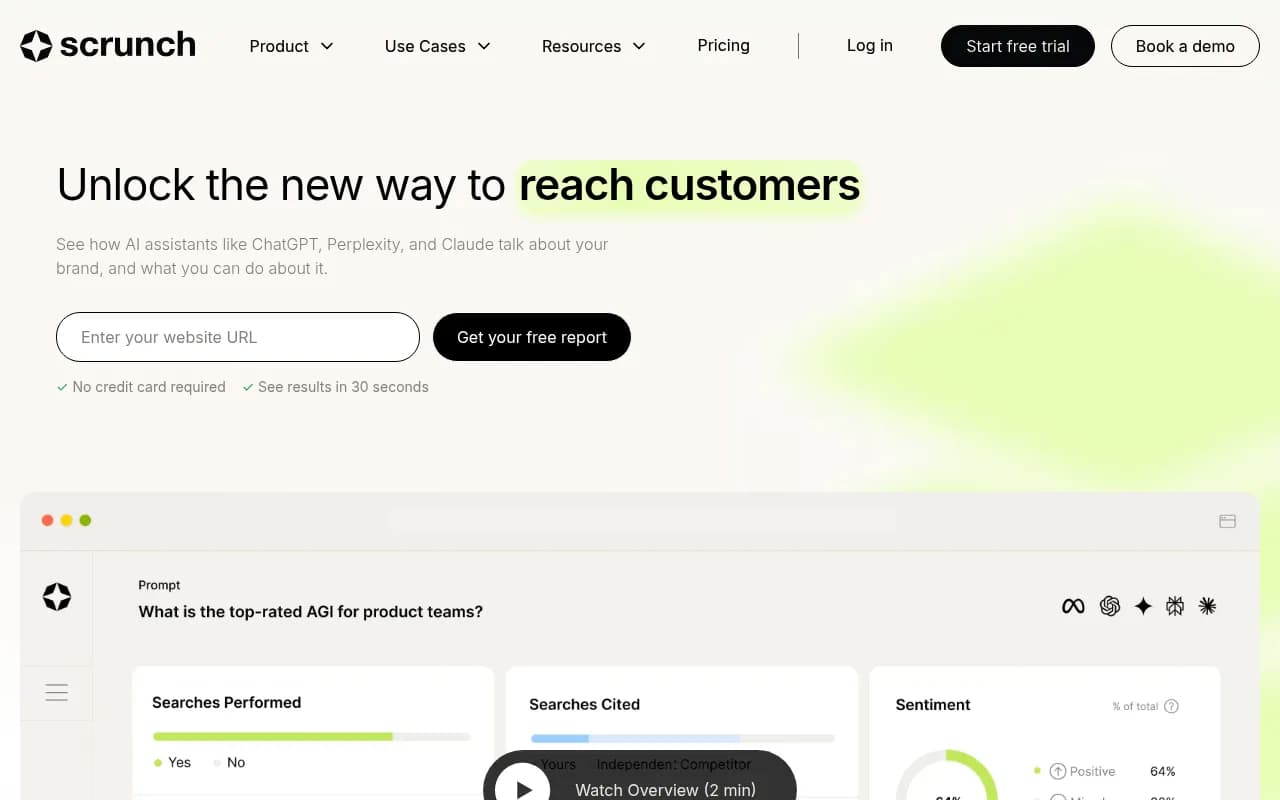
It's useful for brand teams that care not just about whether they're mentioned, but how they're described. Sentiment, framing, and narrative consistency across AI models are areas where Scrunch AI has invested. The trade-off is that it's less focused on the SEO and content optimization side.
Best for: Brand and communications teams monitoring narrative consistency across AI engines.
LLMrefs — best for keyword-first GEO workflows
LLMrefs takes an approach that will feel familiar to SEO practitioners: it organizes AI visibility tracking around keywords and search intent, making it easier to slot into existing SEO workflows.
LLMrefs
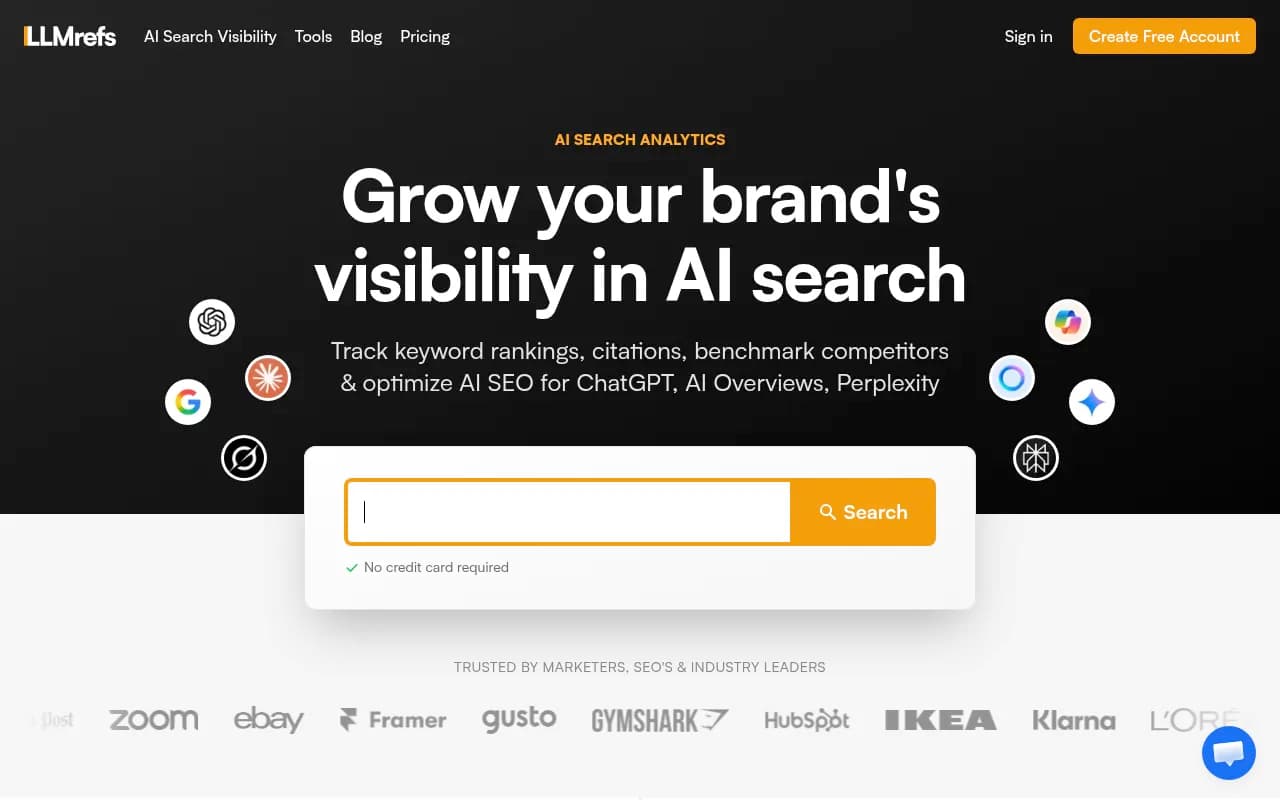
Coverage spans ChatGPT, Perplexity, and several other AI engines. The keyword-centric interface is genuinely useful for teams that think in terms of search terms rather than prompts. It's not a full optimization platform, but the workflow fit for SEO teams is better than most alternatives.
Best for: SEO teams that want AI visibility data organized around keyword research workflows.
ZipTie — best for AI Overviews and traffic impact
ZipTie focuses specifically on the connection between AI visibility and actual traffic impact, with particular depth on Google AI Overviews.
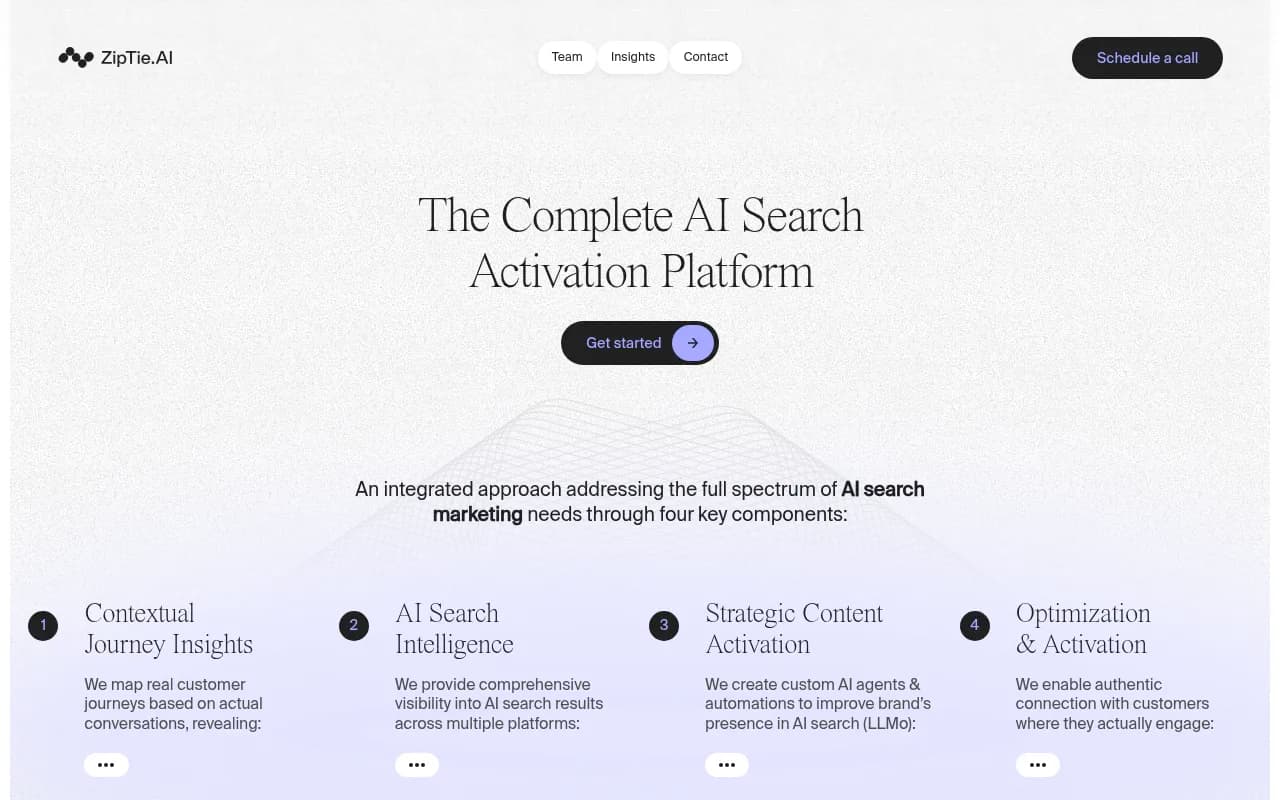
If Google AI Overviews is your primary concern, ZipTie's analysis of how AI Overview appearances affect click-through rates and organic traffic is more detailed than most competitors. It's narrower in scope than a full multi-model platform, but deep where it counts.
Best for: Teams focused specifically on Google AI Overviews and their traffic impact.
SE Ranking — best for teams already in the SE Ranking ecosystem
SE Ranking has added AI visibility tracking to its existing SEO platform, which makes it a convenient option if you're already paying for SE Ranking's rank tracking and site audit tools.
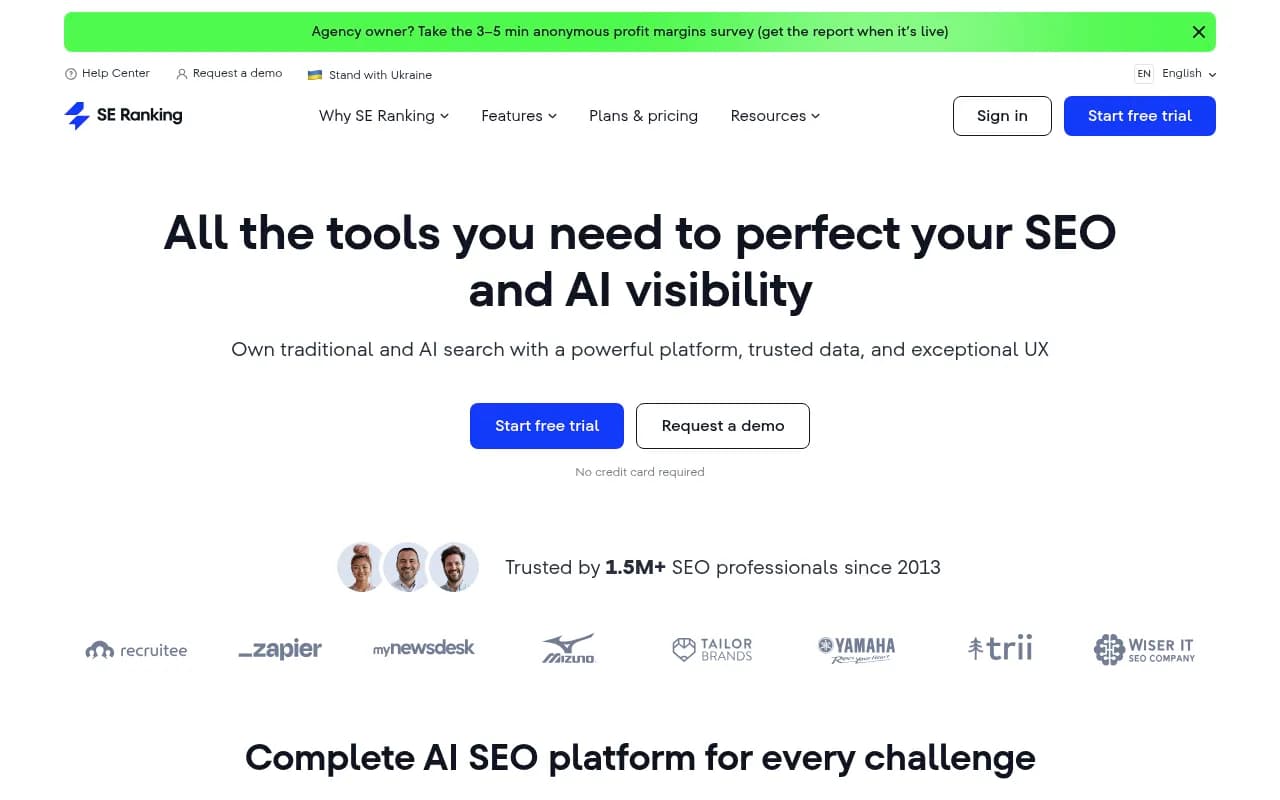
The AI visibility features are solid but not the platform's primary focus. Coverage is reasonable for the main models. The main advantage is consolidation: one platform, one bill, one interface for both traditional SEO and AI visibility.
Best for: Existing SE Ranking users who want to add AI visibility tracking without adding another tool.
Model coverage comparison
This is the question most teams ask first: which models does each platform actually track? Here's how the main alternatives stack up.
| Platform | ChatGPT | Perplexity | Gemini | Claude | Copilot | Grok | DeepSeek | Google AI Overviews |
|---|---|---|---|---|---|---|---|---|
| Promptwatch | Yes | Yes | Yes | Yes | Yes | Yes | Yes | Yes |
| Profound | Yes | Yes | Yes | Yes | Partial | No | No | Yes |
| Otterly.AI | Yes | Yes | No | No | No | No | No | Yes |
| AthenaHQ | Yes | Yes | Yes | Yes | Partial | No | No | Yes |
| Peec AI | Yes | Yes | Yes | Partial | No | No | No | Yes |
| Scrunch AI | Yes | Yes | Yes | Yes | No | No | No | Partial |
| LLMrefs | Yes | Yes | Yes | Partial | No | No | No | No |
| ZipTie | Partial | No | No | No | No | No | No | Yes |
| SE Ranking | Yes | Yes | Yes | Partial | No | No | No | Yes |
A few things stand out. First, ChatGPT and Perplexity are table stakes -- every platform covers them. Gemini and Claude coverage is common but not universal. Grok, DeepSeek, and Copilot are where most platforms fall short. If you need comprehensive coverage across all major models, the options narrow quickly.
Second, Google AI Overviews is increasingly important and most platforms now include it. Google AI Mode (the newer conversational search experience) is covered by fewer platforms.
Feature depth comparison
Model coverage is necessary but not sufficient. Here's how the platforms compare on the features that determine whether you can actually improve your visibility.
| Platform | Content gap analysis | Content generation | Crawler logs | Traffic attribution | Prompt volume data | Reddit/YouTube tracking |
|---|---|---|---|---|---|---|
| Promptwatch | Yes | Yes | Yes | Yes | Yes | Yes |
| Profound | Yes | No | No | Partial | Partial | No |
| Otterly.AI | No | No | No | No | No | No |
| AthenaHQ | Yes | No | No | No | Partial | No |
| Peec AI | Partial | No | No | No | No | No |
| Scrunch AI | Partial | No | No | No | No | No |
| LLMrefs | Partial | No | No | No | Yes | No |
| ZipTie | No | No | No | Yes | No | No |
| SE Ranking | Partial | No | No | No | No | No |
The pattern is clear. Most platforms are monitoring dashboards. They show you where you stand but don't help you change it. Promptwatch is the only platform in this comparison with content generation, crawler logs, traffic attribution, and Reddit/YouTube tracking all in one place.
That doesn't mean the monitoring-only tools are useless. If you have a strong content team that just needs better data to direct their work, a monitoring-only platform might be all you need. But if you want the platform to help you close the loop from insight to action, the options are limited.
Pricing overview
| Platform | Starting price | Free tier |
|---|---|---|
| Promptwatch | $99/month | Free trial |
| Profound | Custom (enterprise) | No |
| Otterly.AI | ~$29/month | Limited free |
| AthenaHQ | Custom | No |
| Peec AI | ~$49/month | Limited free |
| Scrunch AI | Custom | No |
| LLMrefs | ~$39/month | Free tier |
| ZipTie | ~$49/month | Free trial |
| SE Ranking | Bundled with SE Ranking plans | Free trial |
Pricing in this category is still in flux. Several platforms have raised prices as they've added features, and enterprise pricing is often negotiated rather than listed. The figures above reflect publicly available information as of mid-2026.
Which platform should you choose?
The honest answer depends on where you are in your AI visibility journey.
If you're just starting out and want to understand the basics without a significant budget commitment, Otterly.AI or LLMrefs will get you oriented. You'll see where you stand across the main models and start to understand which prompts matter for your category.
If you need multi-model coverage and clean reporting for client or stakeholder presentations, Peec AI or Profound are worth evaluating. Both produce structured data that integrates well with reporting workflows.
If you're serious about improving your AI visibility, not just measuring it, Promptwatch is the platform to evaluate seriously. The combination of gap analysis, content generation, crawler logs, and traffic attribution means you're not just watching your visibility score, you're actively working to change it. The action loop, find gaps, create content, track results, is what separates it from the monitoring-only alternatives.
For teams already in the SE Ranking ecosystem, adding their AI visibility module is the path of least resistance, even if it's not the deepest feature set.
One thing worth noting: the platforms that are purely monitoring-focused are betting that you'll figure out the "what to do about it" part on your own. That works if you have a strong content team and a clear strategy. But for most teams, the gap between "we can see we're invisible" and "we know how to fix it" is where momentum dies. Platforms that close that gap are worth paying more for.
A note on Hall AI itself
Hall AI isn't a bad tool. It's a reasonable starting point for teams that are new to AI visibility tracking and want to understand the basics before committing to a more comprehensive platform. The interface is clean, the onboarding is straightforward, and it covers the most important models.
The limitations become apparent when you need to scale. Prompt limits, model coverage gaps, and the absence of content optimization features mean that growing teams tend to outgrow it relatively quickly. That's not a criticism so much as an observation about where it sits in the market: it's an entry-level tool in a category that's rapidly maturing.
The alternatives in this guide represent where the category is heading: broader model coverage, deeper analytics, and increasingly, tools that help you do something with the data rather than just look at it.
The competitive landscape for AI visibility platforms has expanded significantly in 2026, with new entrants appearing regularly. The tools listed here represent the most established and feature-complete options, but it's worth checking back as the category continues to evolve.