Key Takeaways
- Hybrid pricing works best: Combine retainer fees for ongoing monitoring with performance bonuses tied to AI visibility improvements and traffic attribution
- Package by client maturity: Starter packages for AI search beginners ($1,500-3,000/mo), growth packages for active optimizers ($3,500-7,000/mo), enterprise for brands scaling AI visibility ($10,000+/mo)
- Lead with the action loop: Position your service around finding content gaps, creating AI-optimized content, and tracking results—not just monitoring dashboards
- Price for value, not hours: AI search optimization delivers measurable ROI through increased citations, traffic, and conversions. Tie pricing to business outcomes, not time spent.
- Use the right tools: Platforms like Promptwatch provide the full action loop (gap analysis, content generation, tracking) that justifies premium pricing vs monitoring-only competitors
The AI Search Pricing Challenge: Why 2026 Is Different
If you're running a digital marketing agency in 2026, you've likely noticed something: clients are asking about AI search optimization, but they have no idea what it should cost—and neither do most agencies.
According to recent industry data, 78% of agencies struggle to properly price AI-driven services. The problem isn't lack of demand. It's that AI search optimization (also called Generative Engine Optimization or GEO, Answer Engine Optimization or AEO, or Generative Search Optimization or GSO) is fundamentally different from traditional SEO.
Traditional SEO has decades of established pricing norms. Monthly retainers typically range from $500 to $10,000+ depending on scope, with most agencies charging $1,000-5,000/month for ongoing work. Clients understand what they're paying for: keyword rankings, backlinks, technical audits, content optimization.
But AI search optimization? That's new territory. Clients don't know if it should cost more, less, or the same as SEO. And agencies don't know how to package it—should it be an add-on to existing SEO services, a standalone offering, or a complete replacement?
Here's the reality: AI search optimization requires different skills, different tools, and delivers different outcomes than traditional SEO. It deserves its own pricing structure.
Understanding What You're Actually Selling
Before you can price AI search optimization services, you need to understand what you're selling. This isn't just "SEO for ChatGPT."
AI search optimization is about ensuring your client's brand appears in AI-generated answers across platforms like ChatGPT, Claude, Perplexity, Google AI Overviews, Gemini, and others. It's about being cited as a source, recommended in product comparisons, and visible when users ask questions related to your client's industry.
The deliverables include:
- Visibility tracking: Monitoring how often and where the brand appears in AI responses across multiple models
- Content gap analysis: Identifying which prompts competitors rank for but your client doesn't
- AI-optimized content creation: Writing articles, guides, and comparisons specifically designed to get cited by AI models
- Technical optimization: Ensuring AI crawlers can access and understand the client's content
- Citation analysis: Understanding which sources AI models trust and how to become one of them
- Traffic attribution: Connecting AI visibility improvements to actual website traffic and conversions
This is fundamentally different from traditional SEO's focus on keyword rankings and backlinks. You're optimizing for AI model behavior, not search engine algorithms.
The Three Core Pricing Models for AI Search Optimization
1. Monthly Retainer Model
The retainer model is the most common approach for agencies offering AI search optimization. Clients pay a fixed monthly fee for ongoing services.
Typical retainer ranges in 2026:
- Starter packages: $1,500-3,000/month (1-2 brands, 50-100 prompts tracked, basic monitoring and reporting)
- Growth packages: $3,500-7,000/month (2-5 brands, 150-350 prompts, content gap analysis, AI content generation, crawler log monitoring)
- Enterprise packages: $10,000-25,000+/month (unlimited brands, 500+ prompts, full optimization suite, dedicated account management, custom reporting)
The retainer model works well because AI search optimization requires continuous monitoring and optimization. AI models update frequently, competitor strategies evolve, and new platforms emerge. Clients need ongoing support, not one-time projects.
What to include in retainer packages:
- Monthly visibility reports showing citation frequency and share of voice across AI models
- Quarterly content gap analyses identifying new optimization opportunities
- A set number of AI-optimized articles per month (typically 3-10 depending on package tier)
- Technical audits to ensure AI crawler accessibility
- Competitor benchmarking and heatmaps
- Regular strategy calls and recommendations
2. Performance-Based Pricing
Performance-based pricing ties your compensation directly to results. This model is gaining traction in 2026 as clients demand accountability and agencies gain confidence in their ability to move the needle.
Common performance metrics:
- Citation frequency: Number of times the brand is cited in AI responses for tracked prompts
- Share of voice: Percentage of AI responses where the brand appears vs competitors
- Traffic attribution: Actual website visits from AI search engines (tracked via UTM parameters, server logs, or Google Search Console)
- Conversion events: Leads, sales, or other business outcomes attributed to AI search traffic
Typical performance pricing structures:
- Base retainer ($2,000-5,000/month) + performance bonuses (10-30% of base fee per milestone achieved)
- Pure performance model (no retainer, but higher per-result fees—risky for agencies, attractive to budget-conscious clients)
- Hybrid model with lower base retainer + aggressive performance bonuses
Example performance bonus structure:
- 10% bonus when client achieves 25% share of voice in tracked prompts
- 20% bonus when AI-attributed traffic increases 50% quarter-over-quarter
- 30% bonus when AI-attributed conversions exceed agreed-upon targets
The challenge with performance pricing: attribution can be murky. Unlike traditional SEO where you can track rankings in Google Search Console, AI search traffic often arrives without clear source data. You'll need robust tracking infrastructure—tools like Promptwatch offer traffic attribution via code snippets, GSC integration, or server log analysis to solve this problem.
3. Project-Based Pricing
Some clients prefer project-based engagements over ongoing retainers. This works well for specific initiatives like AI search audits, content gap analyses, or one-time optimization sprints.
Common project-based offerings:
- AI search audit: $3,000-8,000 (comprehensive analysis of current AI visibility, competitor benchmarking, strategic recommendations)
- Content gap analysis: $2,000-5,000 (identify missing content opportunities based on competitor AI visibility)
- AI content sprint: $5,000-15,000 (create 10-30 AI-optimized articles in a concentrated timeframe)
- Technical AI optimization: $4,000-10,000 (fix crawler access issues, implement structured data, optimize for AI model consumption)
Project-based pricing works for clients who want to test AI search optimization before committing to a retainer, or who have specific, time-bound goals. However, it's less ideal for agencies because AI search optimization requires ongoing effort to maintain and improve results.
How to Structure Your AI Search Optimization Packages
The most successful agencies in 2026 structure their AI search packages around client maturity and business goals, not just service features.
Starter Package: AI Search Foundation
Ideal for: Businesses new to AI search optimization, small brands, or clients testing the waters
Price range: $1,500-3,000/month
What's included:
- Monitoring across 3-5 AI models (ChatGPT, Perplexity, Google AI Overviews, Claude, Gemini)
- Tracking 50-100 priority prompts relevant to client's industry
- Monthly visibility reports with citation frequency and share of voice
- Quarterly content gap analysis
- 3-5 AI-optimized articles per month
- Basic technical audit (one-time setup)
- Email support and quarterly strategy calls
What's NOT included:
- Advanced features like crawler log monitoring, Reddit/YouTube tracking, or ChatGPT Shopping visibility
- Extensive competitor analysis
- Traffic attribution and conversion tracking
- Dedicated account management
This package establishes a baseline and demonstrates value without overwhelming the client or requiring massive agency resources.
Growth Package: AI Search Acceleration
Ideal for: Mid-market brands actively investing in AI visibility, companies with established content operations
Price range: $3,500-7,000/month
What's included:
- Monitoring across 8-10 AI models (all major platforms)
- Tracking 150-350 prompts with volume estimates and difficulty scoring
- Bi-weekly visibility reports with trend analysis
- Monthly content gap analysis with prioritized recommendations
- 8-15 AI-optimized articles per month
- AI crawler log monitoring (see which AI bots are accessing your site and when)
- Citation and source analysis (understand which pages and domains AI models trust)
- Reddit and YouTube insights (surface discussions influencing AI recommendations)
- Competitor heatmaps and benchmarking
- Traffic attribution via code snippet or GSC integration
- Priority email/chat support and bi-weekly strategy calls
What's NOT included:
- White-label reporting
- API access for custom integrations
- Multi-language or multi-region tracking
This is the sweet spot for most agencies. It delivers comprehensive AI search optimization with measurable ROI, justifying the higher price point.
Enterprise Package: AI Search Dominance
Ideal for: Large brands, multi-location businesses, agencies managing multiple client sites
Price range: $10,000-25,000+/month
What's included:
- Monitoring across all available AI models
- Unlimited prompt tracking with advanced query fan-outs
- Custom reporting cadence (daily, weekly, or real-time dashboards)
- Continuous content gap analysis with AI-powered prioritization
- 20-50+ AI-optimized articles per month
- Full technical optimization including AI crawler log analysis and indexing fixes
- Advanced citation analysis with Reddit, YouTube, and social media tracking
- ChatGPT Shopping monitoring (track product recommendations and shopping carousels)
- Multi-language and multi-region tracking
- Dedicated account manager and weekly strategy sessions
- White-label reporting and API access
- Custom integrations (Looker Studio, data warehouses, etc.)
- Performance guarantees and SLAs
Optional add-ons:
- Training and enablement for client's internal team
- Competitive intelligence deep-dives
- Crisis monitoring and rapid response for negative AI mentions
Enterprise packages are highly customized. Price based on scope, team size, and expected outcomes rather than fixed tiers.
Positioning Your Agency's AI Search Services
Pricing is only half the battle. You also need to position your services in a way that resonates with clients and differentiates you from competitors.
Lead With the Action Loop, Not Features
Most agencies (and most AI search tools) make the same mistake: they lead with monitoring. "We track your brand across ChatGPT, Perplexity, and Google AI Overviews."
That's not compelling. Clients don't want dashboards. They want results.
Instead, position your service around the action loop:
- Find the gaps: Show clients exactly which prompts their competitors rank for but they don't. Identify the specific content their website is missing.
- Create content that ranks in AI: Generate articles, guides, and comparisons engineered to get cited by AI models—not generic SEO filler.
- Track the results: Prove visibility improvements and connect them to actual traffic and revenue.
This is what separates premium agencies from commodity providers. You're not just showing clients data—you're helping them fix the problem.
Tools like Promptwatch are built around this action loop. The platform shows content gaps, generates AI-optimized content using 880M+ citation data points, and tracks results with page-level visibility and traffic attribution. This is what justifies premium pricing.

Differentiate From Monitoring-Only Competitors
Many AI search tools (Otterly.AI, Peec.ai, AthenaHQ, Search Party) are monitoring-only dashboards. They show you where you're invisible but leave you stuck figuring out what to do about it.
Position your agency as the solution provider, not just the problem identifier. Emphasize:
- Content gap analysis: You don't just track visibility—you identify exactly what content is missing and why competitors are winning.
- AI content generation: You create the content clients need, grounded in real citation data and prompt intelligence.
- Technical optimization: You fix crawler access issues, implement structured data, and ensure AI models can discover and understand client content.
- Traffic attribution: You prove ROI by connecting AI visibility to actual website visits and conversions.
This is the difference between a $2,000/month commodity service and a $7,000/month strategic partnership.
Bundle AI Search With Traditional SEO (Carefully)
Many agencies wonder: should we bundle AI search optimization with traditional SEO, or sell it separately?
The answer depends on your client base and positioning.
When to bundle:
- Your clients are already paying for SEO and see AI search as a natural extension
- You want to increase average contract value without adding new sales cycles
- Your team has the bandwidth to deliver both services without sacrificing quality
When to separate:
- You're targeting clients who don't need traditional SEO (e.g., SaaS companies with strong domain authority but zero AI visibility)
- You want to position AI search optimization as a premium, specialized service
- Your team is small and needs to focus resources on one discipline
If you do bundle, make sure AI search optimization is clearly defined as its own deliverable with its own metrics and reporting. Don't let it become an afterthought buried in monthly SEO reports.
Example bundled package structure:
- SEO + AI Search Starter: $3,500/month (traditional SEO + basic AI monitoring)
- SEO + AI Search Growth: $6,500/month (full SEO + comprehensive AI optimization)
- SEO + AI Search Enterprise: $12,000+/month (enterprise SEO + AI dominance package)
Bundling typically offers a 10-20% discount vs buying services separately, but still increases total contract value.
Pricing Considerations: What Affects Your Rates
Not all AI search optimization services are created equal. Several factors should influence your pricing:
1. Number of Brands/Sites
Tracking one brand is straightforward. Tracking five brands across multiple AI models with separate reporting requires significantly more resources. Charge accordingly.
Typical pricing increments:
- 1 brand: Base price
- 2-3 brands: +30-50% of base price
- 4-5 brands: +60-100% of base price
- 6+ brands: Custom enterprise pricing
2. Number of Prompts Tracked
More prompts = more data to analyze, more reporting complexity, and higher tool costs. Most platforms charge based on prompt volume.
Typical prompt tiers:
- 50-100 prompts: Starter tier
- 150-350 prompts: Growth tier
- 500+ prompts: Enterprise tier
3. Number of AI Models Monitored
Monitoring ChatGPT alone is simple. Monitoring ChatGPT, Claude, Perplexity, Gemini, Google AI Overviews, Grok, DeepSeek, Mistral, Meta AI, and Copilot requires more sophisticated tooling and analysis.
Typical model coverage:
- Starter: 3-5 models (ChatGPT, Perplexity, Google AI Overviews)
- Growth: 8-10 models (add Claude, Gemini, Grok, etc.)
- Enterprise: All available models
4. Content Production Volume
AI-optimized content creation is labor-intensive (or requires expensive AI tools). The more articles you produce per month, the higher your costs and pricing.
Typical content volume:
- Starter: 3-5 articles/month
- Growth: 8-15 articles/month
- Enterprise: 20-50+ articles/month
If you're using AI content generation tools (like Promptwatch's built-in AI writing agent), you can scale production without proportionally increasing costs—but you should still charge for the value delivered, not just your time.
5. Geographic and Language Coverage
Tracking AI responses in English from the US is the baseline. Tracking responses in Spanish from Mexico, French from Canada, and German from Germany adds complexity and cost.
Typical geographic pricing:
- Single country/language: Base price
- 2-3 countries/languages: +20-40%
- 4+ countries/languages: +50-100% or custom pricing
6. Industry Competitiveness
Highly competitive industries (finance, healthcare, legal, SaaS) require more aggressive optimization and content production to achieve visibility. Less competitive industries (niche B2B, local services) may see results faster with less effort.
Consider charging premium rates for competitive industries where results are harder to achieve but more valuable.
Common Pricing Mistakes Agencies Make
Mistake #1: Pricing Too Low
Many agencies underprice AI search optimization because they're afraid clients won't pay premium rates for a "new" service. This is a mistake.
AI search optimization delivers measurable ROI: increased brand visibility, more traffic, higher conversions. If you can prove results (and you should be able to with proper tracking), clients will pay for value.
Don't compete on price. Compete on outcomes.
Mistake #2: Pricing Based on Hours, Not Value
Traditional agency pricing often uses hourly rates as a foundation. "This will take 20 hours per month, so we'll charge $200/hour = $4,000/month."
This is backwards for AI search optimization. The value you deliver isn't tied to hours worked—it's tied to business outcomes.
If your AI optimization increases a client's organic traffic by 30% and generates an additional $50,000 in revenue per month, is that worth $4,000? Absolutely. Is it worth $10,000? Probably. Price based on the value you create, not the time you spend.
Mistake #3: Not Tracking and Proving ROI
If you can't prove your AI search optimization is working, clients won't renew. Period.
Invest in proper tracking infrastructure from day one:
- Use tools with traffic attribution capabilities (Promptwatch, Profound, or custom tracking via UTM parameters)
- Set up Google Search Console integration to capture AI search referrals
- Implement server log analysis to see AI crawler activity
- Track conversion events (leads, sales, signups) attributed to AI search traffic
Show clients the numbers every month. When they see their AI visibility increasing and traffic growing, price becomes less of an objection.
Mistake #4: Offering Too Many Options
Decision paralysis is real. If you offer six different package tiers with dozens of add-ons, clients will struggle to choose—and may choose nothing.
Keep it simple: three core packages (Starter, Growth, Enterprise) with clear differentiation. Add-ons should be limited and clearly valuable (e.g., "Add multi-language tracking for +$1,500/month").
Mistake #5: Not Accounting for Tool Costs
AI search optimization requires specialized tools. Platforms like Promptwatch, Profound, Otterly.AI, and others charge monthly fees based on features and usage.
Typical tool costs:
- Basic monitoring tools: $99-249/month
- Professional platforms: $249-579/month
- Enterprise platforms: $1,000-5,000+/month
Factor these costs into your pricing. Don't eat the expense—pass it through to clients or build it into your margins.
How to Sell AI Search Optimization to Clients
Pricing is only effective if you can actually close deals. Here's how to sell AI search optimization services in 2026:
1. Lead With the Problem, Not the Solution
Don't start with "We offer AI search optimization." Start with the pain point:
"Did you know that 70% of searches now end without a click? Users are getting answers directly from AI models like ChatGPT and Perplexity. If your brand isn't appearing in those answers, you're invisible to a third of your potential customers."
Once the client understands the problem, they'll want to hear your solution.
2. Show Competitor Visibility
Nothing motivates a client faster than seeing their competitors win. Use tools like Promptwatch to generate competitor heatmaps showing which brands dominate AI responses in the client's industry.
"Here's how often your top three competitors appear in AI search results for prompts related to your product category. You're currently at 5% share of voice. They're at 40%, 35%, and 28%. That's a massive visibility gap."
3. Demonstrate Quick Wins
Offer a free or low-cost AI search audit as a lead magnet. Show the client:
- Their current AI visibility score
- Specific prompts where competitors appear but they don't
- 3-5 content gaps they could fill immediately
This proves you understand their business and can deliver results—making the full service an easy sell.
4. Tie AI Visibility to Revenue
Clients care about one thing: making money. Connect AI search optimization to business outcomes:
"If we increase your AI visibility by 30% and that drives an additional 5,000 website visits per month, with your current 3% conversion rate, that's 150 new leads. At your average customer value of $5,000, that's $750,000 in potential revenue. Our service costs $5,000/month. The ROI is clear."
Use the client's own metrics (traffic, conversion rate, customer lifetime value) to build the business case.
5. Offer Performance Guarantees (If You Can)
If you're confident in your ability to deliver results, offer performance guarantees:
"If we don't increase your AI visibility by at least 20% in the first three months, we'll refund your fees."
This removes risk for the client and demonstrates your confidence. Just make sure you have the tools and processes to actually deliver on the guarantee.
Tools and Platforms to Power Your AI Search Services
You can't deliver AI search optimization without the right tools. Here's what you need:
Visibility Tracking and Monitoring
You need a platform that tracks brand mentions across multiple AI models and provides actionable insights.
Top platforms in 2026:
Why Promptwatch stands out: Unlike monitoring-only competitors, Promptwatch is built around the action loop. It shows you content gaps, generates AI-optimized content using 880M+ citations analyzed, and tracks results with page-level visibility and traffic attribution. It's the only platform rated as a "Leader" across all categories in a 2026 comparison of 12 GEO platforms.
Key features:
- Monitors 10 AI models (ChatGPT, Perplexity, Google AI Overviews, Claude, Gemini, Meta/Llama, DeepSeek, Grok, Mistral, Copilot)
- AI crawler logs (see which AI bots access your site and when)
- Content gap analysis (identify missing content opportunities)
- AI content generation (built-in writing agent)
- Reddit and YouTube insights
- ChatGPT Shopping tracking
- Traffic attribution (code snippet, GSC integration, or server logs)
- Multi-language and multi-region support
Pricing: Essential $99/mo, Professional $249/mo, Business $579/mo, custom agency/enterprise pricing available.
Alternatives to consider:
Profound

Profound: Enterprise-focused platform with strong feature set but higher price point. Good for large brands but may be overkill for smaller clients.
Otterly.AI

Otterly.AI: Basic monitoring across ChatGPT, Perplexity, and Google AI Overviews. Lacks content generation, crawler logs, and traffic attribution—fine for clients who only need visibility reports.

AthenaHQ: Monitoring-focused platform without content optimization or generation capabilities. Good for tracking, not for taking action.
Content Creation and Optimization
If your platform doesn't include AI content generation (most don't), you'll need separate tools:
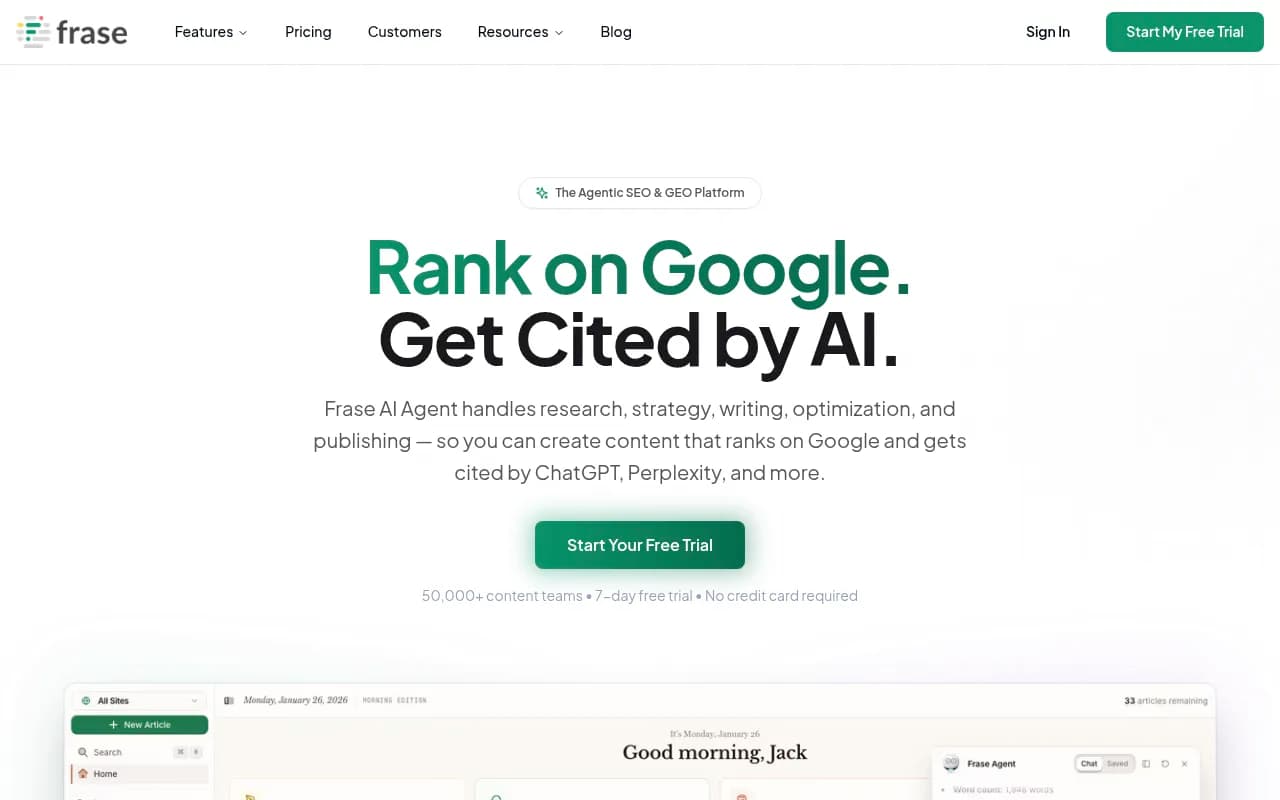
Frase: AI-powered content research and writing tool. Good for creating SEO-optimized content but not specifically designed for AI search.
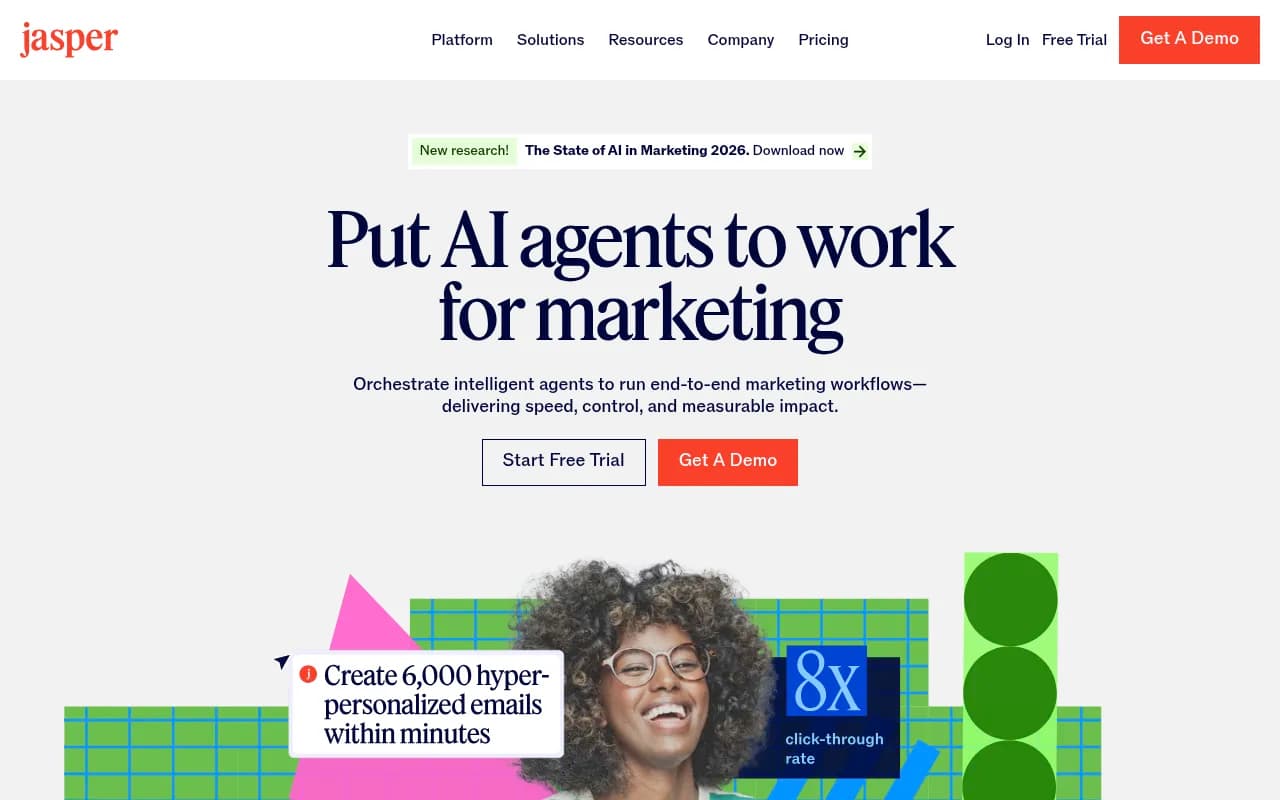
Jasper: AI marketing platform with content generation and workflow automation. Expensive but powerful for agencies managing multiple clients.
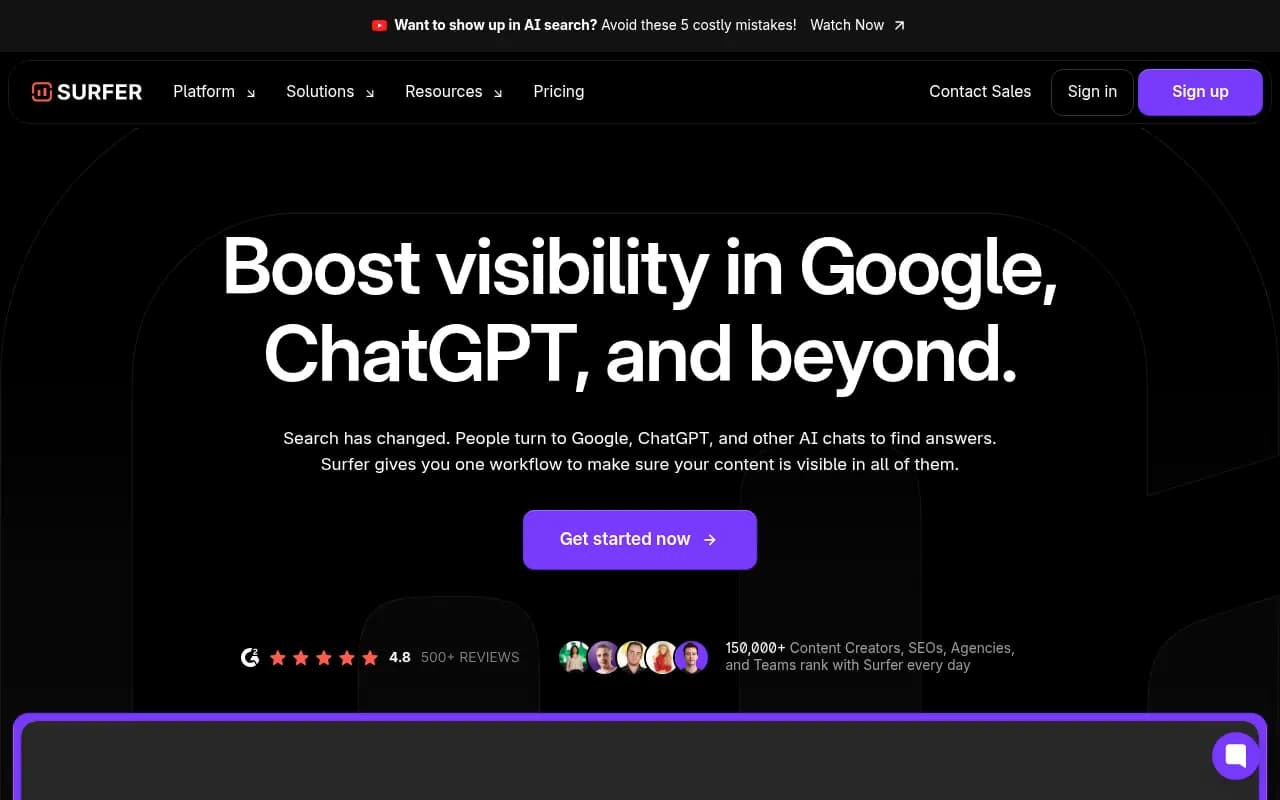
Surfer SEO: Content optimization platform that analyzes top-ranking pages and provides writing guidance. Strong for traditional SEO, less focused on AI search.
Technical Auditing and Crawler Monitoring
You need to ensure AI crawlers can access and understand your client's content:
Screaming Frog: Website crawler for technical SEO audits. Essential for identifying indexing issues, broken links, and crawl errors.
Promptwatch crawler logs: Built-in feature that shows real-time logs of AI crawlers (ChatGPT, Claude, Perplexity, etc.) accessing your site. Unique capability not found in most competitors.
Traffic Attribution and Analytics
Google Analytics: Track website traffic and conversions. Set up custom UTM parameters to attribute traffic from AI search engines.
Google Search Console: Monitor Google AI Overviews traffic and see which queries drive clicks. Essential for tracking Google's AI search performance.
Pricing Examples: Real-World Agency Packages
Here are three example pricing structures based on actual agencies offering AI search optimization in 2026:
Example 1: Boutique Agency (10-Person Team)
Starter Package: $2,500/month
- 1 brand, 75 prompts tracked
- Monitoring across 5 AI models
- Monthly visibility reports
- 5 AI-optimized articles/month
- Quarterly strategy calls
Growth Package: $5,500/month
- 2 brands, 200 prompts tracked
- Monitoring across 10 AI models
- Bi-weekly reports with trend analysis
- 12 AI-optimized articles/month
- Crawler log monitoring
- Citation and source analysis
- Bi-weekly strategy calls
Enterprise Package: Custom pricing (starting at $12,000/month)
- Unlimited brands and prompts
- Full optimization suite
- 30+ articles/month
- Dedicated account manager
- White-label reporting
Example 2: Mid-Size Agency (50-Person Team)
Foundation Package: $3,000/month
- 1 brand, 100 prompts
- 8 AI models monitored
- Monthly reports
- 8 AI-optimized articles/month
- Basic technical audit
Accelerator Package: $7,000/month
- 3 brands, 300 prompts
- 10 AI models monitored
- Weekly reports
- 15 AI-optimized articles/month
- Advanced technical optimization
- Competitor benchmarking
- Traffic attribution
Domination Package: $15,000/month
- 5 brands, 500+ prompts
- All AI models monitored
- Real-time dashboards
- 40 AI-optimized articles/month
- Full technical suite
- Multi-language support
- Dedicated team
Example 3: Enterprise Agency (200+ Person Team)
Custom pricing only, starting at $20,000/month
Enterprise agencies typically don't publish fixed pricing. They build custom packages based on:
- Number of brands and geographic markets
- Content production volume
- Integration requirements (API access, custom reporting, data warehouse connections)
- Service level agreements and performance guarantees
- Training and enablement for client teams
Final Thoughts: Pricing for Profit and Growth
AI search optimization is one of the highest-value services agencies can offer in 2026. It's new enough that clients don't have established price expectations, but proven enough that results are measurable and ROI is clear.
Don't underprice your services. Don't compete on cost. Compete on outcomes.
Position your agency as the solution provider that doesn't just show clients where they're invisible—but actually helps them fix it. Lead with the action loop: find gaps, create content, track results. Use tools like Promptwatch that support this full cycle, not just monitoring dashboards.
Price based on value delivered, not hours worked. Tie your fees to business outcomes: increased visibility, more traffic, higher conversions. Prove ROI with robust tracking and reporting.
Structure packages around client maturity (Starter, Growth, Enterprise) rather than feature checklists. Make it easy for clients to choose the right fit and upgrade as they see results.
And remember: AI search optimization isn't a replacement for traditional SEO—it's a complement. Most clients will need both. Bundle strategically, but make sure AI search gets its own spotlight and its own metrics.
The agencies that master AI search pricing and positioning in 2026 will dominate the market for years to come. The opportunity is massive. The question is: are you ready to seize it?