Key takeaways
- Assistants pick products through three gates: the product has to be retrievable, its visible numbers (price, rating, review count) have to be good, and third parties have to be saying it too.
- The traffic is small but converts better. Similarweb puts generative AI at about 0.4% of retail ecommerce visits, while Adobe's retail panel showed AI referrals converting 60% better than other traffic (July 2026).
- Public data on Alexa+, Siri and Copilot recommendation behavior is thin. ChatGPT is the best-documented proxy, and its citation patterns point at product pages, landing pages and listicles.
- Most of the popular "AI SEO" checklist (llms.txt, AI-tuned descriptions, FAQ padding) has not shown up as a factor in the controlled tests Conspire's review covered.
- Measure assistant by assistant. What ChatGPT says about you tells you little about what Alexa says.
Why personal assistants matter for brands now
For about a decade, voice assistants were glorified timers. You asked Siri something, she misunderstood. Alexa played the wrong song. Most people gave up after the third attempt and pressed the button themselves.
That changed fast. Apple rebuilt Siri around AI, Microsoft put Copilot into Windows, Google replaced Assistant with Gemini on Android, and Alexa became Alexa+, a subscription product running Amazon Nova plus Anthropic models. A walkthrough from Explainer Chris covers the whole field, including Grok in Teslas and ChatGPT Voice.
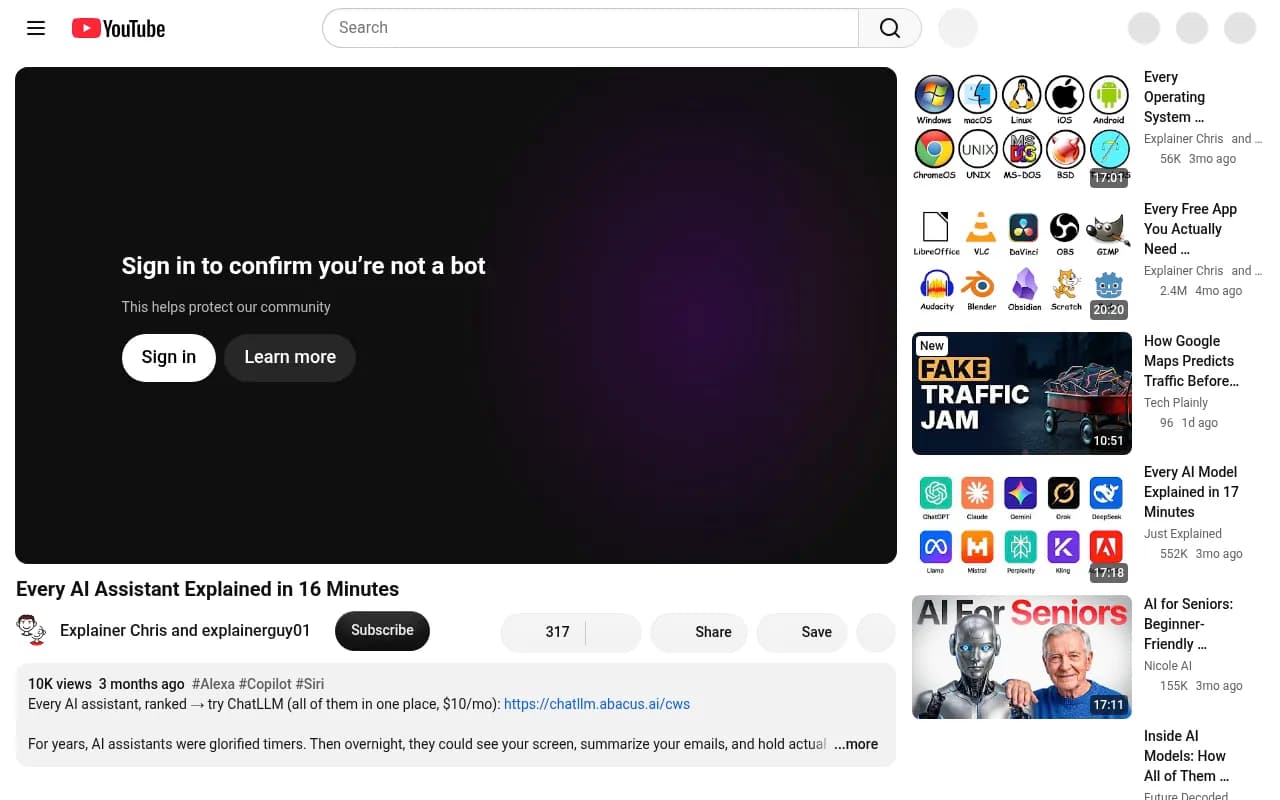
The shift that matters for brands: these assistants no longer just set timers. They answer "what should I buy?" and sometimes place the order. When an assistant says one brand out loud and skips the rest, there is no page of ten blue links to fall back on. You are named or you are not.
Assistants versus agents
A smart assistant is reactive. It waits for a command and handles one request at a time. An agent is goal-driven: you tell it the outcome, and it plans the steps. Phone and gadget makers are pitching agents as supercharged Siri and Alexa, as CNET put it. For product recommendations, that distinction matters because an agent that completes a purchase has to pick one product, not list five.
The main assistants and what they run on
Here is a quick orientation. Pricing comes from a third-party roundup (Agent37, July 2026), so confirm against each vendor before quoting it.
| Assistant | Where it lives | Reported price | What it does for shopping |
|---|---|---|---|
| Alexa+ | Echo devices, voice | Included with Prime ($14.99/mo or $139/yr) or $19.99/mo standalone | Holds context, orders food, shopping |
| Microsoft Copilot | Windows, Office | Free; about $19.99/mo for paid tier | Documents, email, web answers |
| Siri with Apple Intelligence | iPhone | Free; the same source lists a late-2026 beta for the new AI version | Personal context, in-app actions |
| ChatGPT Voice and search | App, web | Free and paid tiers | Cited answers, product cards on some prompts |
| Gemini | Android, Google surfaces | Free and paid tiers | Tied to Google's own results and shopping data |
I could not verify Apple's Siri timing against Apple itself, so treat that row as provisional.
One caveat before going further. I found solid public data on how ChatGPT picks and cites products. I did not find comparable measured data on Alexa+, Siri or Copilot recommendation behavior: whether sponsored or affiliate results influence them, whether Amazon favors its own brands in Alexa answers, or exactly which Bing sources Copilot leans on. Anyone claiming certainty there is guessing. What follows separates what the evidence supports from what is reasonable inference.
How assistants choose which products to recommend
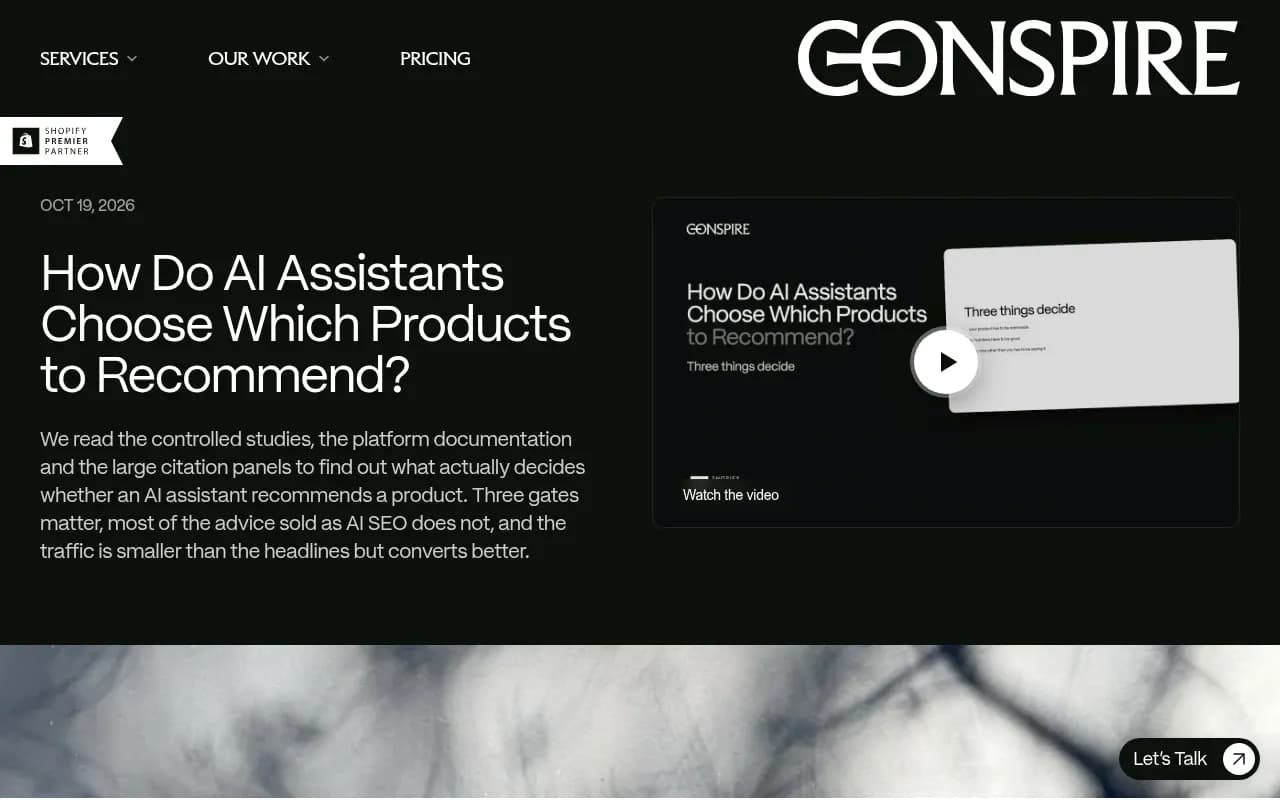
Conspire's October 2026 review of controlled studies, platform documentation and large citation panels lands on three gates. I find the framework useful because it explains why so much AI SEO advice does nothing.
Gate 1: retrievable
The product has to be in the feed the assistant reads, ranked in Google Shopping, and on a page its crawler can open. This is dull and mechanical. If your product pages block AI crawlers, load content only through JavaScript, or are missing from your merchant feed, nothing else you do matters.
For Alexa, the practical read is that it is wired to Amazon's catalog and ordering. If you sell there, your listing quality is your retrievability. For Copilot, Bing's index and Microsoft's shopping data are the likely feeders, which makes Bing Webmaster Tools worth checking. For Siri-style agents that lean on Google or OpenAI models for answers, web retrievability still applies.
Gate 2: the numbers look good
Once a product is in the candidate set, price, star rating and review count explain most of the choice, per the Conspire review. That is not glamorous, but it is consistent with how people shop. An assistant asked for the best option has to justify a pick, and "4.7 stars from 3,000 reviews at a fair price" is an easy justification.
Gate 3: someone else says it
The review sites, retailers and videos each assistant cites for your category have to mention you. Your own copy is not enough. This is where assistants differ most, because each one cites a different mix of sources.
What does not help
In every controlled test Conspire found, the familiar AI SEO list did not move results: llms.txt files, "AI-optimized" product descriptions, extra schema, FAQ padding and chunked pages. I would not go as far as saying schema is useless for everything, since clean structured data helps feeds and rich results elsewhere. But as a lever specifically for getting named by an assistant, the evidence is weak. Spend your hours on gates one to three.
What ChatGPT's citation data shows
ChatGPT is the best-documented proxy for how a conversational assistant picks sources. According to Promptwatch Data's report on ChatGPT citation share by content type (Sep 28 to Oct 4, 2026):
- Product pages are the most cited type at 22.4% of classified citations, and landing pages follow at 16.8%. Together that is 39% of citations pointing to a page describing what a company sells.
- Listicles are 13.6%, how-tos 8.7%, general articles 6.1%, comparisons 5.9%, and news 5.7%.
- For commercial prompts, where people compare options before buying, product pages reach 26.0%, landing pages 20.6% and listicles 15.0%. Comparisons rise to 7.9%.
- For branded prompts, reviews climb to 5.6%, more than three times their all-prompt share.
Two things stand out. Your own product page is the single most-cited format, so it needs complete, factual specs and prices. And roughly 70% of commercial citations come from just four types, so a brand that exists only in blog posts is missing most of the action.
Shopping cards are a separate matter. Promptwatch's ChatGPT shopping usage data, published in November 2025 and so possibly dated, shows shopping features appear on only a low single-digit percentage of web-search responses. The rate moves in steps, which Promptwatch reads as OpenAI actively tuning when product cards appear. They concentrate on commercial and transactional prompts.
Source mix matters too. In the week of Sep 28 to Oct 4, 2026, ChatGPT drew just 0.46% of citations from social platforms, while Google AI Overviews drew 12.2% (Promptwatch Data, social media citations by AI model). So a Reddit and YouTube strategy might help in one assistant and do almost nothing in another. If you want to understand that tension, the same lesson applies to Alexa, Copilot and Gemini: assume nothing transfers.
Is the traffic worth chasing?
Surveys say 26 to 45% of consumers use AI for product research. Measured referrals are far smaller. Similarweb's State of Ecommerce 2026 report puts generative AI at about 0.4% of retail ecommerce visits.
But quality is different. Adobe's retail panel had AI referrals up 62% year over year in July 2026, and those visitors converted 60% better than other traffic for the eleventh month running. Similarweb also found that when an assistant names a brand, that brand's 7-day visit rate runs two to four times its rival's, though that is correlation, and popular brands are likelier to be named in the first place.
My take: this is not a channel to bet the quarter on, but it is cheap to prepare for because the prep (clean feeds, accurate product pages, real reviews) pays off in regular search too.
A practical plan for brands
1. Fix retrievability first
- Make sure AI crawlers can open your product and category pages. Check robots.txt and any bot protection.
- Keep your merchant feed clean, with accurate prices and availability.
- Verify your presence in Google Shopping, Amazon (for Alexa), and Bing, including Bing Webmaster Tools for Copilot.
2. Make the visible numbers defensible
Collect reviews on sites assistants actually cite. A review platform like Trustpilot can help for brands whose category leans on it.
3. Earn third-party mentions
Get into the roundups, comparison pages and video reviews that assistants cite for your category. Publish your own comparison pages too. Comparisons are a bigger slice of commercial citations than of citations overall.
4. Skip the unproven tricks
Do not spend a month on llms.txt or rewriting every description in robotic prose. If you already did, fine, but do not expect it to pay off.
5. Measure by assistant
This is where tooling comes in. You need to see which prompts name you, which sources get cited, and whether AI crawlers can read your pages. Promptwatch tracks the real interfaces of ChatGPT, Google AI Overviews, AI Mode, Gemini, Perplexity, Microsoft Copilot and Amazon Alexa, and adds IP-verified AI crawler logs and AI Shopping tracking so you can check the retrievability gate directly.

Other trackers in the category include Profound, Otterly.AI and Peec AI, but most focus on monitoring only. For a broader look, the GEO software directory at bestgeosoftware.com lists options by feature.
Profound

Otterly.AI


Tool options at a glance
| Need | What to look for | Example tools |
|---|---|---|
| See if assistants name your brand | Real-UI tracking across multiple assistants | Promptwatch, Profound |
| Light monitoring on a budget | Basic prompt tracking | Otterly.AI, Peec AI |
| Check crawler access | AI crawler logs | Promptwatch |
| Traditional search data | Search Console and Bing data | Google Search Console, Bing Webmaster Tools |
| Baseline traffic from AI referrals | Analytics with referrer segmentation | Google Analytics, Similarweb |
What to watch next
Three open questions will decide how much of this matters.
First, whether Alexa+ and Siri move from answering to buying. Once an agent completes a purchase, the pick is final, and being second means being invisible. Second, whether paid placement shows up in assistant answers. Promptwatch Data tracks ads in ChatGPT, and similar questions apply to voice assistants, but I did not find public measurements for them. Third, how much each assistant relies on its owner's catalog. If Alexa leans hard on Amazon, brands that skip Amazon may be locked out of a large slice of voice shopping regardless of how good their own site is.
If you are deciding where to start tomorrow: check that your product pages are crawlable, test ten commercial prompts in each assistant you care about, write down which brands fill the answers and which sources they cite, and fix the gaps in that order.