Key takeaways
- Google rankings and AI citations are measured separately, and the overlap is smaller than most SEO teams assume. Third-party studies put the share of ChatGPT-cited URLs that also rank in Google's top 10 at roughly 12%.
- The check itself is simple: pick 10 to 20 real buyer questions, record the top Google results, run the same prompts in each AI engine, and compare the two URL lists.
- Pages that rank but never get cited usually fail on one of five things: crawlability, extractability, specificity, entity clarity, or freshness.
- Single prompts mislead. According to Promptwatch Data, almost half of ChatGPT responses cite 10 or more domains, so you need dozens of prompts to see a real pattern.
- Rank tracking, Search Console data, and an AI visibility tool each cover one half of the picture. You need both halves joined at the page level.
Why a top-three ranking can still mean zero citations
You rank on page one for your main commercial query. You type the same question into ChatGPT. Your competitor, who sits at position 8, gets named. You get nothing.
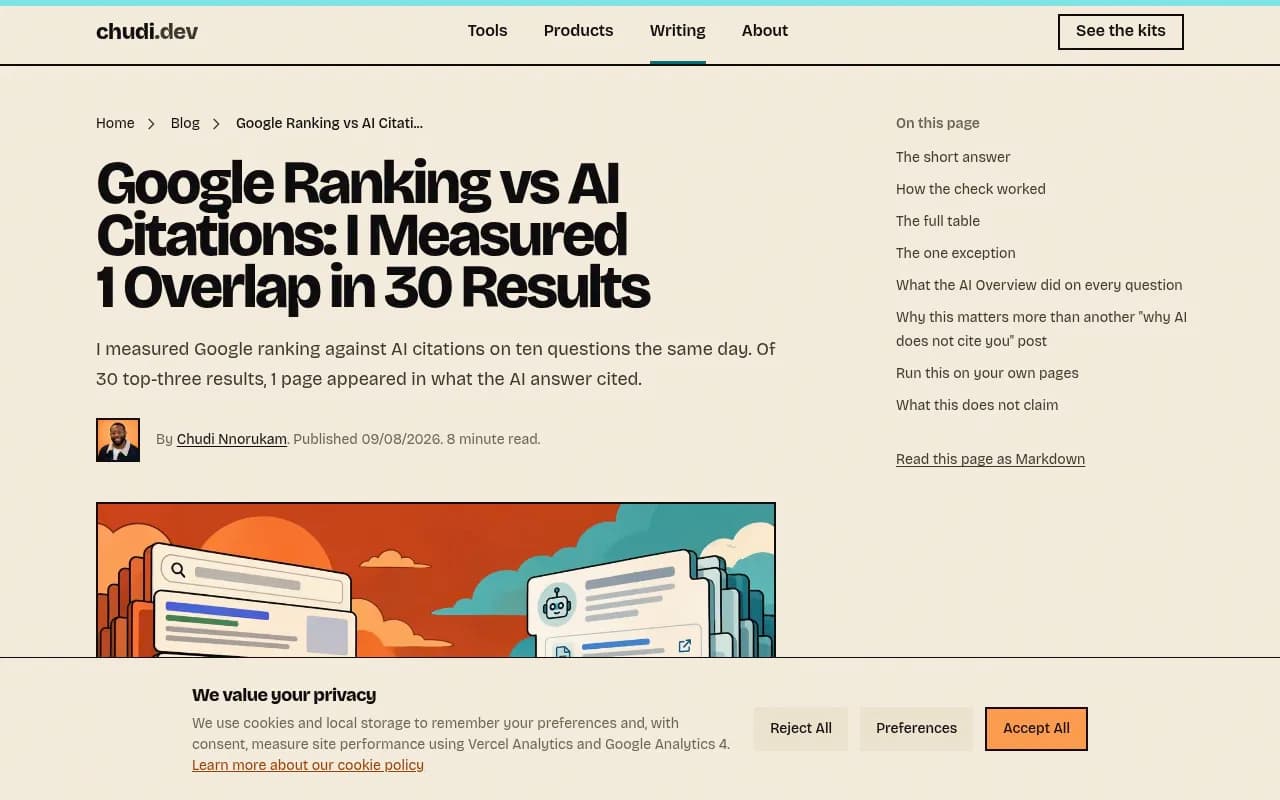
This is not a bug, and it is not rare. A developer named Chudi Nnorukam ran a small test: ten buyer questions, the top three Google results for each, and the sources one AI answer engine cited for the same questions on the same day. The two lists shared one page out of thirty. Nine of the ten questions had no overlap at all. It is one sample from one engine on one day, so don't treat it as a law. But it matches what larger studies keep finding.
The larger numbers vary by source, and I'd treat all of them as directional:
- An Ahrefs analysis of 15,000 prompts (September 2025) found only about 12% of URLs cited by ChatGPT, Gemini and Copilot ranked in Google's top 10 for the same prompt.
- Ahrefs has also reported that Google AI Overviews pull from the organic top 10 roughly 38% of the time, so rank matters most on the surface Google itself controls.
- A Semrush study found that when ChatGPT cites a page, that page often ranks at position 21 or lower.
The mechanism matters more than the exact percentage. Google ranks pages. AI engines break a prompt into smaller questions, retrieve candidates, and cite passages that answer one of those questions cleanly. A long, comprehensive page can rank beautifully and still contain no single passage an engine wants to lift.
What actually decides whether a page gets cited
A page has to survive four stages: access, retrieval, synthesis, and citation selection. Rankings only influence the retrieval stage, and only for engines that lean on Google or a similar index. ChatGPT, for example, is widely reported to retrieve through Bing, so a strong Google position may never enter its pipeline. Your Bing performance can matter more than you'd expect, and Bing Webmaster Tools is a free way to check it.
Three other things shape the outcome.
Content type
Promptwatch Data for September 28 to October 4, 2026 shows what ChatGPT actually cites. Product pages take 22.4% of classified citations, landing pages 16.8%, and listicles 13.6%. How-tos get 8.7% and documentation 7.5%. Product pages lead for commercial, informational and branded prompts alike. The full content-type breakdown is worth reading before you decide what to rewrite. If your ranking page is a vague 3,000-word overview and the engine wants a specific product or answer page, that is a mismatch you can see.
Authority is not what you'd guess
In Promptwatch's August 2026 domain rank data, sites with domain rank 46 to 75 took almost half of ChatGPT citations, while DR 91 to 100 sites fell to about 3% by mid-August. You don't need a giant domain to be cited. You need a relevant page the engine can quote.
Freshness
Promptwatch's content half-life report tracked every page ChatGPT cited on July 6, 2026 for 90 days. Landing pages and docs stayed cited longest. News lost half its pages within 36 days. A page that has held its Google position for two years can quietly drop out of AI answers while still looking healthy in a rank tracker.
The audit: finding pages that rank but never get cited
Here is the process I'd use. It works with a spreadsheet and takes a day. Tools make it repeatable.
Step 1: Build a prompt set
Pull 10 to 20 questions from sales calls, support tickets, site search logs, and Search Console queries. Write them the way a person would type them into a chatbot, not as keywords. Mix intents: a few commercial ("best X for Y"), a few informational, a few branded.
Google Search Console is the best free source for the queries you already rank for.
Step 2: Record your Google positions
For each query, log the ranking URL and position. Use Search Console for your own site, or a rank tracker if you also want competitor positions. Tools like AccuRanker or SE Ranking handle this well.
Step 3: Run the prompts across engines
Run each prompt in ChatGPT, Perplexity, Google AI Overviews, and Gemini. Record every cited URL, not just whether your brand was mentioned. Do it more than once. Answers shift between runs, and engines differ sharply from each other. One third-party analysis found only 2.7% of cited domains appeared across all five major engines. I haven't verified that number, but the direction is consistent with what practitioners see.
A caution on a figure you may see quoted: the claim that ChatGPT averages 3.7 sources per answer looks stale. Promptwatch Data for September 28 to October 4, 2026 found 47.6% of ChatGPT responses with citations cited 10 or more domains, and 66.1% cited at least 8. Only 6% cited 3 or fewer. The unique-domains report also shows brand-specific prompts cite fewer domains (the most common count is 5) than organic ones. The implication: you share almost every answer with many other sites, so one prompt tells you little.
Step 4: Join the two lists
Make a table with one row per query and these columns: Google URL, Google position, cited URLs per engine, and a flag for "ranks but not cited." That flag is your work queue.
| Query | Google position | Your page cited in ChatGPT | Cited in Perplexity | Cited in AI Overviews | Status |
|---|---|---|---|---|---|
| best crm for small teams | 3 | No | No | No | Ranked, not cited |
| how to migrate crm data | 7 | Yes | No | Yes | Cited |
| crm pricing comparison | 12 | No | Yes | No | Cited elsewhere |
| [your brand] crm review | 1 | Yes | Yes | Yes | Healthy |
The example data above is illustrative, but the structure is what you want.
Step 5: Diagnose each gap
For every ranked-not-cited page, work through five checks.
| Check | Question to ask | Typical fix |
|---|---|---|
| Crawlability | Can AI bots fetch the page without errors or JavaScript-only rendering? | Fix robots.txt, serve crawlable HTML, check bot logs |
| Extractability | Does each section open with a direct answer a model can lift? | Rewrite headings as questions, lead with the answer |
| Specificity | Does the page own one problem, or list twelve services? | Split mega pages into problem-focused pages |
| Entity clarity | Is your brand, product and category named consistently? | Tighten naming, add structured data |
| Freshness | When was it last meaningfully updated? | Refresh facts, dates and examples |
If a page already ranks, the break is almost always in extractability, entity clarity or access. Ranking proves the page is relevant. It doesn't prove a model can quote it.
Doing this at scale with tools
A spreadsheet audit is fine for 20 prompts. It falls apart at 200. This is where AI visibility tools earn their keep, and they fall into a few groups.
Monitoring-only trackers
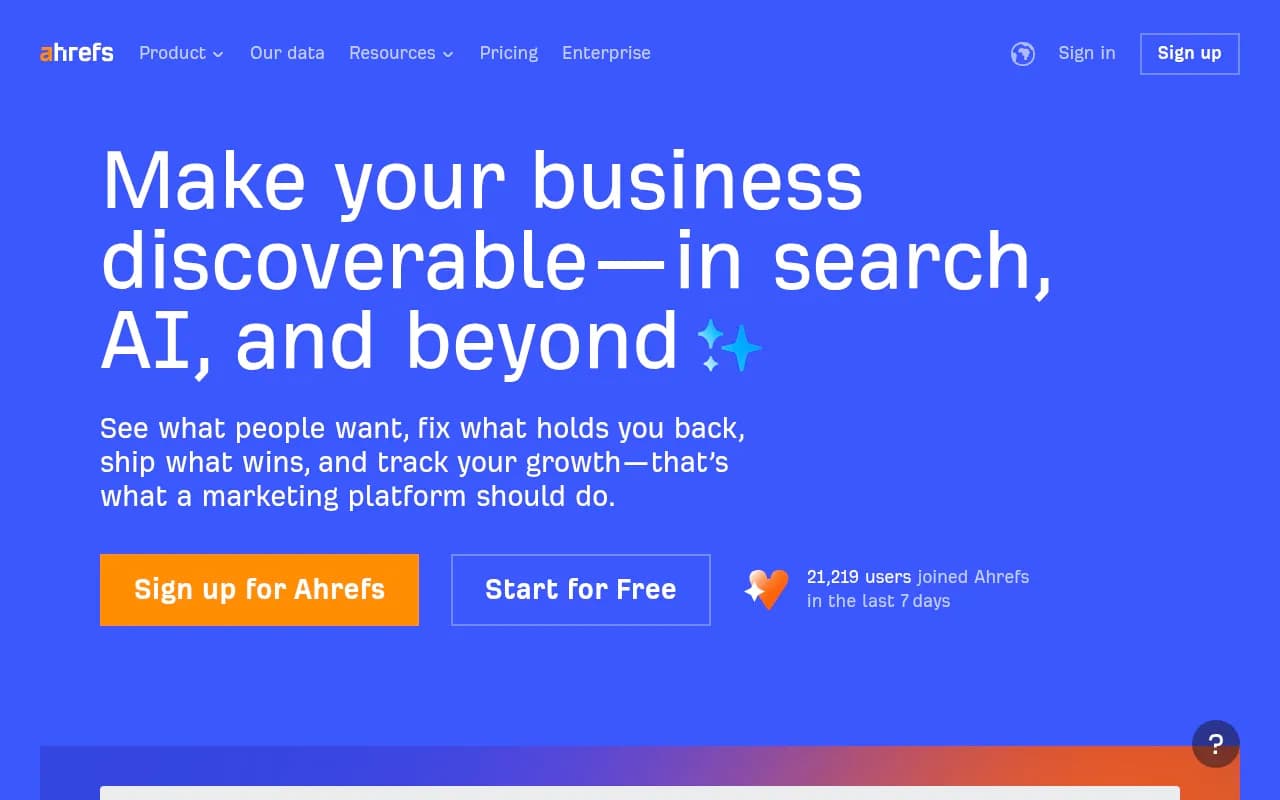
Tools such as Otterly.AI, Peec AI, and Rankshift show whether your brand appears in AI answers across prompts. That answers "were we mentioned?" but usually not "why not?"
Otterly.AI



Platforms that join rankings and citations
The ranked-but-not-cited question needs page-level data from both sides. Promptwatch does this with Search Insights, which overlays Google Search Console and Bing Webmaster data per page with AI crawls, citations and clicks. That lets you ask directly which pages rank in Google and Bing but never get cited by AI. Its IP-verified AI crawler logs help with the crawlability check, showing whether GPTBot, ClaudeBot or PerplexityBot are reaching a page or hitting errors. Query fan-outs show the exact web searches ChatGPT runs for a prompt, which tells you what your page has to match. Its Action Board and Content Refresh then turn the gaps into a prioritized to-do list.

Semrush and Ahrefs have added AI tracking to their SEO suites. They are convenient if you already live in them, though their AI data tends to be shallower than purpose-built platforms.
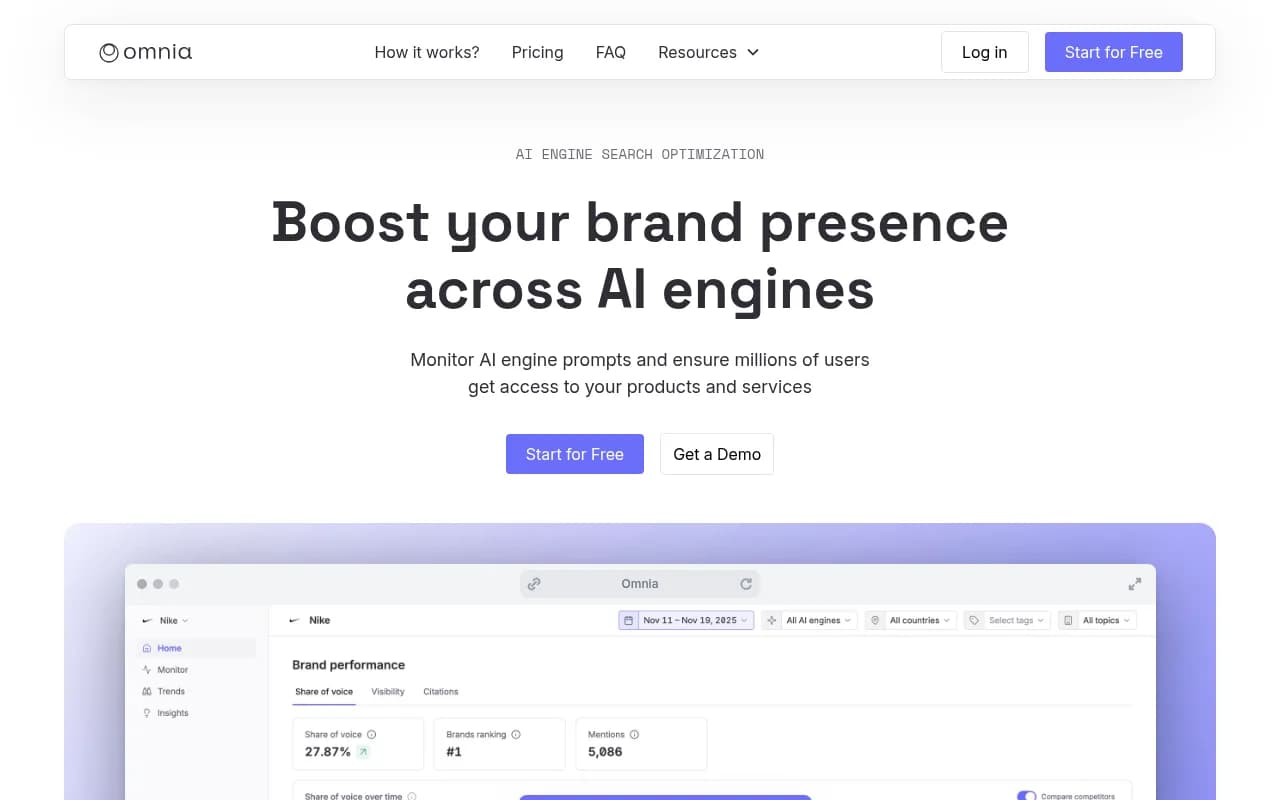
Omnia is worth a look for one specific metric: citation stability by page. A page with steady citations week to week is a working asset. A page that flickers in and out is a contested slot. A page with strong organic rankings and no citation presence is what Omnia calls the AI displacement signal.
| Tool type | Examples | Tells you | Misses |
|---|---|---|---|
| Rank trackers | AccuRanker, SE Ranking | Google position per URL | Any AI citation data |
| Mention trackers | Otterly.AI, Peec AI, Rankshift | Whether your brand appears per prompt | Page-level cause, crawler access |
| Citation stability tools | Omnia | Consistency of citations per page | Often limited action tooling |
| Visibility platforms | Promptwatch | Rankings vs citations per page, crawler logs, fixes | Not a classic SERP rank tracker |
| SEO suites | Semrush, Ahrefs | Rankings plus basic AI tracking | Shallow AI data, fixed prompt sets |
If you want to compare more options, the GEO software directory at bestgeosoftware.com lists many of them side by side.
Fixing the pages you flagged
Once you know which pages rank but get skipped, the fixes are mostly unglamorous.
Rewrite for passages, not pages
Open each section with a one or two sentence answer, then support it. Use question-style headings that match how people phrase prompts. A reader skimming and a model extracting want the same thing.
Split the mega page
A "Services" page that lists everything wins Google on accumulated links and loses AI because no single query matches it cleanly. A page titled "Emergency water damage restoration in Phoenix: same-day response and cost breakdown" owns one problem and gets cited for queries that touch it. You may lose a little ranking breadth. You gain citations.
Check access before you touch the copy
If bots can't read the page, nothing else matters. Confirm the content renders in plain HTML, robots.txt isn't blocking AI crawlers you want, and server logs show real bot visits. A crawler like Screaming Frog helps with the technical pass.
Strengthen entity signals
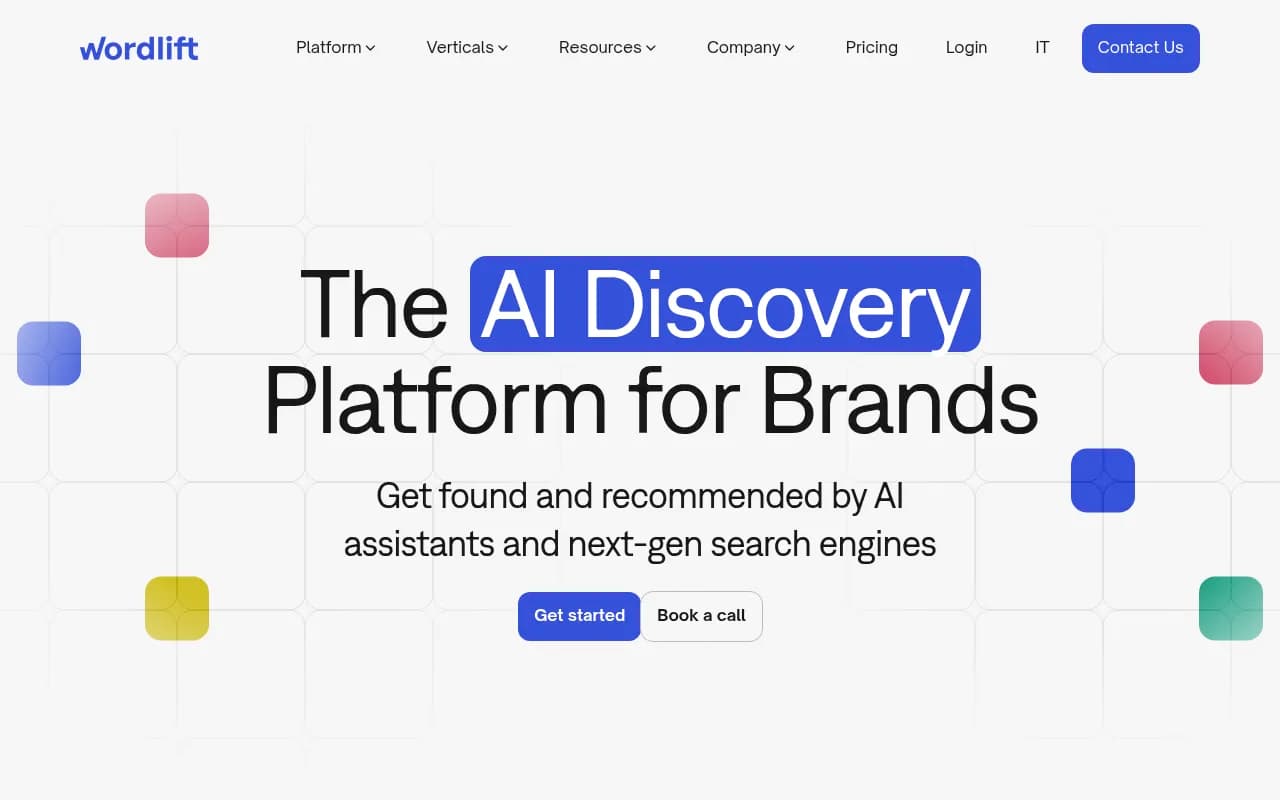
Use the same brand, product and category names throughout. Add structured data where it fits (FAQ, Organization, Product). WordLift focuses on entities and structured data if you want help here.
Refresh on a schedule
Pick pages that ranked for months but have stale facts, and update them with current numbers and dates. Then re-run your prompt set after a few weeks to see whether citations appear.
Build mentions off your site
AI answers lean on third-party sources. Presence on review sites, industry directories and relevant communities helps. Be careful with Reddit assumptions though: according to Promptwatch Data, reddit.com's share of ChatGPT citations fell from about 4% to 0.5% on August 14, 2026, while Google's surfaces declined more gradually. And ChatGPT drew just 0.46% of its citations from social platforms from September 28 to October 4, 2026, versus 12.2% for Google AI Overviews, per the social citations report. Engines behave differently, so don't apply one engine's pattern to another.
Mistakes that ruin the comparison
- Testing one prompt and drawing conclusions. Answers vary run to run.
- Counting brand mentions instead of cited URLs. A mention without a citation means something different from a citation to your page.
- Comparing only against Google. ChatGPT's Bing connection means your Bing position may explain more than your Google position.
- Treating all engines as one. Perplexity, ChatGPT, Gemini and AI Overviews pick sources differently. Report them separately.
- Ignoring query fan-outs. ChatGPT changed its behavior on August 8, 2026, when Promptwatch Data recorded it using the site: operator in about 17% of fanout queries, up from roughly 0.4% overnight (see the site: operator report). Retrieval behavior moves, so re-run your audit regularly rather than once.
A realistic monthly routine
- Keep a fixed core set of 30 to 50 prompts and add a few new ones each month.
- Re-run them across engines and log cited URLs.
- Join the results with Search Console and Bing data per page.
- Flag pages that rank in the top 10 but have no citations.
- Fix the five or so with the most commercial value, then re-check in three to four weeks.
None of this is glamorous. But the teams that do it weekly see what is changing before everyone else does, and they stop assuming a rank tracker tells them how they look inside an AI answer.
If you'd rather hand the measurement and fixing to specialists, agencies like 1001 SEO Media run this kind of rankings-versus-citations audit as part of their AI search and GEO work.
Bottom line
Ranking gets a page onto the shortlist. Citation depends on whether an engine can lift a clear answer from it and tie that answer to a source it trusts. Measure both, join them at the page level, and treat every ranked-but-not-cited URL as a specific, fixable problem rather than a mystery about how AI works.