Key takeaways
- These three tools are not direct substitutes. LowFruits finds weak spots in the SERPs, Keyword Grid is mostly an on-page semantic analyzer, and Machined.ai is a content production platform with keyword research built in.
- Pricing models differ: LowFruits charges per SERP credit, Keyword Grid per 5-credit tool run, and Machined.ai per article. Compare cost per outcome, not the monthly sticker price.
- If you need to decide what to write, start with LowFruits. If you need to improve pages you already have, look at Keyword Grid. If you need to publish many interlinked articles quickly, look at Machined.ai.
- AI search changes how keywords get used. Short, query-like headings and focused sub-question pages matter more, and none of these three tools measures whether AI engines cite you.
- I found no independent reviews of Machined.ai or Keyword Grid, so many claims below come from the vendors themselves. Test with the trials before you commit.
Why this comparison is awkward
Searching for "keyword tool" and landing on these three feels like comparing a hammer, a ruler and a nail gun. They all touch the same project, but they do different jobs.
LowFruits answers "which keywords can I realistically rank for?" Keyword Grid answers "how well does this page cover its topic, semantically?" Machined.ai answers "can you just write and publish the cluster for me?"
So the useful question is not which one wins. It is which step of your workflow is currently the bottleneck: finding targets, optimizing pages, or producing volume. Here is how each tool handles its slice.
Quick comparison
| LowFruits | Keyword Grid | Machined.ai | |
|---|---|---|---|
| Core job | SERP weak-spot discovery | Semantic and entity on-page analysis | Cluster research, writing, linking, publishing |
| Keyword research | Main feature | One feature among many | Automated step feeding the writer |
| Pricing unit | SERP credits | 5 credits per tool run | Articles per month |
| Entry price | $29.90/mo ($20.75 yearly) | $78/mo | $19/mo ($14 yearly) |
| Free trial | 14-day refund if under 100 credits used | None, 7-day money-back | 7 days, no card |
| Publishing | No | No | WordPress, Webflow, Shopify, Framer, Ghost, HubSpot, Wix, webhooks |
| Best for | Niche sites, new domains, freelancers | Optimizing existing content | Teams that need volume fast |
LowFruits: finding the keywords you can actually win
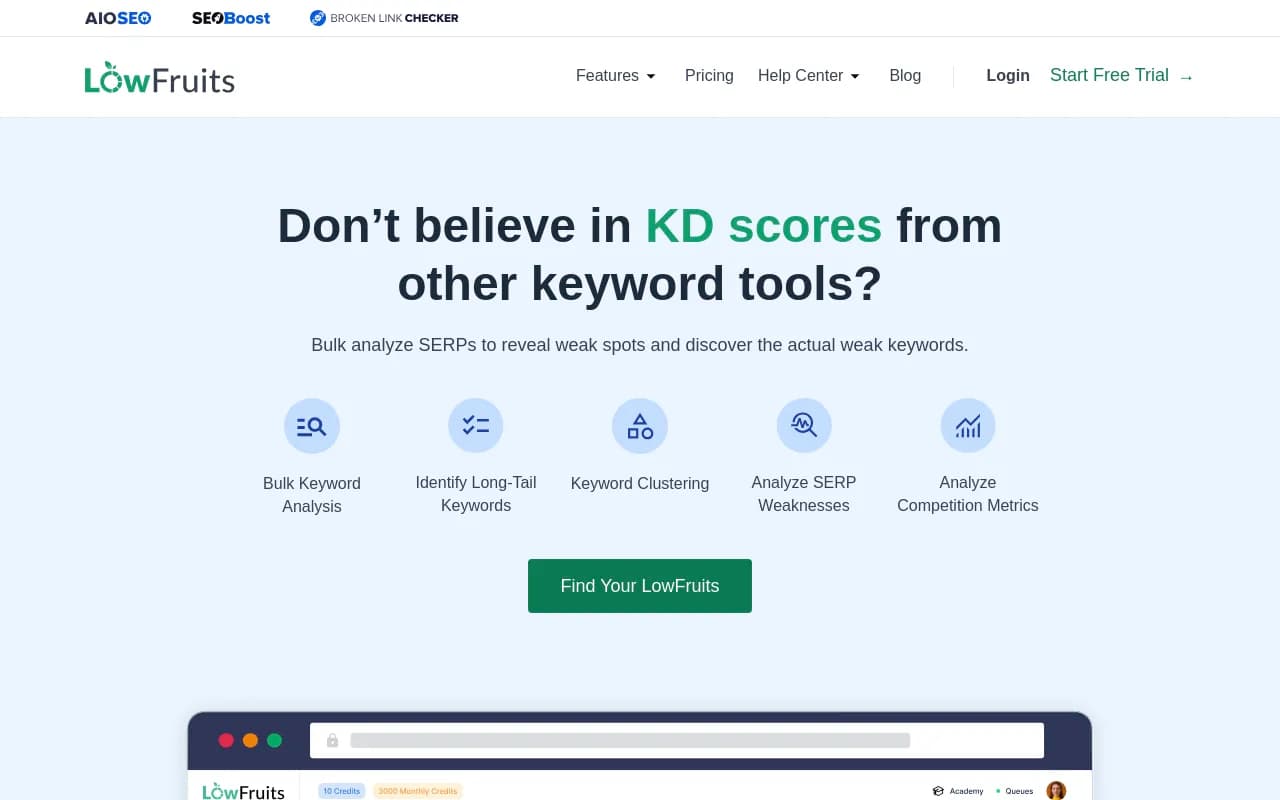
LowFruits has a narrow pitch and sticks to it. Instead of leaning on a keyword difficulty score, it analyzes the live SERP for each keyword and flags weak spots, such as low-authority domains ranking on page one. If a forum thread or a thin blog on a weak domain holds position five, that is your opening.
How it works and what it costs
The Keyword Finder pulls long-tail ideas from Google Autocomplete, and you can import your own list for SERP analysis. One SERP extracted costs one credit.
- Standard: $29.90/mo monthly or $20.75/mo billed yearly. 3,000 credits, 100 tracked keywords, 30 competitor ranking extractions, 300 keyword-idea extractions, 90 sitemap extractions.
- Premium: $79.90/mo monthly or $62.45/mo yearly. 10,000 credits, 500 tracked keywords, 70 competitor ranking extractions, 900 keyword-idea extractions, 300 sitemap extractions.
- Pay as you go: $25 for 2,000 credits up to $250 for 50,000, credits expire after a year.
Subscription credits reset monthly and do not roll over, so a quiet month wastes them. Pay-as-you-go suits people who research in bursts. The pricing page now reads "LowFruits by AIOSEO", which points to AIOSEO ownership. Worth knowing if you care about who maintains your tools long term.
Where it fits and where it does not
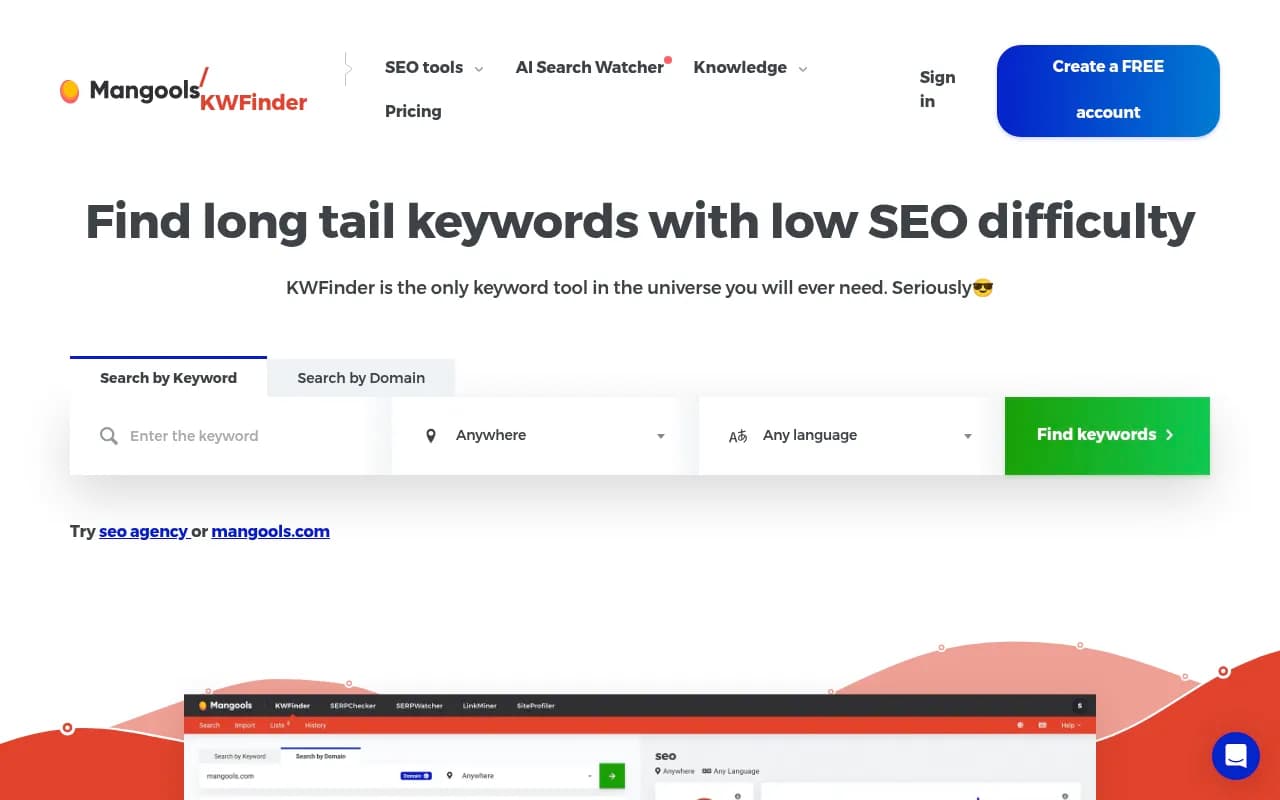
It is strong for new sites, niche sites and freelancers who need achievable wins. A third-party roundup from eesel.ai lists it from $29.90 as a pick for low-competition keywords. It is not a content tool, it does not write anything, and it will not tell you whether ChatGPT cites you. Its sibling Mangools KWFinder is a related option if you want a more traditional difficulty-score workflow.
Keyword Grid: more analyzer than keyword database
Keyword Grid positions itself as an "AI powered SEO optimization and semantic analyzer" for ranking in search results and AI answers. The founder is SEO author Adam Clarke. It is built on embedding, word-vectorization and NLP models, and the site claims a top spot on the MTEB leaderboard and "99% accuracy". Those are vendor claims, and I could not verify them independently.
What you get
- Relevance and quality scoring for a page
- Semantic keywords and NLP entity extraction
- A schema markup viewer
- Keyword research (traffic, difficulty, suggestions) and bulk keyword data
- AI writing, outlining and optimization
- A dedicated tool aimed at AI answers
It is primarily an on-page tool. Keyword research exists, but it is one feature among many rather than the reason to buy.
Pricing
Each tool run costs 5 credits, and credits top up monthly.
| Plan | Price | Credits | Users | Roughly how many runs |
|---|---|---|---|---|
| Basic | $78/mo | 200 | 1 | about 40 |
| Advanced | $158/mo | 500 | 2 | about 100 |
| Agency | $358/mo | 1,000 | 5 | about 200 |
| Enterprise | Custom | Custom | Custom | Custom |
There is no free trial, only a 7-day money-back guarantee. Forty runs a month on the entry plan is not many if you audit pages regularly, so do the math on your page count before buying.
Who should look at it
Someone with an existing library of content who wants entity and semantic gap analysis on each page. If that is your need, it overlaps more with Clearscope, Surfer SEO or NeuronWriter than with LowFruits.

Machined.ai: keyword research as a step in a production line
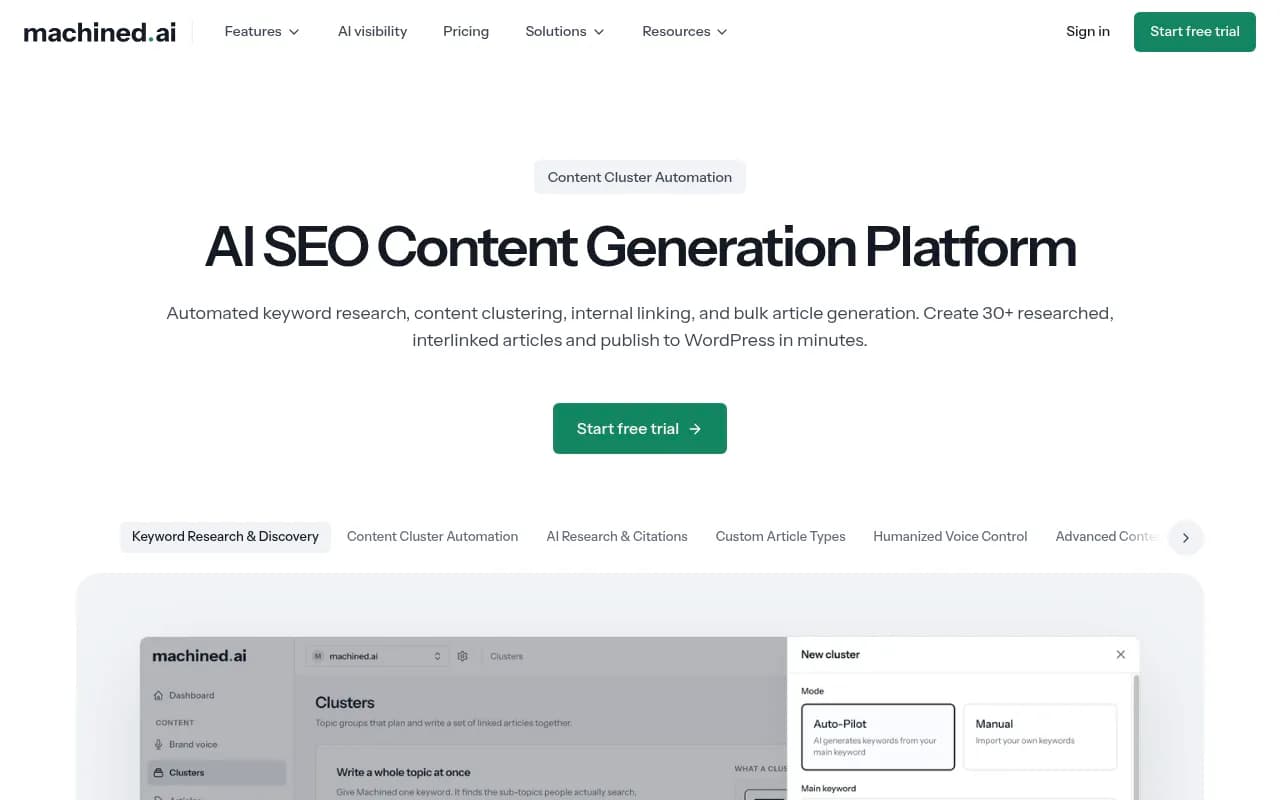
Machined.ai treats keywords as an input to a content pipeline. You enter a topic and audience, it crawls SERPs, finds related keywords with volume, difficulty and trends, clusters them by search intent to avoid cannibalization, and then writes, links and publishes the articles. The homepage claims 30+ researched, interlinked articles published to WordPress in minutes.
The keyword side
The automated research feature page lists keyword discovery beyond the obvious (long-tail, question keywords), cannibalization prevention and per-keyword volume and difficulty. It frames manual cluster research as an 8+ hour job of exporting from Ahrefs or Semrush and grouping in spreadsheets. That is a vendor framing, though it matches what many teams do.
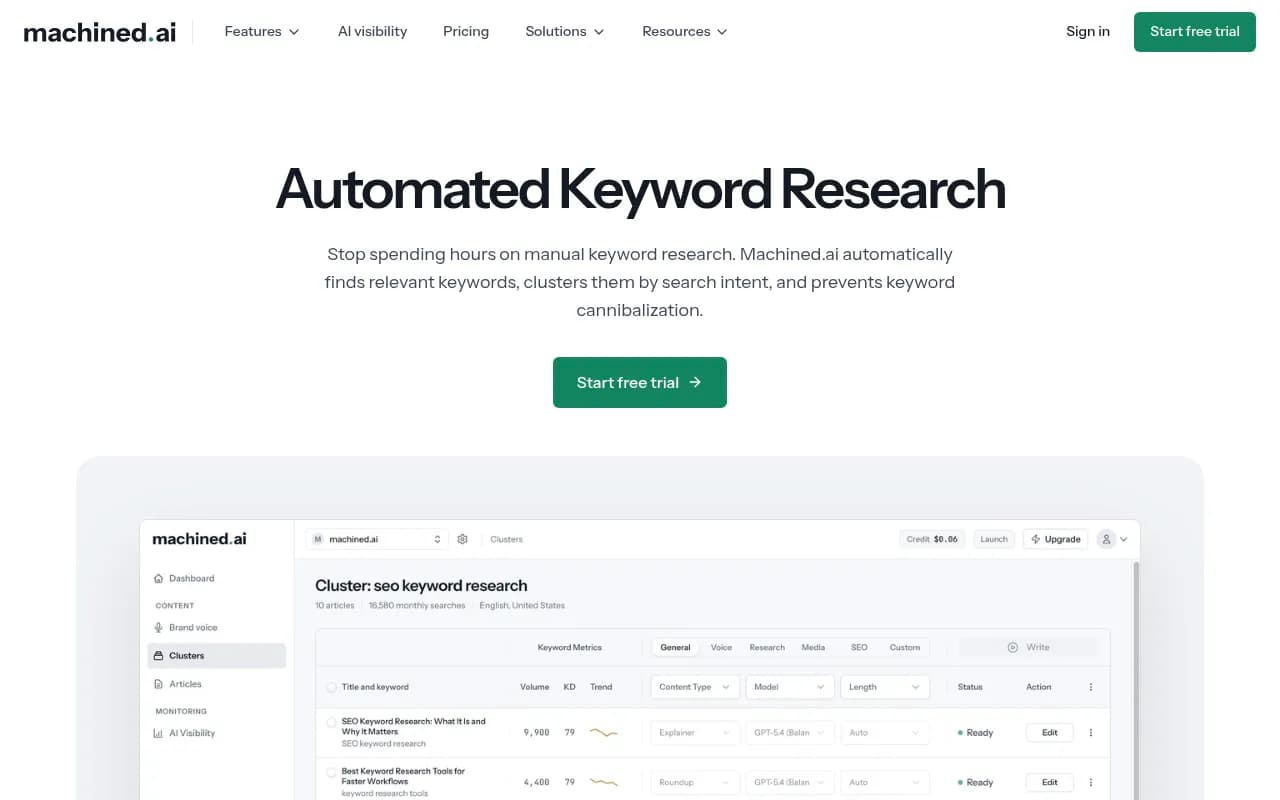
I could not confirm which data provider supplies the volume numbers. If keyword accuracy matters to you, check that before trusting the figures.
The production side
- Auto-Pilot mode that builds a cluster from one seed keyword
- Research with citations attached to each article
- Brand voice profiles generated from your existing writing
- Automated internal linking
- AI image providers including Flux Pro, GPT Image, Nano Banana 2, Unsplash and Pexels
- Publishing to Framer, Ghost, HubSpot, Shopify, Webflow, Wix, WordPress and webhooks
Pricing
Annual billing saves 25%. All plans include clusters, deep research, AI images, unlimited projects, CMS connections, linking and citations.
| Plan | Monthly | Yearly (per month) | Articles | Members |
|---|---|---|---|---|
| Launch | $19 | $14 | 30 | 2 |
| Growth | $49 | $37 | 100 | 3 |
| Pro | $99 | $74 | 250 | 5 |
| Scale | $249 | $187 | 750 | 10 |
| BYOK | $99 | $74 | 2,000 | 10 |
BYOK means bring your own AI keys (Anthropic, OpenAI, Google or OpenRouter). Machined says provider costs average about $0.20 per article. The trial is 7 days with Launch access and no card, but there are no refunds once a subscription is charged.
The honest caveat
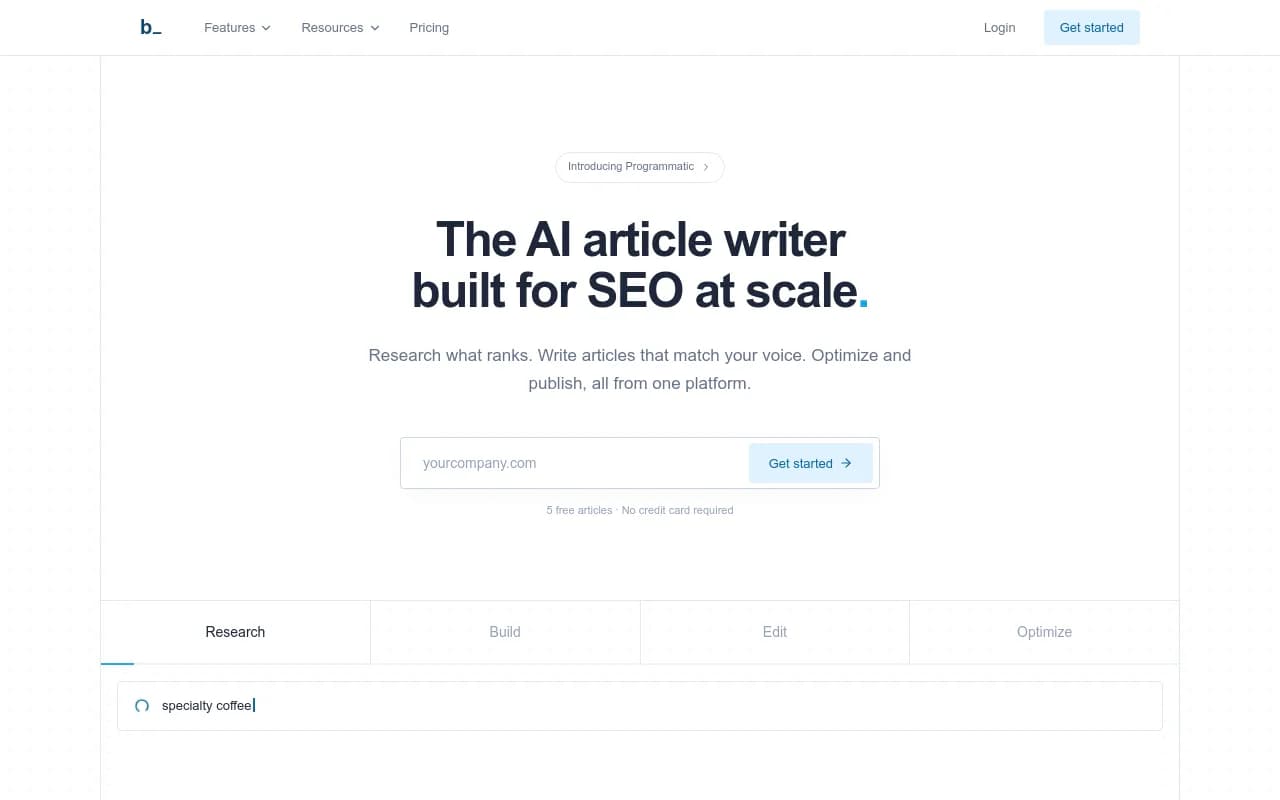
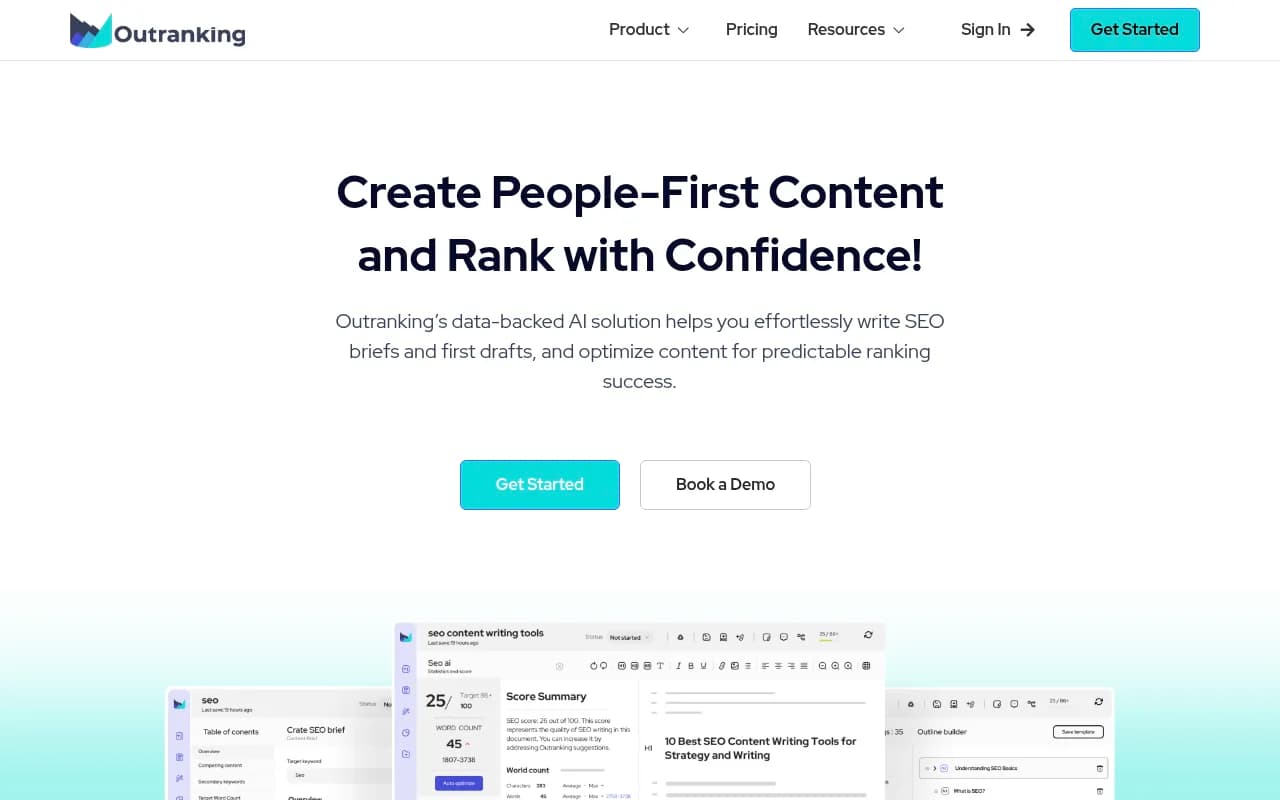
Bulk generation is the part to be careful with. Thirty articles in minutes is fast, and fast is where thin content comes from. Treat the output as drafts that need a human edit, original data and real expertise. The tool does not remove the need for editorial judgment. Similar bulk-oriented platforms in this space include Byword, Junia AI and Outranking.

Choosing by workflow stage
You do not know what to write yet
Start with LowFruits. Its value is in telling you which topics have weak page-one results, which saves you from writing a good article that can never rank. Pair it with free sources like Google Search Console for queries you already almost rank for.
You have content but it underperforms
Keyword Grid, or one of the more established on-page optimizers, makes more sense. The question here is coverage and entities, not discovery.
You know your topics and need volume
Machined.ai is built for this. A small team that already has a brand voice and an editor can use it to get from topic to first drafts quickly, then spend time on edits rather than spreadsheets.
A combined setup
The tools do not collide. A reasonable stack is LowFruits to pick targets, Machined.ai to draft the cluster, and an on-page analyzer to polish important pages. The cost of all three at entry level is about $127 a month on monthly billing, which is less than Keyword Grid's Advanced plan alone.
What AI search changes about keyword work
The old model was one keyword, one page. AI search complicates that. Promptwatch's ChatGPT query fanouts data shows ChatGPT breaking prompts into web searches, and the average number of fanouts per response fell from 2.15 in early December to about 1.84 by early March (2026 data). Average query length dropped from about 117 characters to the high 80s, and was around 53 characters once fanouts returned in April. The page also mentions single prompts triggering 3-8+ searches, which is best read as an upper range rather than the norm.
The practical read is that ChatGPT's searches increasingly look like short keyword queries. That supports a few habits:
- Write headings like short search queries, with the entity and category up front.
- Build focused pages for sub-questions: X vs Y, pricing, alternatives, how-tos. Each fanout query is a separate retrieval your content can win.
- Re-check the keyword-to-heading mapping after major ChatGPT updates.
Here is the gap in this comparison. None of the three tools tells you whether you are actually cited in ChatGPT, Perplexity or AI Overviews. Keyword Grid markets itself on AI answers, but its tooling is about optimizing the page, not measuring outcomes. For measurement, you need a visibility platform. Promptwatch is the one I would point to: it tracks the prompts and citations, shows AI crawler activity in your logs, and can feed content gaps back into your plan.

If you want to browse the wider field, the GEO software directory at bestgeosoftware.com lists alternatives.
Which one I would pick
| Situation | Pick |
|---|---|
| New or small site, tight budget, needs achievable targets | LowFruits |
| Established content library, want semantic and entity gaps | Keyword Grid |
| Publishing at volume with an editor in the loop | Machined.ai |
| Need to know if AI engines cite you | A visibility platform such as Promptwatch |
If I had to spend one budget line first, it would be LowFruits. Picking the right targets is the cheapest way to avoid wasted content, and it costs less than Keyword Grid's entry plan. Add Machined.ai when production, not research, is what slows you down. Keyword Grid is the hardest to recommend on pricing alone, since 40 runs for $78 only makes sense if you have a clear page-by-page optimization plan.
One last practical point: all three offer some form of safety net, but they differ. Machined.ai has a no-card trial, LowFruits refunds within 14 days if you used fewer than 100 credits, and Keyword Grid gives only 7 days money-back. Test each one on a real project before paying for a year.