Key Takeaways
- AI content itself isn't penalized: Google and AI engines don't penalize content just because it's AI-generated. They penalize thin, spammy, or low-quality content regardless of how it was created.
- Audit for quality signals, not AI detection: Focus on E-E-A-T (Experience, Expertise, Authoritativeness, Trustworthiness), content depth, and user value—not whether an AI detector flags your pages.
- Use crawlers and analytics to find problem content: Tools like Screaming Frog, Google Search Console, and AI visibility platforms help you identify underperforming, duplicate, or thin pages at scale.
- Fix or remove spam systematically: Consolidate duplicate content, add expert insights and original data, improve structure and readability, or delete pages that can't be salvaged.
- Monitor AI search visibility separately: Traditional SEO audits miss how AI engines like ChatGPT, Perplexity, and Claude interpret your content. Track citations, misrepresentations, and visibility gaps in AI search.
Why 2026 Is the Year of the Post-AI Content Cleanup
2025 was the year of AI experimentation. Marketing teams rushed to publish AI-generated content—blog posts, product descriptions, FAQs, landing pages—at unprecedented scale. The intent was right: stay visible, stay relevant, keep up with competitors. But the execution was often messy.
Now we're entering 2026 with bloated content ecosystems full of quick fixes, duplicate topics, and pages that no longer align with user intent or search engine expectations. The problem isn't that you used AI to write content. The problem is that much of that content is thin, repetitive, or optimized for keywords instead of humans.
Google has been clear: they don't care if content is AI-generated. They care if it's helpful. AI engines like ChatGPT, Perplexity, and Claude follow similar principles—they cite content that demonstrates expertise, provides clear answers, and comes from authoritative sources. Spam doesn't get cited. Thin content doesn't get recommended.
This guide will show you how to audit your content library, identify AI-generated spam that's dragging down your rankings, and fix or remove it before it costs you more visibility.

What Counts as AI-Generated Spam in 2026?
Not all AI content is spam. But certain patterns signal low-quality, spammy content that hurts your rankings:
Thin Content with No Depth
Pages with 300-500 words that barely scratch the surface of a topic. These pages answer a question in one or two sentences, then pad the rest with filler. AI engines and search algorithms both ignore these pages because they provide no real value.
Duplicate or Near-Duplicate Content
Multiple pages targeting the same keyword or topic with slightly different wording. This happens when you generate content at scale without a clear content strategy. Search engines can't tell which page to rank, so they rank none of them.
Keyword-Stuffed Pages
Content that repeats the same keyword or phrase unnaturally throughout the text. AI writing tools sometimes over-optimize for keywords, creating awkward, robotic prose that both humans and algorithms recognize as spam.
Generic, Templated Content
Pages that follow the exact same structure and say nothing unique. For example, 50 product pages that all start with "Looking for the best [product]? You've come to the right place!" and end with "Ready to get started? Contact us today!" These pages lack differentiation and expertise.
Content with No E-E-A-T Signals
Pages with no author bylines, no citations, no original data, no expert quotes, and no real-world examples. AI engines prioritize content that demonstrates Experience, Expertise, Authoritativeness, and Trustworthiness. Generic AI content lacks all of these.
Misaligned Content
Pages that no longer match user intent or your business goals. Maybe you published 100 blog posts targeting low-value keywords, or created landing pages for products you no longer sell. This content clutters your site and confuses both users and algorithms.
Step 1: Inventory All Your Content Assets
You can't fix what you don't know exists. Start by cataloging every page on your website.
Use a Crawler to Generate a Full URL List
Tools like Screaming Frog (free for sites under 500 pages) or Sitebulb crawl your entire site and export a complete list of URLs. This gives you a baseline inventory.
For larger sites, use enterprise crawlers like OnCrawl or JetOctopus. These tools handle millions of URLs and provide deeper technical insights.
Export Key Metrics from Google Search Console
Google Search Console shows you which pages get traffic, impressions, and clicks. Export this data for the last 12 months. Pages with zero impressions or clicks are prime candidates for removal or consolidation.
Pull Analytics Data
Use Google Analytics or your analytics platform to identify pages with high bounce rates, low dwell time, or zero conversions. These metrics signal content that isn't meeting user needs.
Track Content Metadata
For each URL, note:
- Word count
- Primary keyword or topic
- Publish date and last updated date
- Author (if applicable)
- Traffic and engagement metrics
- Backlinks (from Ahrefs, Semrush, or Moz)
This metadata helps you prioritize which pages to audit first.
Step 2: Identify Low-Quality AI Content
Now that you have a full inventory, it's time to find the spam.
Filter for Thin Content
Sort your URL list by word count. Flag pages under 500 words (adjust this threshold based on your industry and content type). Review these pages manually to determine if they provide real value or if they're just filler.
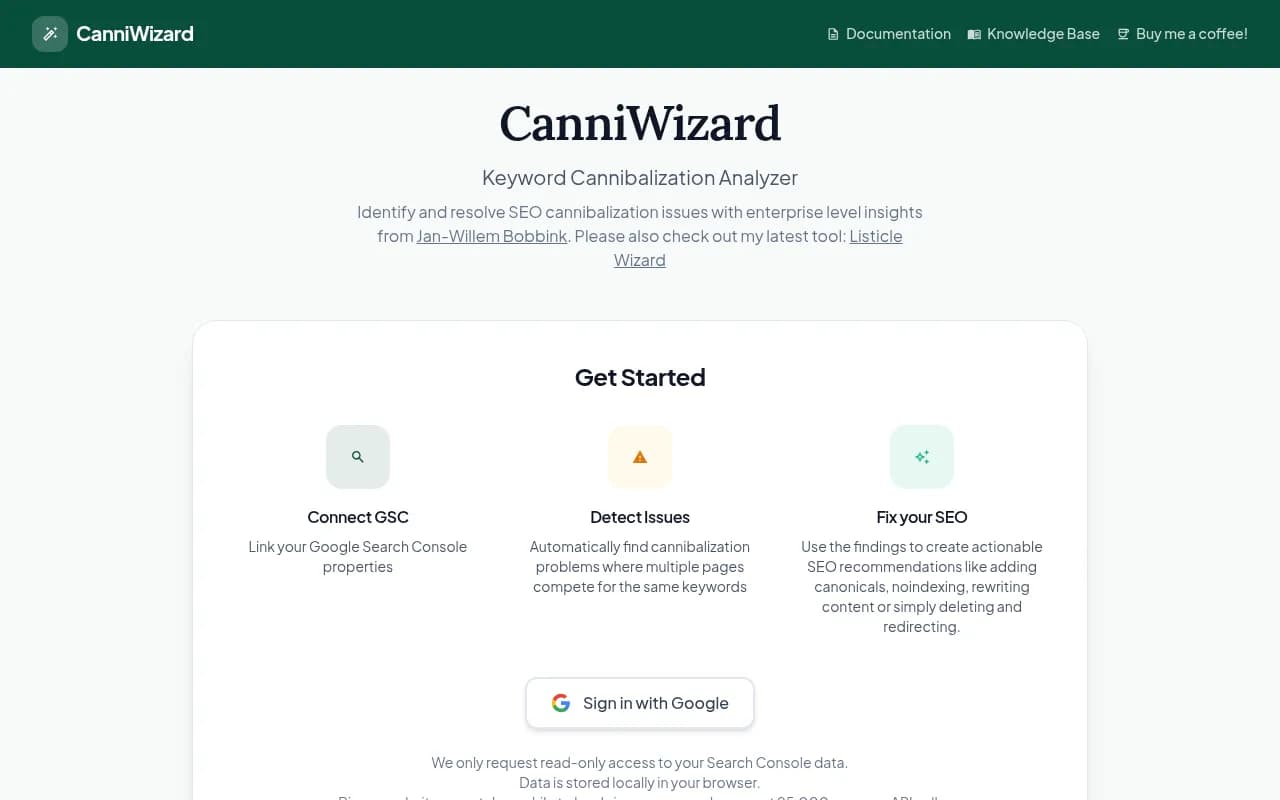
Find Duplicate or Cannibalized Content
Use tools like Screaming Frog or Sitebulb to detect duplicate title tags, meta descriptions, or H1 headings. Then manually review pages targeting the same keyword or topic.
For example, if you have three blog posts about "AI content tools," "best AI writing software," and "top AI content generators," you likely have keyword cannibalization. Consolidate these into one comprehensive guide.
Check for Keyword Stuffing
Read through your content. If the same keyword appears unnaturally often—especially in the first paragraph or headings—you have keyword stuffing. AI writing tools sometimes do this when prompted to "optimize for [keyword]."
Evaluate E-E-A-T Signals
For each page, ask:
- Does this content demonstrate real experience or expertise?
- Is there an author byline with credentials?
- Are there citations, data, or expert quotes?
- Does it include original insights, case studies, or examples?
If the answer is no to all of these, the page lacks E-E-A-T and is unlikely to rank or get cited by AI engines.
Use AI Detection Tools (But Don't Rely on Them)
AI detection tools like GPTZero or Originality.ai can flag content that looks AI-generated. But these tools are unreliable—they produce false positives and false negatives. Use them as one signal among many, not as the deciding factor.
What matters more than whether AI wrote the content is whether the content is helpful, accurate, and well-structured.

Step 3: Audit for AI Search Visibility
Traditional SEO audits focus on Google rankings. But in 2026, you also need to audit how AI engines like ChatGPT, Perplexity, Claude, and Gemini interpret and cite your content.
Track Your Brand Mentions in AI Search
AI visibility platforms like Promptwatch show you which prompts trigger mentions of your brand, which pages AI engines cite, and where you're invisible compared to competitors.

Run a baseline audit:
- Which prompts mention your brand?
- Which competitors appear more often?
- Which pages are cited vs. ignored?
- Are there misrepresentations or hallucinations?
This data reveals content gaps and opportunities. For example, if competitors get cited for "best project management tools" but you don't, your content on that topic is either missing or not authoritative enough.
Check for Misrepresentations
AI engines sometimes misinterpret or misrepresent your content. For example, they might cite an outdated pricing page, attribute a quote to the wrong person, or summarize your product incorrectly.
Monitor AI-generated summaries and snippets regularly. If you find errors, update your content to be clearer and more structured. Add schema markup, FAQs, and explicit statements that AI models can parse accurately.
Analyze Citation Sources
AI engines don't just cite your website—they also cite Reddit threads, YouTube videos, and third-party reviews. Use tools like Promptwatch to see which sources AI models prefer for topics related to your brand.
If Reddit discussions or competitor blogs are getting cited instead of your content, you need to create more authoritative, comprehensive resources on those topics.
Step 4: Decide What to Fix, Merge, or Delete
Now that you've identified problem content, you need to take action.
Fix: Add Depth and Expertise
For pages with potential but lacking quality:
- Expand word count to 1,500-3,000 words (where appropriate)
- Add author bylines with credentials
- Include original data, case studies, or expert quotes
- Embed screenshots, charts, or visuals
- Improve readability with clear headings, bullet points, and short paragraphs
- Add internal links to related content
- Update outdated information
The goal is to transform thin, generic content into authoritative resources that both humans and AI engines trust.
Merge: Consolidate Duplicate Content
For pages targeting the same topic:
- Choose the best-performing page as the primary version
- Merge content from duplicate pages into the primary page
- Set up 301 redirects from old URLs to the new consolidated page
- Update internal links to point to the new URL
This eliminates keyword cannibalization and concentrates your ranking signals into one strong page.
Delete: Remove Irredeemable Spam
For pages that can't be salvaged:
- Delete the page entirely
- Return a 410 (Gone) status code or 404 (Not Found)
- Remove internal links pointing to the deleted page
- Update your sitemap
Don't be afraid to delete content. A smaller, higher-quality content library performs better than a bloated one full of spam.
Step 5: Optimize for Both Human and AI Audiences
Once you've cleaned up your content library, optimize what remains for maximum visibility.
Structure Content for Machine Readability
AI engines parse structured content more easily. Use:
- Clear H2 and H3 headings that outline your content
- Bullet points and numbered lists for scannable information
- Schema markup (FAQ, HowTo, Article, Product) to provide explicit context
- Short paragraphs (2-3 sentences) for readability
- Descriptive alt text for images
Answer Questions Directly
AI engines prioritize content that answers questions clearly and concisely. Include:
- FAQ sections with common questions and direct answers
- Summary boxes or key takeaways at the top of long articles
- Explicit statements like "The best tool for X is Y because..."
Avoid burying answers deep in the text or using vague, marketing-heavy language.
Demonstrate E-E-A-T
Every piece of content should signal expertise:
- Add author bios with credentials and links to LinkedIn or personal sites
- Cite authoritative sources and link to research, studies, or official documentation
- Include original data, surveys, or case studies
- Use real examples and screenshots from your own experience
- Update content regularly to keep it accurate
Optimize Metadata and Technical SEO
Ensure:
- Title tags and meta descriptions are unique and compelling
- URLs are clean and descriptive
- Images are compressed and load quickly
- Pages are mobile-friendly
- Internal linking connects related content
Step 6: Monitor and Re-Audit Continuously
Content audits aren't one-time projects. In 2026, you need continuous monitoring.
Set Up Automated Alerts
Use tools like Google Search Console, Ahrefs, or Promptwatch to alert you when:
- Pages lose rankings or traffic
- New AI misrepresentations appear
- Competitors start outranking you for key prompts
- Technical errors (404s, crawl issues) emerge
Re-Audit Quarterly
Every quarter, run a fresh audit:
- Identify new thin or duplicate content
- Check for outdated information
- Review AI visibility metrics
- Update high-performing pages with new data or insights
This keeps your content library healthy and prevents spam from accumulating again.
Track AI Crawler Activity
AI engines send crawlers (like GPTBot, ClaudeBot, PerplexityBot) to index your content. Monitor these crawlers in your server logs to see:
- Which pages they visit most often
- Which pages they ignore
- Errors or access issues they encounter
Tools like Promptwatch provide AI crawler logs and insights, helping you optimize for AI discoverability.
Common Mistakes to Avoid
Don't Obsess Over AI Detection Tools
AI detection tools are unreliable. They flag human-written content as AI and miss obvious AI spam. Focus on quality signals—depth, expertise, structure—not detection scores.
Don't Delete Content Without Redirects
If you delete a page that has backlinks or traffic, set up a 301 redirect to a relevant page. Otherwise, you lose link equity and create a poor user experience.
Don't Ignore AI Search Visibility
Traditional SEO audits miss how AI engines interpret your content. If you're not tracking AI citations and visibility, you're flying blind in 2026.
Don't Rush to Publish More Content
After cleaning up your library, resist the urge to immediately publish more AI-generated content. Focus on quality over quantity. One authoritative guide is worth more than ten thin blog posts.
Tools to Help You Audit and Optimize
For Traditional SEO Audits
- Screaming Frog: Crawl your site and identify technical issues, duplicate content, and thin pages
- Google Search Console: Track rankings, impressions, and clicks for every page
- Ahrefs or Semrush: Analyze backlinks, keyword rankings, and competitor content

For AI Search Visibility
- Promptwatch: Track your brand mentions across ChatGPT, Perplexity, Claude, Gemini, and other AI engines. See which prompts trigger citations, which pages AI models prefer, and where competitors outrank you. Use built-in content gap analysis and AI writing tools to fix visibility gaps.
- Otterly.AI: Basic monitoring for AI search visibility across ChatGPT, Perplexity, and Google AI Overviews
Otterly.AI

- Profound: Enterprise-level AI visibility tracking across 9+ AI search engines
Profound

For Content Optimization
- Surfer SEO: Optimize content for traditional search with competitor analysis and on-page recommendations
- Clearscope: Content optimization platform for SEO teams
- Frase: AI-powered SEO content research and writing

The Bottom Line: Quality Wins in 2026
AI-generated content isn't the enemy. Low-quality content is. Whether a human or an AI wrote your pages doesn't matter to Google, ChatGPT, or Perplexity. What matters is whether your content demonstrates expertise, answers questions clearly, and provides real value.
In 2026, the brands that win are the ones that audit their content libraries, remove or fix spam, and optimize for both traditional search and AI engines. Don't wait for algorithms to penalize you. Take control now.
Start with a full inventory. Identify thin, duplicate, or low-quality pages. Fix what you can, merge what overlaps, and delete what can't be saved. Then monitor continuously—because content quality is an ongoing commitment, not a one-time project.
If you want to track how AI engines like ChatGPT and Perplexity cite your content—and fix the gaps that hurt your visibility—tools like Promptwatch give you the data and optimization features you need to stay ahead in 2026.