Key Takeaways
- AI visibility gap analysis reveals which prompts competitors rank for but you don't -- showing exactly what content your site is missing to get cited by ChatGPT, Claude, Perplexity, and other AI models
- Traditional SEO gap analysis misses the AI search layer -- you need tools that track citations, prompt volumes, and AI model behavior, not just Google rankings
- The content pipeline starts with gap identification, moves to prioritization, then systematic creation and tracking -- turning raw visibility data into a repeatable workflow that drives citations and traffic
- Platforms like Promptwatch close the loop from gap to content to results -- combining Answer Gap Analysis, AI content generation, and citation tracking in one workflow
- Most teams waste effort creating content AI models ignore -- gap analysis ensures every article targets prompts with real volume and winnable competition
Why Traditional Content Gap Analysis Fails in AI Search
For years, content gap analysis meant comparing your site's keyword rankings to competitors in Google. You'd export a list of keywords they ranked for, filter out what you already covered, and start writing.
That playbook is broken in 2026.
AI search engines like ChatGPT, Perplexity, Claude, and Google AI Overviews don't rank pages -- they synthesize answers from multiple sources and cite the ones they trust most. A page ranking #1 in Google might never get cited by ChatGPT. A blog post buried on page 3 might dominate AI citations because it's structured exactly how language models parse information.
Traditional gap analysis tools (Semrush, Ahrefs, Moz) show you keyword opportunities based on search volume and difficulty. But they can't tell you:
- Which prompts AI models are actually answering
- How often your competitors get cited vs you
- What content structure or format AI models prefer
- Whether a topic has real prompt volume or just search volume
According to Gartner, 74% of B2B buyers complete most research digitally before talking to a vendor. McKinsey reports AI procurement tools accelerate vendor assessment by 60-80%. That means buyers are using AI search to evaluate you before they ever visit your website -- and if you're not cited in those AI responses, you're invisible.
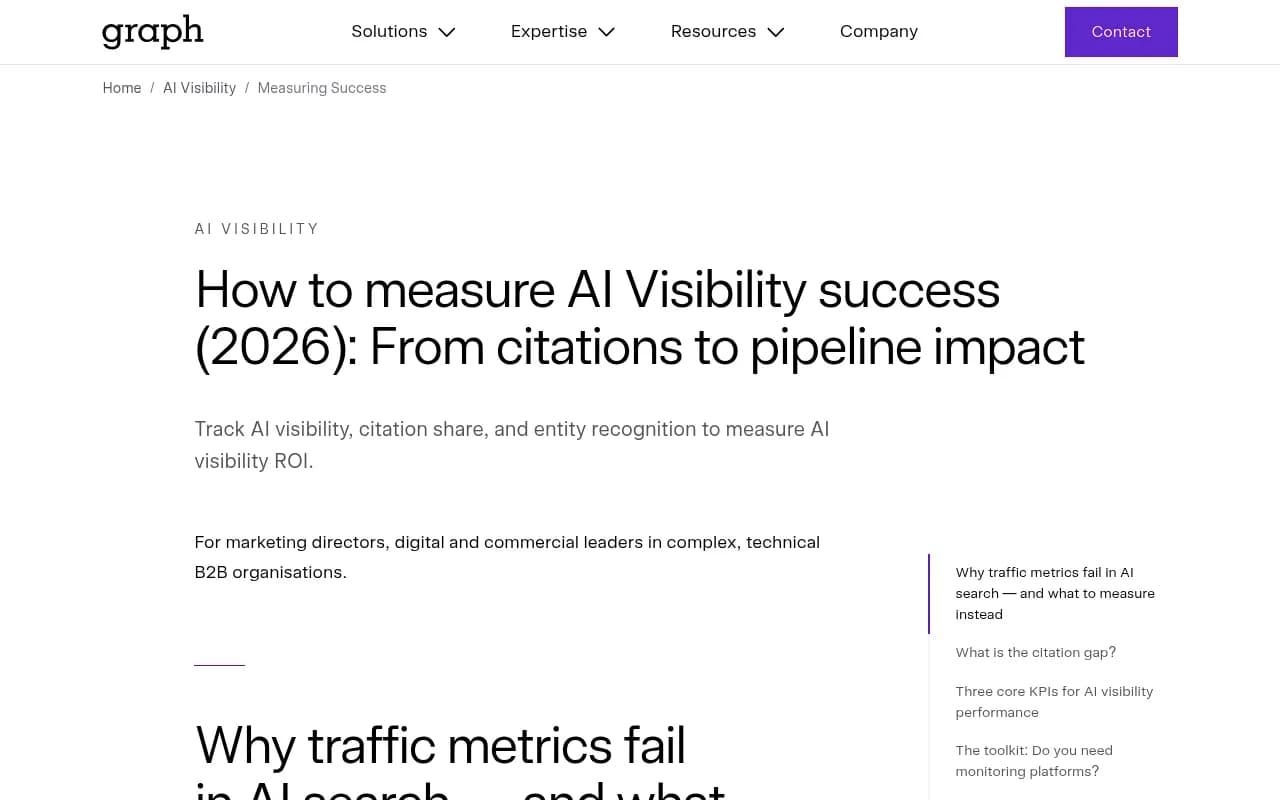
The gap isn't just keywords anymore. It's citation share -- the percentage of AI responses where your brand appears vs competitors. And you can't close that gap without understanding which prompts matter, what content is missing, and how AI models decide what to cite.
What AI Visibility Gap Analysis Actually Measures
AI visibility gap analysis identifies the prompts where competitors get cited but you don't. It's the difference between where you should appear in AI-generated answers and where you actually appear.
Here's what a proper AI gap analysis reveals:
1. Prompt Coverage Gaps
Which customer questions are your competitors answering that you're not? For example, if Perplexity cites three competitors when users ask "best high-temperature polymer suppliers" but never mentions you -- despite having stronger technical specs -- that's a prompt coverage gap.
Traditional keyword tools might show search volume for "high-temperature polymers," but they won't tell you:
- How often that exact question gets asked to AI models
- Which competitors get cited in the response
- What content structure or depth AI models prefer
- Whether the prompt branches into sub-queries (query fan-outs)
2. Citation Share Deficits
Even when you're mentioned, how often are you cited vs competitors? If ChatGPT cites your competitor 8 out of 10 times for a category of prompts but only cites you twice, you're losing visibility share.
This is the AI equivalent of ranking position -- except instead of #1 vs #5, it's "cited 80% of the time" vs "cited 20% of the time."
3. Content Depth and Format Mismatches
AI models prefer specific content structures: direct Q&A formats, comparison tables, step-by-step guides, technical specifications in structured data. If your competitor's content matches what AI models want to cite and yours doesn't, you'll lose even when your information is better.
Gap analysis should surface:
- Which content formats competitors use that you don't (listicles, comparison tables, how-to guides)
- Whether competitors have more comprehensive coverage (longer articles, more examples, deeper technical detail)
- If competitors use structured data, schema markup, or other signals AI models prioritize
4. Topic Cluster Weaknesses
AI models cite sources that demonstrate topical authority -- sites with comprehensive coverage of related subtopics, not just one-off articles. If competitors have full topic clusters (pillar pages + supporting content) and you have isolated posts, you'll lose citation share.
Gap analysis reveals:
- Which topic clusters competitors have built that you haven't
- Missing supporting content around your core topics
- Opportunities to connect existing content into cohesive clusters
5. Persona and Use Case Blind Spots
Different user personas ask different questions. A procurement manager researching suppliers asks different prompts than an engineer evaluating technical specs. If competitors cover more personas or use cases, they capture more citation opportunities.
Gap analysis should identify:
- Which buyer personas or job roles competitors target that you don't
- Use cases or applications you haven't documented
- Geographic or industry-specific variations in prompts
How to Run an AI Visibility Gap Analysis (Step-by-Step)
Here's the systematic process for identifying content gaps that matter in AI search:
Step 1: Define Your Prompt Universe
Start by mapping the prompts your target audience actually uses. These aren't keywords -- they're full questions, comparisons, and requests people type into ChatGPT, Perplexity, or Claude.
For a B2B SaaS company selling project management software, the prompt universe might include:
- "Best project management tools for remote teams"
- "Asana vs Monday.com vs [Your Product]"
- "How to track project milestones in [Your Product]"
- "Project management software with time tracking"
- "Can [Your Product] integrate with Slack?"
Build this list from:
- Customer support tickets and sales call transcripts
- Reddit discussions in your industry subreddits
- YouTube comments on competitor videos
- Google Search Console queries (but reframe them as conversational prompts)
- Competitor content analysis (what questions are they answering?)
Aim for 50-200 prompts to start. Tools like Promptwatch provide prompt volume estimates and difficulty scores so you can prioritize high-value, winnable prompts instead of guessing.
Step 2: Track Competitor Citations Across AI Models
Run your prompt list through multiple AI models (ChatGPT, Perplexity, Claude, Gemini, Google AI Overviews) and record:
- Which competitors get cited in each response
- How often each competitor appears (citation frequency)
- What specific pages or content types get cited
- Whether citations appear in the main response, sources list, or both
Manual tracking is painful and doesn't scale. Platforms built for AI visibility monitoring automate this:

Promptwatch tracks citations across 10 AI models, shows exactly which pages competitors get cited for, and calculates citation share by prompt. The Answer Gap Analysis feature surfaces the specific prompts where competitors appear but you don't -- the exact content gaps you need to fill.
Step 3: Analyze Content Gaps by Priority
Not all gaps are worth filling. Prioritize based on:
Prompt volume: How often is this question actually asked? High-volume prompts drive more visibility and traffic.
Competitive intensity: How many strong competitors already dominate this prompt? Winnable gaps (fewer competitors, lower authority sites) deliver faster results.
Business relevance: Does this prompt connect to your ICP (ideal customer profile)? A high-volume prompt that attracts the wrong audience wastes resources.
Content feasibility: Can you create genuinely better content than what's already cited? If competitors have 5,000-word technical guides and you can only produce 800-word blog posts, you'll lose.
Rank your gaps using a simple scoring system:
- High volume + low competition + high relevance = Priority 1
- High volume + high competition + high relevance = Priority 2
- Low volume + low competition + high relevance = Priority 3
- Everything else = Backlog
Focus on Priority 1 gaps first -- quick wins that build momentum.
Step 4: Map Gaps to Content Types
Different prompts require different content formats. AI models cite:
- Comparison articles for "X vs Y" prompts
- How-to guides for "how to" prompts
- Listicles for "best" or "top" prompts
- Technical documentation for "can X do Y" or "does X support Z" prompts
- Case studies for "examples of" or "companies using" prompts
For each gap, define:
- Content type: Comparison, guide, listicle, FAQ, case study
- Target word count: Based on what competitors are publishing (usually 1,500-3,000 words for comprehensive coverage)
- Required elements: Tables, screenshots, code examples, embedded tools, structured data
- Internal linking: Which existing pages should this connect to?
Step 5: Build Your Content Pipeline
Now translate gaps into a production queue:
- Prioritized backlog: All identified gaps ranked by priority score
- In progress: Content currently being written or optimized
- Review: Drafts awaiting editing and fact-checking
- Published: Live content ready for tracking
- Optimizing: Published content being refined based on citation performance
Assign each piece:
- Target prompt(s) it should rank for
- Primary keyword (for traditional SEO)
- Target AI models (which engines should cite this?)
- Success metrics (citation frequency, visibility score, traffic)
Use a simple spreadsheet or project management tool (Airtable, Notion, Asana) to track status and ownership.
Turning Gaps Into Content That Gets Cited
Identifying gaps is step one. Creating content AI models actually cite is step two -- and where most teams fail.
Here's how to engineer content for AI citation:
Write for Conversational Search Patterns
AI search is conversational. Users ask full questions, not keyword fragments. Your content needs to match that pattern.
Bad: "Project management software features"
Good: "What features should you look for in project management software?"
Structure content as direct answers to questions. Use the question as your H2 heading, then answer it in the first paragraph. AI models prioritize content that directly addresses the query.
Use the Direct Q&A Format
AI models love content structured as:
- Question (H2 heading)
- Direct answer (first paragraph, 2-3 sentences)
- Supporting detail (rest of section)
This format makes it easy for language models to extract and cite your content. Compare:
Weak structure: "Project management tools have evolved significantly. Modern platforms offer features like..."
Strong structure: "What features should you look for in project management software?
Look for task management, time tracking, team collaboration, and reporting capabilities. The best tools integrate with your existing workflow and scale as your team grows.
Here's what each feature does..."
The second version gives AI models a clean, citable answer.
Build Comprehensive Topic Coverage
AI models cite sources with topical authority -- sites that cover a subject comprehensively, not just one angle. If you write one article about "project management for remote teams," you're competing with sites that have:
- Pillar page: Complete guide to remote project management
- Supporting content: Remote team communication, async workflows, time zone management, tool comparisons, case studies
- Related topics: Remote work best practices, distributed team culture, remote hiring
Build topic clusters, not isolated posts. For each Priority 1 gap, map:
- Core pillar content (comprehensive guide)
- Supporting articles (specific subtopics)
- Related content (adjacent topics that build authority)
Internal linking between cluster pages signals topical depth to AI models.
Embed Structured Data and Rich Elements
AI models parse structured data more easily than plain text. Include:
- Comparison tables: For "X vs Y" content
- Step-by-step lists: For how-to guides
- FAQ schema: For question-based content
- Screenshots: For tool tutorials and interface explanations
- Code blocks: For technical documentation
- Embedded tool cards: When mentioning specific products
For example, when comparing project management tools, embed tool cards using the [tool:slug] format:
These render as rich cards with screenshots, descriptions, and links -- making your content more useful to readers and easier for AI models to parse.
Optimize for Citation, Not Just Traffic
Traditional SEO optimizes for clicks. AI search optimization prioritizes citations -- being mentioned in AI-generated responses, even if users don't click through.
That means:
- Clarity over cleverness: Direct answers beat creative intros
- Depth over brevity: Comprehensive coverage beats short posts
- Authority over engagement: Technical accuracy beats viral hooks
AI models cite content they trust. Build trust through:
- Citing authoritative sources (research, official documentation)
- Including data and statistics
- Demonstrating expertise (technical detail, real examples)
- Keeping content updated (fresh dates, current information)
Automating Content Creation from Gap Analysis
Manually writing 50+ articles to fill visibility gaps is slow and expensive. AI writing tools can accelerate production -- but only if they're grounded in real citation data, not generic templates.
Here's the difference:
Generic AI writing (ChatGPT, Jasper, Copy.ai):
- Prompts: "Write an article about project management for remote teams"
- Output: Generic advice, no competitive context, no citation optimization
- Result: Content that reads fine but never gets cited by AI models
Citation-optimized AI writing (Promptwatch, AirOps, Frase):
- Input: Specific prompt you're targeting, competitor analysis, citation data
- Output: Content structured to match what AI models cite, grounded in real examples
- Result: Articles engineered to win citations, not just fill pages
Promptwatch's AI writing agent generates content based on:
- 880M+ analyzed citations (what AI models actually cite)
- Prompt volume and difficulty data (which topics are worth targeting)
- Competitor gap analysis (what you're missing vs who's winning)
- Persona targeting (which buyer roles ask this question)
This isn't generic SEO filler -- it's content engineered to get cited by ChatGPT, Claude, Perplexity, and other AI models.
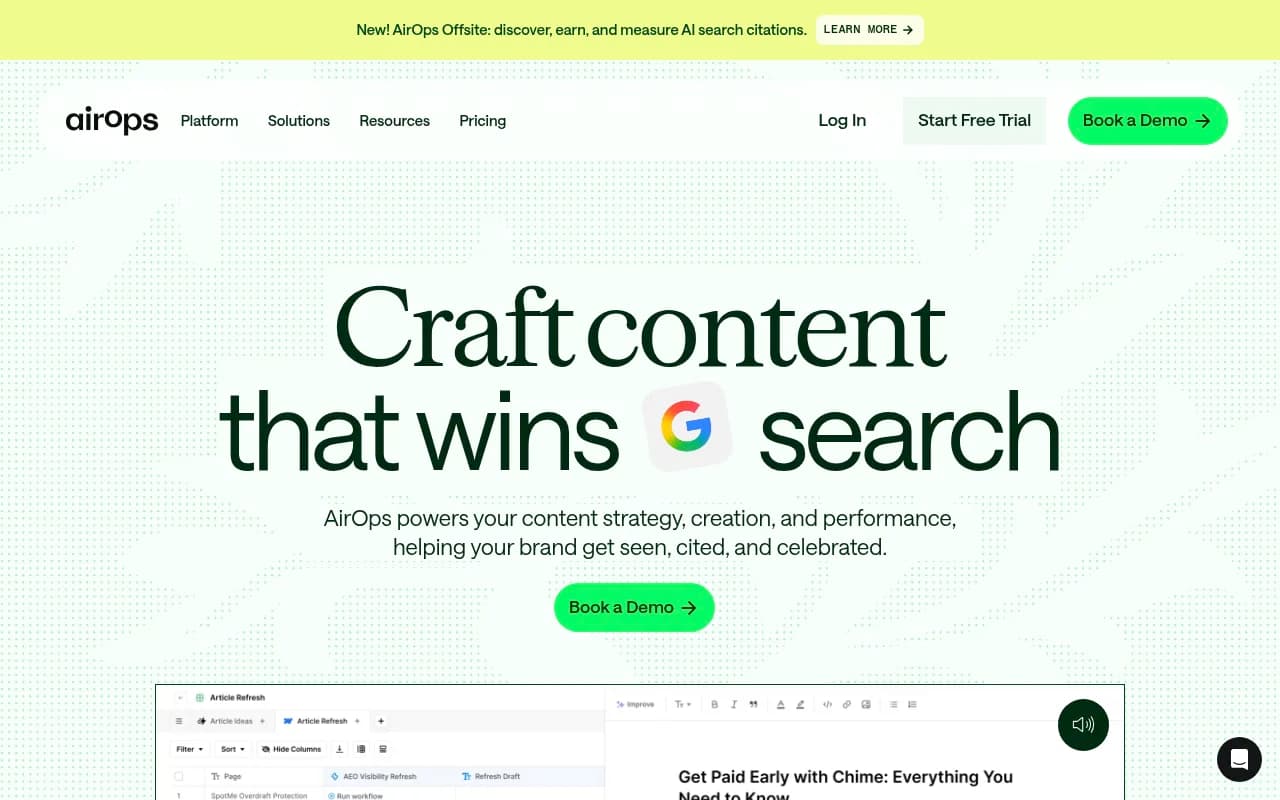
AirOps offers similar capabilities with AI workflows that scan competitor content, identify gaps, and generate topic clusters automatically.
The Content Generation Workflow
- Select a Priority 1 gap from your backlog
- Feed it to your AI writing tool with competitor context and target prompt
- Review and edit the draft -- AI writes the structure, you add expertise and examples
- Add rich elements -- screenshots, tables, tool embeds, structured data
- Publish and track -- monitor citation frequency and visibility score
- Optimize based on results -- refine content that's not getting cited
This workflow lets one content marketer produce 10-15 citation-optimized articles per month instead of 2-3 manually written posts.
Tracking Results: From Gaps to Citations to Traffic
Publishing content is not the finish line. You need to track whether it's actually closing the visibility gaps you identified.
Here's what to monitor:
Citation Frequency by Prompt
For each piece of content, track:
- Which prompts it gets cited for
- How often it appears in AI responses (citation rate)
- Which AI models cite it (ChatGPT, Perplexity, Claude, etc.)
- Whether citation frequency is increasing over time
If a piece isn't getting cited after 2-4 weeks, it needs optimization. Common fixes:
- Restructure as direct Q&A format
- Add more depth and examples
- Improve internal linking to build topical authority
- Update with fresher data or more recent examples
Page-Level Visibility Score
Track visibility at the page level, not just domain level. This shows exactly which content is working and which isn't.
Promptwatch provides page-level tracking -- you can see which URLs get cited, how often, and by which models. This closes the loop from gap analysis to content creation to results.
AI Traffic Attribution
Citations drive traffic, but you need to prove it. Track visitors coming from AI search engines:
- ChatGPT referral traffic (shows as direct or "chatgpt.com" in some analytics)
- Perplexity referral traffic
- Google AI Overviews clicks
Use UTM parameters, server log analysis, or dedicated tracking code to attribute traffic back to AI sources. Promptwatch offers a code snippet, Google Search Console integration, or server log analysis to connect visibility to actual revenue.
Competitive Citation Share
Track your citation share vs competitors over time. If you started at 15% citation share for a category of prompts and you're now at 35%, your content pipeline is working.
Competitor heatmaps (available in Promptwatch and similar platforms) show who's winning for each prompt and why -- letting you prioritize optimization efforts.
Common Mistakes That Kill Content Pipelines
Most teams fail at AI visibility gap analysis because they:
1. Treat It Like Traditional Keyword Research
Keyword volume doesn't equal prompt volume. A keyword with 10,000 monthly searches might only generate 500 AI prompts -- or vice versa. You need tools that measure actual AI search behavior, not just Google search volume.
2. Ignore Prompt Difficulty and Competition
High-volume prompts with 10+ strong competitors citing comprehensive content are hard to win. Low-volume prompts with weak competition deliver faster results. Prioritize winnable gaps, not just high-volume ones.
3. Create Content Without Tracking Citations
Publishing content and hoping it gets cited is a waste. You need closed-loop tracking: gap → content → citation → traffic. Without tracking, you can't optimize or prove ROI.
4. Use Generic AI Writing Tools
ChatGPT and Jasper can write articles, but they don't know which structure or depth AI models prefer for citations. Citation-optimized tools (Promptwatch, AirOps, Frase) generate content grounded in real citation data.
5. Focus Only on Google SEO
Traditional SEO still matters, but if you're not optimizing for AI citations, you're invisible to the 74% of buyers researching with AI tools. You need both -- and AI visibility is becoming the higher-leverage channel.
Building a Sustainable Content Pipeline
Here's the repeatable system:
Week 1: Gap Analysis
- Run competitor citation tracking across your prompt universe
- Identify Priority 1 gaps (high volume, low competition, high relevance)
- Map gaps to content types and assign to pipeline
Weeks 2-4: Content Creation
- Generate 8-12 citation-optimized articles using AI writing tools
- Add rich elements (tables, screenshots, tool embeds)
- Publish and implement tracking
Week 5: Optimization
- Review citation performance for published content
- Optimize pieces not getting cited (restructure, add depth, improve linking)
- Identify new gaps as competitors publish
Repeat monthly. Each cycle:
- Closes 8-12 visibility gaps
- Increases citation share by 5-10%
- Builds topical authority in your category
After 6 months, you'll have 50+ citation-optimized articles, 30-40% citation share in your category, and measurable AI-driven traffic and pipeline.
Tools to Build Your AI Content Pipeline
Here's the stack you need:
AI Visibility Tracking & Gap Analysis:
Promptwatch is the only platform rated as a "Leader" across all categories in a 2026 comparison of 12 GEO platforms. It combines Answer Gap Analysis (shows exactly which prompts competitors rank for but you don't), AI content generation (880M+ citations analyzed), and page-level citation tracking in one workflow.
Alternatives:
Otterly.AI

Profound

Both are monitoring-focused and lack the content generation and optimization capabilities Promptwatch offers.
AI Content Generation:
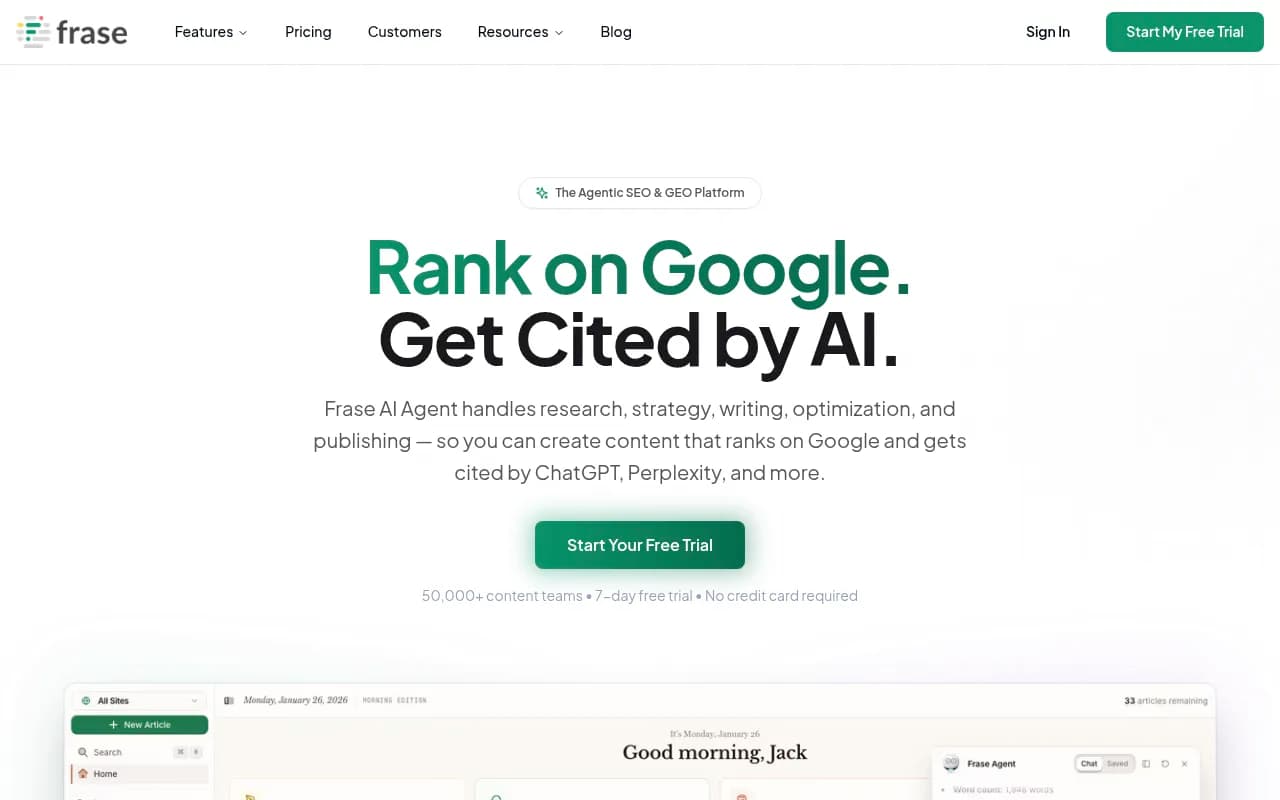
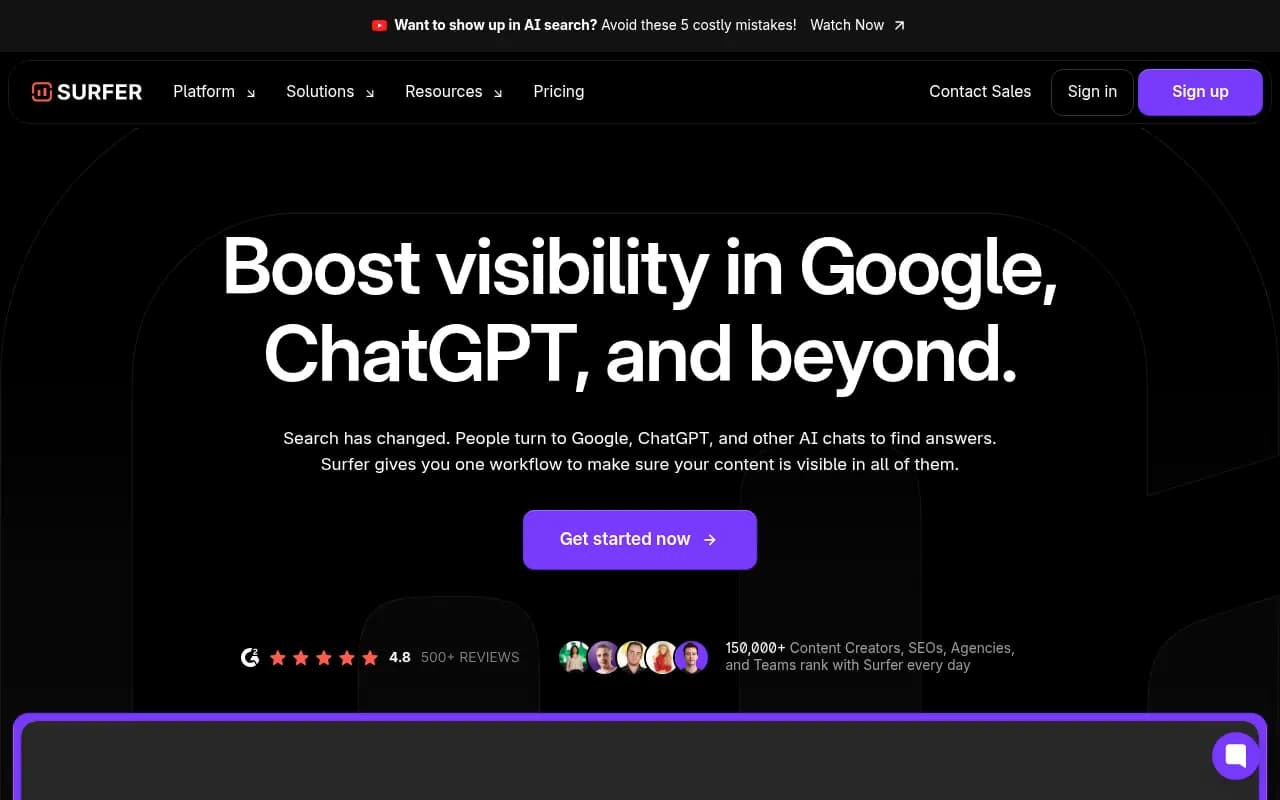
Both offer AI writing with SEO optimization, though they focus more on traditional search than AI citations.
Content Pipeline Management:
Use either to track your content backlog, assign prompts to writers, and monitor publication status.
Traffic Attribution:
Combine with Promptwatch's tracking code or server log analysis to attribute traffic back to AI sources.
Final Thoughts
AI visibility gap analysis isn't just another SEO tactic -- it's the foundation of content strategy in 2026. Buyers are researching with ChatGPT, Perplexity, and Claude before they ever visit your site. If you're not cited in those AI responses, you're invisible.
The teams winning in AI search aren't guessing what to write. They're systematically identifying gaps, creating citation-optimized content, and tracking results. They're building pipelines, not publishing one-offs.
Start with 50 prompts. Run gap analysis. Prioritize winnable opportunities. Create content engineered for citations. Track results. Optimize. Repeat.
That's the playbook. The tools exist. The data is available. The only question is whether you'll build the pipeline before your competitors do.