Key Takeaways
- AI search visibility platforms track brand mentions across ChatGPT, Perplexity, Google AI Overviews, and other AI engines -- essential as AI search approaches 1 billion users and 27% of consumers use AI for half their searches
- The best platforms go beyond monitoring -- they identify content gaps, generate AI-optimized content, and track results in a closed loop (find gaps → create content → measure impact)
- Choosing the right platform depends on your goals -- monitoring-only tools work for basic tracking, but optimization platforms like Promptwatch help you actually improve visibility with content gap analysis, AI writing agents, and crawler logs
- Pricing varies from $99/month to enterprise custom pricing -- evaluate based on prompt volumes, number of AI models tracked, content generation capabilities, and whether you need crawler logs and traffic attribution
- Early adoption matters -- brands that start tracking and optimizing AI visibility now gain a competitive edge before the market becomes oversaturated
What Are AI Search Visibility Platforms?
AI search visibility platforms (also called AI visibility tools, GEO platforms, or AI brand monitoring tools) are specialized software that tracks how your brand appears in AI-generated search results. Unlike traditional SEO tools that focus on Google rankings, these platforms monitor:
- Brand mentions in ChatGPT, Perplexity, Claude, Gemini, and other large language models
- Citation frequency and context -- when, where, and how AI engines reference your brand
- Google AI Overviews and AI Mode appearances
- Competitive positioning -- how you rank vs competitors in AI responses
- Query triggers -- which prompts cause AI models to mention your brand
- Content gaps -- topics where competitors appear but you don't
The core difference from traditional SEO: these tools measure visibility in conversational AI responses, not just blue links on a search results page.
Why You Need an AI Visibility Platform in 2026
Traditional SEO tools don't track AI search visibility. As more users turn to ChatGPT, Perplexity, and Google AI Overviews for answers, you need specialized platforms to:
1. Monitor Brand Presence Across AI Engines
See when and how AI models mention your brand. Track visibility across 10+ AI search engines including OpenAI/ChatGPT, Perplexity, Google AI Overviews, Claude, Gemini, Meta AI, DeepSeek, Grok, Mistral, and Copilot.
2. Understand Competitive Positioning
Benchmark your AI visibility against competitors. Identify which prompts they dominate and where you're invisible. Competitor heatmaps show exactly who's winning for each query and why.
3. Find Content Gaps
Answer Gap Analysis reveals the specific prompts competitors rank for but you don't. See the exact topics, angles, and questions AI models want answers to but can't find on your site. This is the difference between monitoring ("here's what's happening") and optimization ("here's what to fix").
4. Create Content That Ranks in AI
The best platforms don't just show you gaps -- they help you fill them. AI writing agents generate articles, listicles, and comparisons grounded in real citation data (880M+ citations analyzed), prompt volumes, persona targeting, and competitor analysis. This isn't generic SEO filler -- it's content engineered to get cited by ChatGPT, Claude, and Perplexity.
5. Track Results and ROI
Close the loop with page-level tracking that shows exactly which pages are being cited, how often, and by which models. Connect visibility to revenue with traffic attribution via code snippet, Google Search Console integration, or server log analysis.
6. Fix Indexing Issues
AI crawler logs show real-time data on ChatGPT, Claude, Perplexity, and other AI crawlers hitting your website -- which pages they read, errors they encounter, how often they return. Understand how AI engines discover your content and fix indexing problems before they hurt visibility.
Types of AI Search Visibility Platforms
Monitoring-Only Platforms
These tools focus on tracking brand mentions and visibility scores. They show you data but leave you to figure out what to do next.
Best for: Basic awareness, small teams that just need alerts
Examples: Otterly.AI, Peec.ai, AthenaHQ, Search Party
Limitations: No content gap analysis, no AI writing tools, no crawler logs, no traffic attribution
Otterly.AI


Optimization Platforms
These platforms combine monitoring with actionable insights and content creation tools. They close the loop: find gaps → generate content → track results.
Best for: Brands that want to improve AI visibility, not just measure it
Key features: Answer Gap Analysis, AI content generation, crawler logs, prompt intelligence, traffic attribution
Example: Promptwatch is the only platform rated as a "Leader" across all categories in a 2026 comparison of 12 GEO platforms. It's built around the action loop -- showing you what's missing, then helping you fix it with AI-generated content grounded in 880M+ citations analyzed.

Enterprise Analytics Platforms
Advanced platforms with APIs, custom reporting, multi-region tracking, and analyst-driven workflows.
Best for: Large teams with dedicated analysts, agencies managing multiple clients
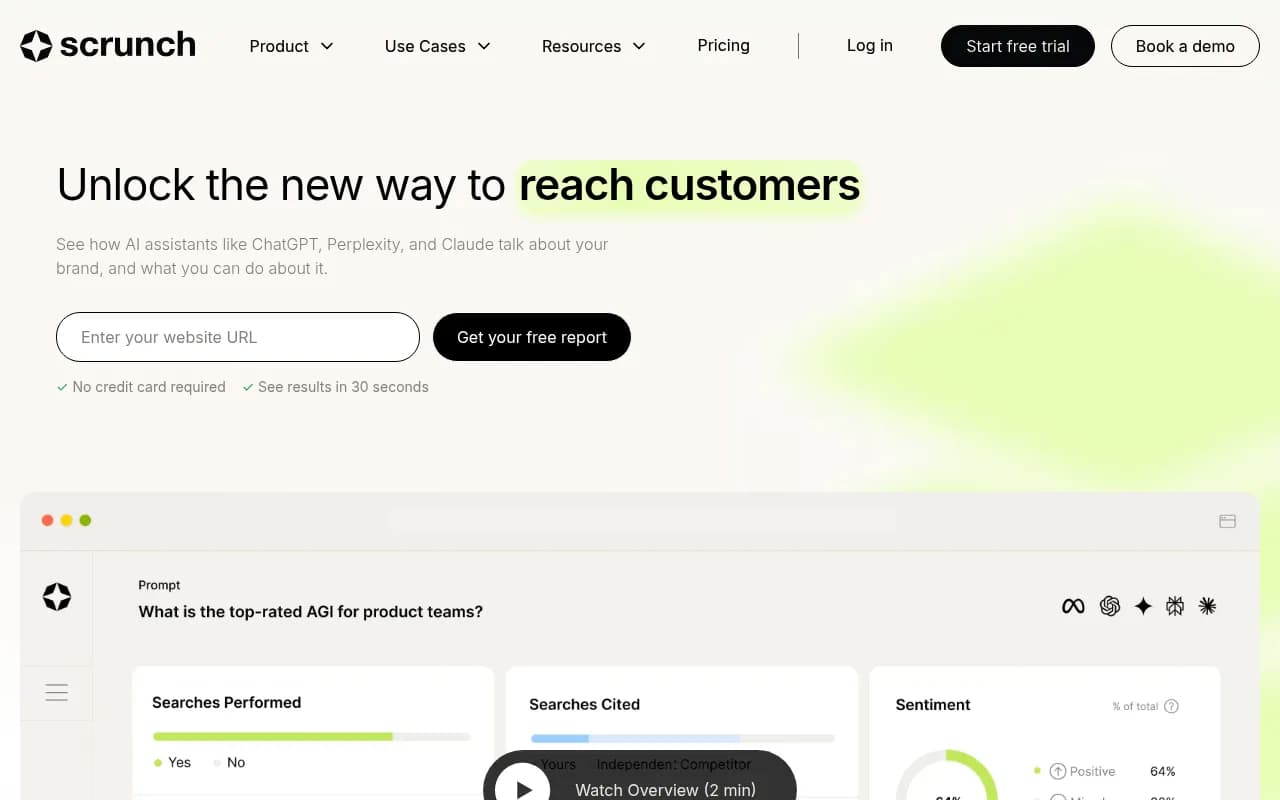
Examples: Profound, Scrunch AI, Evertune
Trade-offs: Higher price points, steeper learning curve, often lack built-in content generation
Profound

Traditional SEO Tools with AI Tracking Add-Ons
Established SEO platforms (Semrush, Ahrefs, Moz) that added AI visibility features.
Best for: Teams already using these tools who want basic AI tracking in one dashboard
Limitations: Fixed prompt sets, shallow AI search coverage, no content gap analysis or optimization tools
Key Features to Look For
1. Multi-Model Coverage
The platform should track at least 8-10 AI models:
- Must-have: ChatGPT, Perplexity, Google AI Overviews, Claude, Gemini
- Nice-to-have: Meta AI, DeepSeek, Grok, Mistral, Copilot, Google AI Mode
More models = more complete picture of your AI visibility.
2. Custom Prompt Tracking
Avoid platforms with fixed prompt sets. You need the ability to:
- Add your own prompts that match how your customers actually search
- Track competitor brand names and product categories
- Monitor prompts in multiple languages and regions
- Get prompt volume estimates and difficulty scores
3. Content Gap Analysis
This is the difference between a monitoring tool and an optimization platform. Look for:
- Answer Gap Analysis that shows which prompts competitors rank for but you don't
- Query fan-outs that reveal how one prompt branches into sub-queries
- Citation analysis showing which pages, Reddit threads, YouTube videos, and domains AI models cite
- Reddit and YouTube insights -- discussions that directly influence AI recommendations
4. AI Content Generation
The best platforms help you create content that ranks in AI search:
- AI writing agent that generates articles, listicles, and comparisons
- Content grounded in real citation data and prompt volumes
- Persona targeting that matches how your customers prompt
- Competitor analysis built into content briefs
This closes the action loop: find gaps → create content → track results.
5. AI Crawler Logs
Real-time logs of AI crawlers (ChatGPT, Claude, Perplexity) hitting your website:
- Which pages they read
- Errors they encounter
- How often they return
- Indexing issues to fix
Most competitors lack this entirely. It's critical for understanding how AI engines discover your content.
6. Page-Level Tracking
See exactly which pages are being cited, how often, and by which models. This helps you:
- Identify your best-performing content
- Find pages that need optimization
- Understand which content formats AI models prefer
- Prioritize content updates
7. Traffic Attribution
Connect AI visibility to actual revenue:
- Code snippet for tracking AI referral traffic
- Google Search Console integration
- Server log analysis
- Conversion tracking from AI sources
Without this, you're flying blind on ROI.
8. Competitor Benchmarking
Compare your AI visibility vs competitors:
- Heatmaps showing who wins for each prompt
- Share of voice across AI engines
- Competitive gap analysis
- Alerts when competitors gain visibility
9. Multi-Language and Multi-Region Support
Monitor AI responses in any language, from any country, with customizable personas that match how your actual customers prompt.
10. Integrations and API
Export data for custom reporting or build on the API for custom workflows. Look for:
- Looker Studio integration
- REST API access
- Webhook support
- CSV/Excel exports
How to Evaluate AI Visibility Platforms
Step 1: Define Your Goals
Before evaluating tools, clarify what you want to achieve:
- Basic monitoring: Just track brand mentions and get alerts
- Competitive intelligence: Benchmark vs competitors and find gaps
- Content optimization: Improve existing content to rank in AI search
- Content creation: Generate new content that gets cited by AI models
- Technical optimization: Fix crawler issues and indexing problems
- ROI tracking: Connect AI visibility to traffic and revenue
Your goals determine which features matter most.
Step 2: Assess Your Team Size and Resources
Small teams (1-5 people):
- Need simple, actionable insights
- Benefit from built-in content generation
- Want one platform that does it all
- Budget: $99-$249/month
Mid-market teams (5-20 people):
- Need deeper analytics and competitor benchmarking
- Want crawler logs and traffic attribution
- May have dedicated content creators
- Budget: $249-$579/month
Enterprise teams (20+ people):
- Need multi-site, multi-region tracking
- Want API access and custom reporting
- Have analyst-driven workflows
- Budget: Custom pricing, often $1,000+/month
Step 3: Compare Pricing Models
AI visibility platforms typically charge based on:
- Number of sites tracked
- Number of prompts monitored
- Number of AI models covered
- Content generation credits (articles per month)
- Team seats
Example pricing tiers:
- Essential ($99-$149/mo): 1 site, 50-100 prompts, 5-10 articles, basic tracking
- Professional ($249-$349/mo): 2-3 sites, 150-250 prompts, 15-25 articles, crawler logs, state/city tracking
- Business ($579-$799/mo): 5+ sites, 350-500 prompts, 30-50 articles, full features
- Enterprise (custom): Unlimited sites, custom prompt volumes, dedicated support, API access
Step 4: Test the Platform
Most platforms offer free trials. During your trial:
- Add your brand and competitors -- see how easy setup is
- Review the dashboard -- is it intuitive or overwhelming?
- Check data quality -- do the AI responses look accurate and up-to-date?
- Test content gap analysis -- does it reveal actionable insights?
- Try the AI writing tool -- if available, generate a test article
- Review crawler logs -- if available, see what AI crawlers are doing on your site
- Check support responsiveness -- ask a question, see how fast they reply
Step 5: Calculate ROI
Estimate the value you'll get:
- Time saved: How many hours per month will the platform save vs manual tracking?
- Content created: How many articles can the AI writing tool generate?
- Visibility gains: What's the potential traffic increase from improved AI visibility?
- Competitive advantage: What's the value of being cited in AI search before competitors?
If the platform saves 10 hours/month and your time is worth $100/hour, that's $1,000/month in value. A $249/month platform pays for itself 4x over.
Choosing the Right Platform for Your Business
For Small Businesses and Startups
Best choice: Optimization platform with built-in content generation
Why: You need to do more with less. A platform that finds gaps AND helps you create content gives you the biggest bang for your buck.
Recommended: Promptwatch Essential ($99/mo) -- 1 site, 50 prompts, 5 articles/month, crawler logs, all AI models
Alternative: Otterly.AI or Peec.ai if you only need basic monitoring and have content creators in-house
For Mid-Market Companies
Best choice: Full-featured optimization platform with crawler logs and traffic attribution
Why: You have the resources to act on insights. You need deeper data to guide strategy and prove ROI.
Recommended: Promptwatch Professional ($249/mo) -- 2 sites, 150 prompts, 15 articles/month, crawler logs, state/city tracking, traffic attribution
Alternative: Profound or Scrunch AI if you have dedicated analysts and don't need content generation
For Agencies
Best choice: Multi-site platform with white-label reporting
Why: You're managing multiple clients. You need scalable pricing and client-facing reports.
Recommended: Promptwatch Business ($579/mo) -- 5 sites, 350 prompts, 30 articles/month, full features. Agency/Enterprise plans available for more sites.
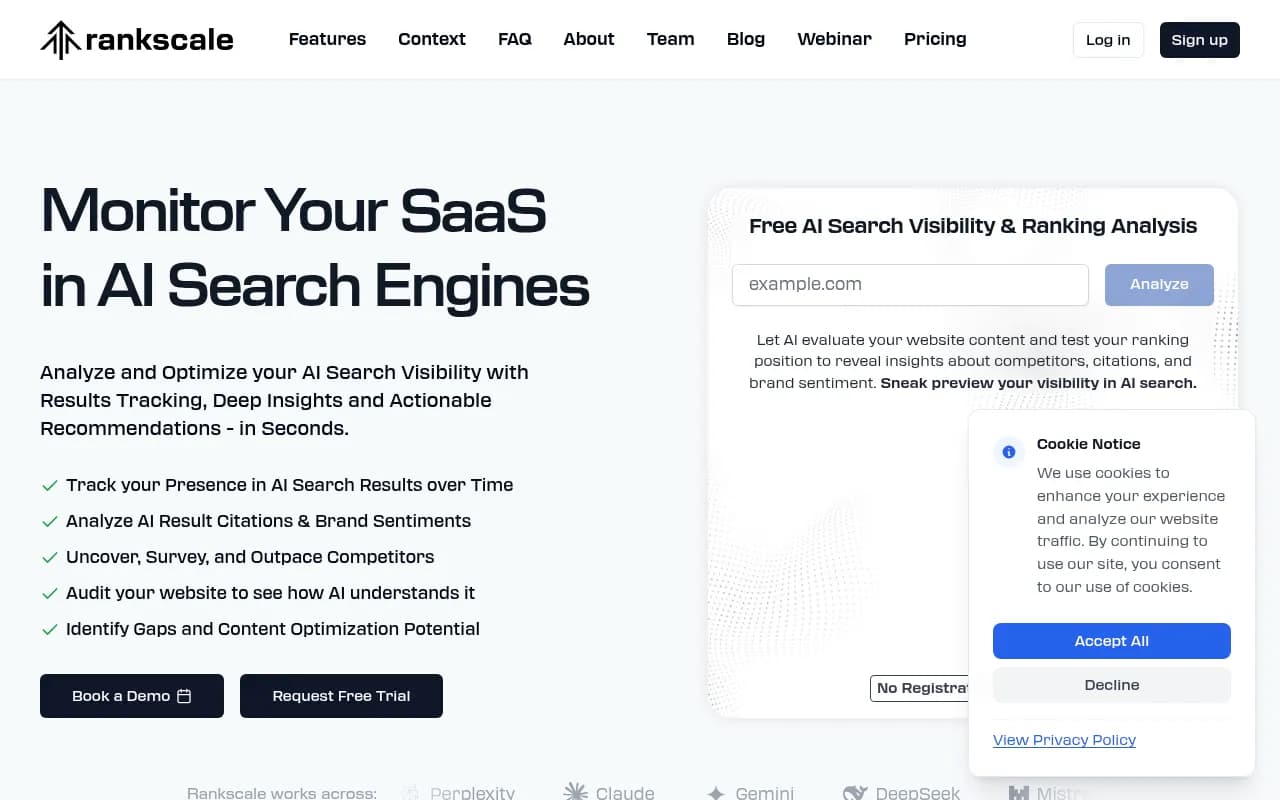
Alternative: Search Party or Rankscale if you're focused on agency workflows
For Enterprise Brands
Best choice: Enterprise platform with API access and custom reporting
Why: You need multi-region tracking, custom integrations, and dedicated support.
Recommended: Promptwatch Enterprise (custom pricing) -- unlimited sites, custom prompt volumes, API access, Looker Studio integration, dedicated account manager
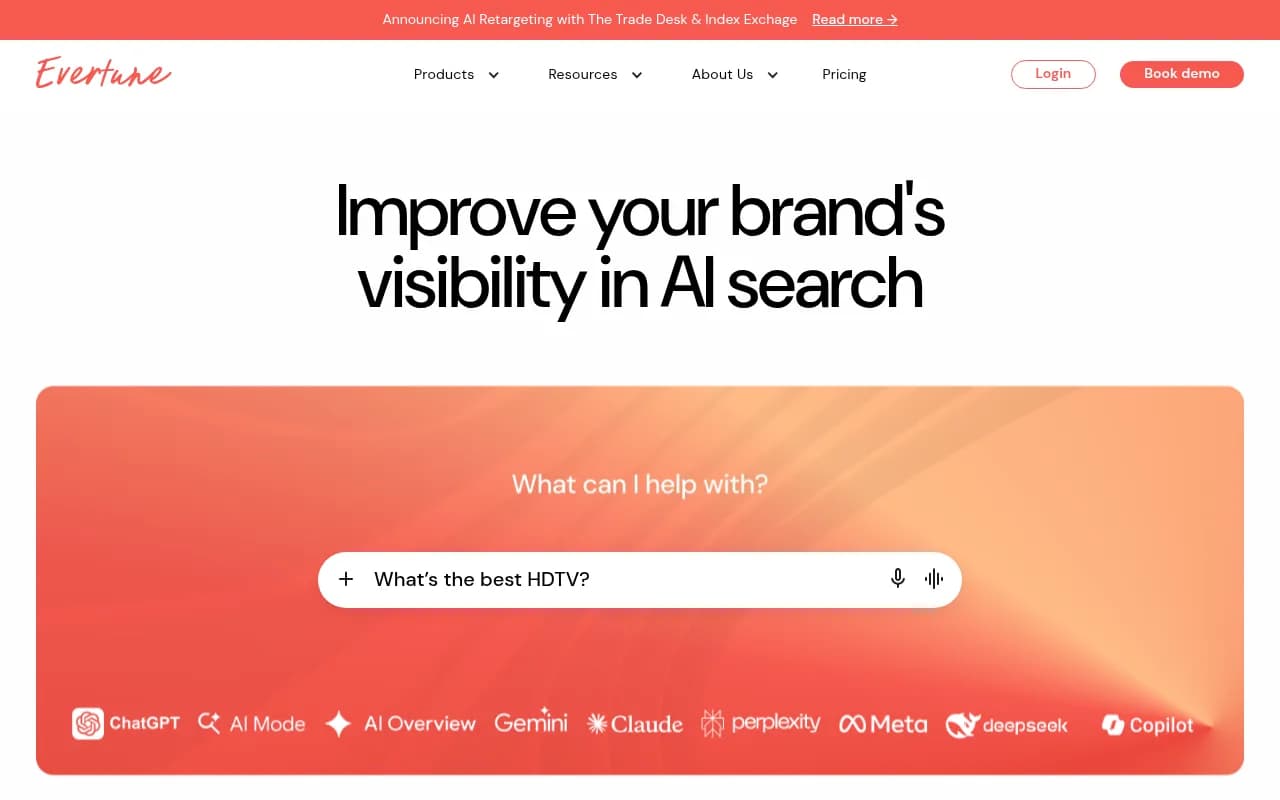
Alternative: Profound, Evertune, or Scrunch AI for analyst-driven workflows
Common Mistakes to Avoid
1. Choosing a Monitoring-Only Tool When You Need Optimization
Many platforms (Otterly.AI, Peec.ai, AthenaHQ) only show you data. They don't help you fix gaps or create content. If your goal is to improve AI visibility, not just measure it, you need an optimization platform.
2. Focusing Only on Price
A $99/month platform that saves 10 hours and generates 5 articles is worth more than a $49/month platform that only tracks mentions. Calculate ROI based on time saved and content created, not just monthly cost.
3. Ignoring Crawler Logs
AI crawler logs are critical for understanding how AI engines discover your content. Most competitors lack this feature. Without it, you're guessing at why you're not being cited.
4. Not Testing Content Generation
If a platform offers AI writing, test it during your trial. Generate a full article and see if it's publish-ready or needs heavy editing. Some tools produce generic filler; others create genuinely useful content.
5. Overlooking Traffic Attribution
Visibility scores are nice, but traffic and revenue matter more. Choose a platform that connects AI visibility to actual business outcomes.
6. Picking a Platform with Fixed Prompts
Some tools (Semrush, Ahrefs Brand Radar) use fixed prompt sets. You can't add custom prompts that match how your customers actually search. This limits your ability to track what matters most to your business.
7. Assuming Traditional SEO Tools Are Enough
Semrush, Ahrefs, and Moz added AI tracking features, but they're shallow compared to dedicated AI visibility platforms. They lack content gap analysis, crawler logs, and optimization tools. Use them for traditional SEO, but add a specialized AI visibility platform for GEO.
How to Use an AI Visibility Platform Effectively
Week 1: Setup and Baseline
- Add your brand and top competitors (3-5 competitors)
- Create a prompt list -- start with 20-50 prompts that match how customers search for your products/services
- Run initial scans across all AI models
- Review baseline data -- where do you appear? Where are you invisible?
- Identify quick wins -- prompts where you're close to being cited
Week 2-4: Content Gap Analysis
- Run Answer Gap Analysis -- find prompts competitors rank for but you don't
- Prioritize gaps using prompt volume and difficulty scores
- Analyze citations -- what content are AI models citing? What format? What angle?
- Check Reddit and YouTube -- what discussions are influencing AI recommendations?
- Create a content roadmap -- list the top 10-20 gaps to fill
Month 2: Content Creation
- Use the AI writing agent to generate articles for your top gaps
- Edit and publish -- don't just copy-paste, but use the AI draft as a strong starting point
- Optimize existing pages -- update content that's almost ranking in AI search
- Fix crawler issues -- review AI crawler logs and fix errors
- Submit to AI engines -- ensure your new content is discoverable
Month 3+: Track and Iterate
- Monitor visibility scores -- are they improving?
- Track page-level citations -- which new pages are being cited?
- Measure traffic -- is AI referral traffic increasing?
- Refine prompts -- add new prompts, remove low-value ones
- Expand to new topics -- once you dominate core prompts, branch out
- Benchmark competitors -- are you closing the gap?
The Promptwatch Advantage
In a 2026 comparison of 12 GEO platforms (Search Party, Otterly.AI, Peec.ai, Profound, AthenaHQ, Scrunch, Brandlight.ai, Bluefish, Searchable, Semrush, Ahrefs Brand Radar), Promptwatch is the only platform rated as a "Leader" across all categories.
The core difference: most competitors are monitoring-only dashboards that show you data but leave you stuck. Promptwatch is built around taking action:
The Action Loop
-
Find the gaps: Answer Gap Analysis shows exactly which prompts competitors are visible for but you're not. You see the specific content your website is missing -- the topics, angles, and questions AI models want answers to but can't find on your site.
-
Create content that ranks in AI: The built-in AI writing agent generates articles, listicles, and comparisons grounded in real citation data (880M+ citations analyzed), prompt volumes, persona targeting, and competitor analysis. This isn't generic SEO filler -- it's content engineered to get cited by ChatGPT, Claude, Perplexity, and other AI models.
-
Track the results: See your visibility scores improve as AI models start citing your new content. Page-level tracking shows exactly which pages are being cited, how often, and by which models. Close the loop with traffic attribution to connect visibility to actual revenue.
This cycle -- find gaps, generate content, track results -- is what makes Promptwatch an optimization platform, not just another tracker.
Additional Capabilities
- AI Crawler Logs: Real-time logs of AI crawlers hitting your website -- which pages they read, errors they encounter, how often they return
- Prompt Intelligence: Volume estimates and difficulty scores for each prompt, plus query fan-outs
- Citation & Source Analysis: See exactly which pages, Reddit threads, YouTube videos, and domains AI models cite
- Reddit & YouTube Insights: Surface discussions that directly influence AI recommendations
- ChatGPT Shopping Tracking: Monitor when your brand appears in ChatGPT's product recommendations
- Competitor Heatmaps: Compare your AI visibility vs competitors across LLMs
- Multi-language & Multi-region: Monitor AI responses in any language, from any country
- Looker Studio Integration & API: Export data for custom reporting or build custom workflows
Platform Details
- Monitors 10 AI models: OpenAI/ChatGPT, Perplexity, Google AI Overviews, Google AI Mode, Claude, Gemini, Meta/Llama, DeepSeek, Grok, Mistral, Copilot
- Pricing: Essential $99/mo (1 site, 50 prompts, 5 articles), Professional $249/mo (2 sites, 150 prompts, 15 articles), Business $579/mo (5 sites, 350 prompts, 30 articles)
- Free trial available
- Target audience: Marketing teams, SEO teams, digital agencies, and any brand that wants to be visible in AI search
Frequently Asked Questions
What's the difference between AI visibility tools and traditional SEO tools?
Traditional SEO tools track rankings in Google's blue links. AI visibility tools track brand mentions in conversational AI responses from ChatGPT, Perplexity, Google AI Overviews, and other AI engines. They measure different things: position in a list vs. presence in a narrative answer.
Do I still need traditional SEO if I'm optimizing for AI search?
Yes. Traditional SEO and AI search optimization (GEO) work together. Good SEO practices -- quality content, technical optimization, backlinks -- help you rank in both traditional search and AI search. But AI search requires additional optimization: conversational content, citation-worthy sources, and structured data.
How long does it take to see results from AI visibility optimization?
Most brands see initial improvements in 4-8 weeks. AI models update their training data regularly, so new content can start getting cited within a month. Significant visibility gains typically take 3-6 months of consistent content creation and optimization.
Can I track AI visibility for free?
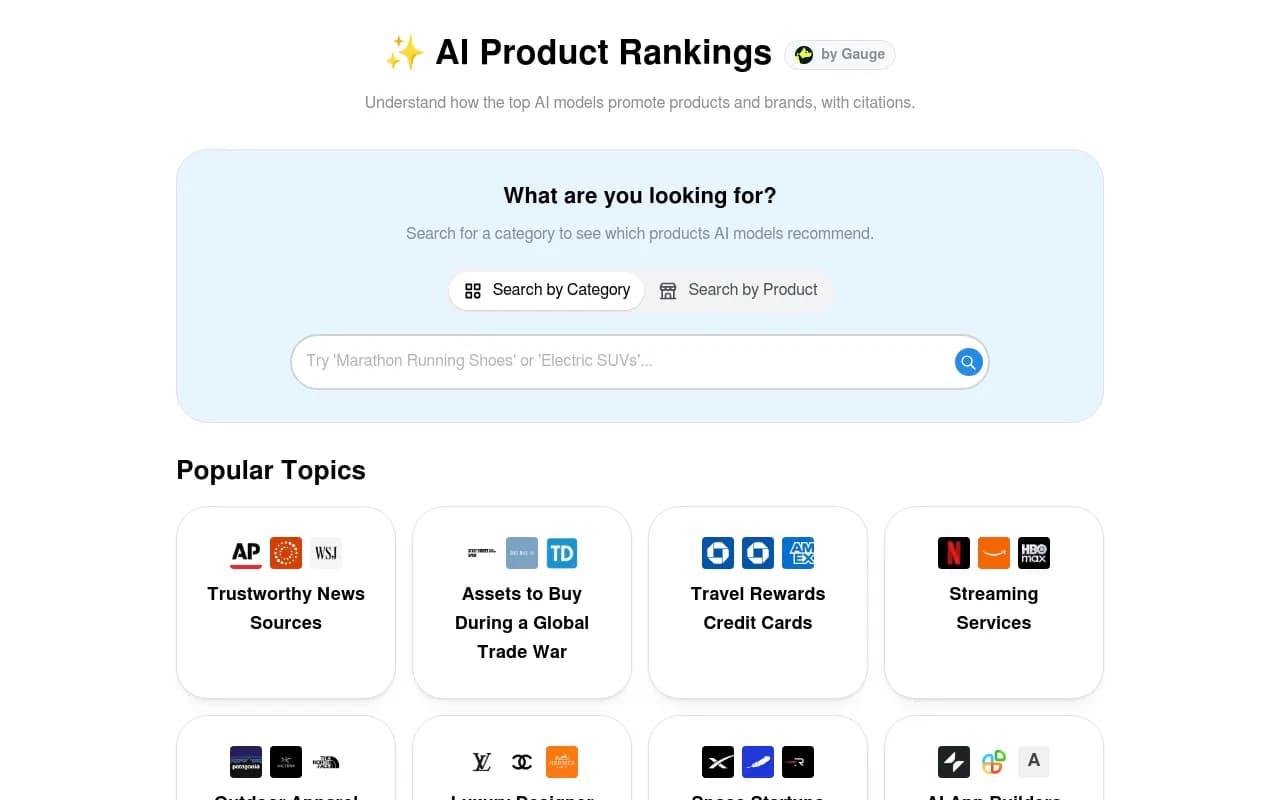
You can manually query ChatGPT, Perplexity, and other AI engines to see if they mention your brand. But this is time-consuming and doesn't scale. Free tools like ProductRank offer basic monitoring, but lack the features needed for optimization. For serious AI visibility work, you need a paid platform.
What's the best AI visibility platform for beginners?
Promptwatch Essential ($99/mo) offers the best balance of features and affordability for beginners. It includes monitoring, content gap analysis, AI content generation, and crawler logs -- everything you need to get started. Otterly.AI and Peec.ai are cheaper but lack optimization features.
Should I choose a monitoring-only tool or an optimization platform?
If you only need basic awareness of brand mentions, a monitoring-only tool like Otterly.AI works. But if you want to improve your AI visibility, choose an optimization platform like Promptwatch that includes content gap analysis, AI writing tools, and crawler logs.
How many AI models should a platform track?
At minimum, track ChatGPT, Perplexity, and Google AI Overviews -- these are the most popular AI search engines. Ideally, track 8-10 models including Claude, Gemini, Meta AI, and others for complete coverage.
What's Answer Gap Analysis?
Answer Gap Analysis identifies prompts where competitors are cited by AI models but you're not. It shows you the specific content gaps on your website -- the topics, angles, and questions you need to create content about to improve AI visibility.
Do AI crawler logs matter?
Yes. AI crawler logs show real-time data on how ChatGPT, Claude, Perplexity, and other AI engines discover your content. They reveal indexing issues, crawl errors, and which pages AI models read most often. Without this data, you're guessing at why you're not being cited.
Can I use Semrush or Ahrefs for AI visibility tracking?
Semrush and Ahrefs added basic AI tracking features, but they're limited compared to dedicated platforms. They use fixed prompt sets, lack content gap analysis, and don't offer crawler logs or AI content generation. Use them for traditional SEO, but add a specialized AI visibility platform for GEO.
Conclusion
Choosing the right AI search visibility platform in 2026 comes down to your goals, team size, and budget:
- For basic monitoring: Otterly.AI or Peec.ai ($49-$99/mo)
- For optimization and content creation: Promptwatch ($99-$579/mo)
- For enterprise analytics: Profound, Evertune, or Scrunch AI (custom pricing)
- For agencies: Promptwatch Business or Rankscale (multi-site plans)
The most important distinction: monitoring-only tools show you data but leave you stuck. Optimization platforms like Promptwatch close the action loop -- they find gaps, help you create content, and track results.
As AI search approaches 1 billion users and 27% of consumers use AI for half their searches, tracking and optimizing AI visibility is no longer optional. Brands that start now gain a competitive edge before the market becomes oversaturated.
Start with a free trial, test the platform's content gap analysis and AI writing tools, and choose the one that helps you take action -- not just watch from the sidelines.