Key takeaways
- ChatGPT only attaches shopping features (product cards, price comparisons) to a low single-digit percentage of web-search responses overall, but that rate spikes sharply on commercial and transactional prompts, and OpenAI visibly tunes it week to week, per Promptwatch's shopping usage data.
- Product pages became ChatGPT's single most-cited content type in July 2026 at 32.8% of citations, so your product page copy is now a citation asset, not just a conversion page.
- Getting recommended starts with feed hygiene: a clean product feed with accurate
availability,price,gtin, andtitlefields is the baseline requirement across ChatGPT, Perplexity, and other AI shopping surfaces. - Tracking tools split into two real categories: AI search monitoring (shows what shoppers actually see, including citations) and LLM monitoring (probes model knowledge, no citation data). Buy the first one.
- Third-party marketplaces and review sites frequently out-cite brand-owned domains, so track competitor and category citation share, not only your own.
Why this actually matters for ecommerce
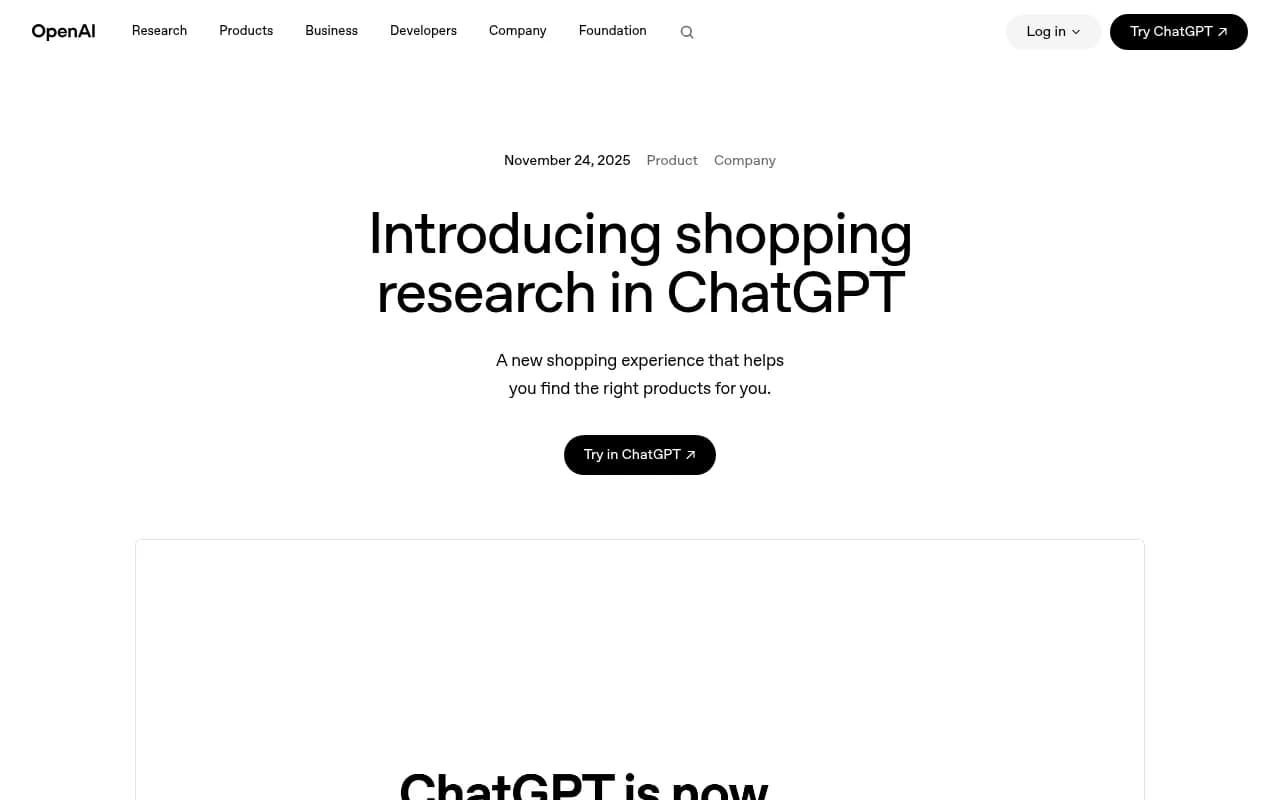
A few years ago, worrying about what ChatGPT says about your products would have sounded like a distraction. It doesn't anymore. OpenAI's shopping research feature, which launched in late November 2025, turns a vague query like "find the quietest cordless stick vacuum for a small apartment" into a personalized buyer's guide built from live research across the web.
Hundreds of millions of people already use ChatGPT to compare products before buying. Similarweb's ecommerce research puts the estimated conversion rate for ChatGPT-referred visits at 11.4%, more than double the 5.3% rate for traditional organic search traffic. That gap is the whole argument for tracking this channel seriously instead of treating it as a curiosity.
The problem is that most brands have no idea whether they show up when someone asks ChatGPT to compare vacuums, running shoes, or skincare. And even when they do show up, they don't know why, or whether a third-party retailer is getting cited instead of them.
What ChatGPT Shopping actually tracks and shows
ChatGPT is built on OpenAI's Agentic Commerce Protocol (ACP), an open infrastructure for product discovery and, longer term, checkout. Right now shopping is live for U.S. users, and Shopify and Etsy sellers are integrated automatically. Other merchants apply through a waitlist at chatgpt.com/merchants and submit a feed sized by SKU count.
A few mechanics matter for tracking purposes:
- Shopping features (product cards, price comparisons) only appear on responses where ChatGPT has already triggered a web search. No search, no shopping card.
- Promptwatch's own data shows the trigger rate for shopping features is not stable. It roughly doubled overnight in late May 2026, then dropped back weeks later, which tells you OpenAI is actively adjusting when these surfaces appear rather than it being an organic constant.
- Ads started appearing in ChatGPT Search responses on May 27, 2026 and had climbed to a 20.1% average over the following 90 days, with day-to-day swings as high as 43.9%, according to Promptwatch's ad-tracking data. Of ad-bearing responses, 73.3% are on plain organic prompts, not brand-name searches, meaning a competitor can buy a slot even when a shopper is just researching your category.
If you're only checking whether your brand name is mentioned once in a while, you're missing both of those layers: whether a shopping card shows up at all, and who's paying to sit next to it.
Set up your product feed before you start tracking
Tracking citations is pointless if your catalog isn't eligible to be cited in the first place. OpenAI's file-upload spec for the ACP lists required fields: item_id, title (under 150 characters, no all-caps), description (factual, plain text, no marketing language, under 5,000 characters), url (must return HTTP 200), brand, availability (must use one of the recognized enum values or the row gets rejected), and price formatted with an ISO currency code.
Conditionally required fields include a gtin or mpn if no GTIN exists, and an availability_date for pre-order or backorder items. OpenAI's best-practices guide specifically recommends adding a UTM parameter like utm_medium=feed to the URL field whenever you need feed-specific click tracking, and keeping tracking parameters consistent across feed snapshots so your analytics don't fragment.
One useful shortcut: roughly 70% of the required fields overlap across ChatGPT, Perplexity, Copilot Checkout, Alexa, and other AI shopping surfaces. Fix your feed once, and most of that work carries over.
What to actually track once your feed is live
Break the tracking problem into four separate questions, because they require different data.
1. Does a shopping card even appear for your category?
Run the real commercial and transactional prompts your buyers use, log whether a shopping card or product carousel appears, and note which brands fill it. Do this repeatedly, not once, since Promptwatch's data shows trigger rates move in visible steps rather than staying flat.
2. Is your product page the thing getting cited?
Product pages led ChatGPT citations in July 2026 at 32.8% of all citations, nearly double their ~18% share back in March, according to Promptwatch's citation-type breakdown. Listicles, how-tos, comparisons, and social posts grew fastest within the month, mostly at the expense of product and landing pages. That's a signal to invest in comparison content ("X vs Y") and roundup placements alongside your product pages, not instead of them.
3. Who else is winning the slot?
Category-level citation data from Promptwatch on the automotive space is a useful proxy here: marketplaces and review/research sites combined for over 27% of citation share, while manufacturer sites managed just under 8%. Even a single local dealer page cracked the top 31 cited domains. The lesson generalizes: your competitors aren't just other brands, they're Amazon, review sites, and comparison blogs that out-cite brand-owned domains by a wide margin.
4. Are ads eating into your organic slot?
Check whether ChatGPT is showing sponsored placements alongside organic recommendations for your category's prompts, and who's buying them. Otterly.AI explicitly frames this as tracking "whether competitor products are being advertised instead of yours," which is exactly the right question to ask.
Tools that actually show citation data (not just mentions)
There's a real distinction in this market between AI search monitoring, which shows what shoppers actually see including citations and links, and LLM monitoring, which probes a model's training knowledge and returns no citation data at all. A lot of buyers confuse the two, and it's an expensive mistake if you're trying to answer "did we get cited in a shopping answer."
Promptwatch tracks ChatGPT Shopping alongside Gemini, Claude, Perplexity, Grok, and Google AI Overviews and Mode, with citation trends classified into 22 content types, page-level tracking to see exactly which of your URLs get cited, and a dedicated Ads Radar for tracking sponsored placements and competitor ad copy in AI answers. It's also one of the only platforms with AI crawler logs, so you can see whether OAI-SearchBot is actually reading your product pages before it decides whether to cite them, which explains the "why" behind a citation gap instead of just reporting the absence.

For ecommerce brands specifically weighing options, here's how the category breaks down:
| Tool | Shopping-specific tracking | Starting price | Notes |
|---|---|---|---|
| Promptwatch | ChatGPT Shopping, Shopping insights, Ads Radar, crawler logs, content agents | $95/mo (Essential) | Adds automated content generation and CMS publishing on top of tracking |
| Profound | Dedicated Shopping module: visibility, attribute accuracy, SKU-level analysis, merchant layer | Custom (real-world estimate ~$499/mo) | No published entry tier; enterprise-focused |
| Otterly.AI | ChatGPT Ads & Shopping tracking, weekly citation checks | $29/mo (Lite) | Cheapest named entry point in the category; covers 50+ countries |
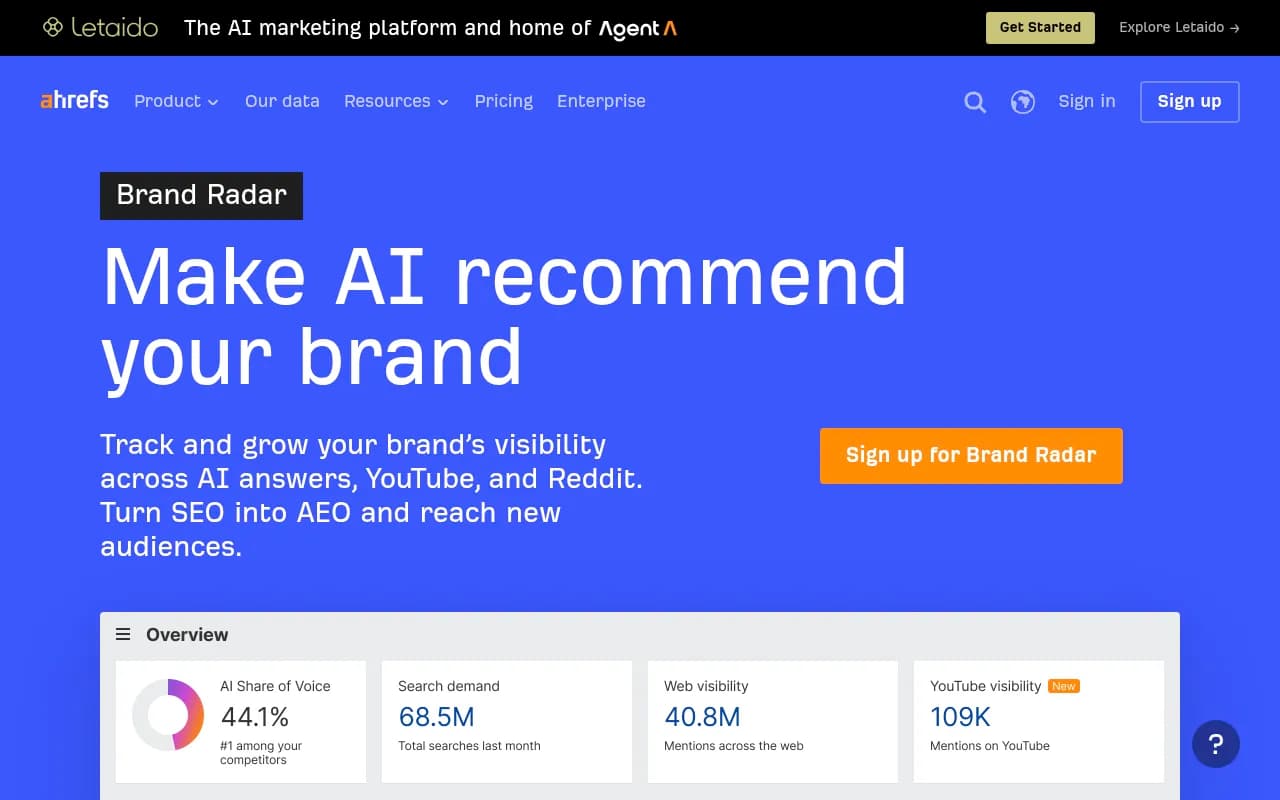
| Ahrefs Brand Radar | ChatGPT-only tracking available separately from full multi-engine plan | $99/mo (ChatGPT only) / up to $699/mo for all engines | Pricing splits by engine and by pre-collected vs custom prompts |
| Semrush AI Visibility Toolkit | Tracks cited pages/sources and share of voice, ChatGPT included | $99/mo per domain | Bundled pricing available via Semrush One from $199/mo |
Profound

Otterly.AI

Retail and DTC brands specifically built on reviews and loyalty data may also want to look at Yotpo's Discover product, which pairs citation tracking with review-driven optimization agents and reports case-study gains like a 62% increase in "#1 product placements" for one apparel brand after implementation. It's not in most general SEO tool comparisons because it's scoped specifically to ecommerce, with custom pricing based on catalog size and market coverage.
If you want to browse the wider category of AI visibility platforms side by side, the directory at bestgeosoftware.com is a reasonable starting point before committing to a contract.
Set up traffic attribution alongside citation tracking
Citation tracking tells you whether ChatGPT mentioned you. It doesn't tell you whether that mention turned into a session or a sale. ChatGPT often appends utm_source=chatgpt.com to outbound links automatically, and GA4 logs these as "chatgpt.com / referral" in the Traffic Acquisition report. Search for "chatgpt" or "gpt" there to start, then build a regex-based channel grouping to catch Gemini, Perplexity, Copilot, and Claude referrers too, since the exact referral format varies by platform.
Don't rely purely on native referrer data, though. In-app browsers and Safari's tracking prevention frequently strip it. Add your own UTM parameters where you control the link (the feed URL field is one place to do this, per OpenAI's own guidance) so you're not blind to sessions that lose their referrer on the way in.
A monthly tracking routine that doesn't take all day
- Run your top 15-20 category and comparison prompts through ChatGPT (and whatever monitoring tool you use) and log whether a shopping card appears, plus which brands fill it.
- Pull citation data for your domain specifically: which pages got cited, how that's trending month over month.
- Check the same for your two or three closest competitors and any marketplace or review site that keeps showing up instead of either of you.
- Review your feed for rejected rows or stale availability/price data; a single wrong
availabilityenum value can knock a SKU out of eligibility entirely. - Cross-check GA4's chatgpt.com referral segment against the citation data to see whether increased visibility is actually converting into sessions.
- Note any change in ad presence on your core prompts, since that share moved from zero to a 20%+ average in under three months during 2026.
None of this needs to be a full day of work if you've already set up a monitoring tool and a GA4 segment. The point is consistency, since the trigger rates and citation mix both move faster than most brands' quarterly reporting cadence can catch.
If you'd rather have a team handle the GEO strategy and content work around this instead of running it in-house, that's the kind of engagement 1001 SEO Media puts together for ecommerce clients, combining technical fixes, content production, and AI visibility monitoring under one plan.