Key Takeaways
- Meta AI has over 1 billion monthly active users across Facebook, Instagram, WhatsApp, and Messenger, making it one of the largest AI search platforms for brand discovery
- 63% of Meta AI interactions happen on WhatsApp, creating high-intent brand discovery moments during conversations
- Specialized tracking platforms like Promptwatch, LLM Pulse, and Knowatoa can monitor your brand mentions across Meta AI and other LLM platforms
- Social context matters: Meta AI recommendations appear while users chat with friends, browse feeds, and shop -- different from traditional search engines
- Track beyond mentions: Monitor sentiment, citation sources, competitor comparisons, and conversion impact to optimize your Meta AI visibility
Why Meta AI Visibility Matters in 2026
Meta AI isn't just another chatbot. It's embedded in the daily social experiences of nearly 4 billion people across the Meta family of apps. When someone asks Meta AI for restaurant recommendations while planning dinner with friends on WhatsApp, or requests product advice while browsing Instagram, your brand either appears in that conversation or it doesn't.
The numbers tell the story:
- 1 billion+ monthly active users engage with Meta AI features
- 630 million WhatsApp users specifically interact with AI capabilities
- 185 million weekly active users actively engage with Meta AI features
- 100% growth in 6 months from 500M to 1B users between late 2024 and Q1 2025
Unlike traditional search engines where users explicitly look for information, Meta AI captures users during social moments -- chatting with friends, scrolling feeds, planning activities. These are high-intent discovery moments where brand recommendations carry social context and immediate action potential.
How Meta AI Differs from Other AI Search Engines
Meta AI operates fundamentally differently than ChatGPT, Perplexity, or Google AI Overviews:
Social Context Discovery
Users don't open a separate app to search. They ask Meta AI questions while already engaged in social activities -- messaging friends on WhatsApp, browsing Instagram Reels, or shopping on Facebook Marketplace. Your brand appears (or doesn't) in the middle of these social flows.
Platform-Specific Behavior
Meta AI behaves differently across platforms:
- WhatsApp: Conversational recommendations during group chats and one-on-one messaging
- Instagram: Visual product discovery and shopping recommendations
- Facebook: Local business discovery and event planning
- Messenger: Customer service and brand interactions
Geographic Concentration
India represents the largest market for Meta AI usage on Instagram and WhatsApp, making geographic tracking essential for brands targeting emerging markets.
Shopping Integration
Meta AI powers shopping recommendations directly within Instagram and Facebook, where users increasingly research and purchase products without leaving the platform.
Setting Up Meta AI Brand Tracking
Choose Your Tracking Platform
Several platforms now offer Meta AI visibility tracking alongside other LLM monitoring:
Comprehensive Multi-LLM Platforms
Tools like Promptwatch track your brand across Meta AI, ChatGPT, Perplexity, Gemini, and 6+ other AI engines from a single dashboard. This approach lets you compare how different AI models talk about your brand and identify platform-specific optimization opportunities.

Specialized Meta AI Trackers
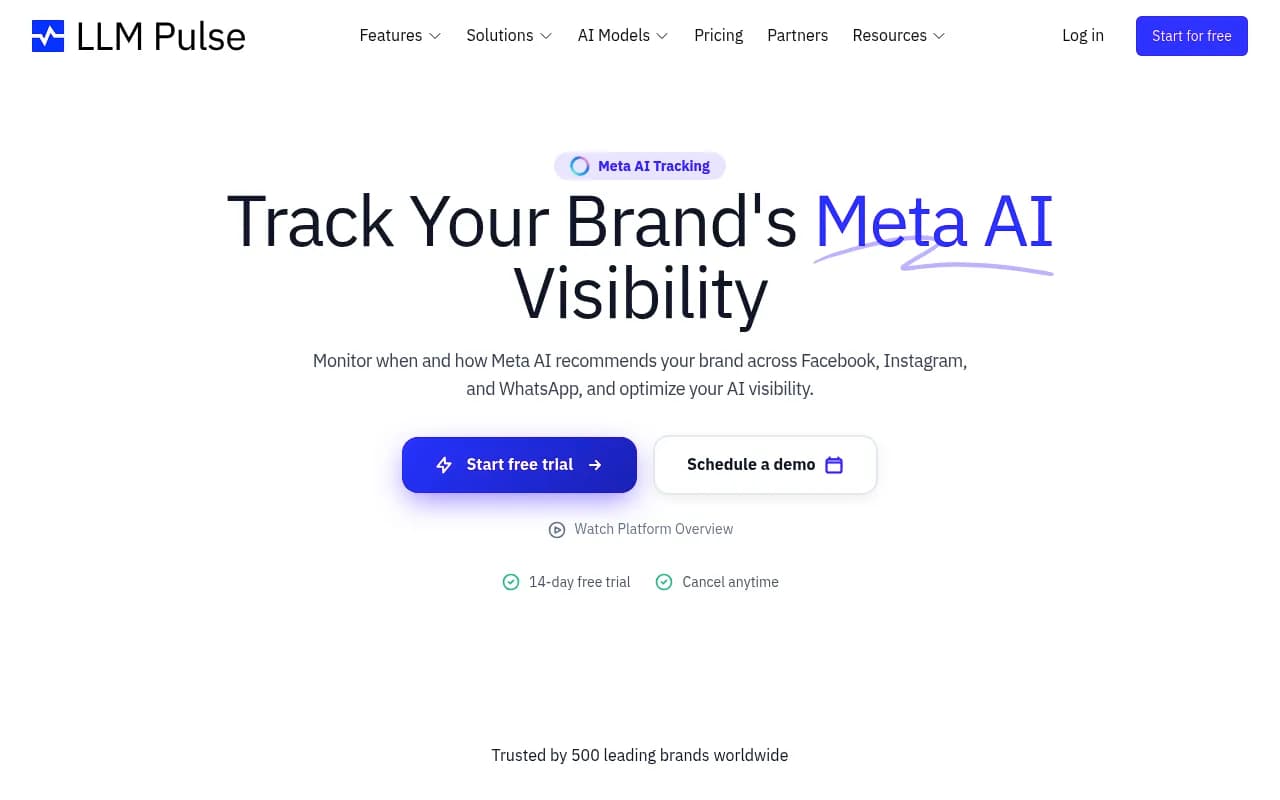
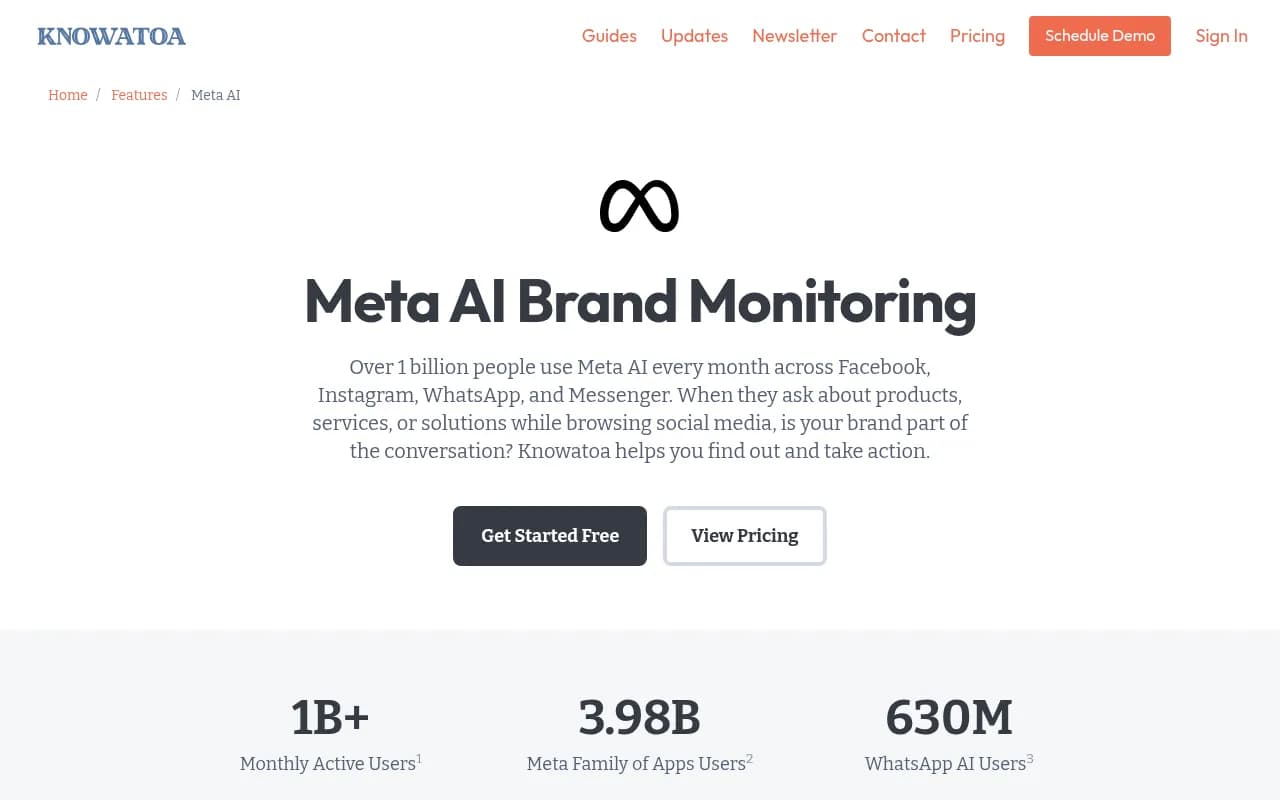
Platforms like LLM Pulse and Knowatoa focus specifically on Meta AI visibility, offering deeper insights into how your brand appears across Facebook, Instagram, WhatsApp, and Messenger contexts.
Define Your Tracking Parameters
Effective Meta AI monitoring requires setting up the right tracking framework:
Brand Mention Tracking
- Direct brand name mentions
- Product and service names
- Branded hashtags and campaigns
- Executive names and thought leadership
- Misspellings and common variations
Competitor Monitoring
- Direct competitor mentions
- Category leaders in your space
- Alternative solutions users might consider
- Comparison queries ("X vs Y")
Query Categories
- Product recommendations ("best X for Y")
- Problem-solving queries ("how to fix Z")
- Local discovery ("X near me")
- Buying intent ("where to buy X")
- Comparison shopping ("X alternatives")
Platform-Specific Contexts
- WhatsApp: Conversational recommendations during messaging
- Instagram: Visual product discovery and shopping
- Facebook: Local business and event queries
- Messenger: Customer service interactions
Configure Geographic and Language Settings
Meta AI responses vary significantly by location and language:
- Country-specific tracking: Monitor how Meta AI recommends your brand in each target market
- Language variations: Track mentions across English, Spanish, Hindi, Portuguese, and other languages
- City-level monitoring: For local businesses, track visibility in specific metropolitan areas
- Regional differences: Meta AI may recommend different brands based on regional availability
What to Track in Meta AI Results
Mention Frequency and Positioning
Appearance Rate
Track what percentage of relevant queries include your brand:
- Category queries ("best project management software")
- Problem-solving queries ("how to improve team collaboration")
- Comparison queries ("Asana vs Monday.com")
- Local queries ("marketing agencies in Austin")
Position in Responses
Meta AI typically lists 3-5 recommendations. Track whether you appear:
- First (primary recommendation)
- Second or third (strong consideration)
- Fourth or fifth (mentioned but not prioritized)
- Not mentioned at all
Mention Context
How does Meta AI frame your brand?
- "Best for [specific use case]"
- "Popular choice for [audience type]"
- "Affordable alternative to [competitor]"
- "Known for [key feature]"
Citation Sources
Meta AI builds responses from web sources, reviews, and social signals. Track which sources it cites when mentioning your brand:
- Your official website pages
- Third-party review sites (G2, Capterra, Trustpilot)
- News articles and press coverage
- Reddit discussions and community forums
- YouTube reviews and tutorials
- Social media posts and conversations
Understanding citation sources reveals what content influences Meta AI's understanding of your brand.
Sentiment and Tone Analysis
Meta AI's language matters as much as the mention itself:
Positive Indicators
- "Highly rated"
- "Popular choice"
- "Known for excellent [feature]"
- "Users love [benefit]"
Neutral Language
- "Option for [use case]"
- "Available in [category]"
- "Offers [features]"
Negative Signals
- "However, some users report [issue]"
- "May not be ideal for [scenario]"
- "Consider [competitor] if [limitation]"
Competitor Comparison Context
When Meta AI mentions your brand alongside competitors, analyze:
- Which competitors appear in the same responses
- How you're positioned relative to them
- What differentiators Meta AI highlights
- Whether you're framed as premium, budget, or mid-market
- Specific features or use cases where you're recommended over competitors
Advanced Meta AI Tracking Strategies
Platform-Specific Monitoring
Meta AI behaves differently across Facebook, Instagram, WhatsApp, and Messenger. Track visibility separately for each platform:
WhatsApp-Specific Tracking
- Conversational recommendation queries
- Group chat contexts ("what should we order for the team lunch?")
- Local business discovery ("find a plumber near me")
- Product recommendations during shopping discussions
Instagram-Specific Tracking
- Visual product discovery queries
- Shopping and fashion recommendations
- Creator tool and app suggestions
- Travel and lifestyle brand mentions
Facebook-Specific Tracking
- Local business queries
- Event planning recommendations
- Community and group-related suggestions
- Marketplace product recommendations
Messenger-Specific Tracking
- Customer service interaction quality
- Automated response accuracy
- Brand information retrieval
- Support query handling
Persona-Based Query Testing
Meta AI tailors responses based on user context. Test queries from different persona perspectives:
B2B Buyer Personas
- Enterprise decision-maker queries
- Small business owner questions
- Department-specific needs (marketing, sales, operations)
- Budget-conscious vs. feature-focused queries
B2C Consumer Personas
- First-time buyers vs. experienced users
- Budget-conscious vs. premium shoppers
- Different age demographics
- Geographic and cultural contexts
Use Case Scenarios
- Urgent need ("need X today")
- Research phase ("comparing options for X")
- Specific problem-solving ("X keeps breaking, need alternative")
- Upgrade consideration ("better than X")
Query Fan-Out Analysis
A single broad query branches into multiple sub-queries. Track how Meta AI handles:
Primary Query: "best project management software"
Fan-Out Queries:
- "best project management software for small teams"
- "best project management software for remote teams"
- "best project management software for agencies"
- "best free project management software"
- "best project management software for developers"
Your brand may appear for some fan-out queries but not others, revealing specific positioning opportunities.
Temporal Tracking
Meta AI's recommendations evolve as new content gets published and user behavior shifts:
Daily Monitoring
- Track high-value queries daily
- Catch immediate changes after content updates
- Monitor competitor launches and announcements
Weekly Trends
- Identify emerging query patterns
- Track visibility score changes
- Measure impact of marketing campaigns
Monthly Analysis
- Compare month-over-month visibility trends
- Assess seasonal patterns
- Evaluate long-term optimization efforts
Campaign-Specific Tracking
- Before/after product launches
- During PR and media campaigns
- Following major content publications
- After partnership announcements
Connecting Meta AI Visibility to Business Outcomes
Tracking mentions matters only if you can connect visibility to actual business results.
Traffic Attribution
Meta AI doesn't send direct referral traffic like traditional search engines. Users see recommendations within Meta apps and then:
- Search for your brand directly
- Visit your website
- Download your app
- Message your business page
Track these conversion paths:
Direct Traffic Spikes
Monitor direct website traffic for increases following Meta AI visibility improvements. Users who discover your brand through Meta AI often navigate directly to your site.
Brand Search Volume
Track branded search queries in Google Search Console and Google Analytics. Meta AI recommendations drive brand awareness that manifests as increased branded search.
App Downloads
For mobile apps, monitor download spikes in regions where Meta AI visibility is strong.
Social Media Engagement
Track increases in:
- Instagram profile visits
- Facebook page likes and follows
- WhatsApp business inquiries
- Messenger conversations
Conversion Tracking
Set up conversion tracking to measure Meta AI's impact on:
- Lead form submissions
- Free trial signups
- Demo requests
- Product purchases
- Customer inquiries
Use UTM parameters and campaign tracking to identify users who discovered your brand through AI-influenced channels.
Revenue Attribution
For B2B companies, track deals influenced by Meta AI visibility:
- Leads who mention discovering you through AI recommendations
- Customers who researched you on Meta platforms
- Deals where Meta AI appeared in the customer journey
For e-commerce, measure:
- Orders from users who visited via Meta platforms
- Average order value from AI-influenced traffic
- Customer lifetime value by acquisition channel
Optimizing Your Meta AI Visibility
Content Gap Analysis
Identify topics where competitors appear in Meta AI but you don't:
- Track competitor mentions: Monitor which queries surface competitor brands
- Analyze citation sources: See what content Meta AI cites for competitors
- Identify missing content: Find topics you haven't covered that competitors have
- Create targeted content: Publish articles, guides, and resources addressing those gaps
Platforms like Promptwatch offer Answer Gap Analysis that shows exactly which prompts competitors rank for but you don't, along with the specific content angles AI models are looking for.
Citation Source Optimization
Meta AI builds responses from authoritative sources. Strengthen your citation profile:
Owned Properties
- Comprehensive product documentation
- Detailed feature comparison pages
- Use case and industry-specific guides
- Customer success stories and case studies
- FAQ pages addressing common questions
Third-Party Validation
- G2, Capterra, and Trustpilot reviews
- Industry analyst reports and mentions
- Press coverage and media mentions
- Expert roundups and recommendation lists
- Award and recognition badges
Community Signals
- Reddit discussions and recommendations
- Quora answers mentioning your brand
- LinkedIn posts and thought leadership
- YouTube reviews and tutorials
- Podcast mentions and interviews
Structured Data Implementation
Help Meta AI understand your brand through structured data:
Schema.org Markup
- Organization schema with brand information
- Product schema with detailed specifications
- Review schema with aggregate ratings
- FAQ schema for common questions
- LocalBusiness schema for location-based businesses
Social Media Optimization
- Complete and accurate business profiles
- Consistent NAP (Name, Address, Phone) across platforms
- Rich media content (images, videos, stories)
- Active engagement and response to comments
- Regular posting and content updates
AI Crawler Optimization
Meta AI's crawlers (and other AI engines) need to access and understand your content:
Technical Requirements
- Allow AI crawlers in robots.txt (Meta-ExternalAgent, GPTBot, etc.)
- Ensure fast page load times
- Implement clean, semantic HTML
- Provide clear content hierarchy
- Use descriptive headings and subheadings
Content Structure
- Clear, concise answers to common questions
- Bulleted lists and scannable formatting
- Comparison tables and feature matrices
- Step-by-step guides and tutorials
- Concrete examples and use cases
Some platforms offer AI Crawler Logs that show exactly when AI engines visit your site, which pages they read, and any errors they encounter -- helping you fix indexing issues that might hurt your visibility.
Common Meta AI Tracking Mistakes to Avoid
Tracking Only Brand Name Mentions
Don't limit tracking to direct brand name queries. Most valuable visibility comes from:
- Category queries ("best [product type]")
- Problem-solving queries ("how to [solve problem]")
- Comparison queries ("[competitor] alternative")
- Use case queries ("[product type] for [specific need]")
Ignoring Platform Differences
Meta AI behaves differently on WhatsApp, Instagram, Facebook, and Messenger. Track each platform separately and optimize accordingly.
Focusing Only on Positive Mentions
Negative or neutral mentions reveal optimization opportunities. If Meta AI says "however, some users report [issue]", that's actionable feedback about perception problems to address.
Not Tracking Competitors
Your visibility exists in context. If competitors dominate Meta AI recommendations in your category, you're losing discovery opportunities regardless of your absolute mention count.
Neglecting Citation Sources
Knowing that Meta AI mentions your brand matters less than understanding why. Citation source analysis reveals what content and signals drive your visibility.
Treating All Queries Equally
A mention in a high-volume, high-intent query ("best CRM for small business") matters more than a mention in a low-volume, low-intent query ("history of CRM software"). Prioritize tracking and optimization based on business value.
Missing the Action Loop
Tracking without optimization is just data collection. The value comes from:
- Finding gaps where you're not visible
- Creating content that addresses those gaps
- Tracking improvements in visibility
- Measuring business impact
Tools and Platforms for Meta AI Tracking
Several platforms now offer Meta AI visibility tracking:
Multi-LLM Tracking Platforms
These platforms track Meta AI alongside ChatGPT, Perplexity, Gemini, and other AI engines:
- Promptwatch: Tracks 10 AI models including Meta AI, with content gap analysis, AI writing tools, and crawler log monitoring
- Profound: Enterprise platform tracking Meta AI and 9+ other AI search engines
- Otterly.AI: Monitors Meta AI, ChatGPT, Perplexity, and Google AI Overviews
- AthenaHQ: Tracks brand visibility across multiple AI platforms including Meta AI
Profound

Otterly.AI


Meta AI-Specific Platforms
These platforms focus specifically on Meta AI visibility:
- LLM Pulse: Dedicated Meta AI tracking across Facebook, Instagram, WhatsApp, and Messenger
- Knowatoa: Meta AI brand monitoring with platform-specific insights
Enterprise Solutions
For large organizations with complex tracking needs:
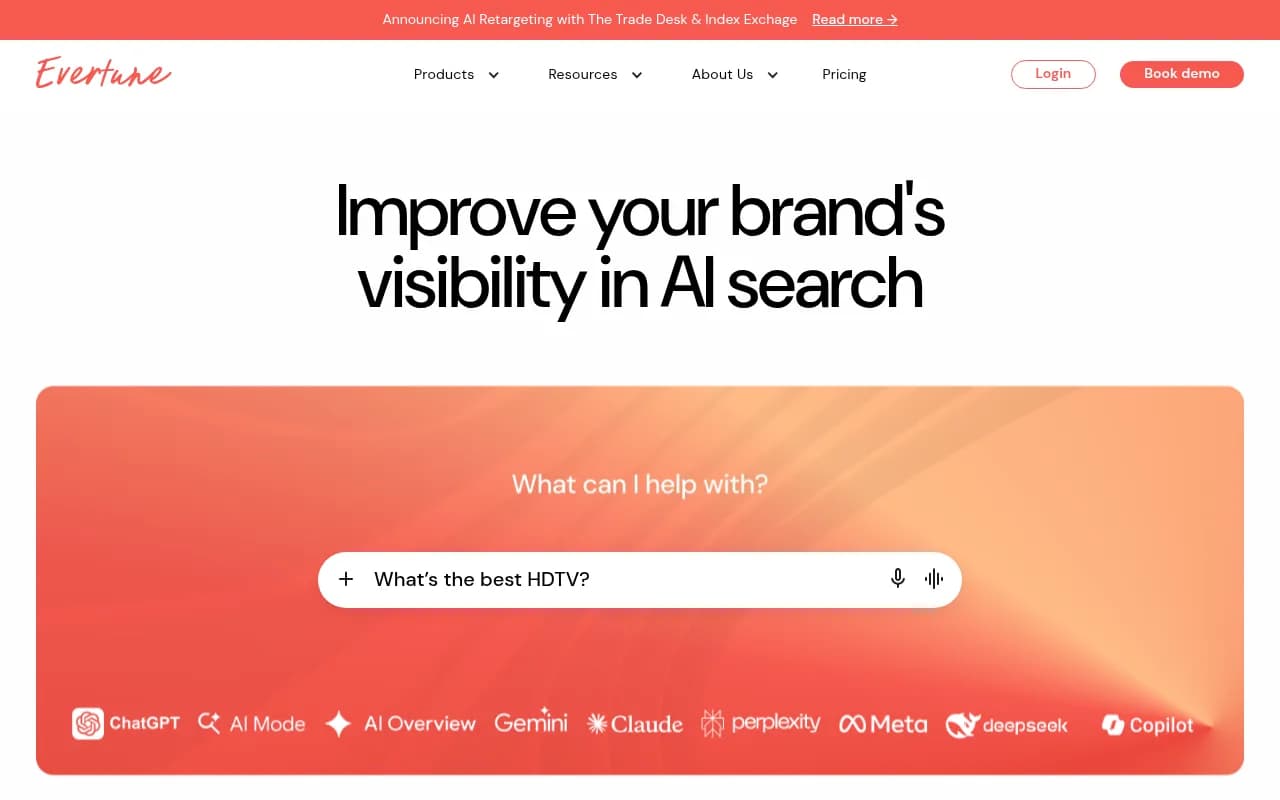
- Evertune: Fortune 500-focused GEO platform with Meta AI tracking
- Relixir: End-to-end GEO engine built for enterprise brands
- seoClarity: Enterprise SEO platform with AI search tracking capabilities
The Future of Meta AI Search Visibility
Meta AI's integration into social platforms represents a fundamental shift in how people discover brands. Unlike traditional search engines where users explicitly seek information, Meta AI captures users during social moments -- chatting with friends, browsing content, shopping.
This creates unique opportunities:
Social Context Recommendations
Your brand appears in conversations, not just search results. A recommendation from Meta AI carries social proof and immediate action potential.
Platform-Specific Optimization
Different Meta platforms serve different purposes. WhatsApp recommendations drive immediate action. Instagram recommendations influence visual product discovery. Facebook recommendations connect to local businesses and events.
Geographic Expansion
Meta AI's rapid growth in emerging markets (particularly India) creates new opportunities for brands targeting these regions.
Shopping Integration
As Meta AI becomes more deeply integrated with Instagram Shopping and Facebook Marketplace, product recommendations will directly influence purchase decisions within the platform.
Getting Started with Meta AI Tracking
Start tracking your Meta AI visibility today:
- Choose a tracking platform that monitors Meta AI alongside other LLM platforms
- Define your tracking parameters: brand mentions, competitor monitoring, key query categories
- Set up geographic and language tracking for your target markets
- Establish baseline visibility across high-value queries
- Identify content gaps where competitors appear but you don't
- Create optimized content addressing those gaps
- Monitor visibility changes and measure business impact
- Iterate and optimize based on what drives results
Meta AI's 1 billion monthly active users represent a massive opportunity for brand discovery. The brands that track, understand, and optimize their Meta AI visibility now will capture these discovery moments as AI-powered social search continues to grow.