Key takeaways
- Jasper's live pricing page now shows only two plans: Pro ($59/mo billed yearly, $69/mo monthly) and Business (custom, 12-month commitment required). The old $49 Creator tier still shows up on third-party trackers but isn't on Jasper's own site anymore.
- Real-world Business deployments tend to run $99-$125 per seat with a roughly 10-seat minimum, so budget $1,000+/month if you outgrow Pro.
- Copy.ai isn't really competing with Jasper on price anymore. Its Chat plan is $29/mo ($24 annual) for 5 seats of unlimited AI chat, but there's a huge gap to its next real tier (Agents at $249/mo, or legacy Growth/Expansion/Scale tiers north of $1,000/mo).
- Writesonic has repositioned entirely, from a cheap article generator into an AI-visibility/GEO platform. Its cheapest self-serve plan is $79/mo (annual), climbing to $399/mo for the tier that includes AI-search tracking.
- Rytr is the only genuinely budget option left standing: $9/mo for unlimited generation, and a real free plan with 10,000 characters/month.
Why this comparison keeps getting harder to write
A few years ago "Jasper vs Copy.ai vs Writesonic vs Rytr" was a straightforward bake-off. Four tools, all doing roughly the same job (write marketing copy with AI), differentiated mostly by template count and tone-of-voice settings. You'd pick based on price and move on.
That comparison doesn't really exist anymore. I pulled each vendor's live pricing page in 2026 and the products have drifted apart so much that comparing them purely on "dollars per month" misses the point. Jasper sells itself as a marketing operations platform with agents and brand governance. Copy.ai sells GTM automation workflows. Writesonic has rebuilt itself as an AI search visibility tracker with content generation bolted on. Rytr is... still Rytr, a straightforward writing tool, which is either refreshing or a red flag depending on what you need.
So the honest answer to "is Jasper worth it" depends entirely on whether you're buying a writing tool or a marketing system. Let's get into the actual numbers first, then sort out who each one is really for.
Jasper AI pricing in 2026, verified
Jasper's pricing page (jasper.ai/pricing) lists exactly two options now:
- Pro: $59/month billed annually, or $69/month billed monthly. One seat, with the option to add more. Includes Jasper IQ (Brand Voice, Knowledge Assets, Audiences), Canvas editor, and access to a library of marketing agents. A 7-day free trial is available, which is on the short side compared to competitors.
- Business: Custom pricing, no public number, and it requires a 12-month commitment with no monthly billing option. Multiple independent trackers (GetSpike, Vendr) put real-world Business quotes at $99-$125 per seat per month, usually with a minimum around 10 seats. That means a typical Business deployment starts somewhere around $1,000-$1,250/month, not a small-team price point at all.
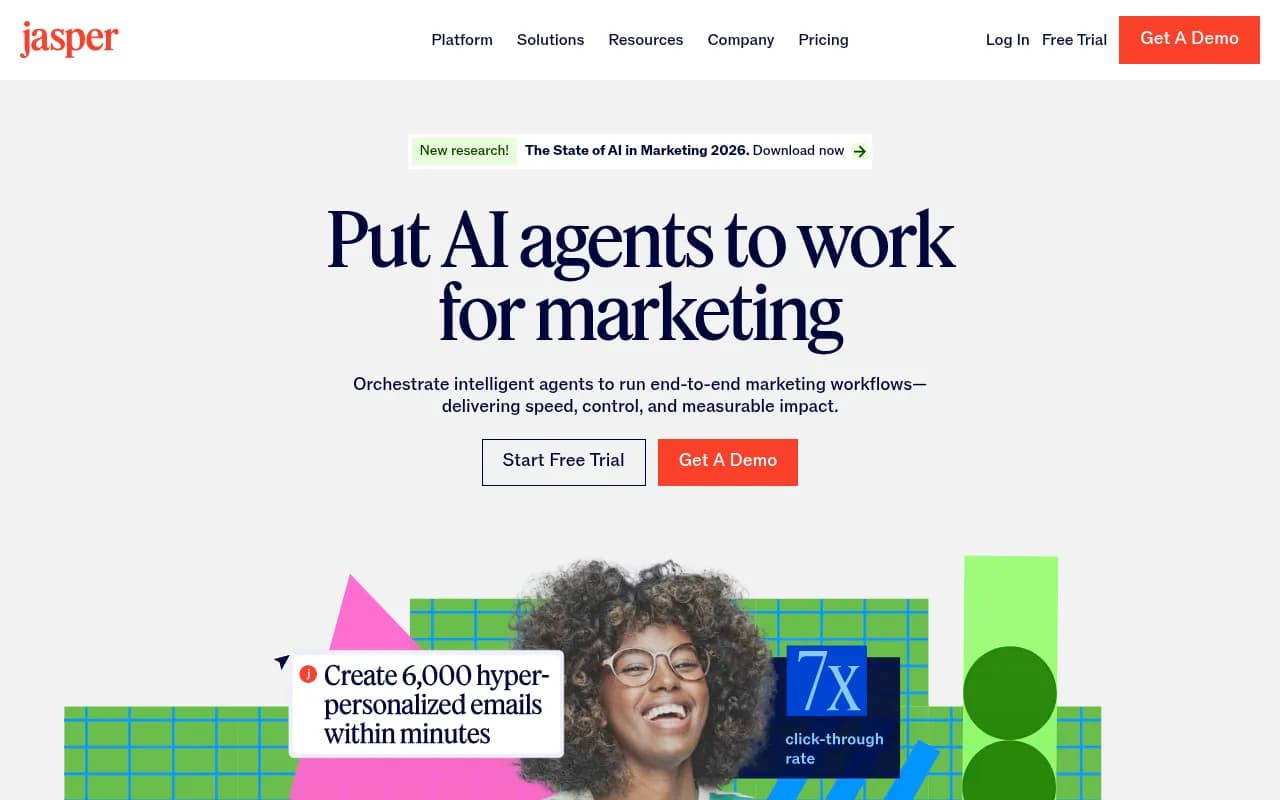
A few things worth flagging before you sign up. Third-party sites like DemandSage and Spendflo still list a $49/month Creator plan as Jasper's entry tier, but it's not on Jasper's current live pricing page. It may still be reachable through certain signup flows or legacy accounts, but don't assume you'll get it at checkout, ask support directly if that price is what drew you in.
Also, Jasper's richest features (unlimited Brand Voices, Knowledge Assets, and the no-code Studio agent builder) are Business-only. If you're on Pro, you're working with a capped version of the product, roughly 2-3 Brand Voices and 5-10 Knowledge Assets depending on which review you trust (the numbers conflict slightly across sources, which itself tells you something about how often Jasper tweaks its limits).
One genuinely new thing in 2026: Jasper added a GEO Agent for monitoring AI-search citations and sentiment, gated behind Business pricing starting around $125/seat/month. It's Jasper's answer to the same AI-visibility trend that pushed Writesonic to rebuild its entire product. If AI-search visibility is actually your priority rather than a nice-to-have bolted onto a writing tool, a dedicated platform like Promptwatch is going to go a lot deeper. Promptwatch tracks citations across ChatGPT, Gemini, Claude, Perplexity, and Google AI Overviews with crawler logs, content gap analysis, and automated content agents built specifically for that job, rather than as an add-on to a copywriting tool.

Copy.ai pricing: the $29 plan and the $1,000 cliff
Copy.ai's official page (copy.ai/prices) shows a Chat plan at $29/month monthly or $24/month billed annually, covering 5 seats with unlimited words in chat across OpenAI, Anthropic, and Gemini models. Per seat, that's under $5/month if you actually use all five logins, which makes it one of the cheapest multi-seat AI tools around on paper.

The catch is what happens when you need more than chat. Copy.ai's public page jumps straight from Chat to Enterprise (custom pricing), but its help center documents a middle tier called Agents at $249/month for up to 10 seats and 10,000 workflow credits. Older material referenced Growth ($1,000/mo), Expansion ($2,000/mo), and Scale ($3,000/mo) tiers that no longer appear on the live page, though the underlying page markup reportedly still contains them. Treat those as legacy reference points, not current quotes, but the pattern is clear either way: there's a real gap between the cheap Chat plan and anything resembling team automation. If your five-person team plans to grow into workflow automation, budget for that jump before you commit.
Writesonic pricing: no longer the cheap option
This is the biggest repositioning in the group. Writesonic's official pricing page shows Starter at $79/month (billed annually, $99 monthly), Basic at $199/month ($249 monthly), and Growth at $399/month (~$499 monthly), each explicitly marketed around "AI visibility" and "GEO" rather than article volume.

Starter gives you 15 AI articles/month, 10 site audits, and tracking of 50 prompts/50 answers a day across ChatGPT, Gemini, and Google AI Overviews for a single user and project. Growth expands that to 50 articles/month, 200 prompts, sentiment analysis, and a trial Action Center for recommended fixes. There's no permanent free plan, just a trial with inconsistent reporting across third-party sites about how many words or credits it actually includes.
If you read an older comparison calling Writesonic "the affordable one," that's stale. It's still cheaper than Jasper Business, but it's no longer competing with Rytr on price, and it's selling a different product entirely now.
Rytr pricing: still the budget option
Rytr's pricing page hasn't drifted the way the others have. Three tiers: Free (10,000 characters/month, no credit card), Unlimited (around $9/month, or $7.50 billed annually), and Premium (around $29/month, or $24 billed annually).
Unlimited gets you unlimited generation with one tone-of-voice match and 50 plagiarism checks a month. Premium adds multiple tone matches (useful if you write for several brands or clients), 100 plagiarism checks, and 35+ languages. Annual billing works out to roughly two months free. There's no team tier with seat discounts, just a single-user product through and through, which is honestly refreshing after wading through Jasper's seat math and Copy.ai's tier gaps.
Pricing comparison table
| Tool | Entry paid plan | Free plan | Best for | 2026 positioning |
|---|---|---|---|---|
| Jasper | Pro $59-69/mo, 1 seat | 7-day trial only | Brand-governed content teams | Marketing OS with agents and Canvas |
| Copy.ai | Chat $24-29/mo, 5 seats | No platform free plan | Small teams needing multi-model chat | GTM chat + expensive workflow tiers |
| Writesonic | Starter $79/mo annual | Trial only | Teams tracking AI search visibility | AI visibility platform with content attached |
| Rytr | Unlimited ~$9/mo | Yes, 10K chars/mo | Freelancers and solo writers on a budget | Straightforward writing assistant |
So, is Jasper worth $59-69/month?
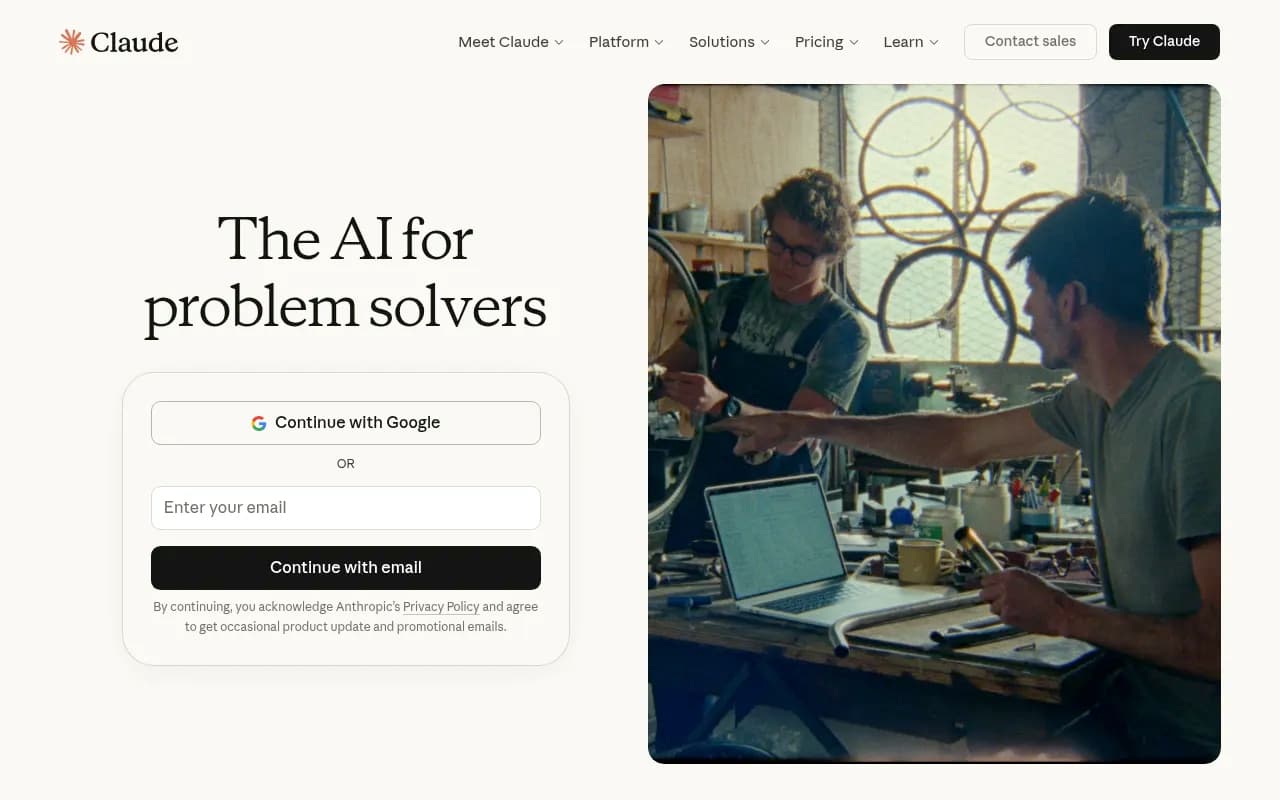
Honestly, it depends on what you're comparing it to. Against a general-purpose assistant like ChatGPT or Claude at $20/month, Jasper is a hard sell for solo writers, you're paying roughly 3x for templates and brand voice settings you could partially replicate with a good custom instructions prompt. Several reviewers, including Cybernews and Water Bear Learning, flag Jasper's cost relative to what small teams and startups actually get for it as the most common complaint.
But against Copy.ai's automation tiers or Writesonic's GEO-focused plans, Jasper's $59-69 Pro tier actually looks reasonable, it's the cheapest entry point of the three "platform" products in this comparison. Where Jasper earns its price is multi-person brand consistency. Unite.AI's hands-on testing found Jasper produced more consistent output across a ten-person team specifically because Jasper IQ enforces brand voice settings at the account level, something Copy.ai and Writesonic do less rigorously.
The honest limitation, repeated by several independent reviewers: Jasper has no keyword research, no rank tracking, and no ad performance data built in. It's a content production layer, not a full marketing stack. If you need those things too, you're paying for Jasper plus two or three other tools regardless of which pricing tier you pick.
Quick recommendations
If you're a solo creator or freelancer on a tight budget, start with Rytr's $9 plan or the free tier before paying for anything else. If you're a 5-person team that mostly needs a shared AI chat interface with multiple model access, Copy.ai's Chat plan at $24-29/month covers that better than Jasper's single-seat Pro plan. If brand voice consistency across a content team is your actual problem, Jasper Pro is worth the premium over Rytr, just budget separately if you eventually need Business-tier seat pricing.
And if what you're really trying to solve is "how do we know if AI search engines are citing us at all," don't buy a writing tool for that job. Writesonic and Jasper have both bolted AI-visibility features onto their platforms in 2026, but neither was built around it the way a dedicated GEO platform is. That's worth comparing separately before you commit a writing-tool budget to solving a visibility problem. You can browse more purpose-built options in the GEO software directory at bestgeosoftware.com if that's the gap you're actually trying to close.