Key takeaways
- Otterly.AI tracks daily on every plan. I found no hourly or 6-hour option in its pricing or comparison pages.
- Truly faster monitoring is rare. The verified options are Peec AI (hourly, Enterprise only), Rankscale (hourly or bi-hourly scheduling, credit-based), and Promptwatch (every 12, 6, or 1 hours on its Business and Agency Scale plans).
- Cost scales as prompts x models x frequency. Running hourly can multiply your usage by up to 24x, so put fast cadence on a small set of priority prompts.
- Most citations decay over weeks, not hours, so daily tracking is enough for most trend work. Fast cadence earns its price for launches, incidents, and measuring answer volatility.
- Vendor comparison pages are biased. Confirm cadence on each vendor's own pricing page before you buy.
Why people look for faster tracking than Otterly.AI
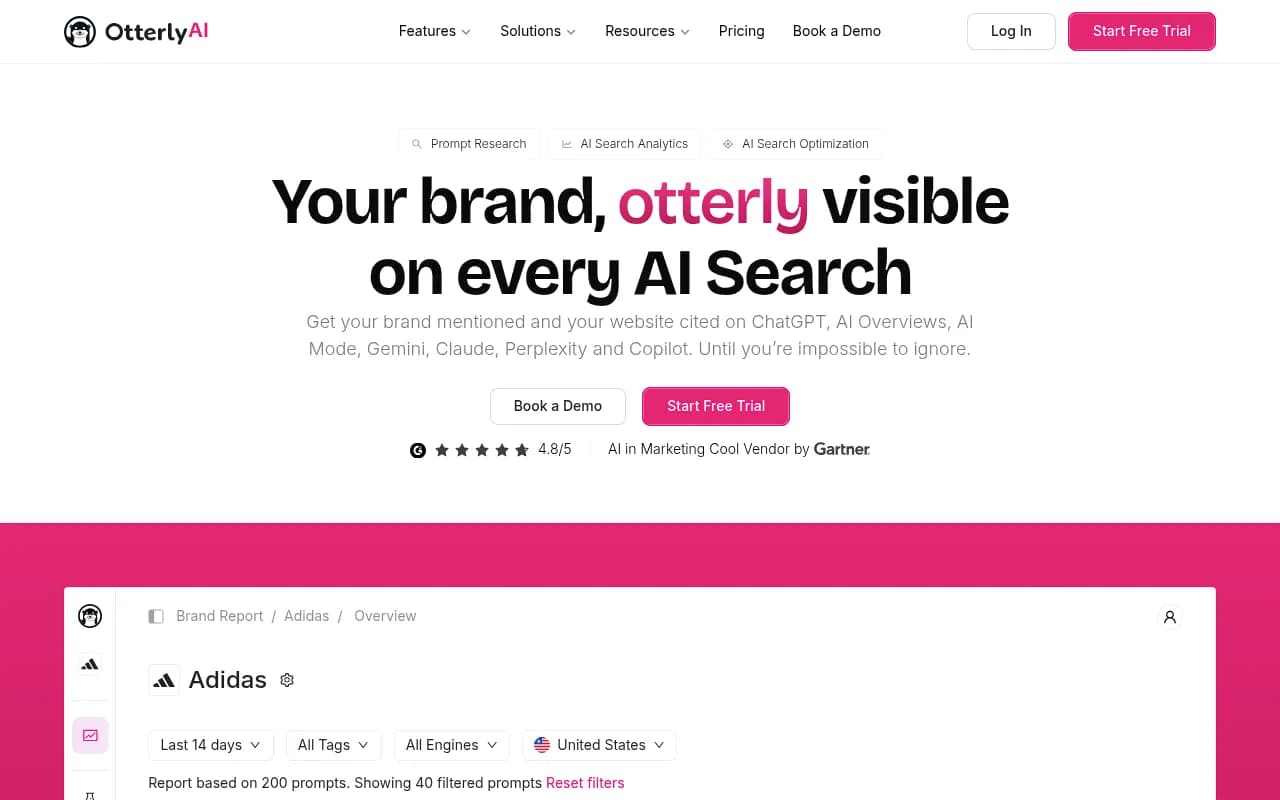
Otterly.AI is a sensible starting point for AI visibility monitoring. Lite is $29/mo with 15 prompts, Standard is $189/mo with 100 prompts across four engines, and Premium is $489/mo with 400 prompts. Billing is monthly, with 15% off annually. Standard adds 50+ countries, 5,000 GEO URL audits a month, a Looker Studio connector, and API and MCP access.
Otterly.AI

The limit is cadence. Every plan runs once a day. If you are launching a product, handling a PR incident, or trying to see how much an answer swings between morning and evening, a single daily snapshot hides a lot. A few other gaps come up in the same conversations: Gemini and AI Mode are sold as add-ons (a third-party claim puts them at $9 to $149 a month depending on plan), and extra prompts come in blocks of 100.
One caveat on sourcing. Much of what is written about Otterly alternatives comes from Otterly's own comparison pages or from competitors' blogs. Both are biased, so I have leaned on each vendor's own documentation where I could and flagged the rest.
Do you actually need hourly or 6-hour tracking?
Honestly, most teams do not. Promptwatch Data has no report on tracking frequency, but its content half-life report is a useful reality check. It followed every page ChatGPT cited on July 6, 2026 for 90 days (published Oct 5, 2026). See What Is the Half-Life of Content in ChatGPT? for the full breakdown. The short version:
- Landing pages and docs: 78% and 76% were still cited at 30 days, and 69% and 67% at 60 days.
- Comparison pages: 72% at 30 days, 63% at 60 days.
- Product pages, reviews, and how-tos: about 55% still cited at 60 days, with half-lives of 74 to 77 days.
- News pages: almost 25% were never cited again after day 0, half were gone after 36 days, and 41% were still cited at day 60.
Citations for most content types move over weeks. That means daily tracking handles trend work fine. Hourly or 6-hour checks help in three situations:
- Launches and campaigns, where you want to see the first 48 hours at fine resolution.
- Incident detection, such as an AI model suddenly saying something wrong or negative about you.
- Volatility measurement, where you want an average over many runs instead of one noisy daily sample.
If none of those describe you, save the money and stay on daily.
Tools that track faster than Otterly.AI
Peec AI
Peec AI offers hourly, daily, or weekly intervals. The hourly option can run every hour, every 6 hours, or at any interval you set, but it is Enterprise-only. You can set frequency per project, for example daily for priority projects and weekly for the rest, and Peec says this is self-service with no support ticket. Models can also be chosen per project, and prompts allocated across projects. Peec runs free 7-day pitch projects. A third-party source lists its Starter plan at 50 prompts with daily tracking, and one comparison cites $95 as its like-for-like entry price.

Good fit if you want per-project control and can talk to sales. Bad fit if you wanted hourly on a self-serve budget plan.
Rankscale
Rankscale lets you schedule prompt checks from hourly or bi-hourly up to monthly, and one source says this applies on all plans. It tracks 17+ engines. Pricing is credit-based: entry is around $17 to $20 a month (sources disagree, and one says yearly billing only), and Pro is $99 ($84 annual). Pro tracks up to 4,800 answers and Pro+ up to 12,000.
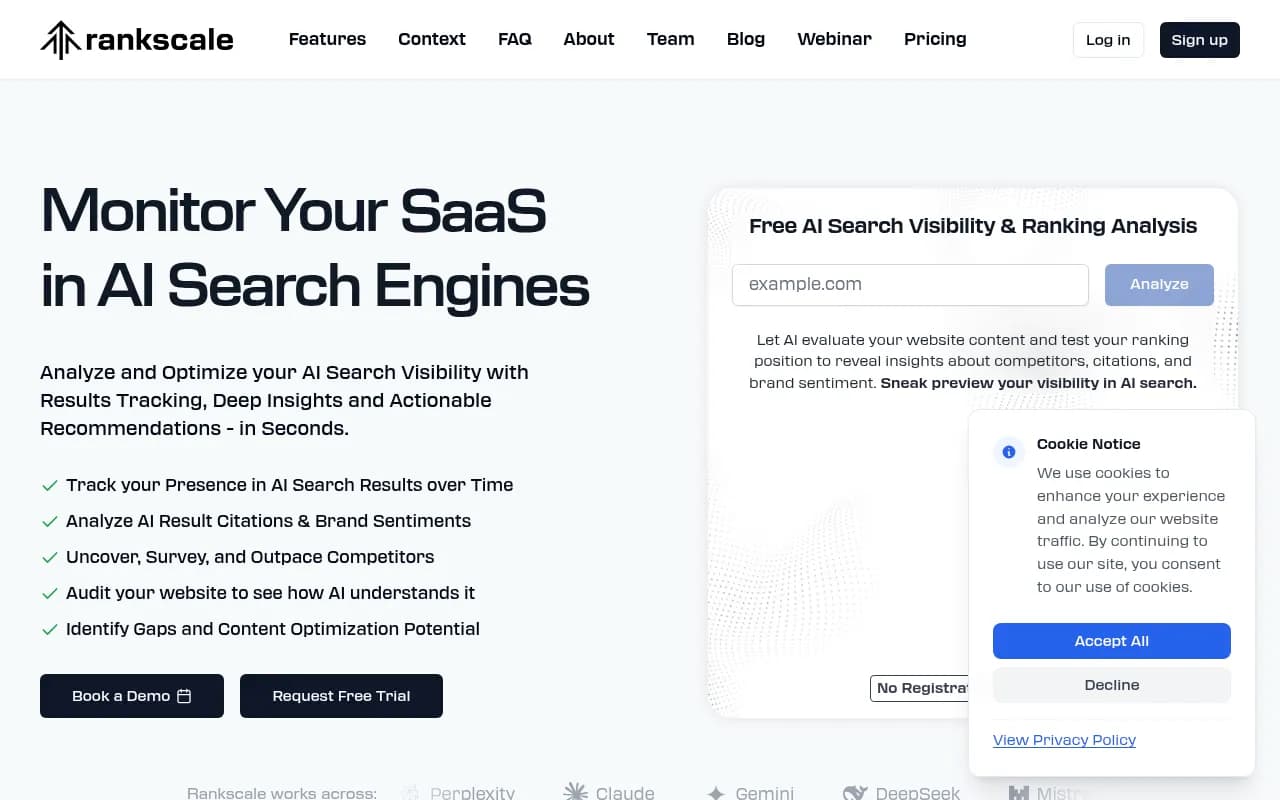
The pitfall is credits. They are consumed per prompt, per model, per run, so faster frequency burns through them quickly. G2 reviewers also describe the UI as overwhelming. It is the cheapest way I found to get hourly checks, as long as you keep the prompt set tight.
Promptwatch
Promptwatch runs prompts daily on every plan. On Business ($579/mo) and Agency Scale ($799/mo), a monitor can run every 12, 6, or 1 hours instead. Enterprise gets faster tracking on request. Note that the research I gathered from third-party sources found no hourly option for Promptwatch, but its own plan details do list one on those tiers, so confirm on promptwatch.com/pricing before buying.

Faster cadence is only part of the pitch. It collects data from the real interfaces of ChatGPT, Gemini, Perplexity, Google AI Overviews, and others, rather than relying on API outputs, and it goes past monitoring: IP-verified AI crawler logs show whether bots can read your pages, and the Content Agent writes and publishes fixes. The Action Board turns the data into a prioritized to-do list. If you only need a number every hour, that is overkill. If you need to find the cause and fix it, it is the more complete stack. The free AI visibility report and the 7-day free trial on monthly billing are the low-risk ways to try it. There is also a Promptwatch vs Otterly comparison page.
Alternatives that are slower or the same
These come up in every Otterly alternatives list, but they will not solve a cadence problem.
Scrunch
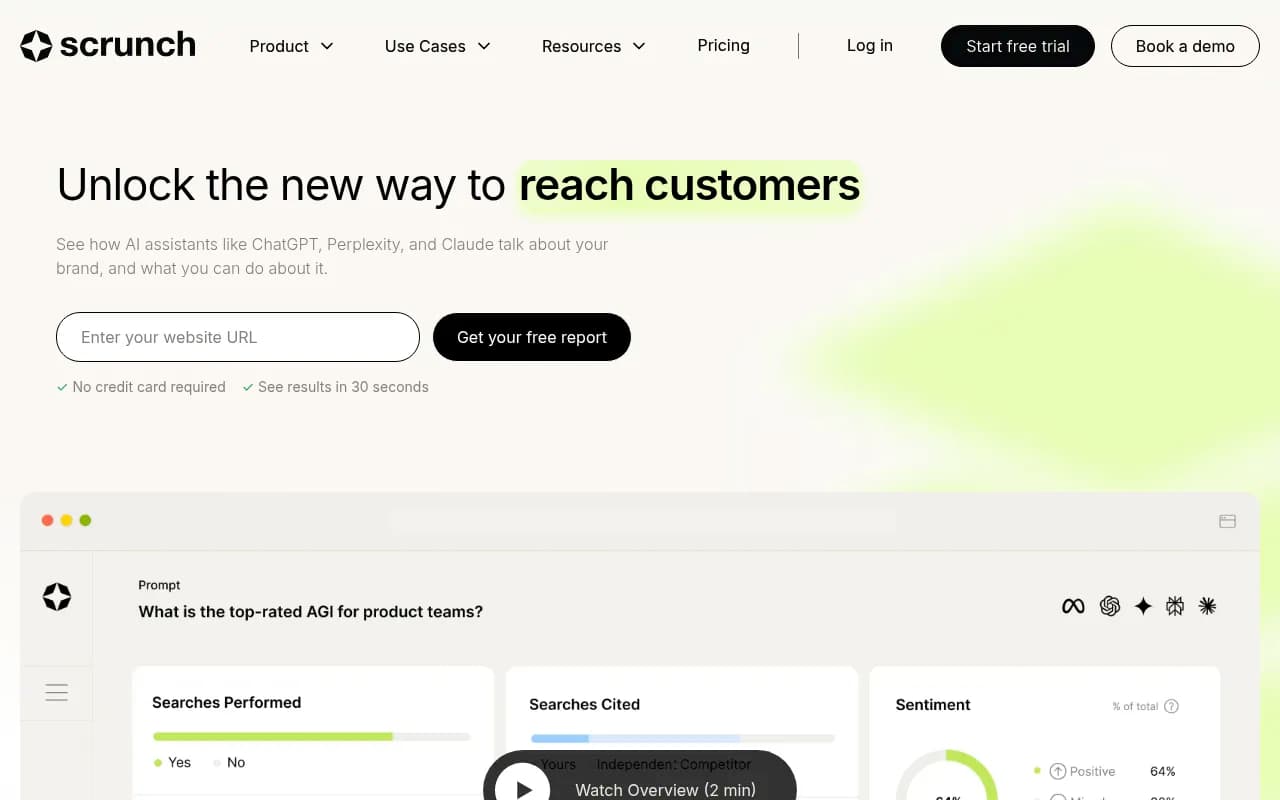
Scrunch runs daily for a prompt's first 14 days, then every 72 hours. That is slower than Otterly. Core costs $250/mo with 125 prompts and four engines.
Profound
Profound is daily. Pricing is inconsistent across sources: Otterly's page lists Starter at $99 and Growth at $399, while others say custom pricing with a free 7-day trial. Check directly.
Profound

AthenaHQ
AthenaHQ schedules by selected days of the week or repeating every 1 to 4 weeks, so it is slower than daily. It has a free Essential tier with 300 credits and a Starter plan at $295/mo.

Side-by-side comparison
| Tool | Fastest cadence | Which plans | Entry price (per source) | Watch out for |
|---|---|---|---|---|
| Otterly.AI | Daily | All | $29/mo (Lite) | No sub-daily option |
| Peec AI | Hourly, 6-hour, custom | Enterprise only | About $95 (Starter, daily) | Hourly requires Enterprise |
| Rankscale | Hourly or bi-hourly | Reportedly all | About $17 to $20 | Credits drain fast, busy UI |
| Promptwatch | Every 12, 6, or 1 hours | Business, Agency Scale, Enterprise | $95/mo (daily) | Fast cadence starts at $579/mo |
| Scrunch | Daily, then every 72 hours | All | $250/mo | Slower after 14 days |
| Profound | Daily | All | Varies by source | Pricing unclear |
| AthenaHQ | Weekly-ish scheduling | All | $295/mo (Starter) | Slower than daily |
Prices come from vendor pages and third-party roundups dated around October 2026. They drift, so verify.
The math that catches people out
Faster tracking is not priced per day, it is priced in usage. A rough model:
usage = prompts x models x runs per day
Take 50 prompts across 4 models. Daily is 200 responses a day, about 6,000 a month. Hourly is 4,800 a day, about 144,000 a month. That is why Peec gates hourly behind Enterprise and why Rankscale's credit pools disappear quickly. Promptwatch's Business plan includes 42,000 responses a month, so even there you would not run 350 prompts hourly across every model.
The sane approach is a split:
- Keep your broad prompt set (the 100 to 300 that define your category) on daily.
- Create a small monitor, maybe 10 to 20 prompts, for the things that really move: your brand name, your top competitor comparison, your launch keywords. Run that one every 6 hours or hourly.
- Drop the fast monitor back to daily when the launch or incident is over.
Peec's per-project frequency and Promptwatch's per-monitor cadence both support this. Rankscale supports it through its scheduling.
How to choose
If you want hourly checks on a budget and can live with credit management, Rankscale is the cheapest route. If you already have an Enterprise-level budget and like per-project control, Peec AI fits. If you want fast cadence plus the diagnosis and fixing work (crawler logs, content gaps, publishing), Promptwatch's Business plan is where that bundle starts. If daily is fine, which for most teams it is, Otterly's $29 to $189 range is hard to beat on price, and you can ignore this whole guide.
Whatever you pick, run a one-week test with your real prompts before committing. Check that the cadence you were promised actually shows up in the data, because vendor comparison pages (including Otterly's own) are marketing. For more options in the category, the GEO software directory at bestgeosoftware.com lists a wider set of trackers.

Bottom line
Otterly.AI is daily-only. Of the tools I could verify, Peec AI (Enterprise), Rankscale (hourly or bi-hourly), and Promptwatch (Business and up) are the ones that go faster. Start by deciding whether you need sub-daily data at all, using the half-life numbers above. If you do, buy it for a small set of priority prompts and leave the rest on daily.