Key takeaways
- Peec.ai is a solid AI visibility monitoring platform with clean UI, daily data refreshes, and support for up to 10 LLMs -- but base plans only include 3 models, with others as paid add-ons
- It tracks citation URLs, competitor share of voice, and brand mention frequency across ChatGPT, Perplexity, Gemini, and others
- The core limitation: Peec.ai is a monitoring tool, not an optimization tool. It shows you where you're invisible but doesn't help you fix it
- Pricing starts at €85/month, with a 7-day free trial available
- Teams that need to close the gap between "we see the problem" and "we fixed it" will likely need to pair Peec.ai with additional tools or look at platforms that include content generation and optimization workflows
AI visibility monitoring has gone from a niche experiment to a real budget line item for marketing teams in 2026. The question isn't whether to track your brand's presence in ChatGPT and Perplexity anymore -- it's which tool actually helps you do something about it.
Peec.ai sits in an interesting position in this market. It's one of the earlier entrants, it's well-funded, and it has a genuinely clean product. But after testing it across multiple use cases and comparing it against the broader category, the picture is more nuanced than the marketing suggests.
Here's what I found.
What Peec.ai actually does
Peec.ai tracks how often your brand appears when AI models answer questions relevant to your category. You define a set of prompts -- questions your buyers might ask ChatGPT or Perplexity -- and Peec.ai runs those prompts daily across whichever LLMs you've configured. It then reports back on:
- Whether your brand was mentioned
- Where in the response it appeared (first mention, later mention, etc.)
- Which URLs were cited as sources
- How your share of voice compares to competitors
- Sentiment around your brand mentions
The citation URL feature is genuinely useful. Knowing that ChatGPT is pulling from a specific third-party review site or a Reddit thread to justify a competitor recommendation tells you something actionable -- even if Peec.ai doesn't tell you what to do with that information.
The UI is clean and presentation-ready. Several reviewers noted you could drop the dashboard straight into a CMO report without embarrassment. That's not a trivial thing when you're trying to get executive buy-in for a new category of spend.

LLM coverage: the fine print matters
Peec.ai advertises support for up to 10 AI models, which sounds comprehensive. The reality is more layered. Base plans include 3 LLMs -- typically ChatGPT, Perplexity, and Google AI Overviews. Claude, DeepSeek, Grok, and others are available as paid add-ons.
This isn't necessarily a dealbreaker, but it's worth knowing before you sign up expecting full coverage out of the box. If your buyers are concentrated on two or three platforms, the base plan might be perfectly adequate. If you're trying to build a complete picture of AI search presence across the ecosystem, the costs add up.
For reference, here's how Peec.ai's model coverage compares to a few alternatives:
| Platform | LLMs tracked | Starting price | Content generation | Crawler logs |
|---|---|---|---|---|
| Peec.ai | Up to 10 (3 in base) | €85/mo | No | No |
| Otterly.AI | 4 (base) | $29/mo | No | No |
| Profound | Up to 10 (Enterprise) | $99/mo | No | No |
| Promptwatch | 10+ | $99/mo | Yes | Yes |
| AthenaHQ | Varies | Custom | No | No |

The multi-language and multi-region support is one of Peec.ai's stronger differentiators. You can monitor AI responses in different languages and configure region-specific personas, which matters if you're running campaigns across European or APAC markets where AI search behavior differs meaningfully from the US.
What the monitoring actually looks like
When you set up a project in Peec.ai, you define:
- Your brand name and competitors
- A set of prompts (questions your buyers would ask)
- Which LLMs to monitor
- Language and region settings
The platform then runs those prompts on a daily cadence and populates your dashboard with visibility scores, mention rates, and source data. The competitor gap analysis shows you which sources are citing your rivals but not you -- a useful starting point for figuring out where to focus.
The prompt limit on the Starter plan (50 prompts) is restrictive for any competitive category. If you're in B2B SaaS with a dozen meaningful use cases and five competitors, 50 prompts fills up fast. You'll need to prioritize carefully or upgrade.
Where Peec.ai stops short
The honest version of this review has to address the monitoring-only problem directly.
Peec.ai tells you that ChatGPT isn't recommending your brand for a given query. It shows you which competitors are appearing instead. It surfaces the URLs those AI models are citing. And then it stops.
There's no content brief generator. No AI writing tool. No optimization workflow. No crawler logs showing you which pages AI bots are actually visiting on your site. No traffic attribution to connect visibility scores to actual pipeline.
This is a pattern across most of the monitoring-only tools in this category -- Otterly.AI, Peec.ai, AthenaHQ, and similar platforms are built around the dashboard, not the fix. You get a clear picture of the problem, then you're on your own to solve it.
For some teams, that's fine. If you have an in-house content team that can take citation gap data and run with it, Peec.ai gives them good raw material. If you're a consultant who needs to show clients where they stand before proposing a project, the reporting is solid.
But if you're a marketing team that needs to actually move the needle -- not just report on it -- you'll hit a ceiling quickly.
Otterly.AI


Pricing breakdown
Peec.ai's pricing starts at €85/month (roughly $92 at current rates), which is competitive for the category. The 7-day free trial is one of the few in the space that lets you actually test the product before committing -- most competitors either have no trial or require a demo call first.
The add-on model for additional LLMs means your effective cost can climb depending on how many models you need. Teams monitoring across 6-7 LLMs will pay meaningfully more than the headline price suggests.
There's no public pricing page that breaks out every tier and add-on clearly, which makes it harder to budget accurately without talking to sales. That's a minor friction point but worth flagging.
Who Peec.ai is actually built for
After testing it across different use cases, Peec.ai fits best for:
B2B marketing teams doing initial AI visibility audits. If you're trying to establish a baseline -- "are we even showing up in AI search?" -- Peec.ai gives you that answer quickly and presents it in a format that works for executive reporting.
Agencies presenting AI visibility data to clients. The dashboard is clean enough to use in client-facing reports. The competitor share-of-voice data makes for compelling slides.
Teams in multi-language markets. The regional and language configuration is genuinely better than most competitors. If you're tracking AI visibility across French, German, and Spanish markets simultaneously, Peec.ai handles that more gracefully than tools built primarily for English-language US markets.
Teams with separate content execution resources. If you have writers or an agency who can act on the gap data, Peec.ai's monitoring gives them a clear brief. The tool doesn't need to generate content if someone else is doing that work.
It's a harder fit for teams that need to close the loop between "we see the gap" and "we fixed it" without adding more tools or headcount to the stack.
How it compares to the broader market
The AI visibility tool market in 2026 has roughly three tiers:
Monitoring-only tools (Peec.ai, Otterly.AI, AthenaHQ, Peec.ai): Show you where you stand. Stop there.
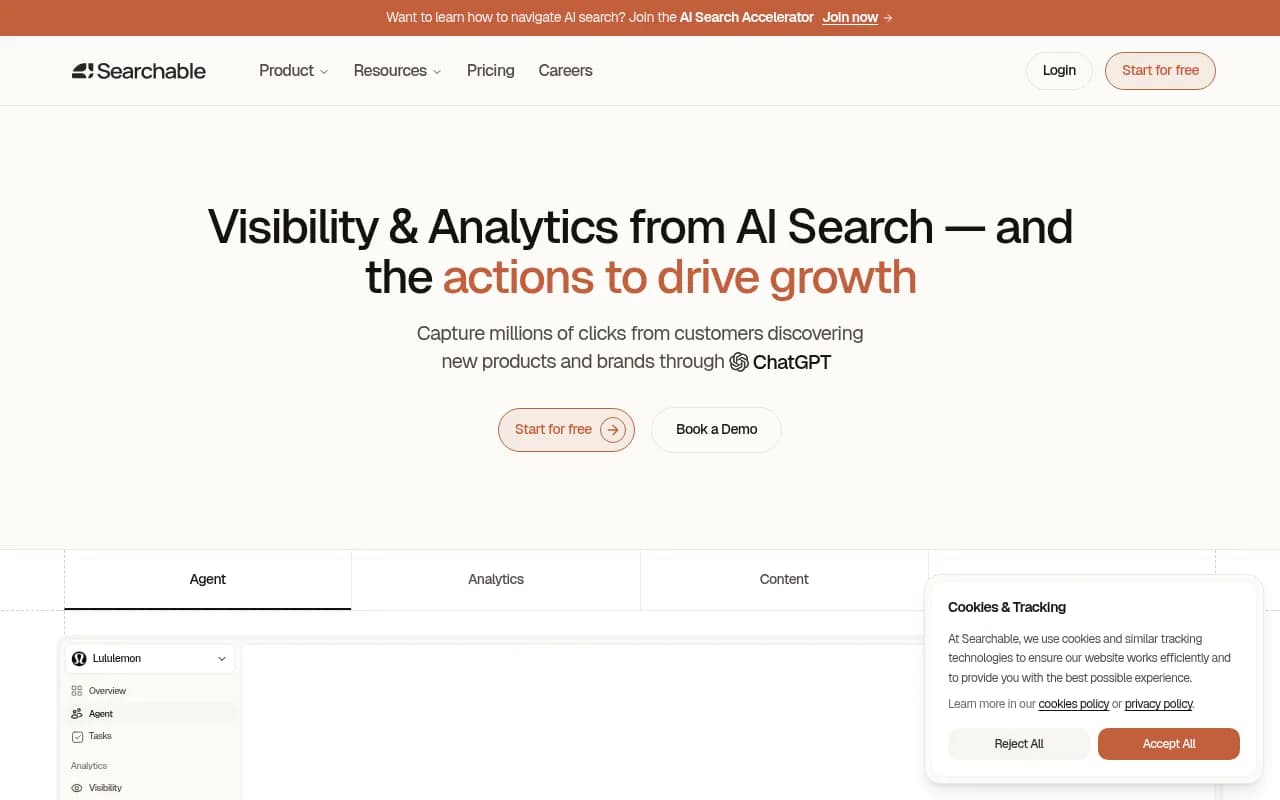
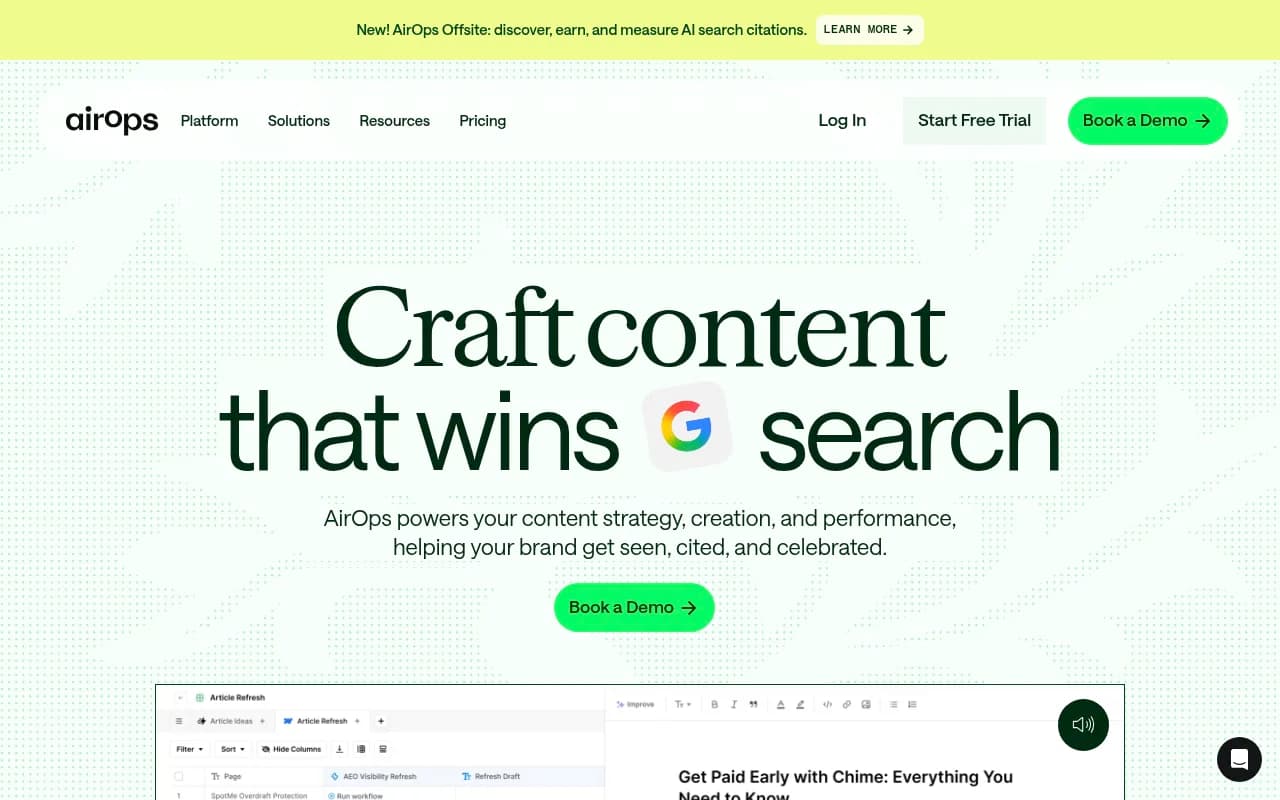
Monitoring plus some content features (Searchable, AirOps): Add content generation or optimization workflows on top of tracking data.
End-to-end platforms (Promptwatch): Track visibility, identify gaps, generate content engineered to get cited, monitor crawler activity, and attribute traffic back to revenue.
Peec.ai sits firmly in the first tier. That's not a criticism -- it does monitoring well. But it's useful to know which tier you're buying into before you commit.
The comparison that comes up most often is Peec.ai versus Profound. Both are monitoring-focused, both support multiple LLMs, and both have clean interfaces. Profound skews more toward enterprise prompt research and has deeper functionality for large-scale prompt libraries. Peec.ai is more accessible at the entry level and has better multi-language support. Neither generates content or closes the optimization loop.
Profound

The multi-language angle: where Peec.ai earns its keep
This deserves more attention than it usually gets in reviews.
Most AI visibility tools are built with English-language, US-market assumptions baked in. Prompt libraries default to English. Region settings are an afterthought. Persona configuration is limited.
Peec.ai's multi-language and multi-region support is one of the areas where it genuinely differentiates. You can configure prompts in multiple languages, set region-specific search contexts, and track how AI responses differ across markets. For a European brand monitoring visibility in Germany, France, and the Netherlands simultaneously, this is a real advantage.
The caveat: the LLMs themselves have varying quality of non-English responses, and some models are more reliable in certain languages than others. Peec.ai surfaces the data; the interpretation still requires human judgment about which models matter most in which markets.
Verdict: good monitoring tool, not an optimization platform
Peec.ai delivers on its core promise. Daily AI visibility data, clean UI, citation source tracking, competitor benchmarking, and solid multi-language support. If you need to know where your brand stands across AI search engines and present that data clearly, it works.
The gap is everything that comes after the data. Peec.ai doesn't help you create content that gets cited, doesn't show you which pages AI crawlers are visiting on your site, and doesn't connect visibility scores to actual traffic or revenue. For teams that need to move from "we see the problem" to "we fixed it," that gap matters.
If monitoring is the job to be done, Peec.ai is a reasonable choice at a reasonable price. If optimization is the job, you'll need more than this tool alone.