Key takeaways
- Otterly.AI is the cheapest entry point ($29/mo) but stops at monitoring -- no content generation, no crawler logs, no attribution
- Peec AI has genuinely strong multi-language monitoring and clean UX, but Claude, Gemini, and AI Mode cost extra on top of an already-limited Pro plan
- Searchable adds built-in content generation, which puts it ahead of pure monitoring tools, but its feature depth and model coverage lag behind
- Promptwatch is the only platform here that closes the full loop: find gaps, generate content engineered to rank in AI, and track which pages actually get cited -- including crawler logs, Reddit insights, and ChatGPT Shopping data

The real question nobody asks
Most comparison guides for AI visibility tools ask "which one tracks the most models?" That's the wrong question.
Tracking is easy. Knowing that ChatGPT mentions your competitor 40% more than you do is interesting for about five minutes. What do you actually do with that information?
The more useful question is: which platform helps you act on what you find? That's where these four tools diverge sharply -- and it's why picking the wrong one can mean paying for a dashboard that tells you you're losing without helping you win.
Let's go through each one honestly.
Otterly.AI: the affordable starting point
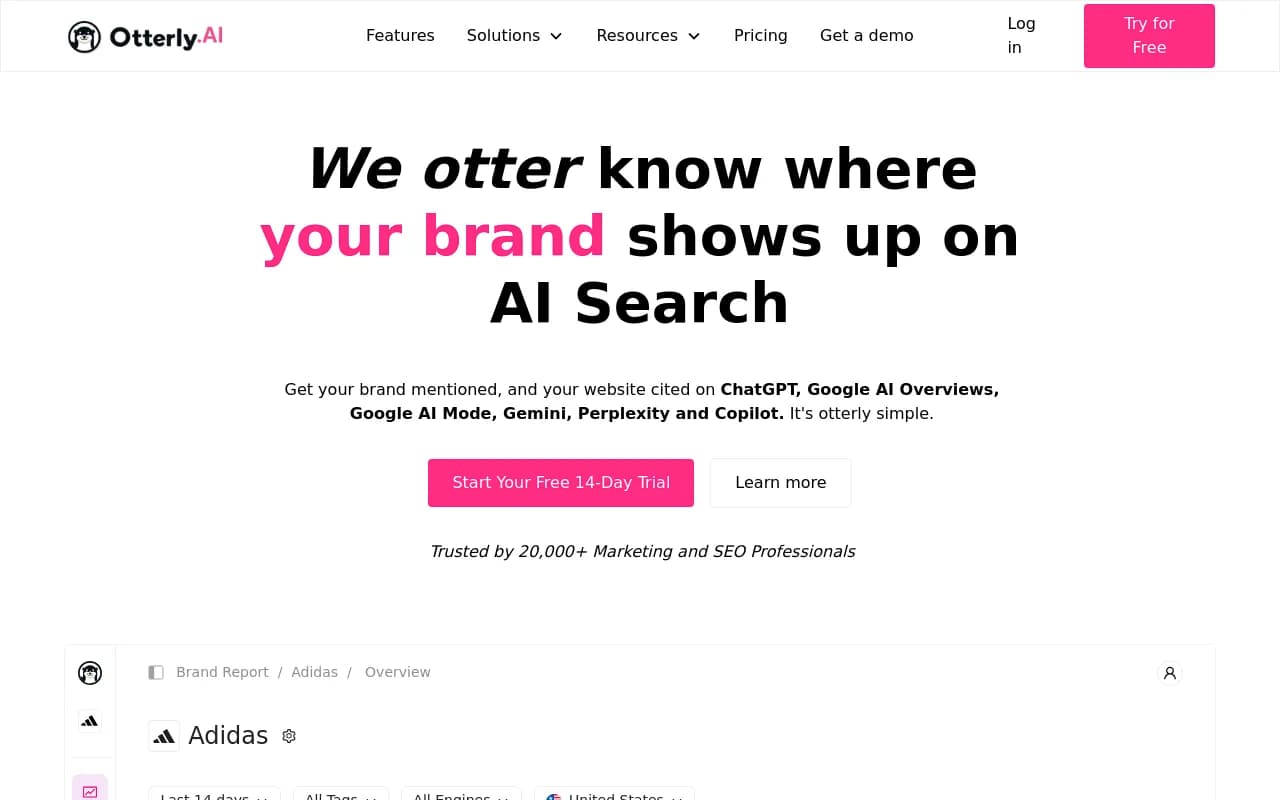
Otterly is the tool most people try first. At $29/month, the barrier to entry is low, the interface is clean, and it gets you tracking brand mentions across ChatGPT, Perplexity, and Google AI Overviews within minutes.
Otterly.AI

For solo marketers or small teams who just want to answer "does AI mention us at all?" -- Otterly works fine. You can set up prompts, watch visibility scores, and get a basic sense of where you stand versus competitors.
The ceiling hits fast, though. There's no content generation. No crawler logs. No attribution connecting AI visibility to actual traffic or revenue. No Reddit or YouTube tracking. When you find a gap -- say, a competitor getting cited for a category you should own -- Otterly shows you the problem and stops there.
It's also worth noting that the prompt limits on lower tiers are tight. If you're running a multi-product brand or tracking across several markets, you'll hit the ceiling quickly and face a meaningful price jump.
Otterly is a monitoring tool. A decent one. But if your goal is to improve AI visibility rather than just observe it, you'll outgrow it fast.
Peec AI: strong monitoring, expensive to expand
Peec AI has carved out a real position in the mid-market. The UX is polished, the reporting is clean, and multi-language support is genuinely one of the best in the category -- unlimited countries and languages at no extra cost is a real differentiator for international brands.

The base Pro plan (€199/mo) covers ChatGPT, Perplexity, Google AI Overviews, and DeepSeek. That's four engines. Claude, Gemini, and Google AI Mode? Those are Enterprise add-ons with custom pricing. So the sticker price understates the real cost if you want full model coverage.
You're also capped at 100 prompts and 9,000 AI answers per month on Pro. For a brand tracking a handful of core queries, that's fine. For a team running competitive analysis across multiple product lines, it's a hard constraint.
Like Otterly, Peec has no content creation tooling. No site audits. No shopping visibility tracking. The platform is built around measurement, and it does that well -- but measurement without action is just expensive reporting.
One thing Peec does better than most: the structured prompt library and the way it organizes competitive benchmarking. If your primary need is "show me a clean, defensible report of AI visibility across markets," Peec delivers that better than Otterly.
Searchable: monitoring plus generation, but limited depth
Searchable sits in an interesting middle position. It offers both AI visibility monitoring and built-in content generation, which immediately puts it ahead of pure monitoring tools in terms of the action loop.
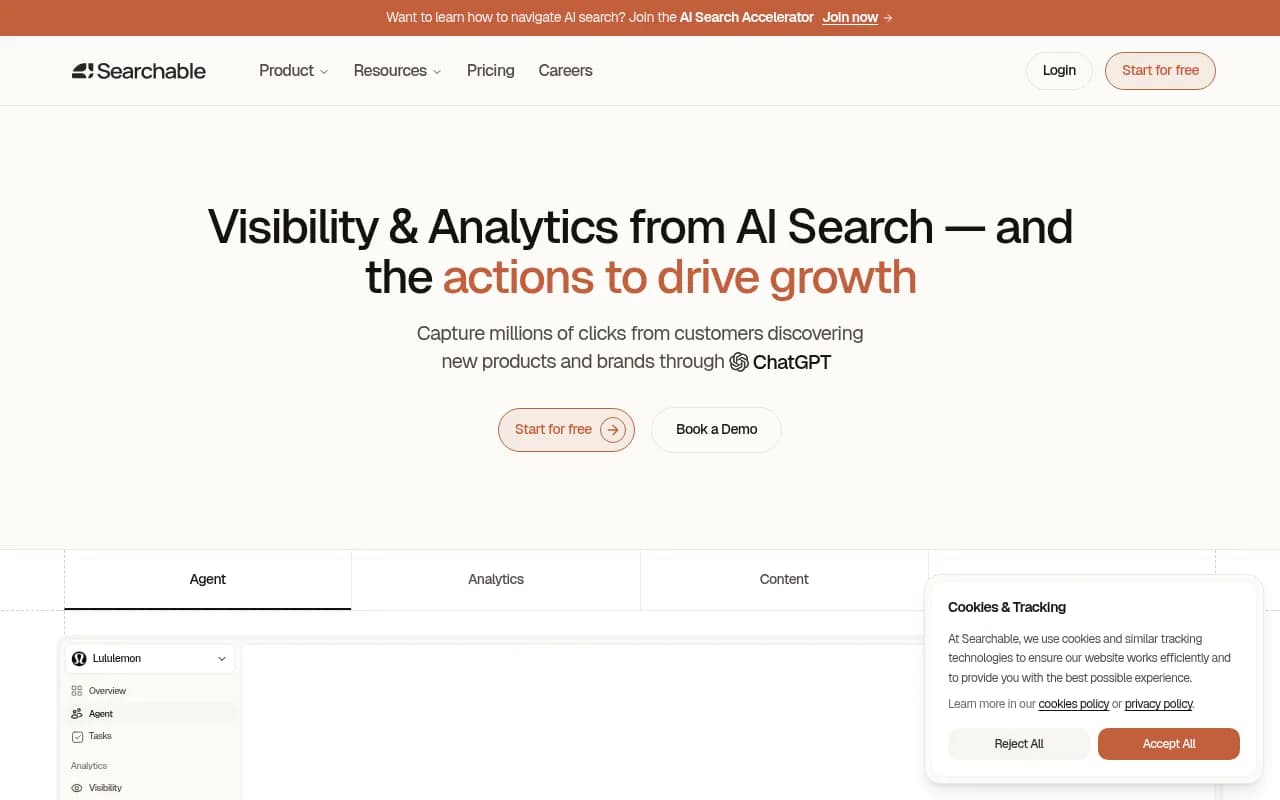
The content generation angle matters. If you can identify a gap and then generate content to fill it without switching platforms, that's a real workflow improvement over using Otterly or Peec and then jumping to a separate writing tool.
Where Searchable struggles is depth. Model coverage is narrower than Promptwatch. The crawler log functionality -- which tells you whether AI engines are actually visiting your pages and which ones they're reading -- isn't there. Attribution connecting AI visibility to traffic and revenue is limited. Reddit and YouTube insights, which matter because AI models frequently cite community content, aren't part of the picture.
For a small team that wants a single tool for basic monitoring plus content drafts, Searchable is a reasonable option. But as your AI search strategy matures, you'll start hitting walls that require either a platform upgrade or stitching together multiple tools.
Promptwatch: the only platform that closes the loop
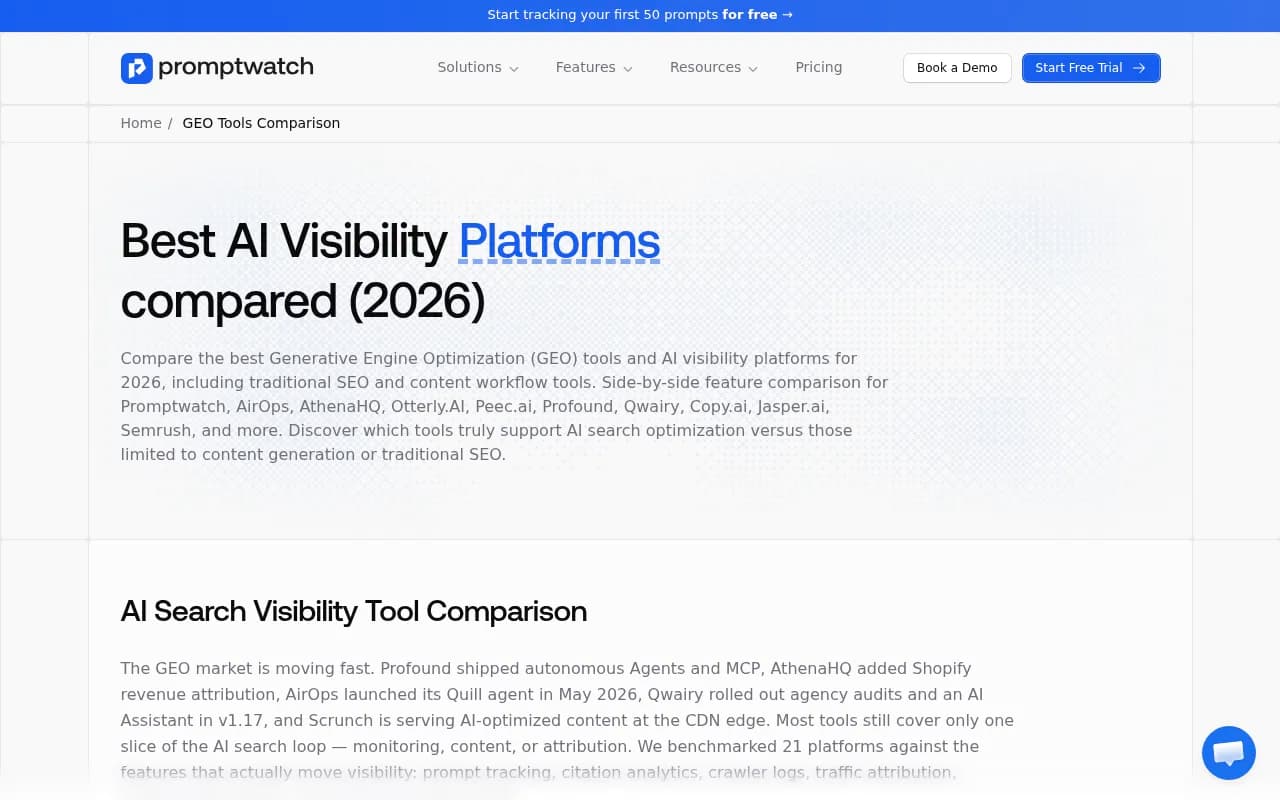
Promptwatch is a different category of tool. Where the others are primarily monitoring dashboards with varying levels of content support bolted on, Promptwatch is built around a three-stage cycle: find the gaps, create content to fill them, and track the results.
Finding the gaps
The Answer Gap Analysis shows exactly which prompts competitors are visible for that you're not. You see the specific topics and questions AI models want to answer but can't find on your site. This isn't a generic "you're missing content about X" suggestion -- it's grounded in real prompt data, including volume estimates and difficulty scores so you can prioritize what's actually worth pursuing.
Query fan-outs show how a single prompt branches into sub-queries, which is useful for understanding the full scope of a topic before you start writing.
Creating content that gets cited
Content Agents generate articles, listicles, comparisons, and briefs based on real citation data, prompt volumes, persona targeting, competitor analysis, and brand guidance. The output is designed to answer the specific gaps AI models are already exposing -- not generic SEO filler.
This is the part that separates Promptwatch from every other tool in this comparison. Otterly, Peec, and Searchable can tell you what's missing. Promptwatch helps you build it.
Tracking what actually changes
Page-level tracking shows which specific pages are being cited, how often, and by which models. The AI Crawler Logs are particularly useful -- real-time logs of when ChatGPT, Claude, Perplexity, and others visit your site, which pages they read, errors they hit, and how often they return. You can see the timeline from publish to crawl to citation.
Traffic attribution connects AI visibility to actual revenue, which is the metric that actually matters to anyone with a budget to defend.
Model and feature coverage
Promptwatch monitors 10 AI models: ChatGPT, Perplexity, Google AI Overviews, Google AI Mode, Claude, Gemini, Meta/Llama, DeepSeek, Grok, Mistral, and Copilot. That's broader than any other platform in this comparison.
It also tracks Reddit discussions and YouTube content that influence AI recommendations -- a channel most competitors ignore entirely. ChatGPT Shopping tracking and entity tracking round out the picture for e-commerce and brand-heavy use cases.
Pricing
Essential starts at $99/mo (1 site, 50 prompts, 5 articles). Professional is $249/mo (2 sites, 150 prompts, 15 articles, crawler logs, state/city tracking). Business is $579/mo (5 sites, 350 prompts, 30 articles). Agency and enterprise pricing is available on request.
That's more expensive than Otterly at entry level, but the comparison isn't really fair -- you're getting a fundamentally different scope of capability.
Side-by-side comparison
| Feature | Otterly.AI | Peec AI | Searchable | Promptwatch |
|---|---|---|---|---|
| Starting price | $29/mo | €199/mo | Custom | $99/mo |
| AI models covered | ChatGPT, Perplexity, AI Overviews | 4 base (Claude/Gemini extra) | Limited | 10 models |
| Prompt tracking | Yes | Yes (100 limit on Pro) | Yes | Yes (50-350+) |
| Content generation | No | No | Yes (basic) | Yes (AI Content Agents) |
| Answer gap analysis | No | No | Partial | Yes |
| AI crawler logs | No | No | No | Yes |
| Traffic attribution | No | No | Limited | Yes |
| Reddit/YouTube tracking | No | No | No | Yes |
| ChatGPT Shopping | No | No | No | Yes |
| Page-level citation tracking | No | No | No | Yes |
| Multi-language | Limited | Yes (unlimited) | Limited | Yes |
| Free trial | Yes | Yes | Yes | Yes |
Who should use what
Otterly.AI makes sense if you're just starting out, have a tiny budget, and want a quick answer to "does AI mention us?" It's a fine first step. Just don't expect it to tell you what to do next.
Peec AI is worth considering if you're an international brand that needs clean, multi-language monitoring and polished reporting. The structured competitive benchmarking is genuinely good. But go in knowing that full model coverage will cost more than the sticker price, and you'll need separate tools for content.
Searchable fits teams that want monitoring and content generation in one place but don't need deep attribution, crawler data, or Reddit/YouTube insights. It's a reasonable middle option for smaller teams with simpler needs.
Promptwatch is the right choice if you're serious about improving AI visibility, not just measuring it. The gap analysis, content generation, crawler logs, and attribution data make it the only platform here that can actually move your numbers -- not just report on them. It's used by 1,480+ brands including Booking.com and Center Parcs, and its data has been cited in the Wall Street Journal and Axios.
The monitoring trap
There's a pattern worth naming. A lot of teams buy an AI visibility tool, set up their prompts, watch the dashboard for a few weeks, and then... nothing changes. The tool keeps reporting. The visibility score stays flat or drifts in the wrong direction.
This happens because monitoring without action is just expensive anxiety. Knowing that Perplexity cites your competitor 3x more than you for "best [your category] software" is useful information -- but only if you do something with it.
The platforms that stop at monitoring (Otterly, Peec at the Pro level) leave you with the "now what?" problem. You have to figure out what content to create, write it somewhere else, publish it, and then hope the platform eventually shows improvement. There's no connection between the gap you found and the content you created.
Promptwatch is built around closing that gap. The Answer Gap Analysis feeds directly into Content Agents, which generate content grounded in the same prompt data that identified the gap. The AI Crawler Logs then show you whether AI engines are actually reading the new content, and page-level tracking shows when it starts getting cited. That's a real feedback loop, not a reporting dashboard.
A note on model coverage
One thing that gets underplayed in most comparisons: not all AI model coverage is equal.
Some platforms query AI models through APIs. Promptwatch tracks how AI search engines behave in real user interfaces -- which matters because user-facing answers, citations, and shopping recommendations can differ from API outputs. If you're trying to understand what a real user sees when they ask ChatGPT about your category, API-based tracking can give you a misleading picture.
This is a subtle but real distinction, especially for e-commerce brands tracking ChatGPT Shopping recommendations or any brand where the specific wording and formatting of AI responses matters.
Bottom line
If you're comparing these four tools and trying to decide where to spend your budget, the decision mostly comes down to what you want to accomplish.
Pure monitoring on a tight budget: Otterly.AI gets you started.
Clean multi-language reporting: Peec AI is the most polished option, budget for the full model coverage cost.
Monitoring plus basic content in one tool: Searchable is a reasonable middle ground.
Actually improving your AI visibility with a platform that finds gaps, generates content to fill them, and tracks the results: Promptwatch is the only option here that does all three.
The GEO market is moving fast. Brands that treat AI visibility as a measurement problem will keep watching their competitors get cited. Brands that treat it as an optimization problem -- with the right tools to act on what they find -- are the ones that will show up in AI answers six months from now.