Key takeaways
- Perplexity processed 780 million monthly queries as of mid-2025, tripling its volume in one year, while Google AI Mode went from concept to full launch in under 12 months
- The two platforms reward different content strategies: Perplexity favors Reddit presence, real-time freshness, and direct answer formats; Google AI Mode requires traditional SEO foundations plus E-E-A-T signals
- For most brands, Google AI Mode reaches a larger existing audience, but Perplexity captures high-intent research queries where buyers are actively comparing options
- Citation behavior differs significantly across platforms -- a 680-million-citation analysis shows you can't optimize for one and expect the other to follow
- Tracking visibility across both platforms requires dedicated tooling; standard Google Analytics won't show you where AI is sending (or not sending) buyers
The race nobody expected to be this close
A year ago, most marketing teams treated Perplexity as a curiosity. A well-funded startup, sure, but hardly a threat to Google's search dominance. That framing aged poorly.
Perplexity hit a $20 billion valuation in 2025. Its monthly query volume tripled in 12 months to 780 million. And according to a LinkedIn post by Joseph PR, Google AI Mode went from concept to full launch in just 12 months -- explicitly because ChatGPT and Perplexity were eating into search behavior fast enough to force Google's hand.
That's the context for this comparison. We're not asking "will Perplexity replace Google?" (it won't, at least not soon). We're asking something more useful for brands: where are buyers actually searching, what does each platform cite, and where should you put your optimization effort first?
How each platform actually works
Understanding the mechanics matters because it directly shapes what content gets cited.
Perplexity: search first, then synthesize
Perplexity queries live sources in real time, then uses large language models to synthesize a cited answer. Every response includes inline citations you can click. The result feels like a research librarian: thorough, transparent about sources, and designed for people who want to verify what they're reading.
This architecture has a side effect that matters for brands: Perplexity is unusually sensitive to Reddit, community forums, and recent publications. If your brand is being discussed (or not discussed) in those places, Perplexity will reflect that.
Google AI Mode: ecosystem-aware, speed-optimized
Google AI Mode blends its existing search index with generative models to produce fast, conversational overviews. It draws on Google's knowledge graph, structured data, and the same ranking signals that traditional SEO has always relied on. Speed and familiarity are the design priorities, not citation depth.
The practical difference: Perplexity feels like a research tool. Google AI Mode feels like a faster version of what Google already was. Neither is better in absolute terms -- they serve different user intents.
Growth trajectories: the numbers
| Metric | Perplexity | Google AI Mode |
|---|---|---|
| Monthly queries (2025) | 780 million | Billions (Google-scale) |
| Growth rate | 3x year-over-year | Rapid rollout from zero |
| Valuation | $20 billion | N/A (Google division) |
| Active users | 22 million | Hundreds of millions |
| Annual recurring revenue | $100 million | N/A |
| Launch timeline | Gradual since 2022 | Concept to launch in ~12 months |
Perplexity's growth is genuinely impressive for a standalone product. But Google AI Mode benefits from something Perplexity can't replicate overnight: it's the default for billions of people who already search on Google. The moment Google surfaces an AI overview instead of a traditional results page, those users are in an AI search experience whether they opted in or not.
That asymmetry matters strategically. Perplexity users are choosing to use an AI search tool. Google AI Mode users often don't realize they've shifted into one.
What each platform actually cites
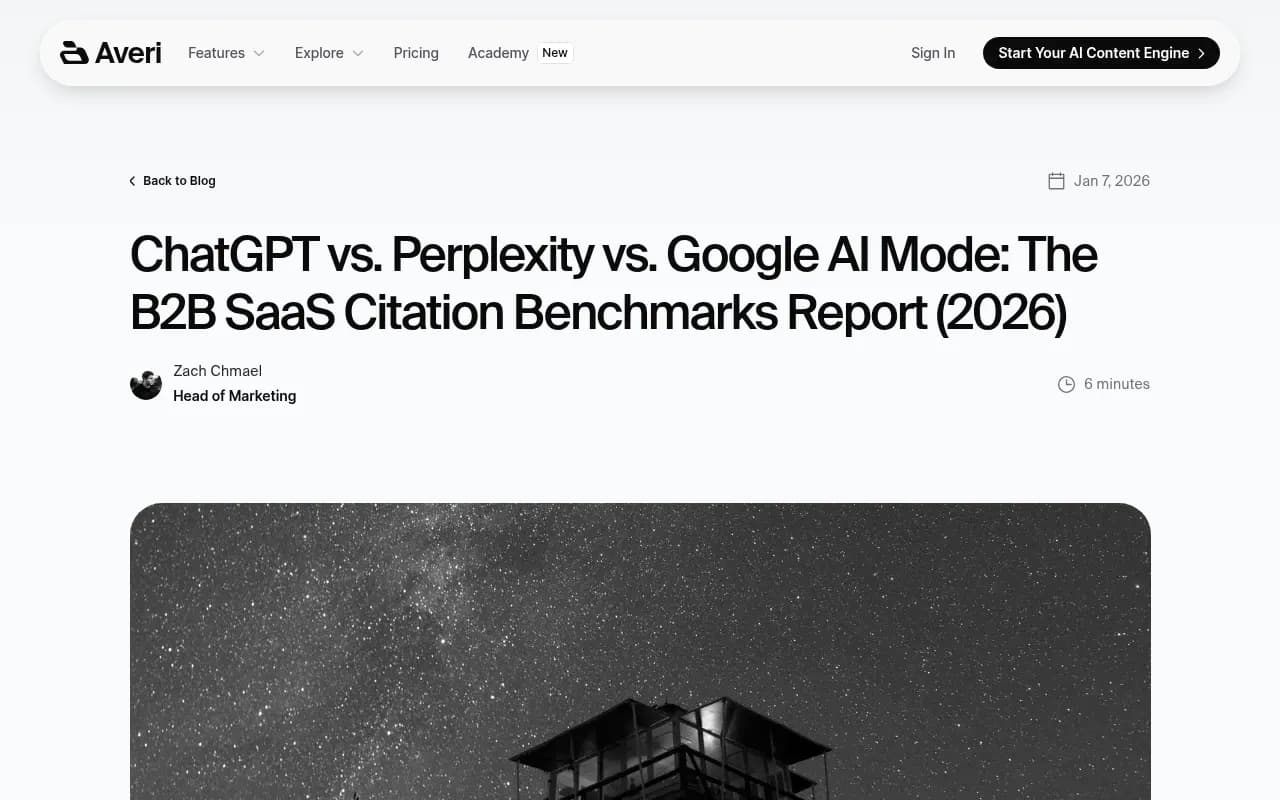
This is where strategy gets concrete. A 2026 analysis of 680 million citations across ChatGPT, Google AI Overviews, and Perplexity (published by Averi AI) found dramatically different source preferences across platforms.
What Perplexity cites
- Reddit threads and community discussions
- Recent publications with visible timestamps
- Comparison tables with extractable data
- Content with 40-60 word lead paragraphs that answer the question directly
- Authentic expertise signals over institutional authority
Perplexity's citation behavior rewards brands that have a real presence in the communities where their buyers talk. If nobody on Reddit is mentioning your product -- or if the mentions are negative -- that shows up in Perplexity responses.
What Google AI Mode cites
- Pages already ranking in the top 10 of traditional search
- Multi-modal content (text, images, video together)
- Comprehensive schema markup
- E-E-A-T signals: experience, expertise, authoritativeness, trustworthiness
- Consistent entity mentions across platforms
Google AI Mode is, in many ways, an extension of traditional SEO. If you've built strong organic rankings, you have a head start. If you haven't, AI Mode won't rescue you -- it amplifies what's already there.
The universal requirements
Both platforms respond well to:
- Statistics with clear methodology and sourcing
- Hierarchical heading structure (H1 → H2 → H3)
- Extractable answer blocks of 40-60 words
- Regular content updates with visible recency signals
- Brand mentions across multiple platforms
Where each platform wins by use case
| Use case | Better platform | Why |
|---|---|---|
| Quick factual lookups | Google AI Mode | Faster, ecosystem-integrated |
| Deep research and comparison | Perplexity | Cited sources, reproducible |
| Developer documentation queries | Perplexity | Depth and citation transparency |
| Local business discovery | Google AI Mode | Maps, reviews, local index |
| B2B software evaluation | Both (different stages) | Perplexity for research, Google for brand validation |
| Product comparisons | Perplexity | Reddit + community signals |
| News and current events | Perplexity | Real-time freshness |
| Shopping and commerce | Google AI Mode | Shopping graph, product data |
The pattern that emerges: Perplexity captures the research phase of a buying journey. Google AI Mode captures the validation and transactional phases. For B2B brands especially, this means both platforms matter -- just at different points in the funnel.
The content strategy implications
For Perplexity visibility
The single most underrated tactic for Perplexity is Reddit presence. This isn't about gaming Reddit -- it's about genuinely participating in communities where your buyers are. When Perplexity synthesizes an answer about your category, it frequently pulls from subreddits, product review threads, and community discussions. If your brand isn't mentioned there, you're invisible in those responses.
Beyond Reddit:
- Write content that answers questions in the first 50 words, not after three paragraphs of preamble
- Include comparison tables that are easy to extract
- Publish frequently enough that your content has recent timestamps
- Earn citations from other publications, not just links
For Google AI Mode visibility
Google AI Mode is more conservative to optimize for because it's largely an extension of what already works in traditional SEO. The additions:
- Schema markup matters more than it used to -- FAQ schema, HowTo schema, and Article schema all help AI Mode identify extractable content
- E-E-A-T signals need to be explicit: author bios with credentials, publication dates, cited sources
- Multi-modal content (articles with relevant images and embedded video) performs better than text-only pages
- Entity consistency across your website, Google Business Profile, and third-party mentions helps Google's knowledge graph connect the dots
The format that works for both
Short, direct answer blocks at the top of your content work well across both platforms. Think of it as writing for someone who will only read the first two sentences -- because an AI model might only extract those two sentences.
Structure like this:
[Question as H2 heading]
[Direct 40-60 word answer]
[Expanded explanation with evidence]
[Comparison table or list if relevant]
This isn't a new idea in SEO, but it's become more important as AI models increasingly extract and re-present content rather than sending users to click through.
Where should brands focus first?
The honest answer depends on where you are right now.
If you have strong traditional SEO foundations -- top-10 rankings, solid domain authority, good E-E-A-T signals -- Google AI Mode is likely already working for you to some degree. Your priority should be auditing which queries trigger AI overviews in your category and whether you're being cited in them.
If your SEO is weak or you're in a competitive category where you're not ranking organically, Google AI Mode won't help you much. Perplexity is actually more accessible in this scenario because it weights community presence and content freshness differently than Google's traditional ranking algorithm.
For most B2B brands, the practical answer is: start with Perplexity for research-phase queries, build your Reddit and community presence, and treat Google AI Mode as an extension of your existing SEO investment.
Tracking visibility across both platforms
Standard analytics won't tell you whether you're being cited in Perplexity or Google AI Mode responses. You need dedicated tooling.
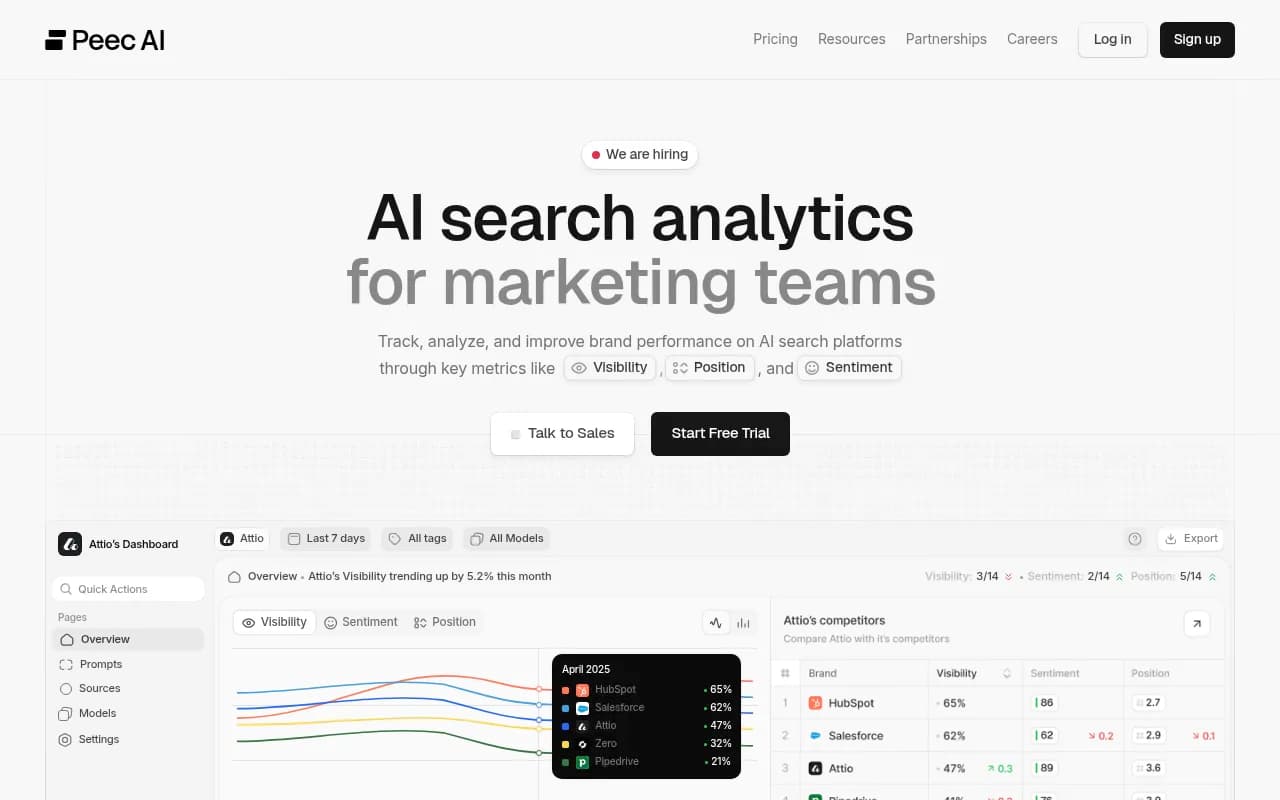
Promptwatch monitors both platforms (along with 8 other AI models) and goes beyond just showing you where you appear. Its Answer Gap Analysis identifies which prompts competitors are getting cited for that you're not -- and its built-in content generation tools help you create content specifically engineered to earn those citations. For brands serious about AI search visibility, that full loop (find gaps, create content, track results) is more useful than a monitoring dashboard alone.

For teams that want to track Perplexity specifically alongside other AI engines:
Otterly.AI

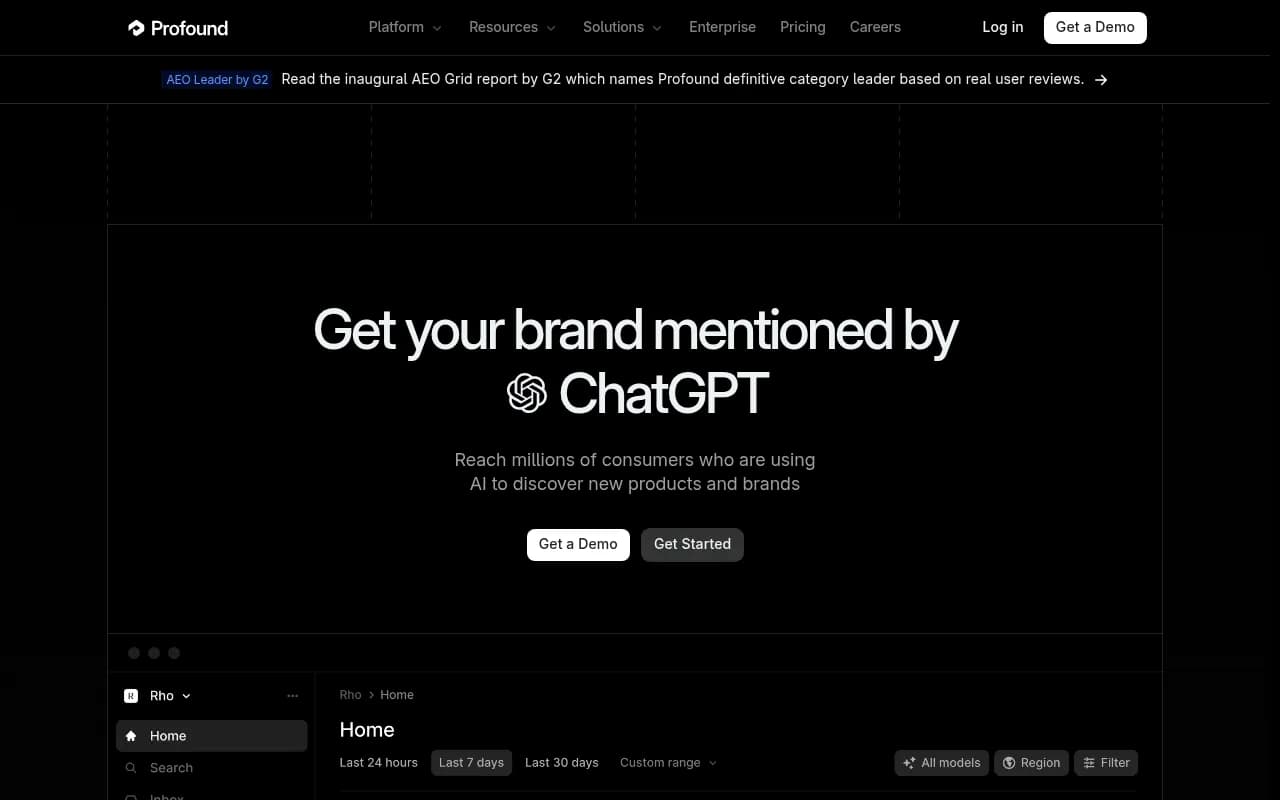
Profound
A quick comparison of tracking options:
| Tool | Perplexity tracking | Google AI Mode | Content gap analysis | Content generation |
|---|---|---|---|---|
| Promptwatch | Yes | Yes | Yes | Yes |
| Peec AI | Yes | Limited | No | No |
| Otterly.AI | Yes | Yes | No | No |
| Profound | Yes | Yes | Limited | No |
The gap between monitoring-only tools and optimization platforms is real. Knowing you're invisible in Perplexity is useful. Knowing exactly what content to create to fix it is more useful.
The competitive angle: what your rivals are probably doing wrong
Most brands are still optimizing for one platform or assuming all AI engines work the same way. The 680-million-citation analysis referenced earlier makes clear they don't.
A brand that's winning in Google AI Mode (because of strong traditional SEO) may be nearly invisible in Perplexity if it has no Reddit presence and publishes infrequently. The reverse is also true: a brand with strong community presence and fresh content may appear regularly in Perplexity responses while barely registering in Google AI Mode.
This creates a real opportunity. If your competitors are focused entirely on traditional SEO and Google AI Mode, building Perplexity visibility is relatively uncrowded territory right now. That window won't stay open indefinitely.
Practical next steps
- Run your top 10-15 category queries in both Perplexity and Google AI Mode. Note who gets cited and who doesn't.
- Check whether your brand appears in Reddit discussions about your category. If not, that's a gap worth addressing.
- Audit your existing content for extractable answer blocks. Rewrite introductions to lead with direct answers.
- Add or improve schema markup, especially FAQ and Article schema.
- Set up tracking so you can measure visibility changes as you make content updates. Without measurement, you're guessing.
The brands that figure out both platforms -- not just one -- will have a meaningful advantage as AI search continues to absorb a larger share of research and discovery behavior. The data suggests that share is growing fast on both sides.