Key takeaways
- AirOps is primarily a content operations platform that added AI visibility tracking; Promptwatch was built from the ground up as an end-to-end AI search visibility platform.
- Both platforms can generate content, but Promptwatch's content generation is grounded in real prompt data, citation gaps, and crawler logs -- AirOps focuses more on content workflows and publishing pipelines.
- AirOps research found that only 30% of brands stay visible from one AI answer to the next, and just 20% remain visible across five consecutive runs -- a volatility problem that requires continuous tracking, not one-off audits.
- Promptwatch is the only platform in this comparison with AI crawler logs, ChatGPT Shopping tracking, Reddit/YouTube insights, and page-level citation tracking in one dashboard.
- If you run a large content library and need a publishing workflow, AirOps is worth considering. If your goal is to understand and improve AI search visibility specifically, Promptwatch covers more ground.
What's actually being compared here
Before getting into features, it's worth being honest about what these two tools are trying to do -- because they don't start from the same premise.
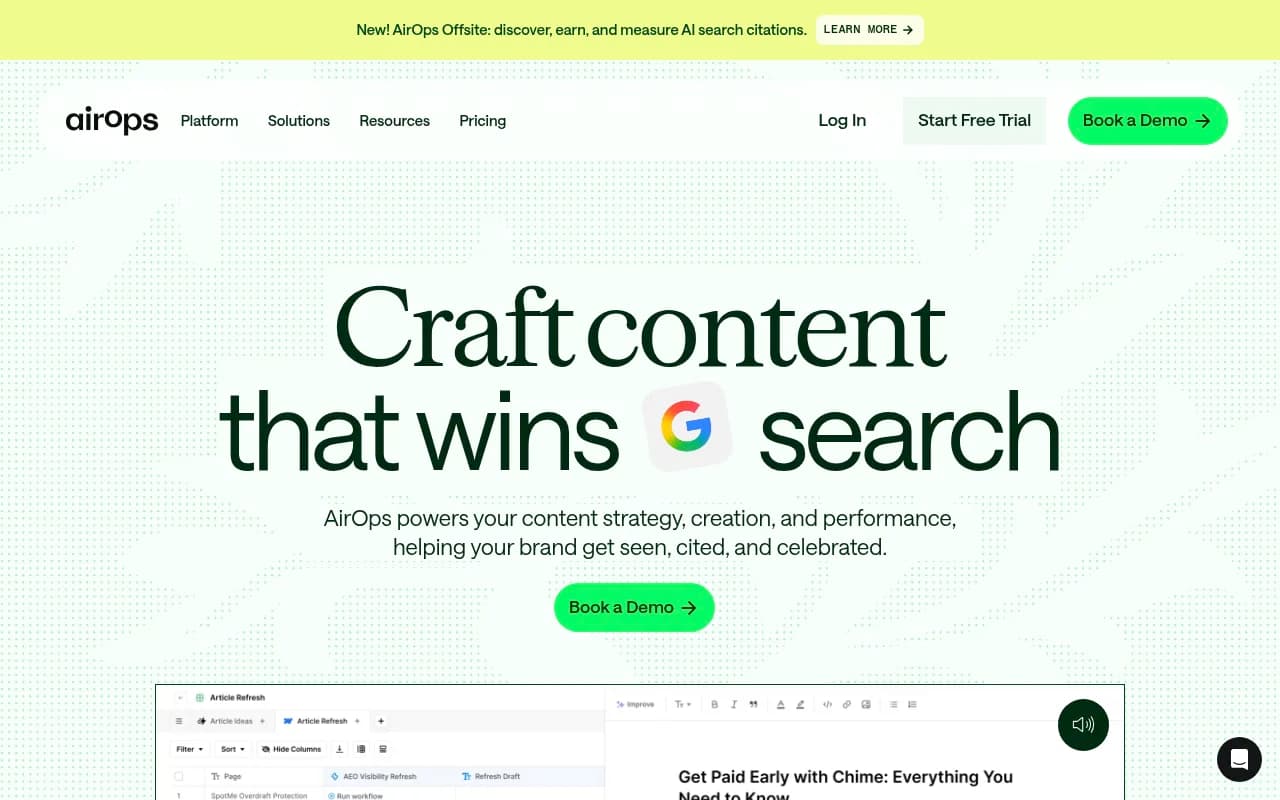
AirOps began as a content operations platform. It helps teams build AI-powered workflows that take content from brief to published page at scale. AI visibility tracking came later, as a supporting capability layered on top of that content engine. The Quill agent, launched in May 2026, is their most recent push into the visibility space.
Promptwatch was built specifically to answer one question: why is your brand invisible in AI search, and what do you do about it? Everything in the platform -- prompt tracking, citation analysis, crawler logs, content generation, traffic attribution -- connects back to that question.

That's not a knock on AirOps. It's just useful context. You're comparing a content platform with visibility features against a visibility platform with content features. Depending on your priorities, that distinction matters a lot.
How AI visibility actually works in 2026
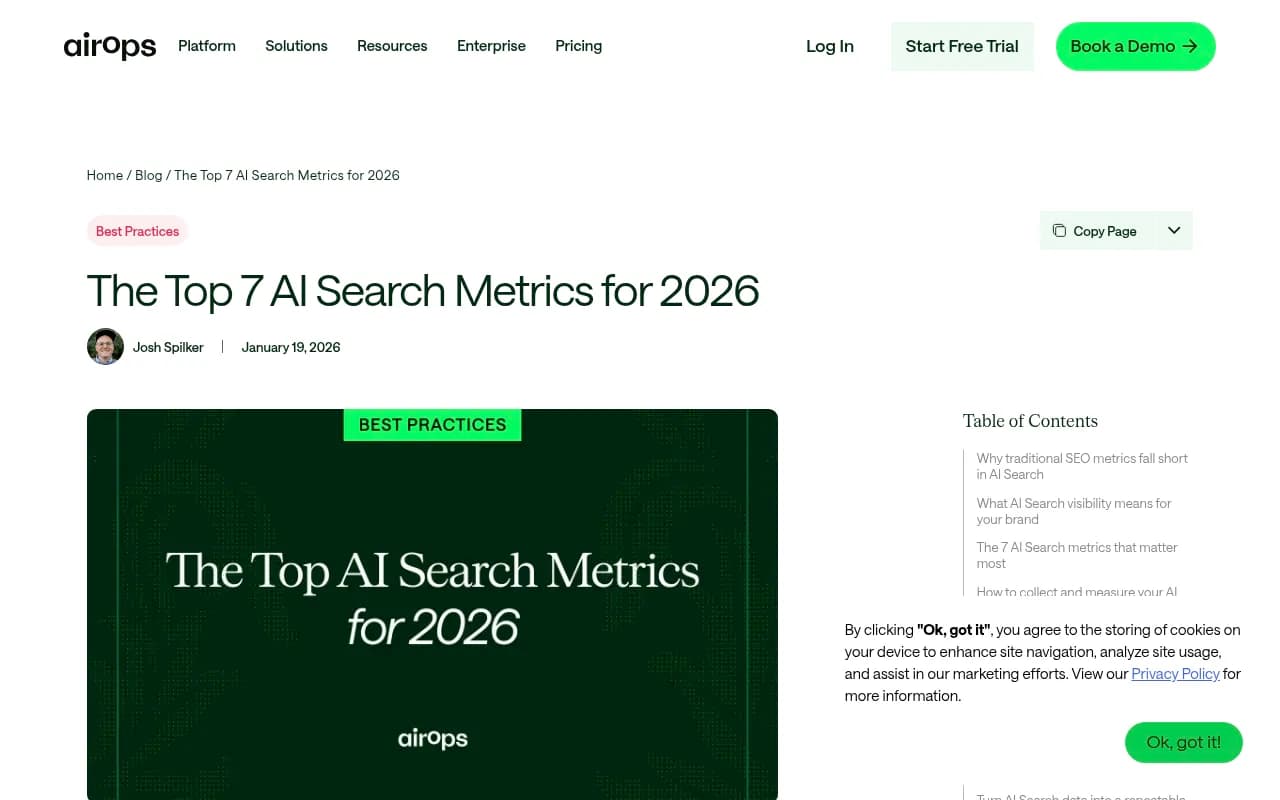
AirOps published research showing that only 30% of brands maintain consistent visibility from one AI answer to the next. Across five consecutive runs of the same prompt, just 20% of brands stay visible throughout. That's a striking number -- it means most brands are essentially invisible most of the time, even when they think they're doing well.
This volatility is what makes one-time audits useless. You need continuous tracking across multiple models, real prompt data (not just API outputs), and a clear path from "you're invisible here" to "here's the content that fixes it."
Both platforms understand this. Where they diverge is in how deeply they've built out each layer of that loop.
Feature comparison
Here's a side-by-side look at the capabilities that matter most for AI search visibility:
| Feature | AirOps | Promptwatch |
|---|---|---|
| AI model tracking | ChatGPT, Perplexity, Google AIO, others | 10 models: ChatGPT, Perplexity, Google AIO, Google AI Mode, Claude, Gemini, Meta/Llama, DeepSeek, Grok, Mistral, Copilot |
| Prompt volume & difficulty scoring | Limited | Yes -- with query fan-outs |
| Answer gap / competitor gap analysis | Basic | Full Answer Gap Analysis |
| AI crawler logs | No | Yes -- real-time logs per page |
| Page-level citation tracking | No | Yes |
| Content generation | Yes (Quill agent, workflows) | Yes (Content Agents grounded in prompt data) |
| Content briefs | Yes | Yes -- with screenshots, news context, uploaded files |
| Reddit & YouTube insights | No | Yes |
| ChatGPT Shopping tracking | No | Yes |
| Offsite citation analysis | Limited | Yes |
| Traffic attribution (AI to revenue) | No | Yes |
| Multi-language / multi-region | Limited | Yes |
| Free trial | Yes (Insights plan) | Yes |
| Starting price | Not publicly listed | $99/month |
The gap that stands out most is on the diagnostic side. AirOps can tell you whether you're visible; Promptwatch can tell you why you're not visible and which specific pages AI crawlers are reading (or failing to read) on your site.
Where AirOps is genuinely strong
AirOps has built a real content operations pipeline. If you have a large website -- think thousands of pages -- and you need to systematically audit and update that content for AI search, their workflow tooling is solid. The Quill agent handles the kind of bulk content work that would otherwise require a team of writers and editors.
Their tracking covers the major AI models and gives you a reasonable view of citation share and brand mention trends. For teams that are primarily content-focused and want visibility data as a supporting signal, it works well.
AirOps also has a free Insights plan, which is useful if you're just getting started and want to understand your baseline visibility before committing to a paid tool.
Where Promptwatch goes further
The honest answer is that Promptwatch covers more of the AI visibility problem in one place. A few specific areas where the difference is meaningful:
AI crawler logs. This is the feature most competitors don't have at all. Promptwatch shows you in real time which pages ChatGPT, Perplexity, Claude, and other AI crawlers are actually visiting -- how often, which errors they hit, and when a page moves from "crawled" to "cited." That's diagnostic information you can act on immediately. AirOps doesn't offer this.
Prompt intelligence. Promptwatch tracks volume estimates and difficulty scores for each prompt, plus query fan-outs that show how a single prompt branches into sub-queries. This lets you prioritize which gaps to close first, rather than treating all prompts equally.
Reddit and YouTube tracking. AI models frequently cite Reddit threads and YouTube videos in their responses. Promptwatch surfaces which discussions are influencing AI recommendations in your category -- a channel most platforms ignore entirely.
Traffic attribution. Knowing you're being cited is one thing. Knowing that those citations are driving actual revenue is another. Promptwatch connects AI visibility to traffic and conversions, which is what you need to justify the investment internally.
The content generation question
Both platforms generate content. But the underlying approach is different.
AirOps builds content workflows -- you define the inputs, the pipeline runs, and pages get produced at scale. It's efficient for volume. The Quill agent can handle research, drafting, and publishing in a connected sequence.
Promptwatch's Content Agents are grounded specifically in AI search data. The briefs are built from real prompt gaps, citation data, competitor analysis, and crawler logs. The goal isn't just to produce content -- it's to produce content that answers the specific questions AI models are already looking for answers to but can't find on your site. That's a narrower use case, but it's more directly tied to improving visibility scores.
If you need to produce 500 pages of updated product content, AirOps is probably the better fit. If you need to close specific citation gaps that are costing you visibility in ChatGPT and Perplexity, Promptwatch's approach is more targeted.
Pricing and who each platform is for
AirOps doesn't publish pricing publicly -- you need to book a demo or start a free trial to get numbers. Their free Insights plan gives you a starting point, but meaningful tracking and content generation require a paid tier.
Promptwatch is more transparent: Essential starts at $99/month (1 site, 50 prompts, 5 articles), Professional at $249/month (2 sites, 150 prompts, 15 articles, plus crawler logs and state/city tracking), and Business at $579/month (5 sites, 350 prompts, 30 articles). Agency and enterprise pricing is available on request.
In terms of audience:
- AirOps suits content-heavy teams that need a publishing pipeline and want AI visibility as a supporting layer. Large media sites, e-commerce brands with big catalogs, and content agencies fit this profile.
- Promptwatch suits marketing teams, SEO teams, and agencies whose primary goal is improving how their brand appears in AI search -- and who want to track, diagnose, and fix visibility gaps systematically.
What other platforms are worth knowing about
AirOps and Promptwatch aren't the only players in this space. A few others worth knowing:
Profound is the closest competitor to Promptwatch in terms of enterprise features. Strong tracking, autonomous agents, and MCP support -- but higher price point and no Reddit tracking or ChatGPT Shopping data.
Profound

Otterly.AI and Peec AI are monitoring-only tools. They'll show you where you're visible, but they don't help you fix it.
Otterly.AI


AthenaHQ recently added Shopify revenue attribution, which is useful for e-commerce teams, but it's still primarily a monitoring platform without content generation.

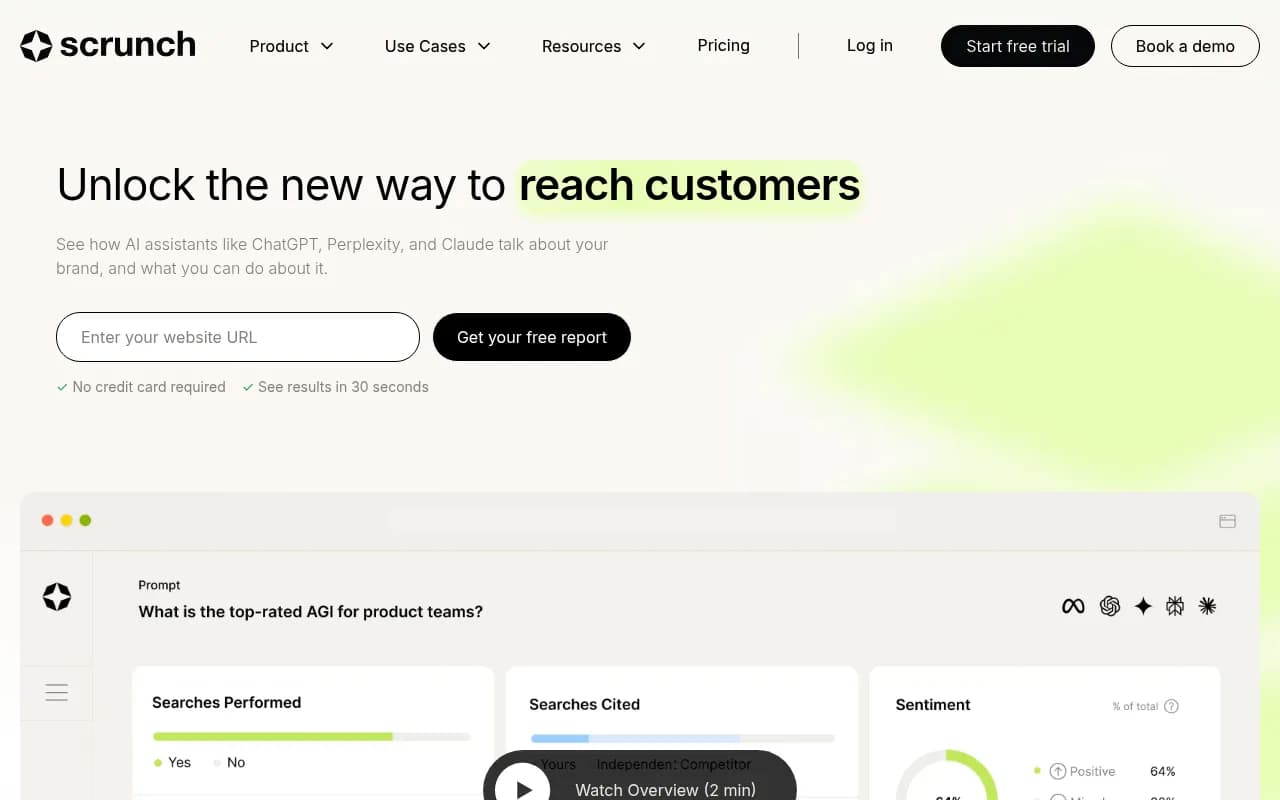
Scrunch AI is interesting for its CDN-edge content serving approach, but it's a niche solution rather than a full-stack platform.
The bottom line
If you're trying to decide between AirOps and Promptwatch, the clearest way to frame it is this: AirOps is a content platform that helps you stay visible; Promptwatch is a visibility platform that helps you create content to become more visible.
That's a subtle but real difference. AirOps gives you the tools to produce and publish content at scale, with visibility tracking as a signal. Promptwatch gives you the diagnostic layer first -- crawler logs, citation gaps, prompt data, Reddit signals -- and then generates content specifically designed to close those gaps.
For teams where AI search visibility is a primary KPI, not a secondary one, Promptwatch's approach is more complete. The crawler logs alone are worth the price of admission for anyone who's been wondering why their content isn't being cited despite ranking well in traditional search.
For teams running large content operations who need a workflow tool that also surfaces AI visibility data, AirOps is a legitimate option -- especially if the free Insights plan covers your initial needs.
Either way, the AirOps research on citation volatility is a useful reminder: one-off checks don't work. Whichever platform you choose, continuous tracking is the baseline requirement.