Key takeaways
- "Time to first actionable insight" measures how long it takes from signup to getting a specific, fixable recommendation, not just a dashboard full of scores.
- Tools built around monitoring alone (Scrunch, Otterly, Peec AI, Goodie AI) tend to show you a visibility number fast, but leave the "now what?" question to you.
- Tools with built-in content generation, crawler logs, or guided onboarding (Promptwatch, Rankshift, ContentMonk) compress the gap between seeing a problem and starting to fix it.
- Enterprise platforms like Profound and AthenaHQ often deliver deeper data, but onboarding, prompt curation, and account setup can push first insight out by days or weeks.
- Scrunch's own pricing moved to $300/month ($250 annual) after Sitecore's 2026 acquisition, which is worth factoring in if speed and price both matter to you.
Why "time to first actionable insight" is the metric that matters
Most comparisons of Scrunch AI alternatives rank tools by prompt volume, model coverage, or price per response. Those numbers matter, but they miss the question that actually determines whether a tool gets used after month one: how long does it take before someone on your team can point to a specific thing to fix?
I've watched teams sign up for an AI visibility tool, wait a week for prompts to populate, stare at a visibility score that dropped two points, and then... nothing. No next step. No content brief. No crawler log showing why a bot bounced off a 404. Just a number that changes color.
That's the gap this guide is ranking for. Not "which tool has the most features" but "which tool gets a marketer from zero to a concrete action the fastest."
The ranking
| Tool | Approx. time to first actionable insight | Why |
|---|---|---|
| Promptwatch | Same day | Crawler logs and Unified Actions surface specific fixes as soon as prompts run; Content Agents can draft a fix immediately |

| Rankshift | Same day to 1 day | UI-accurate data plus native ChatGPT/Claude MCP means you can ask a question and get an answer without waiting on a report cycle |

| Otterly.AI | 1-2 days | Fast prompt setup on Lite plan, but insights are mostly "here's your score" without a fix-it layer |
Otterly.AI

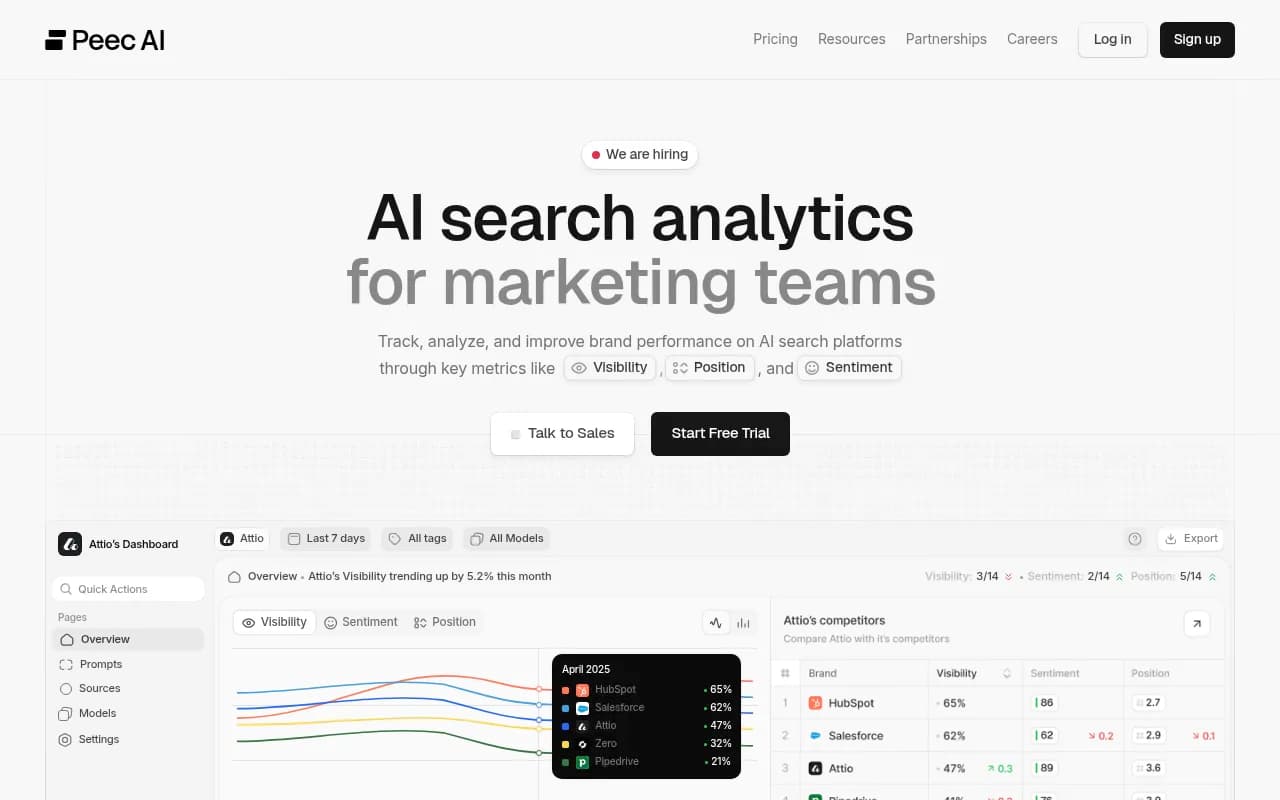
| Peec AI | 2-3 days | Clean UI, decent answer volume, but recommendations are thinner than the monitoring |
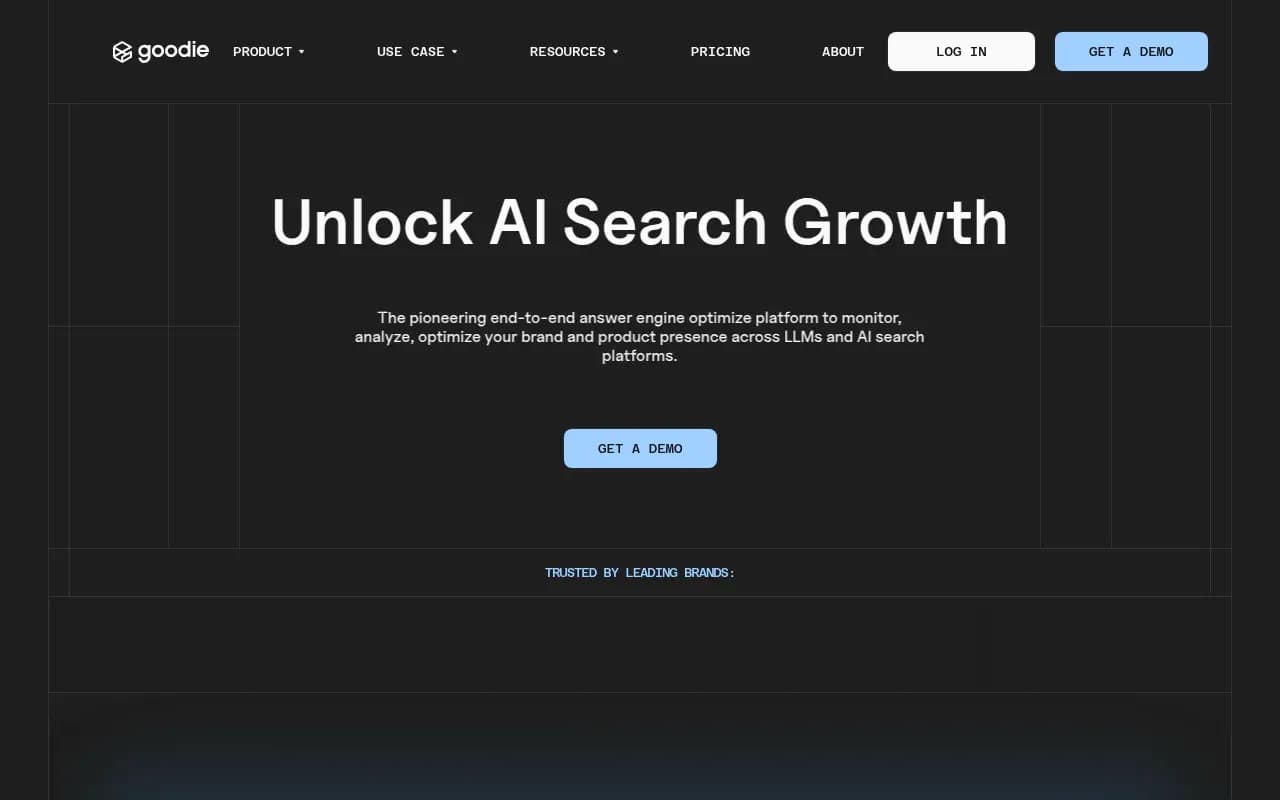
| ContentMonk | 2-4 days | Strong once running, but the closed-loop between AEO tracking and content creation takes a bit longer to configure | | Goodie AI | 3-5 days | Big response/citation numbers at entry tier, but light on next-step guidance |
| AthenaHQ | 5-7 days | Deep 8-LLM data and Shopify attribution, but white-glove-style setup slows the first useful output |

| Profound | 1-2 weeks | Enterprise onboarding with a dedicated strategist produces excellent insight eventually, but "eventually" is the operative word |
Profound

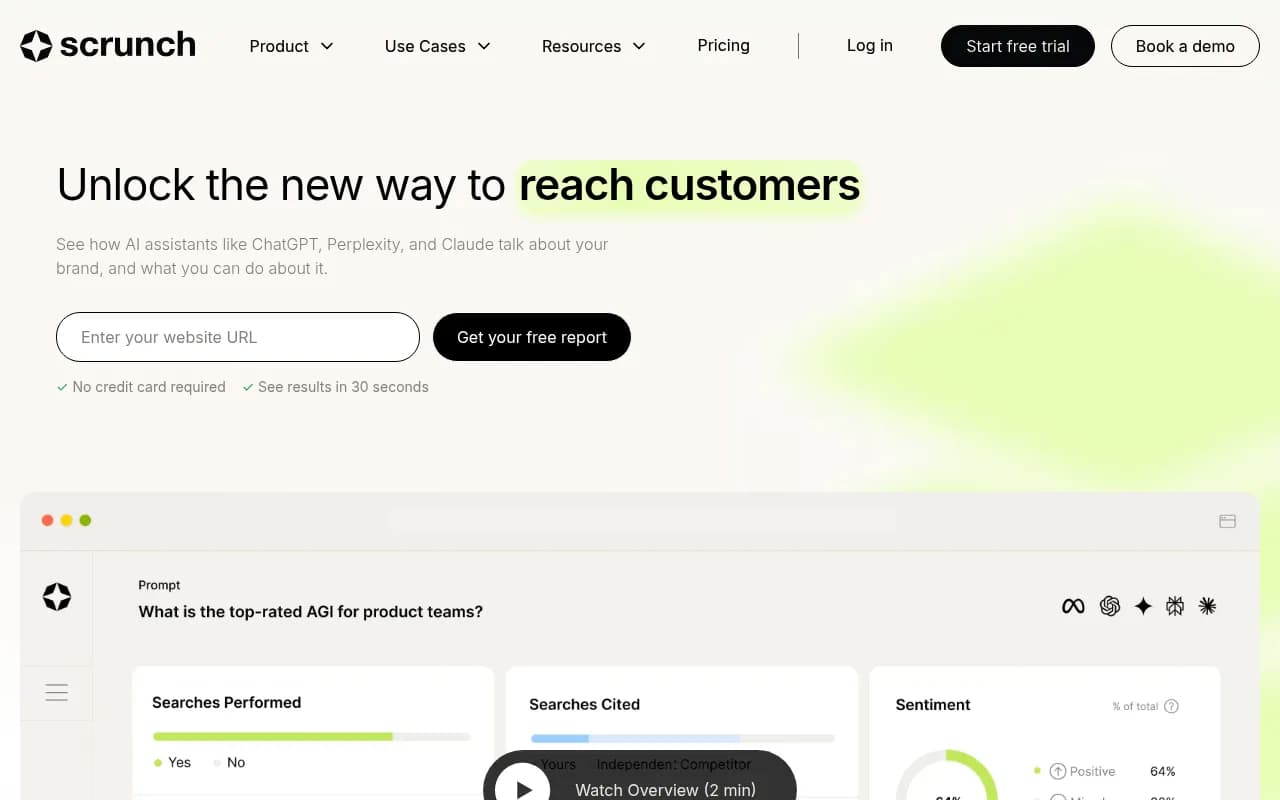
| Scrunch AI | 1-2 weeks | Persona-based prompt curation is thorough but slow; Enterprise tier adds strategy calls before you see much |
These are directional estimates based on plan structure, onboarding process, and what each tool actually surfaces once prompts start running, not lab-tested stopwatch numbers. Your mileage depends on how quickly you can define prompts and connect a domain.
Why Promptwatch tends to come out on top here
Most of the tools on this list stop at the same wall: they tell you that something changed, not why, and they definitely don't do anything about it. Promptwatch closes that loop differently. Its Agent Analytics logs show exactly when ChatGPTBot, ClaudeBot, PerplexityBot, and 400+ other crawlers hit your pages and whether they errored out, which explains the "why" behind a visibility drop the same day it happens rather than after a support ticket.
That matters for speed because the actionable part of "actionable insight" usually requires knowing what specifically to fix. A dropped visibility score is not actionable on its own. A crawler log showing GPTBot hitting a 500 error on your pricing page is. Promptwatch pairs that diagnostic layer with Unified Actions, a prioritized to-do list generated from visibility, citation, and crawler data, plus Content Agents that can draft and publish a fix to Webflow, Framer, or WordPress without someone starting from a blank page.
The company, backed by a EUR 6M seed round led by Seed + Speed Ventures in July 2026 after crossing EUR 2M ARR, now serves 1,840+ brands including Duolingo, Yelp, and Typeform, and is rated 4.7/5 on G2. Crisp, one of its customers, reported 2x higher conversion rates from AI traffic compared to traditional channels after scaling content output with the platform's agents. That's a different kind of proof point than "our dashboard looks nice."
Where the monitoring-only tools stand
Otterly.AI is genuinely fast to set up, and at $29/month for the Lite plan it's the cheapest way to see something. But what you see is a score. There's no content engine, no crawler logs, nothing that tells you what to change on the page. Peec AI is similar: solid UI, up to 9,000 AI answers a month on Pro, but the recommendation layer is thin relative to the monitoring depth.
Goodie AI actually tracks more raw volume at its entry tier (15,000 responses, 250,000 citations) than Scrunch does at a comparable price point, which sounds great until you realize volume of data isn't the same as speed to insight. More data to sift through without a triage system can slow you down, not speed you up.
Where the enterprise platforms stand
Profound and AthenaHQ both do serious work once they're running. Profound's Answer Engine Insights cover share of voice, sentiment, and competitor positioning across 9+ engines, and every customer gets a dedicated engagement manager and AI strategist from day one. That's valuable, but it's also a process: onboarding calls, strategy sessions, prompt curation with a human in the loop. Profound restructured its pricing in September 2026, and the enterprise-first model shows in how the tool is delivered, not just what it costs.
AthenaHQ leans into e-commerce and mid-market Shopify attribution across 8+ LLMs on every plan, which is a real differentiator if that's your use case. But "white-glove setup" is a phrase that shows up repeatedly in comparisons of Athena for a reason, and white-glove usually means slower, not faster, time to first insight.
Scrunch itself, post-acquisition
Worth noting: Scrunch is no longer an independent company. Sitecore announced its acquisition of Scrunch on June 3, 2026, reportedly for $225M according to Bloomberg. Scrunch still sells its own plans, now starting at $300/month ($250/month billed annually) for 350 custom prompts across ChatGPT, Claude, Gemini, Perplexity, Google AI Mode and AI Overviews, and Meta AI. Persona-based tracking and GA4 attribution are real strengths, and SOC 2 Type II compliance holds up in enterprise security reviews. What it still doesn't do is write content, track Google rankings, or generate a fix once it finds a gap. Content Generation is listed as "coming soon" on Scrunch's own comparison pages, which tells you where the product roadmap is heading, just not yet where it is.
A quick framework for picking based on speed
If you need something running and useful by end of day, look at tools with self-serve onboarding and either UI-accurate live data or an existing crawler-log integration, since that's what turns a number into a diagnosis. Promptwatch and Rankshift both fit here.
If you're fine waiting a few days for a broader data set and don't need a content engine attached, Otterly.AI, Peec AI, or Goodie AI will get you monitoring quickly at a lower price point.
If you're an enterprise team that wants a dedicated strategist walking you through setup and you can tolerate a slower ramp in exchange for white-glove guidance and deep persona/funnel filtering, Profound, AthenaHQ, or Scrunch's Enterprise tier are the more defensible choices, even though they're slower to first insight by design.
The methodology gap most "best alternatives" lists skip
A lot of Scrunch alternative roundups rank tools by feature checklist: how many LLMs tracked, how many prompts included, whether there's a free trial. Those lists are useful for budgeting, less useful for figuring out how fast a tool actually changes what your team does day to day. If you're evaluating any of these platforms, ask the vendor directly: "From the moment I connect my domain, how long until I get a specific recommendation I can act on today?" The answer tells you more than the pricing page does.
If you want a broader view of the AI visibility category beyond this list, the directory at bestgeosoftware.com tracks a wider set of GEO platforms, and Promptwatch's own comparison of 21 GEO platforms breaks down feature-by-feature differences across the field in more depth than a single ranked list can.
Bottom line
Speed to insight isn't the only thing that matters when picking a Scrunch AI alternative, but it's the one that decides whether the tool actually gets used past the first month. Tools that pair monitoring with diagnostic data (crawler logs) and an execution layer (content generation, prioritized action lists) close that gap fastest. Tools that stop at a dashboard score, however polished, leave the real work for someone else to figure out later, and "later" is where a lot of AI visibility subscriptions quietly go to die.