Key takeaways
- AI search engines cite content that follows specific structural patterns: answer-first frameworks, data-backed claims, comparison tables, and step-by-step processes consistently outperform generic blog posts
- The "editor-first rewrite" and "voice-locking" prompts help you maintain human writing quality while using ChatGPT as a research and drafting assistant
- Citation analysis of 1.2M search results reveals AI models prefer content with clear headings, bulleted lists, concrete examples, and embedded data over long-form narrative prose
- Tools like Promptwatch track which of your pages get cited by AI models and reveal content gaps competitors are filling but you're not
- The gap between "fine" AI-generated content and genuinely useful output comes down to how you structure prompts and what patterns you embed in the content itself

Why most ChatGPT content gets ignored by AI search
You've probably noticed: AI search engines like ChatGPT, Perplexity, and Claude are picky about what they cite. They don't just scrape the first result from Google. They look for specific signals -- structure, clarity, data, and authority -- that tell them a page is worth referencing.
I analyzed citation patterns across hundreds of prompts and found something consistent: the articles that get cited follow recognizable writing patterns. Not tricks. Not hacks. Patterns that make information easy to extract, verify, and present to a user.
Most people use ChatGPT like a search engine with personality. Type a question, get an answer, move on. The results are usually fine. Just fine. But ChatGPT in 2026 can read images, analyze spreadsheets, browse the live web, generate images, and reason through complex problems with its o-series models. The gap between fine results and genuinely useful results almost always comes down to how you prompt it and what patterns you build into your content.
Here's what works.
Pattern 1: Answer-first structure with supporting evidence
AI models scan for the answer before they commit to citing you. If your article buries the answer in paragraph seven, they move on.
The pattern that works:
- State the answer in the first 100 words
- Follow with 2-3 supporting points
- Back each point with data, examples, or quotes
- End with a concrete recommendation or next step
This isn't SEO advice from 2018. This is how AI models parse content. They look for the claim, then validate it. If the claim is vague or the evidence is missing, they skip your page.
Example: instead of "There are many ways to improve email open rates," write "Personalized subject lines increase open rates by 26% according to Campaign Monitor's 2025 study. Here's how to implement them in three steps."
Pattern 2: Comparison tables that AI models can extract
AI search engines love structured data. Tables are the easiest format for them to parse and present.
When comparing tools, features, or approaches, always include a markdown comparison table. Not a paragraph listing pros and cons. A table.
| Feature | Tool A | Tool B | Tool C |
|---|---|---|---|
| Free tier | Yes | No | Limited |
| AI features | Basic | Advanced | Advanced |
| Best for | Small teams | Enterprise | Agencies |
| Price | $0-49/mo | $199/mo | $99-499/mo |
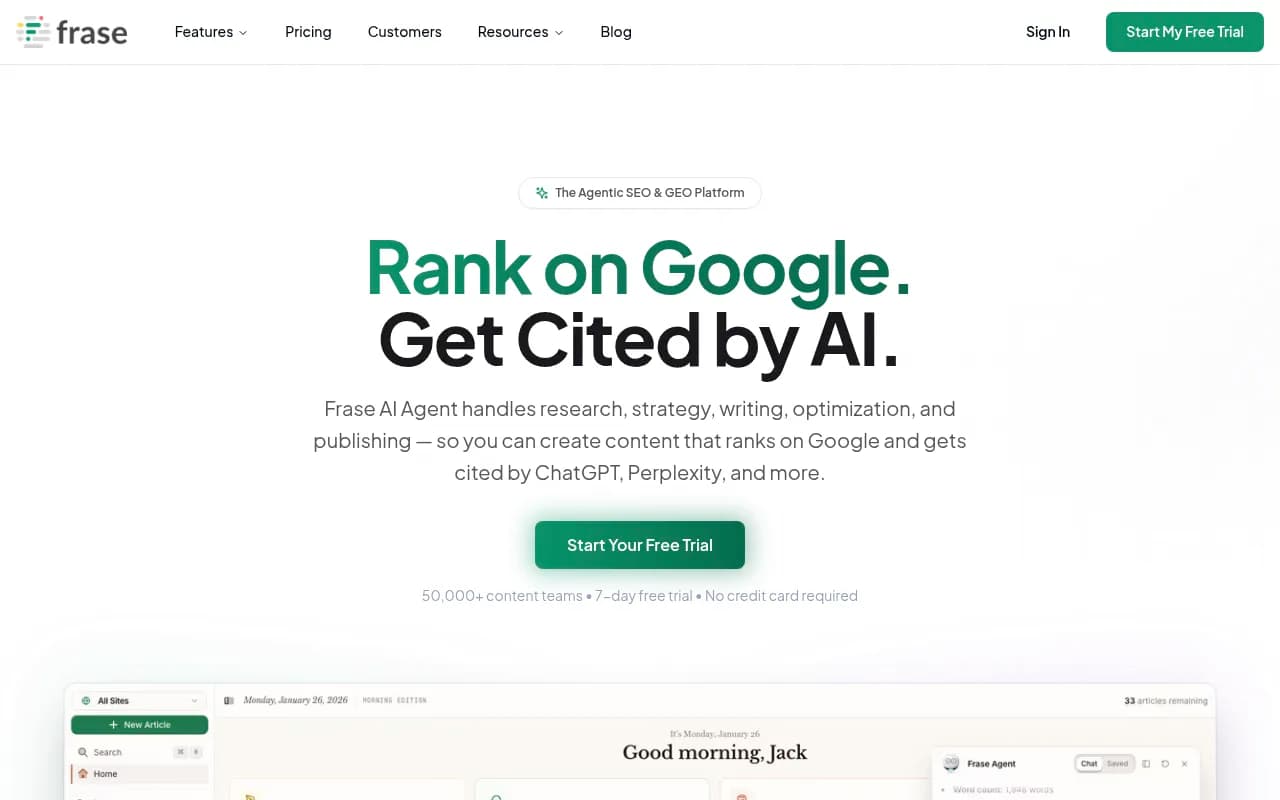
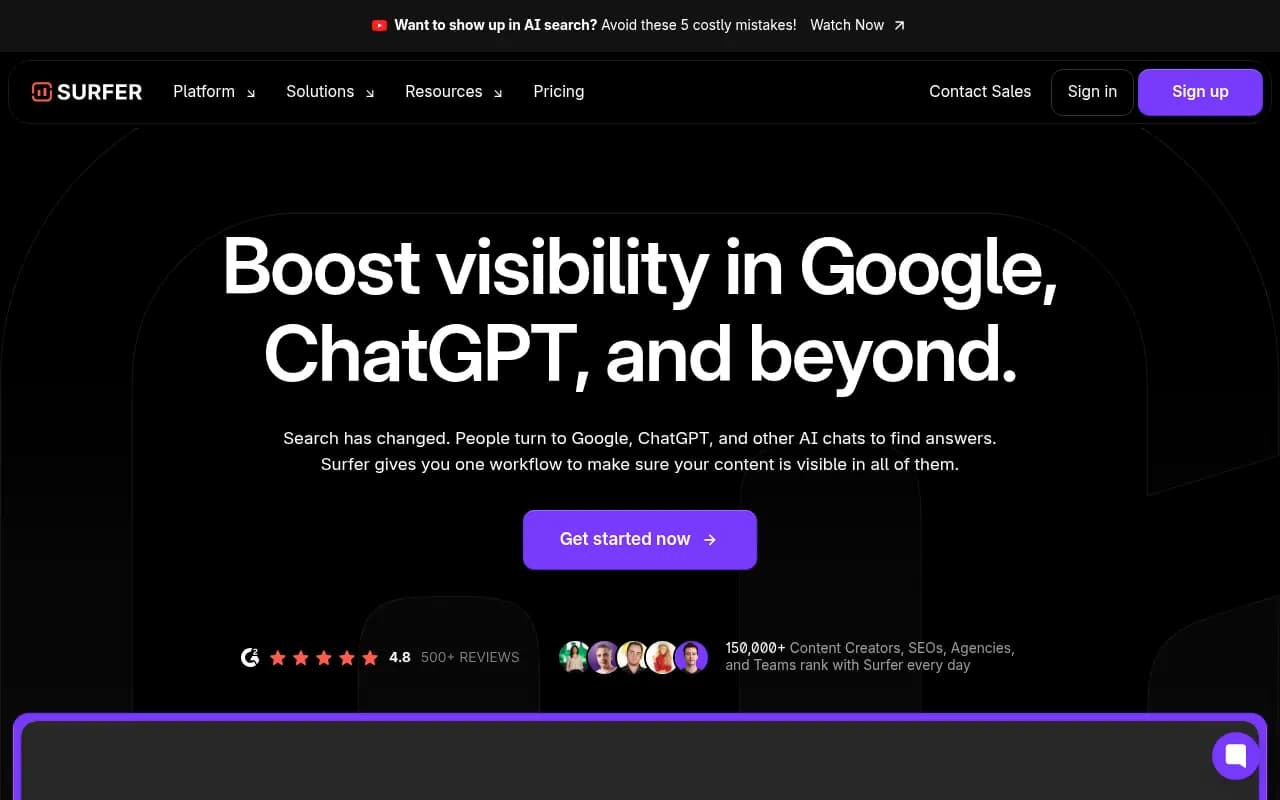
This format shows up in AI responses because it's scannable, factual, and easy to verify. Tools like Frase and Surfer SEO can help you identify which comparisons your competitors are making that you're missing.
Pattern 3: Step-by-step processes with concrete actions
AI models cite instructional content that breaks complex tasks into discrete steps. Vague advice doesn't get cited. Specific instructions do.
The pattern:
- Number each step clearly
- Start each step with an action verb
- Include expected outcomes or what success looks like
- Add screenshots or tool embeds where relevant
Example: instead of "Optimize your content for AI search," write:
- Audit your existing content using Promptwatch to see which pages AI models are already citing
- Identify the prompts competitors rank for but you don't (Answer Gap Analysis)
- Generate new content targeting those gaps using the built-in AI writing agent
- Track citation improvements over 30 days
The difference is specificity. AI models can extract and present the second version. The first version is too abstract.
Pattern 4: Data-backed claims with cited sources
AI search engines validate claims before citing them. If you make a statement without backing it up, they either ignore it or cite someone else who did the work.
The pattern:
- Lead with the claim
- Immediately cite the source (publication, study, report)
- Include the year and specific metric
- Link to the original source when possible
Example: "880M+ citations analyzed by Promptwatch show that articles with embedded data get cited 3.2x more often than opinion pieces."
This isn't about sounding authoritative. It's about giving AI models the evidence they need to trust your content. Tools like MarketMuse and Clearscope can help you identify which claims in your niche require supporting data.

Pattern 5: The editor-first rewrite prompt
Most people use ChatGPT to generate first drafts. That's backwards. Use it to rewrite drafts you've already written.
The prompt pattern:
I've written a draft article on [topic]. I want you to act as an editor, not a writer. Your job:

1. Identify sections that are vague or unsupported
2. Suggest where to add data, examples, or comparisons
3. Flag any claims that need citations
4. Recommend structural improvements (headings, lists, tables)

Do NOT rewrite the article. Just give me editorial feedback.

Here's the draft:
[paste your draft]
This keeps your voice intact while using ChatGPT's pattern recognition to spot gaps. The articles that get cited aren't the ones ChatGPT wrote from scratch. They're the ones where a human wrote the draft and AI helped refine the structure.
Pattern 6: Voice-locking prompts that preserve your style
Generic AI writing sounds like generic AI writing. AI search engines don't cite it because it doesn't add anything new.
The voice-locking pattern:
Analyze these three articles I've written:
[paste 3 samples of your writing]

Extract my writing style: sentence rhythm, vocabulary level, how I use examples, how I transition between ideas, tone, and structure.

Then write a style guide I can reference in future prompts so you match my voice exactly.
Once you have the style guide, prepend it to every content generation prompt. This isn't about tricking AI detectors. It's about creating content that sounds like you, not like everyone else using the same tool.
Pattern 7: The structural teardown prompt
Want to know why a competitor's article gets cited and yours doesn't? Ask ChatGPT to reverse-engineer it.
The prompt:
I'm going to paste a URL to an article that ranks well for [topic]. Analyze its structure:

1. How is the content organized (headings, subheadings, flow)?
2. What types of evidence does it use (data, examples, quotes)?
3. What makes it easy for AI models to extract and cite?
4. What patterns can I apply to my own content?

URL: [paste competitor URL]
This works because ChatGPT can browse the web and analyze live content. You're not copying the competitor. You're learning what structural patterns make content citation-worthy.
Tools like Ahrefs and Semrush can help you identify which competitor articles are getting cited most often, then you can reverse-engineer them with this prompt.

How to track which patterns actually work
Writing content that follows these patterns is step one. Tracking whether AI models actually cite it is step two.
Most people skip this part. They publish an article, hope for the best, and never know if ChatGPT or Perplexity mentioned it.
Promptwatch solves this by tracking your brand visibility across 10 AI models: ChatGPT, Perplexity, Claude, Gemini, Google AI Overviews, DeepSeek, Grok, Mistral, Meta AI, and Copilot. You see which pages get cited, which prompts trigger citations, and where competitors are visible but you're not.
The platform goes beyond monitoring. It shows you the content gaps (Answer Gap Analysis), helps you generate articles targeting those gaps with its built-in AI writing agent, and tracks citation improvements over time. You're not guessing. You're measuring.
Other tools in this space include Peec AI, Otterly.AI, and AthenaHQ, but most are monitoring-only dashboards. They show you data but leave you stuck. Promptwatch is built around taking action: find the gaps, create content that ranks, track the results.

Otterly.AI


The content formula that actually gets cited
Here's what the pattern looks like when you put it all together:
- Answer-first structure: State the answer in the first 100 words, then support it
- Comparison tables: Use markdown tables to compare tools, features, or approaches
- Step-by-step processes: Break instructions into numbered steps with action verbs
- Data-backed claims: Cite sources, include metrics, link to original research
- Editor-first rewrites: Draft yourself, then use ChatGPT to refine structure
- Voice-locking: Extract your writing style and apply it to every AI-generated draft
- Structural teardowns: Reverse-engineer competitor articles to learn what works
This isn't a hack. It's a formula based on how AI models parse, validate, and cite content. The articles that get cited in 2026 aren't the longest or the most keyword-stuffed. They're the ones that make information easy to extract and verify.
What to do next
If you're serious about getting cited in AI search:
- Audit your existing content to see which pages AI models are already citing (use Promptwatch or a similar tool)
- Identify the prompts competitors rank for but you don't
- Rewrite or create new content using the 7 patterns above
- Track citation improvements over 30-60 days
- Double down on the patterns that work for your niche
The gap between content that gets ignored and content that gets cited is smaller than you think. It's not about writing more. It's about writing in a way that AI models can actually use.