Key takeaways
- Model Context Protocol (MCP) is an open standard, now under the Linux Foundation, that lets AI agents securely connect to external tools, databases, and APIs using a single interface.
- MCP is shifting AI from a passive information provider to an active task executor -- which changes how brands get discovered, cited, and recommended.
- Several major SEO and marketing platforms (including Ahrefs) now offer MCP servers, meaning AI agents can query your data directly.
- For brand visibility, MCP creates both an opportunity (your content and data can be surfaced more directly) and a risk (if competitors have MCP integrations and you don't, they get the citation).
- Tracking your brand's appearance in AI-generated responses -- across ChatGPT, Perplexity, Claude, and others -- is now a distinct discipline from traditional SEO.
What MCP actually is (and why it matters beyond developers)
Model Context Protocol started as an Anthropic project and has since grown into a multi-company open standard under the Linux Foundation. The short version: MCP is a standardized way for AI models to talk to external tools and data sources. Instead of every AI integration requiring a custom connector, MCP provides one protocol that works across systems.
Think of it like USB-C for AI. Before USB-C, every device had its own charging port. MCP does for AI integrations what USB-C did for cables -- one standard that everything can plug into.
David Soria Parra, MCP's co-creator at Anthropic, laid out the 2026 roadmap in a keynote earlier this year. The protocol has matured significantly: working groups are now formalized under SEP-1302, and the focus has shifted from "getting it to work" to "making it safe and scalable at enterprise level."
For most marketers, MCP has felt like a developer concern. That's changing fast. Here's why it matters to anyone who cares about brand visibility.
How MCP changes the way AI answers questions
Before MCP, when you asked ChatGPT or Perplexity a question, the model would draw on its training data and, in some cases, do a live web search. The answer was assembled from whatever the model could find or recall.
With MCP, the picture gets more complex. An AI agent can now:
- Query a live database directly
- Pull real-time pricing from a product catalog
- Read structured data from a CRM or analytics platform
- Call an API to get up-to-date inventory or review data
This means AI responses are no longer purely based on what's been crawled and indexed on the web. They can be based on live, structured data -- and the brands that have made their data available through MCP servers have a direct line into AI-generated answers.
The MCP server ecosystem in 2026
Several platforms now offer MCP servers that AI agents can connect to. Skyvia's 2026 roundup lists tools like Ahrefs, HubSpot, Salesforce, Notion, and GitHub among the top MCP servers for marketing, development, and data workflows.
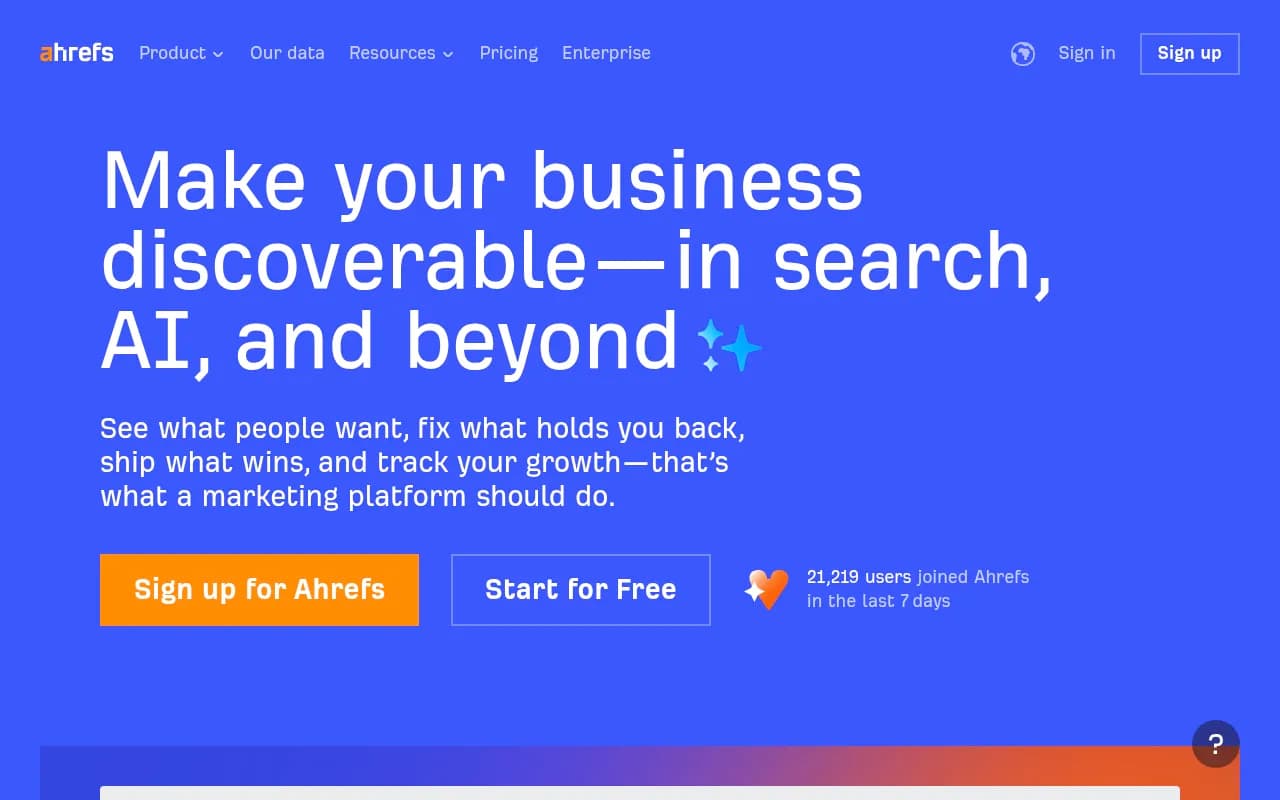
What this means practically: if an AI agent is helping a user research a topic and it has access to an Ahrefs MCP server, it can pull live keyword data, backlink profiles, and content metrics directly into its response. The brands and pages that show up in that data get surfaced in the AI's answer.
For SEO teams, this is a significant shift. It's not just about ranking in Google anymore. It's about whether your data, your content, and your brand are accessible to AI agents through the tools they're already using.
The three layers of AI brand visibility in 2026
MCP is one piece of a larger puzzle. To understand how brand visibility works in the current AI search environment, it helps to think in three layers:
Layer 1: Training data and web citations
This is the traditional layer -- what AI models learned during training, plus what they find when they do live web searches. If your content is well-written, authoritative, and covers topics that users ask about, AI models are more likely to cite you. This is the domain of Generative Engine Optimization (GEO).
Layer 2: Real-time retrieval and crawling
AI crawlers from OpenAI, Anthropic, Perplexity, and others are actively visiting websites right now. They're reading your pages, checking for errors, and deciding what's worth including in responses. If your site has crawl errors, JavaScript rendering issues, or thin content, AI models may skip you entirely -- even if your traditional SEO is solid.
Layer 3: MCP and structured data access
This is the newest layer. Through MCP servers, AI agents can access live, structured data from platforms you already use. If your brand's data is available through an MCP-compatible tool, it can be pulled directly into AI responses without any web crawl at all.
Most brands are focused on layer 1. The smarter ones are paying attention to all three.
What MCP means for brand visibility tracking
Here's where things get genuinely complicated for marketing teams.
Traditional rank tracking tells you where you appear in Google's search results. AI visibility tracking tells you whether you appear in AI-generated responses -- and what those responses say about you. MCP adds a third dimension: whether your data is being accessed directly by AI agents through tool integrations.
These three signals don't always move together. You can rank well in Google, get cited occasionally in Perplexity, and still be completely invisible to an AI agent that's pulling data through an Ahrefs or HubSpot MCP server.
What you actually need to track
For a complete picture of your AI brand visibility in 2026, you need:
| Signal | What it tells you | How to track it |
|---|---|---|
| AI citation frequency | How often AI models mention or link to you | AI visibility platforms |
| Prompt-level visibility | Which specific questions trigger your brand | Prompt tracking tools |
| AI crawler activity | Which pages AI bots are visiting and how often | Crawler log analysis |
| Sentiment in AI responses | What AI models say about you when they cite you | Response monitoring |
| Competitor visibility | Who's getting cited instead of you | Competitor heatmaps |
| MCP data availability | Whether your data is accessible to AI agents | Platform integrations |
The security and governance angle
One thing that often gets skipped in marketing discussions of MCP: it introduces real security considerations. Microsoft published a detailed breakdown of how they're approaching MCP governance internally -- secure-by-default architecture, automated inventory management, and strict access controls.
For brands, this matters in two ways. First, if you're building or exposing an MCP server, you need to think carefully about what data you're making available to AI agents. Second, if AI agents are accessing third-party MCP servers that contain data about your brand (reviews, pricing, product info), that data needs to be accurate and up-to-date.
Stale or incorrect data in an MCP-accessible source can end up in AI-generated responses to real customer questions. That's a brand risk that didn't exist two years ago.
Akamai's security team put it plainly: MCP is "new and evolving, with no established standards for development, deployment, exposure, or security." Best practices are still being written. That's not a reason to ignore it -- it's a reason to get ahead of it.
AI agent protocols beyond MCP
MCP isn't the only protocol shaping how AI agents work in 2026. There are two others worth knowing:
Agent2Agent (A2A) handles communication between AI agents themselves -- when one agent needs to hand off a task to another. This is relevant for complex workflows where multiple AI systems collaborate.
Browser Use and similar protocols let AI agents interact with web interfaces directly, filling forms, clicking buttons, and navigating pages. This is how AI shopping agents work.
For brand visibility, the practical implication is that AI agents are becoming more capable of taking actions, not just generating text. An AI agent helping someone book a hotel, compare software tools, or research a purchase is making decisions that directly affect which brands get chosen. If your brand isn't visible in the AI's data sources -- whether through web citations, MCP integrations, or structured data -- you're not in the consideration set.
How to actually improve your AI visibility
Understanding MCP is useful context. But most marketing teams need actionable steps. Here's what actually moves the needle:
1. Audit your AI crawler access
Before optimizing for AI visibility, check whether AI crawlers can actually access your content. Tools that analyze crawler logs -- showing which pages ChatGPT, Claude, Perplexity, and other AI bots are visiting -- reveal gaps you'd never find through traditional SEO audits.
Promptwatch includes real-time AI crawler logs as part of its platform, showing exactly which pages AI bots read, errors they hit, and how often they return.

2. Find your prompt gaps
The most direct way to improve AI visibility is to figure out which questions your competitors are getting cited for that you're not. This is called answer gap analysis -- mapping the prompts where you're invisible and creating content that addresses them.
3. Create content that AI models want to cite
AI models cite content that is specific, authoritative, and directly answers questions. Generic blog posts optimized for keyword density don't perform well in AI search. What works: structured content with clear answers, original data, and genuine expertise.
4. Get your data into MCP-compatible platforms
If you use tools like HubSpot, Salesforce, or Ahrefs, check whether they have MCP servers and whether your data is current and well-organized. AI agents querying these platforms will surface the brands with the cleanest, most complete data.
5. Monitor what AI models actually say about you
This sounds obvious but most brands still aren't doing it systematically. You need to know whether AI models are recommending you, ignoring you, or -- worst case -- saying something inaccurate about you.
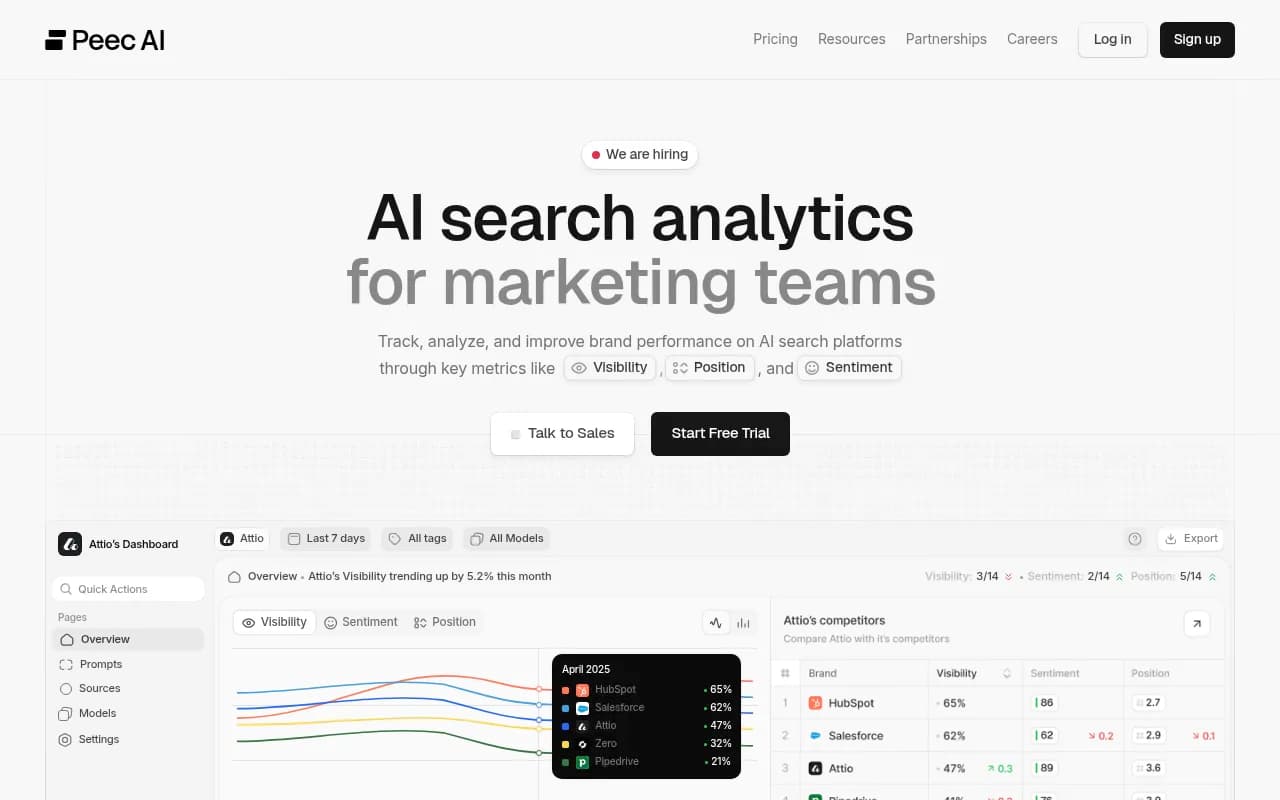
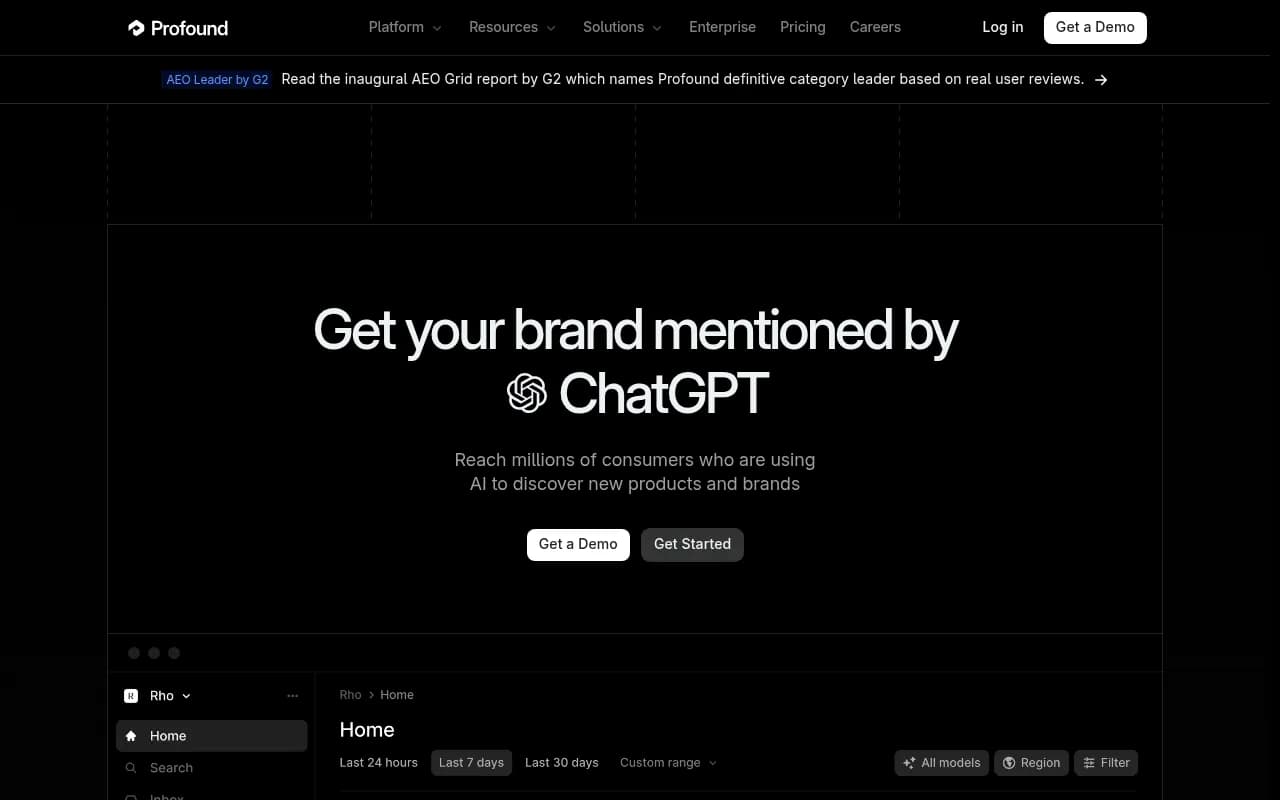
Several platforms now handle this monitoring:
Otterly.AI

Profound
Comparing AI visibility platforms in 2026
Not all AI visibility tools are built the same. Here's how the major options stack up on the capabilities that matter most in an MCP-influenced landscape:
| Platform | Prompt tracking | Crawler logs | Content generation | MCP/data integration | Reddit/YouTube tracking |
|---|---|---|---|---|---|
| Promptwatch | Yes | Yes | Yes (AI writing agent) | Via API | Yes |
| Profound | Yes | No | No | No | No |
| Otterly.AI | Basic | No | No | No | No |
| Peec.ai | Basic | No | No | No | No |
| AthenaHQ | Yes | No | No | No | No |
| Semrush | Limited | No | Via ContentShake | No | No |
| LLM Pulse | Yes | No | No | No | No |
The core difference between monitoring-only tools and platforms like Promptwatch is what happens after you see the data. Monitoring tells you where you're invisible. Optimization helps you fix it.
What the MCP roadmap means for 2026 and beyond
The MCP roadmap published at modelcontextprotocol.io points to several developments that will affect brand visibility:
- Formal working groups are now standardizing how MCP servers expose data, which will make it easier (and more important) for brands to publish structured data through MCP-compatible platforms.
- Security standards are being formalized, which will increase enterprise adoption and make MCP a more reliable channel for AI data access.
- Multi-agent coordination is maturing, meaning AI agents will increasingly work together on complex tasks -- and the brands visible across multiple agent workflows will have a significant advantage.
The practical takeaway: MCP is moving from experimental to infrastructure. Brands that treat it as a developer curiosity will find themselves behind when AI agents become the primary interface for product discovery, research, and purchasing decisions.
The bottom line
MCP changes the mechanics of how AI agents access information. For brand visibility, that means the web crawl is no longer the only path to being cited in an AI response. Structured data, live API access, and MCP server integrations are becoming equally important.
The brands that will win in AI search aren't necessarily the ones with the best traditional SEO. They're the ones whose data is accurate, accessible, and well-organized across every channel AI agents can reach -- from web pages to MCP servers to the platforms AI agents use every day.
Start by understanding where you currently stand. Track which prompts trigger your brand, which AI models cite you, and which pages AI crawlers are actually reading. Then close the gaps systematically. That's the work that matters in 2026.