Key takeaways
- Most GEO platforms are monitoring dashboards. They show you visibility scores, citation counts, and competitor comparisons -- then stop there.
- Knowing you're invisible in AI search is not a strategy. It's just a more expensive way to feel bad about your content.
- The only GEO metric that actually moves the needle is whether your platform can help you close the gap -- through content gap analysis, AI-native content generation, and crawler-level diagnostics.
- A small number of platforms have moved beyond tracking into what you might call the "action loop": find gaps, create content, track results.
- If your current GEO tool can't tell you why you're invisible and what to write to fix it, you're paying for a dashboard, not a strategy.
The visibility problem nobody talks about honestly
There's a version of the GEO conversation that's become almost ritualistic in 2026. Someone shares a screenshot showing their brand mentioned zero times across ChatGPT, Perplexity, and Google AI Overviews. The room goes quiet. Everyone nods. Then someone says "we need to track this" and the meeting ends.
Tracking it is not the problem. The problem is what happens after you track it.
Most teams now have some form of AI visibility monitoring in place. They can tell you their mention rate across five LLMs, which competitors are getting cited more often, and roughly which topics they're losing ground on. That's genuinely useful information. But it's also the easy part. The hard part -- the part that actually changes the numbers -- is figuring out exactly what content to create, creating it in a way that AI models will actually cite, and then verifying that the new content is being crawled and referenced.
Almost no GEO tool does all three of those things. Most do the first one, partially.
Why monitoring-only GEO tools have a ceiling
The monitoring-only model made sense when GEO was new. In 2023 and early 2024, just knowing whether ChatGPT mentioned your brand at all was valuable. Marketers needed to understand the landscape before they could act on it.
That phase is over.
By mid-2026, the question isn't "are we visible in AI search?" -- it's "why aren't we visible for these specific prompts, and what do we do about it?" That's a fundamentally different question, and it requires a fundamentally different kind of tool.
Here's the ceiling monitoring-only tools run into:
They can show you that a competitor gets cited when someone asks "best project management software for remote teams." They can show you that you don't. What they can't tell you is whether that's because you have no content addressing that specific prompt, because your existing content is structured poorly for AI ingestion, because AI crawlers are hitting errors on your site, or because the competitor has been cited in Reddit threads and YouTube videos that AI models are drawing from.
Without that level of diagnosis, you're left guessing. And guessing is expensive.
What "action features" actually means
When I talk about action features in GEO, I mean capabilities that move you from observation to output. There are three categories that matter:
Gap identification that's specific enough to act on. Not "you have low visibility in the productivity software category" but "here are 47 prompts your competitors rank for that you don't, ranked by estimated prompt volume and difficulty, with the specific content angles AI models are currently citing."
Content generation grounded in real prompt data. Not generic AI writing, but articles and briefs built around the exact gaps identified -- incorporating what AI models are already citing, what the competing sources say, and what your brand's positioning should be. The output needs to be engineered to answer the specific question AI models are exposing, not just keyword-stuffed filler.
Crawler-level diagnostics. Knowing that you published new content is not the same as knowing that AI crawlers have found it, read it, and started citing it. Real action features include logs of which AI crawlers visited which pages, what errors they encountered, and when a page moved from "crawled" to "cited." Without this, you're publishing into a black box.
Most tools have none of these. A few have one. Very few have all three working together as a loop.
The action loop in practice
The most useful mental model for GEO in 2026 is a loop, not a dashboard. It goes like this:
- Find the specific prompts where competitors are visible and you're not
- Understand why -- what content exists that AI models are drawing from, and what's missing from your site
- Create content that directly addresses those gaps, structured for AI citation
- Monitor whether AI crawlers find and index that content
- Track whether your visibility scores improve for those specific prompts
- Repeat
This sounds obvious. The reason most teams aren't doing it is that their tools only support step 5 -- and even then, only at a surface level.
Promptwatch is one of the few platforms built around this full loop. Its Answer Gap Analysis identifies the specific prompts competitors rank for that you don't, with prompt volume estimates and difficulty scores so you can prioritize. Content Agents then generate articles and briefs grounded in that gap data -- not generic content, but pieces engineered around what AI models are already citing. And AI Crawler Logs give you real-time visibility into which crawlers are hitting your pages, what errors they're encountering, and when pages move from crawled to cited.

That last piece -- the crawler logs -- is something most competitors don't offer at all. It's also the piece that closes the loop. Without it, you're guessing whether your new content is actually being picked up.
How the current GEO tool landscape breaks down
It's worth being direct about where different tools sit on the monitoring-to-action spectrum, because the marketing copy for most of them sounds similar.
| Tool | Gap analysis | Content generation | Crawler logs | Traffic attribution |
|---|---|---|---|---|
| Promptwatch | Yes (prompt-level) | Yes (AI Content Agents) | Yes (real-time) | Yes |
| Profound | Partial | No | No | Limited |
| Otterly.AI | Basic | No | No | No |
| AthenaHQ | Partial | No | No | No |
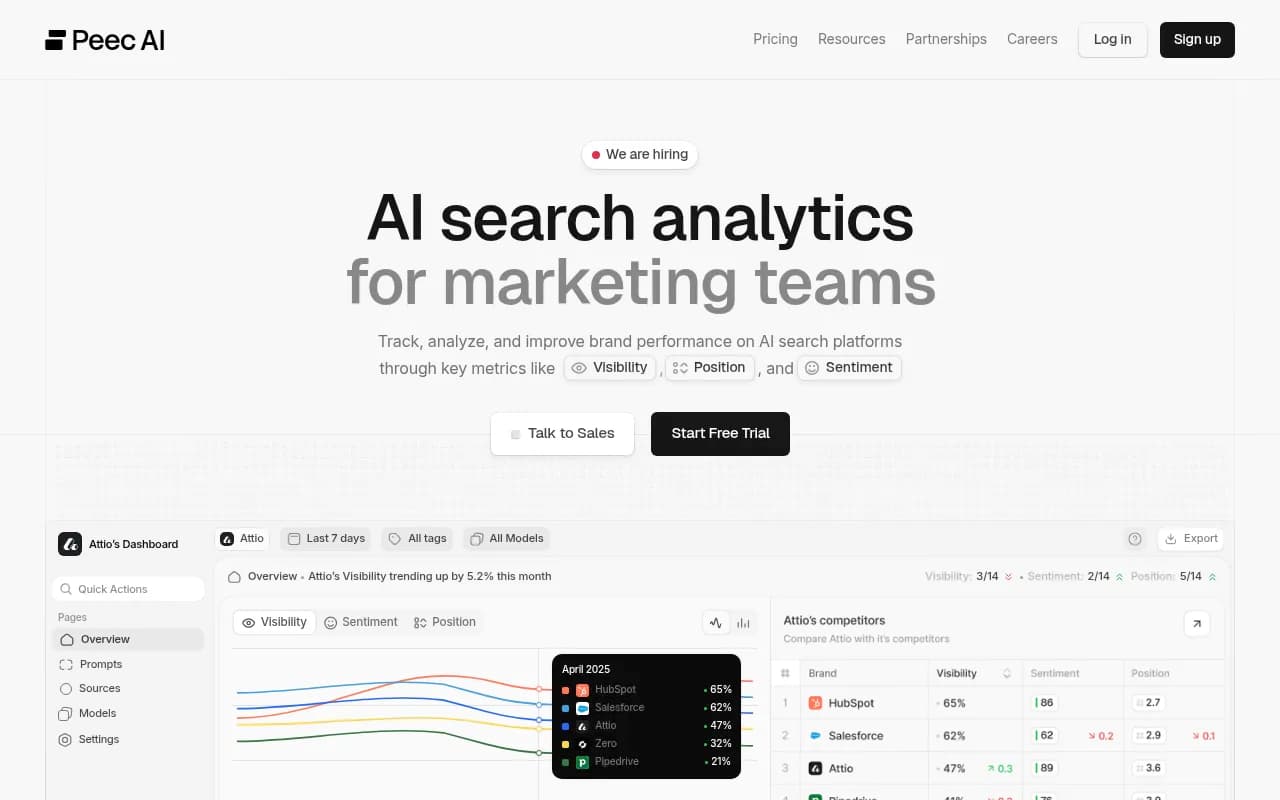
| Peec AI | Basic | No | No | No |
| Search Party | Limited | No | No | No |
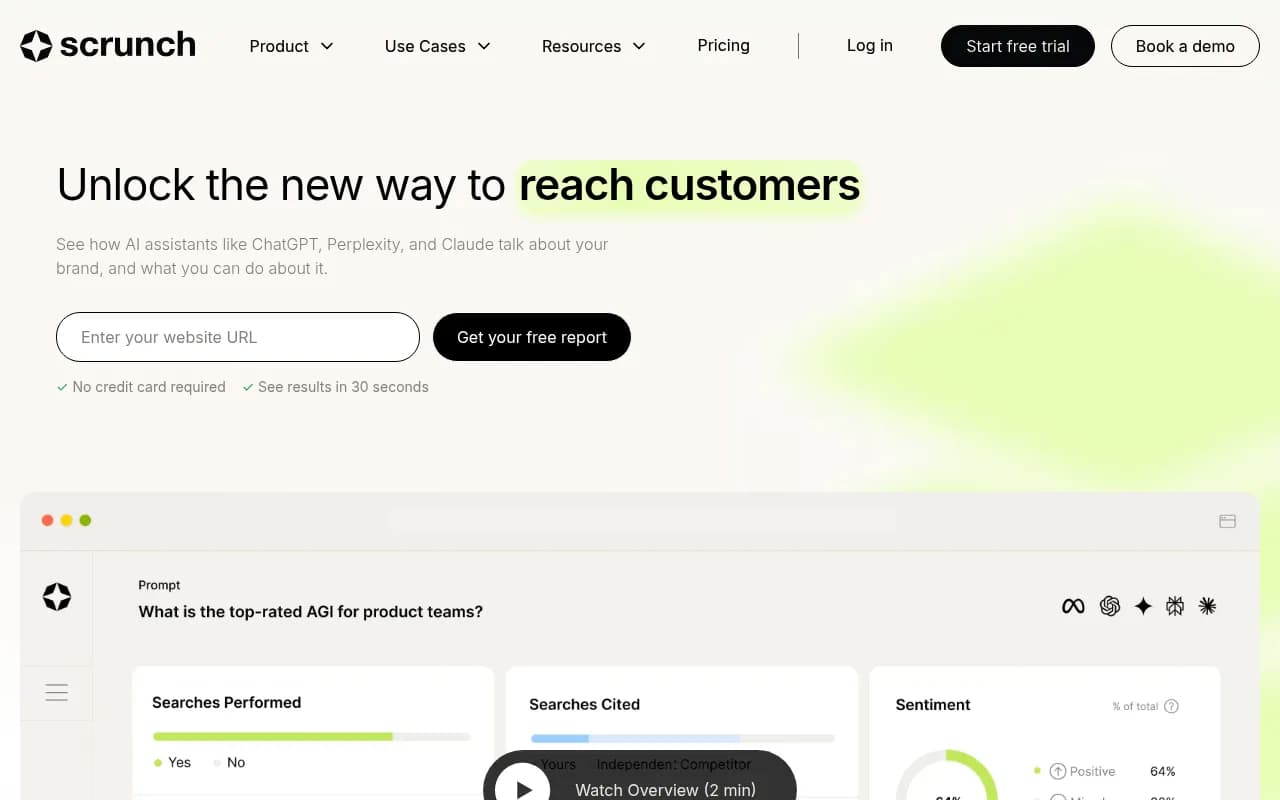
| Scrunch AI | Basic | No | No | No |
| Semrush | Basic (fixed prompts) | Limited | No | No |
| Ahrefs Brand Radar | Basic (fixed prompts) | No | No | No |
The pattern is clear. Monitoring is table stakes. Content generation grounded in real gap data is rare. Crawler-level diagnostics are almost nonexistent outside of Promptwatch.
Profound

Otterly.AI

The prompt data problem
One thing that separates useful GEO tools from expensive ones is the quality of the underlying prompt data.
There are two ways to gather data about how AI search engines behave. You can call the API and analyze the output. Or you can track how AI search engines actually behave in real user interfaces -- the answers, citations, and shopping recommendations that real users see.
These are not the same thing. API outputs and user-facing answers can differ significantly. A tool that only queries APIs may be showing you a version of AI search behavior that no actual user experiences.
This matters for gap analysis. If you're identifying content gaps based on API outputs that don't match what users actually see, you're optimizing for the wrong thing. Prompt volume estimates based on real user interface behavior are more reliable than estimates based on API sampling.
It also matters for citation tracking. Which sources AI models cite in their actual user-facing answers is what drives traffic and brand visibility. That's the data worth having.
What "fixing it" actually requires
Let's be concrete about what closing an AI visibility gap actually involves, because it's more nuanced than "write more content."
AI models cite sources that directly and authoritatively answer the question being asked. That means:
The content needs to match the prompt intent precisely. A blog post that mentions a topic in passing won't get cited for a prompt about that topic. The content needs to be structured as a direct answer -- with clear headings, specific claims, and enough depth that the AI model can extract a useful response.
The content needs to be crawlable by AI agents. This is a technical requirement that's easy to overlook. If your site has JavaScript rendering issues, slow load times, or pages that AI crawlers are encountering errors on, your content won't get indexed regardless of how good it is. Crawler logs are the only way to diagnose this.
The content needs to exist in the right places, not just on your own site. AI models draw from Reddit threads, YouTube videos, third-party listicles, and review sites -- not just brand websites. Offsite citation analysis tells you which external sources are driving competitor visibility, so you can target those channels too.
And the content needs to be published consistently enough that AI models develop a pattern of citing your domain. One article won't move the needle. A sustained publishing cadence targeting specific prompt gaps will.
The metrics that actually matter
Given all of this, here's how I'd think about measuring GEO progress in 2026:
Prompt-level visibility rate. Not an overall brand mention score, but your citation rate for specific high-value prompts. Are you being cited when someone asks the exact question your ideal customer is asking?
Gap closure rate. Of the prompts you've identified as gaps, how many have you created content for, and how many have moved from "not cited" to "cited" after publishing?
Crawler coverage. What percentage of your key pages have been crawled by AI agents in the last 30 days? Are there crawl errors blocking important content?
Citation-to-traffic attribution. Are the AI citations you're earning actually driving traffic? And is that traffic converting? Visibility without attribution is just vanity.
Offsite citation share. What proportion of your AI citations come from your own site vs. third-party sources? A healthy GEO strategy builds both.
Most monitoring-only tools give you some version of the first metric. The rest require action-oriented features that most platforms don't have.
A note on the compounding effect
There's a dynamic in GEO that makes the monitoring-vs-action gap even more consequential over time.
AI models develop citation patterns. Once a source starts getting cited for a particular topic or prompt type, it tends to keep getting cited -- because it's already in the training data, already in the context window, already established as a reliable source. The brands that close their content gaps now are building a citation foundation that compounds over time.
The brands that are still monitoring their gaps in six months, without acting on them, will find those gaps harder to close. Competitors will have more content, more citations, more established authority in the AI models' reference patterns.
This isn't a reason to panic. It is a reason to stop treating GEO as a reporting exercise and start treating it as a content and technical operation.
What to look for when evaluating a GEO platform
If you're assessing GEO tools right now, here are the questions worth asking:
Can it show me the specific prompts my competitors rank for that I don't, with volume and difficulty estimates? (Not just categories -- actual prompts.)
Can it generate content briefs or articles grounded in that gap data, incorporating what AI models are currently citing?
Does it have crawler logs that show me which AI agents are visiting my pages, what errors they're hitting, and when pages move from crawled to cited?
Can it track citations at the page level, not just the domain level?
Does it track offsite citations -- Reddit, YouTube, third-party listicles -- not just my own site?
Can it attribute AI visibility to actual traffic and revenue?
If the answer to most of those is no, you have a monitoring tool, not a GEO platform. That's fine to know -- but it's worth knowing clearly, so you can make the right decision about where to invest.
The gap between knowing you're invisible and fixing it is where most GEO strategies stall in 2026. The tools that close that gap are the ones worth paying for.