
Key takeaways
- Sort every subscription by the job it does (monitor, trace, act, measure), not by vendor name. Overlap is almost always in monitoring.
- A dashboard that only reports a visibility score is the easiest line item to cancel or consolidate. Tools that help you fix things and prove the fix worked are the ones to keep.
- Citation behavior shifted a lot in 2026. Reddit and Wikipedia lost ground in ChatGPT, review sites gained, and Google AI Overviews leans heavily on YouTube. Check your stack still covers the sources that matter now.
- Ask vendors three renewal questions: which engines are tracked from the real interface, whether crawler logs and AI traffic attribution are included, and what happens to your data if you leave.
- Skip multi-year commitments for monitoring-only tools. The category changes too fast.
Why December is the right moment to audit
Most teams bought their first GEO or AI visibility tool in a hurry during 2025 or early 2026. Someone read a scary LinkedIn post, a trial turned into a card on file, and then a second tool showed up because a different team wanted its own dashboard. By now you may be paying for three monitoring products, an SEO suite with an AI add-on, and a content tool that never saw your visibility data.
Renewals cluster at year end, budgets reset in January, and the data you need to judge a tool (a full year of usage) is sitting right there. This guide is a way to go through the stack methodically instead of by vibes.
One caveat up front. I could not find reliable, current public pricing or contract terms for most of the tools below, so I am not going to pretend to quote them. Check each vendor's pricing page and your own contract. What I can give you is a framework, plus fresh citation data to test your tools against.
What changed in AI search during 2026
Your stack should reflect how the engines behave today, not how they behaved when you signed up. Three shifts matter for tool decisions.
ChatGPT stopped leaning on the sources you were told to chase
Promptwatch's ChatGPT citation share data for November 2026 (Nov 1 to 25) shows Reddit as the most cited of the popular sites at just 0.23% of all ChatGPT citations, with G2 and LinkedIn at 0.18% each. In June, Reddit had 3.71%. Wikipedia fell from 0.56% to 0.03% and left the top 20. Review sites hold five of the top 10 spots, and the 20 charted sites together earn under 2% of citations. The rest is spread across hundreds of thousands of domains.
That last point matters for budgeting. There is no short list of sites to game. Promptwatch's report on Reddit citations dropping in ChatGPT pins the cliff to August 14, 2026, when reddit.com fell from roughly 4% to 0.5%. If you paid for Reddit-focused tooling on the strength of early 2026 numbers, that case needs re-examining.
Google AI Overviews behaves very differently from ChatGPT
Promptwatch's November 2026 social media citation report (Oct 11 to Nov 9) found social platforms made up 13.16% of AI Overviews citations, 1.94% of Perplexity's and 0.64% of ChatGPT's. YouTube alone was 6.71% of AI Overviews citations, more than the other six platforms combined. One caution: the October comparison report covered 7 days and the November one covers 30, so treat the month-over-month change as directional.
The practical takeaway is that a single blended visibility score hides the story. You need per-engine reporting.
Crawlers and fan-outs are now part of the job
ChatGPT began using the site: operator at scale on August 8, 2026, going from about 0.4% to about 17% of fan-out queries, according to Promptwatch Data. Meta-WebIndexer grew from about 2% to nearly 38% of tracked AI crawler requests between mid-July and August 9 (report). If your stack cannot show which bots read your pages, you are guessing about access problems.
Sort your tools by job, not by vendor
Pull your invoices and put each line into one of five buckets.
| Job | Question it answers | Typical tools |
|---|---|---|
| Monitor | Are we mentioned, where, and how? | Prompt and brand trackers |
| Trace | Which pages and third-party sources get cited? | Citation reports, crawler logs |
| Act | What do we publish or fix next? | Content agents, briefs, to-do boards |
| Measure | Did it work, and did it send traffic? | Visitor analytics, Search Console, page tracking |
| Classic SEO | Do we still rank and stay technically healthy? | Rank trackers, crawlers, suites |
Most teams find they have three tools in Monitor, one half-used tool in Act, and nothing in Trace or Measure. That is backwards. Monitoring is the cheapest layer to replace because the data looks similar across vendors.
The renew, replace or cancel test
Run each subscription through these questions in order.
- Did anyone open it in the last 60 days? If not, cancel. Do not wait for a better reason.
- Does it do something no other tool in the stack does? If it duplicates another subscription, cancel the weaker one.
- Does it track the real interfaces of the engines your buyers use, or only API outputs? User-facing answers and citations can differ from API responses.
- Does it connect findings to an action? A score with no next step makes someone else do the work.
- Can you show a result tied to it (a page that got cited, traffic that arrived, a claim that got corrected)? If not, you cannot defend the renewal.
Renew when
The tool covers a job nothing else covers, your team uses it weekly, and you can point to a decision it changed. Renew monthly or annually, and avoid multi-year terms in a category that moves this fast.
Replace when
The tool does a needed job poorly. Common signs: only a handful of engines, a fixed prompt set you cannot change, no per-country or per-language tracking, or exports that make your reporting harder.
Cancel when
It overlaps something you already pay for, or it only produces a number. A visibility score on its own does not tell you whether the problem is coverage, prominence, or crawlability.
Category by category: what to keep
Monitoring tools
This is where you will find the most waste. Plenty of trackers do a reasonable job of answering "were we mentioned?" Tools in this crowded group include Otterly.AI, Peec AI, Rankshift, LLM Pulse, Gauge, and Goodie AI. Several are cheap and fine for a small team that only needs mentions tracking.
Otterly.AI



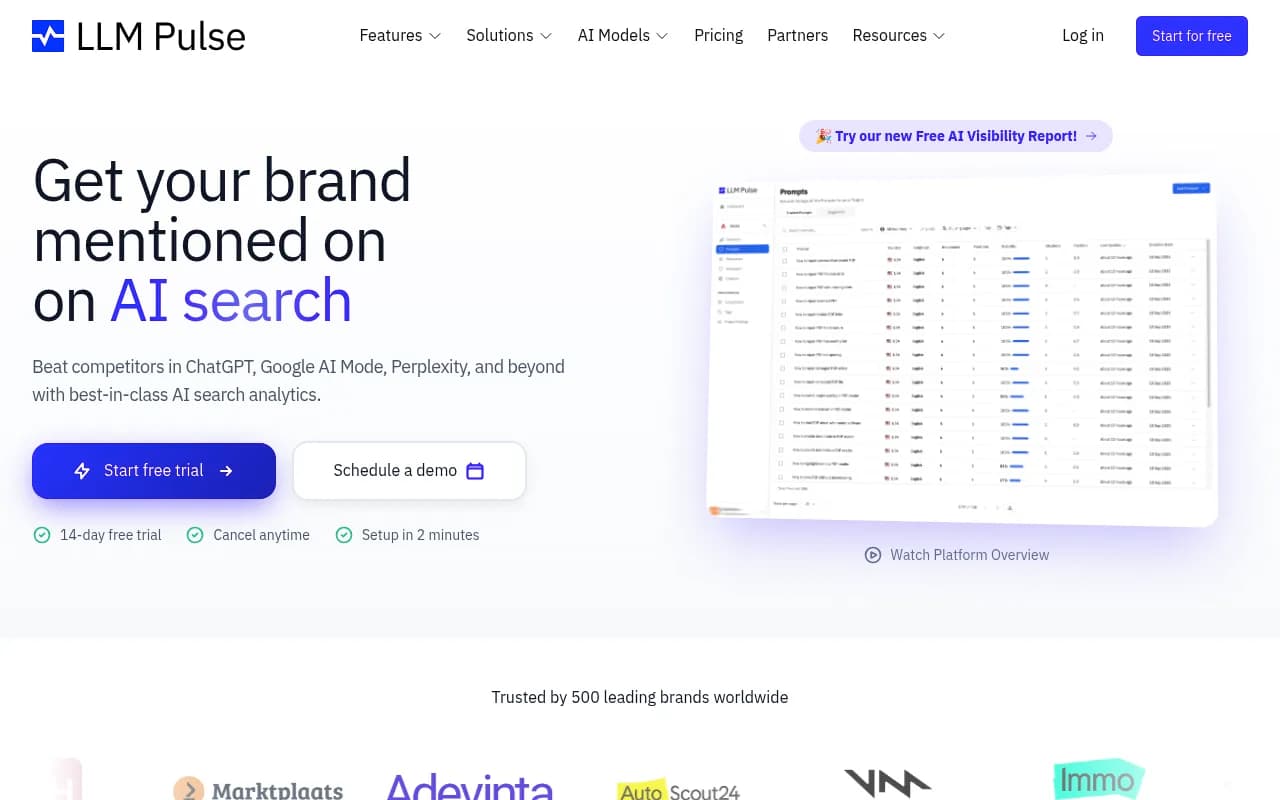
If you run two of these, you are almost certainly paying twice for the same answers. Pick one, export your historical data first, and cancel the other.
For teams that want monitoring plus the work that follows it, an end-to-end option like Promptwatch is worth a look. It tracks ChatGPT, Gemini, Claude, Perplexity, Google AI Overviews and AI Mode, Copilot and others from the real interfaces, then adds IP-verified AI crawler logs, visitor analytics, Brand Narrative and Fact Check, and a Content Agent that writes and publishes pages to WordPress, Webflow or Framer. The honest caveat is that the Content Agent and faster-than-daily tracking start on the Business plan, so confirm what your tier includes at promptwatch.com/pricing.

Enterprise and larger monitoring platforms
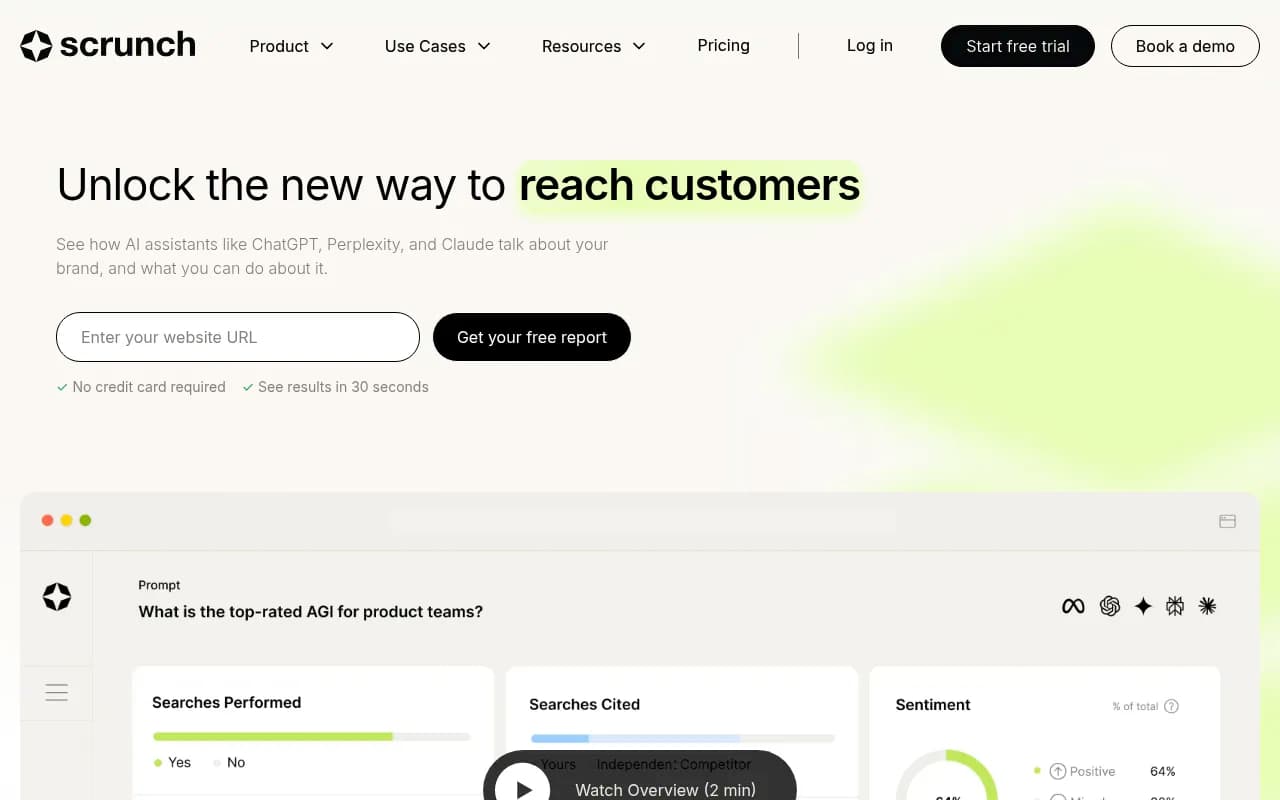
Profound and Scrunch AI sit at the higher end and have strong monitoring feature sets. If you are renewing one of them, the question is whether the price premium buys something you actually use, such as crawler logs, Reddit and YouTube citation tracking, shopping data, or execution. See the head-to-head pages, Promptwatch vs Profound and Promptwatch vs Scrunch, for a vendor-written view, and read them with that bias in mind.
Profound

SEO suites with AI add-ons
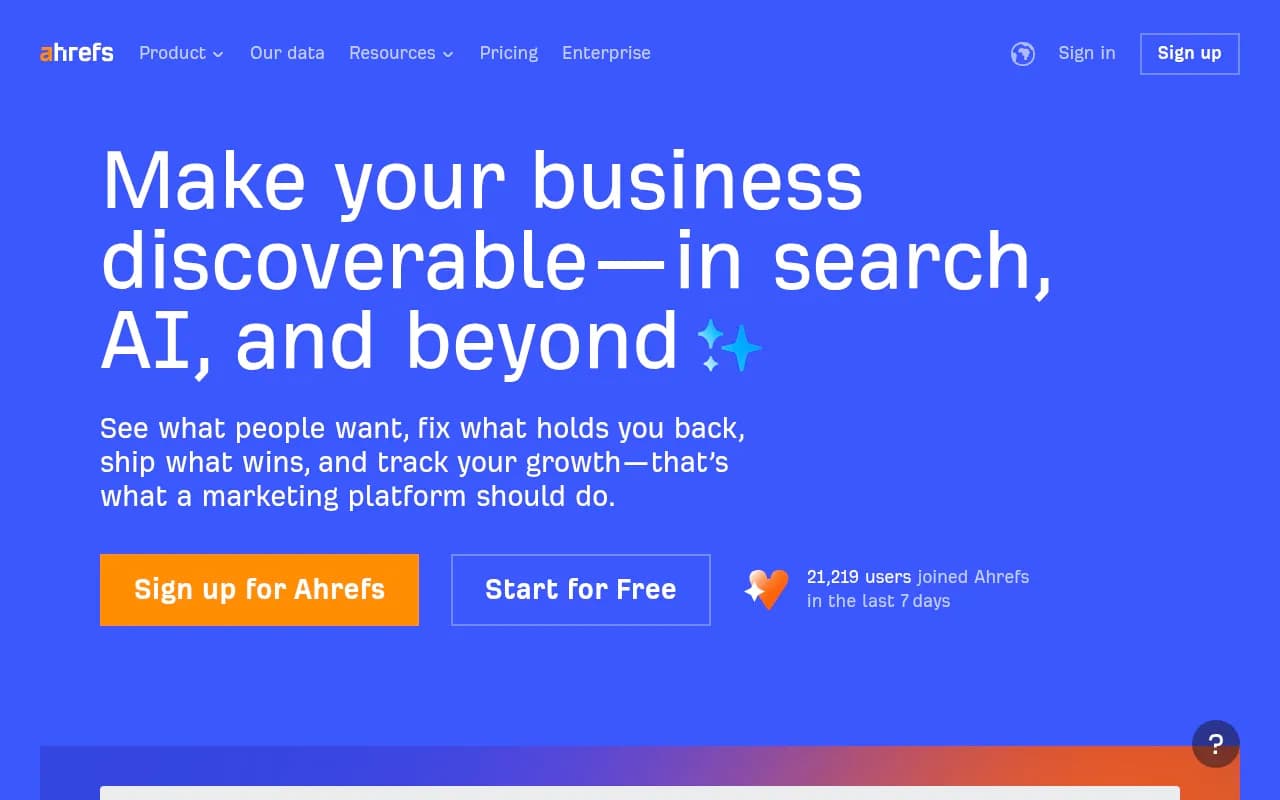
Semrush and Ahrefs (with Brand Radar) now sell AI visibility inside the suite. For many teams the suite stays because of keyword, backlink and audit work. The decision is whether the AI module is deep enough, or whether it is a fixed prompt set that duplicates a dedicated tracker. If you are paying for the suite anyway, test the AI module for a quarter before adding or keeping a separate monitor.
Content tools
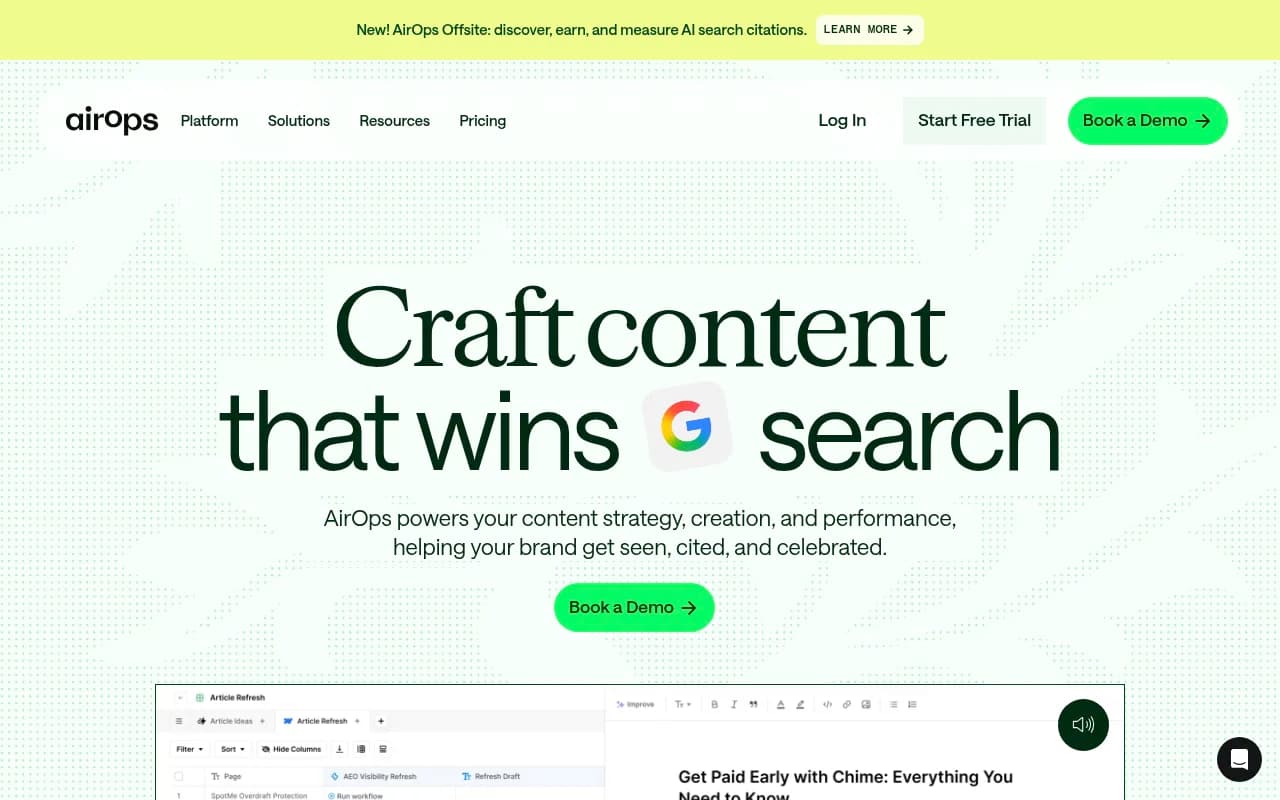
Writing tools are the other classic overlap. If you have Jasper, Copy.ai, Writesonic and AirOps all live, ask which one is grounded in your citation and gap data. A generic writer that has never seen what AI engines cite for your prompts is producing content in the dark. Optimizers such as Surfer SEO, Clearscope and MarketMuse are still useful for classic SERP work but do not replace gap analysis against AI answers.

Classic SEO plumbing
Crawlers like Screaming Frog and Sitebulb, plus free tools like Google Search Console and Bing Webmaster Tools, are cheap and rarely worth cutting. Keep them. Bing data matters more now that several AI engines lean on it.
Questions to ask before you sign anything
| Question | Why it matters | Red flag |
|---|---|---|
| Real interface or API only? | Answers and citations differ | Vague on data collection |
| Which engines, countries, languages? | Markets should not be mixed | Single blended score |
| Can I edit the prompt set? | Fixed sets miss your buyers | Prompts locked by vendor |
| Crawler logs included? | Separates access from content problems | Not offered at any tier |
| AI traffic attribution? | Proves revenue impact | Mentions only |
| Export and API access? | Lets you leave cleanly | Locked in a dashboard |
| Monthly or annual billing? | Category is changing fast | Forced multi-year |
One more point on timing. Some vendors run year-end promotions. Promptwatch, for instance, had a 30% Black Friday offer ending November 30 at 23:59 CET. Check whether it is still live, and always confirm current terms on the vendor's site rather than trusting a blog post, including this one.
A sample audit, worked through
Here is a plausible mid-size B2B setup and how I would handle it.
| Subscription | Job | Verdict |
|---|---|---|
| Two prompt trackers | Monitor | Keep the one with per-country tracking and exports, cancel the other |
| SEO suite with AI add-on | Monitor and classic SEO | Renew for SEO, trial the AI module against your tracker |
| Generic AI writer | Act | Replace with something that uses your gap and citation data |
| Content optimizer | Act | Renew if editors use it weekly, otherwise cancel |
| No crawler logs | Trace | Add this, it is the biggest gap |
| No AI traffic attribution | Measure | Add this, via analytics or a platform that includes it |
Notice the verdicts are about gaps as much as cuts. Cancelling a duplicate tracker frees budget for the Trace and Measure layers you were missing.
Check your stack against the November data
Use the citation findings as a stress test. If you answer no to these, adjust.
- Do your reports split ChatGPT, AI Overviews and Perplexity? If you buy YouTube or Reddit work, the data says engines treat them very differently.
- Can you see whether review sites like G2, Capterra, Gartner and Trustpilot mention you? Promptwatch's takeaway from the November report is to get listed and reviewed there.
- Do you publish answers on your own site, and can you tell if crawlers read them? Product pages were the most cited ChatGPT content type at 22.4% in Sep 28 to Oct 4 data.
- Do you know the median cited domain is DR 56 to 57 across four engines (November domain rank report)? Mid-authority sites get cited, so you do not need a DR 90 profile to compete in ChatGPT.
A note on third-party trend reports. Presenc AI's GEO trends report claims 28% of mid-market and enterprise companies now have a dedicated GEO role and that model updates now arrive roughly every six weeks. It was last updated in March 2026, comes from the vendor's own customers and 35 interviews, and Presenc sells a competing product, so use it as context rather than proof.
A December timeline that works
- First week: export invoices, usage and logins. Tag each tool by job.
- Second week: export historical data from anything you may cancel. Do this before notice periods start.
- Third week: run the five-question test and ask the vendor questions above for tools you are keeping.
- Fourth week: send cancellation notices, downgrade seats, and move annual renewals to monthly where the vendor allows it.
- First two weeks of January: plan Q1 around the gaps, usually crawler visibility, AI traffic attribution and content that targets prompts you currently lose.
If you want more options to compare, the GEO software directory at bestgeosoftware.com lists tools in this category, and ai-rank-tools.com covers AI rank trackers specifically.
What I would do
I would cut one monitoring tool, keep the suite only if it earns its place on classic SEO, and spend the savings on crawler logs, AI traffic attribution and a content workflow tied to real citation gaps. If you want to see one platform that covers monitoring, tracing, acting and measuring in a single loop, start with the Promptwatch free AI visibility report or its 7-day free trial, then compare the result against what you pay for today.
FAQ
Should I sign annual contracts for GEO tools in 2027?
Only for tools you have already proven useful. Annual billing often saves around 17% at vendors that offer it, but the category shifts quickly, and a monitoring-only tool is the wrong thing to lock in.
How many monitoring tools do I need?
One. A second is justified only if it covers an engine, country or language the first one cannot.
Is a dedicated GEO tool still necessary if I have Semrush or Ahrefs?
Sometimes not. Test the AI module for a full quarter. If it lacks editable prompts, crawler logs or traffic attribution, a dedicated platform will fill the gap.
What is the first thing to cancel?
Whatever nobody opened in the last 60 days, followed by the weaker of any two tools that duplicate each other.