Key Takeaways
- AI has moved from experiment to copilot: Marketing automation in 2026 is powered by AI agents that build flows, test variations, personalize at scale, and recommend optimizations based on real customer behavior patterns
- Autonomous orchestration is the new standard: Modern platforms don't just execute tasks—they analyze gaps, suggest next steps, and coordinate multi-channel campaigns without constant human input
- Privacy and consent drive personalization: Stricter regulations and rising customer expectations mean automation must balance hyper-personalization with transparent data practices
- The action loop matters more than monitoring: Effective automation finds content gaps, generates optimized material, tracks results, and closes the loop with traffic attribution—not just dashboards
- Cross-channel integration is non-negotiable: Email, SMS, social, ads, CRM updates, and internal workflows must operate as one connected system, not siloed tools
The Evolution of Marketing Automation: From Scheduling to Intelligence
Marketing automation in 2026 looks nothing like the email schedulers of five years ago. What started as basic drip campaigns has transformed into intelligent orchestration systems that analyze customer behavior, predict next actions, and optimize campaigns in real time.
Approximately 76% of enterprises now use marketing automation technology, and the sector is projected to reach $13.71 billion by 2030. But adoption alone doesn't guarantee results. The difference between automation that delivers and automation that disappoints comes down to how platforms handle three core challenges: data intelligence, cross-channel coordination, and the ability to take action—not just report on it.
Trend 1: AI Becomes Every Marketer's Copilot
If 2025 was the year marketers experimented with AI, 2026 is the year they became expert in it. AI has moved from creative shortcut to full-fledged marketing copilot—one that can analyze campaign performance, plan multi-touch sequences, and optimize messaging automatically.
"AI will become every marketer's copilot, rapidly building flows, testing variations, and personalizing messages at scale," says David Visser, CEO of Zyber and Unlocked, two of New Zealand's top digital commerce agencies. "It will handle the heavy lifting so marketers can focus on creativity, strategy, and community connection."
Stefan Milicevic, strategy director at Underground Ecom, one of the world's largest retention marketing agencies, sees AI moving beyond execution to strategic recommendation: "AI will start recommending triggers, delays, and messaging angles after spotting trends and gaps in customer retention cycles. This makes it possible to work on customer retention at scale while maintaining a lot of the intimate, personal feeling between each customer and the brand."
For smaller teams, AI copilots are already saving hours daily. "I'm a one-person department," says Zach Scheimer, senior marketing operations manager at Criquet Shirts. "We can ask AI to analyze our flows and make adjustments based on the results."
These copilots augment workflow by accelerating tasks, analyzing performance, and suggesting improvements—while keeping humans firmly in the driver's seat. On the customer service side, AI agents can recommend products and resolve support questions, making AI a copilot for both marketing and service teams.
What This Means for Your Stack
Integrate AI tools directly with your CRM or marketing automation platform. Ensure they're trained on your current data set, including high-volume periods like Q4. AI that learns from your actual customer behavior patterns will outperform generic models every time.
Trend 2: Autonomous Orchestration Evolves Quickly
Automation in 2026 isn't just about executing predefined workflows. It's about autonomous systems that analyze performance, identify gaps, and recommend next steps without waiting for human input.
Autonomous orchestration means your marketing platform doesn't just send emails on a schedule—it analyzes which customers are at risk of churn, determines the optimal time and channel to reach them, crafts personalized messaging, and adjusts based on response rates. All of this happens continuously, in the background, across email, SMS, push notifications, and ads.
This shift from reactive to proactive automation is powered by AI agents that handle optimization, reporting, and operational tasks with minimal supervision. Instead of building every workflow manually, marketers define goals and guardrails, then let the system determine the best path to achieve them.
The Action Loop: Find Gaps, Create Content, Track Results
The most effective automation platforms in 2026 follow a clear action loop:
-
Find the gaps: Identify which prompts, topics, or customer questions your competitors are visible for but you're not. See the specific content your website is missing—the topics, angles, and questions AI models and customers want answers to but can't find on your site.
-
Create content that ranks: Generate articles, listicles, and comparisons grounded in real data—not generic SEO filler. This content is engineered to get cited by AI models and discovered by customers searching for solutions.
-
Track the results: Monitor visibility scores, page-level citations, and traffic attribution. Close the loop by connecting visibility improvements to actual revenue.
This cycle—find gaps, generate content, track results—is what separates optimization platforms from monitoring dashboards. Most competitors stop at step one, leaving marketers stuck with data but no clear path to improvement.
For brands looking to understand and improve how they appear in AI search engines like ChatGPT, Claude, Perplexity, and Google AI Overviews, platforms like Promptwatch help close this action loop by showing exactly what's missing and helping you fix it.

Trend 3: Privacy and Consent Drive Personalization
Stricter privacy regulations, rising ad costs, and evolving customer expectations are forcing brands to rethink how they use data. Autonomous marketing in 2026 is no longer just about efficiency—it's about trust.
Customers expect personalized experiences, but they also expect transparency about how their data is used. Marketing automation platforms must balance hyper-personalization with consent management, data minimization, and clear opt-in/opt-out mechanisms.
This means automation workflows need built-in compliance checks: confirming consent before sending messages, respecting preference centers, and automatically removing contacts who opt out. Platforms that treat privacy as an afterthought will struggle as regulations tighten and customer expectations rise.
Hyper-Personalization Without Creepiness
The best automation in 2026 personalizes based on behavior and context—not invasive tracking. Instead of "we know you looked at this product 47 times," effective personalization says "based on what customers like you typically need next, here's a recommendation."
This approach uses aggregated patterns and predictive modeling rather than individual surveillance. It delivers relevance without crossing the line into discomfort.
Trend 4: Cross-Channel Coordination Becomes Non-Negotiable
Marketing automation in 2026 isn't about optimizing one channel—it's about orchestrating all of them. Email, SMS, push notifications, social media, ads, CRM updates, and internal workflows must operate as one connected system.
Customers don't think in channels. They expect consistent messaging whether they're reading an email, scrolling Instagram, or chatting with support. Automation platforms that silo channels create disjointed experiences. Platforms that coordinate across channels create seamless journeys.
This requires deep integrations: CRM data flowing into ad platforms, email engagement triggering SMS follow-ups, social media interactions updating lead scores, website behavior informing next-best-action recommendations. Cross-app connectors like Make and Zapier remain essential in 2026 to integrate CRMs, ad platforms, project management tools, and niche solutions into one automated ecosystem.
The Multi-Touch Attribution Challenge
As automation spans more channels, attribution becomes harder. Which touchpoint deserves credit for a conversion? The email that started the journey? The SMS reminder? The retargeting ad?
Effective automation platforms in 2026 use multi-touch attribution models that assign credit across the entire customer journey—not just the last click. This gives marketers a clearer picture of what's actually working and where to invest.
Trend 5: AI-Powered Content Generation at Scale
Content creation has always been a bottleneck for marketing teams. In 2026, AI writing agents are removing that constraint by generating articles, product descriptions, email copy, and social posts at scale—grounded in real data, not generic templates.
The key difference between effective AI content and filler is training data. AI models trained on citation patterns, prompt volumes, persona targeting, and competitor analysis produce content that ranks in AI search engines and resonates with real customers. Generic AI content trained on broad internet data produces bland, undifferentiated material that gets ignored.
Marketing automation platforms that integrate AI content generation directly into workflows let teams move from idea to published content in minutes instead of days. This doesn't replace human creativity—it accelerates execution so marketers can focus on strategy, positioning, and high-value creative work.
Content That Gets Cited by AI Models
As AI search engines like ChatGPT, Perplexity, Claude, and Google AI Overviews become primary discovery channels, content must be optimized not just for Google's algorithm but for how AI models cite sources. This means:
- Clear, authoritative answers to specific questions
- Structured data and schema markup that AI models can parse
- Citations and references that establish credibility
- Content depth that covers topics comprehensively, not superficially
Automation platforms that help you identify citation gaps and generate content designed to fill them give you a significant advantage in AI search visibility.
Trend 6: Real-Time Optimization and Testing
Static campaigns are dead. In 2026, effective automation means continuous testing and real-time optimization. AI-powered platforms run multivariate tests across subject lines, send times, messaging angles, and creative variations—then automatically shift traffic to winning combinations.
This happens at a speed and scale impossible for human teams. Instead of running one A/B test per month, automation platforms can test dozens of variables simultaneously and apply learnings across thousands of customer segments.
The result: campaigns that improve continuously, not just when someone remembers to check the dashboard and manually adjust settings.
Predictive Optimization
Beyond testing what works now, AI-powered automation predicts what will work next. By analyzing historical patterns, seasonality, and external signals, platforms can recommend optimal send times, suggest content topics likely to resonate, and flag campaigns at risk of underperforming—before they go live.
What Actually Works: Tools and Platforms for 2026
With hundreds of marketing automation tools available, choosing the right stack comes down to three questions:
-
Does it find gaps or just report on them? Monitoring dashboards show you data. Optimization platforms show you what's missing and help you fix it.
-
Does it coordinate channels or silo them? Effective automation orchestrates email, SMS, social, ads, and CRM updates as one connected system.
-
Does it close the loop with attribution? Tracking visibility and engagement means nothing if you can't connect it to revenue.
CRM and Marketing Automation Hubs
Your CRM is the foundation. It's where customer data lives, workflows are built, and campaigns are orchestrated. The best platforms in 2026 combine CRM, marketing automation, and AI capabilities in one system.
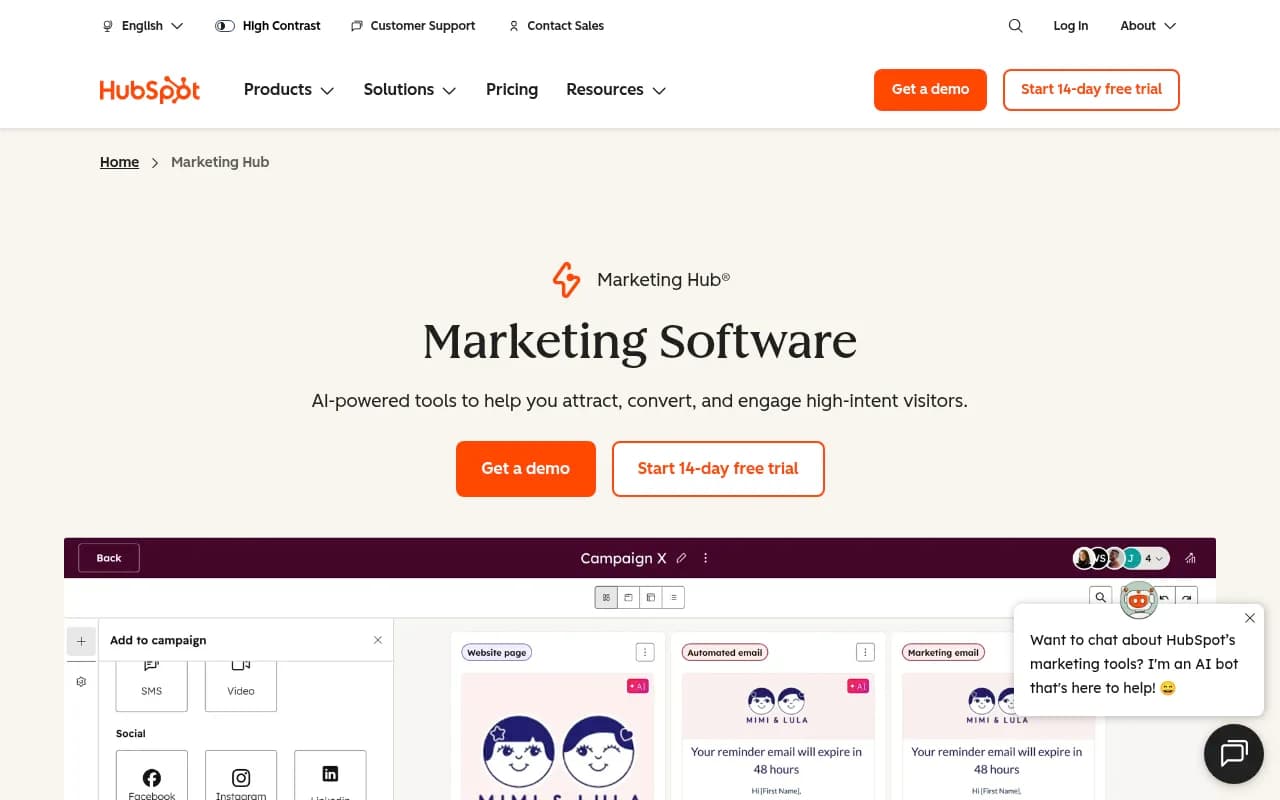
HubSpot remains the gold standard for all-in-one marketing automation. It combines CRM, email, social, ads, and analytics with AI-powered content creation and workflow optimization. For teams that want one platform to handle everything, HubSpot delivers.
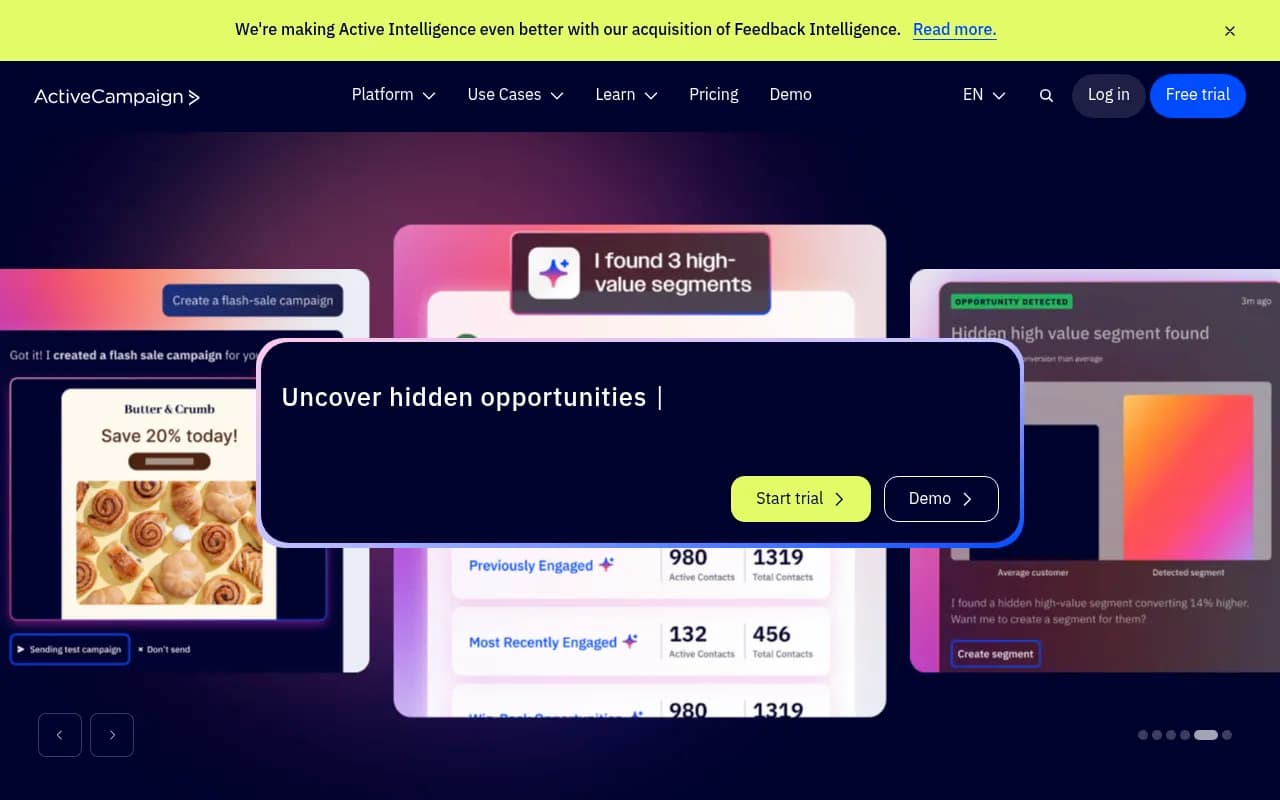
ActiveCampaign offers advanced email automation and customer engagement at a more accessible price point than enterprise platforms. It's ideal for growing teams that need sophisticated workflows without enterprise complexity.
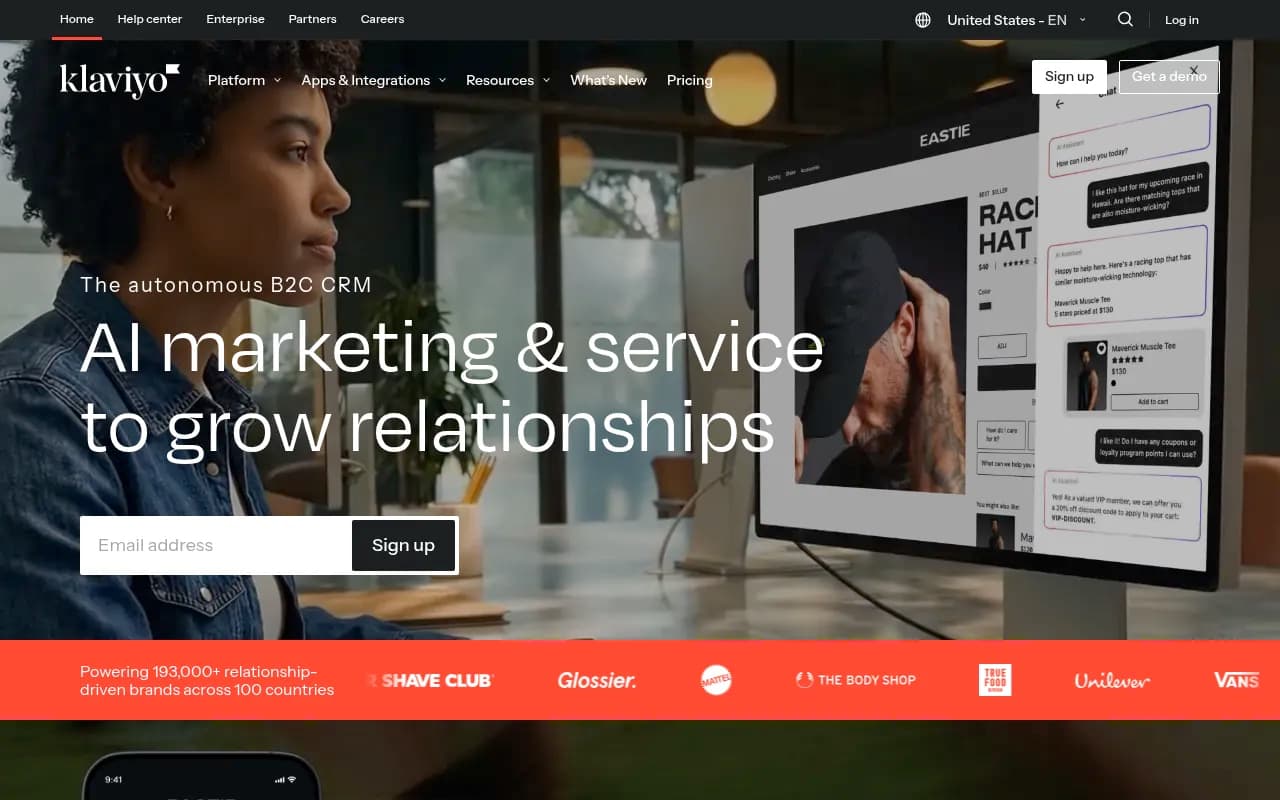
Klaviyo dominates eCommerce marketing automation. Its deep integrations with Shopify, WooCommerce, and other eCommerce platforms make it the go-to choice for online retailers. AI-powered product recommendations, predictive analytics, and autonomous campaign optimization are built in.
Email and SMS Automation
Email remains the highest-ROI marketing channel, and SMS is catching up fast. Platforms that combine both give you more touchpoints and better coordination.
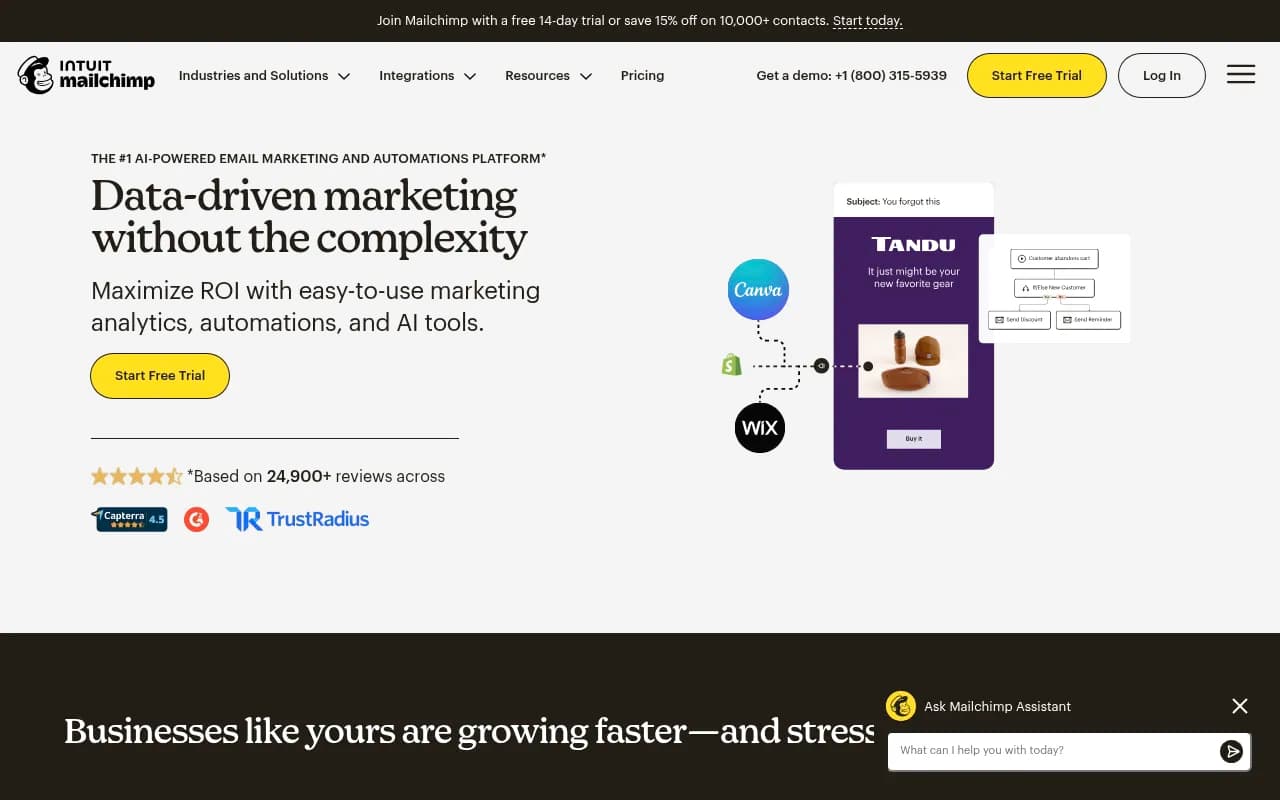
Mailchimp has evolved from simple email marketing to full marketing automation with AI optimization. It's accessible for small teams but powerful enough for sophisticated campaigns.
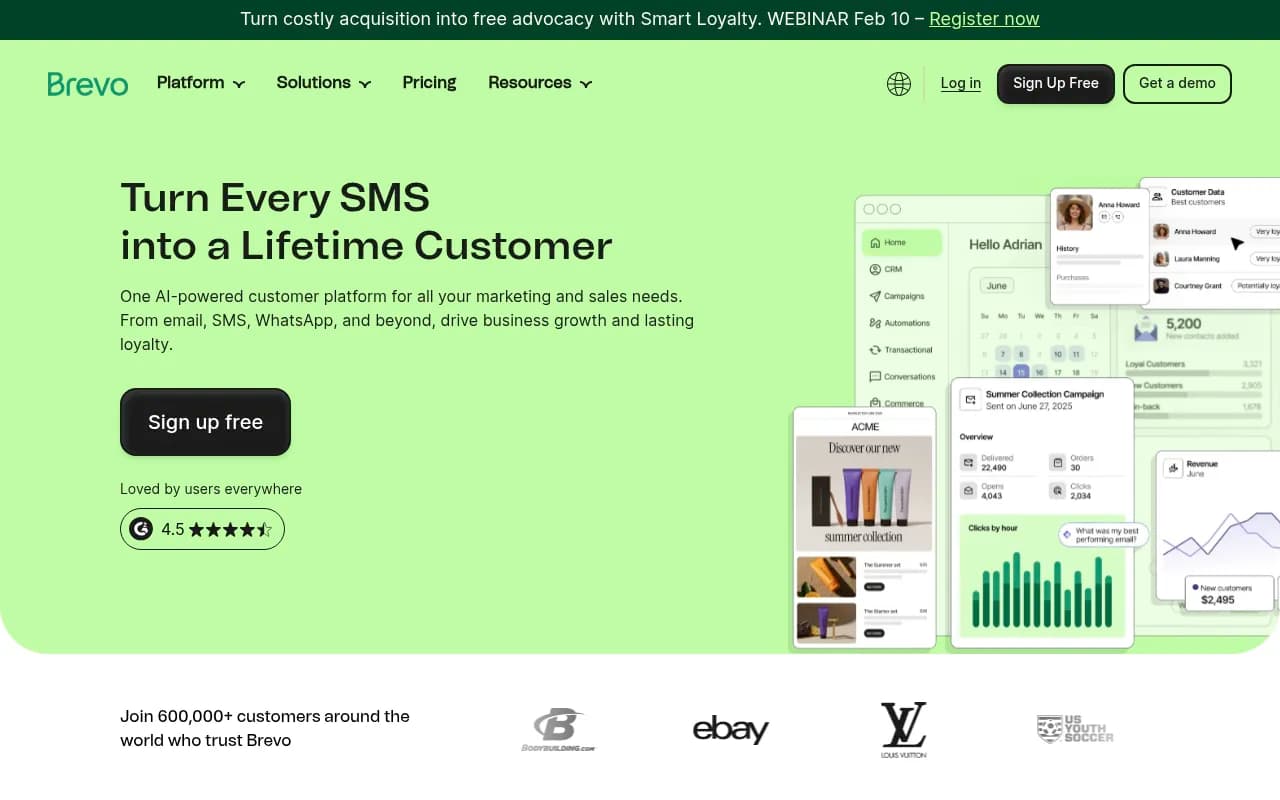
Brevo (formerly Sendinblue) offers affordable all-in-one marketing automation with email, SMS, and chat. It's ideal for teams that need multi-channel coordination without enterprise pricing.
Social Media Automation
Social media automation in 2026 goes beyond scheduling posts. AI-powered platforms analyze engagement patterns, suggest optimal posting times, generate content variations, and coordinate campaigns across multiple networks.
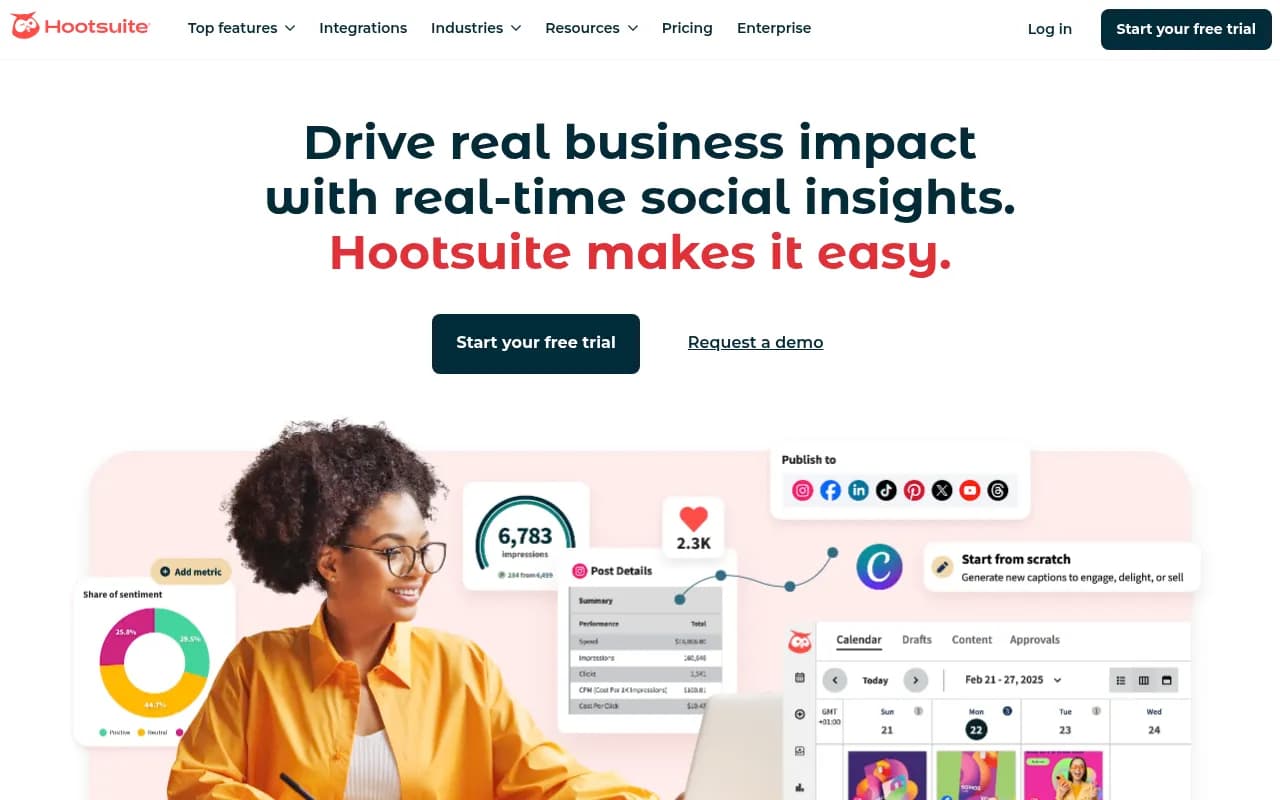
Hootsuite combines social media scheduling with AI-enhanced analytics and content recommendations. It's built for teams managing multiple brands and networks.
Buffer offers simple, affordable social media scheduling with clean analytics. It's ideal for small teams that want effective automation without complexity.
AI Visibility and Content Optimization
As AI search engines become primary discovery channels, tracking and optimizing your brand's visibility in ChatGPT, Perplexity, Claude, and Google AI Overviews is essential. Most platforms only monitor—they show you where you're invisible but leave you stuck. The best platforms help you fix it.
Promptwatch tracks brand visibility across 10 AI models and helps you close the action loop: find content gaps, generate optimized articles, and track results with traffic attribution. It's built for marketing teams that want to rank in AI search, not just monitor it.
Semrush remains a comprehensive digital marketing platform with traditional SEO and emerging AI search capabilities. It's ideal for teams that need both Google optimization and AI visibility tracking in one platform.
Marketing Analytics and Attribution
Automation without analytics is blind execution. Platforms that connect visibility, engagement, and revenue give you the insights needed to optimize continuously.
Google Analytics is the foundation for web analytics. It's free, comprehensive, and integrates with virtually every marketing platform.
Improvado is an AI-powered marketing analytics platform that aggregates data from hundreds of sources, normalizes it, and delivers unified reporting. It's built for teams drowning in dashboards who need one source of truth.
Common Automation Mistakes to Avoid
Even with the best tools, automation can fail if implemented poorly. Here are the most common mistakes teams make:
Mistake 1: Automating Broken Processes
Automation amplifies what you already do. If your manual process is inefficient, automating it just creates inefficiency at scale. Fix the process first, then automate.
Mistake 2: Over-Automating Customer Interactions
Not every interaction should be automated. High-value conversations, complex support issues, and relationship-building moments need human touch. Use automation to handle repetitive tasks and surface opportunities for human engagement—not replace it entirely.
Mistake 3: Ignoring Data Quality
Automation runs on data. If your CRM is full of duplicates, outdated contacts, and incomplete records, your automation will fail. Invest in data hygiene before scaling automation.
Mistake 4: Setting and Forgetting
Automation isn't a one-time setup. Customer behavior changes, market conditions shift, and campaigns decay over time. Review performance regularly, test new approaches, and adjust based on results.
Mistake 5: Choosing Monitoring Over Optimization
Dashboards that show you problems without helping you solve them are expensive distractions. Choose platforms that close the action loop—find gaps, help you fix them, and track the results.
How to Get Started with Marketing Automation in 2026
If you're building or upgrading your automation stack, follow this roadmap:
Step 1: Audit Your Current State
Map out your existing workflows, tools, and data sources. Identify bottlenecks, manual tasks that could be automated, and gaps where customers fall through the cracks.
Step 2: Define Clear Goals
What do you want automation to achieve? Faster lead response times? Higher email engagement? Better customer retention? More visibility in AI search? Clear goals guide tool selection and implementation.
Step 3: Choose Your Foundation
Start with a CRM and marketing automation hub that fits your business model. eCommerce brands should look at Klaviyo. B2B teams should consider HubSpot or ActiveCampaign. Agencies need platforms that support multiple clients.
Step 4: Layer in Channel-Specific Tools
Add email, SMS, social, and AI visibility tools that integrate with your foundation. Use cross-app connectors like Zapier or Make to bridge gaps.
Step 5: Implement in Phases
Don't try to automate everything at once. Start with high-impact, low-complexity workflows—welcome sequences, abandoned cart recovery, lead nurturing. Prove value, then expand.
Step 6: Monitor, Test, Optimize
Automation isn't set-and-forget. Review performance weekly, run continuous tests, and adjust based on results. The best automation gets better over time.
The Future of Marketing Automation: What's Next
Looking beyond 2026, several trends are already emerging:
Fully Autonomous Campaigns
AI agents will soon handle entire campaigns end-to-end: identifying opportunities, creating content, launching tests, optimizing performance, and reporting results—with humans providing strategic direction and creative oversight.
Predictive Customer Journeys
Instead of reacting to customer behavior, automation will predict next actions and proactively guide customers toward desired outcomes. This requires sophisticated AI models trained on millions of customer journeys.
Voice and Conversational Automation
As voice assistants and conversational AI become primary interfaces, marketing automation will extend into voice search optimization, conversational commerce, and AI-powered customer service.
Unified Customer Data Platforms
The fragmentation of customer data across dozens of tools will give way to unified platforms that aggregate, normalize, and activate data in real time. This will enable true omnichannel orchestration.
Final Thoughts: Automation That Actually Works
Marketing automation in 2026 is no longer about saving time—it's about doing things that weren't possible manually. AI copilots that analyze behavior patterns, autonomous orchestration that coordinates channels, and optimization platforms that close the action loop are now table stakes.
The difference between automation that delivers and automation that disappoints comes down to one question: does your platform help you take action, or just show you data?
Choose tools that find gaps, help you fix them, and track the results. Build workflows that balance efficiency with human touch. Test continuously, optimize relentlessly, and always close the loop with attribution.
That's what actually works in 2026.