Key takeaways
- Reporting how often ChatGPT names your brand is now a commodity. The question buyers ask has moved to whether a tool also does the work, or only monitors.
- Tracked results can shift overnight because a platform changed, not because your content did. Promptwatch Data caught several of these in 2026.
- Prompt design matters more than prompt volume. Momentic's data shows brand prompts, pick requests and negative framing each skew results in different directions.
- Pricing is all over the map, from about $29 a month for 15 prompts to custom enterprise contracts.
- I could not find a verified list of tracking tools that shut down in 2026, and I have no solid buyer-survey data. I say so below instead of guessing.
Why I am not giving you a shutdown list
The title of this guide promises "who shut down." I will be straight about it: I went looking and found no verified list of AI visibility or prompt tracking tools that closed in 2026. One search surfaced a podcast episode about a founder who shut down an AI SEO startup, but I could not confirm the episode or the company, so I am not naming it.
What I did find is consolidation. Shortlist reports that Adobe closed its acquisition of Semrush in April 2026 (source). I only saw a snippet of that report, so verify it before you quote it. Acquisitions and shutdowns are different events, but for a buyer they raise the same question: will the tool you pick today exist, and look the same, in 18 months?
The practical answer is to keep your data portable. Ask any vendor about CSV and Excel exports, an API, and how long you can pull history. Do that before you sign, not after.
What changed in the data itself
The biggest change is not in the tools. It is that the thing being tracked keeps moving.
Fan-outs got shorter and fewer
When you type a prompt into ChatGPT, the web searches it runs are not your prompt. Promptwatch Data's ChatGPT query fanouts report shows the average fan-out falling from about 2.15 searches per response in early December to about 1.84 by early March, and then to 1.0 in April after a gap in the data. Average fan-out query length dropped from around 117 characters to the high 80s in February and March, and to about 53 characters in April.
That last number matters. The queries ChatGPT generates are getting shorter and more keyword-like, so the prompt you track is a poor proxy for what your content must match. (The report also says a single prompt can trigger 3 to 8 or more searches, but its own chart shows lower averages, so I am using the measured ones.)
Platform changes look like performance changes
Several shifts in 2026 would have fooled anyone watching only their own dashboard:
- Average citations per ChatGPT response dropped around the GPT-5.3 rollout on March 4, 2026 (Promptwatch Data).
- On August 8, 2026, ChatGPT started using the site: operator at scale, going from about 0.4% to about 17% of fan-out queries overnight (report).
- reddit.com's share of ChatGPT citations fell from about 4% to 0.5% on August 14, 2026 (report).
If your visibility line moved on one of those days, your content probably did not change. Good tracking lets you annotate platform events and compare against competitors, because a drop that hits everyone is a platform story.
Different engines behave differently
Promptwatch Data's average sources per response report is dated September 2025, so treat the numbers as possibly drifted. It found ChatGPT citing about 5 sources per web-search answer, Google AI Overviews about 10, and Perplexity almost exactly 10, day after day. Copilot swung from under 2 to nearly 17 within weeks. The takeaway for tracking: Perplexity is a steady test bench for content changes, while Copilot should be judged on monthly trends, not weekly snapshots.
Search itself is changing shape
Google's I/O 2026 post says AI Mode passed one billion monthly users a year after launch, and that the search box got what Google calls its biggest upgrade in over 25 years, with agents you can invoke just by asking a question (Google).
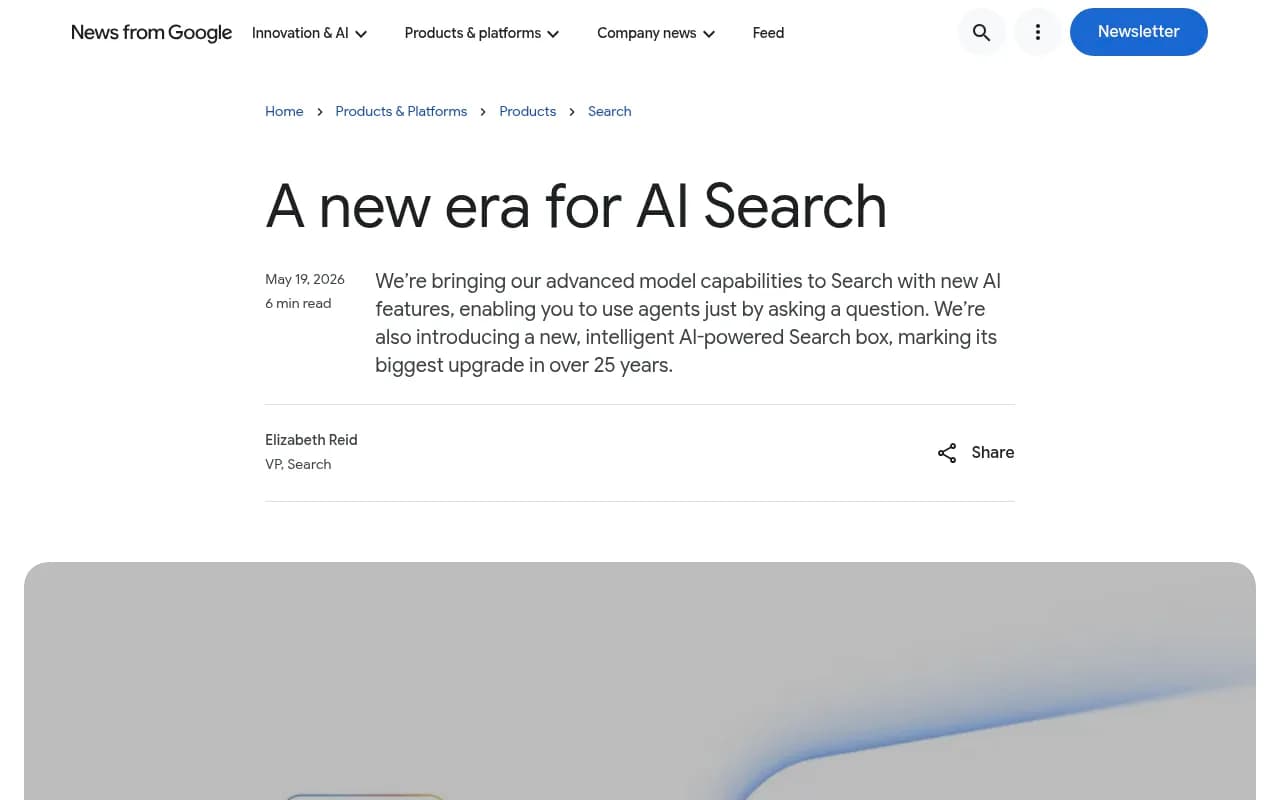
When the interface becomes conversational and agentic, a single static prompt gets less representative. That pushes tracking toward personas and journeys rather than lists of keywords.
What the prompt research says
Two practitioner studies from 2026 changed how I think about prompt sets.
Brand prompts inflate your number
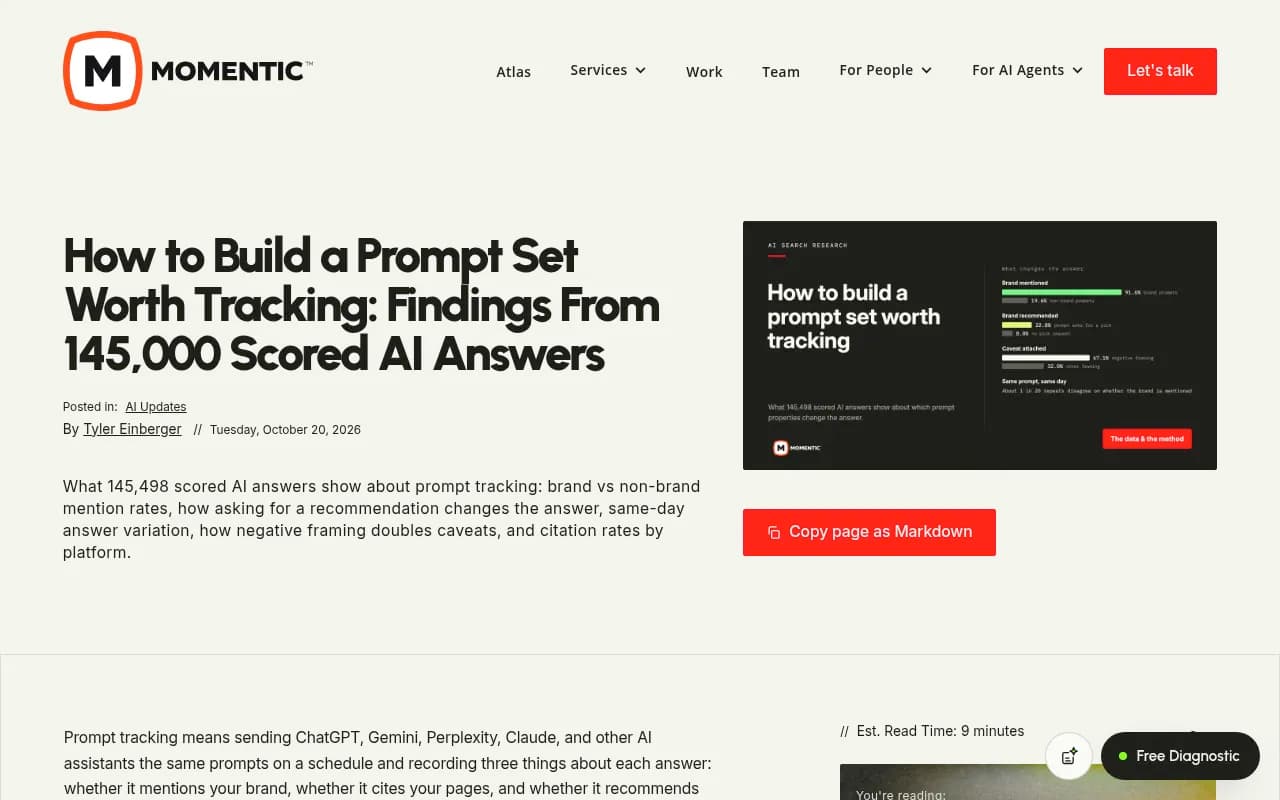
Momentic analyzed tens of thousands of scored answers. Answers to brand prompts mentioned the brand 91.6% of the time (57,824 answers), and the median brand across 16 brands with at least 200 scored answers each was mentioned in 95.7%. The lowest was 66.5%. Mix those into a headline visibility score and you will look great while telling yourself nothing about discovery. Momentic's advice, which I agree with: report brand and non-brand prompts separately, and use the brand set as a drop alarm.
Asking for a pick changes everything
Per Momentic's study, prompts that ask for a recommendation got answers mentioning 4.55 options on average, against 1.25 for prompts without a pick request. The tracked brand was recommended 22.8% of the time versus 8.0%. Prompt length mattered less than that. Short prompts behaved like keyword lists and said little about real buyer questions.
Negative framing doubles the caveats
Prompts like "Are there any hidden fees with [brand]?" pulled caveats into answers at roughly twice the rate of other brand prompts, which sat at 32.0%. Useful for reputation work, misleading if blended into your main score.
How many prompts do you need?
Aleyda Solis updated her prompt library guide in June 2026 with starting points that I find sensible:
| Business type | Suggested starting point |
|---|---|
| SaaS or services, multiple personas | 100-250 prompts |
| Ecommerce, multiple categories | 150-500 prompts |
| Marketplace | 200-500+ prompts, grouped |
| International | 30-100 prompts per priority market, separate libraries |
| Enterprise, multi-brand | Modular library by brand, market and journey stage |
Her refresh cadence is monthly for priority commercial and branded prompts, monthly or quarterly for competitor comparisons, quarterly for persona and international sets, and a full review every 6 to 12 months.
Note the contrast with entry-level plans. A tool capped at 15 or 25 prompts cannot cover even a small SaaS company with a few competitors.
The tool market in late 2026
The 3RD comparison (updated October 23, 2026) is a vendor-run list and discloses that. It tested no data accuracy, and says no fair public comparison has. Prices come from vendor pages and exclude tax, so use them as a rough map only. Its sharpest line is that reporting how often ChatGPT names your brand "is a commodity now."
| Tool | Reported entry price | Engines / notes |
|---|---|---|
| Otterly.AI | $29/mo for 15 prompts | 4 engines; Gemini, AI Mode, Claude are add-ons |
| Semrush AI Visibility Toolkit | $99/mo per domain (annual), 25 prompts | Inside the Semrush suite |
| Peec AI | From about EUR 85/mo | 3 engines per plan, more as add-ons |
| AthenaHQ | Free tier (300 credits); Starter $295/mo | 11 models |
| Scrunch | $300/mo ($250 annual) | 7 engines, AXP site version for AI |
| Ahrefs Brand Radar | Add-on to an Ahrefs plan | 7 engines, 496M+ prompt index |
| Profound | Custom enterprise | Up to 9 engines, SOC 2, SSO, API |
| Writesonic | From $79/mo | Bundled with article writer |
Here are the tools by name, so you can look them up: Profound is the enterprise option.
Profound


Otterly.AI


The directory at bestgeosoftware.com lists far more, and ai-rank-tools.com covers the rank tracking side. There are hundreds of entrants now, which is itself a signal. A market that crowded usually thins out.
What buyers want now
I have no verified survey data on buyer demand, so I will not invent percentages. What I can offer is what the evidence above implies, plus what the 3RD piece argues.
Action over dashboards
3RD frames the buying question as whether your bottleneck is data or time. If you already know you are missing from answers and lack hands to fix it, another dashboard does not help. That is where tools that write and publish content, or track the crawl-to-citation path, earn their price.
Promptwatch is built around that loop. It tracks prompts across the real interfaces of ChatGPT, Gemini, Perplexity, AI Overviews and others, then shows which pages get cited, and its Content Agent writes and publishes pages for the gaps. IP-verified AI crawler logs let you tell an access problem from a content problem, and visitor analytics show whether any of it sends traffic.

Real interface data
User-facing answers and citations can differ from API outputs. Given how quickly ChatGPT's behavior moved this year, a buyer should ask every vendor how data is collected. Promptwatch publishes how it collects data if you want a model answer to compare against.
Prompt realism, not prompt count
Buyers who read the Momentic and Solis work will ask for personas, prompt types (brand, non-brand, competitor), intent labels and fan-out visibility. Promptwatch's prompt tracking includes personas, prompt volumes and difficulty, and fan-out data, and its query fan-out academy page explains why that matters.
Traffic, not just mentions
A mention that sends nobody to your site is a vanity metric. One 2026 wrinkle: Promptwatch notes ChatGPT stopped sending a referrer on October 8, 2026, so teams now rely on utm_source=chatgpt.com tagging to count that traffic. See the guide to attributing AI traffic.
Portability and survival
After a year of acquisitions and a crowded field, I would add one more buyer demand: exports and API access. Promptwatch offers Excel and CSV exports, a REST API and an MCP server on every plan, which is the kind of exit door worth asking every vendor about.
A short buying checklist
- Split brand and non-brand prompts in reporting from day one.
- Include pick-request prompts, but chart them separately.
- Ask how many prompts, engines and countries your plan really covers, and what add-ons cost.
- Check whether the tool sees AI crawler activity on your site.
- Confirm export and API access before committing.
- Annotate platform changes so you do not blame content for what the model did.
- Review the prompt library every quarter, and fully every 6 to 12 months.
If you want a no-commitment starting point, run the free AI visibility report or compare plans at promptwatch.com/pricing. Tracking is cheap now. Knowing what to change because of it is the part still worth paying for.