Key takeaways
- Informational prompts trigger AI Overviews far more often than any other intent type -- one study puts the rate at over 40% for informational vs. just 10% for navigational queries.
- Navigational and commercial intent behave very differently across AI models: ChatGPT handles navigational prompts at nearly the same rate as informational ones (32.2% vs. 32.7%), while Google AI Overviews skew heavily toward informational.
- Tracking all intent types with a single metric or a single AI model will give you a misleading picture of your actual visibility.
- Commercial intent is where the revenue is -- and it's the hardest to win because AI models are cautious about appearing promotional.
- A proper intent-segmented tracking setup requires separate prompt sets for each intent category, monitored across multiple AI engines.
If you've been tracking your AI visibility as a single number -- one score, one model, one prompt set -- you're probably drawing the wrong conclusions. Not because the data is wrong, but because different intent types behave so differently across AI search engines that averaging them together hides more than it reveals.
This guide breaks down how informational, navigational, and commercial prompts actually perform in AI search in 2026, why the gaps matter, and how to build a tracking setup that reflects reality.
Why intent type matters more in AI search than it did in traditional SEO
In traditional SEO, intent classification was mostly about content strategy. You wrote blog posts for informational queries, product pages for transactional ones, and comparison content for commercial. The ranking signals were largely the same across intent types -- backlinks, on-page relevance, authority.
AI search works differently. The model decides whether to answer a query directly, cite a source, recommend a brand, or decline to engage at all. Those decisions vary significantly by intent. An AI model answering "how does compound interest work?" behaves nothing like the same model answering "which savings account should I open?" -- even though both questions are about personal finance.
The implication: your visibility for informational prompts tells you almost nothing about your visibility for commercial ones. They need to be tracked separately, optimized separately, and interpreted separately.
Informational intent: the highest volume, but not the highest value
Informational prompts -- "what is X," "how does Y work," "explain Z" -- are where AI search engines are most active and most confident. The data backs this up clearly.
According to 321 Web Marketing's analysis of AI Overviews trigger rates, informational queries activate AI Overviews at a significantly higher rate than all other intent types combined. Navigational queries, by contrast, trigger AI Overviews only about 10.33% of the time. The gap is enormous.
This makes intuitive sense. AI models are trained to be helpful, and "helpful" is easiest to demonstrate when someone wants to learn something. There's no purchase decision at stake, no brand preference to navigate, no risk of appearing biased. The model can just explain things.
For brands, this creates a visibility opportunity that's relatively easy to capture -- but the traffic value is mixed. Someone asking "what is content marketing?" is probably not ready to buy your content marketing software. You're building awareness, not pipeline.
What good informational visibility looks like
When an AI model cites your content in response to an informational prompt, it's usually pulling from a specific page that answers the question clearly and completely. The citation often appears as a source link rather than a direct recommendation.
To track this properly, you need to:
- Build a prompt set that mirrors the actual informational questions your audience asks (not just the ones you've written blog posts about)
- Monitor which AI models cite you and which don't -- Google AI Overviews and Perplexity behave differently here
- Track page-level citations so you know which specific content is being pulled
A platform like Promptwatch can show you exactly which pages are being cited for which prompts, and flag gaps where competitors are getting cited but you're not.

Navigational intent: the intent type most people ignore
Navigational prompts are queries where the user already has a destination in mind -- "Salesforce login," "HubSpot pricing," "Notion templates." In traditional search, these are easy wins for the brand being searched. You rank #1 for your own name. Done.
In AI search, it's more complicated. And the data is surprising.
Profound's study of 50M+ ChatGPT prompts found that navigational intent accounts for 32.2% of queries -- nearly identical to informational at 32.7%. That's not what most people expect. ChatGPT users aren't just asking questions; a huge share of them are looking for specific brands, tools, or destinations.
But here's the problem: when someone types your brand name into ChatGPT, the model doesn't necessarily send them to your website. It might describe your product, compare you to competitors, mention a negative review, or -- in some cases -- hallucinate details about your offering. You have very little control over what gets said.
This is why navigational intent tracking is actually more about brand accuracy than brand visibility. The question isn't just "do I appear?" but "what does the AI say about me when I appear?"
Tracking navigational intent properly
For navigational prompts, your tracking setup should capture:
- What the AI says about your brand when prompted directly (not just whether you appear)
- Whether the AI links to your actual website or describes it without linking
- How your brand description compares to what competitors say about themselves
- Whether the AI's description of your product is accurate and current
This is harder to track than citation counts. You need qualitative analysis of the actual responses, not just a binary "cited / not cited" flag.
Tools like Profound and Promptwatch both offer response-level tracking that lets you read what the AI actually said, not just whether your domain appeared.
Profound

Commercial intent: the hardest to win, the most valuable to have
Commercial intent prompts -- "best CRM for small business," "top project management tools," "which email marketing platform should I use" -- are where AI visibility translates most directly into revenue. When an AI recommends your product in response to a buying-intent query, that's a warm lead.
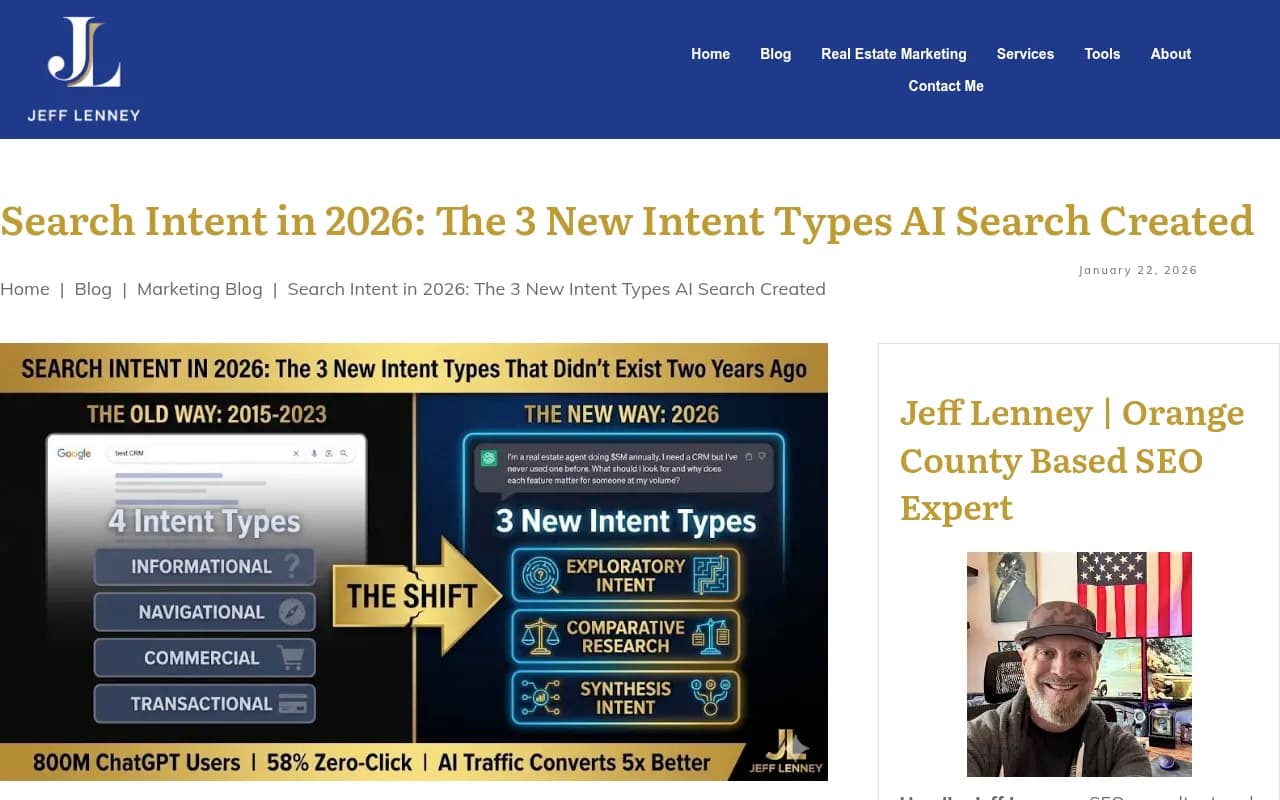
The data from Jeff Lenney's 2026 search intent analysis puts commercial intent at around 20% of AI search queries. That's lower than informational or navigational, but the conversion value per query is much higher.
The challenge is that AI models are genuinely cautious about commercial recommendations. They don't want to appear to be advertising. They tend to recommend well-known brands, heavily reviewed products, and sources they've seen cited frequently across the web. Breaking into those lists -- especially for newer or smaller brands -- is hard.
Why commercial visibility is different across AI models
Not all AI engines handle commercial prompts the same way. Some observations from tracking data in 2026:
- Perplexity tends to cite specific product pages and comparison articles more readily than ChatGPT
- ChatGPT's responses to commercial prompts often include caveats ("I'd recommend checking recent reviews") and tend to favor brands with strong Reddit and forum presence
- Google AI Mode and AI Overviews for commercial queries often pull from established review sites (G2, Capterra, Wirecutter-style content) rather than brand websites directly
- Gemini tends to be more conservative with direct product recommendations than Perplexity
This means your commercial visibility score on one platform tells you almost nothing about your commercial visibility on another. A brand that's well-represented in Perplexity's buying-intent responses might be invisible in ChatGPT's, and vice versa.
The content types that win commercial intent
Based on citation patterns, the content that gets pulled into commercial AI responses tends to be:
- Comparison articles ("X vs. Y" format)
- "Best of" listicles with clear evaluation criteria
- Third-party reviews on platforms AI models trust (G2, Reddit, industry publications)
- Your own content that directly addresses buying criteria (pricing transparency, use case specificity, honest pros/cons)
Generic marketing copy doesn't get cited. Specific, comparative, honest content does.
Intent type performance by AI model: a comparison
Here's how the major AI engines tend to handle each intent type, based on available data and tracking patterns:
| AI engine | Informational | Navigational | Commercial |
|---|---|---|---|
| Google AI Overviews | Very high trigger rate (40%+) | Low trigger rate (~10%) | Moderate; pulls from review sites |
| ChatGPT | High; cites blog/guide content | High volume (32.2% of prompts) | Cautious; favors well-known brands |
| Perplexity | High; cites specific pages with links | Moderate; often redirects directly | More willing to recommend specific products |
| Gemini | High for educational content | Moderate | Conservative on direct recommendations |
| Claude | High for explanatory content | Low | Very cautious; often declines to recommend |
The takeaway: if you're only tracking one AI model, you're missing most of the picture. A brand that's winning informational visibility on Google AI Overviews might be losing commercial visibility on Perplexity -- and those are the queries that actually drive revenue.
How to build an intent-segmented tracking setup
Most AI visibility tracking setups fail because they treat all prompts the same. Here's a more useful approach.
Step 1: Build separate prompt sets for each intent type
Don't mix informational and commercial prompts in the same tracking bucket. Create distinct sets:
- Informational prompts: "how to [do something in your category]," "what is [concept]," "explain [topic]"
- Navigational prompts: your brand name, your product names, your competitors' names
- Commercial prompts: "best [product category]," "[your category] for [use case]," "[your product] vs [competitor]"
Aim for 15-20 prompts per intent category at minimum. More is better, but quality matters more than quantity -- prompts should reflect what your actual customers are asking.
Step 2: Track across multiple AI models
At minimum, track ChatGPT, Perplexity, and Google AI Overviews. These three have meaningfully different behaviors across intent types. If you're in a category where Gemini or Claude are relevant (enterprise software, research tools, education), add those too.
Otterly.AI

Step 3: Measure the right things for each intent type
- For informational: citation rate, which pages are cited, which competitors are cited more often
- For navigational: accuracy of brand description, presence of website link, sentiment of response
- For commercial: mention rate in recommendation lists, position in lists (first vs. last matters), which platforms recommend you vs. competitors
Step 4: Identify gaps and act on them
Tracking without action is just watching. Once you know which intent types and which AI models you're underperforming on, you need a way to close those gaps.
For informational gaps, that usually means creating or improving content that directly answers the questions where competitors are being cited. For commercial gaps, it often means building out comparison content, improving your third-party review presence, or creating more specific use-case content that AI models can pull from.
Promptwatch's Answer Gap Analysis is specifically built for this -- it shows you which prompts competitors are visible for but you're not, so you can prioritize where to focus.
The new intent types worth watching
SE Ranking's 2026 analysis introduces a sixth intent type: generative AI intent. This covers prompts that are specifically designed to get AI to produce something -- a draft, a plan, a summary -- rather than to find information or make a purchase decision.
This matters for brands because generative prompts often involve tools and platforms. "Write a marketing email using [tool]" or "create a project plan in [software]" are generative prompts that implicitly recommend a product. If your brand is the one that gets named in those prompts, that's a form of commercial visibility that doesn't show up in traditional intent tracking.
It's early days for tracking generative intent systematically, but it's worth building a small prompt set around it now -- especially if your product is the kind of thing people use inside AI workflows.
Common mistakes in intent-based AI visibility tracking
A few patterns that consistently produce misleading data:
- Tracking only branded prompts. Your navigational visibility tells you how you're doing when people already know you exist. It says nothing about discovery.
- Using a single AI model as a proxy for all AI search. ChatGPT's behavior on commercial prompts is genuinely different from Perplexity's. Don't extrapolate.
- Measuring citation rate without measuring response quality. Being mentioned in a list of "tools to avoid" is not the same as being recommended. Read the actual responses.
- Ignoring off-site citations. AI models often cite Reddit threads, YouTube videos, and third-party review sites rather than your own pages. If those sources say bad things about you, your commercial visibility suffers even if your own content is excellent.
- Treating AI visibility as a vanity metric. The goal is traffic and revenue, not citation counts. Connect your visibility tracking to actual site traffic from AI referrals to understand what's actually working.
Tools for intent-segmented AI visibility tracking
A few platforms worth knowing for this kind of work:
Profound
Otterly.AI
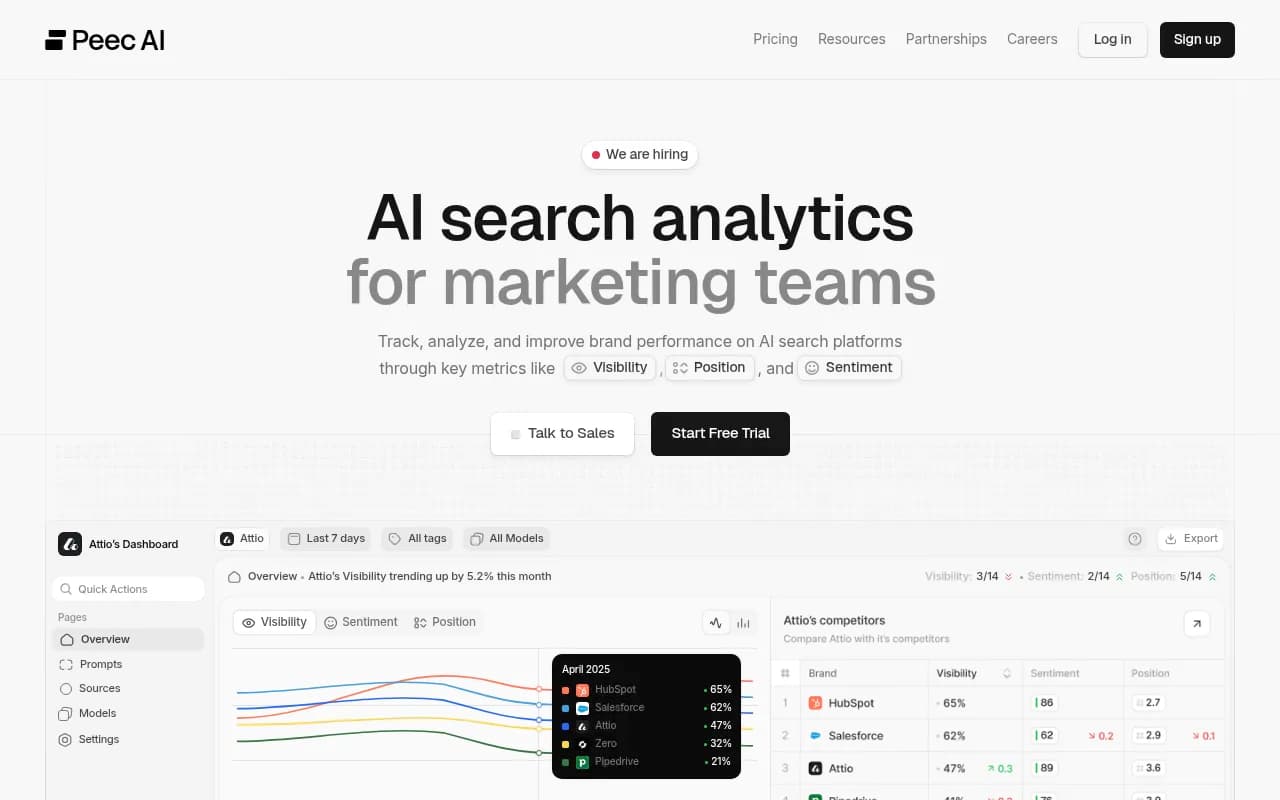
Each has different strengths. Promptwatch covers the full loop from gap identification to content creation to traffic attribution. Profound has strong data on ChatGPT prompt intent distribution. SE Ranking's AI Visibility Tracker monitors across AI Overviews, AI Mode, ChatGPT, Gemini, and Perplexity. Otterly.AI and Peec.ai are simpler monitoring tools if you're just getting started.
The right choice depends on whether you need monitoring only or whether you need to act on what you find. If you're serious about improving commercial visibility -- not just measuring it -- you need a platform that helps you create the content that closes the gaps.
What actually moves the needle for commercial intent
Closing with something concrete: if you had to pick one thing to improve your commercial AI visibility in 2026, it would be this -- create content that directly answers the buying question your customers are asking.
Not generic "why choose us" copy. Not a features list. A specific, honest answer to "what kind of company should use [your product] and what kind shouldn't?" That's the content AI models cite when someone asks a commercial intent question. It's useful, it's specific, and it doesn't read like an ad.
The brands winning commercial AI visibility right now are the ones that made their content genuinely useful to buyers -- not the ones that optimized hardest for traditional SEO signals. That's a meaningful shift, and it's one that rewards honesty over polish.