Key takeaways
- Qwairy has 26 reviews on G2 as of mid-2026, with users generally praising its multi-engine coverage but flagging gaps in actionability and content tools
- The most common complaints center on limited depth beyond monitoring — users want to know what to do with the data, not just see it
- Several users report switching to platforms that combine tracking with content gap analysis and optimization workflows
- The AI visibility tracking space has matured fast in 2026; monitoring-only tools are increasingly losing ground to platforms that close the loop from insight to action
- If you're evaluating Qwairy, the honest question to ask is: does your team need a dashboard, or do you need a system that helps you fix what the dashboard shows?
Who is Qwairy, and why are people reviewing it?
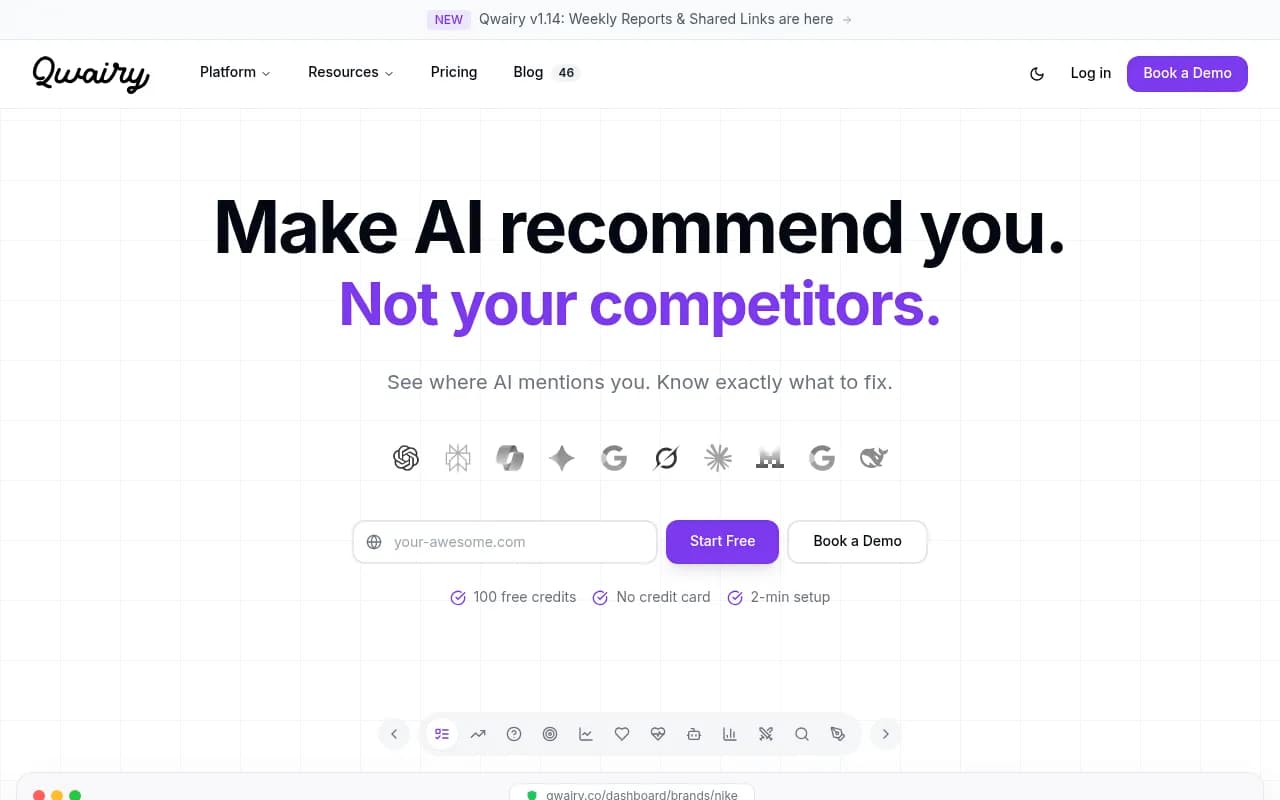
Qwairy is an AI visibility tracking platform that monitors how brands appear across AI search engines — think ChatGPT, Perplexity, Google AI Overviews, Gemini, and others. The pitch is straightforward: as more people get answers from AI rather than clicking through to websites, you need to know whether those AI engines are mentioning you, recommending you, or ignoring you entirely.
That's a real problem. A 2026 Harvard Business Review study found that generative AI adoption is widening across use cases faster than most organizations anticipated. And Pew Research data from March 2026 shows that while only 9% of U.S. adults currently get news from AI chatbots, the underlying behavior shift toward AI-first information retrieval is accelerating. For brands, that means AI visibility is no longer optional.
Qwairy entered this space as one of several tools trying to give marketers a window into what AI engines say about them. So what do actual users think?
What users like about Qwairy
Based on G2 reviews (26 reviews as of 2026), Qwairy earns consistent praise in a few areas.
Multi-engine coverage. Users appreciate that Qwairy tracks across multiple AI models rather than just one or two. For teams that care about visibility in ChatGPT and Perplexity and Google AI Overviews simultaneously, having everything in one place saves time.
Clean interface. Several reviewers mention that the dashboard is easy to navigate, especially for people who aren't deeply technical. Onboarding is described as relatively quick.
Prompt tracking basics. For teams just getting started with AI visibility, Qwairy gives them a starting point — a way to see whether their brand is showing up at all when relevant prompts are run.
Useful for reporting. A handful of agency users mention using Qwairy to show clients their AI visibility scores over time, which works well as a high-level reporting tool.
The complaints: where Qwairy falls short
This is where the reviews get more interesting. The pattern that emerges across multiple G2 reviews is a version of the same frustration: the data is there, but I don't know what to do with it.
Monitoring without action
The most repeated complaint is that Qwairy shows you what's happening but doesn't help you change it. Users can see that competitors are being cited more often, or that their brand is absent from certain prompt categories — but the platform doesn't tell them why, or what content to create to fix it.
This is a structural limitation, not a bug. Qwairy, like several tools in this space, was built as a monitoring dashboard. That was fine when the category was new and just having visibility data felt valuable. In 2026, teams are past that stage. They want the insight and the next step.
Prompt coverage feels limited
Some reviewers note that the number of prompts you can track feels restrictive, especially if you're in a competitive category with lots of relevant queries. Scaling up prompt coverage often means upgrading to higher tiers, which some users feel isn't justified by the feature set.
No content gap analysis
A recurring theme in more detailed reviews: users want to know which specific topics or questions they're missing coverage on — the gaps where competitors are getting cited but they aren't. Qwairy doesn't offer this in a structured way. You can see the output (competitor cited, you weren't) but not a mapped analysis of the content gap underneath it.
Limited crawler and traffic data
More advanced users mention wanting to understand how AI crawlers are interacting with their site — which pages are being read, which are being ignored, whether there are indexing issues affecting citation rates. Qwairy doesn't provide crawler log data or AI traffic attribution, which limits how much teams can actually diagnose and fix problems.
No content generation
This one comes up less often but is worth noting: several users who moved to competing platforms specifically mention that they wanted a tool that could help them create content to fill the gaps it identified. Qwairy doesn't have this.
What users switched to (and why)
The tools people mention when they leave Qwairy tend to fall into two camps: those who wanted more depth in monitoring, and those who wanted to move from monitoring to optimization.
For more comprehensive monitoring
Some users moved to platforms with broader feature sets — more AI engines covered, better prompt volume data, or more granular citation analysis.
Otterly.AI

Profound

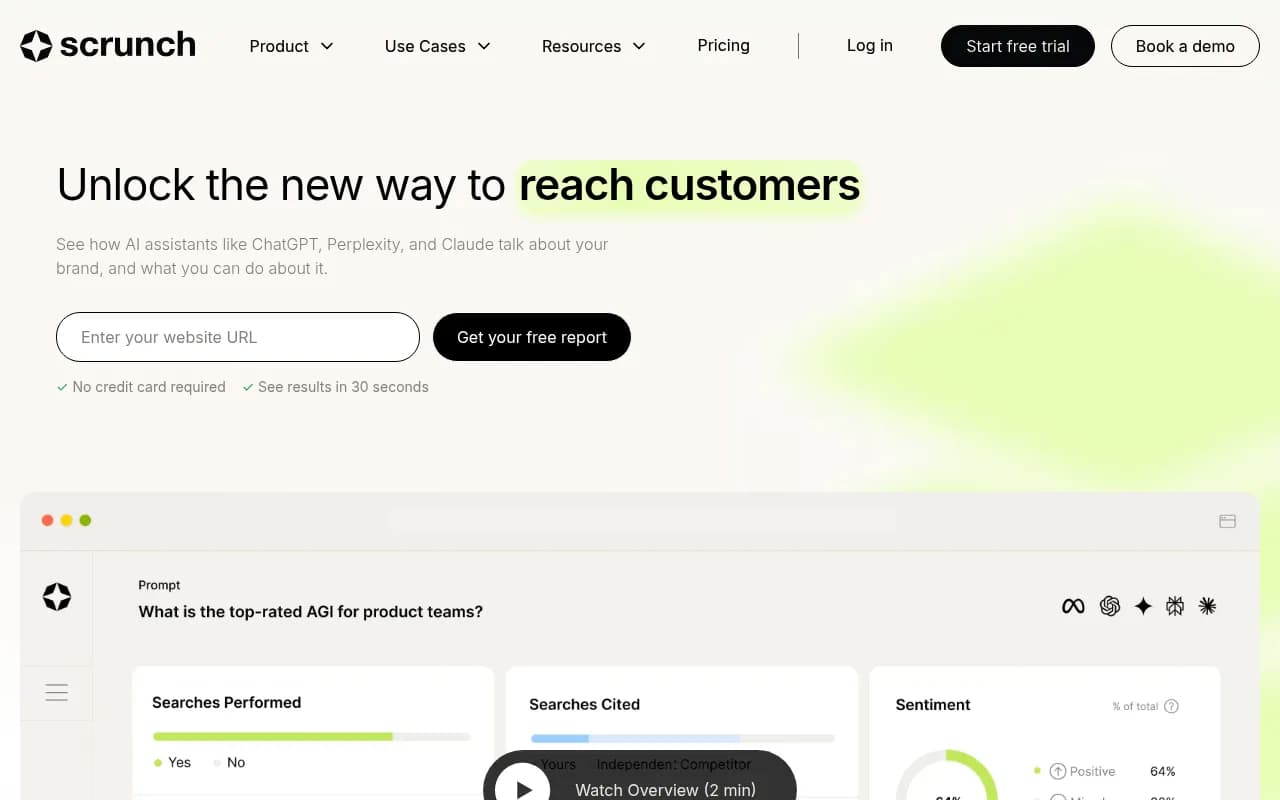
These tools offer more data points, but many users who switched to them eventually ran into the same wall: more data, still no clear path to action.
For optimization, not just tracking
The more significant switch pattern is toward platforms that treat AI visibility as something to be fixed, not just observed. This is where the market is clearly heading.

Promptwatch is the platform that comes up most often in this context. The difference is structural: rather than stopping at "here's your visibility score," it runs an Answer Gap Analysis that shows exactly which prompts competitors are visible for but you aren't, then connects that to content generation tools that create articles and briefs designed to close those gaps. Users who made this switch consistently describe it as moving from a reporting tool to an optimization workflow.


How Qwairy compares to the main alternatives
| Feature | Qwairy | Otterly.AI | Profound | Promptwatch |
|---|---|---|---|---|
| Multi-engine tracking | Yes | Yes | Yes | Yes (10 engines) |
| Prompt volume data | Limited | No | Yes | Yes |
| Answer gap analysis | No | No | Partial | Yes |
| Content generation | No | No | No | Yes |
| AI crawler logs | No | No | No | Yes |
| Reddit/YouTube tracking | No | No | No | Yes |
| ChatGPT Shopping tracking | No | No | No | Yes |
| Traffic attribution | No | No | No | Yes |
| Starting price | ~$49/mo | ~$29/mo | ~$99/mo | $99/mo |
The table tells the story pretty clearly. Qwairy, Otterly.AI, and to some extent Profound are monitoring tools. Promptwatch is built around a different premise: that visibility data is only useful if it connects to something you can act on.
Who should still consider Qwairy
It's worth being fair here. Qwairy isn't a bad product — it's a product that fits a specific use case.
If you're a small team or solo marketer who just wants a basic read on whether your brand is showing up in AI search, and you don't have the bandwidth to run content optimization workflows, Qwairy's simplicity is a genuine advantage. The lower price point and clean interface make it accessible.
It also works reasonably well as a client-facing reporting tool for agencies that need to show AI visibility trends without getting into the weeds of content strategy.
Where it struggles is with teams that have moved past the "awareness" phase of AI visibility and are now asking: what do we actually do about this?
The broader context: what 2026 changed
The AI visibility tracking space has gone through a meaningful shift in the past 18 months. In 2024, just having a tool that could tell you whether ChatGPT mentioned your brand felt novel. By mid-2026, that baseline is table stakes.
What's changed is that brands now have enough data to know they have a problem — and they're frustrated that their monitoring tools don't help them solve it. The Harvard Business Review's 2026 study on AI adoption found that organizations are increasingly integrating AI into core workflows rather than treating it as a side experiment. That same pressure applies to how they manage AI visibility: it needs to be part of a workflow, not a standalone dashboard you check occasionally.
The tools that are winning in 2026 are the ones that close the loop. Find the gap, create the content, track the result. Monitoring-only tools are losing users to platforms that do all three.

What to ask before choosing an AI visibility tool
If you're evaluating Qwairy or any alternative, these are the questions worth asking:
- Does the tool show you why you're not being cited, or just that you're not?
- Can it identify specific content gaps — the exact prompts where competitors win and you don't?
- Does it connect to content creation, or does it stop at the data?
- Can you see how AI crawlers are interacting with your site, not just the outputs?
- Does it track prompt volume so you can prioritize which gaps matter most?
Qwairy answers "yes" to the first question and "no" to most of the others. Whether that's enough depends entirely on where your team is in the AI visibility journey.
Bottom line
Qwairy is a reasonable entry point into AI visibility tracking. The multi-engine coverage is real, the interface is clean, and for teams just getting started, it does what it says on the tin.
But the reviews tell a consistent story: users outgrow it. The frustration isn't that Qwairy is broken — it's that the category has moved on, and monitoring without optimization feels increasingly incomplete. The teams switching away aren't looking for a better dashboard. They're looking for a system that helps them actually improve their AI visibility, not just measure it.
If you're in that second camp, the tools worth evaluating are the ones built around the full loop: gap analysis, content creation, and result tracking in one place.