Key takeaways
- AirOps is built around content workflows and AI search monitoring, but it lacks several features teams need to actually close the loop on AI visibility.
- The biggest gaps: no AI crawler logs, no ChatGPT Shopping tracking, no Reddit/YouTube citation intelligence, no traffic attribution, and limited content generation tied to real prompt data.
- Promptwatch covers all five of these areas in a single platform, which is why teams that outgrow AirOps tend to land here.
- This isn't about AirOps being bad -- it's about what you need once AI search becomes a serious revenue channel, not just a monitoring exercise.
- Both tools offer free trials. The right choice depends on whether you need monitoring or the full optimization loop.
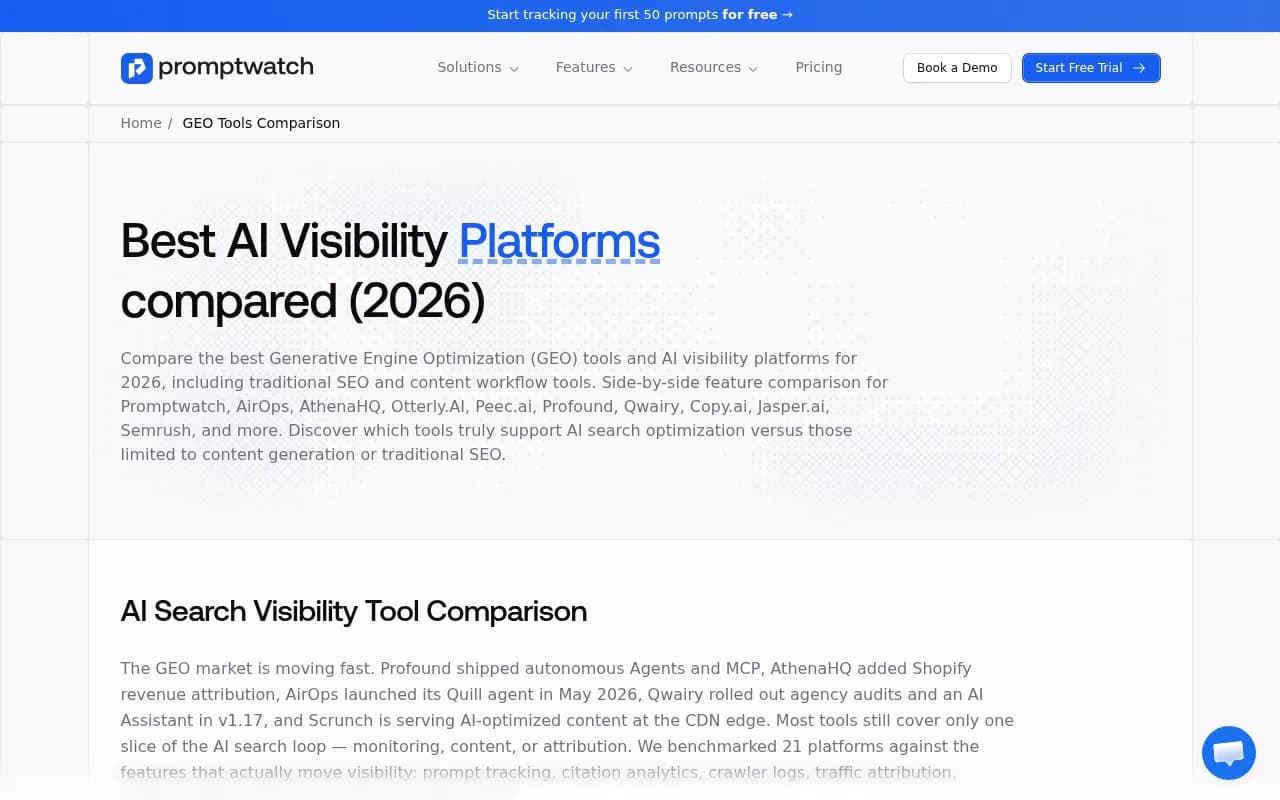
AirOps has built a real following. Its Quill agent (launched May 2026) and content engineering workflows are genuinely useful, and its Prompts view gives teams a clean way to track brand mentions across AI platforms. For teams just getting started with AI search visibility, it's a reasonable place to begin.
But there's a pattern emerging in 2026: teams that start with AirOps and get serious about AI visibility eventually hit a ceiling. They want to know not just where they're visible, but why -- and what to do about it. That's when the gaps start to show.
Here's what those gaps actually look like, and why Promptwatch has become the destination for teams making the switch.

What AirOps does well (and where it stops)
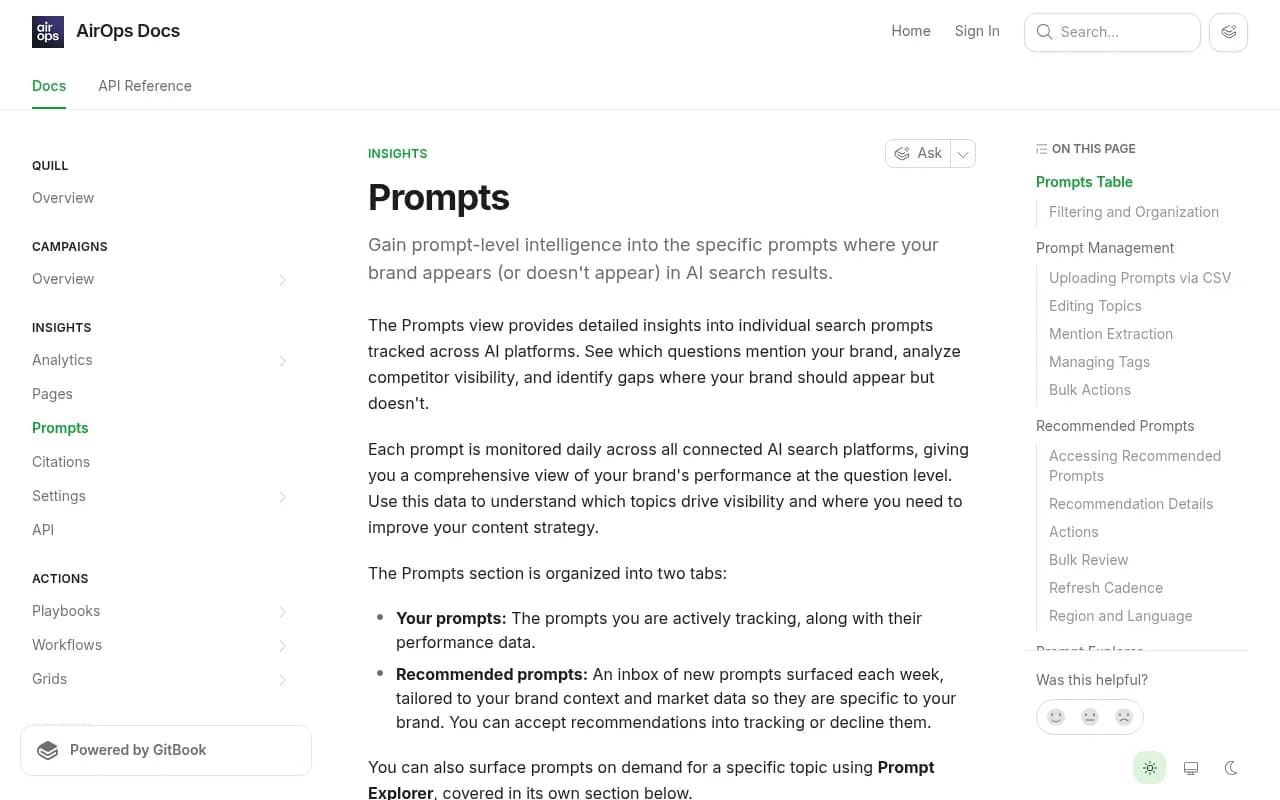
To be fair about this: AirOps is not a bad tool. Its Prompts view tracks brand mentions and citation rates across AI platforms, surfaces recommended prompts weekly, and lets you filter by region and date range. The Prompt Explorer feature lets you surface prompts on demand for specific topics. For a content team that wants to understand which questions their brand is showing up for, it covers the basics.
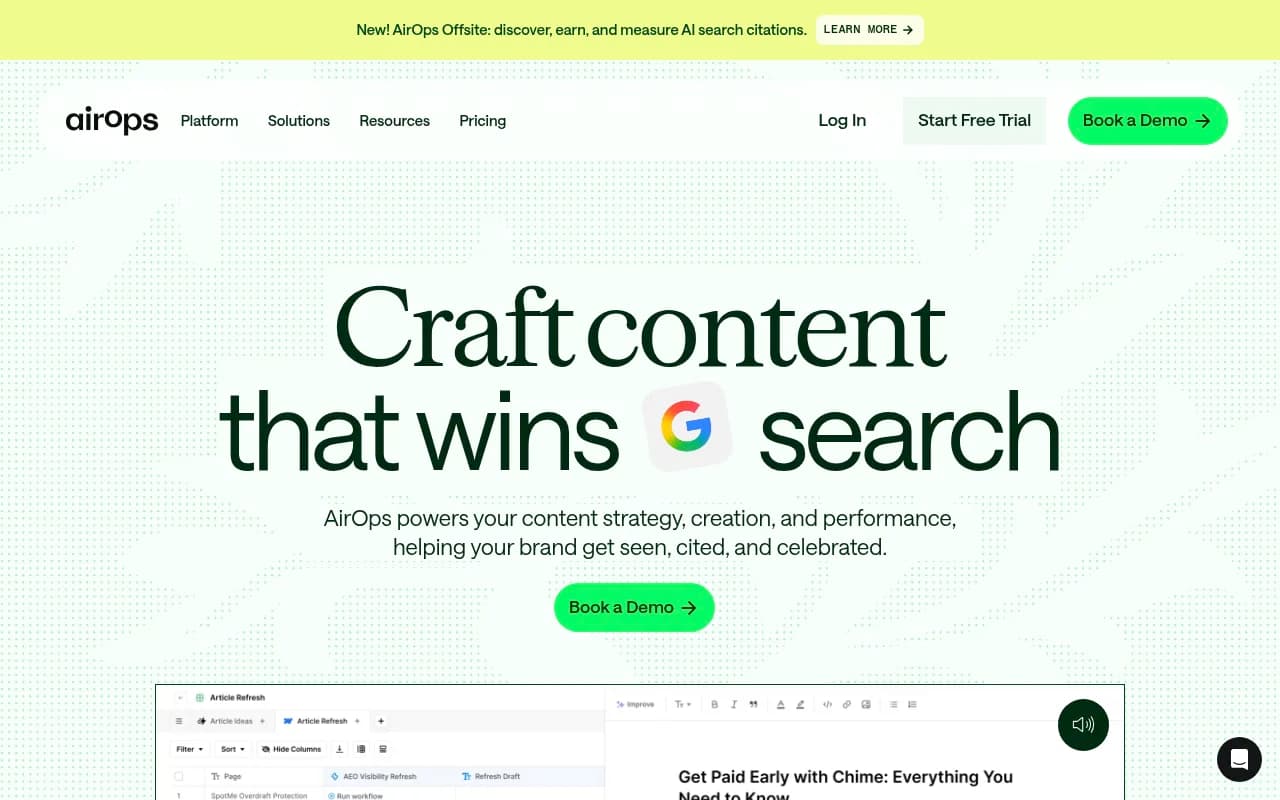
The issue is what happens next. Once you know which prompts you're missing, AirOps doesn't have a clear path to fixing it. There's no crawler log telling you whether ChatGPT has even read your pages. There's no content generation system grounded in actual citation data. There's no way to see whether your new article moved the needle three weeks after you published it.
You're left with data and no obvious next step.
That's the core tension. Monitoring is useful. Optimization is what actually moves revenue.
The 5 features that drive the switch
1. AI crawler logs
This is the one that surprises people most when they first see it.
Promptwatch shows you real-time logs of AI crawlers -- ChatGPT's GPTBot, Perplexity's PerplexityBot, Claude's ClaudeBot -- hitting your website. You can see which pages they read, how often they return, what errors they encounter, and critically, when a page moves from "crawled" to "cited."
Why does this matter? Because you can publish a perfectly optimized article and still not get cited if the AI crawler never reads it, hits a 403 error, or gets blocked by your robots.txt. Without crawler logs, you're flying blind on the technical side of AI visibility.
AirOps has no equivalent. You can see your citation rate drop, but you can't tell whether it's a content problem or a crawling problem. Those require completely different fixes.
Promptwatch's crawler logs are available on the Professional plan ($249/mo) and above. They connect through Cloudflare, Fastly, Vercel, server logs, or a tracking snippet -- whichever fits your stack.
2. Content agents grounded in real prompt data
AirOps has content workflows. Promptwatch has Content Agents, and the difference is in what they're built on.
When Promptwatch generates content, it's working from actual citation data, prompt volumes, difficulty scores, competitor analysis, and query fan-outs (the sub-queries that branch off a main prompt). The output isn't generic SEO content -- it's articles, listicles, and comparisons engineered to answer the specific gaps AI models are already exposing.
The workflow looks like this: Answer Gap Analysis shows you which prompts competitors are visible for but you're not. Content Agents then generate briefs and full articles targeting those exact gaps, with brand guidance, search results, news context, and screenshots baked in. Page-level tracking then shows you whether those pages get crawled and cited after publication.
That's a closed loop. AirOps's content tooling doesn't connect to citation data in the same way, and it doesn't have the Answer Gap Analysis as a starting point for content creation.
3. ChatGPT Shopping and entity tracking
ChatGPT's shopping recommendations are becoming a real commerce channel in 2026. When someone asks ChatGPT "what's the best project management tool for remote teams," the answer includes product cards with brand names, pricing, and links. Showing up there is increasingly valuable -- and most platforms don't track it at all.
Promptwatch monitors when your brand appears in ChatGPT's product recommendations and shopping carousels, alongside entity mentions across all 10 AI models it covers. AirOps doesn't have this. Neither do most competitors.
For e-commerce brands and SaaS companies with transactional intent queries, this is a meaningful gap. You can't optimize for a channel you can't see.
4. Reddit and YouTube citation intelligence
Here's something most teams don't realize: AI models frequently cite Reddit threads and YouTube videos in their answers. A Reddit post from two years ago might be influencing what ChatGPT says about your category right now. A YouTube review might be the reason a competitor keeps getting recommended.
Promptwatch surfaces Reddit discussions and YouTube content that directly influence AI recommendations. You can see which external sources are driving visibility in your category -- and use that to inform where you publish, who you partner with, and what content you create.
AirOps doesn't track Reddit or YouTube citations. This means teams using AirOps are missing a significant part of the picture -- the offsite signals that shape AI responses.
5. Traffic attribution that connects visibility to revenue
This is the one that matters most to anyone with a CFO asking questions.
Promptwatch connects AI visibility to actual website traffic and revenue. You can see which AI-cited pages are driving visitors, track the timeline from publish to crawl to citation to click, and tie the whole chain back to business outcomes. The Looker Studio integration and API let you pull this into whatever reporting setup you already use.
AirOps gives you mention rates and citation rates. It doesn't tell you whether any of that visibility is translating into traffic or pipeline. For teams that need to justify their GEO investment, that's a significant limitation.
Feature comparison: AirOps vs Promptwatch
| Feature | AirOps | Promptwatch |
|---|---|---|
| Prompt tracking | Yes | Yes (with volume + difficulty scores) |
| Citation rate monitoring | Yes | Yes |
| AI crawler logs | No | Yes (Pro+) |
| Answer Gap Analysis | Limited | Yes |
| Content generation from prompt data | Partial (Quill agent) | Yes (Content Agents) |
| ChatGPT Shopping tracking | No | Yes |
| Reddit citation intelligence | No | Yes |
| YouTube citation intelligence | No | Yes |
| Traffic attribution | No | Yes |
| Page-level visibility tracking | No | Yes |
| Multi-model coverage | Yes | Yes (10 models) |
| Competitor heatmaps | Limited | Yes |
| Looker Studio / API | Limited | Yes |
Who should stay on AirOps
Not everyone needs to switch. AirOps makes sense if:
- You're primarily using it as a content workflow tool and AI monitoring is secondary
- You're early in your AI visibility journey and want to understand the basics before investing in a fuller stack
- Your team is already deeply embedded in AirOps's content engineering workflows and the switching cost is high
The Quill agent is genuinely useful for teams that want AI-assisted content at scale without needing the monitoring side to be deeply integrated. If that's your situation, AirOps is fine.
Who should switch to Promptwatch
The switch makes sense when:
- You're publishing content to improve AI visibility but have no way to verify whether AI crawlers are actually reading it
- You're losing to competitors in AI search and can't figure out why
- Your leadership wants to see AI visibility tied to traffic and revenue, not just mention rates
- You're in a category where ChatGPT Shopping or Reddit discussions influence recommendations
- You want one platform for the full loop: find gaps, create content, track results
Promptwatch's pricing starts at $99/month for the Essential plan (1 site, 50 prompts, 5 articles). The Professional plan at $249/month adds crawler logs, state/city tracking, and 150 prompts. There's a free trial available.
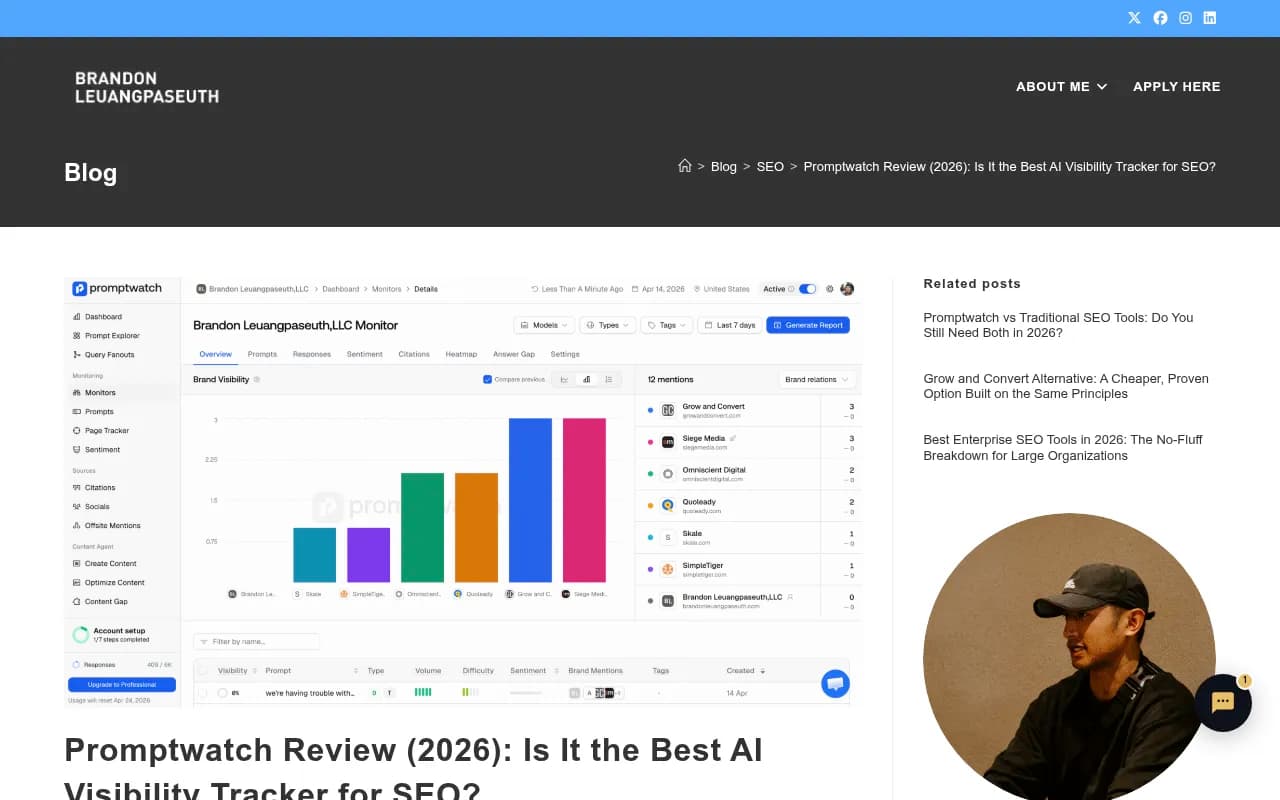
Independent SEO consultant Brandon Leuangpaseuth, who has scaled multiple SaaS companies' organic traffic, reviewed Promptwatch and called out the Answer Gap report and crawler log analysis specifically as the standout features -- the ones that make the data "actually actionable" rather than just interesting.
The real difference: monitoring vs optimization
The framing that makes this clearest: AirOps is a monitoring and content tool. Promptwatch is an optimization platform.
Monitoring tells you where you stand. Optimization tells you what to do about it, helps you do it, and then tells you whether it worked. In 2026, with AI search eating into organic traffic across almost every category, the teams winning are the ones running the full loop -- not just watching the dashboard.
That's the gap. And it's why the switch keeps happening.