Lemlist Review 2026
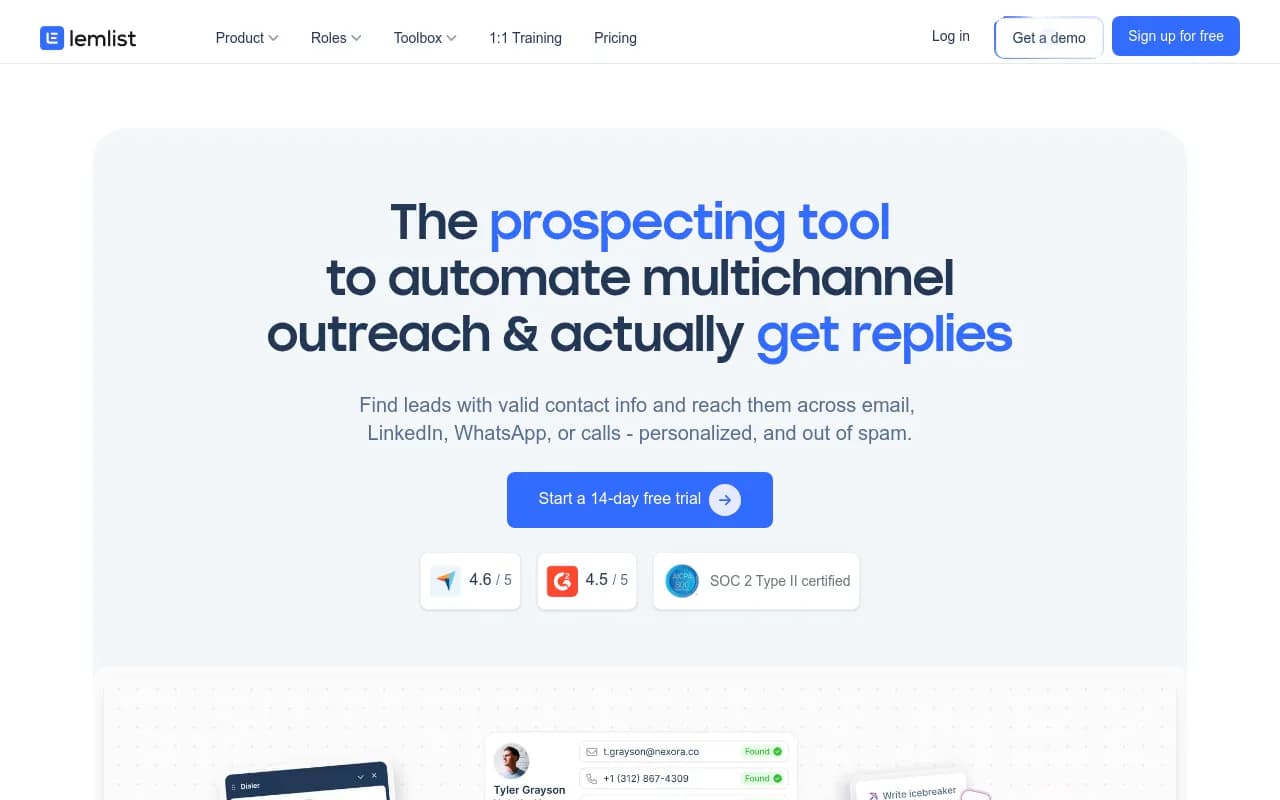
lemlist is an all-in-one sales engagement platform that automates prospecting across email, LinkedIn, WhatsApp, and calls. With a 450M+ lead database, waterfall enrichment, AI personalization, and built-in deliverability tools, it helps sales teams find qualified leads, personalize at scale, and act
Summary: Key Takeaways
• All-in-one prospecting platform: lemlist combines lead finding (450M+ database), contact enrichment, multichannel outreach (email, LinkedIn, WhatsApp, calls), and deliverability management in one tool -- most competitors force you to juggle 3-5 separate platforms • Built-in spam protection: Every seat includes lemwarm, a deliverability booster that automates warm-up emails and protects sender reputation -- critical for cold outreach success • Real multichannel automation: Unlike tools that claim "multichannel" but only do email well, lemlist actually automates LinkedIn actions, WhatsApp messages, and call workflows from a single sequence • Strong for SDR/BDR teams: Best fit for sales development teams at B2B companies running high-volume outbound -- agencies and solo founders can use it, but pricing and features target team environments • Pricing jumped recently: New customers pay $109/user/month (up from $99 for existing customers). At 5+ seats, costs add up quickly compared to lighter alternatives
lemlist is a sales engagement platform built for B2B teams that want to automate outbound prospecting without sounding robotic or landing in spam. Founded by Guillaume Moubeche and the lemlist team (French company), it's used by over 20,000 sales teams including companies like Paddle, Videoly, and ElevenLabs. The core promise: find leads with verified contact info, personalize messages at scale using AI, reach them across multiple channels from one workflow, and keep your emails out of spam folders.
The platform sits in the crowded sales engagement space alongside tools like Outreach, SalesLoft, Apollo.io, and Instantly.ai. What sets lemlist apart is the combination of lead database + enrichment + multichannel sequences + deliverability tools in one package. Most competitors excel at one piece (Apollo has a great database, Instantly focuses on email deliverability, SalesLoft does sequences well) but force you to stitch together multiple tools. lemlist tries to be the single platform you need from prospecting to reply.
Lead Finding and Enrichment
lemlist includes a built-in lead database of 450M+ contacts with smart filters to find companies and people matching your ICP (ideal customer profile). You can search by company size, industry, location, job title, technology stack, and other firmographic data. Once you've identified target accounts, the waterfall enrichment feature pulls verified emails and phone numbers by querying multiple data providers in sequence until it finds a match. This saves you from paying for separate enrichment tools like ZoomInfo, Lusha, or Cognism.
The enrichment accuracy is solid but not perfect -- expect around 85-90% email validity based on user reports. Phone numbers are harder to source and coverage varies by region (stronger in US/UK, weaker in APAC). The database itself is licensed from third-party providers, so it's not proprietary data. You're essentially getting aggregated access to the same sources you'd pay for separately, which is convenient but not necessarily more accurate than going direct to a premium provider.
One nice touch: lemlist shows you enrichment costs upfront before you burn credits, so you can decide if a lead is worth the spend. Credits are consumed per enrichment action (email find, phone find, etc.) and pricing varies by plan.
AI Personalization at Scale
lemlist's AI pulls lead details from LinkedIn profiles, company websites, recent news, and other public sources to generate personalized message snippets. You can use dynamic variables to automatically insert these insights into email copy, LinkedIn messages, or even personalized images and landing pages. For example, the AI might pull a prospect's recent LinkedIn post, their company's latest funding round, or a pain point mentioned on their website, then weave that into your outreach.
The AI writing quality is decent -- better than generic mail merge, not as good as a human researcher spending 10 minutes per lead. It tends to produce safe, professional copy that hits the main personalization points without much creativity. You'll want to edit the output or set up custom prompts to match your brand voice. The image personalization feature lets you dynamically insert prospect names, company logos, or screenshots into images, which can boost engagement (though it feels gimmicky if overused).
Dynamic landing pages are a standout feature: you can create a landing page template with variables that auto-populate based on who clicks the link. So each prospect sees a page with their name, company, and relevant case studies. This works well for high-value accounts where you want to create a "wow" moment.
Multichannel Sequences That Actually Work
This is where lemlist shines compared to email-only tools. You can build sequences that combine email, LinkedIn actions (connection requests, profile views, messages, post engagement), WhatsApp messages, and manual call tasks -- all triggered based on prospect behavior. For example: send email → wait 2 days → if no reply, send LinkedIn connection request → wait 3 days → if accepted, send LinkedIn message → wait 2 days → trigger call task for your rep.
The LinkedIn automation uses a Chrome extension that mimics human behavior (random delays, realistic activity patterns) to avoid detection. It's safer than aggressive bots but still carries some risk -- LinkedIn's terms prohibit automation, and accounts can get flagged if you're too aggressive. lemlist includes safety limits (connection requests per day, message limits) and recommends conservative settings, but you're ultimately responsible if LinkedIn restricts your account.
WhatsApp integration requires connecting your WhatsApp Business account and works through the official API, so it's compliant and won't get you banned. You can send templated messages (which require WhatsApp approval) or trigger manual tasks for reps to send personalized messages. The call workflow doesn't auto-dial -- it creates tasks in your sequence that remind reps to call, with notes and context pulled from previous interactions.
The unified inbox is a major time-saver: all replies across email, LinkedIn, and WhatsApp show up in one thread per lead, so you can see the full conversation history without switching platforms. You can reply directly from lemlist or sync conversations back to your CRM.
Deliverability: lemwarm and Spam Protection
Every lemlist seat includes free access to lemwarm, a separate tool (also built by the lemlist team) that automates email warm-up and monitors deliverability. lemwarm sends and receives emails between a network of real inboxes to build your sender reputation gradually. It also provides a deliverability score, spam test results, and actionable recommendations (fix your SPF/DKIM/DMARC records, reduce sending volume, improve email copy, etc.).
This is table stakes for cold email in 2026 -- if you're sending outbound at scale, you need warm-up or your emails will land in spam within days. Most competitors either don't include warm-up (forcing you to pay for Mailreach, Warmbox, or similar) or charge extra for it. lemlist bundles it for free, which is a real cost advantage.
The warm-up works well based on user feedback -- most teams report inbox placement rates of 80-90% when following lemlist's setup guidelines. The spam test feature lets you send a test email and see how it's classified by Gmail, Outlook, and other providers before launching your campaign. Helpful for catching issues early.
One limitation: lemwarm can't fix fundamental deliverability problems like a bad domain reputation, poor email authentication, or spammy copy. It's a booster, not a magic fix. If you're sending to scraped lists or using aggressive language, you'll still land in spam.
Integrations and Workflow Fit
lemlist integrates natively with HubSpot and Salesforce, so you can trigger sequences, sync lead data, and log activities directly from your CRM. This is critical for sales ops teams that want a single source of truth. The integration is bidirectional -- leads added to lemlist sequences automatically sync to your CRM, and replies/activities log as CRM records.
Other notable integrations: Pipedrive, Aircall (click-to-call from lemlist), Slack (notifications for replies), Zapier/Make (connect to 1000+ apps), and webhooks for custom workflows. The API is well-documented and supports most core actions (add leads, start sequences, fetch analytics), so dev teams can build custom integrations if needed.
One gap: no native integration with LinkedIn Sales Navigator for lead import. You can export Navigator searches to CSV and upload to lemlist, but it's a manual step. Competitors like Apollo and Outreach handle this more smoothly.
Who Should Use lemlist
lemlist is built for B2B sales teams running outbound at scale -- specifically:
• SDR/BDR teams at SaaS companies (5-50 reps) prospecting into mid-market or enterprise accounts. If you're sending 500+ emails per rep per week and need multichannel follow-up, lemlist handles the volume and complexity. • Sales leaders and ops teams who want to onboard reps quickly and enforce consistent processes. The template library, sequence analytics, and team management features make it easy to scale outbound across a growing team. • Agencies running outbound for clients can use lemlist's multi-workspace feature to manage campaigns separately per client. Pricing gets expensive at scale (each client workspace needs seats), but the white-label options and reporting are solid. • Founders and solo sellers can use lemlist, but it's overkill if you're only sending 50 emails a week. The pricing ($109/user/month minimum) and feature set assume you're running sequences continuously.
lemlist is less ideal for:
• Enterprise sales teams (100+ reps) who need advanced governance, compliance features, and dedicated support. Tools like Outreach and SalesLoft offer better enterprise controls and SLAs. • Transactional or high-volume email senders (newsletters, product updates, etc.). lemlist is for 1-to-1 sales outreach, not bulk email blasts. Use Mailchimp, SendGrid, or Customer.io for that. • Teams that only do email outreach and don't need LinkedIn/WhatsApp. You're paying for multichannel features you won't use -- Instantly.ai or Smartlead are cheaper email-only alternatives. • Companies in highly regulated industries (finance, healthcare) where cold outreach has strict compliance requirements. lemlist doesn't include built-in compliance workflows for GDPR consent tracking, opt-out management, or audit logs.
Pricing and Value
lemlist pricing recently increased for new customers:
• Email Outreach plan: $59/user/month (billed annually) -- email sequences only, no LinkedIn/WhatsApp, limited enrichment credits • Sales Engagement plan: $109/user/month (billed annually) or $129/month (billed monthly) -- full multichannel, unlimited email sending, 100 enrichment credits/month, lemwarm included, CRM integrations • Enterprise plan: Custom pricing (annual contracts only) -- adds multi-workspace, advanced permissions, dedicated support, custom integrations, higher enrichment limits
Existing customers grandfathered at $99/user/month for Sales Engagement. The $10/month increase (10% jump) is notable -- lemlist is no longer the budget option in this space.
Enrichment credits are consumed per action: finding an email costs 1 credit, finding a phone number costs 2-3 credits depending on data source. 100 credits/month means you can enrich roughly 50-100 leads per user per month (depending on what data you need). Heavy users will need to buy credit top-ups or negotiate higher limits on Enterprise.
Compared to competitors: • Apollo.io: $49-79/user/month with larger lead database and more enrichment credits included -- better value if lead sourcing is your main need • Instantly.ai: $37-97/month (flat rate, unlimited users) for email-only -- much cheaper if you don't need multichannel • Outreach/SalesLoft: $100-150+/user/month with more enterprise features but steeper learning curve -- better for large teams • Smartlead: $39-94/month (unlimited users) for email + basic LinkedIn -- cheaper but less polished UX
lemlist sits in the middle: more expensive than email-only tools, cheaper than full enterprise platforms, with a feature set that tries to cover the whole prospecting workflow. Whether it's good value depends on how much you use the multichannel and enrichment features. If you're only doing email, you're overpaying. If you're running complex sequences across 3+ channels, it's competitive.
Strengths
• True multichannel automation: Email, LinkedIn, WhatsApp, and calls in one sequence with unified inbox -- most competitors only do email well • Deliverability built-in: lemwarm included free with every seat saves $30-50/month per user vs buying separate warm-up tools • Lead database + enrichment in one platform: Eliminates need for separate tools like ZoomInfo or Apollo for basic prospecting • Strong personalization options: AI-generated copy, dynamic images, and personalized landing pages go beyond basic mail merge • Easy onboarding: Intuitive UI and helpful in-app guidance make it fast to train new reps -- most teams are running sequences within a day • Active community and content: lemlist publishes solid outbound playbooks, templates, and case studies (like the ElevenLabs 6x pipeline growth story) that help you learn best practices
Limitations
• Enrichment coverage gaps: Phone numbers and emails for non-US leads are hit-or-miss -- you'll still need a premium provider like ZoomInfo for comprehensive data • LinkedIn automation risk: Chrome extension-based LinkedIn automation violates LinkedIn's ToS -- accounts can get restricted if you're too aggressive, and lemlist can't prevent that • Limited enterprise features: No advanced compliance workflows (GDPR consent tracking, audit logs), no SSO, no dedicated IP addresses for email sending -- not built for 100+ user deployments • Pricing creep: Recent $10/month increase puts lemlist at the higher end of mid-market tools -- no longer the budget-friendly option it once was • No Sales Navigator integration: Can't directly import leads from LinkedIn Sales Navigator -- requires manual CSV export/import • AI writing is generic: Personalization AI produces safe, professional copy but lacks creativity -- you'll need to edit heavily or write custom prompts to match your brand voice
Bottom Line
lemlist is a strong choice for B2B sales teams (5-50 reps) that want to run multichannel outbound sequences without juggling multiple tools. The combination of lead database, enrichment, email/LinkedIn/WhatsApp automation, and built-in deliverability tools covers the full prospecting workflow in one platform. It's particularly good for SDR/BDR teams at SaaS companies that need to personalize at scale and follow up across channels.
The recent pricing increase ($109/user/month for new customers) makes it less of a budget option, and the LinkedIn automation carries inherent risk since it violates LinkedIn's terms. If you only need email outreach, cheaper alternatives like Instantly.ai or Smartlead offer better value. If you need enterprise-grade compliance and governance, Outreach or SalesLoft are safer bets.
Best use case in one sentence: B2B sales teams running high-volume, multichannel outbound who want lead sourcing, personalization, and deliverability management in one platform without paying for separate tools.
Tags:
Frequently asked questions
What is Lemlist and what does it do?
How much does Lemlist cost?
Does Lemlist offer a free plan?
Who is Lemlist best for?
What channels does Lemlist support for outreach?
Does Lemlist include a lead database?
How does Lemlist help with email deliverability?
How does Lemlist compare to Apollo.io?
Does Lemlist have AI personalization features?
What is lemwarm in Lemlist?
Similar and alternative tools to Lemlist