Terminus Review 2026
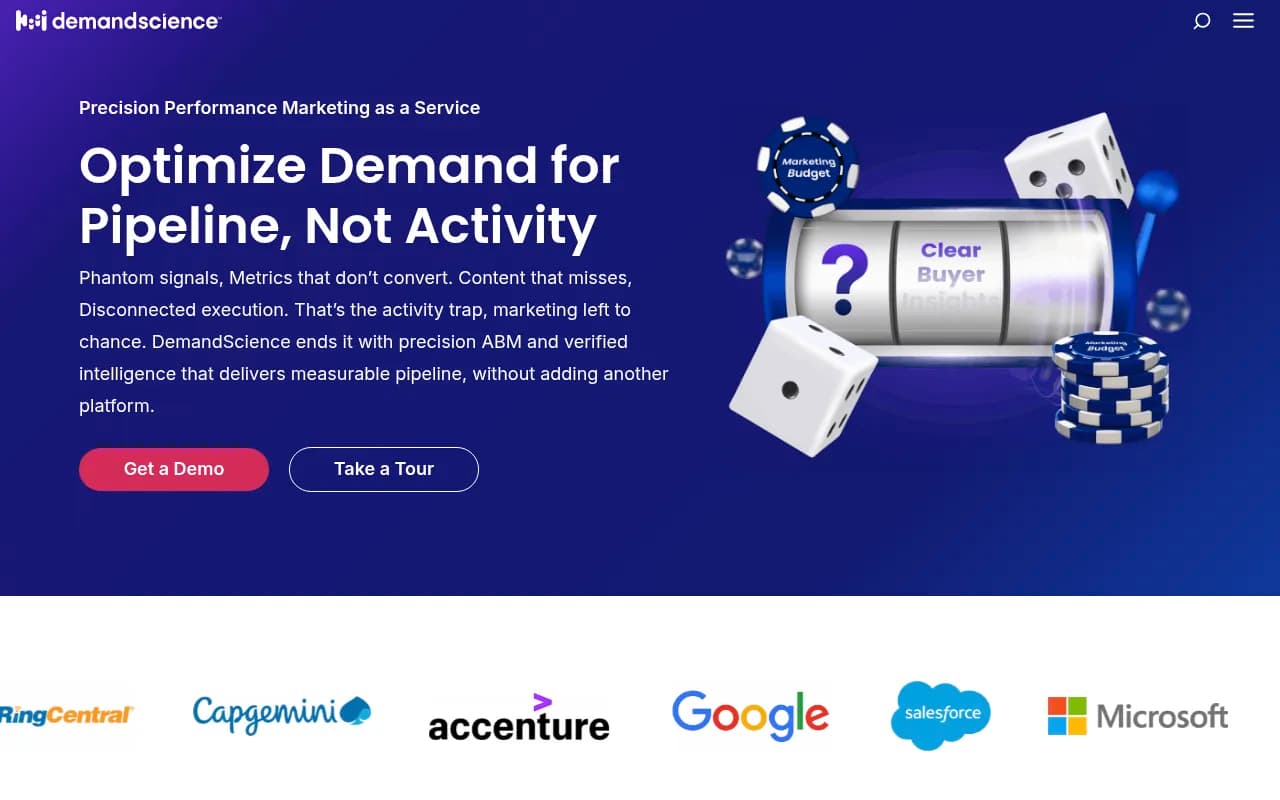
DemandScience (formerly Terminus) is a precision ABM and performance marketing platform for B2B teams. It combines verified buyer intelligence, AI-powered orchestration, and expert campaign management to deliver measurable pipeline—not just activity metrics. Trusted by 900+ companies including Googl
Summary
- Best for: Mid-market to enterprise B2B marketing teams tired of vanity metrics and phantom intent signals that don't convert to revenue
- Core strength: Verified buyer intelligence with full provenance—no inflated intent scores or bot traffic—plus managed campaign execution so you don't need another platform to babysit
- Key differentiator: Combines data, AI orchestration, and human expertise ("Demand Scientists") in a single service—you're not buying software, you're buying outcomes
- Honest limitation: Pricing is opaque (typical for enterprise ABM platforms) and likely starts mid-five figures annually, putting it out of reach for smaller teams or startups
- Bottom line: If your dashboards show success but pipeline stays flat, DemandScience is built to fix that exact problem
DemandScience is what happens when a B2B marketing platform decides to stop selling you software and start delivering actual pipeline. Originally known as Terminus (one of the early ABM platform pioneers), the company rebranded in 2025 after years of acquisitions and product evolution. The pitch is simple: most marketing teams are drowning in activity that looks like progress—clicks, impressions, "intent signals"—but none of it converts to revenue. DemandScience calls this the "Marketing Data Mirage" and their entire platform is designed to end it.
Their 2026 research backs up the frustration: 87% of organizations report unreliable or inflated intent signals, 67% say dashboards show success while no revenue follows, and 85% of teams spend more time fixing data problems than creating programs. If you've ever watched a campaign hit all its KPIs while sales complains about lead quality, you know the feeling.
What makes DemandScience different is the service model. You're not licensing software and figuring it out yourself—you're hiring a team (they call them "Demand Scientists") who run campaigns for you using verified buyer data, AI orchestration, and a unified intelligence layer called Ionic. It's closer to hiring an agency than buying a SaaS product, except the agency comes with proprietary data and technology you can't get anywhere else.
How It Actually Works
DemandScience is built on three layers that work together:
Ionic (Intelligence & Orchestration Layer): This is the data and AI engine. Ionic ingests verified buyer signals—not cookie-based intent scores or third-party data of questionable origin, but actual engagement data with full provenance. It tracks who's reading your content, which accounts are showing real buying behavior, and which signals are just noise. The AI orchestration piece automatically routes accounts through the right campaigns based on their readiness and behavior, so you're not manually segmenting lists or guessing at timing.
Labs (Expert Services Team): This is where the human expertise comes in. Labs is a team of campaign strategists, content creators, media buyers, and data analysts who design and execute your programs. They handle everything from audience targeting and creative development to media placement and optimization. You're not learning a new platform—you're briefing a team and reviewing results. They run demand gen, ABM, content syndication, paid media, email, events, web personalization, and more.
Central (Marketing Intelligence Hub): This is your command center. Central connects every campaign, signal, and outcome in one place so you can see what's actually working. It tracks pipeline contribution, not just activity metrics. You can see which accounts are engaging, which campaigns are driving revenue, and where to double down. It integrates with your CRM and MAP (Salesforce, HubSpot, Marketo, etc.) to close the loop from campaign to closed-won.
The workflow is: Ionic identifies verified buyers and orchestrates targeting → Labs builds and runs campaigns across channels → Central shows you the pipeline impact.
What You Can Actually Run
DemandScience handles the full range of B2B marketing programs:
Demand Generation: High-quality lead programs including propensity-based leads (scored by likelihood to buy), in-market buyer activation (targeting accounts actively researching solutions), content syndication (distributing your content to engaged audiences), and HQL/BANT leads (sales-ready contacts). The key difference vs traditional lead gen vendors: DemandScience verifies every signal and filters out bots, fake emails, and low-intent clicks. Their 2026 data shows a 3% ad fraud rate vs 20% industry average.
Advertising: Media placement and management across display, social, search, and programmatic channels. Labs handles strategy, creative, targeting, and optimization. You're not managing campaigns in Google Ads or LinkedIn—you're reviewing performance dashboards and adjusting strategy.
Data Services: Audience building, data enrichment, and data cleansing. If your CRM is full of incomplete records or outdated contacts, DemandScience's Integrity product cleans it up. Audience Builder lets you create precise target lists based on firmographics, technographics, and intent signals. Digital Audiences packages your ICP for activation across ad platforms.
Web Personalization: Turn your website into a conversion engine by personalizing content, CTAs, and experiences based on account, industry, or buying stage. This is handled through their Web product and integrated with Ionic's intelligence layer so personalization is based on real behavior, not guesswork.
Email Outreach: Targeted email campaigns to your ICP with verified contacts and deliverability management. Labs handles list building, creative, and sending—you approve messaging and review results.
Events: Live and virtual event support including promotion, registration management, and follow-up nurture. If you're running a user conference or webinar series, Labs can handle the full marketing execution.
Studio (Content Creation): In-house creative team for content development, translation, and design. If you need ebooks, case studies, landing pages, or ad creative, Studio produces it. This is useful if your internal team is stretched thin or you need content at scale.
AI Visibility (New in 2026): This is DemandScience's answer to Generative Engine Optimization (GEO). AI Visibility helps you get found by AI search engines like ChatGPT, Perplexity, Claude, and Google AI Overviews. It's a newer offering and not as mature as their core ABM capabilities, but it shows they're paying attention to how B2B buyers are shifting to AI-powered research.
Who This Is Actually For
DemandScience is built for mid-market to enterprise B2B companies with complex sales cycles and high deal values. Specific personas:
VP/Director of Demand Gen at a $50M-$500M B2B SaaS or tech company: You're responsible for pipeline but your team is underwater managing six different tools (MAP, ABM platform, intent data provider, ad platforms, content syndication vendors, data enrichment tools). You want to consolidate vendors and get back to strategy instead of platform administration.
Head of Marketing at a 50-500 person company with a 6-12 month sales cycle: Your CEO wants to see marketing's contribution to revenue, not vanity metrics. You need a system that tracks pipeline, not just MQLs. You're tired of intent data that doesn't convert and lead gen vendors that send junk.
Marketing Ops leader drowning in data quality issues: Your CRM is a mess, your intent data contradicts itself, and sales doesn't trust marketing's leads. You need verified data and a single source of truth.
ABM program manager at an enterprise with 100+ target accounts: You're running account-based programs but struggling to coordinate across channels (ads, email, web, events). You need orchestration that actually works and reporting that shows account-level engagement and pipeline.
Who should NOT use DemandScience:
Startups or companies under $10M revenue: The pricing is too high and the service model assumes you have a mature sales process and defined ICP. If you're still figuring out product-market fit, you need simpler tools.
Teams that want full control over execution: If you prefer to run campaigns in-house and just need data or software, DemandScience's managed service model won't fit. You're hiring a team, not licensing a tool.
Companies with short, transactional sales cycles: If your average deal is under $10K and closes in days or weeks, ABM and verified buyer intelligence are overkill. You need volume, not precision.
Integrations & Ecosystem
DemandScience integrates with the major B2B marketing and sales stack:
- CRM: Salesforce, HubSpot, Microsoft Dynamics
- Marketing Automation: Marketo, HubSpot, Pardot, Eloqua
- Data Warehouses: Snowflake, BigQuery (for Central reporting)
- Ad Platforms: Google Ads, LinkedIn, Facebook, programmatic exchanges (managed by Labs)
- Analytics: Google Analytics, Looker, Tableau (via Central data exports)
The integration model is different from typical SaaS—DemandScience's team handles most of the setup and data flow. You're not configuring API keys yourself. Central pulls data from your CRM and MAP to show pipeline attribution, and Ionic pushes enriched data and engagement signals back into your systems.
No public API for custom integrations. This is a managed service, not a developer platform.
Pricing & Value
DemandScience does not publish pricing. Industry sources (ZenABM's analysis) indicate typical costs are mid-five figures annually ($50K-$100K+) for mid-market, scaling to six figures ($100K-$300K+) for enterprise. Pricing depends on:
- Number of target accounts
- Campaign types and channels (demand gen, advertising, events, etc.)
- Data volume (leads, enrichment records, audience size)
- Level of Labs involvement (full managed service vs lighter support)
There's a 21-day free trial mentioned on some pages (likely for Central or a limited pilot), but the core platform requires a sales conversation and custom quote.
How this compares to alternatives: DemandScience is priced like an agency + data provider + ABM platform combined. If you're currently paying for 6sense or Demandbase ($50K-$150K/year), plus a content syndication vendor ($30K-$60K/year), plus a data provider like ZoomInfo ($20K-$40K/year), plus agency fees for campaign execution ($50K-$100K/year), DemandScience can consolidate that spend. But if you're a smaller team running campaigns in-house with HubSpot and LinkedIn Ads, this is a big step up in cost.
Value proposition: You're paying for outcomes (pipeline), not software licenses. If your current stack generates lots of activity but no revenue, DemandScience's verified data and managed execution can deliver better ROI even at a higher price point. Their case studies show 417% boost to pipeline, 141% of SQL goal achieved, and 45% MQL-to-SQL conversion rates—numbers that justify the investment if you can replicate them.
Strengths & Limitations
What DemandScience does exceptionally well:
- Verified buyer data with provenance: No bots, no fake emails, no inflated intent scores. Every signal is traceable to real engagement. This is the core differentiator vs intent data providers that aggregate third-party signals of questionable quality.
- Managed service model: You're not learning another platform or hiring more headcount. Labs runs campaigns for you, which is a huge relief if your team is stretched thin.
- Pipeline attribution in Central: Finally, a dashboard that shows revenue contribution instead of just clicks and impressions. Central connects campaigns to closed-won deals so you can prove marketing's impact.
- Multi-channel orchestration: Ionic automatically routes accounts through the right campaigns based on behavior and readiness. You're not manually building segments or guessing at timing.
- Low ad fraud rate (3% vs 20% industry average): DemandScience's verification process filters out bots and invalid traffic, so your ad spend goes to real buyers.
Honest limitations:
- Opaque pricing and high cost: No public pricing, and industry estimates suggest $50K-$300K+ annually. This puts it out of reach for smaller teams and requires a significant budget commitment.
- Less control over execution: If you prefer to run campaigns in-house and just need data or software, the managed service model won't fit. You're hiring a team, not licensing a tool you can customize.
- AI Visibility is a newer offering: While DemandScience has added GEO/AI search visibility, it's not as mature as their core ABM capabilities. If AI search optimization is your primary need, dedicated platforms like Promptwatch offer deeper functionality (content gap analysis, AI crawler logs, traffic attribution, Reddit/YouTube tracking, ChatGPT Shopping monitoring) that DemandScience's AI Visibility doesn't yet match.
- Requires a mature sales process: If you're still figuring out your ICP or have a short sales cycle, DemandScience's precision ABM approach is overkill. You need simpler tools.
Bottom Line
DemandScience is for B2B marketing teams that are tired of activity metrics that don't convert to pipeline. If your dashboards show success but sales complains about lead quality, if your intent data is full of phantom signals, or if you're drowning in MarTech sprawl and want to consolidate vendors—this is built for you. The managed service model means you're buying outcomes, not software, which is a relief if your team is stretched thin. But the high cost and opaque pricing mean you need a significant budget and a mature sales process to justify the investment. Best fit: mid-market to enterprise B2B companies with 6-12 month sales cycles, high deal values, and a VP of Demand Gen who wants to focus on strategy instead of platform administration.
Tags:
Frequently asked questions
What is Terminus and what does it do?
How much does Terminus cost?
Is Terminus free to use?
Who is Terminus best for?
What is the difference between Terminus and DemandScience?
What are the key features of Terminus?
Does Terminus offer a free trial?
What companies use Terminus?
Similar and alternative tools to Terminus