Key Takeaways
- Jasper: Best for enterprise marketing teams needing brand consistency, 100+ AI agents, and content pipelines across channels — but costs significantly more than Byword ($249+/mo vs $99/mo)
- Surfer SEO: Ideal if you prioritize real-time SERP analysis and on-page optimization over bulk article generation — stronger for optimizing existing content than creating from scratch
- Promptwatch: The only platform that tracks and optimizes content for AI search engines (ChatGPT, Claude, Perplexity) — essential if you want visibility beyond Google
- Frase: Best all-in-one alternative with research, writing, and optimization in one workflow — now includes GEO features for AI search visibility
- Koala AI: Top choice for affiliate marketers and niche site owners who need publish-ready articles fast — 19,000+ creators trust it for one-click content that ranks
Byword has become a go-to AI article writer for content teams that need to produce SEO-optimized articles at scale. With 85,000+ users, it handles everything from keyword research to WordPress publishing in one workflow. But it's not the only option — and depending on your specific needs, it might not be the best one.
Some teams need stronger brand voice controls for enterprise marketing. Others want deeper SERP analysis or better optimization tools. Affiliate marketers often prioritize speed and publish-ready output over customization. And if you're thinking about AI search visibility (how ChatGPT, Claude, and Perplexity cite your content), Byword doesn't address that at all.
Here's an honest comparison of the top Byword alternatives in 2026, what they do better (and worse), and who should pick each one.
Jasper
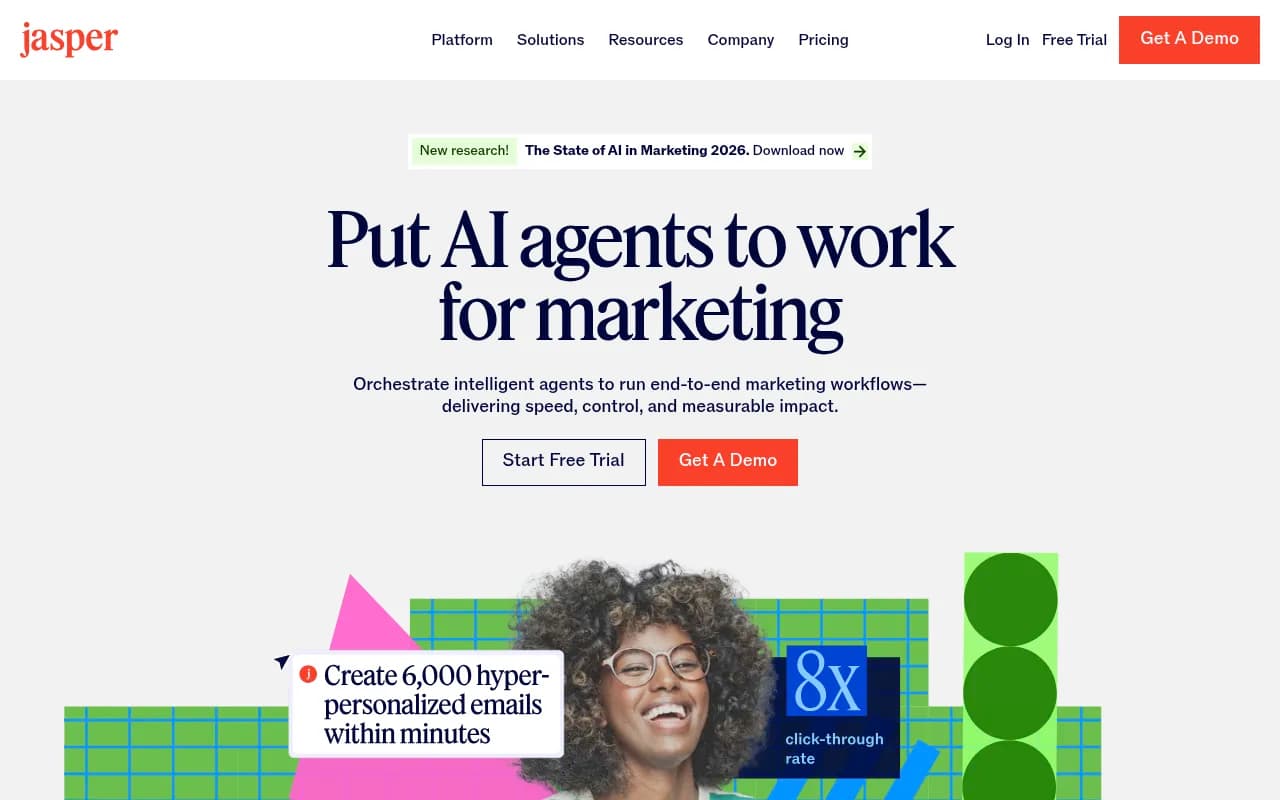
Jasper positions itself as an enterprise AI marketing platform, not just a content writer. Where Byword focuses on generating SEO articles at scale, Jasper is built for marketing teams that need to produce content across multiple channels — blogs, ads, emails, social posts, landing pages — while maintaining strict brand consistency.
The core difference: Jasper gives you 100+ specialized AI agents and content pipelines. You're not just writing articles; you're orchestrating entire campaigns. The platform learns your brand voice, style guidelines, and visual identity through its Brand IQ system, then applies those rules across every piece of content. For large teams with compliance requirements or agencies managing multiple brands, this is a game-changer.
Byword's strength is simplicity: keyword in, article out, publish to WordPress. Jasper's strength is control: you can build custom AI agents in Jasper Studio (no-code), create multi-step content workflows, and enforce brand guardrails that prevent off-brand output. The Canvas workspace lets teams collaborate in real-time, and the Grid interface handles bulk content generation with systematic quality checks.
Jasper also includes proprietary image generation models (Image Suite) trained on your brand's visual style, which Byword doesn't offer. And the platform integrates with enterprise marketing stacks — HubSpot, Salesforce, Marketo — in ways that Byword's WordPress/Webflow integrations don't match.
Trade-offs: Jasper costs significantly more. The Creator plan starts at $59/month but is limited to individual use. The Pro plan ($249/month for up to 5 users) is where teams get real value, and enterprise pricing goes higher from there. Byword's Starter plan is $99/month for 25 articles; Jasper's pricing is based on seats and usage, not article count, which can get expensive fast.
Jasper is also more complex. If you just need to generate blog posts, the learning curve and feature set can feel like overkill. Byword's interface is straightforward: research keywords, generate articles, optimize, publish. Jasper requires more setup — defining brand voice, building agents, configuring workflows — before you see results.
Best for: Mid-to-large marketing teams and agencies that need to produce content across multiple channels (not just blog posts), maintain strict brand consistency, and have the budget for enterprise-grade tools. If you're a solo blogger or small content team just trying to rank articles on Google, Byword's simplicity and lower price point make more sense.
Surfer SEO
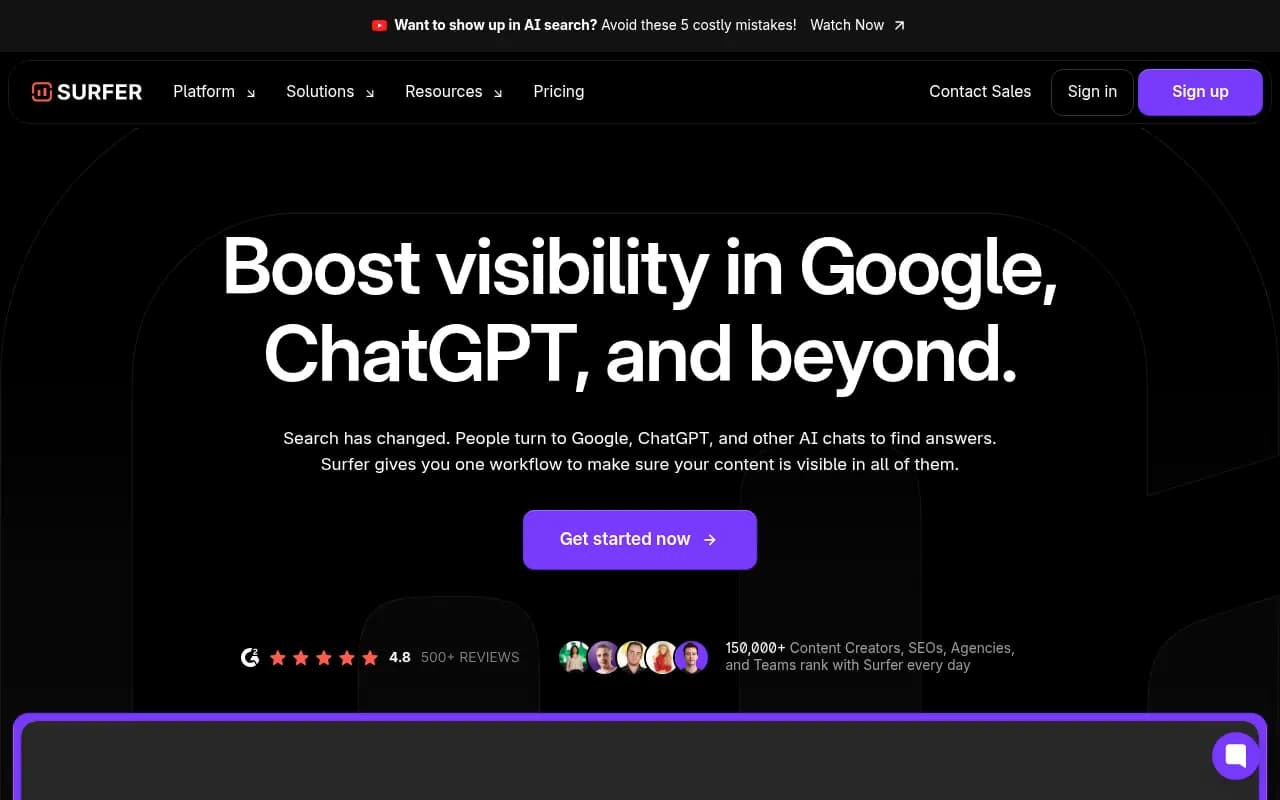
Surfer SEO takes a fundamentally different approach than Byword. Where Byword is an end-to-end article generator (research → write → optimize → publish), Surfer is primarily an optimization platform that happens to include AI writing capabilities.
The core strength: real-time SERP analysis and data-driven optimization. Surfer analyzes the top-ranking pages for your target keyword, extracts the ranking factors (word count, keyword density, heading structure, related terms), and gives you a Content Score that updates as you write. You see exactly what's missing and what to fix. Byword includes SEO optimization, but it's more of a final check before publishing. Surfer makes optimization the entire workflow.
Surfer's Content Editor is where it shines. You write (or paste in AI-generated content), and the sidebar shows you real-time suggestions: add this keyword 3 more times, include these related terms, restructure this heading, add more words to this section. The Outline Builder analyzes competitors and suggests a structure based on what's actually ranking. The NLP terms feature identifies semantic keywords that Google associates with your topic.
Byword generates full articles in one click. Surfer expects you to be more hands-on — either writing yourself with AI assistance or heavily editing AI-generated drafts. The Surfer AI add-on can generate articles, but it costs extra credits on top of your monthly plan, and the output isn't as polished as Byword's out-of-the-box articles.
Surfer also includes an Audit tool that analyzes your existing content and tells you exactly how to improve it for better rankings. Byword doesn't have this — it's focused on creating new content, not optimizing old posts. For teams with a large back catalog of underperforming articles, Surfer's audit and optimization features are invaluable.
Trade-offs: Surfer's pricing is comparable to Byword ($99/month for the Essential plan), but the article limits are tighter. The Essential plan includes 30 articles; Byword's Starter plan ($99/month) includes 25 articles, so they're close. But Surfer AI articles cost additional credits, which can add up fast if you're generating content at scale.
Surfer is also more manual. Byword's workflow is: enter keyword, click generate, get a publish-ready article. Surfer's workflow is: research keyword, build outline, write or generate content, optimize based on real-time feedback, export. If you want speed and automation, Byword wins. If you want control and data-driven optimization, Surfer wins.
Best for: SEO professionals and content teams that prioritize optimization over volume. If you're writing 5-10 high-quality articles per month and want each one to rank as high as possible, Surfer's real-time feedback and SERP analysis are worth the extra effort. If you're publishing 50+ articles per month and need automation, Byword's one-click generation is more practical.
Promptwatch

Promptwatch is the only platform on this list that addresses a problem Byword (and most AI content tools) completely ignore: visibility in AI search engines. While Byword optimizes for Google, Promptwatch tracks and optimizes for ChatGPT, Claude, Perplexity, Gemini, and other AI models that are increasingly where people search for answers.
This is a fundamentally different use case. Byword helps you create content that ranks in traditional search engines. Promptwatch helps you understand how AI models cite (or don't cite) your content, then shows you exactly what's missing so you can fix it. The platform monitors 10 AI models, tracks 1.1 billion+ citations, and provides prompt-level visibility — which specific questions are your competitors getting cited for that you're not.
The action loop is what sets Promptwatch apart: find the gaps, create content that ranks in AI, track the results. The Answer Gap Analysis shows you which prompts competitors are visible for but you're not, and exactly what content your site is missing. The built-in AI writing agent generates articles grounded in real citation data (880M+ citations analyzed), prompt volumes, and competitor analysis — content engineered to get cited by AI models, not just rank on Google.
Byword doesn't track AI search visibility at all. You can generate articles, publish them, and hope ChatGPT cites you, but you have no way to know if it's working. Promptwatch closes that loop with page-level tracking (which pages are being cited, how often, by which models) and traffic attribution (code snippet, GSC integration, or server log analysis) to connect visibility to actual revenue.
Promptwatch also includes AI Crawler Logs — real-time logs of ChatGPT, Claude, Perplexity, and other AI crawlers hitting your website. You see which pages they read, errors they encounter, how often they return. This is critical for understanding how AI engines discover your content and fixing indexing issues. Byword has no equivalent feature.
Trade-offs: Promptwatch is not a replacement for Byword — it's a complementary tool. Byword generates articles; Promptwatch tells you what articles to generate and tracks whether AI models are citing them. The pricing is also different: Promptwatch starts at $99/month (Essential plan: 1 site, 50 prompts, 5 articles), which is comparable to Byword, but the focus is on monitoring and optimization, not bulk content generation.
If you only care about Google rankings, Promptwatch is overkill. But if you're thinking about the future of search — where people ask ChatGPT instead of Googling, where Perplexity answers questions with cited sources, where AI models recommend products and services — Promptwatch is the only platform that helps you show up in those results.
Best for: Brands and agencies that want to be visible in AI search engines (ChatGPT, Claude, Perplexity) and understand how AI models cite their content. If you're already ranking on Google but want to capture the growing share of searches happening in AI assistants, Promptwatch is essential. Use it alongside Byword: generate articles with Byword, track AI visibility with Promptwatch.
Frase

Frase is the closest all-in-one alternative to Byword. Both platforms handle the full content workflow — research, writing, optimization, publishing — but Frase takes a more research-heavy approach, while Byword prioritizes speed and automation.
The standout feature: Frase's research capabilities are deeper than Byword's. The platform analyzes the top 10 SERP results for your target keyword, extracts key topics and questions, and builds a comprehensive brief before you start writing. You see exactly what competitors are covering, which questions they're answering, and what content gaps exist. Byword includes keyword research and SERP analysis, but it's more automated — you get less visibility into the underlying data.
Frase also includes an AI Agent (introduced in 2026) that handles 80+ SEO and GEO tasks. It researches your market, creates optimized content, and tracks your visibility across Google, ChatGPT, and Perplexity. This is a direct response to the rise of AI search — Frase now optimizes for both traditional search engines and AI assistants, similar to what Promptwatch does but integrated into the content creation workflow.
Byword's strength is simplicity: keyword in, article out. Frase's strength is control: you get a detailed brief, competitor analysis, and topic targets before the AI generates a draft. If you want to understand why the AI is making certain choices (and have the ability to adjust them), Frase gives you more transparency.
Frase also includes a Content Analytics feature that tracks how your published articles perform over time — rankings, traffic, conversions. Byword focuses on creation and publishing; Frase extends into post-publish performance tracking, which helps you identify which articles need updates or optimization.
Trade-offs: Frase's pricing is lower than Byword's for small teams. The Starter plan is $39/month (vs Byword's $99/month), but it includes fewer articles and less automation. The Professional plan ($103/month) is comparable to Byword's Starter plan in terms of output. Frase is a better deal if you're writing 10-20 articles per month and want more control over the research and outlining process. Byword is a better deal if you're writing 25+ articles per month and want maximum automation.
Frase's interface is also more complex. Byword's workflow is linear: research → generate → optimize → publish. Frase's workflow has more steps: research → brief → outline → draft → optimize → publish. If you're a solo blogger who just wants to crank out articles, Byword's simplicity wins. If you're a content strategist who wants to understand the research behind each article, Frase's depth wins.
Best for: Content teams and SEO professionals who want a balance between automation and control. Frase is ideal if you need deep SERP research, competitor analysis, and the ability to customize briefs before generating content. It's also a strong choice if you care about AI search visibility (GEO features) and want post-publish performance tracking. If you just want fast, automated article generation, Byword is simpler.
Junia AI

Junia AI is built for speed and scale. Where Byword focuses on end-to-end workflow (research → write → optimize → publish), Junia focuses on generating long-form, SEO-optimized articles as fast as possible with minimal input. It's the closest alternative to Byword in terms of automation and ease of use.
The core strength: one-click article generation with automatic publishing. You enter a keyword, Junia researches the topic, generates a 2,000-5,000 word article, adds relevant images, inserts internal links, and publishes directly to WordPress — all without manual intervention. Byword does this too, but Junia's output is slightly faster and the interface is more streamlined for bulk content creation.
Junia also includes automatic internal linking, which Byword doesn't handle as well. The platform scans your existing content, identifies relevant anchor text opportunities, and inserts contextual internal links as it generates new articles. For niche site owners and affiliate marketers building topical authority, this is a huge time-saver.
The image generation feature is another differentiator. Junia automatically generates and inserts relevant images throughout each article (not just a featured image), which improves readability and engagement. Byword includes image support, but it's more manual — you need to upload or select images yourself.
Junia's pricing is also more affordable for high-volume creators. The Creator plan is $34/month; the Pro plan is $59/month. Byword's Starter plan is $99/month. If you're publishing 50+ articles per month and want to minimize costs, Junia's pricing structure is more favorable.
Trade-offs: Junia's optimization features are weaker than Byword's. Byword includes real-time SEO scoring, keyword density analysis, and readability suggestions. Junia generates articles that are "SEO-optimized" out of the box, but you get less visibility into the optimization process and fewer tools to fine-tune the output. If you want control over optimization, Byword or Surfer SEO are better choices.
Junia's brand voice matching is also less sophisticated. Byword lets you upload style guides and train the AI on your existing content. Junia's voice customization is more basic — you can set tone and style preferences, but it doesn't learn from your content library the way Byword does.
Best for: Niche site owners, affiliate marketers, and content creators who need to publish 50+ articles per month at the lowest possible cost. Junia is ideal if you prioritize speed, automation, and volume over customization and control. If you're building topical authority across multiple sites and need publish-ready articles with automatic internal linking, Junia is a strong Byword alternative.
Koala AI
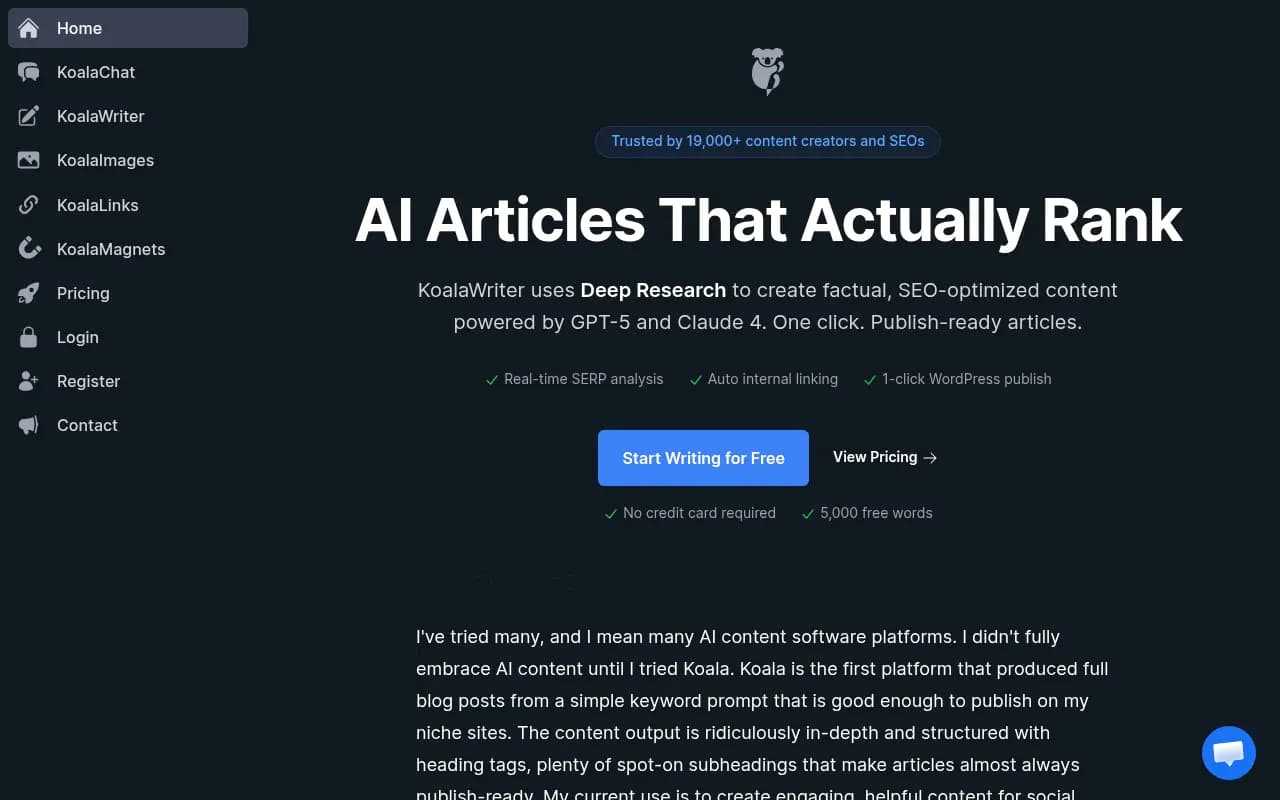
Koala AI has become the go-to tool for affiliate marketers and niche site owners who need publish-ready articles that rank fast. With 19,000+ creators using it, Koala's reputation is built on one thing: generating long-form, SEO-optimized content in one click that requires minimal editing before publishing.
The standout feature: Deep Research mode. Koala analyzes real-time SERP data, pulls information from top-ranking pages, and structures articles based on what's actually working in search results. This is similar to what Byword does, but Koala's output is specifically optimized for informational and commercial intent keywords — the types of queries that drive affiliate revenue.
Koala also includes KoalaChat, a research assistant that helps you brainstorm topics, analyze competitors, and refine outlines before generating articles. Byword's workflow is more automated (keyword in, article out); Koala gives you a research layer that helps you make smarter decisions about what to write.
The pricing is extremely competitive. Koala offers 5,000 free words to start, then the Essentials plan is $9/month for 15,000 words. The Starter plan ($25/month for 50,000 words) is the sweet spot for most users. Byword's Starter plan is $99/month for 25 articles; Koala's pricing is based on word count, which gives you more flexibility if you're writing shorter articles or need to generate more content on a budget.
Koala also includes KoalaImages (AI image generation), KoalaLinks (internal linking suggestions), and KoalaMagnets (lead magnet creation). These are niche features that Byword doesn't offer, but they're valuable for affiliate marketers and niche site owners who need to build email lists and monetize traffic.
Trade-offs: Koala's optimization tools are less robust than Byword's. You get SEO-optimized articles out of the box, but there's no real-time content scoring or detailed optimization feedback. If you want to fine-tune articles for specific keywords or readability targets, Byword's optimization features are stronger.
Koala also lacks direct CMS integrations beyond WordPress. Byword supports WordPress, Webflow, Shopify, and 5,000+ integrations via Zapier. If you're publishing to multiple platforms, Byword's integration ecosystem is more flexible.
Best for: Affiliate marketers, niche site owners, and content creators who need to publish high volumes of SEO-optimized articles on a budget. Koala is ideal if you're targeting informational and commercial keywords, building topical authority, and want publish-ready content with minimal editing. If you need advanced optimization tools or multi-platform publishing, Byword is a better fit.
Content at Scale (BrandWell)

Content at Scale (recently rebranded as BrandWell) is a unique hybrid: it started as an AI content writer (RankWell) but has evolved into an intent-led go-to-market platform that combines content creation with visitor identification, intent data, and ABM (account-based marketing) features.
The content creation side (RankWell) is comparable to Byword: you enter a keyword, the AI generates a long-form, SEO-optimized article, and you can publish directly to WordPress. The difference is that BrandWell's platform also shows you who's visiting your site, who's researching your competitors, and who holds the budget at target accounts — then helps you surround those decision-makers with ads and content.
This is a fundamentally different value proposition than Byword. Byword helps you create content that ranks. BrandWell helps you create content that ranks and identifies the people reading it so you can convert them into customers. The platform tracks 5 billion+ visits per day, identifies anonymous website visitors, and maps buying committees with full contact data.
For content teams at B2B companies, this is powerful. You can see which articles are driving traffic from target accounts, which competitors those accounts are researching, and which stakeholders (VP, CFO, CMO) are engaging with your content. Then you can sync those audiences to Meta, Google, and LinkedIn Ads to stay top of mind.
Trade-offs: BrandWell's pricing is significantly higher than Byword's. Plans start at $250/month, which includes content creation (RankWell) and basic visitor identification. Higher tiers add more content volume and enterprise ABM features. Byword's Starter plan is $99/month for 25 articles; BrandWell's pricing is based on the full GTM platform, not just content creation.
BrandWell is also more complex. If you just need to generate blog posts, the ABM features and visitor identification tools are overkill. Byword's interface is straightforward: research, write, optimize, publish. BrandWell requires more setup — defining target accounts, configuring intent tracking, syncing audiences to ad platforms — before you see value.
Best for: B2B marketing teams and agencies that need to generate content and identify the people engaging with it. BrandWell is ideal if you're running account-based marketing campaigns, want to track competitor research signals, and need to map buying committees at target accounts. If you're a solo blogger or small content team just trying to rank articles on Google, Byword's simplicity and lower price point make more sense.
Agility Writer
Agility Writer is designed for bloggers, affiliate marketers, and SEO professionals who need to produce long-form, search-optimized articles at scale with a focus on factual accuracy. The core differentiator: Agility Writer pulls real-time data from web searches to ensure articles are factually accurate and up-to-date, rather than relying solely on the AI model's training data.
This is similar to what Byword does, but Agility Writer's research process is more transparent. You can see which sources the AI is pulling from, verify the information, and adjust the research parameters before generating the article. Byword's research is more automated — you get less visibility into the underlying sources.
Agility Writer also includes advanced customization options for article structure. You can define custom outlines, specify heading formats, control keyword placement, and set tone/style preferences. Byword includes customization options, but Agility Writer gives you more granular control over the output.
The pricing is credit-based: 1 credit = 1 article. Plans range from $25/month (40 articles) to $898/month (1,000 articles). Byword's pricing is also article-based, but the tiers are different: $99/month for 25 articles, $299/month for 80 articles. Agility Writer's pricing is more favorable if you're generating 40+ articles per month.
Trade-offs: Agility Writer's interface is less polished than Byword's. The platform is functional but feels more utilitarian — it's built for power users who want control over every aspect of the content generation process. Byword's interface is more intuitive and beginner-friendly.
Agility Writer also lacks the CMS integrations that Byword offers. You can export articles as HTML or Markdown, but there's no direct publishing to WordPress, Webflow, or Shopify. If you need one-click publishing, Byword's integration ecosystem is stronger.
Best for: SEO professionals and content creators who prioritize factual accuracy and want granular control over article structure and research sources. Agility Writer is ideal if you're writing in niches where accuracy is critical (health, finance, legal) and need to verify sources before publishing. If you want a more streamlined, beginner-friendly workflow with direct CMS publishing, Byword is a better fit.
Which Byword Alternative Should You Choose?
The right alternative depends on your specific use case:
- Choose Jasper if you're an enterprise marketing team that needs brand consistency, multi-channel content, and 100+ AI agents — and you have the budget for it ($249+/month).
- Choose Surfer SEO if you prioritize real-time SERP analysis and on-page optimization over bulk article generation — ideal for teams writing 5-10 high-quality articles per month.
- Choose Promptwatch if you want to track and optimize your content for AI search engines (ChatGPT, Claude, Perplexity) — the only platform that addresses AI visibility alongside traditional SEO.
- Choose Frase if you want a balance between automation and control, with deep SERP research, competitor analysis, and GEO features for AI search visibility.
- Choose Junia AI if you need fast, automated article generation with automatic internal linking and image insertion — ideal for high-volume content creators on a budget.
- Choose Koala AI if you're an affiliate marketer or niche site owner who needs publish-ready articles that rank fast — 19,000+ creators trust it for one-click content.
- Choose Content at Scale (BrandWell) if you're a B2B marketing team that needs content creation and visitor identification/ABM features — powerful for account-based marketing campaigns.
- Choose Agility Writer if you prioritize factual accuracy and want granular control over research sources and article structure — ideal for niches where accuracy is critical.
For most users, Byword remains the best all-around choice for its balance of automation, optimization, and ease of use. But if you have specific needs — enterprise brand control, AI search visibility, deeper SERP analysis, or budget constraints — one of these alternatives might be a better fit.