Key takeaways
- Google AI Overviews now trigger on 48% of all searches, up 58% year over year, and B2B Tech queries specifically jumped from 36% to 82% AI Overview presence in 12 months.
- In at least 10 SaaS categories, buyers are now more likely to discover products through ChatGPT, Perplexity, or Google AI Overviews than through traditional organic search results.
- If your product isn't cited in AI answers, you're being eliminated from shortlists before a buyer ever visits your website, G2, or Capterra.
- Traditional SEO still matters for roughly half of all queries, but the categories where it matters least are precisely the ones where SaaS competition is fiercest.
- Tracking and optimizing your AI visibility is no longer optional — it's the new baseline for SaaS go-to-market.
Something shifted in late 2024 and accelerated through 2025. B2B buyers stopped Googling "best project management software" and started asking ChatGPT. They stopped searching "HubSpot alternatives" and started prompting Perplexity. The behavior change was gradual enough that most SaaS marketing teams missed it — until their organic traffic started dropping and they couldn't explain why.
The data is now clear. BrightEdge tracked Google AI Overviews across industry-specific keyword sets from February 2025 to February 2026 and found a 58% increase in AI Overview presence. B2B Tech queries went from triggering AI Overviews 36% of the time to 82%. That's not a trend to watch. That's a category that has already flipped.
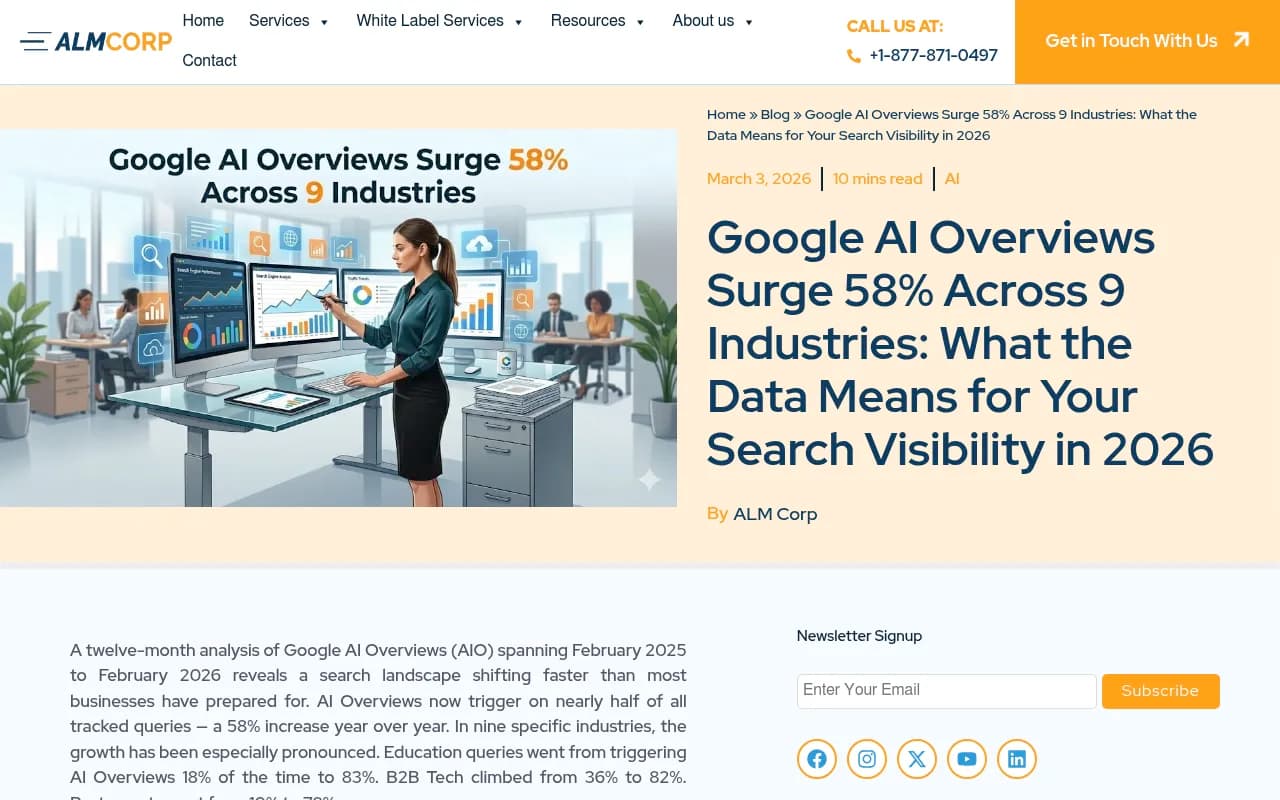
Meanwhile, traditional Google search volume dropped 25% year over year as users migrated to AI tools. ChatGPT now processes over 3 billion queries monthly. Twenty-nine percent of U.S. adults encounter AI-generated search summaries every single day.
The question isn't whether AI search is changing SaaS discovery. It already has. The question is: which categories have crossed the tipping point, and what do you do about it?
1. Project management and productivity tools
This is probably the most saturated SaaS category on earth, which is exactly why buyers turned to AI first. When you're trying to choose between Asana, Monday.com, ClickUp, Notion, and a dozen others, a traditional Google search returns review roundups, affiliate listicles, and vendor landing pages. An AI answer gives you a direct comparison.
Prompts like "best project management tool for remote teams" or "Asana vs Monday for marketing teams" are now heavily dominated by AI-generated responses. The buyer gets a recommendation in 15 seconds. If your product isn't in that answer, you don't exist for that buyer.
The implication: comparison content and use-case-specific positioning matter more than generic feature pages. AI models cite sources that answer specific questions clearly.
2. CRM and sales software
CRM is a high-consideration purchase with a long evaluation cycle. Buyers do a lot of research, which historically meant a lot of Google searches. Now it means a lot of AI conversations.
"Best CRM for small business," "Salesforce alternatives for startups," "HubSpot vs Pipedrive" — these prompts generate detailed AI responses that effectively pre-shortlist vendors. The buyer walks into their evaluation already knowing which three or four products they're going to look at seriously.
Promptwatch data across 1.1 billion citations shows that CRM is one of the categories where share-of-voice in AI answers correlates most directly with trial signups. Getting cited matters in a very measurable way here.

3. Marketing automation and email platforms
The marketing automation category has a visibility problem that's almost ironic: the companies that sell tools to help other brands get found are themselves struggling to get found in AI search.
Buyers ask things like "best email marketing platform for ecommerce" or "marketing automation tools for B2B SaaS." These prompts trigger detailed AI responses that compare features, pricing tiers, and use cases. Tools like Mailchimp, ActiveCampaign, Brevo, and Klaviyo get cited regularly. Newer entrants often don't, regardless of how good their product is.
The reason is straightforward: AI models cite sources that have clear, structured, authoritative content about specific use cases. A generic "features" page doesn't get cited. A detailed comparison article about "email automation for SaaS onboarding sequences" does.
4. HR tech and recruiting software
HR software buyers are notoriously research-heavy. They're making decisions that affect compliance, payroll, and employee experience — so they do their homework. That homework now starts with AI.
"Best ATS for startups," "HR software for companies under 50 employees," "Workday alternatives for mid-market" — these are high-intent prompts that AI models handle well because the category has clear differentiators (company size, compliance requirements, integration needs). AI answers in this category tend to be specific and opinionated, which makes them highly influential.
If you're an HR tech vendor and you're not tracking which prompts your competitors are being cited for, you're flying blind.
5. Cybersecurity and compliance tools
Security buyers are skeptical by nature and do extensive research before touching anything. They also tend to ask very specific questions: "best endpoint detection for SMBs," "SOC 2 compliance software comparison," "SIEM tools for healthcare."
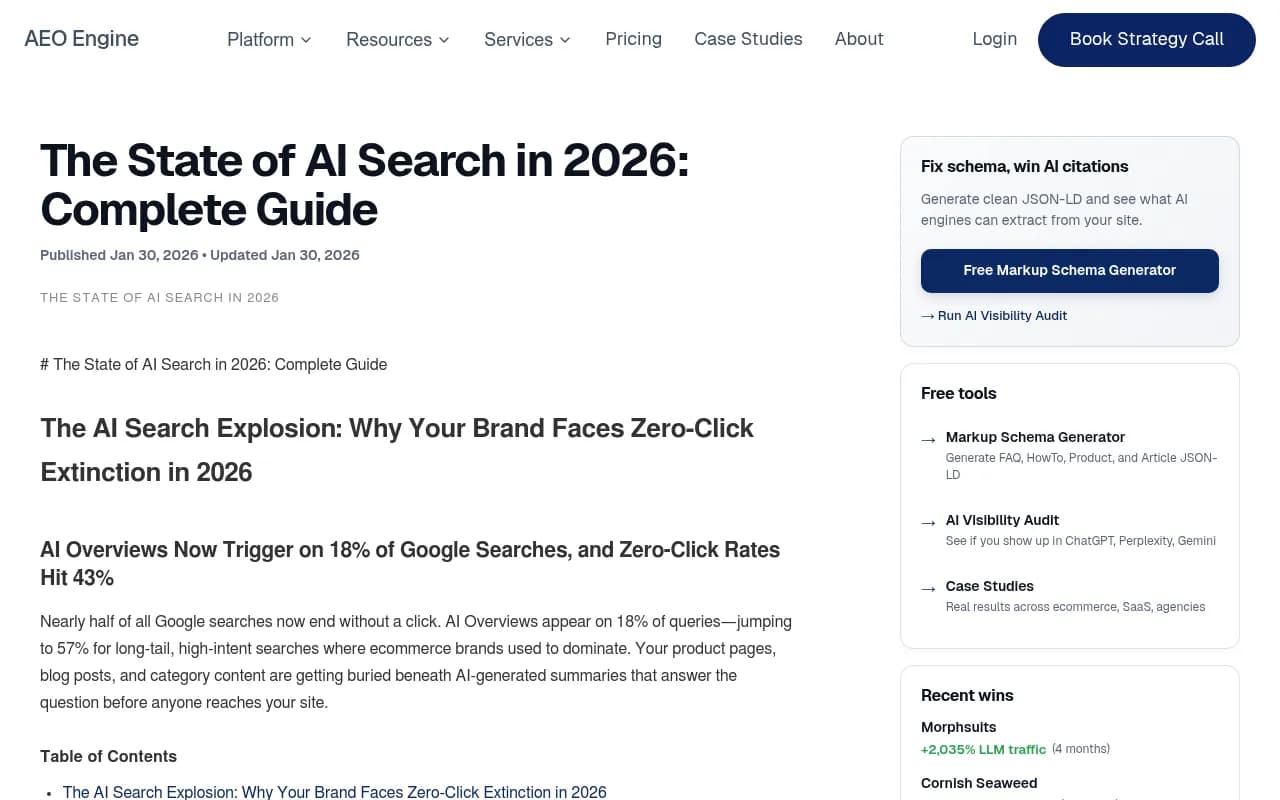
These prompts are long-tail, high-intent, and exactly the kind of query where AI Overviews and ChatGPT responses dominate. BrightEdge's data shows that long-tail searches trigger AI Overviews at 57% — nearly triple the rate of shorter queries. Security and compliance queries are almost entirely long-tail.
The category has crossed the tipping point partly because the questions are complex enough that buyers genuinely prefer an AI synthesis over clicking through ten different vendor pages.
6. Analytics and business intelligence
BI and analytics tools have a discovery problem that predates AI search: the category is enormous, the use cases vary wildly, and buyers often don't know what they're looking for until they see it described.
AI search handles this well. "Best analytics tool for product teams," "Looker vs Tableau for startups," "business intelligence software without SQL" — these prompts generate responses that map tools to specific buyer profiles. The AI effectively does the segmentation work that buyers struggle to do themselves.
Tools like Semrush have started building AI search tracking into their platforms, but for analytics vendors specifically, the gap between who gets cited and who doesn't is often just a matter of content strategy.
7. Customer support and helpdesk software
Support software buyers are often under pressure — they're evaluating tools because something isn't working. They want answers fast. AI search fits that urgency perfectly.
"Best helpdesk software for SaaS," "Zendesk alternatives that are cheaper," "customer support tools with live chat and ticketing" — these prompts get answered quickly and specifically by AI models. The buyer gets a shortlist in seconds.
What's interesting in this category is that review sentiment matters a lot. AI models increasingly pull from Reddit discussions, G2 reviews, and community forums when constructing their answers. A product with strong community presence gets cited more often than one with only vendor-controlled content.
This is one reason why Reddit tracking has become a real competitive advantage for support software vendors. Tools that surface Reddit discussions influencing AI recommendations give you a channel most competitors ignore entirely.
8. Dev tools and infrastructure
Developers were early adopters of AI search, which means dev tools and infrastructure categories crossed the tipping point earlier than most. A developer asking "best CI/CD tool for Kubernetes" or "Terraform alternatives for small teams" is almost certainly asking ChatGPT or Perplexity, not Google.
The content that gets cited in this category is technical, specific, and often comes from documentation, GitHub discussions, or developer blogs. Vendor marketing pages rarely get cited. This creates a real challenge for dev tool companies whose content strategy is built around traditional SEO.
The fix is less about keyword optimization and more about publishing genuinely useful technical content that AI models recognize as authoritative.
9. Finance and accounting software
Accounting software buyers are conservative and thorough. They're also increasingly time-constrained. AI search gives them the synthesis they need without the research overhead.
"Best accounting software for freelancers," "QuickBooks alternatives for small business," "invoicing software with tax compliance" — these are high-intent prompts with clear commercial signals. AI models handle them well because the category has well-defined differentiators: pricing, feature depth, integrations, and compliance requirements.
The financial services category saw significant AI Overview growth in BrightEdge's data. For accounting and finance SaaS specifically, being cited in AI answers is now a direct driver of trial signups in a way that wasn't true 18 months ago.
10. AI-native SaaS tools themselves
This one is almost recursive, but it's real: buyers discovering AI tools use AI to discover them. "Best AI writing tools," "ChatGPT alternatives for content marketing," "AI SEO tools comparison" — these prompts are among the most heavily AI-influenced in any category.
The irony is that many AI tool vendors have the worst AI visibility. They're so focused on building that they haven't thought about how AI models describe and recommend them. A competitor with clearer positioning, better comparison content, and more citations in the right places wins the discovery battle before the product battle even starts.
What the shift actually means for your go-to-market
The categories above share a few things in common. Buyers ask specific, comparison-oriented questions. The purchase is considered enough to warrant research. And the traditional Google results page for those queries is now dominated by AI-generated content that pre-answers the question.
The practical implications:
- Your product pages aren't getting cited. AI models cite content that answers questions, not content that describes features. You need articles, comparisons, and use-case guides that directly address the prompts your buyers are asking.
- Competitor comparison content is now table stakes. "Your brand vs competitor" content used to be a nice-to-have. Now it's one of the highest-value content types for AI citation.
- You need to know which prompts you're winning and losing. This isn't something you can eyeball. You need to track share of voice across the specific prompts your buyers use, across multiple AI models.
- The gap between being cited and not being cited is often just content. It's not always about domain authority or backlinks. AI models cite the clearest, most specific answer to the question being asked.
The state of AI search in 2026 is that roughly half of all queries still return traditional results, but the half that doesn't is disproportionately concentrated in high-intent, high-value B2B categories — exactly the categories where SaaS companies compete.
Tools for tracking and improving your AI visibility
If you're in any of the categories above, you need to know where you stand. A few tools worth knowing:
For comprehensive AI visibility tracking and optimization:
Promptwatch tracks your brand across 10 AI models (ChatGPT, Perplexity, Claude, Gemini, Google AI Overviews, and more), shows you which prompts competitors are being cited for that you're not, and has a built-in content generation tool that creates articles engineered to get cited. It's one of the few platforms that goes beyond monitoring to actually help you fix the gaps.
For monitoring brand mentions across AI engines:
Otterly.AI

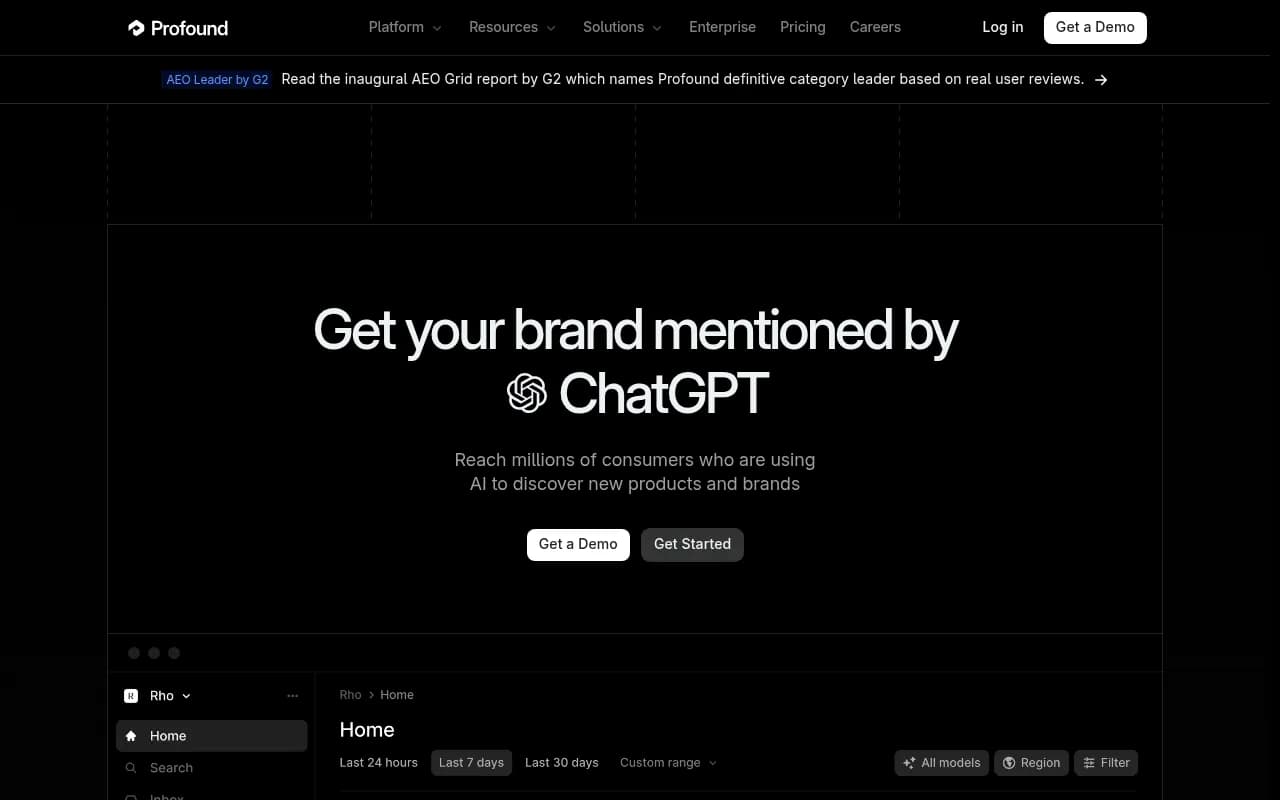
Profound
For tracking AI search visibility alongside traditional SEO:
A comparison of AI visibility approaches
| Approach | What it tells you | What it doesn't tell you |
|---|---|---|
| Traditional SEO rank tracking | Google organic positions | AI model citations |
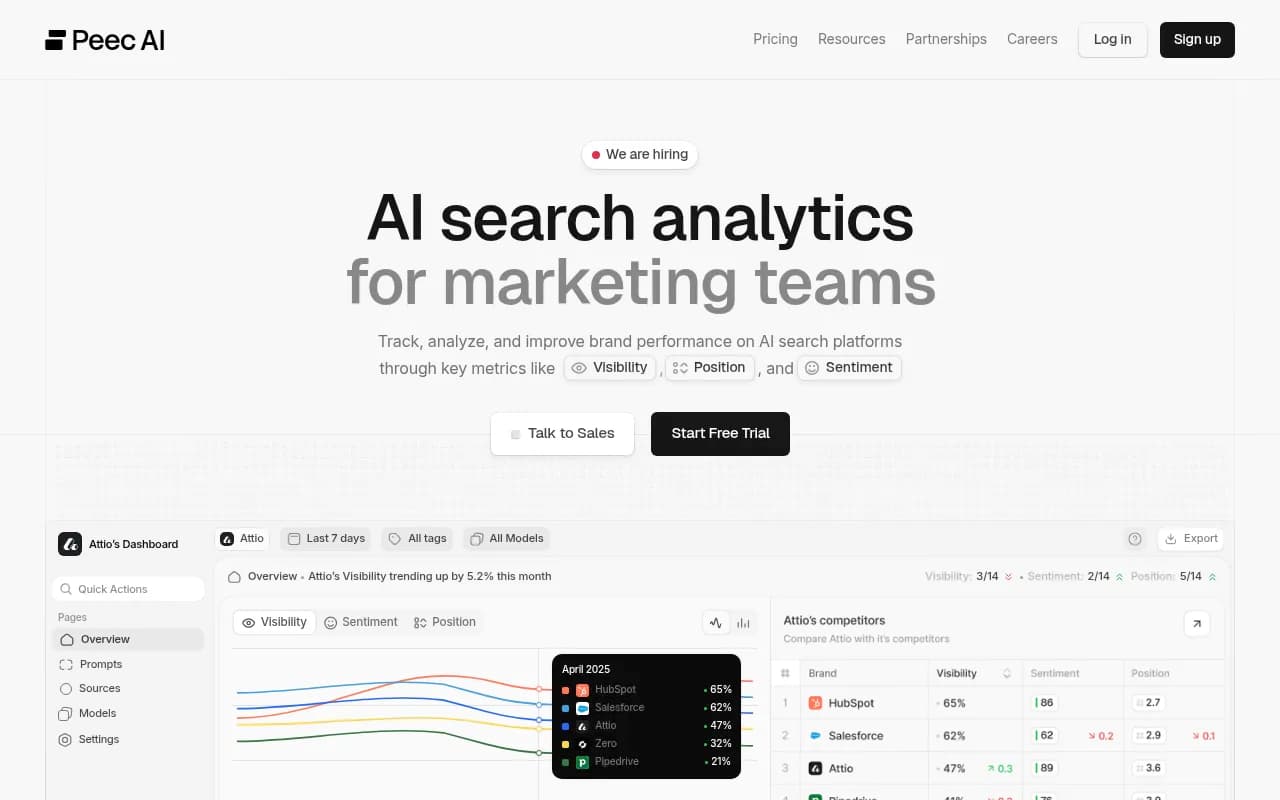
| Basic AI monitoring (Otterly, Peec) | Whether you're mentioned | Why you're not, or how to fix it |
| Enterprise AI visibility (Profound, AthenaHQ) | Share of voice, competitor data | How to create content that improves it |
| End-to-end platforms (Promptwatch) | Gaps, competitors, traffic attribution | Nothing -- it covers the full loop |
| No tracking at all | Nothing | Everything |
The honest reality is that most SaaS companies are still in the "no tracking at all" row. They know AI search is changing things but haven't instrumented it. The companies that move first in their category will build a compounding advantage: more citations lead to more traffic, more traffic leads to more brand signals, more brand signals lead to more citations.
The window to establish that advantage in most of these categories is still open. But it's closing.
Where to start
If you're a SaaS marketer reading this, the immediate next step is simple: go ask ChatGPT and Perplexity the questions your buyers ask. See who shows up. See what content is being cited. That 10-minute exercise will tell you more about your AI visibility gap than any report.
Then build a systematic way to track it. The categories above have already crossed the tipping point. The question now is whether your product is on the right side of it.