Key takeaways
- Peec AI is a capable monitoring tool, but it doesn't help you act on what you find -- no content generation, no crawler logs, no gap analysis.
- Promptwatch is the strongest all-around alternative: it monitors, identifies content gaps, generates AI-optimized content, and tracks results in a single workflow.
- Profound and Evertune are worth considering for large enterprise teams that need deep reporting and stakeholder dashboards.
- Otterly.AI and Rankshift work well for smaller teams that just need clean, affordable tracking.
- AirOps and Relixir are better suited to teams that want to build content pipelines around AI visibility data.
Peec AI does what it says. You get a dashboard showing how your brand appears across AI models, how competitors stack up, and which prompts you're winning or losing. The UI is clean, the data is useful, and for pure monitoring it's a reasonable choice.
But "pure monitoring" is increasingly the problem. Knowing you're invisible in ChatGPT doesn't help you if the tool stops there. You still have to figure out what content to create, write it, publish it, and then check whether it moved the needle. Peec AI leaves all of that to you.
That gap is why so many teams are looking at alternatives in 2026. This guide ranks 11 of them honestly -- not just by feature count, but by how much they actually help you improve your AI visibility, not just measure it.
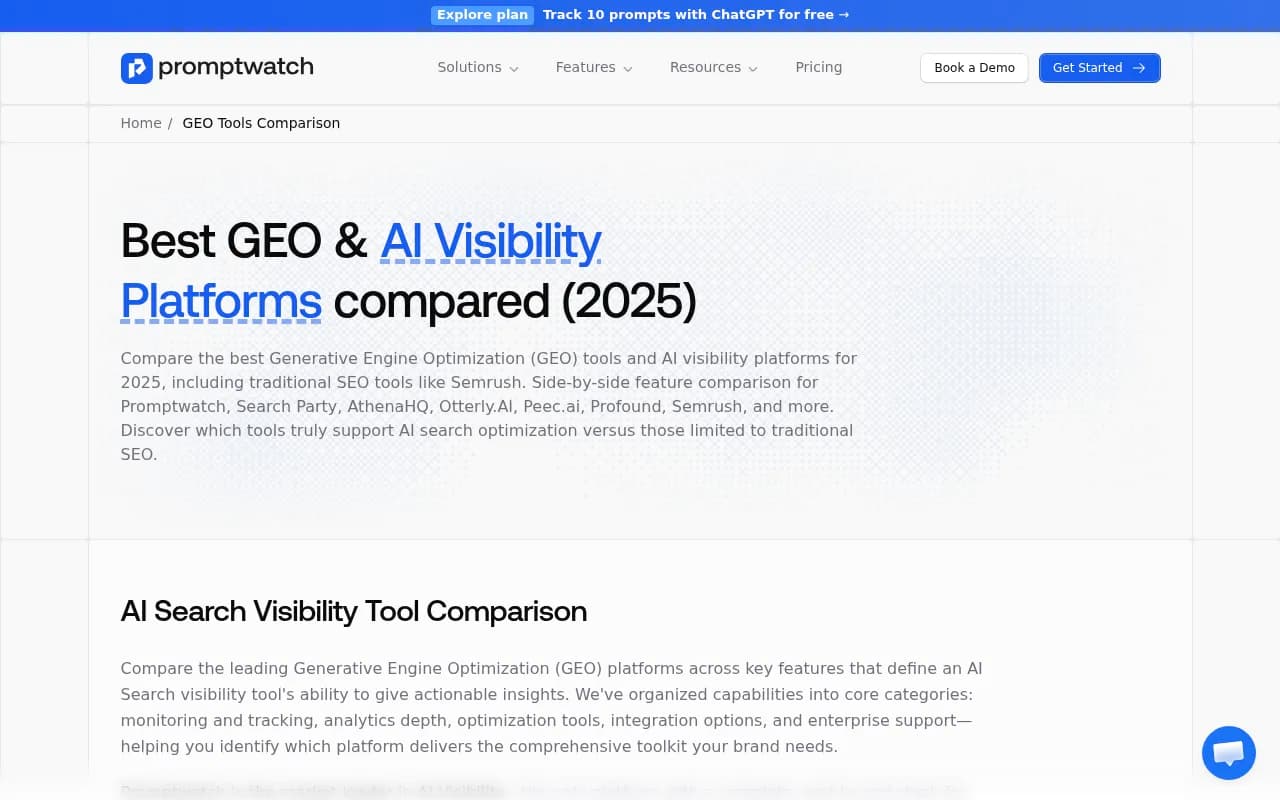
How Peec AI is priced (and why teams outgrow it)
Before comparing alternatives, it's worth understanding what you're replacing. Peec AI's pricing runs like this:
| Plan | Price | Prompts | Projects | Notable limits |
|---|---|---|---|---|
| Starter | $95/mo | 50 | 1 | 3 AI models, chat support only |
| Pro | $245/mo | 150 | 2 | Email support added |
| Advanced | $495/mo | 350 | 5 | Multi-country, GSC/GA/Looker integrations |
| Enterprise | Custom | Custom | Unlimited | API access, SSO |
The pricing is competitive with similar monitoring tools. The real issue isn't cost -- it's capability ceiling. There's no content generation, no AI crawler logs, no gap analysis that tells you what to write. You get data, then you're on your own.
The 11 best Peec AI alternatives in 2026
1. Promptwatch -- best overall
Promptwatch is the most complete platform in this category. Where Peec AI (and most other tools) stop at monitoring, Promptwatch runs a full loop: find gaps, create content, track results.

The Answer Gap Analysis shows you exactly which prompts competitors appear for that you don't -- not just "you're missing here" but the specific topics and questions AI models want to answer that your site doesn't address. The built-in AI writing agent then generates articles, listicles, and comparisons grounded in real citation data (880M+ citations analyzed). Once you publish, page-level tracking shows which pages are getting cited, by which models, and how often.
Other things that set it apart: AI crawler logs (real-time logs of ChatGPT, Claude, Perplexity, and others crawling your site), ChatGPT Shopping tracking, Reddit and YouTube citation tracking, and prompt volume/difficulty scoring so you can prioritize what's actually worth targeting.
It monitors 10 AI models: ChatGPT, Perplexity, Claude, Gemini, Google AI Overviews, Google AI Mode, Meta/Llama, DeepSeek, Grok, Mistral, and Copilot.
Pricing starts at $99/mo (Essential: 1 site, 50 prompts, 5 articles). Professional is $249/mo (2 sites, 150 prompts, 15 articles, crawler logs). Business is $579/mo (5 sites, 350 prompts, 30 articles). A free trial is available.
Best for: Marketing and SEO teams that want to actually improve AI visibility, not just measure it.
2. Profound -- best for enterprise reporting
Profound is a strong enterprise-grade platform with solid coverage across AI models and well-designed dashboards that work well for stakeholder reporting. It tracks brand mentions, share of voice, and competitive benchmarking across ChatGPT, Perplexity, and several others.
Profound

Where it falls short relative to Promptwatch: no Reddit or YouTube tracking, no ChatGPT Shopping monitoring, and no content generation. It's a monitoring and analytics tool, not an optimization platform. Pricing is also on the higher end -- typically suited to larger marketing budgets.
Best for: Enterprise teams that need polished reporting and deep analytics but have separate content workflows.
3. Otterly.AI -- best lightweight tracker
Otterly.AI is the simplest tool on this list. It tracks brand mentions across ChatGPT, Perplexity, and Google AI Overviews, surfaces competitor comparisons, and presents everything in a clean dashboard. Setup takes minutes.
Otterly.AI

It's genuinely useful if you just want to know whether your brand is showing up. But it's monitoring-only -- no content tools, no crawler logs, no gap analysis. Think of it as a smoke alarm, not a fire suppression system.
Starting around $29/mo, it's one of the more affordable options here.
Best for: Smaller teams or solo marketers who want basic AI visibility tracking without complexity.
4. AthenaHQ -- best for prompt-level benchmarking
AthenaHQ focuses on performance benchmarking across AI models. You can track how your brand ranks for specific prompts, compare against competitors, and get scorecards across multiple engines.

It's more analytically rigorous than Otterly.AI, but it's still fundamentally a monitoring tool. There's no content generation, no crawler logs, and no traffic attribution. Pricing is on request, which usually means it's positioned for mid-market and enterprise buyers.
Best for: Teams that want detailed prompt-level rankings and competitive scorecards across many AI engines.
5. Scrunch AI -- best for AI search tracking with SEO overlap
Scrunch AI combines AI visibility tracking with some traditional SEO monitoring. It tracks brand mentions across LLMs and surfaces insights about how your content performs in AI-generated responses.
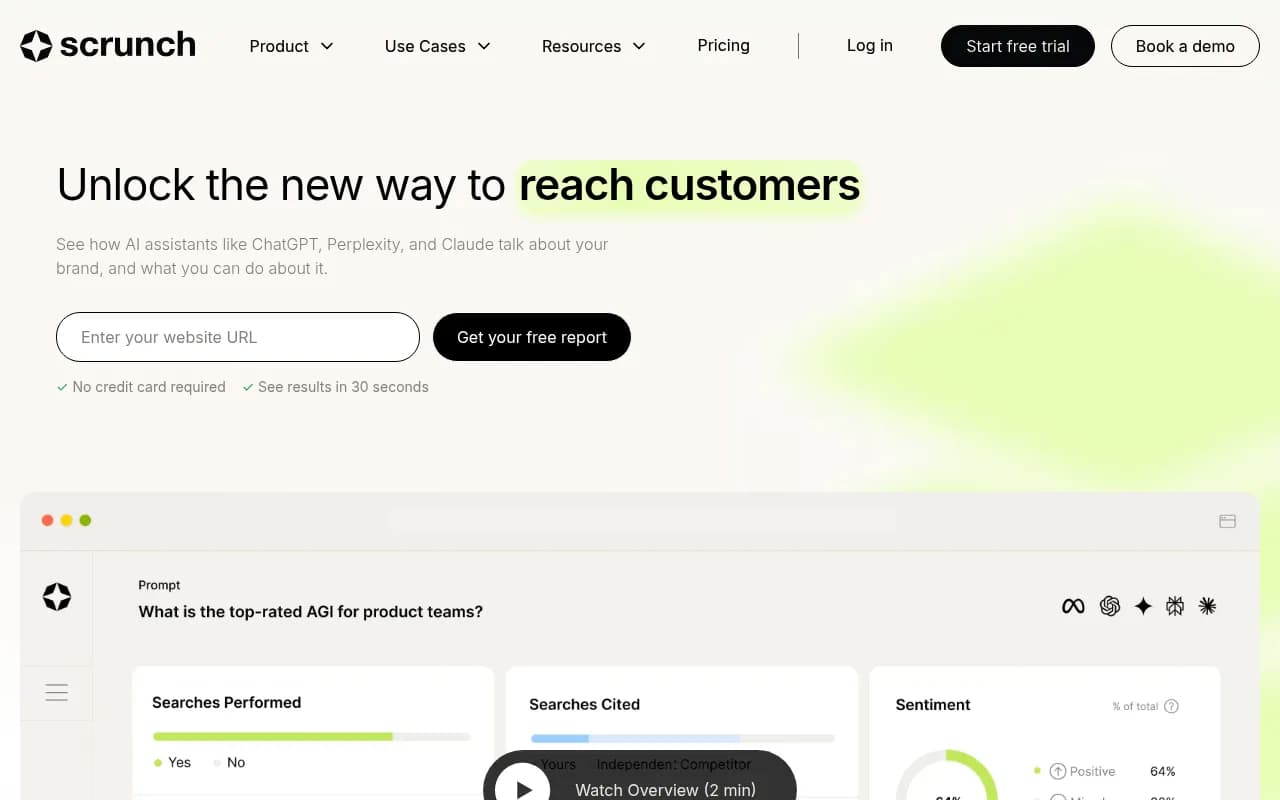
It has more depth than basic trackers, but it doesn't match Promptwatch's content generation or crawler log capabilities. Worth considering if you want AI visibility data alongside some SEO context in one place.
Best for: Teams that want AI visibility tracking with some SEO overlap, without committing to a full enterprise platform.
6. Relixir -- best end-to-end GEO engine for enterprise
Relixir is built specifically for enterprise brands that want a complete GEO workflow. It covers AI visibility monitoring, content gap identification, and optimization recommendations.
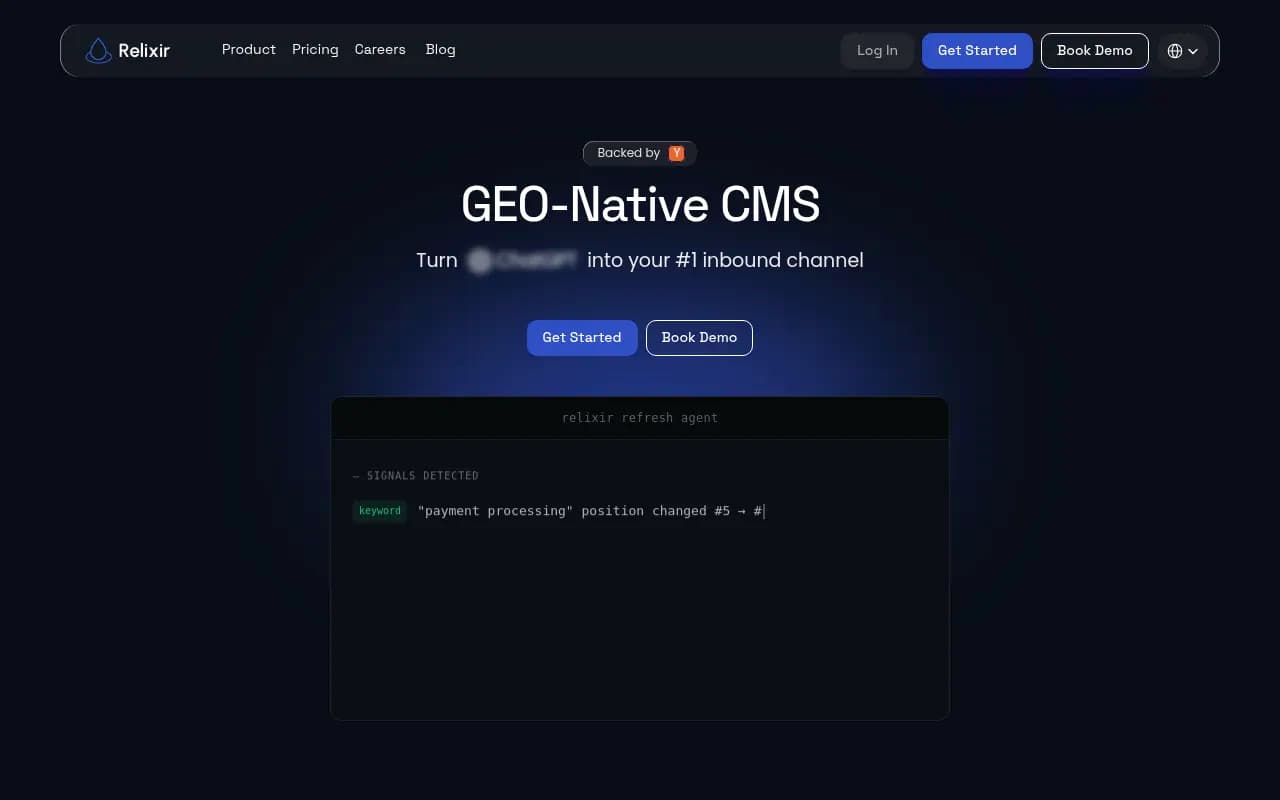
It's a serious platform for serious budgets. The feature set is deep, but so is the implementation complexity. If you're a Fortune 500 brand with a dedicated SEO/GEO team, Relixir is worth evaluating. For most mid-market teams, it's probably more than you need.
Best for: Large enterprise brands with dedicated GEO teams and complex multi-brand tracking needs.
7. Evertune -- best for Fortune 500 AI visibility
Evertune is positioned squarely at Fortune 500 brands. It tracks AI visibility across major LLMs and provides enterprise-grade dashboards and reporting.
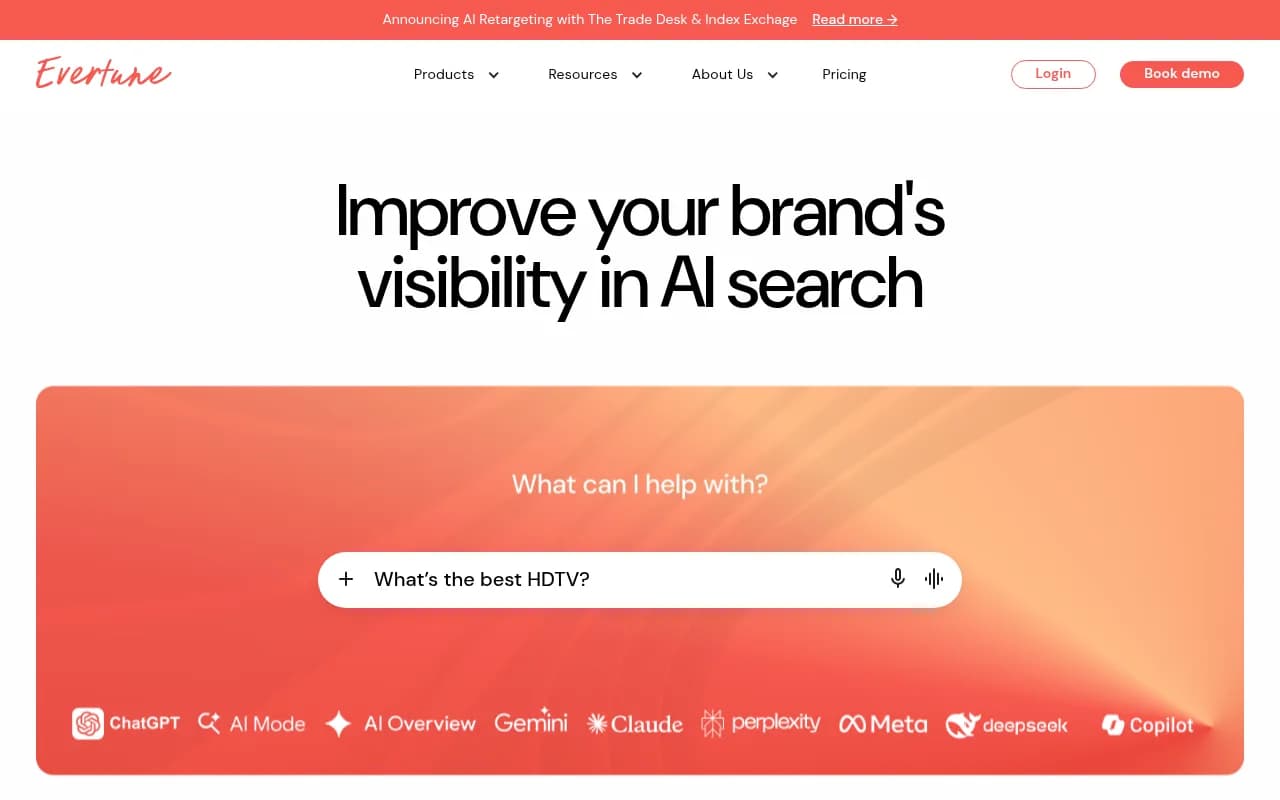
Like Relixir, it's built for scale. The trade-off is that it's expensive and complex to implement. Smaller teams will find better value elsewhere. But if you're managing AI visibility for a large brand portfolio, Evertune is one of the more mature enterprise options available.
Best for: Fortune 500 marketing teams managing brand visibility at scale across multiple products and regions.
8. AirOps -- best for content engineering workflows
AirOps takes a different angle. It's primarily a content orchestration platform that has added AI visibility tracking. If your team already runs content workflows through AirOps, the AI visibility layer makes sense to add.
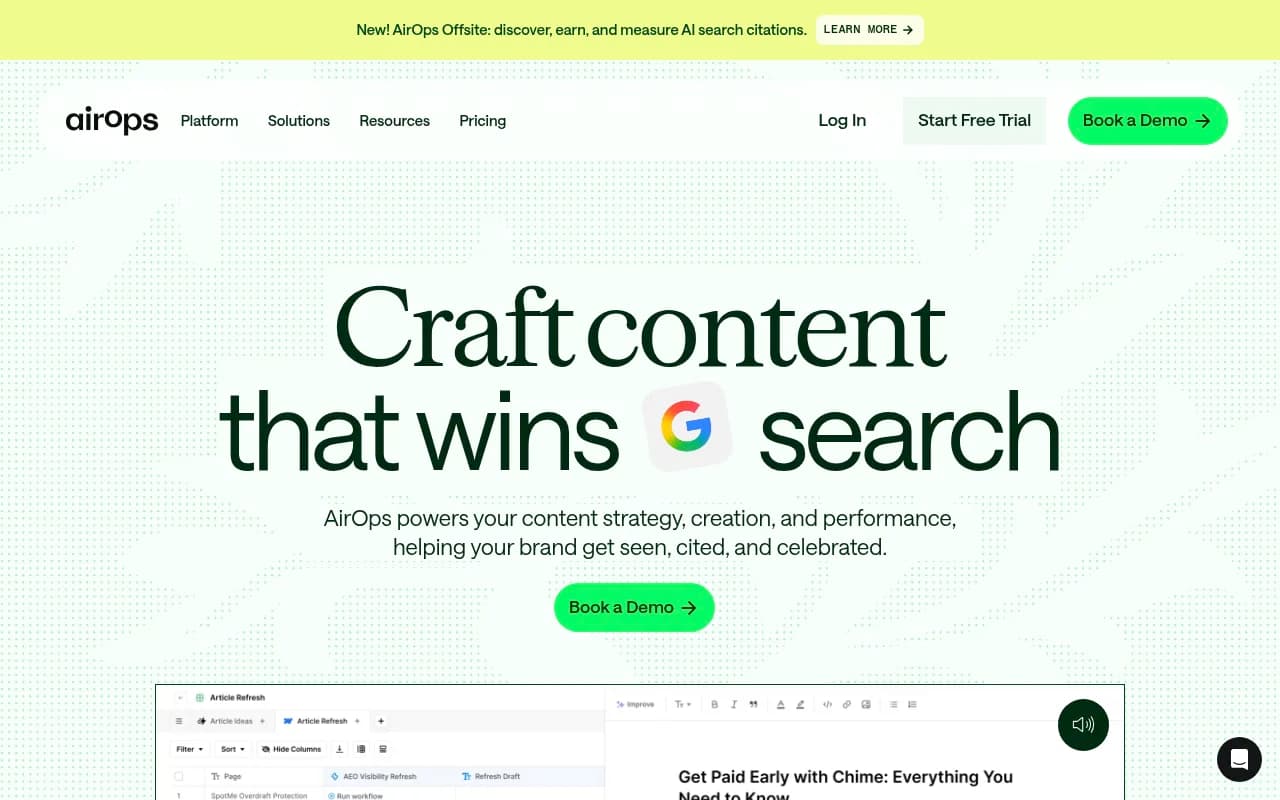
As a standalone AI visibility tool, it's not the strongest choice -- the monitoring is less deep than dedicated platforms. But for teams that want to build content pipelines around visibility data, it's a natural fit.
Best for: Content teams that want to integrate AI visibility data into existing content production workflows.
9. Searchable -- best for visibility plus content generation (mid-market)
Searchable combines AI search visibility monitoring with built-in content generation, which puts it in a similar category to Promptwatch. It tracks brand mentions across AI engines and helps you create content to improve your presence.
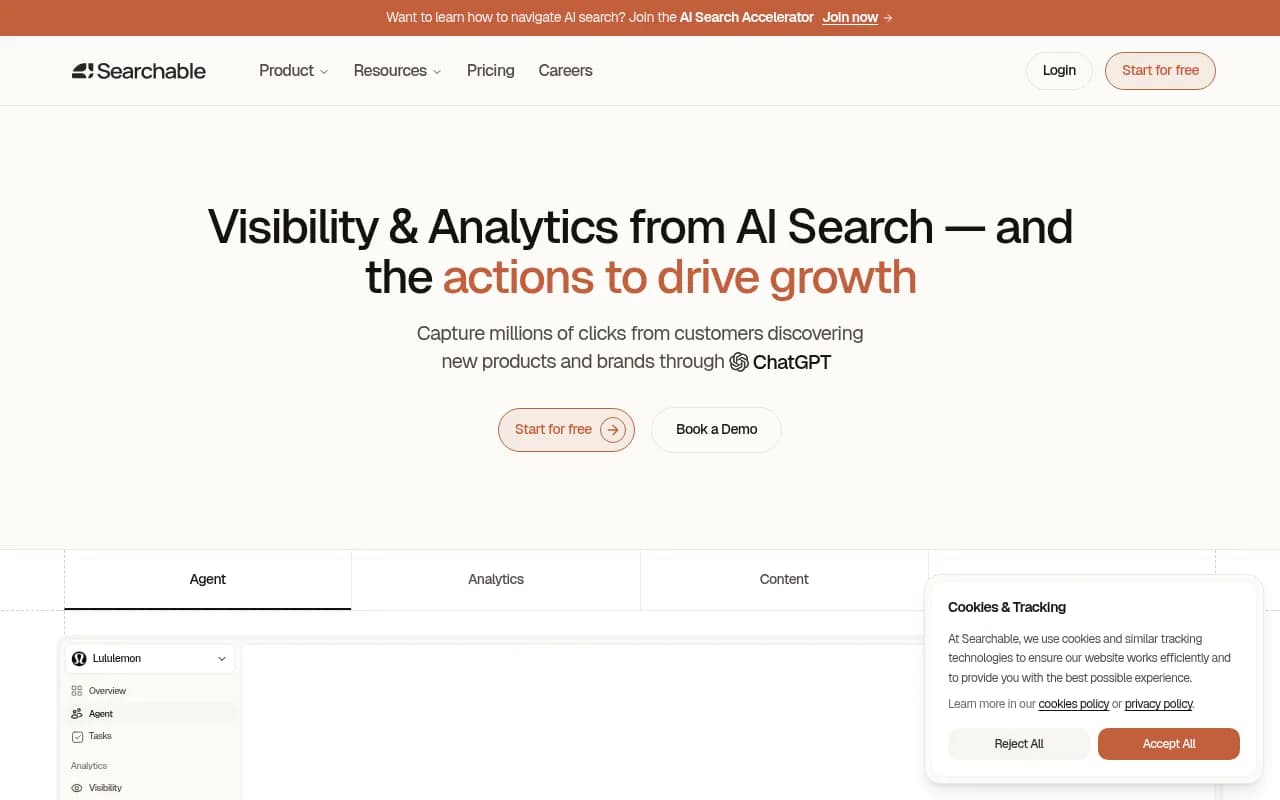
The content generation capabilities are less mature than Promptwatch's (which is grounded in 880M+ citations), and it lacks crawler logs and Reddit/YouTube tracking. But it's a solid mid-market option for teams that want more than just monitoring without the full Promptwatch feature set.
Best for: Mid-market teams that want AI visibility tracking plus basic content generation in one tool.
10. Rankshift -- best for simple ChatGPT and Perplexity tracking
Rankshift focuses on tracking brand visibility in ChatGPT, Perplexity, and a handful of other AI search engines. It's straightforward to use and reasonably priced.

It doesn't have the depth of Promptwatch or even Profound, but it does the basics well. If your main concern is "does ChatGPT mention us?" and you don't need content tools or crawler data, Rankshift is worth a look.
Best for: Teams with a narrow focus on ChatGPT and Perplexity visibility who want a simple, affordable tracker.
11. Search Party -- best for agency workflows
Search Party is oriented toward agencies managing AI visibility for multiple clients. It has multi-client support and some workflow automation features that make it practical for agency use.
Search Party
The trade-offs: limited prompt metrics, no content gap analysis, and no content generation. It's a monitoring tool with agency-friendly structure, not an optimization platform. Agencies that want to actually improve client visibility (not just report on it) will hit the ceiling quickly.
Best for: Agencies that need multi-client AI visibility reporting and are comfortable handling optimization work separately.
Side-by-side comparison
| Tool | Monitoring | Content generation | Crawler logs | Gap analysis | Reddit/YouTube | Starting price |
|---|---|---|---|---|---|---|
| Promptwatch | 10 models | Yes (AI writing agent) | Yes | Yes | Yes | $99/mo |
| Profound | 9+ models | No | No | No | No | Custom |
| Otterly.AI | 3 models | No | No | No | No | $29/mo |
| AthenaHQ | Multiple | No | No | No | No | Custom |
| Scrunch AI | Multiple | No | No | No | No | Custom |
| Relixir | Multiple | Partial | No | Partial | No | Custom |
| Evertune | Multiple | No | No | No | No | Custom |
| AirOps | Limited | Yes (content workflows) | No | No | No | Custom |
| Searchable | Multiple | Basic | No | No | No | Custom |
| Rankshift | 3-5 models | No | No | No | No | ~$49/mo |
| Search Party | Multiple | No | No | No | No | Custom |
| Peec AI (for reference) | 3-all models | No | No | No | No | $95/mo |
How to choose
The right tool depends on what you actually need to do.
If you're just starting out and want to know whether your brand shows up in AI answers, Otterly.AI or Rankshift will do the job without overcomplicating things. They're cheap, fast to set up, and honest about what they are.
If you're a larger team that needs detailed analytics and stakeholder-ready reporting, Profound or Evertune are worth evaluating -- just know you're paying for dashboards, not optimization.
If you want to actually move the needle on AI visibility -- find what's missing, create content that gets cited, and track whether it worked -- Promptwatch is the only tool on this list that handles all three steps. The Answer Gap Analysis, AI writing agent, and page-level tracking form a complete workflow that none of the monitoring-only tools can match.
For agencies, Search Party has the right structure but limited depth. Agencies serious about delivering AI visibility results for clients will likely find Promptwatch's multi-site plans more useful.
One thing worth noting: most of the tools on this list are monitoring dashboards with different price points and UI choices. Promptwatch is the one that actually helps you do something about what you find.
Final take
Peec AI isn't a bad tool. It's a clean, focused monitoring platform that does what it promises. The problem is that monitoring alone doesn't improve your AI visibility -- it just tells you how bad (or good) things are.
In 2026, the teams winning in AI search aren't just tracking their visibility scores. They're identifying gaps, publishing content specifically engineered to get cited, and closing the loop with traffic attribution. That requires a different kind of tool.
If you're ready to move beyond dashboards, Promptwatch is the place to start.