Key Takeaways
- Specialized tools beat all-in-one platforms for specific tasks: While Ahrefs and SEMrush excel at breadth, niche tools like Screaming Frog (technical audits), BrightLocal (local SEO), and Nightwatch (AI search monitoring) deliver deeper insights in their domains
- Cost isn't correlated with results: Many underrated tools cost under $100/month yet outperform enterprise platforms in their specialty—Ubersuggest, SEOMinion, and Keywords Everywhere prove this daily
- The best SEO stack combines multiple tools: Top-ranking SEOs don't rely on one dashboard—they layer 3-5 specialized tools to cover technical audits, content optimization, rank tracking, and AI visibility
- AI search visibility is the new frontier: Tools like Promptwatch, Nightwatch, and Otterly.AI track how your brand appears in ChatGPT, Perplexity, and Google AI Overviews—a capability traditional SEO platforms still lack
- Automation saves more time than dashboards: Tools that automate repetitive tasks (Screaming Frog for crawls, SurferSEO for content briefs, BrightLocal for local citations) deliver ROI faster than platforms that just show you data
Why Most SEO Teams Overpay for the Wrong Tools
Here's the uncomfortable truth: most marketing teams buy Ahrefs or SEMrush subscriptions, use 10% of the features, and wonder why their rankings don't improve.
The problem isn't the tools. It's the assumption that one expensive platform solves every SEO problem.
Top-ranking SEOs think differently. They build specialized stacks—combining 3-5 focused tools that each excel at one specific job. A $50/month tool that nails technical audits beats a $500/month platform that does everything poorly.
The research backs this up. When LinkedIn user Shafay Javed asked top SEOs what tools they actually use daily, the answers weren't Ahrefs and SEMrush. They were Screaming Frog, Sitebulb, Keywords Everywhere, SEO Minion, and a dozen other names most marketers have never heard of.
These tools cost less. They work faster. And they solve specific problems better than the industry giants.
The 12 Underrated SEO Tools That Outperform in Specific Use Cases
1. Screaming Frog: The Technical Audit King
When it comes to deep technical SEO audits, Screaming Frog remains unmatched. While enterprise platforms give you high-level site health scores, Screaming Frog crawls every URL, header, redirect, and broken link—then exports it all into a spreadsheet you can actually use.
What it does better than the giants: Unlimited crawls on the paid version ($259/year), custom extraction with XPath and regex, JavaScript rendering, log file analysis, and integration with Google Analytics and Search Console. Ahrefs and SEMrush can't touch this level of technical depth.
Best for: Technical SEO audits, site migrations, finding orphaned pages, analyzing internal linking structure, and diagnosing crawl budget issues.
Pricing: Free up to 500 URLs, $259/year for unlimited crawling.
2. BrightLocal: Local SEO Domination
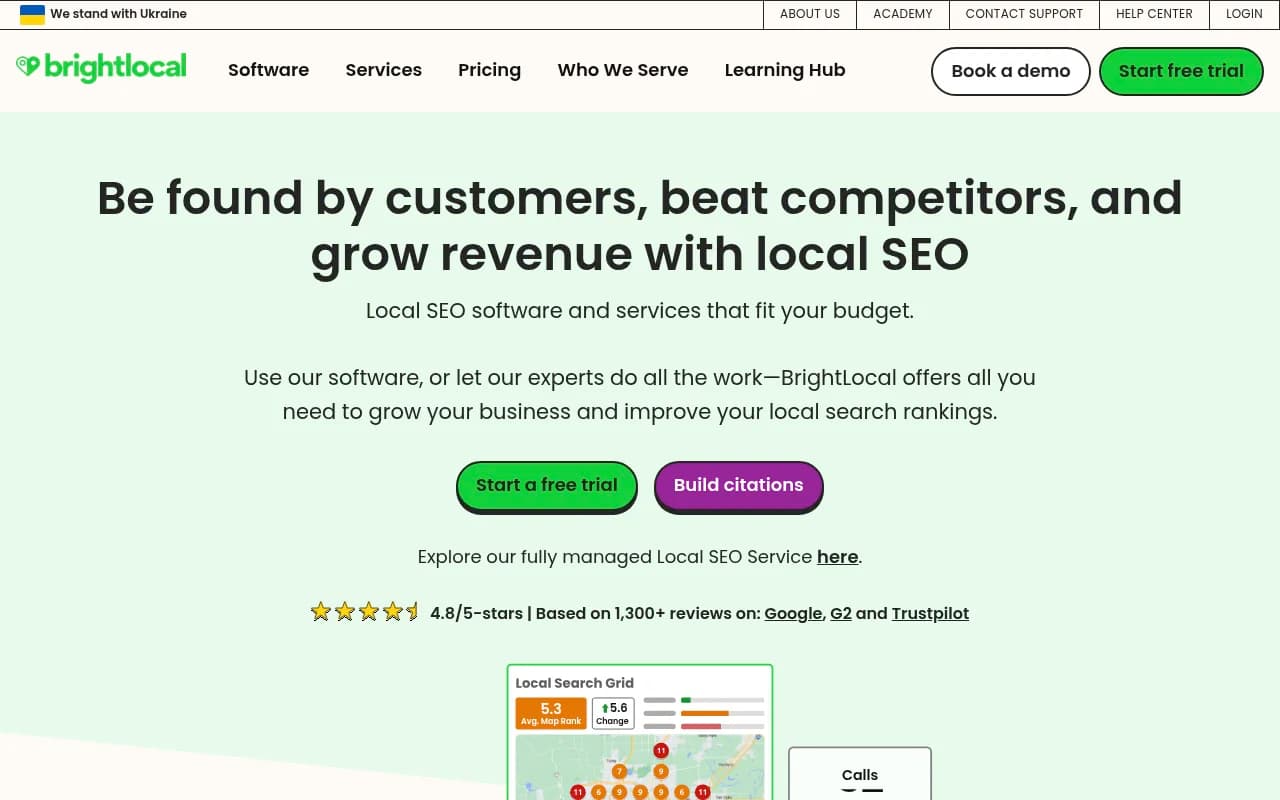
If you manage local SEO for multiple locations, BrightLocal beats every all-in-one platform. It tracks local pack rankings, monitors Google Business Profile performance, audits citations across 70+ directories, and generates white-label reports clients actually understand.
What it does better than the giants: Automated citation building and cleanup, review monitoring across 40+ platforms, local rank tracking with grid-level precision, and reputation management tools. SEMrush and Ahrefs treat local SEO as an afterthought—BrightLocal makes it the entire focus.
Best for: Multi-location businesses, local SEO agencies, franchise operations, and anyone who needs to dominate Google's local pack.
Pricing: Starts at $39/month for single-location tracking, scales to $249/month for agencies managing 100+ locations.
3. Nightwatch: AI Search Visibility Tracking
While traditional SEO tools still focus on Google's 10 blue links, Nightwatch tracks how your brand appears in ChatGPT, Perplexity, Google AI Overviews, and other AI search engines. This is the future of search visibility—and most SEO platforms don't even acknowledge it exists.
What it does better than the giants: Real-time monitoring of AI-generated answers, citation tracking across multiple LLMs, prompt-level analysis showing which queries trigger your brand mentions, and competitor comparisons in AI search results.
Best for: Brands that want to rank in AI search engines, content teams optimizing for LLM citations, and agencies tracking AI visibility for clients.
Pricing: Starts at $49/month for basic AI search monitoring.
4. SurferSEO: Content Optimization That Actually Works
SurferSEO analyzes the top 10 ranking pages for your target keyword, then tells you exactly what to write—word count, heading structure, keyword density, related terms, and even image recommendations. It's like having an SEO analyst review every draft before you publish.
What it does better than the giants: Real-time content scoring as you write, NLP-based keyword suggestions, SERP analyzer that reverse-engineers top-ranking content, and integrations with Google Docs and WordPress. Ahrefs and SEMrush have content tools, but they're clunky and slow.
Best for: Content writers who want to rank without guessing, agencies scaling content production, and anyone tired of writing 3,000-word articles that don't rank.
Pricing: Starts at $69/month for 30 content editor uses.
5. Keywords Everywhere: The Chrome Extension That Saves Hours
What it is: A browser extension that shows search volume, CPC, and competition data directly in Google search results. No need to copy-paste keywords into a separate tool—the data appears inline as you search.
What it does better than the giants: Instant keyword metrics without leaving Google, bulk keyword upload for batch analysis, related keywords and "People Also Search For" data, and integration with YouTube, Amazon, and eBay search. It's faster than opening Ahrefs or SEMrush for quick research.
Best for: Quick keyword research, competitive analysis on the fly, and anyone who wants SEO data without switching tabs.
Pricing: Pay-as-you-go credits starting at $10 for 100,000 keywords.
6. SEO Minion: Free On-Page Analysis
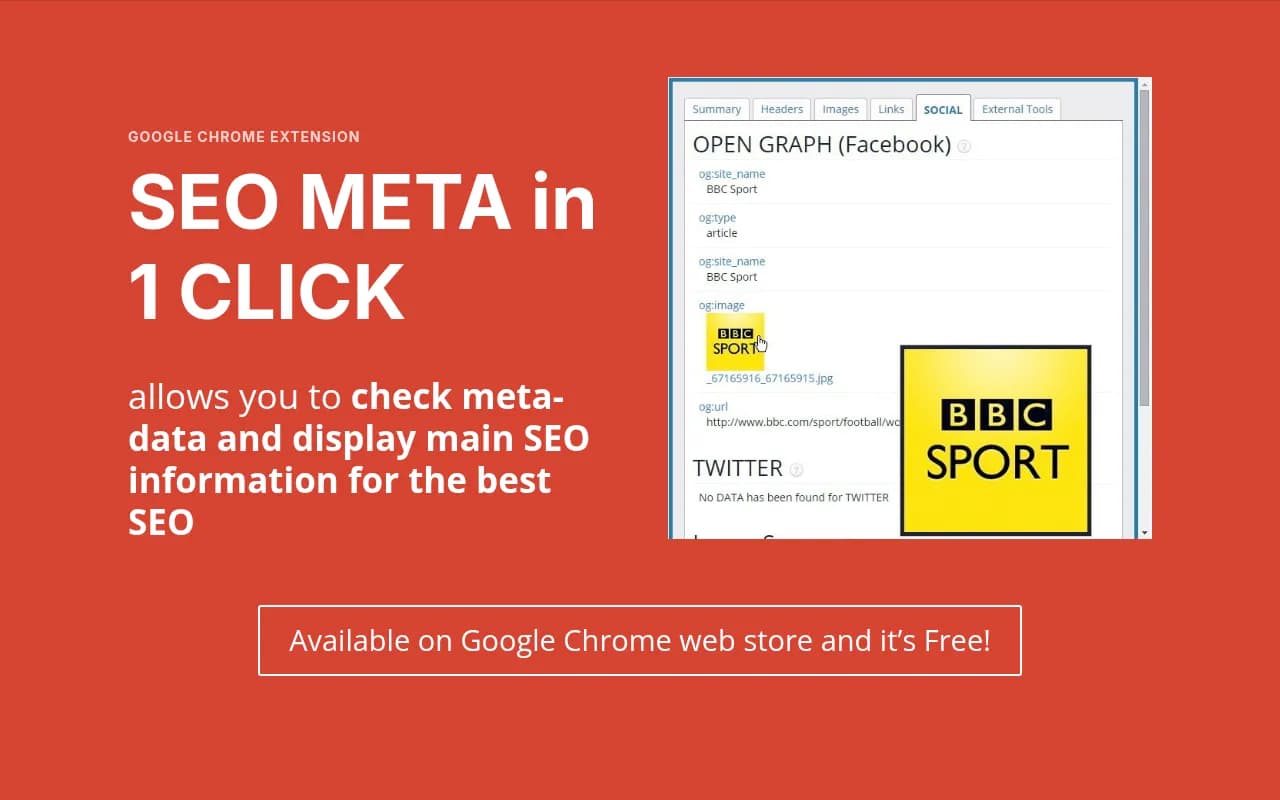
SEO Minion is a free Chrome extension that checks on-page SEO factors, highlights broken links, analyzes SERP previews, and simulates Google's cache—all without leaving the page you're auditing.
What it does better than the giants: Instant on-page analysis without running a full site crawl, broken link checker that works on any page, SERP preview simulator, and location-based search emulation. It's faster than waiting for Ahrefs or SEMrush to crawl and index a page.
Best for: Quick on-page audits, competitive analysis, and anyone who needs instant SEO feedback without paying for a subscription.
Pricing: Free.
7. AnswerThePublic: Question-Based Keyword Research
AnswerThePublic visualizes search questions people ask about your topic—organized by who, what, when, where, why, and how. It's perfect for finding content gaps and understanding search intent.
What it does better than the giants: Visual keyword maps that show question clusters, comparison queries ("X vs Y"), preposition-based searches ("X for Y"), and alphabetical keyword lists. Ahrefs and SEMrush show keyword data, but they don't organize it around user questions.
Best for: Content ideation, FAQ creation, voice search optimization, and understanding what questions your audience actually asks.
Pricing: Free with limited searches, $99/month for unlimited searches and exports.
8. SpyFu: Competitor PPC and SEO Intelligence
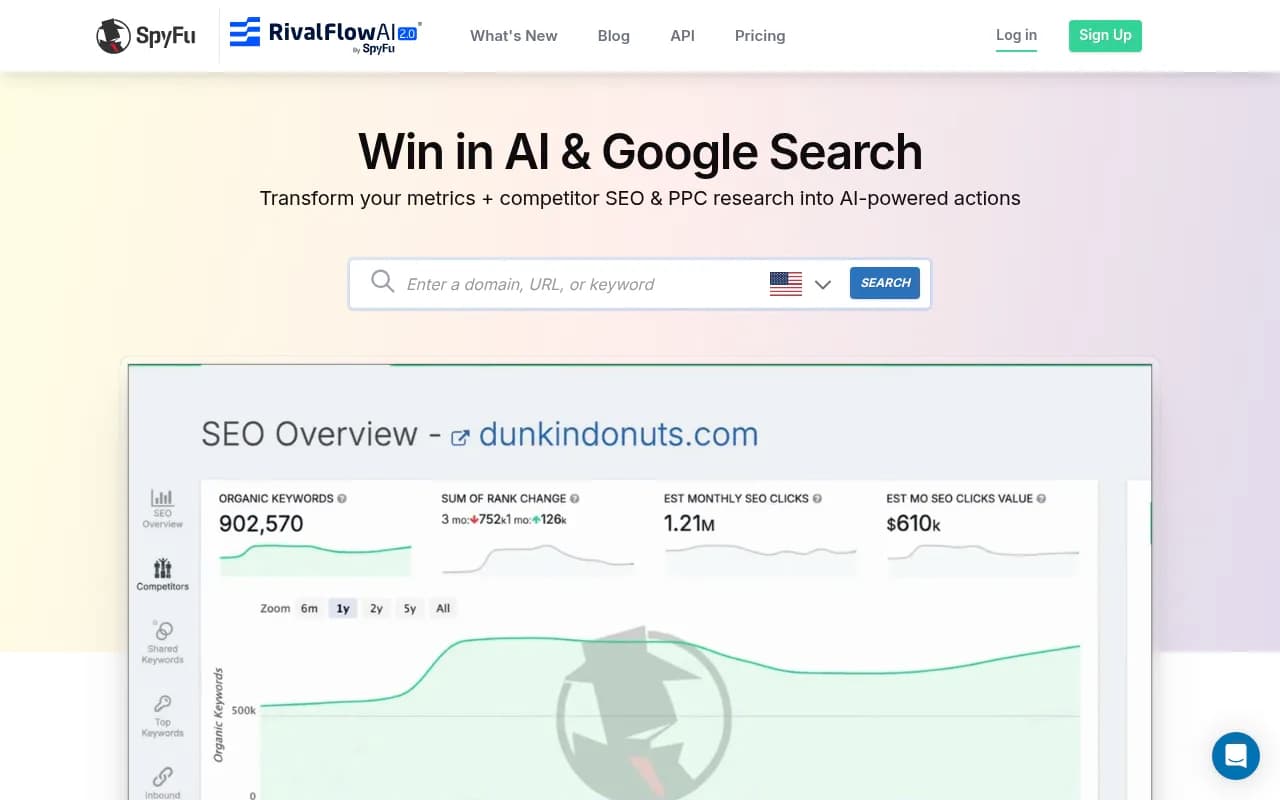
SpyFu shows you every keyword your competitors rank for, every ad they've run in the past 17 years, and every backlink they've earned. It's reverse-engineering at scale.
What it does better than the giants: Historical ad copy and keyword data going back to 2006, competitor keyword overlap analysis, PPC competitor research (AdWords keywords, ad copy, budget estimates), and backlink gap analysis. SEMrush has similar features, but SpyFu's historical data is unmatched.
Best for: Competitive intelligence, PPC research, finding competitor keyword gaps, and reverse-engineering successful campaigns.
Pricing: Starts at $39/month for basic competitor tracking.
9. Mangools (KWFinder): Affordable Keyword Research
Mangools is a suite of five SEO tools—KWFinder (keyword research), SERPChecker (SERP analysis), SERPWatcher (rank tracking), LinkMiner (backlink analysis), and SiteProfiler (website analysis). It's designed for small teams and solo SEOs who can't afford enterprise pricing.
What it does better than the giants: Keyword difficulty scores that actually correlate with ranking success, clean UI that's easier to navigate than Ahrefs or SEMrush, location-based keyword research for 50,000+ locations, and affordable pricing that doesn't require annual contracts.
Best for: Small businesses, freelance SEOs, and anyone who needs core SEO features without paying $500/month.
Pricing: Starts at $29.90/month for 100 keyword lookups per day.
10. Ubersuggest: Neil Patel's Budget-Friendly Alternative
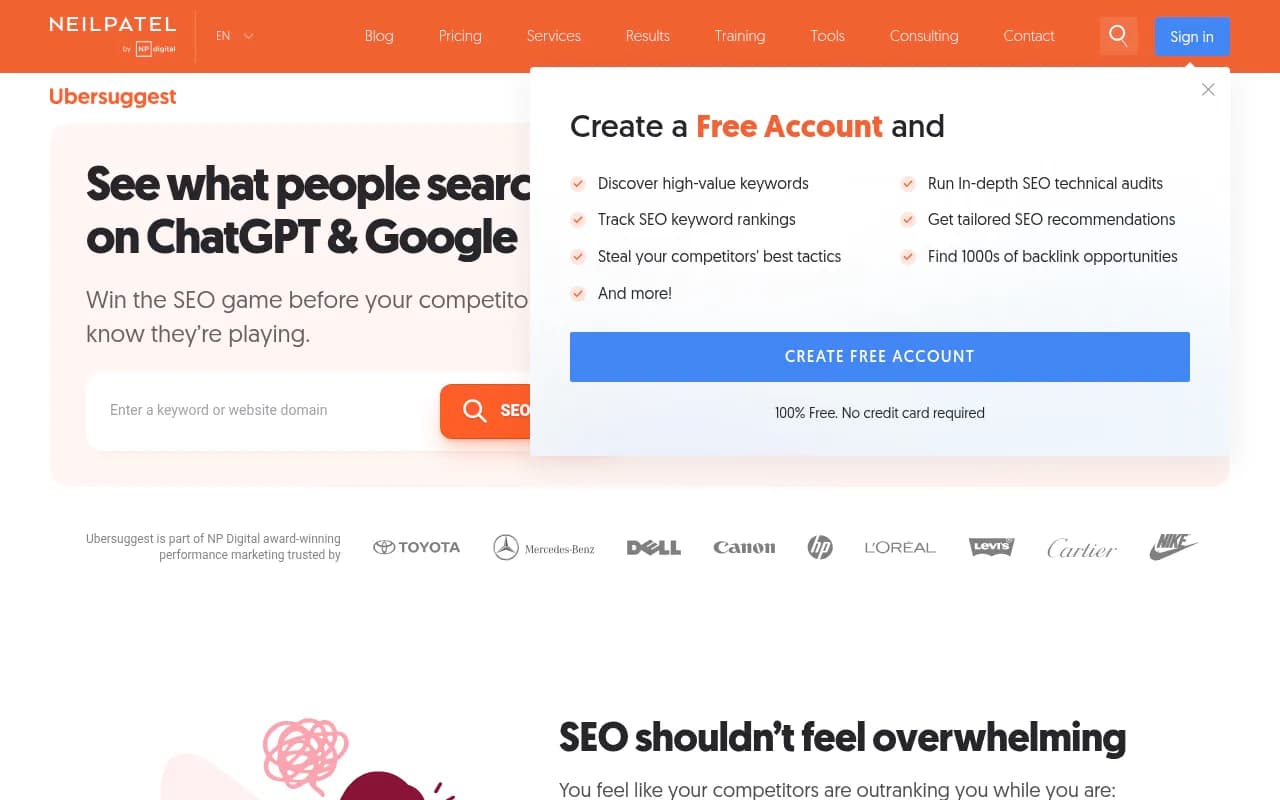
Ubersuggest offers keyword research, site audits, backlink analysis, and rank tracking at a fraction of the cost of enterprise tools. It's not as deep as Ahrefs, but for most small businesses, it's more than enough.
What it does better than the giants: Lifetime pricing option (pay once, use forever), simple UI that non-SEOs can understand, content ideas based on social shares and backlinks, and Chrome extension for inline keyword data. It's the best entry-level SEO tool for teams on a budget.
Best for: Small businesses, bloggers, and anyone who needs basic SEO data without enterprise complexity.
Pricing: Starts at $29/month, or $290 for lifetime access.
11. Sitebulb: The Smarter Site Crawler
Sitebulb is a desktop crawler like Screaming Frog, but with better visualizations, automated hints, and prioritized recommendations. It doesn't just show you data—it tells you what to fix first.
What it does better than the giants: Visual site architecture maps, automated SEO hints that explain why issues matter, prioritized issue lists ranked by impact, and PDF reports you can send to clients without explaining technical jargon. Screaming Frog gives you raw data; Sitebulb gives you actionable insights.
Best for: Technical SEO audits, site migrations, and agencies that need client-ready reports.
Pricing: Starts at $13.50/month for personal use, $55/month for agencies.
12. Promptwatch: AI Search Optimization Platform

While traditional SEO tools track Google rankings, Promptwatch tracks how your brand appears in ChatGPT, Claude, Perplexity, Gemini, and other AI search engines. It's the only platform that goes beyond monitoring—it helps you fix visibility gaps with AI content generation and optimization tools.
What it does better than the giants: Answer Gap Analysis shows exactly which prompts competitors rank for but you don't, AI writing agent generates content grounded in 880M+ citations analyzed, real-time AI crawler logs show how LLMs discover your content, and page-level tracking connects AI visibility to actual traffic. Most competitors (Otterly.AI, Peec.ai, AthenaHQ) only monitor—Promptwatch helps you optimize.
Best for: Brands that want to rank in AI search engines, content teams optimizing for LLM citations, and agencies tracking AI visibility for clients.
Pricing: Starts at $99/month for 1 site and 50 prompts.
How to Build Your Own Specialized SEO Stack
The best SEO teams don't use one tool. They layer 3-5 specialized tools to cover different use cases:
Core stack for most teams:
- Technical audits: Screaming Frog or Sitebulb
- Content optimization: SurferSEO or Clearscope
- Rank tracking: Nightwatch (for AI search) or AccuRanker (for traditional SEO)
- Quick research: Keywords Everywhere or SEO Minion
- AI visibility: Promptwatch (if you want to rank in ChatGPT and Perplexity)
Add-ons for specific needs:
- Local SEO: BrightLocal
- Competitor intelligence: SpyFu
- Budget keyword research: Ubersuggest or Mangools
- Question-based content: AnswerThePublic
This approach costs less than a single Ahrefs subscription—and delivers better results because each tool excels at its specific job.
The Future of SEO Tools: AI Search Visibility
The biggest shift in SEO since Google's algorithm updates is happening right now: AI search engines are replacing traditional search for millions of queries.
ChatGPT, Perplexity, Google AI Overviews, Claude, and Gemini don't show 10 blue links. They generate answers—and cite sources. If your brand isn't cited, you're invisible.
Traditional SEO tools (Ahrefs, SEMrush, Moz) still focus on Google's traditional search results. They track rankings, backlinks, and keyword difficulty—but they don't monitor AI search visibility.
That's where tools like Promptwatch, Nightwatch, and Otterly.AI come in. They track how often your brand appears in AI-generated answers, which prompts trigger citations, and which competitors are winning in AI search.
For brands that want to stay visible in 2026 and beyond, AI search monitoring isn't optional—it's essential. Tools like Promptwatch go further by helping you fix visibility gaps with content generation and optimization tools grounded in real citation data.
Common Mistakes When Choosing SEO Tools
Mistake 1: Buying the most expensive tool and assuming it solves everything. Ahrefs and SEMrush are excellent platforms, but they're not the best at every task. A $50/month specialist tool often outperforms a $500/month generalist.
Mistake 2: Ignoring AI search visibility. If you're not tracking how your brand appears in ChatGPT, Perplexity, and Google AI Overviews, you're missing the fastest-growing search channel.
Mistake 3: Paying for features you never use. Most teams use 10-20% of an enterprise SEO platform's features. Build a stack of focused tools instead—you'll save money and get better results.
Mistake 4: Choosing tools based on demos instead of workflows. A tool that looks impressive in a sales demo might be clunky in daily use. Test free trials, read user reviews, and prioritize tools that fit your actual workflow.
Mistake 5: Not automating repetitive tasks. The best SEO tools save time by automating crawls, audits, and reporting. If you're manually checking rankings or running site audits, you're wasting hours every week.
Final Thoughts: Specialized Tools Beat All-in-One Platforms
The SEO tools that win aren't always the most expensive or the most popular. They're the ones that solve specific problems better than anyone else.
Screaming Frog beats Ahrefs at technical audits. BrightLocal beats SEMrush at local SEO. Promptwatch beats everyone at AI search visibility.
The smartest SEO teams in 2026 don't rely on one dashboard. They build specialized stacks—layering 3-5 focused tools that each excel at one job.
That's how top-ranking SEOs outperform teams with bigger budgets. They use the right tool for each task—not the most expensive one.