Key Takeaways
- B2B attribution is fundamentally different from B2C: Long sales cycles (3-18 months), multiple stakeholders per account, and high-value contracts require account-based tracking, not just individual lead attribution
- The gap between spend and revenue is real: 58% of B2B marketers report their analytics are inadequate, leaving teams unable to prove ROI or optimize budgets effectively
- Modern platforms track the full journey: The best tools connect first-touch awareness campaigns to mid-funnel nurture sequences to final sales conversations—attributing revenue credit across every channel and touchpoint
- Integration depth matters more than features: Platforms that sync with your CRM, marketing automation, ad platforms, and sales tools provide unified data; siloed tools leave you stitching spreadsheets together manually
- Look for closed-loop attribution: The platforms worth investing in track leads from anonymous visitor to closed deal, connecting marketing spend directly to pipeline and revenue outcomes
B2B marketing attribution has always been hard. Your buyer's journey spans months, involves 6-10 decision-makers, and touches a dozen channels before anyone fills out a form. By the time a deal closes, the original campaign that sparked interest is buried under layers of nurture emails, retargeting ads, sales calls, and demo requests.
Most attribution tools weren't built for this complexity. They track clicks and conversions but stop at the lead handoff. Sales closes the deal three months later, and marketing has no idea which campaigns actually drove revenue.
The platforms below solve this problem. They connect marketing activity to closed revenue by tracking the full account journey—from anonymous website visits to contract signature. These aren't vanity metric dashboards. They're systems that help you prove ROI, kill underperforming campaigns, and allocate budget to what actually works.
What Makes B2B Attribution Different (And Harder)
B2B attribution isn't just "attribution with a longer sales cycle." The entire model is different:
Account-based tracking, not individual leads: A single B2B deal involves multiple people—CMO, VP of Sales, procurement, IT. Your attribution platform needs to track all of them as one account, not separate leads. If the CMO downloads a whitepaper, the VP attends a webinar, and procurement requests a demo, those are three touchpoints for one buying committee.
Long, non-linear journeys: B2C customers might convert in hours or days. B2B deals take 3-18 months. Prospects disappear for weeks, re-engage through different channels, loop in new stakeholders. Linear attribution models (first-touch, last-touch) completely fail here.
High contract values demand precision: When deals are worth $50K-$500K+, you can't afford to guess which campaigns work. A 10% improvement in attribution accuracy can shift millions in budget allocation.
Sales and marketing must share data: Marketing runs campaigns, sales closes deals. If those systems don't talk to each other, you'll never connect spend to revenue. The best attribution platforms live at the intersection of your CRM, marketing automation, and ad platforms.
The 7 Platforms That Actually Close the Loop
1. Dreamdata — Best for Full-Funnel B2B Attribution
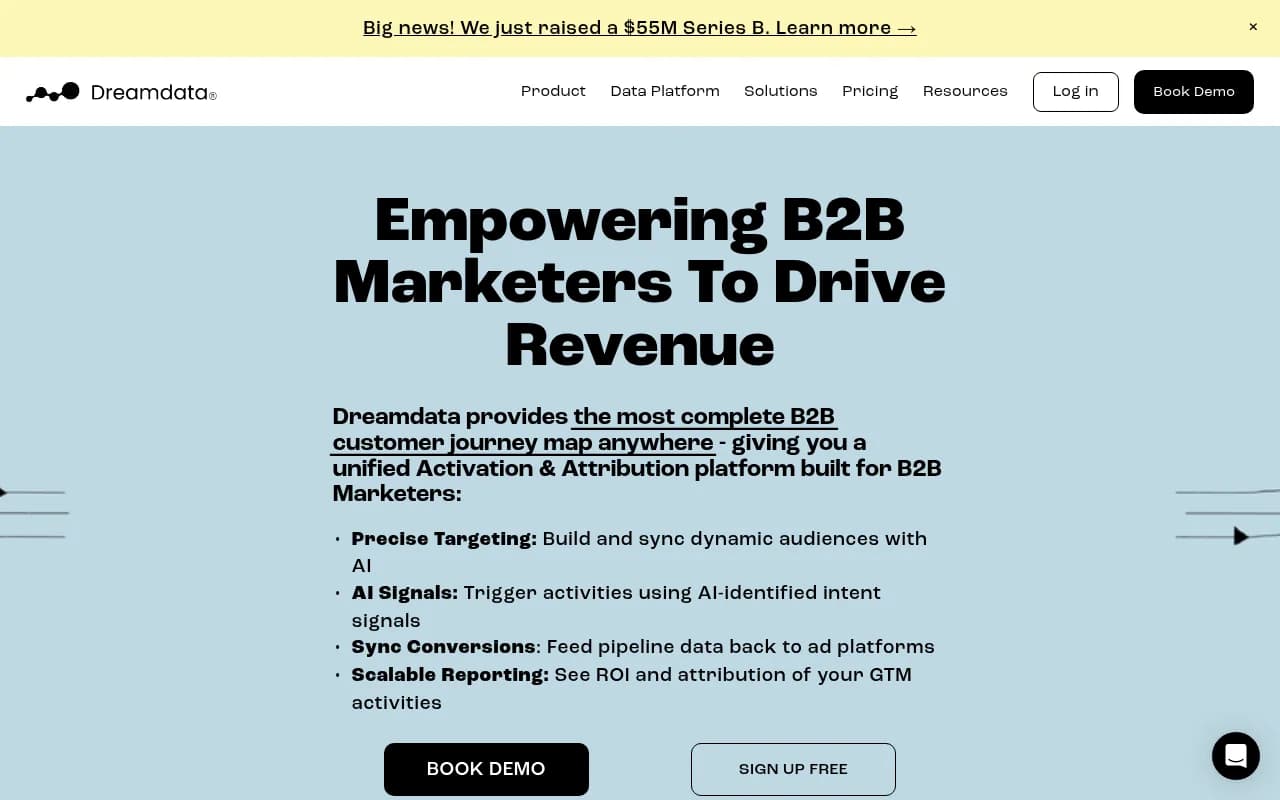
Dreamdata is purpose-built for B2B revenue attribution. It tracks every touchpoint across the customer journey—anonymous website visits, ad clicks, content downloads, webinar attendance, sales calls—and maps them to closed deals in your CRM.
The platform automatically stitches together account-level journeys by connecting multiple contacts within the same company. When three people from Acme Corp interact with your brand through different channels, Dreamdata treats them as one buying committee and attributes revenue accordingly.
What sets it apart: Multi-touch attribution models (W-shaped, time-decay, custom) that reflect how B2B buyers actually move through the funnel. You can see which campaigns influenced early awareness, which drove mid-funnel engagement, and which closed the deal. Revenue attribution connects directly to pipeline and closed-won revenue in Salesforce or HubSpot.
Best for: B2B SaaS companies, agencies, and enterprises with complex sales cycles who need to prove marketing's impact on revenue.
2. HockeyStack — Marketing Intelligence with Attribution
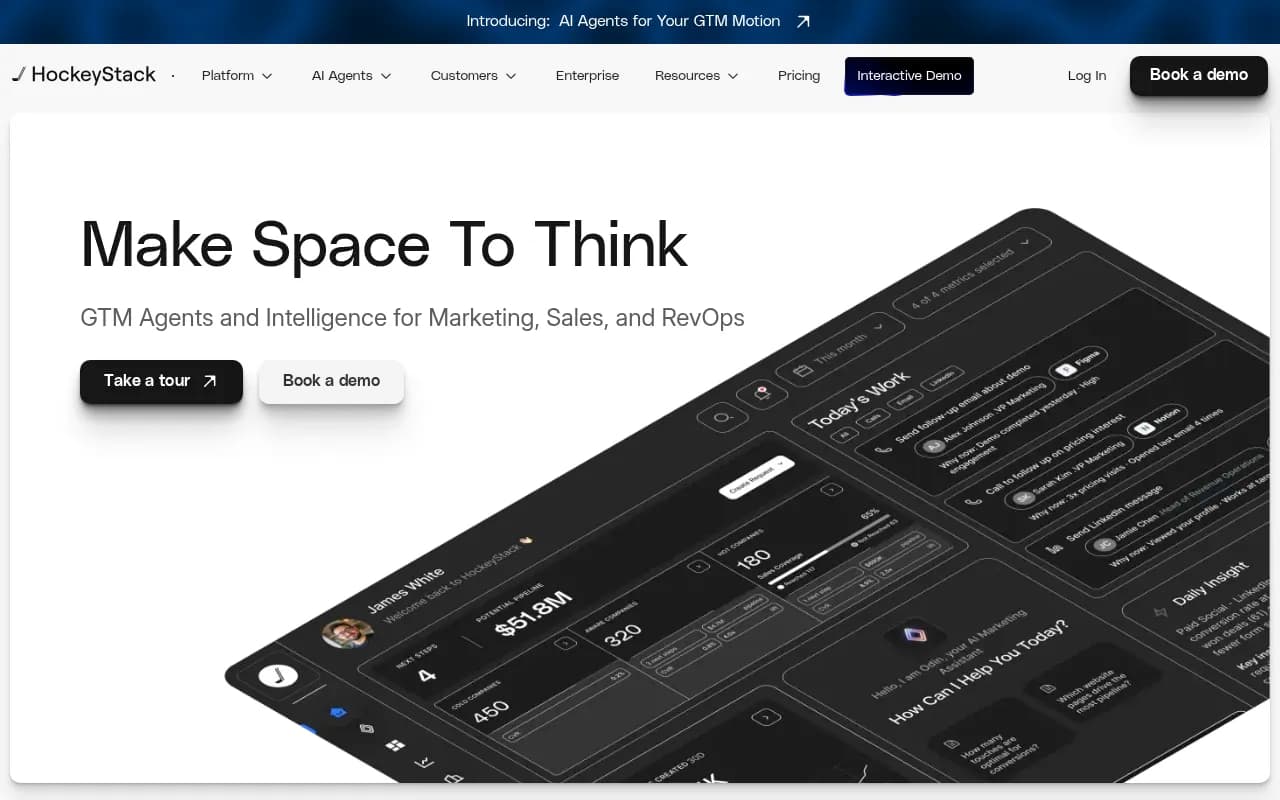
HockeyStack combines attribution with broader marketing intelligence—tracking not just what happened, but why it matters. The platform monitors website behavior, campaign performance, and revenue outcomes in one unified dashboard.
Unlike pure attribution tools, HockeyStack adds context: which pages drive conversions, how different segments behave, where drop-offs happen. It's attribution plus analytics, built for teams that want to optimize the entire funnel, not just measure it.
What sets it apart: No-code dashboard builder lets you create custom reports without SQL or engineering help. Self-attribution surveys ask customers how they found you, then compare their answers to tracked data—revealing gaps in your attribution model.
Best for: Growth teams and marketers who want attribution plus actionable insights on what to fix.
3. Ruler Analytics — Closed-Loop Attribution for Agencies
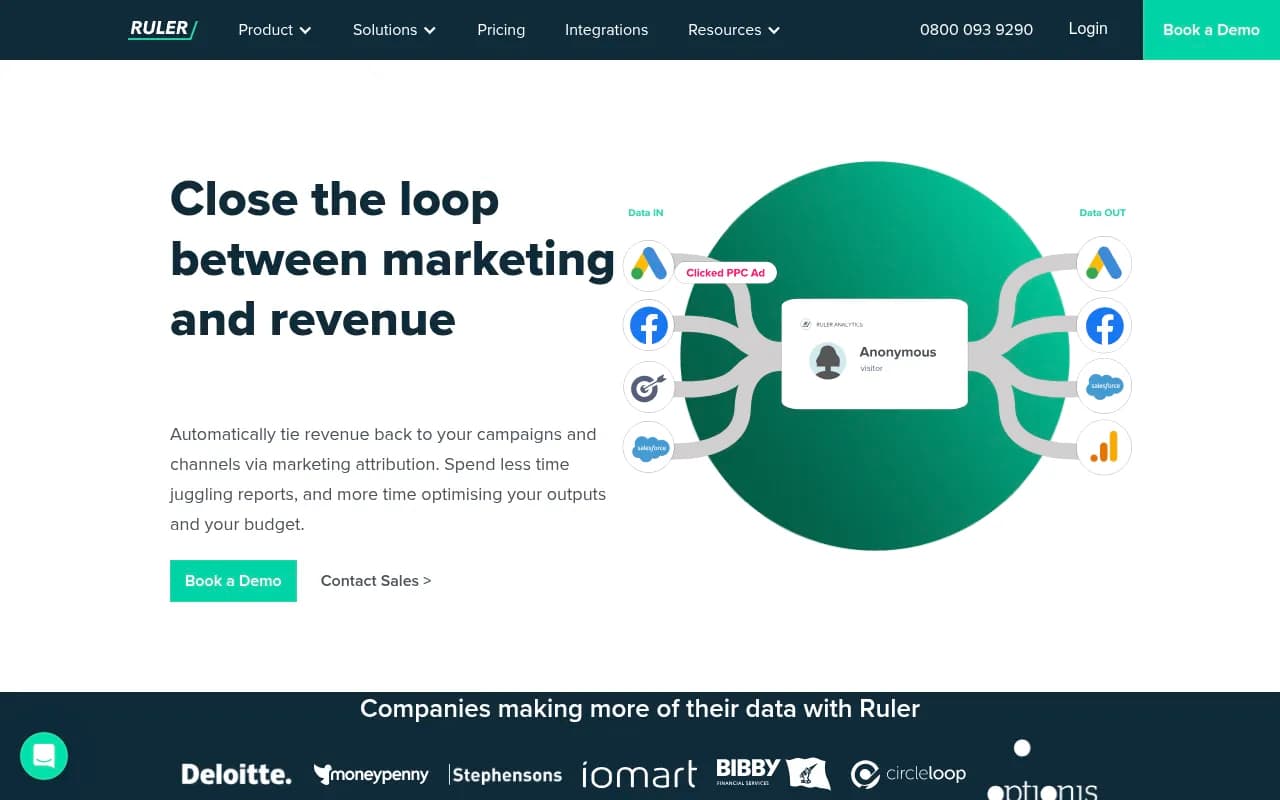
Ruler Analytics specializes in closed-loop attribution—tracking leads from first anonymous visit through to closed revenue, then feeding that data back into your ad platforms for optimization.
The platform captures phone calls, form fills, live chats, and offline conversions, then matches them to the original marketing source. When a lead converts, Ruler pushes revenue data back to Google Ads, Facebook Ads, and other platforms so they can optimize for actual revenue, not just clicks.
What sets it apart: Call tracking with dynamic number insertion—every visitor sees a unique phone number, so Ruler knows exactly which campaign drove each call. Offline conversion tracking connects in-store visits or sales rep conversations back to digital campaigns.
Best for: Agencies managing multiple clients, and businesses with significant phone or offline sales.
4. Adobe Marketo Measure — Enterprise Multi-Touch Attribution
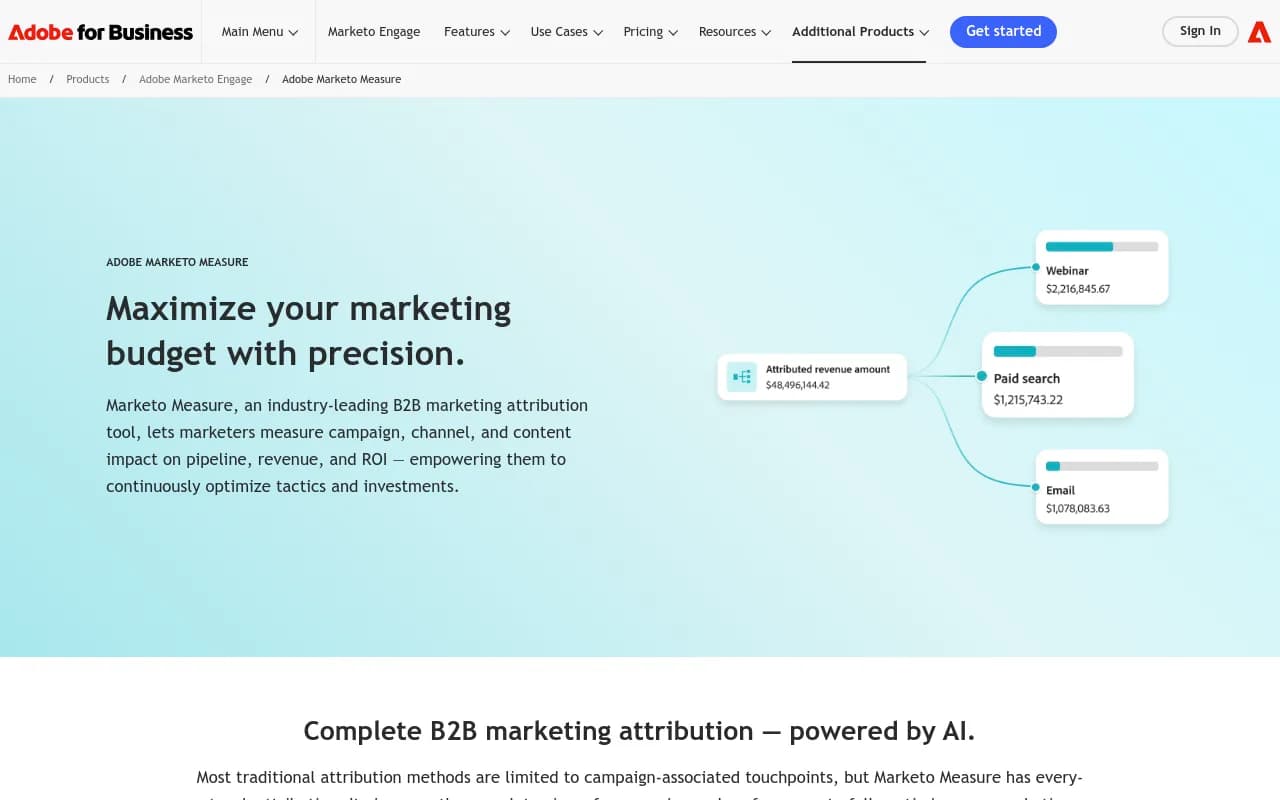
Formerly Bizible, Marketo Measure is Adobe's enterprise attribution platform. It tracks every touchpoint across paid, earned, and owned channels, then applies multi-touch attribution models to connect marketing spend to pipeline and revenue.
The platform integrates deeply with Salesforce and Adobe's marketing stack, making it the default choice for large enterprises already invested in those ecosystems. Custom attribution models let you weight touchpoints based on your specific sales process.
What sets it apart: Machine learning models that predict which leads are most likely to convert, helping sales prioritize high-value accounts. Revenue forecasting based on current pipeline and historical attribution data.
Best for: Enterprise B2B companies with complex marketing stacks and large sales teams.
5. Factors.ai — Intent-Driven B2B Attribution
Factors.ai combines attribution with account-based intent signals. The platform tracks not just what prospects do on your website, but also their behavior across the broader web—which competitors they research, what content they consume, when they're actively evaluating solutions.
This intent data feeds into attribution models, helping you understand which accounts are in-market and which campaigns are influencing them. The platform scores accounts based on engagement and intent, then routes high-value prospects to sales automatically.
What sets it apart: Intent signals from third-party data sources (G2, Capterra, review sites) combined with first-party attribution data. Account scoring that prioritizes prospects showing buying intent, not just engagement.
Best for: B2B companies running account-based marketing (ABM) campaigns who need to prioritize high-intent accounts.
6. CaliberMind — Data Unification + Attribution
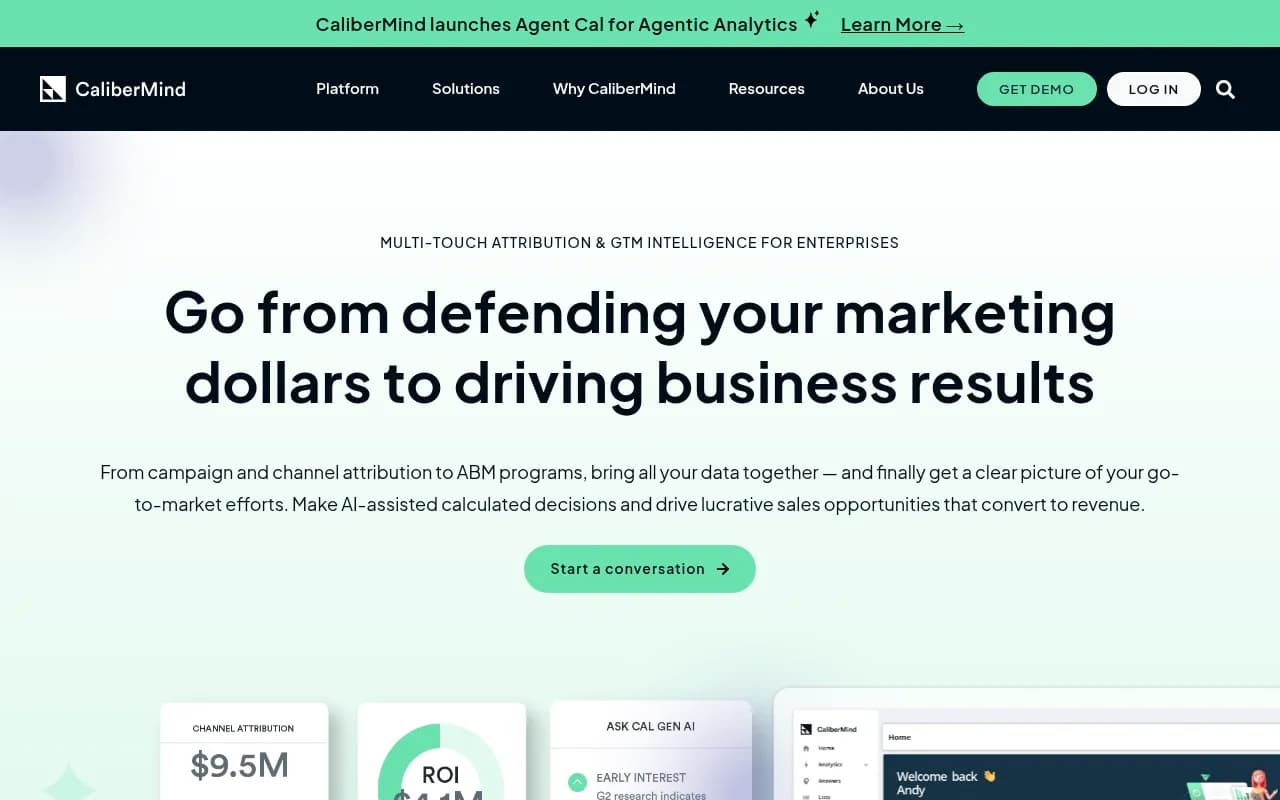
CaliberMind is a B2B data platform that unifies marketing, sales, and product data, then applies attribution models on top. The platform pulls data from your CRM, marketing automation, ad platforms, product analytics, and support tools into one unified customer record.
Once data is unified, CaliberMind tracks the full customer journey—from first touch to expansion revenue—and attributes value across every interaction. Custom attribution models let you weight touchpoints based on your sales cycle.
What sets it apart: Data unification layer that cleans, deduplicates, and standardizes records across systems before attribution runs. Expansion and retention attribution—tracking which campaigns drive upsells, renewals, and churn prevention, not just new logos.
Best for: B2B SaaS companies with complex data stacks who need unified customer records and full lifecycle attribution.
7. Hyros — AI-Powered Ad Attribution
Hyros uses AI to track ad performance and attribute revenue across every channel—paid search, social, display, email, affiliates. The platform tracks users across devices and sessions using proprietary fingerprinting technology, then connects ad clicks to sales (even if the conversion happens weeks later on a different device).
Unlike pixel-based tracking (which breaks with iOS privacy changes and ad blockers), Hyros uses server-side tracking and AI to maintain attribution accuracy. The platform pushes conversion data back to ad platforms so they can optimize for revenue, not just clicks.
What sets it apart: AI attribution that adapts to your sales cycle—learning which touchpoints matter most and adjusting models automatically. Print tracking for offline ads (magazines, direct mail) using unique URLs and phone numbers.
Best for: Performance marketers and eCommerce brands running high-volume paid campaigns who need accurate ROAS tracking.
How to Choose the Right Attribution Platform
Picking an attribution tool isn't about features—it's about fit. Ask these questions:
1. Does it integrate with your existing stack? The best attribution platform is the one that connects to your CRM (Salesforce, HubSpot), marketing automation (Marketo, Pardot), ad platforms (Google Ads, LinkedIn Ads), and analytics tools (Google Analytics, Mixpanel). If integration requires custom dev work, you'll never get it set up properly.
2. Does it track the full journey or just part of it? Some tools stop at lead generation. Others track through to closed revenue. If you need to prove ROI to the CFO, you need closed-loop attribution that connects spend to actual revenue, not just pipeline.
3. Can it handle account-based attribution? If you're selling to enterprises, you need a platform that tracks multiple contacts within the same account and attributes revenue at the account level, not the individual lead level.
4. What attribution models does it support? First-touch and last-touch are easy but inaccurate. Multi-touch models (linear, time-decay, W-shaped, custom) reflect how B2B buyers actually move through the funnel. Make sure the platform supports the model that matches your sales process.
5. Does it feed data back to ad platforms? The best attribution platforms don't just report—they optimize. They push conversion and revenue data back to Google Ads, Facebook Ads, and LinkedIn Ads so those platforms can optimize for actual business outcomes, not just clicks.
What Attribution Can't Fix (And What It Can)
Attribution platforms solve one specific problem: connecting marketing activity to revenue. They don't fix bad campaigns, weak messaging, or broken sales processes. Here's what they can and can't do:
What attribution solves:
- Proving which campaigns drive revenue (so you can kill underperformers and scale winners)
- Allocating budget based on actual ROI, not gut feel
- Understanding the full customer journey across channels and touchpoints
- Aligning marketing and sales around shared revenue goals
What attribution doesn't solve:
- Creating better campaigns (you still need good creative, targeting, and messaging)
- Fixing a broken sales process (if sales can't close, attribution won't help)
- Replacing analytics (attribution shows what happened, analytics shows why)
- Eliminating the need for experimentation (attribution tells you what worked, not what will work next)
The best marketing teams use attribution to measure results, then combine it with analytics, experimentation, and qualitative feedback to improve campaigns over time.
Beyond Traditional Attribution: AI Search Visibility
While traditional attribution tracks how prospects find you through Google, social, and paid ads, a new channel is emerging: AI search engines like ChatGPT, Perplexity, Claude, and Google AI Overviews.
When someone asks ChatGPT "best CRM for small businesses" or Perplexity "top project management tools for agencies," these AI models generate answers by citing websites, tools, and brands. If your brand isn't mentioned, you're invisible to an entire generation of buyers who skip Google entirely.
Tools like Promptwatch help you track and optimize your visibility in AI search results—monitoring which prompts your brand appears in, which competitors are cited instead, and what content gaps are keeping you invisible. This isn't traditional SEO or attribution, but it's becoming critical for B2B brands as AI search adoption grows.
Final Thoughts: Attribution Is the Foundation, Not the Finish Line
B2B attribution platforms give you the data to prove marketing's impact on revenue. They show which campaigns work, which channels drive pipeline, and where to allocate budget for maximum ROI.
But data alone doesn't win deals. The best marketing teams use attribution as a foundation—measuring results, killing underperformers, and doubling down on what works—then layer on experimentation, creative testing, and continuous optimization.
Start with one of the platforms above. Connect it to your CRM and ad platforms. Track the full journey from first touch to closed revenue. Then use that data to make smarter decisions, align with sales, and prove marketing's value to the business.
That's how you turn attribution from a reporting exercise into a competitive advantage.